Whether Two Meals a Day Is Enough for a Bloodhound
One of the biggest anxieties for Bloodhound owners, new and seasoned alike, revolves around feeding, specifically meal frequency. It's not just about keeping their rumbling tummies happy; it's about safeguarding their health, especially from the looming threat of bloat. This guide dives deep into whether a two-meal-a-day schedule is truly adequate for your beloved Bloodhound, exploring the nuances of their unique physiology and offering practical strategies to ensure they thrive.
The Big Question: Is Twice a Day Really Enough for a Bloodhound?
For many dog breeds, feeding twice a day is the gold standard. It fits neatly into human schedules, allows for proper digestion, and generally keeps dogs satisfied. But Bloodhounds, with their deep chests and often voracious appetites, aren't just "any dog." The question of meal frequency takes on a much higher stakes meaning when you consider the breed's predispositions.
The Rationale Behind Splitting Meals for Giant Breeds
When we talk about meal frequency for large, deep-chested breeds like Bloodhounds, the elephant in the room – or rather, the twisting stomach – is Gastric Dilatation and Volvulus, commonly known as bloat. This terrifying condition occurs when the stomach fills with gas and often twists, cutting off blood supply and becoming rapidly life-threatening. The consensus among veterinarians and experienced Bloodhound owners is that smaller, more frequent meals can help mitigate this risk.
Imagine your Bloodhound, belly full from a single, massive meal. That weighty stomach is now a much larger, heavier organ, potentially bouncing and shifting inside their abdominal cavity, especially if they decide to play or run shortly after eating. A full stomach, particularly one distended with gas, is structurally more prone to twisting. By splitting their daily caloric intake into multiple smaller meals, you reduce the volume of food in the stomach at any one time. This lessens the chances of it becoming overly distended or heavy, thereby theoretically reducing the immediate mechanical risk of rotation. It’s like carrying multiple small grocery bags rather than one giant, unwieldy one; you have better control and less risk of dropping everything. This is a critical consideration for our beloved hounds, whose unique build, described in Why a Deep Narrow Chest Puts a Bloodhound at Risk, sadly makes them more susceptible to this devastating condition. Many owners even opt for a preventive surgery called gastropexy, as discussed in The Gastropexy Decision Every Bloodhound Owner Faces, to secure the stomach, but even then, careful feeding remains paramount.
Understanding a Bloodhound's Digestion and Metabolism
Bloodhounds might look like laid-back loungers, but their digestive systems are working hard. While they aren't typically as hyperactive as, say, a Border Collie, their large size means their bodies are constantly processing nutrients to maintain that substantial frame. However, their metabolism isn't necessarily faster; in some ways, it can be quite deliberate. One of the biggest challenges with Bloodhounds is their tendency to "bolt" their food. If you've ever witnessed it, it's less eating and more vacuuming. They inhale their meals at an astonishing speed, often without much chewing. This rapid ingestion introduces a lot of air into their stomach, which is a significant factor in bloat.
Beyond the speed of eating, a Bloodhound's overall digestive process needs to be supported by appropriate meal timing. Their bodies are designed to process large quantities, but slowly and steadily. Overloading their system with a single huge meal can put undue stress on the stomach and intestines. While they are resilient, consistent overfilling can contribute to gastric discomfort and potentially affect nutrient absorption over time. It's about finding a rhythm that works with their natural digestive pace, rather than against it. Understanding Whether a Bloodhound Bolts Its Food is crucial for mitigating risks associated with their eating style.
What Happens if a Bloodhound Eats Too Much Too Fast
The immediate consequence of a Bloodhound eating too much, too fast, is often visible distress. Their abdomen might appear distended, hard, and painful to the touch. They might start pacing, drooling excessively, or trying to vomit without actually bringing anything up – a classic symptom of bloat known as non-productive retching. This behavior, often referred to as The Prayer Position a Bloating Bloodhound Takes, is a huge red flag. The stomach, suddenly filled with an abundance of food, liquids, and gulped air, stretches unnaturally. This distention alone is uncomfortable, but it's the precursor to the deadly twist.
When the stomach distends, it can become unstable, making it easier for it to flip or rotate on its axis. This twisting motion pinches off both the entry and exit points of the stomach, trapping gas and food inside. It also cuts off blood flow to the stomach and often the spleen, leading to rapid tissue death. The pain is excruciating, and shock sets in quickly. Recognizing Signs a Bloodhound Is Bloating can literally be the difference between life and death. Every minute counts in this situation, and swift veterinary intervention is absolutely essential. Therefore, preventing this initial "too much, too fast" scenario is the foundation of safe feeding for your Bloodhound.
Balancing Convenience with Canine Health: Practical Feeding Schedules
We all lead busy lives, and sometimes the idea of feeding a giant dog more than twice a day feels like a logistical nightmare. However, with a Bloodhound, finding that balance between what's convenient for you and what's safest for them is paramount. Thankfully, there are many practical solutions that don't require you to become a full-time chef for your hound.
The Case for Three Meals a Day (or More) for Puppies and High-Risk Adults
For Bloodhound puppies, three or even four smaller meals a day are highly recommended. Puppies have incredibly fast metabolisms and need a steady supply of nutrients for their rapid growth. Their tiny stomachs can't handle large volumes of food, and frequent meals help maintain stable blood sugar levels, preventing energy dips. As they grow, you can gradually transition them, but many owners find that maintaining three meals a day, especially during their first year, is beneficial.
For adult Bloodhounds, particularly those identified as having a higher bloat risk (perhaps due to family history, anxiety, or previous bloat episodes if they've had a gastropexy), continuing with three meals a day is often the safest bet. This could mean a smaller breakfast, a modest lunch, and a dinner meal. This schedule ensures that the stomach is never overly full, reducing distention and the mechanical stress that can contribute to bloat. It doesn't necessarily mean feeding more food in total, just distributing the daily allowance differently. Some owners find that fresh dog food delivery services, like Ollie, which pre-portion meals, can make managing multiple feedings much easier, as the guesswork is taken out of each serving size. This commitment to Three Meals Lower a Bloodhound's Bloat Risk is a proactive step many dedicated owners take to protect their furry family members.
Strategies for Making Two Meals a Day Work Safely
If a three-times-a-day schedule just isn't feasible for your lifestyle, you can absolutely make two meals a day safer for your Bloodhound with a few smart strategies. The key is to slow down their eating and manage their activity around meal times.
First and foremost, invest in a good quality slow feeder bowl. These bowls have raised ridges or obstacles that force your Bloodhound to eat around them, significantly extending mealtime. Instead of inhaling their food in 30 seconds, a slow feeder can stretch it out to 10-15 minutes, allowing for better digestion and reducing the amount of air they swallow. There are many options available on platforms like Amazon and Chewy, from simple maze designs to more intricate puzzle feeders. This simple tool can be a game-changer and directly addresses Whether a Slow Feeder Helps a Bloodhound.
Secondly, strict rules around activity before and after meals are non-negotiable. Your Bloodhound should have a quiet period of at least 30-60 minutes before eating and a minimum of 1-2 hours after eating. No strenuous exercise, no roughhousing, no excited greetings, and definitely no running or jumping. A calm mind and a settled body are crucial for safe digestion. This means if you take your Bloodhound for a brisk walk in the morning, wait until they've settled down completely before offering breakfast. Similarly, after dinner, it's time for quiet relaxation, perhaps a gentle chew toy or a snuggle on the couch. Understanding How Long Before Exercise a Bloodhound Should Eat and How Long After Exercise a Bloodhound Should Eat is vital for any owner aiming to prevent bloat.
Finally, manage their water intake around meals. While hydration is essential, allowing a Bloodhound to gulp down a huge amount of water immediately after a large meal can add to stomach distention. Offer water freely throughout the day, but perhaps remove it for a short period (15-20 minutes) immediately after they finish eating a large two-a-day meal, then reintroduce it. This helps prevent rapid overfilling.
The Role of Food Type and Consistency in Bloat Prevention
Beyond how often you feed your Bloodhound, what and how you feed them plays a significant role in bloat prevention and overall digestive health. The type of food and its consistency can impact how quickly it's consumed, how much gas is produced, and how it sits in the stomach.
Many owners opt for a high-quality kibble formulated for large breeds, which often contains specific nutrient balances for their growth and joint health. The size and shape of the kibble can sometimes matter; very small kibble might be swallowed even faster, while larger pieces might encourage a bit more chewing. However, there isn't a definitive rule that larger kibble prevents bloat.
One strategy often discussed is soaking kibble in water or broth before feeding. The idea here is that if the food expands before it's eaten, it won't expand as much in the stomach, potentially reducing gas production and distention. Many Bloodhound owners swear by this practice, reporting fewer instances of gas and general stomach upset. However, some studies have suggested that soaking kibble might actually increase bloat risk in some breeds. The jury is still out on a definitive answer for Bloodhounds specifically, but it's a practice worth discussing with your vet if you're considering it. Whether Soaking a Bloodhound's Kibble Helps is a question many owners ponder, and personal experience and veterinary advice will be your best guides.
When it comes to wet food or fresh food diets, these often have a higher moisture content and can be easier to digest, potentially reducing the risk of gas. However, fresh food diets, like those offered by Ollie, need careful handling and storage. Ultimately, the best food for your Bloodhound is one that is nutritionally complete, digestible, and doesn't cause them any adverse reactions. Regardless of the type, the goal is always to prevent rapid ingestion and excessive stomach distention.
Beyond Meal Frequency: A Holistic Approach to Bloodhound Nutrition
While meal frequency is a huge piece of the puzzle for Bloodhound health, it's just one part of a larger, holistic approach to their nutrition and well-being. Thinking about their feeding environment, overall body condition, and routine can add layers of protection and contribute to a happier, healthier hound.
Managing Mealtime Stress and Competition
Mealtime should be a calm, peaceful experience for your Bloodhound, not a stressful race. If you have multiple dogs, feeding them in separate, quiet areas is highly advisable. This eliminates competition, which can cause dogs to eat even faster, increasing their bloat risk and potentially leading to resource guarding. A Bloodhound, despite its generally placid nature, can still feel pressure from other dogs being nearby, even if they're not overtly fighting.
Creating a predictable and tranquil feeding environment also helps reduce anxiety. Consider feeding them in their crate, a separate room, or a designated quiet corner where they won't be disturbed by children, other pets, or household hustle and bustle. This allows them to focus solely on their food and eat at a more relaxed pace. When you consider Whether a Bloodhound Should Be Fed Alone or Whether Stress at Mealtime Matters for a Bloodhound, it becomes clear that a serene environment is a small but impactful change.
Portion Control and Maintaining a Healthy Weight
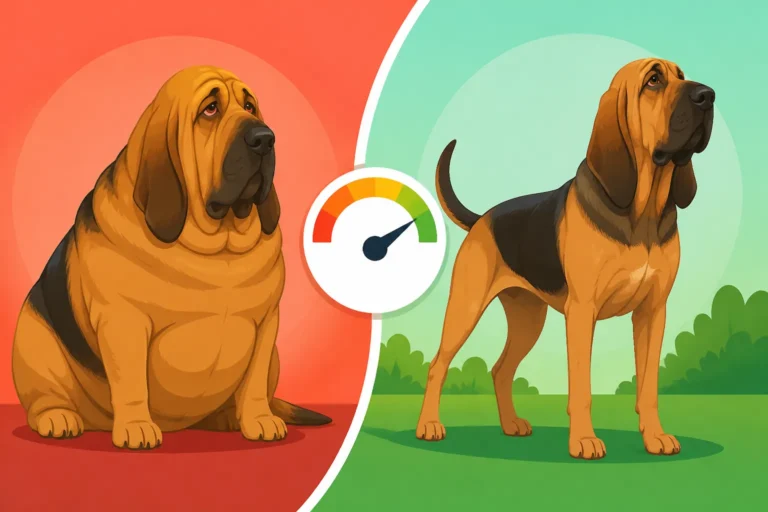
One of the most powerful things you can do for your Bloodhound's health is to keep them at a lean, healthy weight. Overweight dogs, particularly large breeds, are at a higher risk for various health issues, including joint problems (which Bloodhounds are already prone to, as discussed in Hip and Elbow Dysplasia in the Bloodhound), heart disease, and yes, bloat. A lean dog has less internal fat putting pressure on their organs, and their overall system tends to function more efficiently.
It's tempting to "free feed" a Bloodhound or constantly top up their bowl, especially if they seem to always be hungry (which, let's be honest, they usually do!). However, portion control is absolutely critical. Use a measuring cup to ensure you're feeding the recommended amount for their weight and activity level, and adjust as needed based on their body condition. You should be able to easily feel, but not necessarily see, their ribs. They should have a noticeable waist when viewed from above, and a tuck-up from their chest to their abdomen when viewed from the side. Keeping a Bloodhound Lean on Purpose is not just about aesthetics; it's a cornerstone of their long-term health. Regularly assess Signs a Bloodhound Is Overweight and adjust their food intake accordingly. For specific large breed formulas or other dietary needs, checking out retailers like Chewy or Amazon can provide a wide range of options.
The Importance of a Consistent Routine
Dogs, including Bloodhounds, are creatures of habit. They thrive on routine, and a predictable feeding schedule contributes significantly to their overall well-being, both physically and psychologically. Feeding them at roughly the same times each day, in the same location, creates a sense of security and helps regulate their digestive system. Their bodies learn when to expect food, which can optimize digestive enzyme production and overall gut health.
Consistency isn't just about meal times; it's also about the entire daily rhythm. Consistent exercise times, potty breaks, and bedtime routines all play a role in reducing stress and promoting a calm, settled hound. A predictable environment can even mitigate anxiety that might indirectly contribute to bloat risk. While life inevitably throws curveballs, striving for as much consistency as possible in your Bloodhound's daily life is a gift you can give them.
Here's a quick look at how different feeding frequencies might work for your Bloodhound:
| Factor | Two Meals A Day (AM/PM) | Three Meals A Day (AM/Midday/PM) |
|---|---|---|
| Bloat Risk | Higher if meals are large and eaten quickly. | Lower due to smaller meal volumes and less stomach distention. |
| Digestion | Larger volume per meal may stress digestive system. | Gentler on the digestive system, steadier nutrient absorption. |
| Puppies | Generally NOT recommended due to rapid growth needs. | Ideal for stable blood sugar and growth. |
| Adults (Low Risk) | Manageable with slow feeders & strict rest rules. | Recommended, especially for very active or anxious dogs. |
| Adults (High Risk) | Avoid unless absolutely no other option; higher risk. | Strongly recommended. |
| Owner Convenience | Easier for busy schedules. | Requires more planning, potentially a midday check-in. |
| Satiety | Longer gaps between meals might lead to more hunger. | More consistent fullness throughout the day. |
| Key Mitigations | Slow feeder, strict pre/post-meal rest, mindful hydration. | Still benefits from slow feeder and post-meal rest. |
Ultimately, whether two meals a day is "enough" for your Bloodhound depends on a variety of factors: their individual health, age, temperament, and your ability to implement strategies to reduce bloat risk. While it might be convenient, the health of your Bloodhound often benefits significantly from more frequent, smaller meals. It's a choice that requires careful consideration and, ideally, a conversation with your veterinarian.
Disclaimer
This article is for general informational purposes only and does not constitute professional advice. Laws, prices and regulations vary by location and change over time. Consult a qualified professional for guidance on your specific situation.