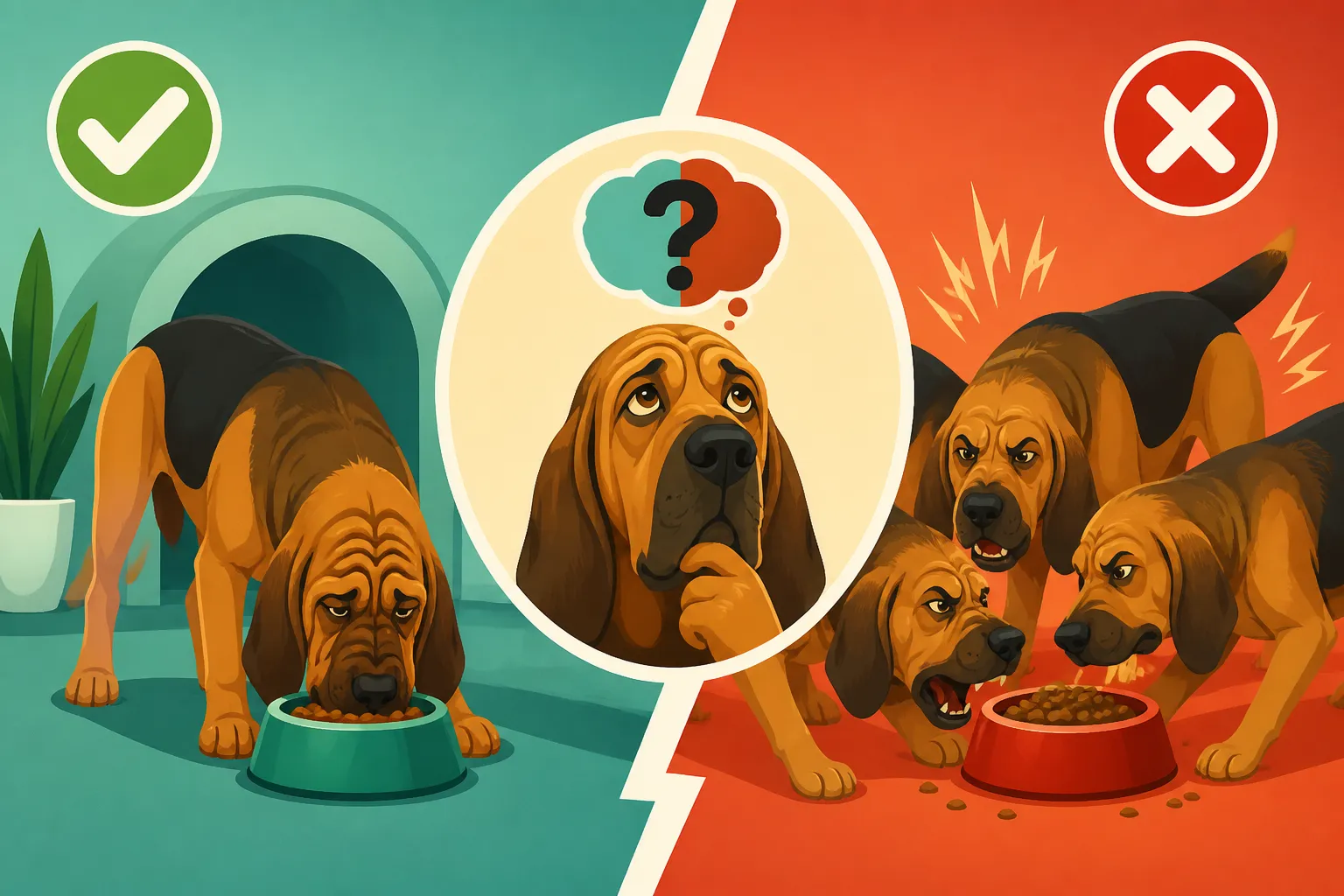
Whether a Bloodhound Should Be Fed Alone
One of the trickiest parts of sharing your life with a Bloodhound, especially if you have other pets or a bustling household, is navigating mealtime. Many owners find themselves grappling with concerns about speed eating, food aggression, or simply ensuring their big, wrinkly friend eats peacefully. This guide dives deep into whether feeding your Bloodhound alone is the best practice for their health, safety, and your peace of mind, offering practical solutions for common mealtime dilemmas.
The Unique Challenges of Bloodhound Mealtimes
Let's face it, Bloodhounds are not like every other dog. Their deep chests, their sometimes stubborn nature, and their sheer size bring a unique set of considerations to the dinner table. Ignoring these specific traits can lead to some serious problems that no Bloodhound owner wants to encounter.
The Ever-Present Shadow of Bloat
For Bloodhound owners, the word "bloat" hangs heavy in the air. Gastric Dilatation-Volvulus (GDV), or bloat, is a terrifying and often fatal condition where the stomach fills with gas and can twist, cutting off blood supply. This isn't just a general dog problem; it's a Bloodhound problem due to their deep, narrow chests. Eating too quickly, especially large meals, can increase the risk. Imagine a scenario where your Bloodhound feels rushed by another dog, gobbling down their food at warp speed to ensure they get it all before anyone else can even think about it. That frantic pace introduces more air, puts stress on their system, and can be a direct contributor to this life-threatening emergency. We talk a lot about Why a Bloodhound's Chest Shape Causes Bloat, and how crucial it is to manage mealtime to prevent this.
When a Bloodhound feels pressure, whether real or perceived, from other animals or even just the general chaos of a busy family dinner, they're more likely to gulp their food. This isn't just about politeness; it's a physiological risk factor. A quick meal isn't just indigestion for them; it can be a race against time.
Resource Guarding in a Gentle Giant
You might think your sweet, laid-back Bloodhound wouldn't guard anything, especially not from their canine companions or even beloved human family members. However, resource guarding, where a dog protects valuable items like food, toys, or even a favorite sleeping spot, can emerge in any breed. For a Bloodhound, whose physical presence alone can be intimidating, a growl over a food bowl can escalate quickly. Even if your dogs typically get along beautifully, the presence of highly valued food can trigger an instinct to protect it.
Think about it: Your Bloodhound might be perfectly happy sharing a water bowl or a dog bed, but food is a different story. The stakes feel higher. If another dog approaches while your Bloodhound is eating, even with the best intentions, it can be perceived as a threat. This isn't necessarily aggression born of malice, but a primal instinct to ensure survival. A single incident of resource guarding can sour the relationship between pets and create an environment of tension and anxiety at mealtimes, making everyone, including you, a little on edge.
Managing Excitement and Competition
Picture this: You're preparing dinner, and your Bloodhound, along with any other dogs, is bouncing with anticipation. There's a lot of tail-wagging, maybe some frantic pacing, and a chorus of excited bays. This heightened state of arousal, while endearing, isn't ideal for digestion or safety. When multiple dogs are fed together, this excitement can quickly turn into competition. One dog might try to push another away, leading to spilled food, squabbles, or simply an environment where no one can eat calmly.
This isn't just about avoiding fights. Even friendly competition can lead to a Bloodhound rushing their food, increasing that bloat risk we just talked about. Plus, it can make it harder for you to monitor how much each dog is actually eating, which is vital for managing their weight and spotting any changes in appetite that could indicate a health issue. A chaotic mealtime means less oversight, and with a breed prone to specific health issues, vigilance is key.
Why Solitary Dining Often Suits a Bloodhound Best
Given these challenges, it’s not surprising that many experienced Bloodhound owners and reputable breeders advocate for feeding their hounds alone. It might seem like a bit of a hassle at first, but the benefits for your Bloodhound’s health, comfort, and overall household harmony are truly significant.
Reducing Stress and Anxiety
Imagine trying to enjoy a meal while constantly looking over your shoulder, worried someone might try to take your plate. That's what mealtime can feel like for a dog in a multi-pet household, even if overt aggression isn't present. By providing a quiet, separate space for your Bloodhound to eat, you remove that underlying tension. They can relax, take their time, and focus on their food without feeling the need to gulp it down or guard it.
This reduction in stress isn't just about their mental well-being; it has direct physical benefits. Stress can impact digestion, and a calm eating environment supports proper nutrient absorption. It allows them to truly decompress and enjoy what should be one of the highlights of their day. You'll often find that dogs who eat alone are more likely to finish their meals at a steady pace, rather than inhaling them. This calm demeanor extends beyond mealtime, contributing to a more relaxed and harmonious home. When we think about Stress at Mealtime Matters for a Bloodhound, creating a sanctuary for their bowls is a huge step in the right direction.
Preventing Mealtime Mishaps
Beyond the very serious risk of bloat, feeding Bloodhounds alone helps prevent a host of other common mealtime problems. No more squabbles over spilled kibble, no more stolen mouthfuls from an unattended bowl, and significantly less chance of a resource guarding incident escalating into a fight. In a home with multiple dogs, even small scuffles over food can lead to injuries or create lasting tension.
Consider a younger, more eager dog trying to sneak a bite from your Bloodhound's bowl. Even if your Bloodhound is generally tolerant, a sudden lunge or snarl could happen, startling both dogs and potentially you if you're nearby. By separating them, you eliminate these opportunities for conflict entirely. This becomes especially important if one of your dogs is a puppy or an older, more vulnerable companion. Everyone gets to eat their own food, in their own space, without concern.
Tailored Nutrition and Monitoring
Feeding dogs separately makes it much easier to manage their individual dietary needs. If one dog needs a specific prescription diet, or perhaps your Bloodhound needs a large breed formula to support their rapid growth or joint health, separate feeding ensures they get exactly what they need without another dog inadvertently eating it. This is particularly crucial for Bloodhounds, who often have specific dietary considerations to mitigate bloat risk, such as specific kibble size or the addition of water to their meals.
Moreover, solo feeding allows you to closely monitor your Bloodhound’s appetite and eating habits. Is your Bloodhound eating How Many Meals a Day a Bloodhound Should Eat? Are they finishing all their food? Are they eating slower or faster than usual? Any changes in their eating patterns can be an early indicator of a health issue, and it's much harder to spot these subtle cues when multiple dogs are jostling for position at a communal feeding station. Being able to observe your Bloodhound alone, without distractions, gives you invaluable insights into their health and well-being. This vigilance can literally save their life if it means you catch the early signs of something like bloat.
Practical Strategies for Solo Feeding in a Busy Home
Okay, so you’re convinced that separate feeding is the way to go, but how do you actually implement it in a real-world home? It’s not always easy, especially if you have a bustling family or multiple pets, but with a little planning and consistency, it’s completely achievable.
Creating Dedicated Feeding Spaces
The key to successful solo feeding is to have designated spots where each dog can eat undisturbed. This doesn't have to be complicated or require major renovations. Here are some ideas:
- Crates: If your Bloodhound is crate trained (and honestly, every Bloodhound should be, as it helps with so many things, including being a safe haven), their crate is an ideal spot. You can feed them inside, close the door, and they have a private, secure area. Many dogs actually prefer eating in their crates as it feels like their den. This is also a fantastic way to introduce a sense of calm and routine.
- Separate Rooms: Utilize different rooms in your house. One dog in the kitchen, another in the living room, your Bloodhound in a quiet bedroom. Just make sure the doors are closed or baby gates are in place to prevent any unwanted visits.
- Pens or Gated Areas: For puppies or dogs who aren't quite ready for a full room, an exercise pen or a gated-off section of a larger room works wonders. This provides just enough separation without making them feel isolated.
No matter which method you choose, ensure the space is quiet, free from distractions, and comfortable. This isn't a punishment; it's their private restaurant.
Implementing a Consistent Routine
Dogs thrive on routine, and Bloodhounds are no exception. Establishing a predictable mealtime schedule is paramount. Feed your Bloodhound at the same time every day, in their designated spot. This consistency helps them understand what to expect and reduces anxiety or frantic behavior leading up to meals.
A typical routine might look something like this:
- Prepare food: Get all meals ready for all dogs.
- Separate dogs: Lead each dog to their individual feeding station.
- Serve food: Place the bowls down.
- Allow them to eat: Give them ample time to finish. For a Bloodhound, this might mean a full 15-20 minutes, especially if you're using a slow feeder.
- Clean up: Once everyone is done, pick up bowls and allow them back into communal areas.
This routine teaches them patience and ensures that they associate mealtime with a calm, orderly process rather than a free-for-all. It also allows you to make sure your Bloodhound gets How Much an Adult Bloodhound Eats without any guesswork.
Utilizing Tools for Calm Mealtimes
There are fantastic products out there designed to help manage mealtimes, particularly for fast eaters or those prone to bloat.
- Slow Feeders: These bowls have mazes or obstacles that force your Bloodhound to eat around them, significantly slowing down their intake. You can find excellent options on
ChewyorAmazon. This is a crucial tool for Bloodhounds, as we discuss in Whether a Slow Feeder Helps a Bloodhound. - Puzzle Feeders: Similar to slow feeders but often more interactive, these can also make mealtime a mentally stimulating activity, further reducing the frantic energy associated with eating.
- Appropriate Bowls: While not directly related to solitary feeding, selecting the right bowl size for your Bloodhound's massive head and long ears is important. Some owners swear by deep, narrow bowls or using a snood to keep those magnificent ears out of the food.
- Raised Bowls: The topic of Whether a Raised Bowl Is Right for a Bloodhound is a bit contentious. Historically, they were recommended to prevent bloat, but some studies suggest they might actually increase the risk in certain breeds. It's always best to discuss this with your veterinarian to make an informed decision for your specific Bloodhound.
Remember, the goal is to create an environment where your Bloodhound can eat slowly and calmly. If you're using a high-quality food like Ollie, ensuring it's consumed at a healthy pace is just as important as the nutrition itself.
| Feeding Scenario | Pros for Bloodhounds | Cons for Bloodhounds | Recommended Action |
|---|---|---|---|
| Feeding Alone in Crate/Room | Reduces bloat risk, prevents resource guarding, stress-free, easy monitoring, tailored diets. | Requires space/management, initial training for separation. | Highly Recommended for safety & calm. |
| Feeding with Other Dogs (Supervised) | Can work for highly socialized, non-resource guarding dogs. | High bloat risk for fast eaters, potential for conflict, harder to monitor. | Avoid if possible, or extreme caution. |
| Free Feeding (Food always out) | Convenience for owners. | Very high bloat risk, impossible to monitor intake, attracts pests, difficult for multi-pet homes. | Strongly Discouraged for Bloodhounds. |
| Shared Bowls | Minimal effort for owners. | Extreme risk of resource guarding, bloat, fighting, no individual diet control. | Never Recommended. |
When Sharing a Meal Space Might Work (With Caution)
While solitary feeding is generally the gold standard for Bloodhounds, life isn't always perfect, and sometimes strict separation isn't feasible or necessary for every dog. There are rare circumstances where sharing a meal space might be considered, but it requires extreme vigilance and a deep understanding of your individual dogs' personalities. This is not a situation to take lightly with a breed as prone to bloat and as physically capable as a Bloodhound.
Assessing Individual Temperaments
Before you even think about feeding dogs in the same room, you absolutely must have a clear understanding of each dog's temperament and their relationship dynamics. Are they truly relaxed around each other, even when high-value items like food are present? Have you ever witnessed any subtle signs of tension, like a hard stare, stiff body language, or a low growl when one dog approaches another’s valued item?
Some dogs, through careful socialization and naturally calm dispositions, might coexist peacefully during meals. However, this is the exception, not the rule, for multi-dog households, especially with a breed like a Bloodhound. Even the most seemingly docile Bloodhound can have a hidden instinct to protect their food. If there's any history of resource guarding, or if one dog is a known fast eater, or if there's a significant size difference that could lead to intimidation, feeding in the same space is simply not worth the risk. It's often safer to assume the potential for conflict and take preventive measures.
Supervised Feeding and Separation Techniques
If, after a thorough assessment, you decide to attempt feeding in the same general area (though still separate bowls!), constant and active supervision is non-negotiable. This isn't about being in the same room; it means having your full attention on the dogs, ready to intervene instantly.
Even with supervision, consider these techniques:
- Physical Barriers: This isn't full separation into different rooms, but rather using baby gates or pens to create visual and physical divides within a larger room. This way, dogs can see each other, but cannot physically access each other's food. For example, your Bloodhound could be in a large ex-pen, while your other dog eats in an adjacent area, both within your sight.
- Distance Feeding: Place bowls far enough apart that each dog feels completely secure in their own space. This might mean one bowl in one corner of a large kitchen and another in the opposite corner. The general rule of thumb is a distance where neither dog can feel "pressure" from the other's presence.
- Post-Meal Management: Once eating is complete, promptly pick up all bowls. This prevents lingering over empty bowls or any attempt to "clean up" another dog's remnants, which can also spark conflict. Always ensure your Bloodhound gets a good rest after eating, as How Long a Bloodhound Should Rest After Eating is vital to reduce bloat risk.
Ultimately, while the idea of a harmonious group meal might be appealing, the reality for a Bloodhound owner often points towards individual dining. It might take a bit more logistical planning, but the peace of mind knowing your beloved hound is safe, calm, and well-fed is absolutely worth the extra effort.
Remember, a healthy, happy Bloodhound is one that feels secure and content, especially around something as fundamental as food. Prioritizing their individual needs during mealtime is one of the best ways to ensure a long, joyful life together. Don't forget to also consider topics like What a Bloodhound Does With an Empty Afternoon and How a Bloodhound Gets On With Other Dogs to manage their overall well-being in a multi-pet household.
Disclaimer
This article is for general informational purposes only and does not constitute professional advice. Laws, prices and regulations vary by location and change over time. Consult a qualified professional for guidance on your specific situation.