Whether a Bloodhound Bolts Its Food
Oh, the sheer joy a Bloodhound expresses when it's mealtime! It's a sight to behold, full of wiggles and happy sighs, until you realize that "joy" often translates into gulping down their entire meal in what feels like mere seconds. Many Bloodhound owners face the daily struggle of their beloved hound "bolting" its food, inhaling kibble so fast you wonder if they even tasted it. This guide is here to help you understand why your Bloodhound might be eating like a vacuum cleaner and, more importantly, what practical steps you can take to slow them down and protect their health.
Why Bloodhounds Are Prone to Bolting Their Food
It’s easy to feel frustrated when your Bloodhound devours their meal at warp speed, especially when you know it's not good for them. But understanding the root causes can help you approach the problem with a bit more patience and a whole lot of strategy. It’s rarely about them being "greedy" in a malicious way; it’s usually a mix of instinct, physiology, and learned behavior.
The Instinctual Drive
Bloodhounds, like all hounds, are deeply connected to their ancestral roots. In the wild, food was never guaranteed. When a meal was available, the imperative was to eat it quickly, before a rival could steal it or before it attracted predators. This ingrained survival instinct is still very much alive in our modern-day companions. For a Bloodhound, a bowl full of food triggers that ancient drive to consume as much as possible, as fast as possible. They aren't savoring their meal; they're fulfilling a primal need.
This drive can be amplified in multi-dog households. Even if your dogs typically get along beautifully and aren't overtly fighting over resources, the mere presence of another dog can create a subtle sense of competition. Each dog might feel the need to finish their meal before the other, leading to a race against the clock. It's not always aggressive; sometimes it's just an underlying pressure to get it done. You might observe your Bloodhound, even after eating, checking on other dogs' bowls, just to make sure. This intense food drive also means they often react strongly to any form of food, even dropped scraps, a trait that can be challenging to manage but speaks to their deep connection to all things edible.
Physical Characteristics
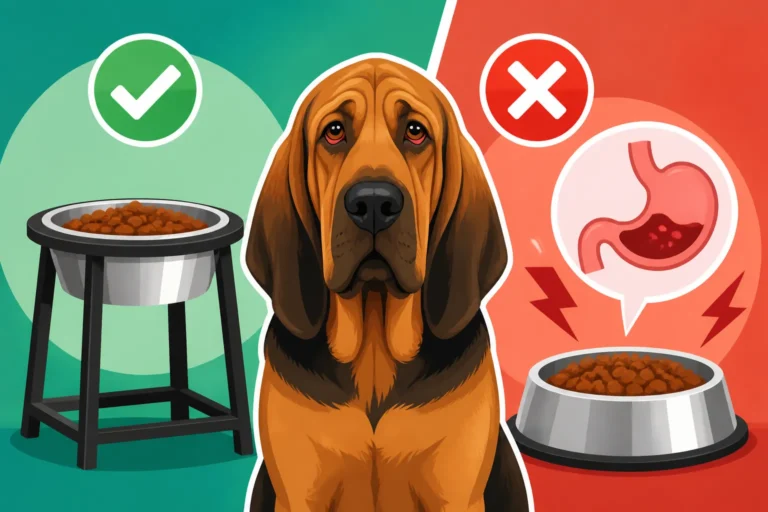
While it might seem counterintuitive, a Bloodhound's unique physiology, particularly their deep chest, plays a significant, if indirect, role in the concern around bolting food. Their deep, narrow chest shape is a hallmark of the breed, giving them that majestic, powerful appearance. However, this specific chest conformation is also a significant risk factor for Gastric Dilatation and Volvulus (GDV), more commonly known as bloat.
When a Bloodhound eats too quickly, they gulp down a lot of air along with their food. This excessive air intake, combined with their deep chest, can contribute to the stomach distending and potentially twisting, a life-threatening emergency. Why a Bloodhound's Chest Shape Causes Bloat delves deeper into this anatomical predisposition. It's not that their body shape causes them to eat fast, but it makes the consequences of eating fast much, much graver for them compared to many other breeds. Owners often feel a heightened sense of anxiety watching their Bloodhound inhale food, knowing the silent danger that lurks. The droopy jowls and loose skin also mean they can easily scoop up large quantities of food without much effort, further facilitating rapid consumption.
Learned Behavior and Environment
Beyond instinct, a Bloodhound's environment and early experiences can heavily influence their eating speed. Think about a litter of Bloodhound puppies – they're all vying for attention and, of course, for food. The fastest eater often gets the most. This early competition can hardwire them to eat quickly. If a puppy always had to compete for food, they'll carry that habit into adulthood, even if they're now the sole dog in a home with an abundant food supply.
Inconsistent feeding schedules can also contribute. If meals are unpredictable, a dog might feel a need to gorge whenever food is presented, unsure when the next meal will arrive. Similarly, if an owner inadvertently rewards fast eating (perhaps by refilling the bowl immediately after it's emptied, or not addressing the speed), the behavior can become reinforced. Stress or anxiety, perhaps from a change in environment or a rescue situation, can also lead to frantic eating, as the dog feels insecure about their resources. This is why Whether an Anxious Bloodhound Bloats More is a particularly relevant read for many Bloodhound owners. A calm, predictable feeding routine is crucial, not just for digestion, but for their mental well-being around food.
The Risks of a Bloodhound Bolting Its Food
While watching your Bloodhound inhale their dinner might be a daily spectacle, it's far from harmless. For this particular breed, the consequences of eating too fast can range from mild discomfort to an immediate, life-threatening emergency. It's essential for every Bloodhound owner to understand these risks thoroughly.
The Ever-Present Danger of Bloat
This is, without a doubt, the most significant and terrifying risk associated with a Bloodhound bolting its food. Bloat, or Gastric Dilatation and Volvulus (GDV), is an urgent veterinary emergency where the stomach fills with gas and twists on itself. The deep chest characteristic of the Bloodhound breed makes them highly susceptible to this condition. When a Bloodhound eats too quickly, they swallow excessive amounts of air. This air, trapped in the stomach, can initiate the process of bloat.
The consequences are dire: the twisted stomach cuts off blood flow to vital organs and traps gas and food inside. Without immediate veterinary intervention, often surgical, bloat is fatal within hours, sometimes even minutes. It's a devastating condition that claims the lives of many Bloodhounds. Bloat Is What Kills Most Bloodhounds emphasizes just how critical this issue is for the breed. Recognizing the Signs a Bloodhound Is Bloating is absolutely vital for any owner, as time is of the essence. Many owners opt for a prophylactic gastropexy surgery, which permanently tacks the stomach to the abdominal wall, to prevent the twisting aspect of bloat, even if they still manage rapid eating. What a Preventive Gastropexy Does for a Bloodhound outlines this option. But even with a gastropexy, slowing down eating habits is still crucial to reduce overall stomach distress.
Choking and Indigestion
While bloat is the biggest fear, bolting food also carries more immediate, albeit often less severe, risks. When a Bloodhound eats at lightning speed, they often don't chew their kibble properly. Large, unchewed pieces of food can become lodged in their throat, leading to choking. This can be incredibly frightening for both you and your dog, and in severe cases, it can obstruct their airway.
Even if they don't choke, swallowing large amounts of air and unchewed food can lead to significant indigestion. You might notice your Bloodhound regurgitating their meal almost immediately after eating, or experiencing discomfort, gas, and an upset stomach later. This isn't just unpleasant; it means their digestive system isn't processing the food efficiently, leading to potential nutrient loss and general gastrointestinal distress. It can manifest as excessive burping, slobbering more than usual right after eating, or restlessness.
Nutritional Absorption Issues
Our dogs' bodies are designed to break down food gradually, allowing for optimal nutrient absorption. When food is bolted down, it moves through the digestive tract too quickly. This rapid transit means that the digestive enzymes and processes don't have enough time to fully extract all the valuable vitamins, minerals, and macronutrients from the food.
Over time, this can lead to less efficient nutrient uptake. While not always immediately obvious, chronically poor absorption can impact a Bloodhound's overall health, coat quality, and energy levels. It can also contribute to inconsistent stool quality, with loose or poorly formed stools being a common sign that food isn't being properly digested. Essentially, you could be feeding a high-quality food, but if your Bloodhound isn't properly digesting it, they aren't getting the full benefit, which feels like a waste for both you and your furry friend.
Strategies to Slow Down Your Bloodhound's Eating
Now that we understand why Bloodhounds bolt their food and the serious risks involved, let's talk about practical solutions. There's no single magic bullet, but a combination of methods can make a significant difference in helping your Bloodhound adopt a healthier eating pace.
Invest in a Slow Feeder Bowl
This is often the first line of defense and for good reason: slow feeder bowls work by creating physical obstacles that force your Bloodhound to eat around or through them. These bowls come in various designs, from those with raised ridges and mazes to more complex puzzle-like structures. The idea is simple: it prevents your dog from being able to gulp large mouthfuls of food at once, making them work a little harder for each bite.
When choosing a slow feeder, consider the material and design. Plastic, ceramic, or stainless steel options are available. Some designs are more challenging than others. For a determined Bloodhound, you might need a bowl with deeper grooves or more intricate patterns. You can find a wide variety of excellent slow feeder bowls on sites like Chewy or Amazon. Look for options specifically designed for large breeds, as your Bloodhound's big snout needs adequate space. Whether a Slow Feeder Helps a Bloodhound explains the benefits and varieties in more detail. It might take your Bloodhound a little while to get used to it, but stick with it – the benefits for their health are immense.
Feeding Smaller, More Frequent Meals
Instead of offering one or two large meals a day, consider breaking your Bloodhound's daily food ration into three or four smaller portions. This strategy reduces the sheer volume of food in the bowl at any one time, naturally making it harder for them to bolt. Less food available means less to gulp down quickly.
This approach also has the added benefit of potentially reducing bloat risk, as smaller meals put less immediate strain on the digestive system. It helps keep their metabolism steady throughout the day, avoiding periods of extreme hunger that might trigger rapid eating. How Many Meals a Day a Bloodhound Should Eat is an important consideration here, as splitting meals is often recommended for large, deep-chested breeds. If you're currently feeding once a day, transitioning to twice a day is a great start, and three times a day can be even better, especially for younger or more active Bloodhounds.
Interactive and Puzzle Feeders
Beyond just slowing down how they eat, interactive and puzzle feeders engage your Bloodhound's incredible brain and powerful nose during mealtime. These aren't just bowls; they're toys that dispense food as your dog interacts with them. Think KONG wobblers, treat balls, or snuffle mats.
- KONG Wobblers: You fill them with kibble, and as your Bloodhound nudges and bats them around, food slowly tumbles out. It's a great way to combine mental and physical activity with eating.
- Treat Balls: Similar to KONGs, these require manipulation to release food.
- Snuffle Mats: These fabric mats have numerous folds and pockets where you can hide kibble. Your Bloodhound has to use their nose to "snuffle" out each piece, turning mealtime into a fun scent game.
These feeders turn eating into a stimulating activity, satisfying their natural foraging instincts. They extend mealtime significantly, preventing bolting and providing valuable mental enrichment, which is especially important for a working breed like a Bloodhound. You can find many innovative designs on sites like Amazon or by browsing specialized pet retailers.
Spreading Food Out or Hand Feeding
Sometimes, the simplest solutions are the most effective, and they don't even require special equipment.
- Scattering Kibble: If you have a clean, safe floor or a secure, clean patch of grass in your yard, simply scatter your Bloodhound's meal across a wide area. This forces them to move around and pick up individual pieces, slowing down their consumption considerably. It also engages their fantastic nose, turning mealtime into a delightful treasure hunt. Make sure the area is free of hazards or anything they shouldn't ingest.
- Hand Feeding: This is the most labor-intensive but also the most controlled method. By offering small handfuls or even individual pieces of kibble at a time, you dictate the pace. This can be a wonderful bonding experience and allows you to monitor their eating closely. While it might not be feasible for every meal, doing it for one meal a day, or even just a portion of a meal, can make a difference. It also teaches patience and impulse control around food.
Wetting or Soaking Kibble
Adding liquid to your Bloodhound's dry kibble can be another effective way to slow down eating. When kibble is dry, it's easy to swallow whole. However, once it's soaked in water or low-sodium broth, it becomes softer and expands, making it harder to gulp down quickly. This encourages them to chew more and reduces the risk of gulping air.
Beyond slowing down, soaking kibble also adds extra hydration, which is beneficial for overall health. It can also make the food more palatable, especially for those picky eaters (though a Bloodhound is rarely picky!). Whether Soaking a Bloodhound's Kibble Helps confirms that this method is indeed beneficial for slower eating and digestion. If your Bloodhound is on a fresh food diet, like those offered by companies such as Ollie, the softer, more hydrated texture naturally encourages a slower eating pace compared to hard, dry kibble.
Managing Multi-Dog Households
If you have more than one dog, mealtime can quickly become a competitive sport, exacerbating the bolting issue for your Bloodhound. The solution here is simple: feed them separately.
- Separate Rooms or Crates: Designate different areas for each dog to eat. This eliminates the visual cue of another dog eating nearby, reducing the perceived competition and allowing each Bloodhound to focus solely on their own meal.
- Physical Barriers: If separate rooms aren't possible, use baby gates or ex-pens to create individual feeding stations.
- Consistent Routine: Establish a clear routine where each dog goes to their designated feeding spot. This predictability helps reduce anxiety around mealtime.
Ensuring each Bloodhound feels secure and unthreatened about their meal is paramount. This can significantly reduce the urgency with which they consume their food, making all other slow-feeding strategies more effective.
When Bolting Is More Than Just Eating Too Fast
While most instances of a Bloodhound bolting their food stem from instinct and learned habits, sometimes there's more going on. It's always wise to consider underlying factors, especially if your Bloodhound's eating habits change suddenly or seem extreme.
Rule Out Medical Issues
A sudden onset of frantic eating, or an increase in eating speed beyond what's typical for your Bloodhound, should always prompt a veterinary check-up. There are several medical conditions that can lead to an increase in appetite or a ravenous hunger that might manifest as food bolting.
For example, conditions like intestinal parasites can lead to a dog feeling constantly hungry because the parasites are siphoning off nutrients. Malabsorption issues, where the body struggles to absorb nutrients, can also cause a dog to feel unsatiated. Hormonal imbalances, such as hypothyroidism, can sometimes affect metabolism and appetite, though typically hypothyroidism leads to decreased appetite and weight gain, but it's worth ruling out. Hypothyroidism in a Bloodhound covers this condition in more detail. Even certain medications can increase appetite. If you notice a significant, unexplained change in your Bloodhound's eating behavior, a trip to the vet is always the best first step to ensure there's no underlying health problem.
Behavioral Components: Anxiety and Insecurity
Just like humans, dogs can express stress and anxiety through their eating habits. A Bloodhound that has experienced food insecurity in the past, perhaps from being a stray, rescued, or coming from a neglectful situation, might develop a deep-seated fear that food will be taken away. This can lead to frantic eating, even if they are now in a loving home with a steady supply of food. Their past trauma makes them feel an urgent need to consume everything presented to them.
Building trust and establishing a consistent, predictable routine is crucial for these dogs. Creating a calm, quiet, and secure feeding environment can help alleviate their anxieties. It's about showing them, day after day, that food is plentiful and safe, and they don't need to rush. Over time, with patience and positive reinforcement, these insecurities can diminish, and their eating pace may gradually normalize. This is another reason why Whether an Anxious Bloodhound Bloats More is such an important topic to consider.
Consistency is Key
Implementing any new strategy requires consistency, and slowing down a Bloodhound's eating is no exception. It’s not enough to use a slow feeder bowl for a few meals and then revert to a regular bowl. Every member of your household needs to be on board with the chosen methods, ensuring that your Bloodhound receives the same consistent message at every meal.
Patience is your best friend here. Your Bloodhound has likely been eating quickly for a long time, possibly since puppyhood. Changing ingrained habits takes time, effort, and a whole lot of understanding. Don't get discouraged if you don't see immediate, dramatic results. Stick with your chosen methods, experiment with different slow feeders, and reinforce the calmer eating behavior. Over weeks and months, you will likely see a positive change in your Bloodhound's eating speed, contributing significantly to their long-term health and well-being. It's a commitment, but one that is absolutely worth it for your precious hound.
| Method to Slow Eating | Description | Pros | Cons |
|---|---|---|---|
| Slow Feeder Bowl | Bowls with internal obstacles (mazes, ridges) | Highly effective; widely available; various materials | Can be messy; some determined Bloodhounds may still figure out shortcuts; requires cleaning. |
| Puzzle Feeder | Interactive toys that dispense kibble gradually | Provides mental stimulation; extends mealtime significantly; fun for the dog. | Can be more expensive; may require supervision; some designs are complex to clean. |
| Multiple Meals | Dividing daily food into 3-4 smaller portions | Reduces meal size, lessening bolting volume; aids digestion; helps prevent extreme hunger. | Requires more owner time and effort; need to stick to a consistent schedule. |
| Spreading Food Out | Scattering kibble on a clean floor or grass | Simple and no special equipment needed; engages natural foraging instinct. | Requires a clean, safe space; can be messy; not ideal for wet food. |
| Hand Feeding | Offering kibble small amounts at a time | Builds bond; maximum control over eating pace; teaches patience. | Very time-consuming; not practical for all meals; requires significant owner involvement. |
| Soaked Kibble | Adding water or broth to dry kibble | Softens food, making it harder to gulp; adds hydration; can aid digestion. | Can be messy; some dogs may dislike the texture change; requires preparation time. |
| Separate Feeding | Feeding dogs in different rooms or behind barriers | Eliminates competition; reduces anxiety in multi-dog households. | Requires space; may need to supervise to ensure no one is sneaking bites. |
Disclaimer
This article is for general informational purposes only and does not constitute professional advice. Laws, prices and regulations vary by location and change over time. Consult a qualified professional for guidance on your specific situation.