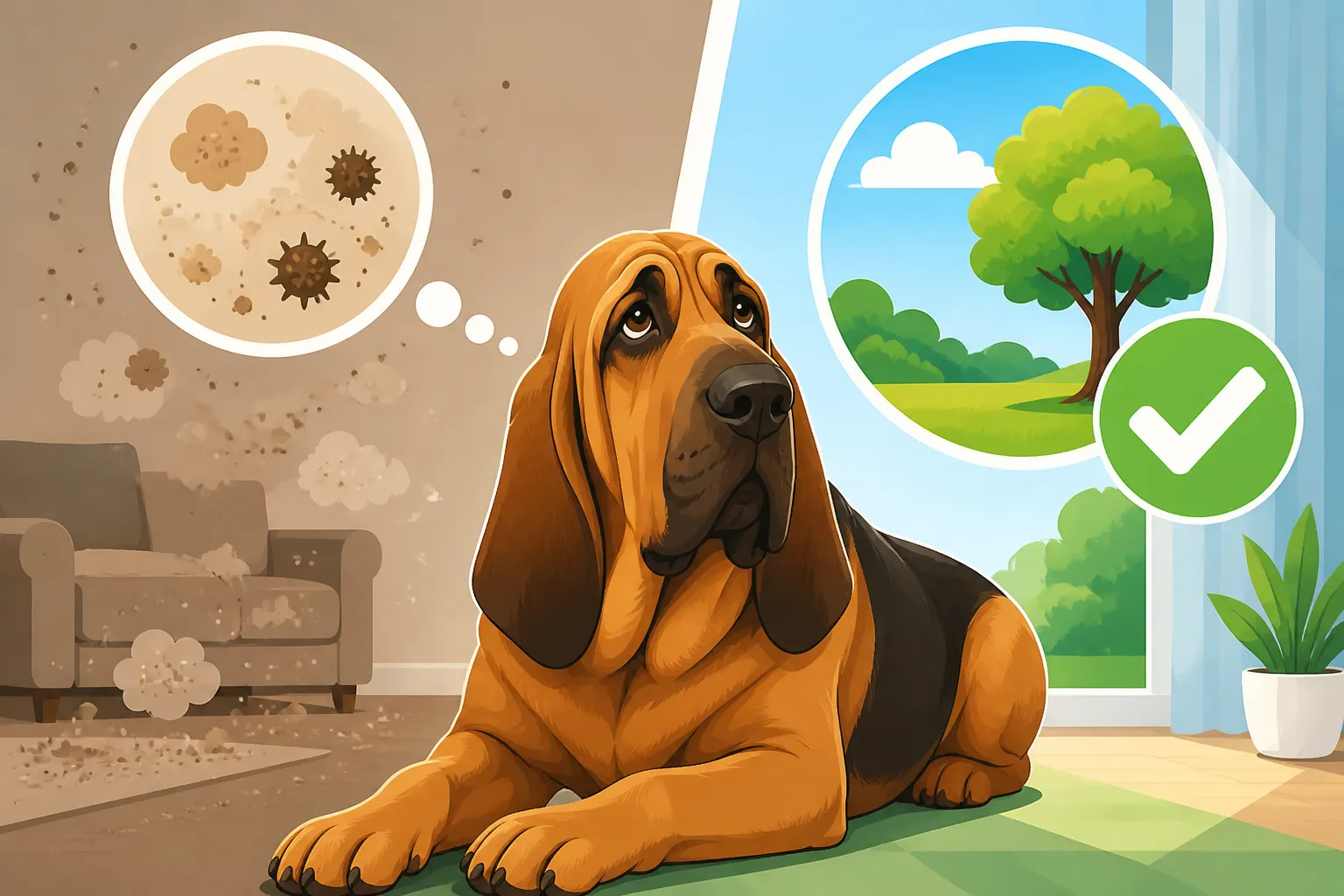
Whether Dust Should Keep a Bloodhound Indoors
The distinct, soulful gaze of a Bloodhound is one of their most endearing features, but for many owners, those famously loose eyelids and deep-set eyes are also a constant source of worry. The reality is, our beloved hounds are built to put their noses to the ground, and in doing so, they often expose their vulnerable eyes to all sorts of environmental irritants, with dust being a major culprit. This guide aims to shed light on how dust impacts a Bloodhound's eye health and whether keeping them indoors is the only solution to prevent potential problems.
The Bloodhound's Unique Anatomy and Its Dust Magnet Effect
Let's face it, a Bloodhound's head is a magnificent, droopy work of art, but those very characteristics that make them so distinctive also create some unique challenges when it comes to keeping their eyes clear of dust. Unlike many other breeds with tightly fitting eyelids, Bloodhounds often possess what's known as ectropion, a condition where the lower eyelids roll outwards. This isn't usually a defect in the breed, but rather a standard trait that leaves the delicate conjunctiva and even parts of the eyeball more exposed to the elements.
Think about it: when your Bloodhound is enthusiastically following a trail, head down, those long, heavy ears sweeping the ground, they're not just moving air and scent—they're also kicking up a surprising amount of dust, dirt, and debris directly into their open, exposed eyes. This is a primary reason why Why a Bloodhound's Lower Lid Hangs Away From the Eye is such a common topic among owners. Their eyes are simply not as sealed off from the environment as a dog with tighter lids, making them natural dust magnets.
Beyond the eyelids, the deep wrinkles and folds around their eyes can also trap dust, pollen, and other fine particles. While these folds are integral to their scenting ability, helping to "catch" scent particles, they also inadvertently collect airborne irritants. When a Bloodhound blinks, instead of clearing the eye completely, some of this trapped debris can be swept into the eye or irritate the surrounding skin. It's a constant battle, and it's easy to feel like you're fighting against their very nature.
The Real Risks of Dust Exposure for Bloodhounds
Dust isn't just a minor annoyance for a Bloodhound; it can lead to a cascade of uncomfortable and sometimes serious eye conditions. Because their eyes are so exposed, and because their instinct drives them to put their faces into every dusty nook and cranny, they are particularly susceptible to dust-related issues. Understanding these risks is the first step in effective management.
Chronic Eye Irritation and Conjunctivitis
The most immediate and common issue from dust exposure is simple irritation. Dust particles, even microscopic ones, can scratch the delicate surface of the eye or get trapped under the eyelid. This leads to redness, excessive tearing, and a general discomfort that your Bloodhound might show by pawing at their face, blinking repeatedly, or rubbing their eyes on furniture. This chronic irritation can quickly escalate into conjunctivitis, which is an inflammation of the conjunctiva – the pink membrane lining the inside of the eyelids and covering the white part of the eye.
A Bloodhound with conjunctivitis will often have very red, swollen eyes, and you might notice a discharge that can range from clear and watery to thick and pus-like. While a mild case might resolve on its own with a good rinse, persistent dust exposure makes it a recurring problem. It's a frustrating cycle where their love for exploration directly clashes with their ocular health, and it often means you're doing Daily Eye Care for a Bloodhound more often than you ever anticipated.
Corneal Abrasions and Ulcers
Perhaps the most concerning risk of dust exposure is the potential for corneal damage. A tiny grit of sand or a sharp dust particle can easily scratch the cornea, the clear outer layer of the eye. This scratch, known as a corneal abrasion, is incredibly painful for your Bloodhound. If left untreated, or if the irritation persists, these abrasions can develop into corneal ulcers, which are deeper, more serious wounds on the eye's surface.
Signs of a corneal ulcer include intense pain (your Bloodhound might keep their eye shut, squint, or rub it vigorously), excessive tearing, redness, and a cloudy appearance to the cornea itself. You might notice your dog is suddenly very light-sensitive, trying to avoid bright areas. These are emergencies, and if you suspect your Bloodhound has a corneal ulcer, it's crucial to get them to the vet immediately. Signs a Bloodhound Has a Corneal Ulcer often mirror severe irritation, making quick veterinary attention vital. Untreated ulcers can lead to infection, permanent scarring, and even vision loss.
Aggravation of Pre-Existing Eye Conditions
Many Bloodhounds are predisposed to certain eye conditions due to their breed standard. Ectropion is one, but they can also be prone to other issues. Dust exposure doesn't just cause problems; it can significantly aggravate existing ones. For a Bloodhound that already has slightly dry eyes, for instance, constant dust will make them even drier and more uncomfortable. The same goes for any dog recovering from eye surgery or with a history of recurrent infections.
Understanding The Four Eye Problems a Bloodhound Is Born Toward highlights just how delicate their ocular system can be. Dust adds another layer of challenge to managing these inherent predispositions. It means that while you can't change their genetics or their love for sniffing, you can be proactive about minimizing environmental triggers that make these conditions worse.
| Issue | Cause (Dust-Related) | Symptoms | Management | Severity |
|---|---|---|---|---|
| Eye Irritation | Fine particles, grit | Redness, tearing, pawing, squinting | Regular rinsing, protective gear, minimizing dusty environments | Mild |
| Conjunctivitis | Persistent irritation, bacterial growth | Red, swollen eyes, discharge (clear to pus) | Veterinary consultation, antibiotic/anti-inflammatory drops, frequent cleaning | Moderate |
| Corneal Abrasion | Sharp dust particle, foreign body | Intense pain, squinting, cloudy eye, light sensitivity | Emergency Vet Visit, pain medication, antibiotic drops, Elizabethan collar | Severe |
| Corneal Ulcer | Untreated abrasion, deep wound | Extreme pain, deep cloudiness, visible defect | Emergency Vet Visit, intensive medication, possibly surgery, close monitoring, Elizabethan collar | Critical |
| Dry Eye Aggravation | Drying effect of dust, irritation | Increased dryness, redness, thick discharge | Veterinary consultation, specialized eye drops (lubricants, tear stimulants), diligent cleaning, environmental control | Moderate |
Practical Strategies for Managing Dust Exposure
So, does this mean your Bloodhound needs to live in a hermetically sealed bubble? Absolutely not! That goes against everything that makes a Bloodhound, well, a Bloodhound. They need to explore, they need to use their nose, and they need to be outdoors. The key is finding a balance and implementing practical strategies to minimize dust exposure and manage its effects.
Indoor Dust Control
It might seem counter-intuitive, but a lot of dust exposure happens right inside your home. Think about all the shedding, dander, and general household dust that accumulates. For a Bloodhound whose eyes are already sensitive, a dusty indoor environment can be just as problematic as an outdoor one.
Regular cleaning is your first line of defense. Vacuum frequently with a HEPA filter, dust surfaces with a damp cloth, and wash pet bedding often. Consider air purifiers in rooms where your Bloodhound spends a lot of time. These can significantly reduce airborne particles. For dogs prone to allergies that manifest as eye irritation, even changing your furnace filters regularly can make a difference. Many of us forget how much our home environments contribute to our pets' well-being. Keeping a clean house isn't just for us; it's a huge benefit to their respiratory and ocular health.
Outdoor Protection and Post-Adventure Care
When your Bloodhound is out doing what they love, whether it's trailing, exploring the backyard, or just going for a sniffy walk, they're bound to encounter dust. While you can't eliminate it entirely, you can take steps to protect them. Avoiding overly dusty areas during high-wind days can help, but that's not always realistic for a dog driven by scent.
One option to consider is protective eyewear, often called "doggles." While some Bloodhounds might look at you like you've lost your mind, others can be trained to tolerate them, especially if introduced positively. Brands available on sites like Amazon or specialized pet supply retailers offer various styles that can shield their eyes from dust and debris, particularly for car rides with windows down or adventures in brushy areas. After any dusty outing, make it a habit to gently wipe around their eyes with a damp, soft cloth or a specialized pet eye wipe, which you can find easily on Chewy. This helps remove any loose particles before they have a chance to migrate into the eye. A quick, gentle flush with a sterile saline solution made specifically for canine eyes can also be very beneficial. Whether a Bloodhound's Eye Should Be Rinsed Daily explores this further, emphasizing gentle, consistent care.
The Role of Diet and Supplements
While diet won't magically make your Bloodhound's eyelids tighter, a robust immune system supported by a high-quality diet can help their body better cope with environmental stressors and recover faster from minor irritations. Ensuring your Bloodhound receives a balanced diet rich in omega fatty acids, antioxidants, and essential vitamins can contribute to overall health, including eye health.
Some owners opt for fresh food options from companies like Ollie, believing the higher quality ingredients can support their dog's general wellness. Discussing any dietary changes or supplements with your veterinarian is always a good idea, especially if you're looking for something specific to support eye health. While not a direct dust deterrent, strong overall health provides a better foundation for managing chronic issues.
Balancing Outdoor Activity with Eye Health
The dilemma is real: how do you let a Bloodhound be a Bloodhound, indulging their incredible natural instincts, without constantly battling eye problems? It’s a tightrope walk between providing enrichment and preventative care.
The Irresistible Call of the Trail
Bloodhounds live to trail. Their world is dictated by scent, and to fully engage that world, they need to be outdoors, nose to the ground. Restricting them indoors purely to avoid dust might save their eyes some irritation, but it would severely impact their mental and physical well-being. A bored or under-stimulated Bloodhound is prone to destructive behaviors and can be deeply unhappy. Their drive to follow a trail is so profound that Why Off Leash Is Not a Goal With a Bloodhound is a fundamental lesson for any owner, reinforcing the need for controlled, safe outdoor environments.
The joy they get from a good sniffy walk or a dedicated trailing session far outweighs the inconvenience of post-outing eye care. Instead of thinking of dust as a reason to keep them locked up, consider it a built-in reminder of the ongoing grooming and health care commitments that come with the breed. It's part of the package deal, much like A Bloodhound's Ears Are a Standing Infection Risk or Skin Fold Dermatitis on a Bloodhound, which also require diligent cleaning.
When to Seek Veterinary Advice
Even with the best preventative measures, your Bloodhound will occasionally experience eye issues. Knowing when to simply rinse and when to call the vet is crucial. If you notice any of the following, don't hesitate:
- Persistent redness or swelling: If it doesn't improve after a day or two of gentle cleaning.
- Thick, colored discharge: Especially yellow or green, as this often indicates infection.
- Squinting or holding the eye shut: A strong sign of pain or discomfort.
- Cloudiness or visible injury to the eyeball: This could be an ulcer or foreign body.
- Excessive pawing or rubbing at the eye: Suggests significant irritation.
Your veterinarian can properly diagnose the issue and prescribe appropriate medications, which might include antibiotic eye drops or anti-inflammatory ointments. Sometimes, a specialist referral to a veterinary ophthalmologist might be necessary, particularly for complex or recurring issues. The costs for such care can add up, as discussed in Eyelid Surgery Is the Bill Bloodhound Owners Do Not Expect, but your Bloodhound's vision and comfort are priceless.
In the end, while dust is an inevitable part of life for a Bloodhound, it doesn't have to keep them a prisoner indoors. With consistent care, proactive measures, and a watchful eye (pun intended!), you can ensure your soulful companion enjoys a rich, adventurous life while keeping their eyes as healthy and comfortable as possible. Embrace the challenge, equip yourself with the right tools, and enjoy every dusty, scent-filled moment with your incredible hound.
Disclaimer
This article is for general informational purposes only and does not constitute professional advice. Laws, prices and regulations vary by location and change over time. Consult a qualified professional for guidance on your specific situation.