How Often a Bloodhound’s Nails Need Trimming
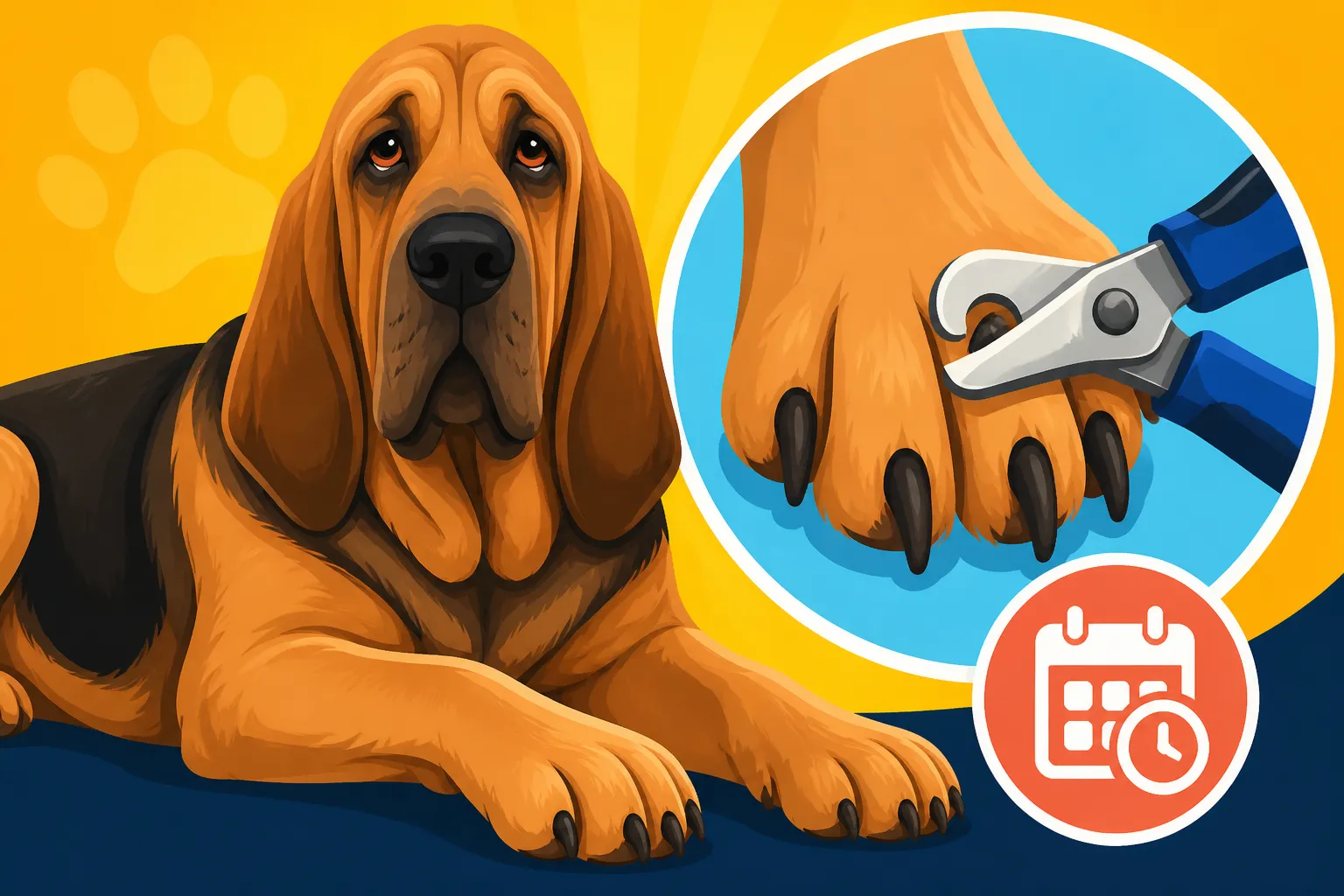
One of the trickiest parts of owning a Bloodhound, beyond the drool and the incredible scent drive, is keeping those formidable nails in check. It's a task many owners dread, not just because our hounds often object, but because their dark, thick nails hide the quick, leading to anxiety about hurting them. This guide will walk you through everything you need to know about how often a Bloodhound's nails need trimming, why it's so important for their health and comfort, and how to make the process as stress-free as possible for both of you.
The Anatomy of a Bloodhound's Foot and Nail
Understanding the unique structure of your Bloodhound's paw and nails is the first step toward confident and consistent trimming. These are not dainty little paws; they're built for endurance and gripping varied terrain, and their nails reflect that robust design.
The Quick and the Bloodhound's Thick Nails
Every dog's nail contains what's known as the "quick" – a fleshy part that houses blood vessels and nerves. If you cut into the quick, it's painful for your dog and will bleed, sometimes quite profusely. This is the primary fear factor for most Bloodhound owners, and for good reason! Bloodhounds typically have very thick, dark nails, often black, which makes visualizing the quick nearly impossible without specialized tools or a very bright light. Even with lighter-colored nails, the quick can be hard to discern. This uncertainty can lead to owners procrastinating, which, unfortunately, only makes the problem worse. The quick grows with the nail, extending further down as the nail gets longer, so infrequent trimming means a longer quick, and a higher risk of hitting it when you finally do attempt a trim.
Imagine trying to navigate a dark maze blindfolded, knowing that one wrong turn means a painful encounter for your beloved companion. That's what trimming a Bloodhound's nails can feel like. Their nails are designed for digging and traction, and they grow quickly, often curving in ways that make it even more challenging to get a clean, safe cut. It’s a common frustration, and one that absolutely needs a consistent approach to manage effectively.
Why Long Nails Are a Problem for Bloodhounds
It's not just about aesthetics or the annoying click-clack on hard floors. Overly long nails can have serious implications for your Bloodhound's health and comfort. When a Bloodhound's nails are too long, they push up into the nail bed, putting pressure on the sensitive toe joints and distorting the natural angle of the paw. This forced splaying of the toes can lead to discomfort, pain, and even long-term orthopedic issues. Given that Bloodhounds are already prone to joint problems like Hip and Elbow Dysplasia in the Bloodhound, adding unnecessary strain from overgrown nails is something we definitely want to avoid.
Think about walking in shoes that are too small, forcing your toes to curl up. Now imagine that feeling, day in and day out, every time you take a step. That's essentially what your Bloodhound experiences. This constant pressure can lead to arthritis, lameness, and changes in gait as they try to compensate for the discomfort. They might shift their weight, walk more tentatively, or even develop infections if a nail grows so long it curls under and punctures the paw pad. For a breed whose entire purpose revolves around comfortable, enduring movement, well-maintained nails are not a luxury; they are a fundamental part of their physical well-being. It impacts their ability to trail efficiently, to run freely, and even just to relax without subtle aches.
Understanding the Ideal Nail Length for a Bloodhound
Knowing what "good" looks like is crucial for successful nail care. It’s not about trimming them down to the quick every time, but rather achieving a functional length that supports their unique anatomy and lifestyle.
The "No Click" Rule
The golden rule for ideal nail length in any dog, and especially a large, heavy breed like the Bloodhound, is simple: their nails should not touch the ground when they are standing naturally on a flat surface. When your Bloodhound is standing squarely, those nails should be just shy of making contact with the floor. If you hear that distinctive "click, click, click" sound as they walk across your kitchen tiles or hardwood floors, it's a clear signal that their nails are too long.
This "no click" rule isn't arbitrary; it's a practical indicator of proper foot mechanics. When the nails hit the ground, they exert pressure that pushes the nail back into the quick and forces the toes upward, altering the natural angle of the paw. Over time, this constant pressure can lead to splayed feet, joint pain, and even contribute to conditions like arthritis in their digits. It sounds like a small thing, but for a dog like a Bloodhound, who relies on their paws for balance, traction, and tireless work on a trail, optimal foot health is paramount. Aiming for silence on hard floors is your immediate, most accessible goal.
How Nail Length Affects Movement and Comfort
The impact of nail length on a Bloodhound's movement goes far beyond a simple click. When nails are too long, they act like miniature levers, pushing the sensitive toe bones back into the foot with every step. This unnatural pressure can cause significant discomfort and even pain, leading your Bloodhound to adjust their posture and gait to compensate. They might distribute their weight differently, placing more strain on their hocks, stifles, and hips, which can exacerbate existing joint issues or even create new ones. This subtle, chronic discomfort can manifest as reluctance to go on walks, difficulty getting up, or a general decrease in their usual enthusiasm.
Consider the detailed work a Bloodhound performs when trailing; every nuance of their foot placement matters for scent detection and navigation. If their feet are uncomfortable or misaligned due to long nails, it affects their entire biomechanics. Imagine trying to sprint or navigate rough terrain when your toes feel constantly jammed. For a Bloodhound, whose job and joy is often about sustained movement and careful footwork, this can diminish their quality of life. Long nails also make them more prone to slipping on smooth surfaces, which can lead to falls and injuries. It's a cascade effect: long nails lead to discomfort, which leads to altered gait, which leads to joint strain, and potentially, serious orthopedic problems down the line. Proper nail length is a foundation for their overall physical health and their ability to do what they love.
Establishing a Regular Trimming Schedule
Consistency is the absolute key when it comes to Bloodhound nail care. You can't just trim them once a month and expect magic. A regular schedule not only keeps their nails at an appropriate length but also helps the quick recede, making future trims easier and less stressful.
Weekly Checks and Trims
For most Bloodhounds, especially those who aren't regularly working on abrasive surfaces, a weekly check-up and trim is the gold standard. I know, I know, that sounds like a lot, but hear me out! It's not about doing a full, stressful clipping session every single week. Instead, think of it as a quick maintenance routine. Spend a few minutes inspecting their paws, giving them a good rub, and then, if needed, just take off the very tips of their nails. We're talking about tiny slivers, just enough to keep them from touching the floor. This frequent, minimal approach has several huge benefits. Firstly, it prevents the nails from ever getting truly overgrown. Secondly, and perhaps most importantly, it encourages the quick to recede. When the nail is consistently kept short, the quick naturally pulls back, making it safer and easier to achieve that ideal "no click" length over time.
This consistent interaction also helps desensitize your Bloodhound to having their paws handled, which is a massive win in itself. If they learn that paw handling isn't always followed by an intimidating deep cut, they'll be far more cooperative. Just like The Weekly Routine a Bloodhound Owner Cannot Skip for their ears and folds, this regular nail attention becomes a non-negotiable part of their overall care, preventing bigger problems down the line. A few minutes invested each week can save you hours of struggle, stress, and potential vet bills in the long run.
Factors Influencing Nail Growth Rate
While a weekly trim is a great general guideline, every Bloodhound is an individual, and several factors can influence how quickly their nails grow and wear down.
Firstly, activity level plays a massive role. A working Bloodhound, consistently out on trails, tracking across various terrains like asphalt, gravel, and dirt, will naturally wear down their nails much faster than a beloved couch potato Bloodhound who primarily lounges indoors. The more ground they cover, especially on abrasive surfaces, the less you might need to trim. Conversely, if your Bloodhound's daily exercise consists mainly of soft grass or indoor play, their nails won't have the natural wear and tear to keep them short. This is why a show Bloodhound might have different nail care needs than a working one, despite often being equally active. It’s not just about how much they move, but where they move.
Secondly, diet and genetics can also play a subtle part. While not as significant as activity, a dog's overall health and nutrition can influence nail strength and growth rate. Some Bloodhounds simply have genetically thicker, faster-growing nails, regardless of how much they run. As Bloodhounds age, their nails can sometimes become harder and more brittle, or their activity level might decrease, meaning less natural wear. Aging in a Bloodhound Starts at Six brings with it a whole host of considerations, and changes in nail texture or growth are definitely on that list. Always observe your own Bloodhound; they will tell you what their unique needs are. A younger, more active dog might genuinely need weekly touch-ups, while an older, less mobile dog might only need it every two weeks, or vice versa if their nails are particularly stubborn.
Tools and Techniques for Bloodhound Nail Care
Equipping yourself with the right tools and knowing how to use them gently and effectively can transform nail trimming from a battle into a manageable routine. It's all about comfort and confidence, for both you and your hound.
Choosing the Right Trimmers or Grinders
When it comes to tackling those thick Bloodhound nails, your choice of tool matters significantly. There are two main categories: trimmers and grinders.
Scissor-style clippers, like the popular Safari or Millers Forge brands you might find on Chewy or Amazon, are often preferred for their sharp, clean cut. They work much like a pair of pliers, offering good leverage for thick nails. For Bloodhounds, opt for a large, heavy-duty size. The key here is sharpness; dull clippers will crush the nail rather than cut it cleanly, which can be painful and lead to splintering. The downside? If your Bloodhound is squirmy or if you're nervous, it's easier to cut too much at once.
Guillotine-style clippers are another option, where the nail is inserted into a hole and a blade slices across. Some owners find these easier to handle, especially for smaller trims. However, for really thick Bloodhound nails, they can sometimes struggle to make a clean cut and may also crush the nail if not sharp enough or if the nail is too large for the opening.
Nail grinders, or Dremel tools, have gained popularity, especially for breeds with dark nails. These devices use a rotating abrasive drum to grind the nail down gradually. The biggest advantage for Bloodhounds is that you remove tiny bits at a time, making it much harder to hit the quick. This also helps to smooth the edges, preventing sharp points that can scratch you or get snagged. Grinders are fantastic for "quick-recession," as you can gradually push the quick back over weeks of consistent grinding. The downsides are the noise and vibration, which can be off-putting for some dogs, and the potential for the nail to heat up with prolonged grinding, so short bursts are key. You can find excellent pet-specific grinders on Amazon or through pet specialty stores like Chewy. Many professional groomers swear by them for large breeds.
Here's a quick comparison:
| Tool Type | Pros for Bloodhounds | Cons for Bloodhounds | Best For |
|---|---|---|---|
| Scissor Clippers | Strong leverage for thick nails; quick cuts. | Higher risk of hitting quick; dull blades can crush. | Confident owners, quick touch-ups on cooperative dogs. |
| Guillotine Clippers | May be easier for some to position. | Less effective on very thick nails; can crush. | Smaller Bloodhounds, or those with less dense nails. |
| Nail Grinder | Low risk of hitting quick; quick recession; smooth finish. | Noise/vibration can be scary; can generate heat; slower overall. | Nervous dogs/owners, dark nails, maintaining short quick. |
Ultimately, the best tool is the one you and your Bloodhound are most comfortable and successful with. Don't be afraid to try a few options.
Step-by-Step Trimming Guide
Okay, so you have your tools. Now for the actual process. This needs to be a calm, positive experience, especially for a Bloodhound who might already be suspicious of paw handling. Remember, a Bloodhound's temperament generally means they respond best to patience and positive reinforcement. How to Hold a Bloodhound Still for Ear Cleaning shares similar principles of gentle handling and rewards.
- Gather Your Supplies: Have your chosen clippers or grinder, plenty of high-value treats (think cheese or cooked chicken), and styptic powder or a styptic pencil nearby before you start. You don't want to be scrambling if you hit the quick.
- Choose Your Moment: Pick a time when your Bloodhound is relaxed, perhaps after a good walk or a meal. Avoid trying to trim when they're overly energetic or stressed.
- Positive Association: Start by simply touching their paws, wiggling their toes, and giving treats. Do this for several days or weeks until they're comfortable with their feet being handled. If using a grinder, turn it on nearby (not touching them) and give treats to associate the sound with good things.
- Positioning: For many Bloodhounds, sitting on the floor with them or having them lie down can be effective. If they are comfortable, gently hold a paw. Ensure you have good lighting.
- Identify the Quick (or Estimate): If your Bloodhound has light nails, you might see the pink quick. For dark nails, you'll be looking for the "pulp" or the softer, grayish oval in the center of the cut nail, which indicates you're close to the quick. Err on the side of caution.
- Small Cuts (or Grinds): Take off just the very tip of the nail. Imagine taking off just a tiny curved sliver. For clippers, hold the paw firmly but gently, spreading the toes slightly. Position the clipper so you cut straight across the tip or at a slight angle that follows the natural curve of the paw. For grinders, touch the rotating drum to the nail for just a second or two, then pull away. Repeat this motion, turning the nail slightly to round it, rather than grinding continuously in one spot, which can cause heat buildup.
- Don't Forget the Dewclaws: Many Bloodhounds have dewclaws (the thumb-like nail higher up on the leg). These don't touch the ground, so they don't wear down naturally and are particularly prone to growing too long and curling into the leg, causing pain. Always check and trim them.
- Reward, Reward, Reward: After each nail, or even after a couple of nails, praise profusely and give a treat. Keep sessions short, especially when starting out. If your Bloodhound gets stressed, stop and try again later. It’s far better to do a few nails at a time over several days than to force a full, traumatic session. Remember, Whether a Bloodhound Learns to Accept Ear Cleaning highlights that patience and positive reinforcement are your best tools for any routine care.
What to Do if You Cut the Quick
It happens. Even the most experienced groomers and owners occasionally nick the quick. Don't panic! Your Bloodhound might yelp or pull away, and it will bleed, which can look alarming, but it's rarely serious if handled correctly.
- Stay Calm: Your Bloodhound will pick up on your anxiety. A calm demeanor from you will help them recover faster.
- Apply Styptic Powder: This is why you keep it handy! Generously press a pinch of styptic powder directly onto the bleeding nail and apply firm, direct pressure for a few seconds. Kwik Stop is a popular brand, often available at pet stores or online at Chewy and Amazon. Cornstarch can work in a pinch if you don't have styptic powder, but it's not as effective.
- Keep Them Still: Try to keep your Bloodhound calm and still for a few minutes while the powder and pressure do their job and the bleeding subsides. You can offer a distracting treat or a favorite chew toy.
- Observe: Once the bleeding has stopped, keep an eye on the nail for the next hour or so to ensure it doesn't start again.
- Rebuild Trust: If you've had a quick-cutting incident, you'll need to work to rebuild your Bloodhound's trust regarding nail trims. Go back to basics: lots of paw handling, treats, and positive association without trimming, then slowly reintroduce the clippers or grinder with very small, cautious trims, focusing heavily on rewards. You might need to take a break from trimming for a few days to let the memory fade a little. A single bad experience can set back weeks of progress, so be extra patient.
Professional Assistance and Alternatives
Sometimes, despite your best efforts, managing your Bloodhound's nails at home can feel overwhelming. There's no shame in seeking professional help; in fact, it's often the smartest decision for both your sanity and your dog's well-being.
When to Seek a Professional Groomer or Vet Tech
There are several scenarios where bringing in a professional can be incredibly beneficial. Firstly, if your Bloodhound has developed a severe aversion to nail trimming, perhaps due to a past bad experience or just general stubbornness, a professional groomer or veterinary technician often has the skills and techniques to manage difficult dogs. They can work quickly and efficiently, minimizing stress for everyone involved. Secondly, if your Bloodhound's nails have become severely overgrown, where the quick has extended far down the nail and the nails are curling, it can be a painful and risky job to shorten them at home. Professionals are adept at safely trimming these nails, sometimes doing it in stages, or recommending sedation if absolutely necessary for the dog's comfort.
Thirdly, if you simply lack confidence or fear hurting your dog, a professional can provide guidance. Many groomers are happy to demonstrate proper technique and offer tips tailored to your specific Bloodhound. Think of it as a coaching session! Moreover, if you notice any unusual changes in your Bloodhound's nails – such as splitting, discoloration, or signs of infection around the nail bed – a veterinary technician or your vet is the best person to consult. They can rule out underlying health issues and ensure the nails are trimmed safely. As covered in Whether a Groomer Is Necessary for a Bloodhound for general care, sometimes outsourcing specific tasks makes all the difference in maintaining your dog's health and happiness.
Making Nail Trimming a Positive Experience
Even if you rely on professionals, there's a lot you can do at home to make nail trimming a positive, or at least tolerable, experience for your Bloodhound. The key is consistent positive reinforcement and desensitization. Start by simply touching their paws, individually handling each toe, and immediately following with a high-value treat and praise. Do this multiple times a day, every day, until they are completely relaxed with the sensation. This builds a strong foundation of trust and positive association.
Next, introduce the tools. Let them sniff the clippers or grinder. Put them on the floor near your Bloodhound while they're eating or getting treats. If using a grinder, turn it on briefly in another room, then closer, always associating the sound with something good like food. Gradually, bring the tool closer to their paw without actually touching the nail, giving treats the whole time. When you finally do a trim, make it incredibly brief – just one nail, or even just touching the clipper to the nail, followed by a jackpot of treats and a break. Over time, you can increase the duration. The goal is to make them associate the entire process with delicious rewards and gentle handling, not fear.
Remember, a Bloodhound's memory for unpleasant experiences can be long, but so is their capacity for positive association. Short, frequent, and heavily rewarded sessions will get you much further than infrequent, forced struggles. Consistency, patience, and positive reinforcement are your greatest allies in ensuring your Bloodhound's nails are always in tip-top shape.
Disclaimer
This article is for general informational purposes only and does not constitute professional advice. Laws, prices and regulations vary by location and change over time. Consult a qualified professional for guidance on your specific situation.