The Bloodhound Against a Basset Hound
When you picture a hound, often two breeds spring to mind: the majestic, mournful-eyed Bloodhound and the low-slung, equally soulful Basset Hound. Both are iconic for their incredible noses and floppy ears, leading many to wonder what truly separates them beyond mere size. It's a valid question because while they share the deep-seated instincts of a scent hound, their personalities, needs, and even their very ways of moving through the world are distinctly different. This guide will walk you through the nuances of each breed, helping you understand the unique joys and challenges of living with either a Bloodhound or a Basset Hound.
A Tale of Two Noses: Scenting Prowess Compared
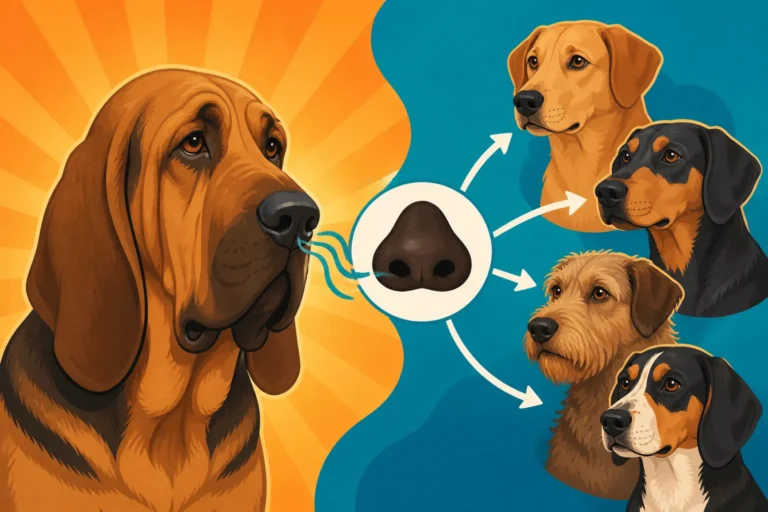
It's no secret that both Bloodhounds and Basset Hounds are champions of the scent world. Their long, pendulous ears, loose skin, and deep muzzles are all physical adaptations that help them gather and hold scent molecules close to their noses, creating a veritable "scent pool" for them to analyze. However, the application and intensity of their scenting abilities, and what they were historically bred for, create a clear distinction between these two incredible breeds.
The Bloodhound's Unrivaled Olfactory Power
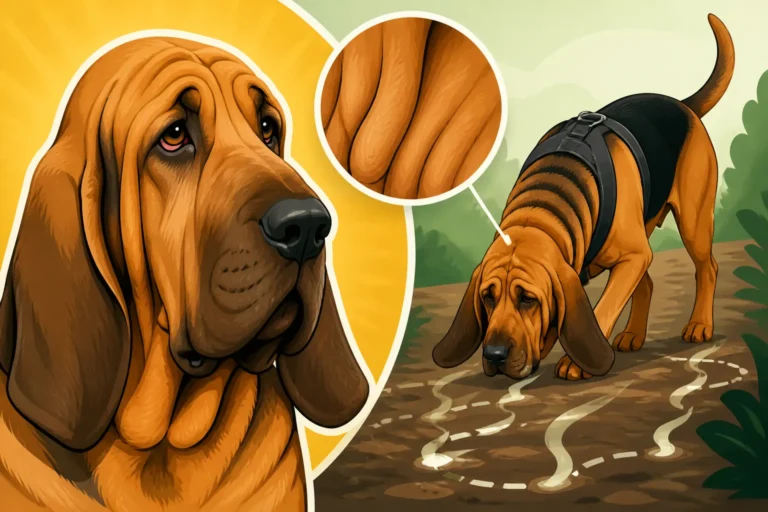
Let's be real, when it comes to scenting, the Bloodhound is the undisputed heavyweight champion. There's a reason why The Bloodhound Is the Only Dog Whose Evidence Stands in Court. Their olfactory capabilities are legendary, and their entire being is designed around following a trail, no matter how faint or old. A Bloodhound’s nose isn’t just good; it’s an intricate, biological masterpiece. They possess an astounding number of scent receptors, far more than most other breeds, allowing them to differentiate subtle scent particles that would be utterly lost to a lesser hound.
A Bloodhound is a relentless, single-minded tracking machine. Once they lock onto a scent, the world around them ceases to exist. They ignore distractions, other animals, and even your most fervent calls, because their brain is entirely consumed by the invisible thread of scent before them. This isn't stubbornness in the typical sense; it's an intense, innate drive that breeders have cultivated for centuries. They were developed to track lost people and game over vast distances, through all sorts of terrain and conditions, often days after the scent was laid. This is why you'll often hear that Mantrailing Is the Answer to a Bloodhound, Not Obedience – you’re not training them not to trail, you’re channeling that instinct.
The Basset's Ground-Hugging Scent Detection
The Basset Hound also boasts an incredible nose, make no mistake. They are scent hounds through and through, capable of following a cold trail with impressive accuracy. However, their physical structure and historical purpose lend themselves to a different style of scent work. With their incredibly short legs and long bodies, Bassets are built to work low to the ground, methodically unraveling scent trails that cling to vegetation and earth. They were originally bred in France for hunting small game like rabbits and hares, which required a slow, persistent, and low-to-the-ground approach that hunters could easily follow on foot.
While a Basset's nose is highly sensitive, their drive, while strong, typically doesn't reach the almost obsessive intensity of a Bloodhound's. They are still prone to "going deaf" when a captivating scent hits their nostrils, but their physical limitations mean they aren't going to vanish over the horizon quite as quickly as a full-speed Bloodhound. Their tracking style is more deliberate, often described as plodding but incredibly thorough, allowing them to dissect every nuance of a scent puzzle. You might find a Basset taking their sweet time, almost casually following a trail, while a Bloodhound would be tearing through underbrush with a focused determination that borders on frantic.
Physical Characteristics: More Than Just Droopy Ears
At a glance, both breeds share the characteristic "hound look" – long, droopy ears, loose skin, and a general air of gentle melancholy. But delve a little deeper, and you'll find significant differences in their size, build, and specific facial features that contribute to their unique charm and care requirements.
Size, Weight, and General Build
This is perhaps the most obvious distinction. A Bloodhound is a large, powerful dog. Males can stand over 27 inches at the shoulder and easily weigh well over 100 pounds, with some individuals pushing 130 or even more. They are substantial dogs, with heavy bone, a deep chest, and a powerful, muscular build that allows them to cover ground tirelessly. Their size means they take up a lot of space, whether curled up on the sofa (if you're brave enough to allow it) or simply maneuvering around your kitchen. Their sheer mass can be a challenge for some owners, especially when they decide to lean against you or, heaven forbid, pull on the leash when a squirrel crosses their path.
In contrast, the Basset Hound is a medium-sized dog with a surprisingly heavy frame for their height. They might only stand around 14-15 inches at the shoulder, but they can weigh anywhere from 40 to 65 pounds, sometimes more, often feeling denser and heavier than their stature suggests. Their trademark is their incredibly short, stout legs, long back, and a body that seems disproportionately large compared to their height. This unique conformation gives them their distinctive low-slung, somewhat comical appearance. While they are not as physically imposing as a Bloodhound, their weight and low center of gravity mean they can still be surprisingly strong when they decide to dig in their heels.
Distinctive Facial Features and Skin
Both breeds are known for their wonderfully loose skin, but the Bloodhound takes this trait to an extreme. Their skin is incredibly abundant and elastic, especially around the head and neck. This creates those iconic, deep wrinkles and folds across their forehead and muzzle, and the voluminous dewlap (loose skin under the throat). These folds aren't just for looks; they help trap scent particles, guiding them towards the nose, which is crucial for their superior tracking ability. Their eyes are often deeply set and can appear a bit sunken, adding to their somber expression. The lower eyelids often droop, displaying the haw, which is part of their breed standard, though it can contribute to certain eye issues that require Daily Eye Care for a Bloodhound.
The Basset Hound also has plenty of loose skin, particularly on their head, which forms characteristic wrinkles, though usually not as deep or profuse as a Bloodhound's. Their jowls are very pronounced, and their famous ears are exceptionally long, often extending well beyond their nose when pulled forward – a trait that helps sweep scents upwards. Their eyes are usually kind and soft, often with a slightly sad or weary expression that gives them their endearing quality. Both breeds, with their profuse skin folds, require regular cleaning to prevent skin infections, especially in warm, damp climates. Products available from retailers like Chewy can help keep these areas clean and dry, minimizing potential problems like Skin Fold Dermatitis on a Bloodhound.
Coat and Grooming Needs
Both Bloodhounds and Basset Hounds sport short, dense, and relatively easy-to-care-for coats, but there are still subtle differences in texture and shedding. A Bloodhound’s coat is typically short, hard, and somewhat coarse to the touch. It’s designed to be protective against brambles and weather while they're out on a trail. They are moderate to heavy shedder year-round, with seasonal increases. Regular brushing with a hound mitt or a rubber curry brush is essential to remove loose hair and keep their coat healthy.
The Basset Hound's coat is similar: short, smooth, and dense. It tends to be quite resistant to dirt and water. Like Bloodhounds, Bassets are also moderate to heavy shedder. While their coats are low-maintenance in terms of needing professional grooming, the sheer volume of loose hair they can produce means regular brushing is crucial for keeping your home somewhat fur-free. Beyond brushing, the primary grooming concern for both breeds revolves around their ears and skin folds. Cleaning a Bloodhound's Ears Every Week for Life is non-negotiable, and Bassets also demand consistent ear care to prevent infections due to their long, floppy, poorly ventilated ear canals.
Temperament and Personality: Affectionate, But Different
While both Bloodhounds and Basset Hounds are generally known for their sweet, affectionate dispositions, their underlying temperaments and how they interact with their families and the world reveal some fascinating differences rooted in their breeding history.
Bloodhound's Independent, Driven Nature
A Bloodhound is, at its core, a working dog. They are incredibly driven by their nose, and this drive often translates into an independent nature. They are deeply affectionate with their families, often described as gentle giants who love to lean into you for a cuddle. However, don't mistake their sweetness for a desire to please you in the traditional sense of a Golden Retriever. A Bloodhound's purpose in life is to follow a scent, and when that switch is flipped, human commands often become secondary. This independence can be misinterpreted as stubbornness, but it's more about their singular focus.
They are generally good-natured and tolerant, even with children, but their large size means supervision is always necessary to prevent accidental tumbles. Bloodhounds are rarely aggressive, preferring to bay rather than bite, but their vocalizations can be intense. They are often described as having a certain gravitas, a serious demeanor that belies a playful side, especially when they're puppies. They crave companionship and can become anxious or destructive if left alone for long periods without adequate mental and physical stimulation. Because of their strong drive, Why Off Leash Is Not a Goal With a Bloodhound is a critical understanding for any potential owner.
Basset Hound's Laid-Back, Stubborn Charm
Basset Hounds are famous for their wonderfully laid-back, somewhat melancholic, and incredibly charming personalities. They are true couch potatoes at heart, perfectly content to snooze the day away on a soft bed or a sunny patch of floor. They are highly affectionate with their families and tend to be very good with children and other pets, making them excellent family dogs. Their low-key demeanor makes them less prone to frantic energy bursts, though they do have their playful moments.
However, beneath that calm exterior lies a strong streak of stubbornness. Unlike the Bloodhound's independence driven by scent, a Basset's stubbornness is often simply a matter of "I don't wanna." They are intelligent but will weigh whether obeying a command is worth the effort, especially if a more interesting smell has captured their attention or if there's no immediate reward. Training a Basset requires patience, consistency, and a good sense of humor, often relying on high-value treats to motivate them. Their bay, while distinctive, is usually less ear-splittingly powerful than a Bloodhound's, but they are certainly not quiet dogs and will use their voices to express themselves.
Socialization with Other Pets and Children
Both breeds generally get along well with other dogs and can be excellent companions for children, provided proper introductions and supervision are in place.
Bloodhounds, despite their size, tend to be very gentle and tolerant. They usually view other dogs as part of their pack and are rarely confrontational. Their even temper makes them adaptable to multi-dog households. With children, their patient nature shines through, but their sheer size means they can accidentally knock over a small child with an enthusiastic tail wag or a clumsy turn. Teaching children how to interact respectfully with a large dog, and supervising all interactions, is paramount. They often form strong bonds with children, seeing them as part of their human "pack" to be protected and loved.
Basset Hounds are also renowned for their easygoing nature with other dogs and children. They are often quite social and enjoy the company of other canines, though their low-to-the-ground perspective means they sometimes prefer to play with dogs of similar size and energy levels. Their patience and good humor make them excellent playmates for gentle children, and their sturdy build means they are less likely to be accidentally injured by enthusiastic toddlers. As with Bloodhounds, teaching kids to respect the dog's space and supervising interactions is key. Both breeds generally integrate well into family life, making them loving additions to homes willing to accommodate their unique traits.
Exercise Requirements and Activity Levels
It’s easy to look at the Basset Hound’s short legs and the Bloodhound’s calm demeanor in the house and assume both are low-energy dogs. While neither is a high-strung breed, their exercise needs, and the type of exercise that truly satisfies them, are vastly different. Misunderstanding these needs can lead to frustration for both dog and owner.
The Bloodhound's Need for a Job
A Bloodhound needs significant exercise, but perhaps more importantly, they need mental stimulation in the form of scent work. A long walk around the block isn't going to cut it for a Bloodhound. They are built for endurance, capable of tracking for miles. If their incredible nose isn't engaged, they will find their own "job," which often translates into destructive behaviors like chewing, digging, or endlessly baying. Daily, vigorous walks are a minimum, but dedicated scent work, such as mantrailing, nose work classes, or even just setting up simple scent games in your yard, is crucial for their well-being.
Think of it this way: their brain is wired to process scent information, and if you deny them that outlet, it’s like asking a rocket scientist to sort mail. They'll do it, but they won't be happy, and they might make a mess. A Bloodhound can benefit from a large, securely fenced yard to explore and sniff, but remember that a fence is only as good as its weakest point when a Bloodhound decides to investigate an interesting scent on the other side. They are not dogs you can take to an off-leash dog park and expect them to stick by your side; their nose will lead them far astray. How Much Exercise a Bloodhound Actually Needs goes beyond just physical exertion; it's about engaging their primary sense.
The Basset's Leisurely Pace
The Basset Hound, in contrast, has much lower exercise requirements. While they certainly benefit from regular walks to maintain a healthy weight and condition, they are not built for endurance or high-impact activities. Several moderate walks a day, or a good romp in a securely fenced yard, are usually sufficient. Their short legs and long backs mean they are prone to back injuries if allowed to jump off high places, so care must be taken to protect their spine.
Despite their laid-back nature, Bassets are still scent hounds and enjoy using their noses. Short sniffing walks in interesting environments or a bit of backyard "nose work" (like hiding treats for them to find) can be mentally stimulating and satisfying. However, they are far more likely to "call it a day" after a reasonable amount of activity and retreat to their favorite napping spot. An overweight Basset is prone to a host of health problems, so while they appreciate a sedentary lifestyle, it’s important for owners to ensure they get enough activity to stay trim and healthy. Just like Bloodhounds, their nose can get them into trouble, so Whether an Invisible Fence Stops a Bloodhound and other hounds often comes down to how strong the scent is on the other side.
Training Challenges and Scent-Driven Behavior
Training these two breeds presents distinct challenges, largely due to their powerful olfactory senses and the inherent traits cultivated over centuries of selective breeding. Owners expecting instant obedience from either a Bloodhound or a Basset Hound are in for a reality check.
The Unshakeable Focus of a Bloodhound on a Trail
Training a Bloodhound requires immense patience, consistency, and a deep understanding of their innate drive. Their intelligence is undeniable, but it's an intelligence geared towards problem-solving scent puzzles, not necessarily eager compliance with human commands. Once a Bloodhound latches onto a scent, they literally become deaf to the world. Their desire to follow that trail overrides almost everything else. This isn't defiance; it's their deepest biological imperative.
Recall, for instance, is often a pipe dream in an unfenced area. You can spend hours teaching "come" in a controlled environment, but the moment a compelling scent is present, that training can seemingly vanish. This is why many Bloodhound owners embrace specialized activities like mantrailing, where the dog is encouraged to follow a scent and the handler learns to read and support them, rather than trying to suppress the instinct. Positive reinforcement is key, and harsh methods are not only ineffective but can damage your relationship with this sensitive breed. Why a Prong Collar Is Wrong for a Bloodhound is a sentiment shared by many who understand their nature; gentle guidance and high-value rewards are far more effective.
Basset Hound's Selective Hearing and Treat Motivation
Basset Hounds are often described as intelligent but supremely stubborn. They understand commands perfectly well; they just have to decide if they want to perform them. Their "selective hearing" is legendary. Unlike the Bloodhound, whose independence is solely focused on scent, the Basset's can be motivated by comfort, a good nap, or simply deciding that your request isn't as interesting as something else. This means training often becomes a negotiation.
The good news is that Bassets are usually highly food-motivated. High-value treats can be a powerful tool in getting their attention and encouraging them to comply. Consistency is vital, and short, fun training sessions are more effective than long, repetitive drills, which they will quickly tune out. While they might not excel in competitive obedience, they can learn basic manners and household rules with dedicated effort. Their deep love for food and their gentle nature make them receptive to positive reinforcement, even if it sometimes takes a little longer to get through to them. When looking for high-value treats to help with training, retailers like Chewy offer a wide variety that can appeal to even the pickiest Basset.
Health Considerations and Lifespan
Both Bloodhounds and Basset Hounds, like many purebred dogs, are predisposed to certain health conditions that responsible owners should be aware of. While generally robust, their unique physical characteristics also bring specific vulnerabilities.
Common Ailments in Bloodhounds
Bloodhounds are prone to several significant health issues, many of which are exacerbated by their deep chests, loose skin, and large size. Gastric Dilatation-Volvulus (GDV), commonly known as bloat, is a life-threatening emergency that every Bloodhound owner fears. Their deep, narrow chests put them at a higher risk for this condition, where the stomach fills with gas and can twist, cutting off blood supply. This is why understanding Bloat Is What Kills Most Bloodhounds and considering a preventive gastropexy is so crucial.
Other common concerns include:
- Hip and Elbow Dysplasia: Due to their large size and rapid growth, joint issues like hip and elbow dysplasia are prevalent. Responsible breeders screen for these conditions, and feeding a proper large-breed puppy food can help mitigate risk. What the American Bloodhound Club Asks Breeders to Screen includes these conditions.
- Eye Problems: Their loose eyelids can lead to ectropion (lids roll out) and entropion (lids roll in), both of which can cause irritation and require surgical correction. The Four Eye Problems a Bloodhound Is Born Toward is a good overview.
- Ear Infections: Those long, heavy ears, combined with their oily skin, create a warm, moist environment perfect for yeast and bacteria. Regular cleaning is essential to prevent chronic ear infections, which can be a lifelong battle. A Bloodhound's Ears Are a Standing Infection Risk is a reality for owners.
- Skin Fold Dermatitis: The abundance of loose skin and deep wrinkles, particularly around the face and neck, can trap moisture and debris, leading to bacterial or yeast infections if not kept meticulously clean and dry.
- Hypothyroidism: This is another condition commonly seen in Bloodhounds, often managed with daily medication.
Bloodhounds have a relatively short lifespan for their size, with an average of 7-10 years. How Long a Bloodhound Lives is a heartbreaking reality for many owners.
Basset Hound Health Concerns
Basset Hounds also have their share of breed-specific health issues, many of which stem from their unique conformation.
- Back Problems: Their long backs and short, curved legs make them susceptible to intervertebral disc disease (IVDD), where the discs in their spine can rupture or bulge, causing pain, paralysis, and requiring surgery. Preventing jumping and supporting their back when handling them is important.
- Ear Infections: Just like Bloodhounds, Bassets are highly prone to ear infections due to their long, heavy, poorly ventilated ears. Weekly cleaning is vital.
- Eye Problems: They can also suffer from ectropion, entropion, and cherry eye, all of which may require veterinary intervention.
- Obesity: Basset Hounds love to eat and are not overly energetic, making them prone to becoming overweight, which exacerbates back and joint problems. This is why Keeping a Bloodhound Lean on Purpose applies to Bassets too.
- Glaucoma: This painful eye condition, characterized by increased pressure within the eye, is another concern in the breed.
Basset Hounds generally have a slightly longer lifespan than Bloodhounds, typically living 10-12 years.
Ideal Living Environments: Home Sweet Home for Each Hound
Choosing between these two breeds often comes down to the kind of home environment you can provide and whether it aligns with their fundamental needs. While both are gentle and loving, their physical requirements and mental stimulation needs dictate very different ideal living situations.
Space and Fencing for a Bloodhound
A Bloodhound thrives in a home where they have space to move and, ideally, a large, securely fenced yard. "Securely" is the operative word here – Bloodhounds are notorious escape artists when a compelling scent takes hold. A standard 4-foot fence might as well be a suggestion for a motivated Bloodhound. Many owners find that a 6-foot solid fence, often with a dig guard at the bottom, is necessary. They are not typically destructive chewers of fences, but they will methodically test for weaknesses if a trail calls.
Rural or suburban settings tend to be more suitable than dense urban environments, primarily due to the noise (their bay is LOUD) and the need for ample exercise and scent work opportunities away from heavy traffic. While they are affectionate house dogs, they need mental stimulation to prevent boredom and destructive tendencies. Expect to dedicate significant time daily to walks, training, and scent games. A Bloodhound needs to be an integral part of family life; they are not dogs to be left alone in a backyard.
Basset Hound Adaptability to Smaller Spaces
Basset Hounds are much more adaptable to various living situations, including apartments or smaller homes, as long as their modest exercise needs are met. Their lower energy levels and preference for napping mean they don't necessarily need vast amounts of space. A securely fenced yard is still highly recommended for their safety, as they too will follow a captivating scent with single-minded determination, oblivious to cars or dangers. However, their short legs mean they are less likely to scale or jump a fence with the agility of a Bloodhound, making a sturdy 4-5 foot fence often sufficient.
While they can adapt to apartment living, their distinctive bay can be an issue for neighbors in close quarters. They will use their voice to express loneliness, boredom, or excitement, and it's not a sound that everyone appreciates. Consistent training and providing them with companionship can help manage excessive vocalization. Ultimately, a Basset is happy wherever their people are, as long as they have a comfy spot to snooze and a few good walks each day.
Here's a quick comparison of these two beloved scent hounds:
| Feature | Bloodhound | Basset Hound |
|---|---|---|
| Size | Large (100+ lbs, 25-27+ inches tall) | Medium (40-65 lbs, 14-15 inches tall) |
| Build | Powerful, heavy-boned, deep chest, muscular | Low-slung, long body, very short stout legs |
| Scent Ability | Unrivaled, relentless, highly focused | Excellent, methodical, ground-hugging |
| Temperament | Independent, driven, affectionate, serious | Laid-back, charming, stubborn, affectionate |
| Exercise | High, requires mental scent work, long trails | Moderate, leisurely walks, prone to obesity |
| Training | Challenging due to extreme scent drive | Challenging due to stubbornness, food motivated |
| Grooming | Regular brushing, intense ear & fold care | Regular brushing, intense ear & eye care |
| Vocalizations | Deep, powerful bay; can be very loud | Distinctive bay; can be persistent |
| Lifespan | 7-10 years | 10-12 years |
| Common Health | Bloat, Dysplasia, Eye/Ear/Skin Issues | Back Problems (IVDD), Ear/Eye Issues, Obesity |
Ultimately, both Bloodhounds and Basset Hounds are incredible dogs, each with a unique blend of charm, challenges, and that unmistakable hound dog appeal. Your choice will come down to which breed's specific needs and personality traits align best with your lifestyle and expectations.
Disclaimer
This article is for general informational purposes only and does not constitute professional advice. Laws, prices and regulations vary by location and change over time. Consult a qualified professional for guidance on your specific situation.