Whether a Bloodhound’s Loose Skin Helps It Trail
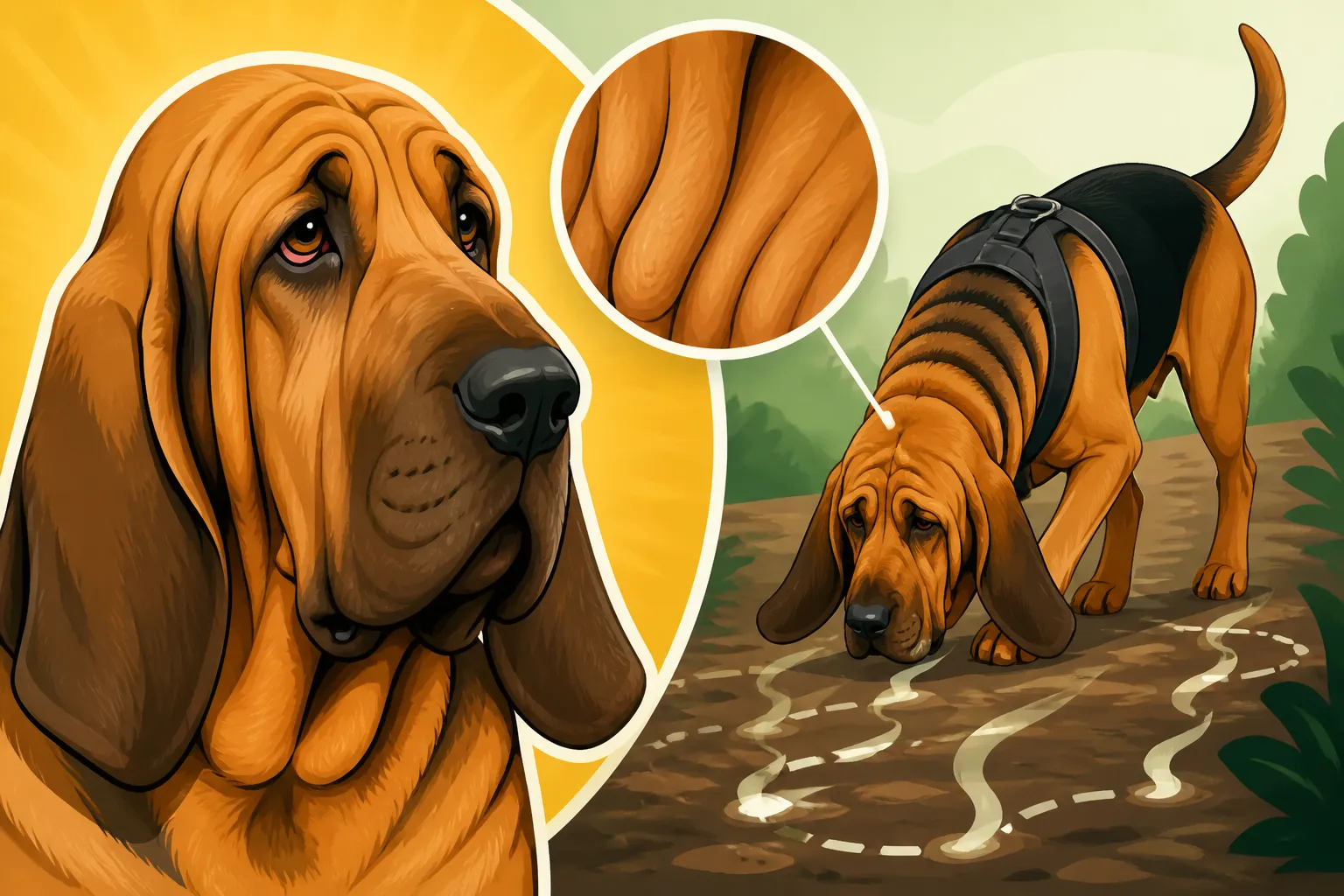
A Bloodhound’s loose skin is one of its most recognizable features, but it is easy to assume those folds work like scent-catching pockets. They do not literally trap a trail for the dog to follow. The folds may play a supporting role in the breed’s scenting setup, while the nose, ears, and focused trailing behavior do the main work.
How a Bloodhound’s loose skin may help with scenting
The folds can shape the space around the nose
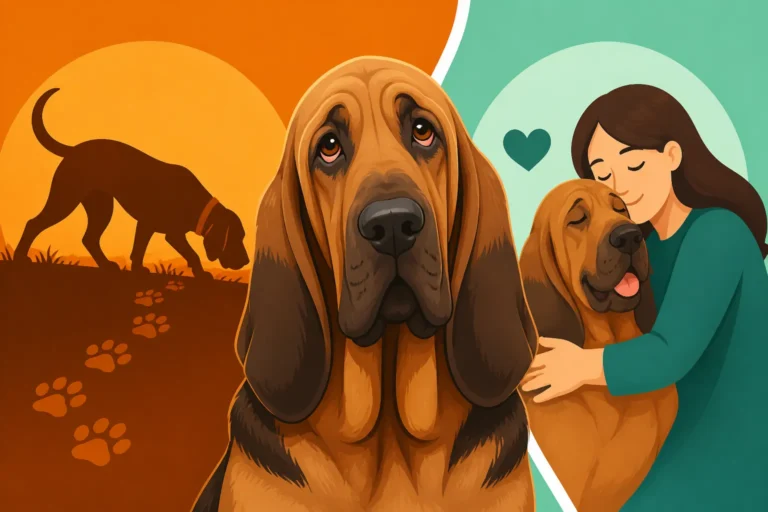
A Bloodhound’s skin hangs loosely around its head and neck, creating folds that move as the dog lowers its head and works close to the ground. That movement may help channel air and scent particles around the face. It is a plausible supporting effect, but it is not the same as the skin absorbing a person’s scent and carrying it to the dog’s nose.
That distinction matters. A Bloodhound following a trail is detecting odor molecules in the environment, not reading a scent stored in its wrinkles. The dog’s nose is the sensory organ doing the detection. The folds are part of the surrounding anatomy, and their contribution is best understood as indirect rather than as a stand-alone tracking mechanism.
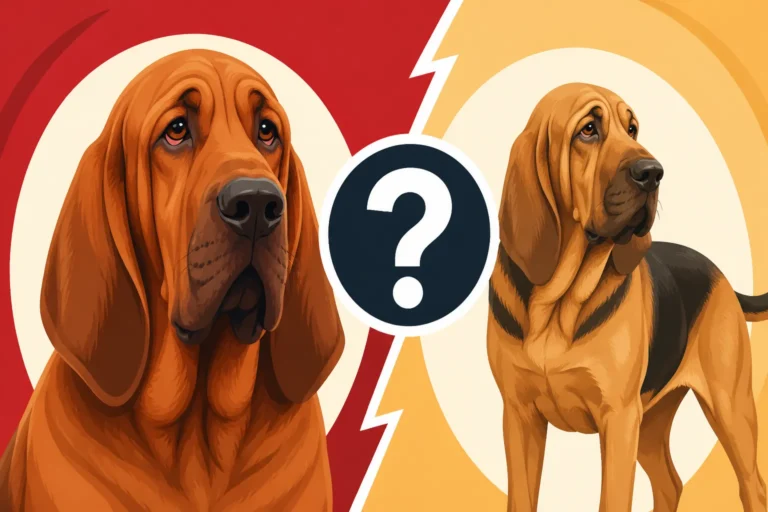
Bloodhounds also vary in how pronounced their folds are. A dog with more visible wrinkles is not automatically a better tracker than one with less dramatic skin. Trailing depends on many factors, including training, motivation, the scent conditions, and the individual dog. For a broader look at what this breed detects, see What a Bloodhound Is Actually Smelling on a Trail.
Loose skin is only one part of a larger design
The Bloodhound’s head, ears, nose, and skin work together as a whole. Its long ears hang near the ground when the dog is trailing. As they move, they may help stir or direct scent-bearing air toward the nose. That proposed role is more relevant to how a dog’s anatomy may support scenting than the idea that wrinkles themselves hold a trail. Read more in Why a Bloodhound's Ears Sweep Scent Toward Its Nose.
The breed’s facial shape is also part of the picture. A Bloodhound’s long muzzle gives the nose a large working area, while its loose facial skin and ears frame the head. These traits developed together over generations, but it is difficult to isolate one feature and claim that it alone explains the breed’s tracking ability. Why a Bloodhound's Head Is Shaped the Way It Is explores how the breed’s head structure fits into the larger discussion.
| Feature | Possible role during trailing | What it does not mean |
|---|---|---|
| Nose | Detects odor molecules in the environment | It does not identify a person by magic or without scent information |
| Long, low ears | May move air and scent around the nose as the dog works close to the ground | The ears do not create a trail |
| Loose facial skin | May contribute to the airflow around the head | The folds do not store a trail for later use |
| Training and experience | Help the dog work systematically and respond to the handler | Anatomy alone does not make every Bloodhound a trained tracker |
| Weather and ground conditions | Affect how scent disperses and remains available | A trail is not equally readable in every setting |
Do Bloodhound wrinkles hold or collect scent?
The “scent-catching wrinkles” idea needs a careful explanation
People often describe Bloodhound wrinkles as if they gather scent and funnel it directly to the nose. That description is catchy, but it can make the process sound more certain and mechanical than it is. A dog’s nose detects scent in the surrounding air and on surfaces. The skin folds are not scent containers, and there is no need for a trail to be physically caught in them before the dog can follow it.
A Bloodhound may keep its face low as it tracks, bringing its nose close to the ground where odor may be present. The shape and movement of its head can influence how air behaves around the nose, but a precise, guaranteed “wrinkle funnel” effect should not be treated as established fact. For a closer look at the popular claim, see Whether a Bloodhound's Wrinkles Hold Scent.
That does not mean the folds are irrelevant. They are part of the breed’s distinctive anatomy, and the overall arrangement of its head may support close, sustained scent work. The practical point is simply that a dog’s tracking ability cannot be reduced to one feature. A wrinkled face without a capable nose, suitable training, and the drive to work would not be enough.
A trail is an odor picture, not a single scent ribbon
A person leaves odor through skin cells, secretions, clothing, and other materials. Those odors interact with the ground, vegetation, buildings, weather, and passing people or animals. The Bloodhound’s task is to detect and interpret scent information in that changing environment. It is not following a neat line that remains equally strong from start to finish.
That helps explain why two tracks laid in similar places can be very different for a dog. Wind can shift scent away from the path. Rain may alter or disperse odor, though it does not automatically erase every trail. See Whether Rain Destroys a Bloodhound's Trail for more on how conditions can change the job.
The dog also has to distinguish the target odor from background smells. A busy sidewalk, a parking area, or a crowded trailhead can present a complicated mix of odors. The Bloodhound’s ability to work through that complexity is tied to its scenting ability and training, not simply to the loose skin visible around its face. How a Bloodhound Separates One Person's Scent From a Crowd looks at that challenge in more detail.
What matters more than loose skin when a Bloodhound trails
Nose, focus, and training all count
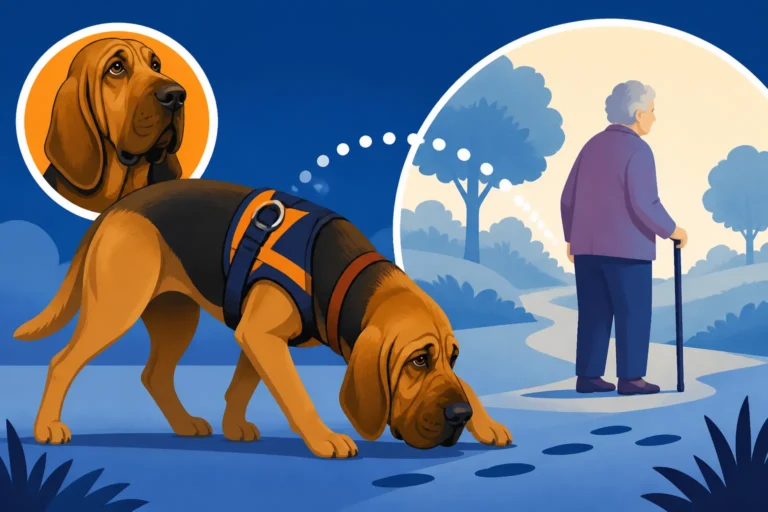
The Bloodhound is renowned for scent work, but no breed trait makes every individual dog equally skilled. A dog needs to learn how to start from a scent article, follow a trail, and work through changes in the environment. The handler also has to learn when the dog is following odor, checking an area, or losing confidence in the track.
A novice may see a dog pause, circle, or move off the apparent path and assume it has stopped tracking. Sometimes the dog is investigating scent that has drifted away from the visible route. Sometimes it is checking conflicting odor. In either case, the handler’s job is to give the dog room to work while maintaining safe control. What a Bloodhound Does When It Loses the Trail explains why a pause or detour is not always a simple failure.
The breed’s reputation also comes from its exceptionally capable nose, but comparisons can be oversimplified. “Best nose” claims depend on what is being measured and how the test is designed. For a more careful discussion, see Whether a Bloodhound's Nose Is the Best of Any Breed. The takeaway is that Bloodhounds have remarkable scenting ability, but loose skin is not a shortcut that replaces practice or good handling.
The handler should read the whole dog
When a Bloodhound is on a trail, watch its behavior rather than judging its work by the amount of skin around its face. The dog may lower its head, take short turns, change pace, or briefly lift its nose to sample the air. Those actions can reflect changing scent conditions. They do not prove that the folds are catching or releasing odor.
A properly fitted harness and a suitable long line can help a handler manage the dog without pulling directly on its neck. The dog should have enough room to investigate while remaining safely connected. If you are new to trailing, Which Harness a Bloodhound Trails In offers useful context about equipment choices.
Safety matters even during casual scent activities. A Bloodhound following an interesting odor can become intensely focused, and a visible trail or open field does not guarantee that the dog will respond to recall. Work in a controlled area, keep the dog secured, and follow guidance from an experienced trainer or organized scent-work group. Why Off Leash Is Not a Goal With a Bloodhound discusses why a strong nose can make off-leash freedom risky.
Caring for loose skin without interfering with scent work
Keep folds clean, dry, and comfortable
Loose skin needs ordinary care, not special scent-enhancing treatment. Check the folds regularly for trapped moisture, debris, redness, or an unpleasant change in odor. After the dog gets wet or has been active in muddy conditions, gently dry the skin rather than leaving the folds damp. Do not scrub hard or apply fragranced products in an attempt to improve tracking.
If you are choosing routine grooming supplies, Chewy may be one place to compare basic dog-care items such as soft cloths or veterinarian-recommended cleansers. The important choice is a product appropriate for your dog’s skin and your veterinarian’s instructions, not a product marketed as making a dog smell better or track better. Some dogs have sensitive skin, and a new cleanser can irritate rather than help.
A persistent sour smell, swelling, tenderness, redness, or discharge deserves veterinary attention. These signs can point to irritation or infection and are not simply part of having a wrinkled breed. For a practical overview of fold locations and related issues, see Where a Bloodhound's Folds Are.
Avoid unnecessary products around the nose and face
Do not put oils, powders, perfumes, or homemade mixtures into facial folds to “hold” scent or sharpen the dog’s nose. These products do not improve trailing and may bother the skin or expose the dog to ingredients that are not suitable for that area. When buying grooming supplies through Chewy or another retailer, choose items for routine hygiene rather than products promising to change scenting performance.
If you are unsure whether a wipe or cleanser is safe near the face, ask your veterinarian before using it. The same applies if the dog has recurring irritation, a history of allergies, or an existing skin condition. Basic care should leave the folds clean and comfortable without masking symptoms or adding unnecessary residue.
A Bloodhound’s loose skin is part of a distinctive head and body design that may support scenting in combination with other features. But the wrinkles do not hold a trail, and they are not the reason on their own that the breed can follow scent. The nose detects odor; the ears, head shape, training, and working behavior contribute to the overall picture. When judging a Bloodhound’s trailing ability, look at the dog’s work and conditions, not just how loose its skin appears.
Disclaimer
This article is for general informational purposes only and does not constitute professional advice. Laws, prices and regulations vary by location and change over time. Consult a qualified professional for guidance on your specific situation.