Whether a Bloodhound’s Nose Is the Best of Any Breed
A Bloodhound’s nose is extraordinary, but “best” depends on what a dog is being asked to smell. Bloodhounds are especially celebrated for following an individual person’s trail over distance and changing terrain. That does not automatically make them the top choice for every scent task. This guide explains what their noses do exceptionally well, how other breeds compare, and why training and conditions matter.
What makes a Bloodhound’s nose exceptional
Following a person’s trail is the Bloodhound’s specialty
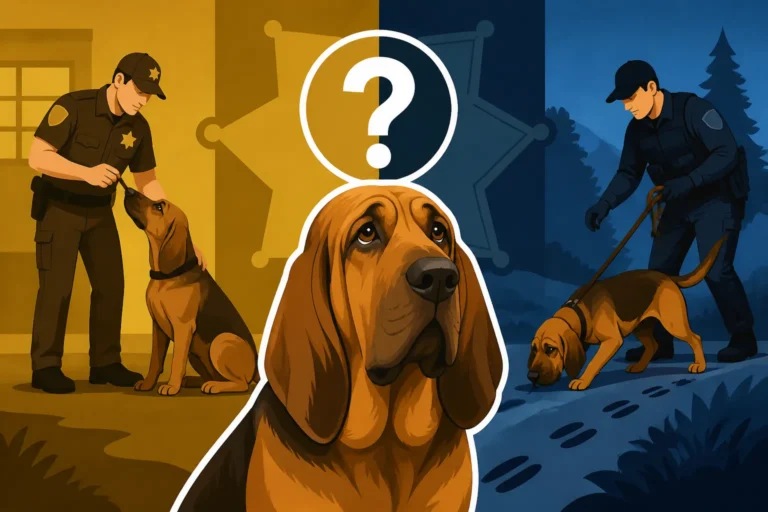
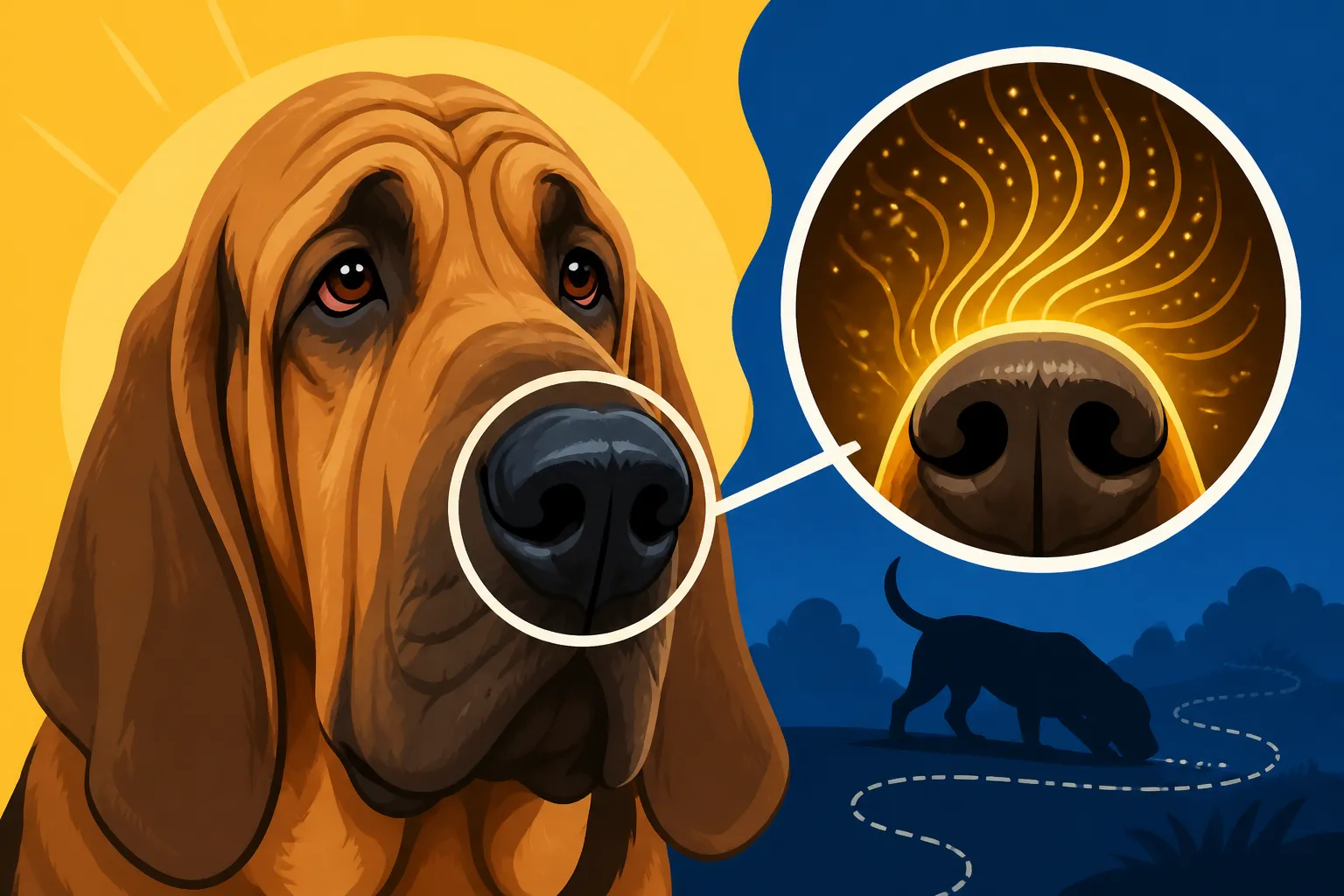
A Bloodhound is built for scent work, but its particular strength is often described as trailing: following the odor associated with a specific person along the route that person traveled. The dog is not simply looking for a visible footprint. It gathers scent from the ground, objects, vegetation, and the surrounding air, then works through a changing pattern that may include overlapping odors and interruptions.
Picture a person walking from a park path onto a residential sidewalk, cutting across a grassy verge, and stepping into a car. The scent picture changes at every transition. A Bloodhound may continue investigating where the person went even when the route is no longer a neat line. That persistence, combined with the ability to work with a handler over a long line, is a big part of the breed’s reputation.
This is different from detecting one specific substance in a controlled search. A dog looking for a particular odor may need to identify it among many competing smells and give a trained indication when it finds it. A Bloodhound can be trained for scent tasks, too, but its famous advantage is closely tied to human trailing. For more detail on the odor picture involved, see What a Bloodhound Is Actually Smelling on a Trail.
Scenting is a whole-body skill, not just a powerful nose
A dog’s ability to find and follow an odor depends on more than the nose itself. The dog must be physically able to take in scent, distinguish useful information from background odors, stay engaged, and work with its handler. The handler also has to read the dog accurately without accidentally steering it toward a preferred answer.
Bloodhounds bring a combination of traits to the task: strong scent interest, stamina, and a tendency to keep investigating even when the route becomes difficult. Their loose skin and long ears are often discussed as features that may help gather or direct scent, but they do not work like a simple scent-catching device. The breed’s overall anatomy and behavior are part of the picture. Read Whether a Bloodhound's Loose Skin Helps It Trail for a closer look at that commonly repeated explanation.
A talented nose can still have an off day. Heat, wind, rain, hard surfaces, crowds, and the age of a trail can all change the scent available to a dog. The Bloodhound may be exceptional, but it is not following a perfectly preserved odor ribbon. It is interpreting a variable, sometimes messy trail, with help from training and a handler.
Is a Bloodhound’s nose the best of any breed
There is no single winner for every scent job
Calling one breed’s nose “the best” sounds straightforward, but it collapses several different abilities into one ranking. A dog may be excellent at following a person’s trail while another is better suited to locating a specific odor in a crowded building, searching luggage, or working in a confined space. The best match depends on the target scent, environment, training, and the kind of indication expected.
A Bloodhound is an outstanding choice to discuss when the job involves tracking or trailing people. That does not mean the breed automatically outperforms every other dog in every detection setting. Labrador Retrievers, German Shepherds, Beagles, and other dogs may be trained for specific scent work. Individual ability and selection matter enormously; breed reputation alone cannot predict how a particular dog will perform.
| Scent task | Why a Bloodhound may be a strong fit | Why another dog may also be suitable |
|---|---|---|
| Trailing a person along a route | Persistence and a strong interest in following human scent can be valuable | Other breeds can trail too, depending on individual ability and training |
| Finding a particular odor in a building | A Bloodhound can learn scent discrimination, but the task requires specific training | A dog selected for detection work may be a better fit for the environment and indication style |
| Searching a vehicle or luggage | A Bloodhound may investigate scent, but its size and working style can affect access | Smaller or more compact dogs may maneuver more easily in tight spaces |
| Following a trail across mixed terrain | The breed’s trailing strengths can help when the odor picture changes | Conditions, experience, and handler skill can matter as much as breed |
| Pet scent games at home | Many Bloodhounds enjoy using their noses in simple search games | Most dogs can enjoy beginner scent activities with suitable guidance |
The comparison is not a contest with one universal score. A Bloodhound’s nose is among the most celebrated for human trailing, but “best at every scent task” is a much broader claim than the evidence of the breed’s reputation can support. For a useful distinction between trailing performance and another well-known scent breed, see Whether a Bloodhound Trails Better Than a Beagle.
Training changes what a dog can do with scent
A strong natural interest in odor is a starting point, not a finished working skill. A dog must learn what scent to follow, how to persist when the trail becomes confusing, and how to work safely alongside a handler. The handler, in turn, must learn when the dog is working scent and when it is distracted, uncertain, or following an unhelpful odor.
This is why two Bloodhounds can perform very differently. One may have careful foundations, regular practice, and a handler who understands its signals. Another may be a much-loved pet whose scent interests are expressed through sniffing every fence post on a walk. Both have capable noses; they have not been prepared for the same job.
It is also why a dog’s apparent certainty should not be treated as proof that its conclusion is correct. Scent work is influenced by trail conditions, training, and human interpretation. A dog can follow the wrong odor or be affected by competing scent. Explore Whether a Bloodhound Can Be Wrong for a fuller discussion of limits and interpretation.
What can affect a Bloodhound’s ability to follow scent
Weather and terrain change the scent picture
Wind can move scent away from the path a person actually walked. Rain may alter or disperse odor, while damp ground and vegetation can create a different scent environment from dry pavement. Heat may also affect both the dog’s comfort and the way odor is available in the surroundings. These factors do not make a trail automatically impossible, but they can make it more challenging and less predictable.
A trail across a quiet field is not the same as a route through a busy downtown block. On city sidewalks, a dog may encounter many people’s odors, changing air currents around buildings, and surfaces that hold scent differently from soil or grass. The Bloodhound must sort through competing information while the handler manages the leash, route, and safety.
This is one reason it is unhelpful to assume that a skilled dog can follow every trail under all conditions. A trail can become difficult even for an experienced team. For more on how conditions shape the work, see Whether Rain Destroys a Bloodhound's Trail and Whether Wind Moves the Scent a Bloodhound Follows.
A dog’s performance is a partnership
A handler can support a Bloodhound by giving it enough room to investigate safely, keeping the line from constantly tugging it off course, and observing changes in pace or focus. Rushing the dog or repeatedly suggesting a direction can interfere with the work. A good team allows the dog to make decisions while the handler keeps the search safe and structured.
That partnership matters outside formal tracking, too. A family can give a pet Bloodhound safe opportunities to use its nose without expecting it to perform like a trained search dog. Hide-and-seek games with treats or familiar toys can provide a simple outlet. Some owners use beginner scent-work materials or food puzzles available through retailers such as Chewy, choosing activities that fit the dog’s experience and household setup. The goal is enjoyment and enrichment, not testing whether the dog has the “best” nose.
For example, a beginner might let the dog sniff a treat held in one hand, then gradually hide it under one of several cups. The dog is rewarded for investigating rather than hurried through the exercise. If using a packaged game or puzzle purchased through Chewy, keep the activity supervised and make sure the pieces are suitable for the dog’s size and chewing habits. If a dog becomes frustrated, make the search easier instead of turning it into a test.
What the Bloodhound’s reputation does and does not mean
Exceptional scenting is not the same as infallibility
Bloodhounds have a remarkable reputation because their trailing ability has been used in serious real-world settings. But a dog’s nose does not remove uncertainty from a search. Trails can overlap, weather can shift odors, and a dog can lose or change the scent it is following. The handler’s interpretation also matters, so conclusions should be evaluated carefully rather than accepted simply because a Bloodhound is involved.
That distinction is especially important when people hear stories about a dog following an old trail or working through a complicated environment. Such accounts can show what a well-trained team may accomplish, but they should not be turned into a promise that every Bloodhound can reproduce the result. Training, conditions, and the specific task all shape what is possible.
Nor does a dog’s ability to follow scent by itself establish what happened or who is responsible. In legal contexts, procedures and rules differ by location, and scent evidence may be considered alongside other evidence. See Whether a Bloodhound's Nose Counts as Evidence in Every State for why the legal role of scent work is not identical everywhere.
A practical answer to the “best nose” question
If the question means, “Is the Bloodhound one of the very best dogs for following a person’s trail?” the answer is yes: it is among the breeds most strongly associated with that work. If the question means, “Can any breed do every scent task better than every other breed?” there is no reliable one-size-fits-all answer. Detection and trailing are different jobs, and success depends on the dog, training, handler, and conditions.
For a prospective owner, that distinction can make the breed easier to understand. A Bloodhound’s nose is not merely a party trick; it is a powerful instinct that affects everyday life. Walks may become slow investigations, an interesting odor may compete with a familiar cue, and safe management is essential because scent can pull the dog’s attention away from the handler. If you are exploring the breed, Why Off Leash Is Not a Goal With a Bloodhound offers useful context for keeping that nose engaged without relying on risky freedom.
A Bloodhound does not need to prove it is the best in the dog world to be extraordinary. Its special talent is the determined, nose-led work of following scent, especially human scent. That is a remarkable ability—and one that works best when people respect both its strengths and its limits.
Disclaimer
This article is for general informational purposes only and does not constitute professional advice. Laws, prices and regulations vary by location and change over time. Consult a qualified professional for guidance on your specific situation.