Who Owned the Bloodhound Nick Carter
We often hear stories of incredible dogs, whose feats become legendary, but sometimes the details get a little fuzzy over time. For Bloodhound enthusiasts, the name Nick Carter conjures images of an unparalleled tracker, a true canine detective whose nose brought criminals to justice. Many wonder about the actual person behind such a magnificent animal, the handler who shared in his monumental success. This guide will delve into the history of Nick Carter, revealing who owned this legendary Bloodhound and exploring the profound impact their partnership had on the world of trailing and canine law enforcement.
Unraveling the Legend: Who Was Nick Carter?
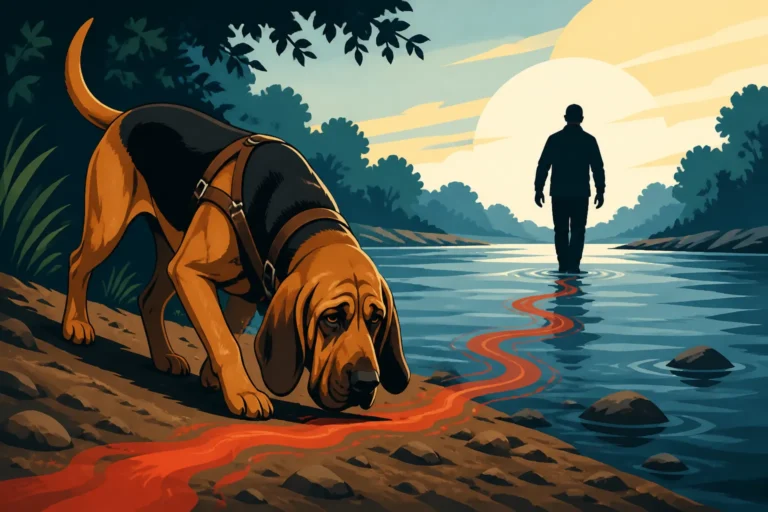
Before we talk about who owned him, it’s important to truly grasp the magnitude of Nick Carter himself. He wasn't just a Bloodhound; he was the Bloodhound, a dog whose reputation for accuracy and perseverance set a standard that still resonates today. His name became synonymous with unerring scent work, making him arguably the most famous trailing dog in American history. People still talk about his incredible nose, and for good reason – his achievements were astounding.
More Than Just a Name: The Dog Behind the Legend
Born in 1899, Nick Carter was a purebred Bloodhound, a magnificent specimen of the breed known for its distinctive loose skin, long pendulous ears, and, of course, that extraordinary nose. He came into the world at a time when the capabilities of tracking dogs were beginning to be seriously explored, particularly for law enforcement purposes. His physical characteristics, typical of the breed, were perfectly adapted for his work: the long ears sweeping scent upwards, the deep wrinkles trapping scent particles, and his immense lung capacity for sustained effort. He was bred and trained not just as a pet, but as a working animal, destined to demonstrate the true potential of the Bloodhound. Imagine the sight of him, all wrinkles and dignity, head low to the ground, meticulously unraveling a scent puzzle that humans couldn't even perceive. It’s no wonder he captured public imagination.
A Trailblazer in Canine Law Enforcement
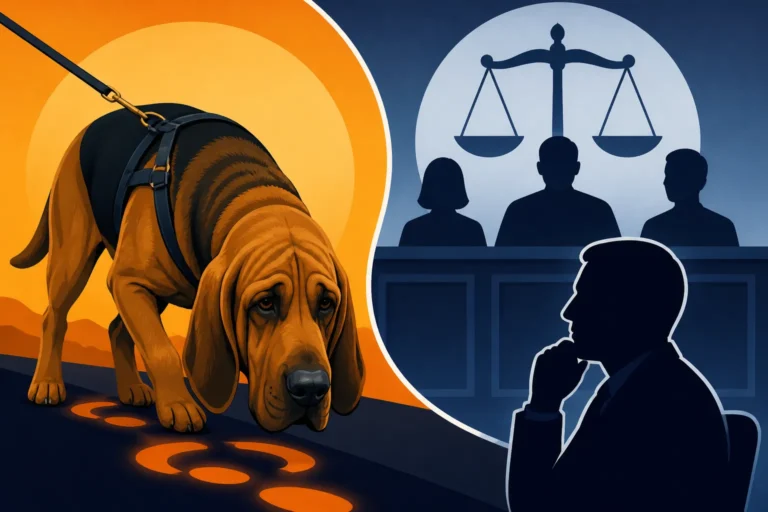
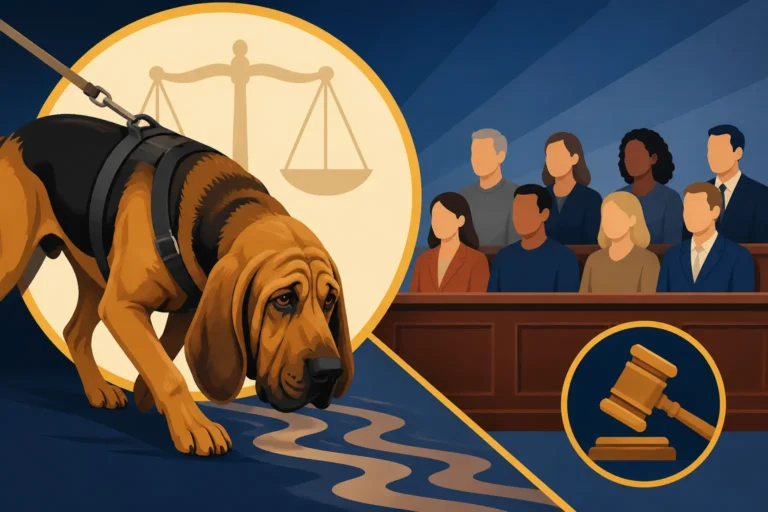
What set Nick Carter apart was his consistent, verifiable success in trailing human scent. Before him, while Bloodhounds were known for their tracking abilities, their use in court cases was often met with skepticism. Nick Carter changed that perception dramatically. He was instrumental in demonstrating that a Bloodhound's trail could indeed be reliable, even in challenging conditions. His work was pivotal in establishing the admissibility of Bloodhound evidence in courtrooms, a precedent that still exists today, making the Bloodhound the only dog breed whose testimony can carry weight in a legal setting. The Bloodhound Is the Only Dog Whose Evidence Stands in Court speaks to this unique legal standing. His efforts helped usher in an era where police departments and search and rescue organizations began to seriously consider incorporating Bloodhounds into their operations, a practice that continues to this day.
The Man Behind the Hound: Colonel Edwin H. Pearce
Every great dog has an equally great handler, and for Nick Carter, that person was Colonel Edwin H. Pearce. Their partnership was symbiotic, built on trust, understanding, and an unwavering commitment to the work. It was Pearce's vision and dedication that allowed Nick Carter to reach his full potential and, in doing so, leave an indelible mark on history. Without Pearce, Nick Carter might have remained just another talented Bloodhound; together, they formed a formidable team.
Colonel Pearce: A Pioneer in Bloodhound Use
Colonel Edwin H. Pearce was an attorney from Kentucky, and a man ahead of his time when it came to understanding canine capabilities. He wasn't just an owner; he was a fervent advocate for the scientific application of Bloodhound tracking. Pearce recognized the incredible potential in these dogs for locating missing persons and tracking criminals, often in situations where human efforts had failed. He was meticulous in his methods, documenting every trail, every success, and even the challenges. This rigorous record-keeping was crucial, not just for his own understanding, but for presenting irrefutable proof of Nick Carter's abilities to a skeptical public and legal system. His dedication helped to professionalize the use of Bloodhounds in police work, shifting them from a novelty to an invaluable tool.
Pearce understood that a Bloodhound's success wasn't just about the dog's nose, but also about the handler's skill and integrity. He was committed to ethical handling and ensuring that Nick Carter's work was conducted fairly and accurately. This commitment to professionalism was key in gaining public and judicial trust. He understood the nuances of scent, how environmental factors like rain or wind could affect a trail, and how to interpret Nick Carter's behavior on the line. This deep understanding allowed them to work seamlessly as a team, with Pearce effectively translating Nick Carter's silent language of scent into actionable information for law enforcement. You might want to read Whether a Bloodhound Handler Must Be Qualified to Testify for more on the importance of skilled handlers.
The Partnership That Changed History
The bond between Colonel Pearce and Nick Carter was legendary. Pearce acquired Nick Carter from a kennel in Maine, recognizing something special in the young hound. What followed was a partnership that redefined the role of dogs in public service. Together, they traveled across the country, assisting authorities in numerous high-profile cases. Imagine the scene: a hushed crowd, a tense police force, and then Colonel Pearce leading Nick Carter to the starting point of a cold trail, the dog's nose dropping, beginning to weave its invisible path. Nick Carter, the Bloodhound With Six Hundred Fifty Finds touches on the sheer volume of his work.
Their success wasn't always immediate or easy. There were undoubtedly long hours, frustrating dead ends, and challenging terrain. But through it all, Pearce trusted Nick Carter's nose, and Nick Carter trusted Pearce's guidance. This mutual trust allowed them to achieve what many thought impossible. Their combined efforts often led to the apprehension of suspects, the recovery of stolen property, and, perhaps most importantly, the resolution of cases that had baffled human investigators. This era truly cemented the Bloodhound's reputation as a reliable and indispensable partner in the pursuit of justice.
Nick Carter's Enduring Legacy
Nick Carter's impact wasn't fleeting; it reverberated through generations, leaving a permanent mark on the perception and utilization of working dogs. His contributions extended far beyond the individual cases he solved, fundamentally altering how society viewed the capabilities of the Bloodhound breed. It’s truly remarkable how one dog, with the right handler, could instigate such a significant shift.
Documenting the Unbelievable: His Unmatched Track Record
One of the most powerful aspects of Nick Carter's legacy was the meticulous documentation of his cases. Colonel Pearce understood that anecdotes, while impressive, wouldn't convince judges and juries. He kept detailed records, including sworn affidavits from law enforcement officers and witnesses, verifying the accuracy of Nick Carter's trails. These records often described how Nick Carter would follow scent over various terrains – through busy towns, across open fields, even after significant time had passed. How Many Convictions Nick Carter's Nose Produced in 1903 gives a glimpse into his impressive statistics.
This rigorous documentation built an unshakeable case for the Bloodhound's reliability. It was this body of evidence that led to courts across the United States accepting Bloodhound testimony as credible. Think about how revolutionary that was! Before Nick Carter, it was largely guesswork and local folklore; after him, it became a recognized forensic tool. His success not only highlighted his individual brilliance but also provided invaluable data for understanding how Bloodhounds process and follow scent, paving the way for future scientific study into canine olfaction. His record stood as a testament to the fact that his abilities weren't just luck or showmanship, but a genuine, repeatable skill.
Shaping the Future of Trailing Dogs
Nick Carter's fame wasn't just a matter of notoriety; it translated into tangible advancements for the field of trailing dogs. His impressive track record spurred interest in breeding and training more Bloodhounds for law enforcement and search and rescue. Breeders began to focus on preserving and enhancing the strong scenting abilities within the Bloodhound lineage, understanding the practical value of these traits. People realized that owning a Bloodhound wasn't just about having a large, lovable dog; it was about tapping into an ancient instinct honed for a specific purpose.
His work also led to the development of standardized training protocols for handlers. If a Bloodhound's evidence was to be accepted in court, the training and handling had to be consistent and professional. This emphasis on proper training ensured that future working Bloodhounds would be as effective and reliable as Nick Carter himself. His influence essentially laid the groundwork for modern mantrailing and human scent detection programs that we see implemented by police and volunteer organizations today. He proved the concept, and others built upon his monumental achievements. You can explore more about what a Bloodhound smells on a trail in What a Bloodhound Is Actually Smelling on a Trail.
The Impact of a Single Bloodhound on the Breed
It’s not often that one individual, canine or human, can single-handedly reshape the destiny of an entire breed. But Nick Carter, through his extraordinary work and the tireless efforts of Colonel Pearce, did just that for the Bloodhound. His influence extended beyond the courtroom, touching on public perception, breeding practices, and even the everyday care of these remarkable dogs.
Public Perception and the Bloodhound's Reputation
Before Nick Carter, the Bloodhound, while respected for its scenting ability, sometimes suffered from misconceptions, often being portrayed in popular culture as fearsome or even aggressive due to its historical use in tracking fugitives (sometimes inaccurately depicted). Nick Carter’s public image, however, was one of a diligent, focused, and ultimately heroic dog. His successful trails, often documented in newspapers, painted him as a tireless worker for justice, not a menacing brute. This positive exposure helped to rehabilitate the breed's image, showcasing their gentle nature alongside their formidable talent.
This shift in perception was crucial. It made people see Bloodhounds not just as working tools, but as intelligent, dedicated companions capable of incredible feats. It fostered a deeper appreciation for the unique characteristics of the breed, from their deep bay to their expressive, wrinkled faces. People began to understand that the Bloodhound was a specialized animal, requiring a specific approach to ownership and training that honored their innate abilities. You might consider checking Why a Bloodhound Ignores a Cue It Knows to understand their single-minded focus. This positive spotlight undoubtedly contributed to more people considering Bloodhounds as family members, albeit high-maintenance ones!
Breeding for Excellence: Carrying on the Legacy
Nick Carter's success naturally led to a heightened interest in Bloodhound breeding, with a focus on producing dogs with similar drive and scenting capabilities. Responsible breeders began to emphasize health and temperament alongside working ability, understanding that a sound dog with a good disposition was essential for effective trailing work and successful integration into society. This wasn't just about making money; it was about preserving and enhancing the very traits that made Nick Carter so special.
Breeders, inspired by Carter's feats, sought to trace his lineage and understand what genetic factors contributed to his extraordinary nose. While not directly stated, it's reasonable to infer that the desire to produce "another Nick Carter" likely influenced breeding decisions, prioritizing proven working lines. This focus on working ability, even for pet owners, helps to ensure that the Bloodhound remains true to its heritage. Many breeders today still adhere to rigorous health screenings and carefully select breeding pairs, ensuring that the traits that made Nick Carter famous are passed down. For those interested in acquiring a Bloodhound, understanding what reputable breeders do is key, as seen in What the American Bloodhound Club Asks Breeders to Screen.
| Aspect | Before Nick Carter's Fame | After Nick Carter's Fame |
|---|---|---|
| Public Image | Often misunderstood, sometimes feared | Seen as heroic, dedicated, and effective |
| Legal Standing | Evidence met with skepticism, limited admissibility | Evidence widely accepted in court |
| Breeding Focus | General breeding, less emphasis on documented working traits | Increased focus on proven working lines and temperament |
| Handler Training | Less formalized, often self-taught | Drive towards standardized, professional training methods |
| Police Adoption | Sporadic, experimental | Increased integration into law enforcement and search teams |
| Popularity | Niche breed, known to few | Higher profile, increased public interest |
The Challenge of Verifying Historical Accounts
When we talk about historical figures, especially those from over a century ago like Nick Carter, it's easy for myths and exaggerations to creep into the narrative. While his achievements are undeniably real and well-documented, distinguishing absolute fact from the embellishments that naturally occur around a legend can sometimes be tricky. This doesn't diminish his importance, but it helps us approach his story with a critical, yet appreciative, eye.
Separating Fact from Canine Fiction
The stories surrounding Nick Carter are often so incredible that they verge on the unbelievable. Tales of him following trails many days old, over vast distances, and through crowded city streets are common. While many of these accounts have strong corroborating evidence, the precise details can sometimes vary depending on the source. It’s important to remember that newspaper reports of the era, while generally striving for accuracy, also aimed to captivate readers. This means that while the core events are true, specific distances or times might have been slightly dramatized for effect. How Old a Trail a Bloodhound Can Follow discusses the incredible capabilities of Bloodhounds.
The sheer volume of his "finds" – often cited as 650 successful trails – is a testament to his prolific career. However, defining a "find" can be nuanced. Does it mean a direct apprehension? Or successfully identifying the direction of travel for investigators? Colonel Pearce's meticulous records were crucial in verifying the impact of Nick Carter's work, but even with documentation, the passage of time can add layers to the narrative. The key takeaway, regardless of minor historical discrepancies, is that Nick Carter consistently demonstrated abilities that surpassed any other dog of his time, making him a true pioneer.
What Modern Owners Can Learn from Carter's Story
Even over a hundred years later, Nick Carter's story offers valuable lessons for modern Bloodhound owners and handlers. First and foremost, it highlights the immense potential of the breed when paired with a dedicated and understanding handler. It’s a powerful reminder that these dogs are not just pets; they are working animals with an incredible, inherent drive. Providing an outlet for that drive, whether through formal mantrailing, scent games, or simply long, enriching walks where they can use their nose, is crucial for their well-being. If you're looking for gear for scent work, even simple training aids, you can often find good options on Chewy.
Secondly, Nick Carter's story underscores the importance of the handler-dog bond. Pearce and Carter’s success wasn’t just about the dog's nose, but their partnership. Trust, clear communication, and consistent training are paramount. A Bloodhound that trusts its handler is more likely to work effectively, even when the trail gets tough. Lastly, it teaches us patience. A Bloodhound’s work is methodical and takes time. They don't rush; they meticulously unravel the scent. This breed demands a different kind of respect for their process, one that can be immensely rewarding if you lean into their natural inclinations. Understanding the history of greats like Nick Carter helps us appreciate our own Bloodhounds even more deeply.
Disclaimer
This article is for general informational purposes only and does not constitute professional advice. Laws, prices and regulations vary by location and change over time. Consult a qualified professional for guidance on your specific situation.