Whether a Bloodhound’s Trail Alone Can Convict
Many Bloodhound owners and even the general public hold a romanticized view of our beloved "sleuth hounds," believing that once their incredible nose locks onto a scent, it's an open-and-shut case. However, the reality of a Bloodhound's trail evidence in a courtroom is far more nuanced and often quite frustrating for those who witness their dogs' undeniable abilities. This guide will walk you through the complex legal landscape surrounding Bloodhound evidence, helping you understand why a trail alone rarely leads to a conviction and what truly gives their work legal weight.
The Enduring Myth of the Infallible Nose in Court
It’s easy to understand why people imagine a Bloodhound's trail as the ultimate smoking gun. We've all seen movies or read stories where the trusty hound sniffs out the culprit, and justice is swiftly served. This image, deeply ingrained in our culture, suggests an almost magical, undeniable certainty to their work. The truth, however, is that while a Bloodhound's nose is indeed one of the most astonishing biological detection systems known, the legal system approaches it with a necessary dose of skepticism and a framework of strict rules.
Why the Legend Persists
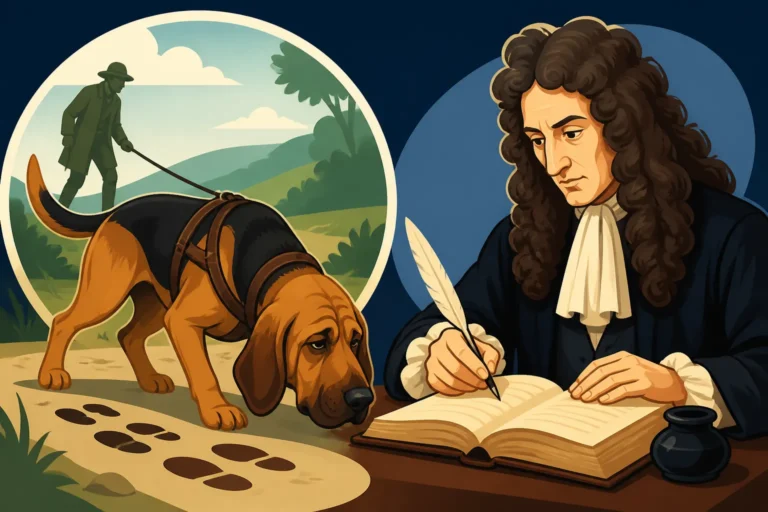
The legend of the Bloodhound's infallible nose isn't entirely baseless; it stems from a long, proud history of impressive feats. For centuries, these dogs have been used to track criminals, locate missing persons, and follow trails that confound human capabilities. There's a reason the Bloodhound is famously The Bloodhound Is the Only Dog Whose Evidence Stands in Court, a testament to its unparalleled scenting ability and historical reliability. Stories abound of Bloodhounds following trails days old, across challenging terrains, leading directly to individuals. These dramatic successes, often reported in the news, naturally feed into the idea that their work is absolute proof. The sheer wonder of watching a Bloodhound work, head down, completely absorbed, is enough to convince anyone of their incredible power.
But here's where the frustration often begins for handlers and enthusiasts: the legal system doesn't operate on wonder or historical anecdotes alone. While their historical use and unique physiological advantages (like an astounding number of scent receptors and those magnificent, scent-gathering ears) are well-documented, the leap from "incredible tracking" to "sole basis for conviction" is a chasm the courts are reluctant to cross without robust support.
The Actual Legal Standing: Corroborating Evidence is Key
In reality, a Bloodhound's trail is almost never enough to secure a conviction on its own. Instead, it's considered circumstantial evidence, meaning it suggests a fact rather than proving it directly. Think of it less like a photograph of the crime and more like a directional arrow pointing toward a possibility. The handler will testify to what the dog did, describing the circumstances of the trail and the dog's behavior, but this testimony requires additional backing.
This is where the term Whether a Bloodhound's Trail Needs Corroborating Evidence becomes crucial. Corroborating evidence means other pieces of information, independent of the Bloodhound's trail, that support the conclusion the dog's work implies. This could be eyewitness testimony, forensic evidence like fingerprints or DNA found at the scene, possession of stolen goods, or an alibi that doesn't hold up. The Bloodhound's trail might establish that a suspect was at or near a crime scene, or followed a specific path away from it. However, it doesn't, on its own, prove what that person did there, nor does it inherently prove guilt. The trail simply indicates presence or movement. Without that extra evidence, the defense can (and will) argue that the trail, while interesting, doesn't actually tie their client to the crime in a way that proves guilt beyond a reasonable doubt.
What Makes a Bloodhound's Evidence Admissible in Court
For Bloodhound trail evidence to even be considered by a jury, it must first clear several admissibility hurdles. This isn't about whether the Bloodhound is "right" or "wrong" in the field, but whether the process of acquiring that evidence was sound enough for a court to deem it reliable. This involves scrutinizing both the dog and, perhaps even more so, the human on the other end of the leash.
Handler Qualifications and Training Standards
The person handling the Bloodhound in court is more than just a dog owner; they are, in effect, an expert witness. Their credibility is paramount. This means they must demonstrate a significant level of expertise and experience, often achieved through specialized training and certification programs. It’s not enough to simply say, "My dog is good at sniffing things out." The court needs assurance that the handler understands scent theory, canine behavior, proper trailing techniques, and how to interpret their dog's signals accurately.
Certification from recognized organizations is often a minimum requirement. This might involve extensive coursework, practical exams, and recurrent testing to ensure proficiency. A qualified handler can articulate the dog's actions, the conditions of the trail, and the limitations of the dog's work in a way that is understandable and credible to a judge and jury. Without this rigorous background, a defense attorney will quickly undermine the handler's testimony, casting doubt on the entire process. Just think about the dedication needed for How a Bloodhound Is Certified for Search Work; it's a testament to the commitment required.
Documentation of the Trail
The legal system thrives on documentation. Every aspect of a Bloodhound's deployment and subsequent trail must be meticulously recorded. This isn't just a casual stroll; it's a systematic data collection exercise. This includes:
- Start Point: Precise location where the dog was given the scent article and started the trail.
- Scent Article: Detailed description of the item used (e.g., a shirt, a hat), where it came from, and how it was handled to prevent contamination.
- Environmental Conditions: Weather (temperature, humidity, wind direction and speed), ground cover (asphalt, grass, dirt), time of day, and any potential contamination or distractions present (crowds, other animals, vehicles).
- Trail Path: A detailed map or GPS log of the exact route the Bloodhound took, including any deviations, hesitations, or changes in behavior.
- Dog's Behavior: Notes on how the Bloodhound worked—was it eager, hesitant, did it air scent, did it put its nose to the ground, how did it indicate a loss or recovery of the trail, and the final "find" indication.
- Personnel: Identification of all individuals present during the trail (handler, assistant, witnesses, law enforcement).
This level of detail is crucial. It creates an auditable record that can be reviewed and challenged. Without it, the defense can argue that the trail was not conducted under controlled conditions, or that the handler's memory is unreliable, making the evidence inadmissible. It might seem like overkill to a civilian, but in court, every detail matters for establishing the trail's integrity.
The Courtroom Challenge: Cross-Examination and Defense Strategies
Even when Bloodhound evidence is deemed admissible, it still faces an intense challenge during cross-examination. Defense attorneys are experts at poking holes in evidence, and Bloodhound trails, being circumstantial and reliant on interpretation, offer several avenues for questioning. This is often where the perception of an "infallible nose" truly crumbles under legal scrutiny.
Questioning the Hound's Reliability
A common defense strategy is to cast doubt on the Bloodhound's actual reliability in the specific circumstances of the case. They might ask:
- Environmental Factors: Were the conditions truly optimal for scenting? Was it too hot, too cold, too windy, too rainy? Whether Rain Destroys a Bloodhound's Trail is a very real question in court. Strong winds can scatter scent, heavy rain can wash it away, and extreme temperatures can degrade it rapidly. Even seemingly minor factors like concrete vs. grass can affect scent retention.
- Scent Contamination: Was the scent article properly handled? Could other scents have been introduced to it? Was the trail itself contaminated by other foot traffic, animals, or even the scent of the handler? The defense will highlight any opportunity for extraneous scent to interfere, suggesting the Bloodhound wasn't truly on the suspect's trail.
- Distractions and Age of Trail: How old was the trail when the Bloodhound started? Older trails are naturally more degraded and harder to follow. Were there significant distractions along the path that could have led the dog astray? A busy urban environment presents a far greater challenge than a quiet field.
- Dog's Health and Focus: Was the Bloodhound physically and mentally fit to work that day? Was it tired, ill, or simply distracted? While handlers strive for perfect conditions, life happens, and any deviation can be seized upon.
These questions aren't meant to imply the Bloodhound is "bad" but rather to suggest that the conditions or circumstances might have compromised the accuracy of its work, making the evidence less reliable. They want to raise that seed of doubt: Whether a Bloodhound Can Be Wrong.
Challenging the Handler's Methodology and Interpretation
Beyond the dog itself, the handler's actions and interpretations are ripe for challenge. The defense will scrutinize every step of the handler's methodology and their subsequent testimony.
- Training Consistency: How often is the handler/dog team trained? Is their training consistent with industry standards? Are records of their training and successes (and failures) available? Any perceived gaps or inconsistencies in training can be used to question the team's overall competence.
- Reading the Dog: Trailing involves a handler interpreting subtle cues from their Bloodhound. The defense will ask how the handler knew the dog was on the right scent. How do they distinguish between a true trail and the dog simply being interested in another scent, or even just wandering? This is subjective, and subjectivity is a vulnerability in court.
- Bias: Could the handler have consciously or unconsciously influenced the dog? Did they know where the suspect was supposed to go? This is a serious accusation, but defense attorneys will explore it to suggest the trail wasn't a pure, independent act by the dog.
- Adherence to Protocol: Did the handler follow all established protocols for scent preservation, starting the trail, and navigating through distractions? Any deviation, no matter how small, can be leveraged to suggest the trail was improperly conducted.
The goal here is to demonstrate that the handler's testimony is not an objective scientific measurement but an interpretation, and that interpretations can be flawed. If the jury believes the handler made an error or influenced the dog, the evidence is weakened considerably.
Factors Influencing a Bloodhound's Trail
Understanding the challenges Bloodhound evidence faces in court often comes down to appreciating the many variables that affect their ability to trail effectively in the first place. These aren't necessarily "flaws" in the dog, but rather environmental realities that impact scent, which in turn impacts the legal reliability of the trail.
Environmental Conditions and Scent Longevity
Scent, by its very nature, is volatile and easily affected by its surroundings. A Bloodhound's astounding ability to track is a testament to evolution, but even the best nose is subject to physics and environmental degradation.
- Weather: We already touched on Whether Rain Destroys a Bloodhound's Trail, but it’s more complex than just "wet is bad." Rain can indeed wash away scent particles or dilute them, making a trail harder to follow. However, damp conditions can sometimes preserve scent by preventing rapid evaporation. Conversely, dry, hot, and windy conditions are generally terrible for scent retention, causing it to dissipate quickly. Wind can also dramatically shift scent, making a dog trail parallel to where a person actually walked.
- Temperature and Humidity: Heat speeds up evaporation and bacterial decomposition of scent. Cold can slow it down, potentially preserving scent longer, but extreme cold can also make scent less available as particles become less volatile. Humidity, like rain, has a double-edged effect; too dry and scent evaporates, too humid and it can become heavy and stick to surfaces, making it harder for airborne scenting.
- Terrain: Hard, non-porous surfaces like asphalt or concrete retain scent differently than porous surfaces like soil, grass, or carpet. Soil and vegetation can absorb and hold scent longer, especially in protected areas. Water, surprisingly, can hold scent for a time, though trailing through large bodies of water is exceedingly difficult for most Bloodhounds. Whether Asphalt Holds Scent for a Bloodhound is a frequent point of discussion among handlers.
All these factors mean that a Bloodhound's performance can vary wildly from one trail to the next, even with the same dog and handler. The defense will always highlight conditions that were less than ideal, suggesting that the dog was working at a disadvantage and its results may not be accurate.
Age of the Trail and Distractions
Beyond the immediate environmental factors, the trail itself has inherent characteristics that influence its viability for a Bloodhound. A fresher trail is almost always easier and more reliable.
- Scent Degradation Over Time: Human scent is composed of dead skin cells, sweat, oils, and bacteria, all of which continue to degrade and change over time. As a trail ages, the original scent signature becomes weaker and more diffuse, making it harder for even a Bloodhound to isolate and follow. While Bloodhounds are known for following older trails, even up to a few days, the longer the time elapsed, the greater the challenge and the higher the chance of error.
- Contamination and Competing Scents: Every person, animal, and object leaves its own scent. In urban environments, or areas with heavy foot traffic, a trail can quickly become a "scent soup" of competing odors. Bloodhounds are incredibly skilled at How a Bloodhound Separates One Person's Scent From a Crowd, but even their abilities have limits. The more competing scents there are, the harder it is for the dog to focus solely on the target scent. This is why a trail laid in a pristine wilderness will often yield more reliable results than one in a bustling city park.
- Handler Patience and Dog Focus: Working a difficult, aged, or contaminated trail requires immense patience and trust between the handler and dog. The handler must allow the Bloodhound to work at its own pace, sometimes casting wide to regain a lost scent, and avoid interfering or leading the dog. This is easier said than done, and any lapse in concentration or communication can affect the outcome.
These are realistic challenges that any Bloodhound team faces, and they are legitimate points for a defense attorney to raise when challenging the reliability of the evidence.
Beyond the Conviction: The Bloodhound's Role in Investigations
While a Bloodhound's trail alone might not secure a conviction, it's vital to recognize that their contribution to investigations is immense and often irreplaceable. Their value extends far beyond the courtroom, especially in the crucial early stages of a case. They are an incredible tool for finding out What a Bloodhound Does at the End of a Trail, even if that trail doesn't directly lead to a jail cell.
Guiding Search Efforts and Confirming Paths
The primary strength of a Bloodhound in an investigation is its ability to direct human search efforts and confirm hypotheses about movement. When a person is missing or a suspect has fled a scene, law enforcement often faces a massive area to search. Human search teams can be slow, inefficient, and prone to missing crucial details. This is where a Bloodhound shines.
- Narrowing Search Areas: A Bloodhound can quickly determine the direction a person traveled from a specific point. This allows search teams to focus their efforts on a much smaller, more probable area, saving critical time and resources. Instead of blindly searching miles of woodland, the Bloodhound might indicate a specific path down a dirt road, drastically improving efficiency.
- Confirming Witness Accounts: If a witness claims they saw a suspect flee in a particular direction, a Bloodhound's trail can either corroborate that account or contradict it, redirecting the investigation. This is invaluable for validating or disproving initial leads, which can prevent law enforcement from wasting time on dead ends.
- Locating Discarded Evidence: Sometimes, a suspect will ditch clothing, weapons, or other items along their escape route. A Bloodhound, by following the path, can lead handlers to these crucial pieces of evidence, which may contain DNA or fingerprints that can secure a conviction.
In essence, the Bloodhound acts as a living, breathing compass, guiding investigators through the invisible landscape of human scent. This strategic advantage helps gather other, more concrete evidence, even if the trail itself isn't the final piece of the puzzle.
Locating Missing Persons, Not Just Suspects
It's easy to focus on the "crime-solving" aspect, but Bloodhounds are equally, if not more, vital in finding vulnerable individuals. Their exceptional nose makes them invaluable for search and rescue operations, regardless of criminal intent.
- Children and the Elderly: When a child wanders off or an elderly person with dementia goes missing, time is of the essence. Bloodhounds can pick up faint scent trails quickly, even in crowded areas or after several hours, dramatically increasing the chances of a successful rescue. The emotional relief for families in these situations is immeasurable.
- Hikers and Outdoor Enthusiasts: People can get lost or injured in vast wilderness areas. A Bloodhound's ability to cover large distances, often through difficult terrain, while staying focused on a single human scent can mean the difference between life and death for someone stranded.
- Desperate Situations: In situations where foul play is suspected, but no body has been found, a Bloodhound can sometimes indicate the presence of human remains or a specific burial site, providing closure to families and crucial evidence to investigators.
The Bloodhound's work in these scenarios is often about pure humanity—bringing people home, not necessarily about prosecution. The success rate for locating missing persons through Bloodhound deployment is incredibly high, making them heroes in communities across the country. Many Police Departments Still Keep Bloodhounds precisely for these essential search and rescue capabilities.
Ethical Considerations and Responsible Handling
Given the immense power of a Bloodhound's nose and the potential impact of its work, both in court and in the field, ethical considerations and responsible handling are absolutely paramount. This isn't just about legality; it's about justice and respect for both the dog and the people involved.
The Burden of Proof and Avoiding Miscarriages of Justice
In the legal system, the burden of proof rests with the prosecution. This means they must prove guilt beyond a reasonable doubt. Because Bloodhound evidence is circumstantial, there's an inherent risk of misinterpretation or overreliance, potentially contributing to a wrongful conviction.
- Innocent Until Proven Guilty: The fundamental principle of "innocent until proven guilty" means that suspicion, even strong suspicion generated by a Bloodhound's trail, is not enough. Without corroborating evidence, a person's freedom should not be jeopardized solely by a dog's nose.
- The Weight of Public Perception: Due to the media's portrayal, the public often places undue faith in Bloodhound evidence. It can be hard for a jury to disregard the compelling image of a Bloodhound leading to a suspect, even if the actual legal weight of that evidence is light. This requires careful instruction from judges and diligent work from defense attorneys.
- Consequences of Error: A false positive (the Bloodhound "finding" an innocent person) can have devastating consequences for the individual, including wrongful arrest, reputational damage, and immense stress. Even though Whether a Bloodhound Has Ever Been Wrong in Court is a complex question, the potential for error, however small, must be taken seriously.
Responsible handling demands that handlers and law enforcement acknowledge these risks and integrate Bloodhound evidence as one tool among many, never the sole deciding factor.
The Importance of Ethical Training and Deployment
To mitigate risks and maximize the ethical use of Bloodhounds, strict adherence to best practices in training and deployment is essential.
- Blind Trails: In training, and sometimes in critical deployments, "blind" trails are used where the handler has no prior knowledge of the trail's path. This prevents conscious or unconscious cuing of the dog and ensures the dog is working independently.
- Continuous Education: The field of scent detection and canine forensics is constantly evolving. Handlers must commit to ongoing education, staying current with the latest research, techniques, and legal precedents.
- Respect for the Dog: Ethical handling also means recognizing the dog as a sentient being and a working partner, not a machine. It involves positive reinforcement, ensuring the dog's physical and mental well-being, and never forcing a dog to work if it's not performing optimally. Resources for high-quality food and enrichment, like those found on Chewy, are essential for maintaining a healthy, happy working dog.
- Knowing When Not to Deploy: Sometimes, the conditions are simply too poor, the trail too old, or the contamination too severe for a reliable trail. An ethical handler knows when to call off a deployment, rather than risk inaccurate results that could lead to a miscarriage of justice or waste valuable investigative resources.
By upholding these ethical standards, Bloodhound teams can ensure that their incredible abilities are used responsibly, contributing positively to justice and public safety without overstepping the boundaries of their legal standing.
Admissibility vs. Weight: Understanding the Legal Distinction
It’s crucial to understand the difference between whether evidence is admissible and what weight it carries.
-
Admissibility: This is the judge's decision. It's about whether the evidence meets the legal rules to be presented to the jury. For Bloodhound evidence, this typically means:
- The handler is qualified.
- The dog is adequately trained and reliable.
- The trail was conducted under proper protocols.
- There's a connection between the trail and the case.
If these criteria are met, the jury gets to hear about the Bloodhound's work. Which Court First Accepted a Bloodhound's Trail is a historical nod to this process of judicial acceptance.
-
Weight: This is the jury's decision. Once evidence is admitted, the jury decides how much credibility and importance to give it. This is where all the defense's arguments about environmental conditions, potential contamination, handler interpretation, and the need for corroboration come into play. The jury is instructed that Bloodhound evidence is circumstantial and that it alone is not proof of guilt. They weigh it against all other evidence presented.
Consider the following table outlining common arguments regarding the weight of Bloodhound trail evidence:
| Factor | Argument for Stronger Weight | Argument for Weaker Weight |
|---|---|---|
| Trail Age | Fresh trail (hours old) | Old trail (days old) |
| Environmental Conditions | Moderate temperature, low wind, damp soil, low humidity | High temperature, strong wind, dry asphalt, high humidity |
| Contamination | Isolated area, secure scent article, minimal distractions | Busy urban area, multiple foot traffic, open scent article |
| Handler Experience | Certified, extensive successful deployments, clear records | New handler, limited experience, incomplete records |
| Dog Training | Regularly trained, high success rate on blind trails, certified | Irregular training, inconsistent performance, no certification |
| Documentation | Detailed logs, GPS data, photos, multiple witness reports | Sparse notes, no independent verification, memory-reliant |
| Corroborating Evidence | Multiple independent pieces of evidence support the trail | No other evidence, only the Bloodhound trail points to suspect |
| Behavior at End of Trail | Clear, strong indication of "find" | Ambiguous indication, hesitation, no definitive "find" |
This table illustrates why a Bloodhound's trail, while compelling, is rarely seen as definitive. Its weight in court can be dramatically reduced or strengthened depending on how well the prosecution can defend against these potential weaknesses, and how much other evidence supports it.
Ultimately, while the image of a Bloodhound's nose infallibly leading to a conviction is a powerful one, the legal reality is far more complex. These magnificent hounds are incredible investigative tools, crucial for finding missing persons and guiding law enforcement. However, their trails serve primarily as powerful pieces of circumstantial evidence, almost always requiring strong corroboration to secure a conviction. It’s a testament to the legal system's commitment to due process that even the most amazing canine abilities are subjected to such rigorous scrutiny.
Disclaimer
This article is for general informational purposes only and does not constitute professional advice. Laws, prices and regulations vary by location and change over time. Consult a qualified professional for guidance on your specific situation.