Robert Boyle Wrote Down the First Bloodhound Trial
It’s easy to think of the incredible tracking abilities of our Bloodhounds as something we’ve only recently understood or appreciated, perhaps thanks to modern forensic science or high-tech training methods. But the truth is, the astounding power of a Bloodhound's nose has been marveled at and meticulously documented for centuries. Long before police forces and search and rescue teams relied on these incredible dogs, a renowned scientist took the time to observe and record a Bloodhound's trailing prowess, providing us with one of the earliest written accounts of a purebred hound at work. This guide will take a deep dive into Robert Boyle's remarkable documentation of a Bloodhound trial, exploring its historical context, the details of the event, and its lasting significance for our understanding of this magnificent breed.
Who Was Robert Boyle, and Why Does His Account Matter?
When we talk about Robert Boyle, many people immediately think of chemistry, gas laws, and scientific experiments. It’s true, Boyle was a towering figure in the scientific revolution of the 17th century, often considered one of the founders of modern chemistry. But what you might not know is that his inquisitive mind wasn't confined to the laboratory. He was a polymath, interested in all aspects of the natural world, and that included the incredible capabilities of animals, particularly dogs. His detailed observations weren't just casual notes; they were part of a broader scientific inquiry into how the world worked, including the senses and instincts of creatures around him.
Beyond the Flasks: Boyle's Broader Scientific Interests
Boyle's scientific pursuits were incredibly diverse, encompassing physics, medicine, and theology, alongside his more famous work in chemistry. He lived during a time when the boundaries between scientific disciplines were much blurrier, and natural philosophers were eager to understand everything. This thirst for knowledge meant that observing animal behavior, especially something as extraordinary as a Bloodhound's scenting ability, was perfectly in line with his scientific methodology. He sought to understand phenomena through empirical observation and careful recording, a groundbreaking approach for his era. This wasn’t just a dog story; it was a scientific investigation into the mechanics of olfaction and persistence.
His interest in dogs wasn't unique among the educated elite of his time; hunting and hounds were a significant part of aristocratic and gentry culture. However, Boyle's approach differed. He didn't just enjoy the sport; he analyzed it. He brought the same rigorous attention to detail to observing a dog on a trail as he did to studying the properties of gases. This scientific lens is what makes his account so valuable, transforming an anecdote into a piece of documented natural history, giving us a rare glimpse into the early understanding of canine scent work.
A Scientist's Approach to Observing Nature
What set Boyle apart was his commitment to systematic observation and clear, unbiased reporting. In an age where superstition and anecdotal evidence often dominated, Boyle emphasized careful experimentation and the meticulous recording of results. He laid out his observations in a way that others could understand and, theoretically, verify. His writings provide an invaluable window into the past, not just because of the subject matter, but because of the scientific rigor he applied to it. He described the conditions, the actions of the hound, and the outcome, all with a detachment that elevates it beyond mere storytelling. This method, applied to a Bloodhound’s tracking, bestowed a new level of credibility on the dog's capabilities, essentially turning an impressive feat into a documented scientific phenomenon. It showed that even something seemingly mystical, like following an invisible trail, could be understood and described through observation.
The 17th Century World of Dogs: Context for Boyle's Observations
To truly appreciate Boyle's account, we need to understand the world in which he lived and the role dogs played. The 17th century was a vastly different time for canines. Dogs were primarily working animals, valued for their utility in hunting, guarding, or herding. The concept of "pet" as we understand it today was nascent, and breeds were far less standardized than they are now. However, certain types of dogs, particularly hounds, were already renowned for specific abilities.
The Hound's Place in Society and Hunting
Hounds, and Bloodhounds in particular, held a special status among working dogs. They were instrumental in the hunt, which was not merely a sport but a vital part of sustenance and social ritual for the gentry. The ability of certain hounds to follow a scent, often hours or even days old, was nothing short of miraculous to many. Bloodhounds, or "blooded hounds" as they were sometimes called, were already known for their extraordinary scenting prowess, making them distinct from other hunting dogs like sight hounds. Their deep, resonant bay and relentless pursuit of a trail were legendary. Boyle's observations were not about a random dog; they were about a breed already celebrated for its highly specialized skill. This historical context underlines why a man of science would be so intrigued by their capabilities. The Abbey of Saint Hubert Bred the Bloodhound's Ancestor is a fascinating read if you're curious about the deeper history of these incredible dogs.
Early Concepts of "Breed" and Canine Specialization
While modern breed standards and registries were still centuries away, people certainly recognized distinct types of dogs with specific traits. The "Bloodhound" as a concept already existed, signifying a hound of pure or "blooded" stock, renowned for its superior scenting ability and dignified appearance. It wasn't just any dog that Boyle observed; it was a hound understood to be at the pinnacle of scent work. This specialization was crucial. Owners understood that different dogs excelled at different tasks, and the Bloodhound was the undisputed master of the scent trail. This inherent understanding of distinct canine aptitudes meant that Boyle was observing a highly developed, specialized animal, rather than just a generic dog, which adds weight to his findings.
Boyle's Account: The Details of the First Bloodhound Trial
Robert Boyle's detailed description of a Bloodhound's tracking ability is truly a marvel of early scientific writing. It wasn't a casual observation; it was a deliberate recording of a hound at work, highlighting its persistence and accuracy. He published this account in his A General History of the Air in 1692, demonstrating his broad interest in all natural phenomena. This inclusion speaks volumes about how he viewed the importance of understanding the world around him.
The Setup and the Challenge
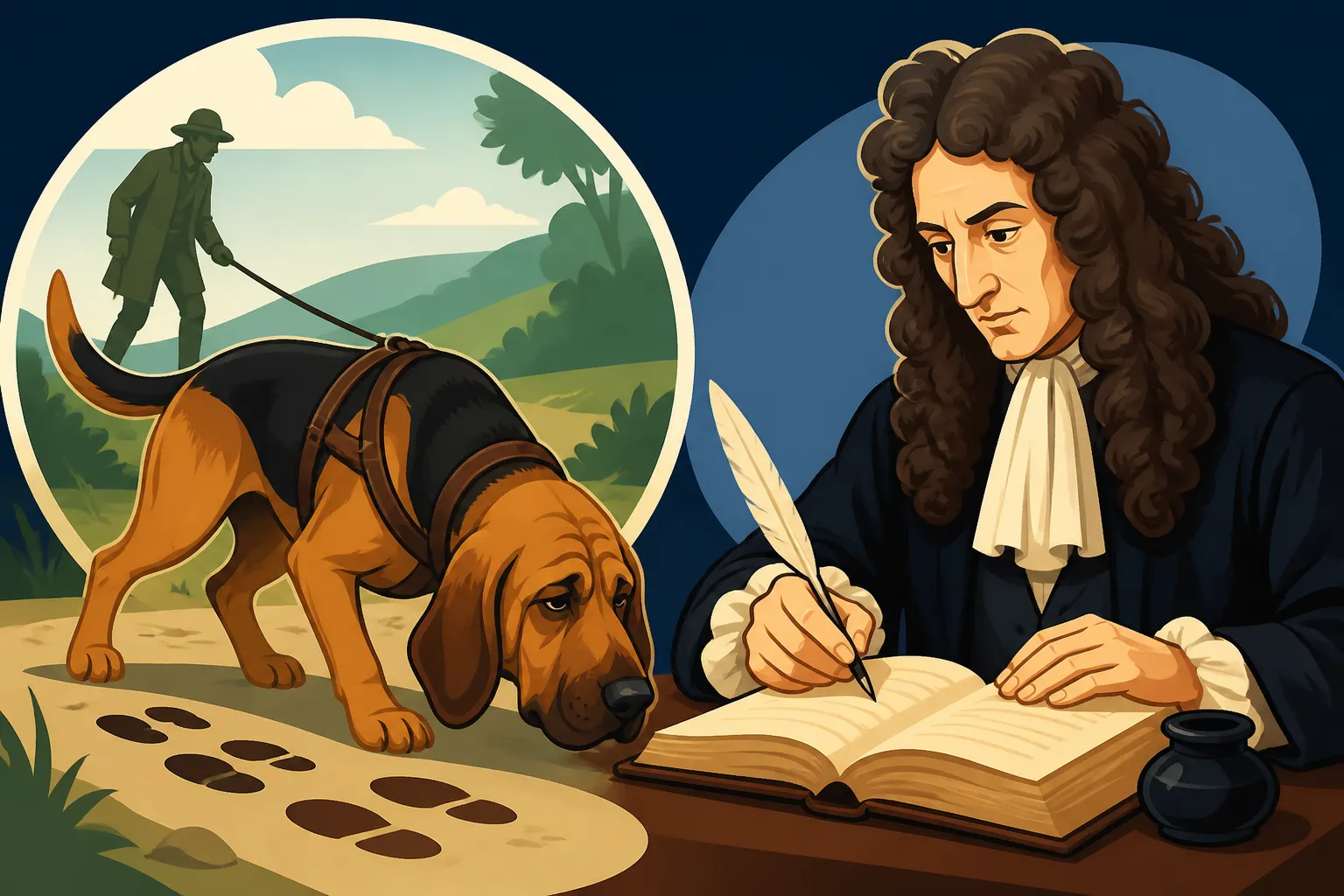
Boyle recounts the tale of a particular Bloodhound, owned by a "Mr. Honeywood," which was tasked with a truly impressive challenge. The dog was asked to follow a human scent that was hours old, and under conditions that weren't always ideal. Imagine, no carefully controlled laboratory environment, just the raw, unpredictable outdoors. The "trail" was essentially a man on horseback, who had ridden a significant distance and then dismounted, leaving his horse and walking away through various terrains. This wasn't a simple "find the person hiding in the backyard" exercise; it was a genuine test of skill and endurance, designed to push the limits of what was thought possible for a dog. The complexity of the track, involving both horse and human scent, and the changes in surface, would challenge even a modern Bloodhound.
The Hound's Incredible Follow
The most captivating part of Boyle's account is the sheer determination and unerring accuracy of the Bloodhound. The dog, picking up the scent, followed it diligently. Boyle notes how the hound would lose the trail momentarily on particularly difficult stretches, perhaps over hard ground or across a stream, but would then circle back, meticulously casting about until it found the scent again. This "casting" behavior, where a dog searches for the lost scent cone, is something we still observe in trailing dogs today. It’s a testament to the Bloodhound’s innate drive and problem-solving ability. The hound didn't give up; it persisted, driven by an invisible thread of scent. The description truly makes you picture the dog, nose to the ground, unwavering in its mission, much like you might see a Bloodhound working on a trail today, perhaps even with a new harness and long line you might pick up from Chewy for your own scent work adventures.
What’s truly striking is the distance covered and the eventual success. The Bloodhound tracked the man for several miles, through fields, over fences, and even where the man had attempted to confuse the trail. Finally, after hours of relentless work, the hound successfully located the man. This success, documented by a respected scientist, lent significant credence to the Bloodhound's reputation as the ultimate scenting dog. How Far a Bloodhound Will Follow a Trail offers more insight into these distances.
The Hound in Question: What We Know About Boyle's Dog
While Boyle doesn't give the specific name of the Bloodhound, his account paints a vivid picture of a working dog of its time. We can infer a lot about its characteristics and how it was handled based on the performance described and the general understanding of Bloodhounds in the 17th century. It wasn't just a dog; it was a prime example of its kind, demonstrating the traits that would make the breed famous for centuries to come.
Breed Characteristics of Early Bloodhounds
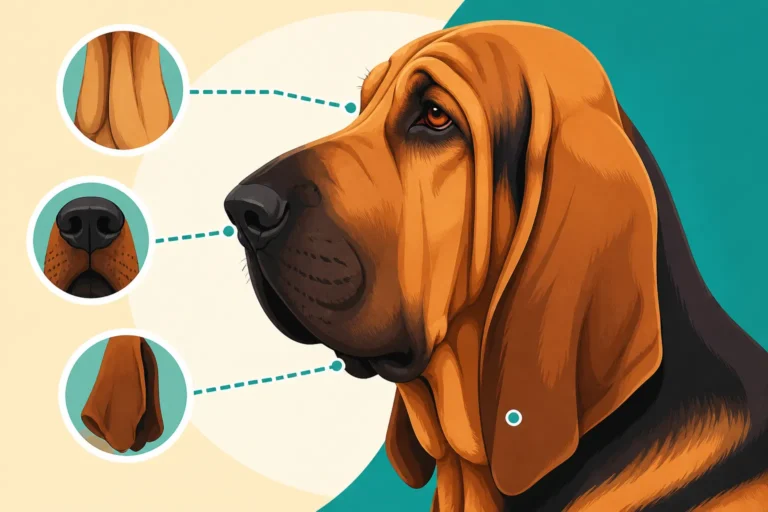
The Bloodhound of Boyle's era would have possessed the foundational traits we still cherish today: an unparalleled olfactory sense, a deep, resonant voice, and an impressive physical build designed for endurance. While appearances might have varied slightly from today's show dogs, the essential working components – the long, pendulous ears that sweep scent, the loose skin that traps scent, and the powerful, muscular body – would have been present. The term "Bloodhound" itself, as explored in What the Name Bloodhound Actually Means, implies purity of breeding and exceptional scenting ability, suggesting this was a dog specifically bred and selected for its trailing capabilities. This was a dog that lived to follow a trail, a characteristic bred into it over generations.
Handling Methods in the 17th Century
Boyle’s account gives us a glimpse into the handling practices of the time. The dog was clearly under the guidance of a handler, even if that guidance wasn't as structured as modern mantrailing protocols. The fact that the hound was "put upon" the scent implies a deliberate deployment, and the handler would have observed and perhaps encouraged the dog. While long lines and specialized harnesses might not have been as refined as the ones you see on Chewy today, there would have been a means to control and guide the dog, even if only loosely. The emphasis, however, was clearly on allowing the dog to do its natural work, trusting its nose, and intervening only when necessary. This reflects a deep understanding and respect for the Bloodhound's innate ability to independently follow a trail, something modern handlers still strive to cultivate.
Impact and Legacy: Why Boyle's Record Matters
Robert Boyle's account wasn't just a curious anecdote; it was a significant piece of documentation that contributed to the scientific understanding of animal senses and behavior. Its impact resonated through the scientific community and helped solidify the Bloodhound's reputation, ultimately paving the way for its unique legal standing centuries later.
A Scientific Validation of Canine Scenting
For the scientific community of the 17th century, Boyle's meticulous recording of the Bloodhound’s performance offered empirical evidence that dogs possessed an astonishing sense of smell, capable of distinguishing and following complex, aged trails. This was groundbreaking. It moved the understanding of canine scenting from folklore and hunting lore into the realm of observable, documentable phenomena. It demonstrated that animals could perform feats that humans found impossible, using senses far superior to our own. This scientific validation was crucial in an era focused on rational inquiry, providing a foundation for future studies into olfaction and animal behavior. It essentially said, "Here is proof of what this creature can do."
Influencing Future Understanding of Olfaction
Boyle's account, even without delving into the biological mechanisms of scent, highlighted the power of olfaction. It showed that scent wasn't just a fleeting presence but something that could persist and be followed with incredible precision. This would have indirectly influenced later scientific thought on the nature of smell and how animals perceive their world. It planted a seed of curiosity about how such an incredible feat was possible, potentially inspiring future generations of naturalists and scientists to explore the mysteries of scent in greater detail. His observation of the Bloodhound casting for scent, for instance, offered early insights into the practical application of scent discrimination, a concept that continues to be refined in modern scent detection training.
Connecting to Modern Bloodhounds: A Timeless Legacy
Boyle's 17th-century account isn't just a dusty historical record; it's a testament to the enduring traits of the Bloodhound breed that are still celebrated and utilized today. From the fields of search and rescue to competitive mantrailing, the core abilities documented by Boyle remain the hallmark of these magnificent dogs.
The Enduring Power of the Bloodhound's Nose
The very qualities that amazed Robert Boyle are the same ones that make the Bloodhound an irreplaceable asset in modern society. The ability to follow an aged, cold trail, to discriminate individual human scent amidst myriad other odors, and to persist relentlessly, are still the defining characteristics. Today's search and rescue Bloodhounds perform feats that echo Boyle's descriptions, following trails that are days old, sometimes over vast and challenging terrains. This continuity speaks to the incredible genetic consistency and specialized breeding that has been maintained over centuries. If you've ever watched a Bloodhound at work, you know that focused, determined drive. Whether a Bloodhound Really Smells Forty Times Better Than a Person dives into this incredible ability.
From Historical Record to Legal Evidence
Perhaps one of the most profound legacies connected to the Bloodhound's documented abilities is its unique standing in the legal system. The Bloodhound is the only dog whose trail evidence is routinely accepted in courts of law. This exceptional status owes a debt to centuries of consistent, documented performance, of which Boyle's account is a significant early example. The reliability and accuracy demonstrated in such historical records paved the way for legal precedents, showing that the Bloodhound’s nose isn't just an impressive natural phenomenon, but a credible tool for justice. The Bloodhound Is the Only Dog Whose Evidence Stands in Court explains this fascinating legal standing in depth.
Boyle's record, while not directly a legal document, contributes to the long historical narrative of the Bloodhound's proven capability, reinforcing the breed's reputation for unerring accuracy. It's this long history of verifiable results that makes their work so compelling in courtrooms.
Challenges and Interpretations of Historical Accounts
While Boyle’s account is incredibly valuable, it’s important to approach historical records with a critical eye. The scientific standards and methods of the 17th century were different from those of today, and we must consider how these differences might affect our interpretation.
The Nature of 17th Century Scientific Reporting
Boyle was a pioneer, but his reporting style, while rigorous for his time, wasn't quite what we'd expect from a modern scientific paper. He didn't include extensive data sets, statistical analysis, or controlled variables in the way a contemporary researcher would. His account is more narrative and descriptive, relying on direct observation rather than repeatable experimentation under laboratory conditions. This doesn't diminish its value, but it means we interpret it as a detailed eyewitness account rather than a formal experiment report. We accept it on the credibility of the observer, which, in Boyle’s case, was very high.
Consider the potential for observer bias, or even the limitations of what could be observed without modern tools. For example, exactly how the scent lay on the ground, or the precise atmospheric conditions, could only be inferred, not measured. However, the consistent success rate described for Bloodhounds over centuries, mirroring Boyle’s observation, lends powerful support to the fundamental accuracy of his description.
What Robert Boyle Did Not Say
It’s also crucial to remember what Boyle's account doesn't tell us. He didn't delve into the genetics of the Bloodhound, nor did he offer a physiological explanation for its superior olfactory abilities. These insights would come much later with advancements in biology and genetics. He also didn't describe the breed's temperament in a broader sense, focusing solely on its working drive. We don't learn about the challenges of living with a Bloodhound, its famous baying, or its tendency to chew everything in sight (perhaps because such items weren't readily available like they are from Chewy today!). His focus was strictly on the observable phenomenon of scent trailing.
His work was a snapshot, a single, albeit detailed, observation. It wasn't a comprehensive study of the breed, but rather a powerful demonstration of one of its most remarkable talents. However, this focused observation was exactly what was needed to lay the groundwork for a scientific appreciation of the Bloodhound's unique place in the canine world.
The Endurance of the Bloodhound's Purpose
The story of Robert Boyle and his documented Bloodhound trial is more than just a historical footnote. It’s a foundational piece in the narrative of this extraordinary breed, demonstrating that the Bloodhound's unparalleled scenting ability has been recognized, respected, and recorded for centuries. It reminds us that while our scientific tools and understanding evolve, the fundamental marvel of a Bloodhound's nose remains a timeless wonder.
From the 17th-century fields to modern-day trailing competitions, the Bloodhound's dedication to scent is unwavering. When you see a Bloodhound with its nose to the ground, working tirelessly, know that you are witnessing a tradition that Robert Boyle himself would have recognized and admired. It’s a legacy of diligence, precision, and an almost magical connection to an invisible world of scent, a legacy that continues to make the Bloodhound one of the most fascinating and valuable canine companions on the planet.
Table: Historical Accounts vs. Modern Understanding of Bloodhound Trailing
To put Boyle's contribution into perspective, let's look at how historical accounts compare to our modern understanding of Bloodhound trailing. This isn't to diminish the past but to highlight the evolution of our knowledge.
| Aspect | 17th Century (Robert Boyle's Era) | Modern Understanding (21st Century) |
|---|---|---|
| Primary Focus | Documenting observable phenomenon; demonstrating capability. | Understanding mechanisms, optimizing training, legal applications. |
| Evidence Type | Detailed narrative, eyewitness account by respected individuals. | Empirical data, scientific studies (e.g., genetics, physiology), statistics. |
| Trail Complexity | Recognized as complex (age, varying terrain, distractions). | Quantified complexity (particulates, ground disturbance, individual scent). |
| Dog Handling | Handler guidance, trusting the dog's instinct. | Structured training protocols, specialized equipment (e.g., long lines, specific harnesses from vendors like Chewy), reward systems. |
| Scientific Context | Early natural philosophy, part of broader natural history. | Specialized fields of olfaction, animal behavior, forensic science. |
| Legal Standing | Reputation for accuracy, basis for future legal acceptance. | Legally accepted evidence with specific handler/dog certification requirements. |
| Breed Recognition | Recognized as a distinct type ("blooded hound") with superior nose. | Formal breed standard, AKC recognition, health testing protocols. |
This table helps illustrate that while the capability of the Bloodhound has been consistently amazing, our understanding and the application of that understanding have certainly grown more sophisticated.
Disclaimer
This article is for general informational purposes only and does not constitute professional advice. Laws, prices and regulations vary by location and change over time. Consult a qualified professional for guidance on your specific situation.