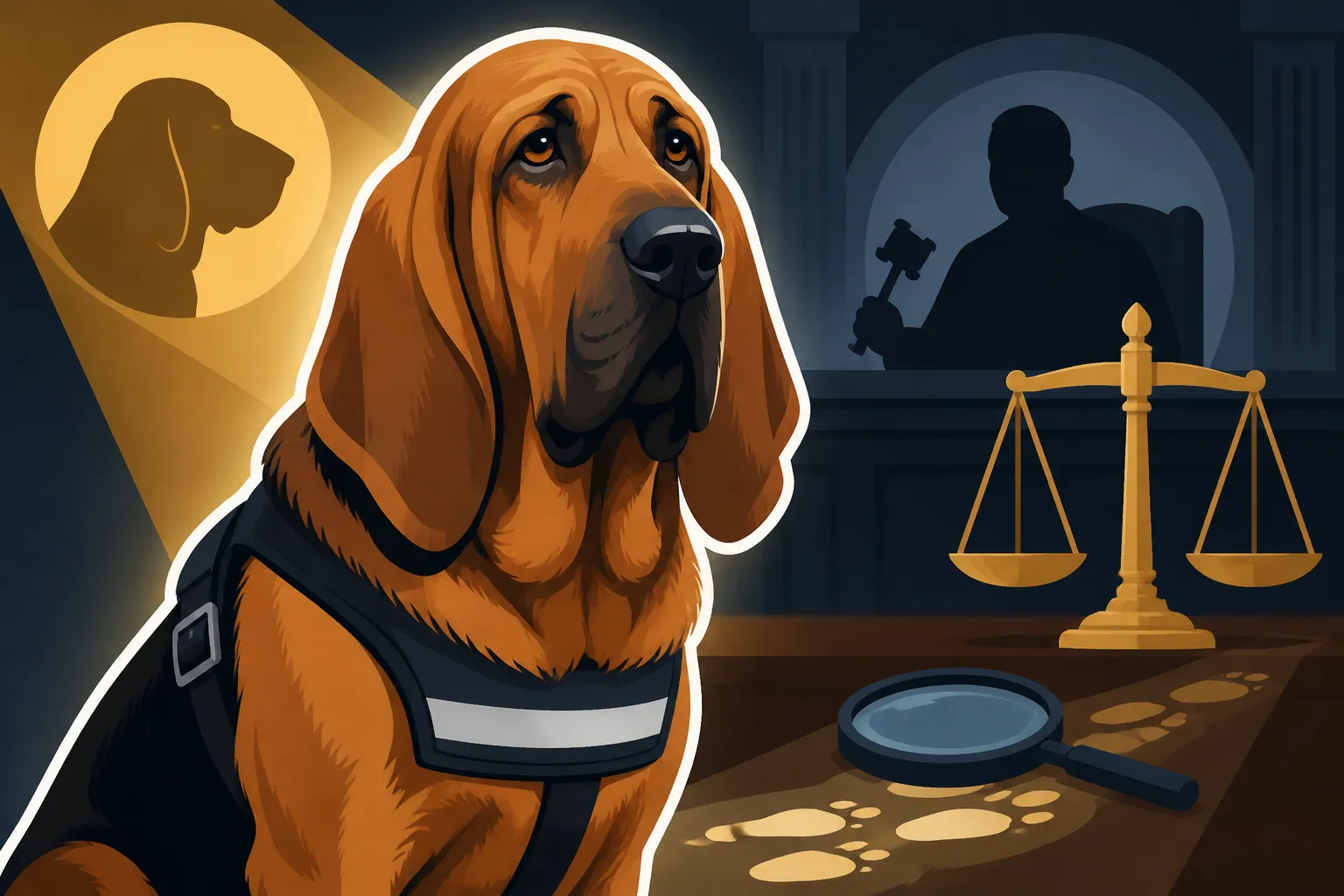
The Bloodhound Is the Only Dog Whose Evidence Stands in Court
For any dog owner, the idea of their beloved companion contributing to something as serious as a legal investigation might seem like something out of a movie. But for Bloodhound enthusiasts, we know the truth: these incredible dogs possess an olfactory power so profound, it actually holds weight in a court of law. It's a heavy responsibility, and it's something that sets our hounds apart from every other breed out there. This guide dives deep into why the Bloodhound's nose is considered a witness on four legs, exploring their unique capabilities, their historical and modern roles in justice, and what it truly means for their trails to stand up under judicial scrutiny.
The Unparalleled Nose: Why Bloodhounds Are Different
When we talk about a Bloodhound's nose, we're not just talking about a keen sense of smell; we're talking about an evolutionary masterpiece specifically honed for trailing. While many breeds have excellent noses, the Bloodhound's is in a league of its own, giving them an almost supernatural ability to detect, differentiate, and follow a specific human scent, even under the most challenging conditions. This isn't just a fun parlor trick; it's the very foundation of their unique legal standing.
The Biology Behind the Bloodhound's Nose
Our Bloodhounds are practically walking scent detectors, and it's all thanks to their incredible anatomy. They possess an estimated 300 million olfactory receptors, dwarfing the mere 5-6 million a human has. This sheer volume allows them to pick up far more scent particles than any other creature, processing them into a detailed "scent picture" in their brain. But it's not just the number of receptors; it's how they're built. The deep, pendulous flews (lips) and long, low-hanging ears of a Bloodhound aren't just for show; they actively work to enhance their scenting ability. As the Bloodhound moves its head, those heavy ears sweep the ground, stirring up scent molecules and directing them towards its nose. This creates a cone of concentrated scent, helping them to maintain focus on the trail. Why a Bloodhound's Ears Sweep Scent Toward Its Nose goes into more detail about this fascinating adaptation. Furthermore, their moist noses trap scent particles effectively, and a specialized organ called the vomeronasal organ, located on the roof of their mouth, allows them to detect pheromones and other chemical signals that are imperceptible to us.
Think about walking through a busy city park. To us, it smells like general "park smells"—cut grass, maybe some exhaust, a hint of coffee from a nearby cafe. To a Bloodhound, it's a cacophony of individual human signatures, each distinct and traceable. They don't just smell a "person"; they smell that specific person. Their brain processes this data in a way that allows them to compartmentalize and prioritize, focusing on the single target scent they're tasked with finding, even amidst a thousand others. This is critical for their work, as any trail they follow in the real world will inevitably be contaminated by countless other scents.
This biological advantage isn't just about finding a scent, but maintaining one scent. Their deep, wrinkled skin on their face and neck also plays a subtle role, collecting scent particles and concentrating them around the nose, much like a funnel. Every aspect of their unique appearance, from their long, droopy ears to their wrinkled brows, contributes to their unparalleled ability to track. It's truly a marvel of natural selection, honed over centuries of selective breeding for this singular purpose.
Distinguishing a Bloodhound's Trail
One of the most remarkable things about a Bloodhound's scenting ability is its capacity to discriminate between individual human scents. Unlike some other tracking dogs that might follow a general "human" smell or the freshest ground disturbance, Bloodhounds are trained to follow one specific person's scent, often referred to as a "scent article" which is given to them at the start of a trail. This might be a piece of clothing, a personal item like a watch, or anything that carries the unique odor signature of the individual they are looking for.
This means that even if the person they're tracking has walked through a crowded mall, crossed a busy street, or even been picked up by a car and then dropped off miles away, a properly trained Bloodhound can often pick up the trail again. They don't get sidetracked by other people's footsteps or by animal trails. Their focus is absolute, almost obsessive, on that one specific human scent. It’s a level of focus that other breeds, for all their talents, simply don't possess to the same degree for trailing human scent. This specialization is precisely what makes their work so valuable in criminal investigations and search and rescue operations.
The science behind this involves understanding that each person leaves a unique scent signature, a complex cocktail of skin cells, sweat, hormones, and bacteria that is as individual as a fingerprint. A Bloodhound can filter out ambient smells and other human scents to lock onto this specific signature. This is why even a relatively old trail can be followed; the microscopic particles of human scent can persist for days, even weeks, under the right environmental conditions. How Old a Trail a Bloodhound Can Follow can give you a deeper understanding of how long a Bloodhound's nose remains effective. They are not merely following tracks on the ground; they are following an airborne "scent cone" left by the person, which can drift and settle in surprising ways.
A Legacy in Law: Historical Precedent of the Bloodhound
The Bloodhound's esteemed position in the legal system isn't a recent development. Their accuracy and persistence have been recognized for centuries, slowly building a body of legal precedent that acknowledges their unique contributions to justice. This historical journey, from ancient hunting grounds to modern courtrooms, highlights how deeply ingrained the Bloodhound's role has become.
Early Accounts and Legal Firsts
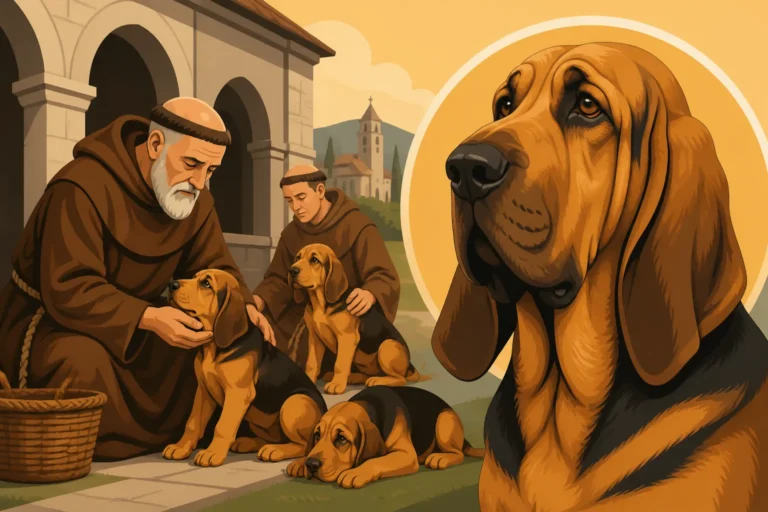
The history of the Bloodhound is intertwined with the pursuit of justice for hundreds of years. Descended from the Saint Hubert Hound bred by monks in the Ardennes region of Europe, these dogs were initially developed for hunting large game, but their incredible scenting ability quickly found another purpose: tracking humans. Early accounts from medieval Europe describe their use in pursuing poachers and criminals, a testament to their reliability even in those nascent legal systems. It wasn't until later, particularly in English common law, that their specific contributions began to be formalized.
One of the earliest and most significant legal acknowledgments of the Bloodhound's work came in the 19th century. In the United States, several states began to accept evidence derived from Bloodhound trails, recognizing the dogs' unique capacity to follow scent. A landmark case often cited is the 1886 case of Pedigo v. Commonwealth in Kentucky, where the court upheld the admissibility of Bloodhound evidence. This was a pivotal moment, as it established a legal framework for how such evidence could be presented and evaluated. This decision, and others like it, set the stage for the Bloodhound to become a legitimate tool in law enforcement, carving out a niche no other dog breed has managed to fully replicate.
The legal system, ever cautious, developed specific criteria for admitting Bloodhound evidence, which we'll discuss further, but the fact that it was admitted at all speaks volumes. It signaled a trust in the dog's innate ability that went beyond mere anecdotal evidence. These early legal recognitions were not granted lightly; they were the result of repeated, documented successes in tracking individuals, often when other investigative methods had failed. This established a critical historical foundation, reinforcing the idea that a Bloodhound's testimony, through its handler, held specific investigative value.
The Role in Early Law Enforcement
As legal precedents grew, so did the integration of Bloodhounds into official law enforcement. Sheriffs' departments, particularly in the Southern United States, were among the first to regularly employ Bloodhounds for tracking purposes. These dogs became indispensable for locating escaped prisoners, finding missing persons, and pursuing criminals across vast, often challenging terrain. Their ability to cover ground quickly and relentlessly, always driven by that single-minded scent focus, made them invaluable assets in an era before advanced forensic science or widespread communication technologies.
The image of a Bloodhound, nose to the ground, leading a determined handler, became iconic. These dogs were often the last resort in desperate situations, and their successes frequently made headlines. Their reputation as "man-trailers" solidified, leading to their widespread adoption by law enforcement agencies. This wasn't just about catching criminals; it was also about bringing peace of mind to families of missing loved ones. The Bloodhound's deep-seated instinct to follow a trail to its conclusion made them perfectly suited for these high-stakes scenarios.
It's important to understand that these dogs weren't just unleashed to run wild. Their deployment was always a highly skilled operation, involving dedicated handlers who understood the nuances of scent, weather conditions, and terrain. The success of early Bloodhound teams built the trust and respect that eventually led to their unique legal standing. Whether Police Departments Still Keep Bloodhounds continues this discussion into contemporary times, highlighting their ongoing contributions to public safety. The consistent, reliable results from these early teams helped to demonstrate, over and over, that the Bloodhound was a scientific instrument in its own right, one that could provide critical information for human investigations.
The Courtroom Canine: How Bloodhound Evidence is Presented
The path from a Bloodhound locating a suspect to that trail being presented as evidence in court is a rigorous one, fraught with legal scrutiny. It’s not enough for the dog to simply find someone; the entire process must adhere to strict rules to ensure the evidence is deemed reliable and admissible. This involves a careful interplay between the dog's natural abilities, the handler's expertise, and the legal standards of the jurisdiction.
Laying the Foundation for Admissibility
For Bloodhound evidence to be considered admissible in court, a solid foundation must be laid. This typically involves proving several key elements to the judge. First and foremost, the specific Bloodhound used must be proven to be a purebred Bloodhound. While any dog can track, the unique genetic predisposition and centuries of selective breeding of the Bloodhound are central to the legal acceptance of their particular abilities. This is usually verified through registration papers from organizations like the American Kennel Club, which certifies their lineage and breed standard.
Secondly, the Bloodhound in question must be shown to be adequately trained and reliable in trailing human scent. This isn't just about general obedience; it's about specialized trailing work. Evidence of consistent, successful trailing in practice runs and actual cases is often required. This might involve keeping detailed logs of the dog's training exercises, including the type of terrain, age of the trail, and the outcome. Many jurisdictions require that the dog successfully complete a certain number of trails, with known outcomes, before their evidence can be admitted. For example, a dog might need to have successfully found the "missing person" in a set percentage of training exercises, demonstrating consistent accuracy.
Finally, and crucially, the handler presenting the evidence must be proven to be competent and experienced. The handler is effectively the "voice" of the Bloodhound in court, translating the dog's actions into understandable evidence. This means demonstrating proper training in handling Bloodhounds for trailing, understanding scent dynamics, and adhering to strict protocols during a trail. If a handler isn't properly trained, the evidence might be excluded, regardless of the dog's skill. This often involves certifications from reputable organizations or proof of extensive on-the-job experience. When purchasing dog food or training supplies from retailers like Chewy, ensuring you have the right equipment to support this rigorous training is vital.
Handler Testimony and Cross-Examination
When Bloodhound evidence is presented, it's typically through the testimony of the handler. The handler doesn't just state that the dog found someone; they explain the entire process, step-by-step. This includes details such as: where the scent article was obtained, how the dog was introduced to the scent, the environmental conditions during the trail (wind, temperature, terrain), the dog's behavior during the trail (e.g., pulling strongly, showing excitement, indications of losing and regaining scent), and the exact path the dog took. The handler's testimony is crucial because it provides the human interpretation and contextualization of the dog's actions, making it comprehensible for a jury.
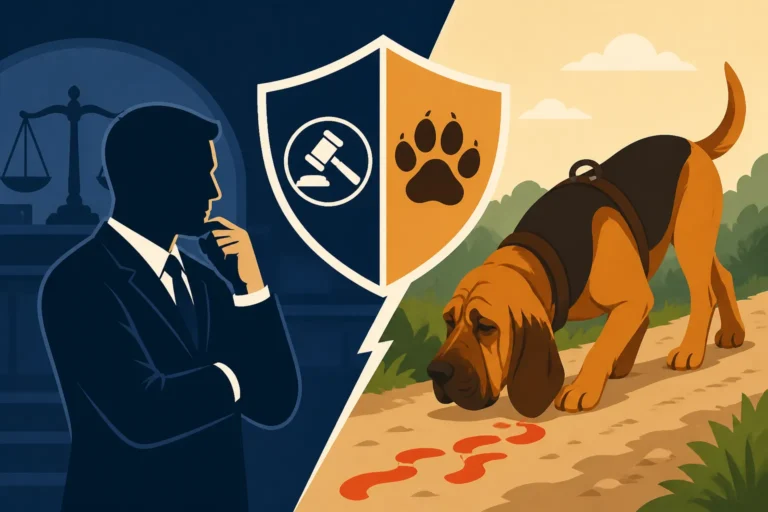
During cross-examination, the defense attorney will often challenge various aspects of the Bloodhound's trail and the handler's testimony. This is where the meticulous record-keeping and training documentation become paramount. The defense might question the dog's reliability, the handler's methods, the possibility of scent contamination, or even the Bloodhound's "motivation" for following a particular path. For instance, they might ask if the dog was simply following animal tracks, or if the handler inadvertently influenced the dog's direction. Whether a Defense Can Challenge a Bloodhound's Trail elaborates on the legal strategies employed to question such evidence.
This rigorous examination underscores the legal system's caution when dealing with non-human evidence. The handler must be able to articulate why they trust their dog's actions and why the trail they followed is attributable to the specific person. It's a testament to the Bloodhound's consistent performance that their evidence has withstood such scrutiny over the years. The handler essentially acts as a scientific expert, interpreting data (the dog's behavior on the trail) and presenting it in a way that is credible and understandable to a lay audience. They must be prepared to defend every decision made during the trail, highlighting the professionalism and dedication required for this specialized work.
Beyond the Trail: What Bloodhound Evidence Actually Means
It’s easy to imagine a dramatic courtroom scene where a Bloodhound's trail leads directly to a conviction. While their work is undoubtedly powerful, it's crucial to understand that Bloodhound evidence rarely stands alone as the sole piece of incriminating proof. Its primary role is often to guide investigations, establish probable cause, or corroborate other evidence.
Corroborating Evidence: The Necessary Supplement
In most legal jurisdictions, a Bloodhound's trail is considered circumstantial evidence, meaning it suggests a fact but doesn't directly prove it. Therefore, it almost always needs to be supported by other forms of evidence to secure a conviction. Think of it this way: the Bloodhound indicates that a specific person likely traveled a certain path from point A to point B. This is incredibly valuable information, but it doesn't, by itself, prove intent, motive, or guilt.
For example, if a Bloodhound tracks a suspect from a crime scene to a specific house, that trail, by itself, doesn't prove the person in the house committed the crime. However, if police then find the stolen goods, the weapon, or other forensic evidence (like fingerprints or DNA) at that house, the Bloodhound's trail provides crucial corroboration, linking the suspect to the crime scene and strengthening the overall case. This complementary role is where Bloodhound evidence truly shines. It connects dots that might otherwise remain disconnected, providing a critical lead or piece of the puzzle for human investigators. This is why you'll rarely hear of a conviction based solely on a dog's trail; Whether a Bloodhound's Trail Alone Can Convict explains this legal nuance in more detail.
The legal system acknowledges the Bloodhound's ability to track, but it also recognizes the inherent limitations of interpreting an animal's actions. No matter how accurate a Bloodhound is, its "testimony" must always be channeled through a human handler and supported by other human-collected evidence. It's about building a robust case where multiple pieces of evidence point to the same conclusion, rather than relying on a single, albeit impressive, source. The Bloodhound serves as an expert guide, directing human attention and resources to the most fruitful areas for investigation.
The "Probable Cause" Standard
One of the most frequent and critical applications of Bloodhound evidence is in establishing probable cause. In law, probable cause is the standard by which police authorities have reason to obtain a warrant for a search or to make an arrest. It requires more than just suspicion, but less than the level of evidence needed for a conviction. A Bloodhound's successful trail can be a powerful factor in meeting this standard.
Imagine a situation where a suspect is identified, but police lack direct evidence to link them to a crime scene. If a Bloodhound successfully tracks a scent from the crime scene directly to the suspect's residence or vehicle, this can provide the probable cause necessary for law enforcement to obtain a search warrant. With that warrant, they can then legally search the premises for physical evidence that directly implicates the suspect. In this scenario, the Bloodhound's work acts as the bridge, allowing investigators to move forward in a legally sound manner. Without that initial trail, the investigation might hit a dead end, unable to gather further evidence.
Furthermore, Bloodhound trails can also contribute to establishing probable cause for an arrest. If a dog trails directly to an individual hiding in a dense wooded area or an abandoned building, this strong indication of their presence and proximity to the scene of an incident can justify an arrest, even before a full investigation has concluded. In essence, the Bloodhound provides a highly credible "lead" that meets the legal threshold for further action. It's an indispensable tool in the early stages of an investigation, helping to narrow down suspects and focus resources effectively. Whether a Bloodhound Finds People With Dementia showcases another vital area where Bloodhounds provide immediate, actionable intelligence, often for locating vulnerable individuals quickly.
The Bloodhound's Accuracy: Challenges and Criticisms
Despite their renowned abilities and legal standing, Bloodhound evidence isn't without its challenges and criticisms. Like any forensic tool, its effectiveness can be influenced by various factors, and its interpretation has been the subject of debate within legal and scientific communities.
Factors Affecting Trail Reliability
The reliability of a Bloodhound's trail can be impacted by a multitude of factors, making each scenario unique. Environmental conditions play a massive role. Wind can disperse scent particles, making it harder for the dog to follow a direct path, or even carry scent in directions that don't match the actual movement of the person. Rain can wash away scent, while extreme heat or cold can degrade it more quickly. The type of terrain also matters; scent can linger longer on natural surfaces like grass or soil, but may dissipate quickly on hard, paved surfaces like asphalt or concrete.
The age of the trail is another significant factor. While Bloodhounds are known to follow very old trails, the older the scent, the more degraded it becomes, and the more susceptible it is to environmental interference. A trail that's several days old will inherently be more challenging to follow than one laid just hours prior. Additionally, the amount of scent left by the individual can vary. Someone who is running or agitated may shed more skin cells and sweat, leaving a stronger, more persistent trail than someone walking calmly.
Finally, the skill and experience of the handler are paramount. A highly trained handler knows how to "read" their dog, recognizing subtle changes in behavior that indicate the dog is on scent, has lost it, or is working through contamination. An inexperienced handler might misinterpret these signals, leading to an unreliable trail. The handler must also ensure the scent article is uncontaminated and properly presented to the dog. All these variables mean that while a Bloodhound's nose is incredible, the conditions under which it's deployed and the expertise of its human partner are just as critical to the reliability of its work.
Instances of Disputed Evidence
Given that Bloodhound evidence is circumstantial, it has, naturally, faced its share of legal challenges and criticisms. Cases have arisen where the reliability of a Bloodhound's trail has been hotly contested, leading to appeals or even reversals of convictions. These disputes often highlight the inherent difficulties in presenting animal behavior as irrefutable proof in a court of law. One common criticism revolves around the potential for human error or handler bias. Even unconsciously, a handler might influence their dog's path, or misinterpret a signal, leading to a "false positive" or a trail that doesn't accurately reflect the suspect's movements.
There have been documented cases where Bloodhound trails led to individuals who were later proven innocent by other evidence, raising questions about the absolute infallibility of the dogs. This isn't to say Bloodhounds are inherently flawed, but rather that like any investigative tool, they are not perfect and must be used judiciously. The legal system acknowledges that Whether a Bloodhound Can Be Wrong is a valid concern, and therefore requires corroborating evidence to mitigate this risk. These instances have prompted courts in some jurisdictions to impose even stricter admissibility standards for Bloodhound evidence, emphasizing the need for comprehensive training records, expert handler testimony, and the presence of supporting facts.
The debates surrounding Bloodhound evidence often center on the fine line between their extraordinary natural ability and the scientific rigor required in a courtroom. Critics argue that scent evidence, being invisible and ephemeral, is difficult to verify objectively after the fact. Proponents counter that with proper protocols, well-trained dogs, and experienced handlers, Bloodhounds offer an unparalleled investigative advantage that has a proven track record of solving crimes and finding missing persons. The ongoing dialogue ensures that while Bloodhounds remain a vital part of law enforcement, their unique evidence is continuously scrutinized to uphold the highest standards of justice.
Training and Certification: The Making of a Court-Ready Bloodhound
A Bloodhound isn't born ready for the courtroom; it takes years of dedicated, specialized training to hone their natural abilities into a reliable, legal asset. This intensive process involves both the dog and the handler, culminating in certifications that underscore their competence and the trustworthiness of their work.
The Rigorous Training Regimen
The training for a court-ready Bloodhound begins almost from puppyhood, focusing on fostering their natural scent drive and channeling it into specific trailing behaviors. Puppies are exposed to short, simple trails with known "runaways" (helpers who lay the trail), gradually increasing the difficulty in terms of length, age of scent, and environmental distractions. The goal is to make trailing a highly rewarding experience, usually through praise, toys, and high-value treats (which can be found at Chewy, among other places). This positive reinforcement ensures the dog maintains its enthusiasm and focus.
As they mature, the training becomes more complex. Dogs are taught to work on various surfaces, through different weather conditions, and to ignore ambient distractions like other animals, people, or tempting smells. They learn to indicate when they are on scent, when they have lost it, and when they have found their "quarry." A critical part of this training is "negative proof" or knowing when the dog isn't finding scent, which helps confirm a person didn't go in a specific direction. Repetition, consistency, and a deep understanding of canine behavior are key to shaping these natural instincts into a reliable, verifiable skill.
The rigorous training isn't just about the dog; it's about conditioning the dog and handler to work as a seamless unit. The handler learns to interpret their dog's body language, to trust its nose, and to support it through challenging trails. This partnership is forged over countless hours, ensuring that when they are deployed in a real-world scenario, they can operate effectively under pressure. It's a demanding process, but it's what transforms a talented Bloodhound into an indispensable tool for justice.
Handler Expertise and Certification
While the Bloodhound's nose is the star, the handler is the director, interpreter, and legal representative. Therefore, handler expertise is just as crucial as the dog's training. Handlers undergo extensive training themselves, learning about scent theory, canine psychology, first aid for working dogs, navigation, and legal protocols for evidence collection. They are taught how to manage their dog on a long line, how to read scent patterns, and how to maintain meticulous records of every training session and operational deployment.
Certification is a critical step for both the dog and handler team. Various organizations, such as the National Police Bloodhound Association or the American Bloodhound Club, offer certification programs that evaluate a team's proficiency. These certifications often involve testing the team on trails of varying difficulty, including blind trails (where the handler doesn't know the route of the "missing person") and trails with multiple cross-contaminations. Passing these tests demonstrates a high level of competence and adherence to established standards, lending credibility to their future work in legal settings. What an American Bloodhound Club Trailing Title Requires details some of these demanding standards.
The importance of ongoing training and education for handlers cannot be overstated. Scent work is dynamic, and new challenges constantly emerge. Handlers must stay current with best practices, attend seminars, and continuously refine their skills. This commitment to excellence ensures that Bloodhound teams remain highly effective and that their evidence continues to be respected in court. A well-trained handler not only maximizes their dog's potential but also ensures that any evidence gathered is collected and presented in a manner that can withstand intense legal scrutiny.
The Modern Bloodhound in Law Enforcement and Search & Rescue
Even with advancements in forensic science and technology, the Bloodhound remains an indispensable asset in modern law enforcement and search and rescue operations. Their unique ability to follow human scent over long distances and varied terrain simply cannot be replicated by any machine or human.
Current Use in Police and SAR
Today, Bloodhounds continue to be deployed by police departments, sheriff's offices, and volunteer search and rescue (SAR) teams across the globe. They are frequently called upon for a wide range of missions, including locating missing children, elderly individuals with dementia who have wandered off, hikers lost in the wilderness, and suspects who have fled a crime scene. Their ability to discriminate individual scents means they can often pick up a specific person's trail even in urban environments or areas with high foot traffic, where other methods might fail.
Police K9 units specifically dedicated to trailing often utilize Bloodhounds because of their recognized legal standing. When a Bloodhound makes a find or establishes a trail, the subsequent actions of law enforcement are strengthened by the dog's credible evidence. This often leads to quicker resolutions in missing person cases, potentially saving lives, and provides crucial leads in criminal investigations. Bloodhounds also play a vital role in natural disaster response, although their specialization in live human scent trailing often complements, rather than replaces, other SAR dog disciplines like cadaver or wilderness search dogs.
The rigorous training and certification programs mentioned earlier ensure that these modern Bloodhound teams operate with the utmost professionalism. Their deployment is strategic, often occurring after initial human searches have yielded no results, or when a specific scent article is available. They serve as a critical component in a multi-faceted approach to public safety, proving that some capabilities, like the Bloodhound's nose, are timeless and irreplaceable.
The Enduring Value of the Bloodhound's Specialization
In an age of DNA analysis, satellite imagery, and drone technology, one might wonder why an ancient breed of dog still holds such prominence. The answer lies in the Bloodhound's specialization: the ability to follow a unique human scent across diverse and often degraded environments. While technology excels at broad-area searches or analyzing microscopic evidence after it's collected, it cannot, with the same precision and efficiency, follow an invisible trail left by a single individual through a complex landscape.
A drone might map a vast area, but it won't tell you where a person walked or who walked there. DNA analysis identifies a person from a sample, but it doesn't tell you their path. The Bloodhound fills this crucial gap, providing directional intelligence and pinpointing locations that human searchers or technology might overlook. This is particularly valuable in cases where time is of the essence, such as locating a lost child or a vulnerable adult, where every minute counts. The "real-time" nature of a Bloodhound's trail, as it unfolds, offers immediate, actionable intelligence that static forensic evidence cannot.
The Bloodhound's enduring value also stems from its cost-effectiveness compared to prolonged, large-scale human searches or extensive deployment of high-tech equipment. A well-trained Bloodhound team can cover vast areas more efficiently and with greater focus, directing resources precisely where they are needed. They are, in essence, a living, breathing, highly sensitive forensic instrument, whose singular talent for human scent trailing continues to be a cornerstone of investigative work, providing a bridge between the unseen world of scent and the tangible evidence required for justice.
Ethical Considerations and Public Perception
The unique legal standing of the Bloodhound also brings with it significant ethical considerations and influences public perception. As with any powerful tool, its use must be approached with responsibility, transparency, and a clear understanding of its capabilities and limitations.
Balancing Justice and Canine Capability
The ethical use of Bloodhound evidence revolves around ensuring that the pursuit of justice is balanced with a realistic understanding of canine capability. While Bloodhounds are incredibly accurate, they are not infallible. They are animals, subject to instincts, environmental factors, and the interpretations of their human handlers. Therefore, relying too heavily on Bloodhound evidence without sufficient corroboration can lead to miscarriages of justice. The legal system, by typically requiring corroborating evidence, attempts to strike this balance.
Handlers and agencies employing Bloodhounds bear a significant ethical responsibility. This includes ensuring the dogs are consistently and rigorously trained, that handlers are competent and honest in their reporting, and that the evidence is presented fairly and without exaggeration in court. Misrepresenting a Bloodhound's capabilities or a handler's interpretation of a trail not only undermines the credibility of the specific case but also erodes public trust in the use of K9 evidence as a whole. Ethical guidelines often dictate that handlers must testify to what the dog did, not what the dog thought or intended.
Furthermore, the welfare of the working Bloodhound itself is an ethical consideration. These dogs undergo demanding training and often work in stressful, high-stakes environments. Ensuring they receive proper care, regular veterinary check-ups (perhaps from supplies ordered via Chewy), and adequate rest and enrichment is paramount. Their physical and mental well-being directly impacts their performance and, by extension, the reliability of the evidence they help to gather. Balancing the need for effective law enforcement with responsible animal stewardship is a continuous ethical challenge.
Public Understanding vs. Legal Reality
Public perception of Bloodhounds, often shaped by media portrayals, can sometimes differ significantly from the legal reality of their work. Movies and television often depict Bloodhounds as infallible detectors, always leading directly to the guilty party, and sometimes even showing them "pointing" directly at a suspect in a dramatic courtroom scene. This creates a myth of absolute certainty that doesn't fully align with how their evidence is handled in actual legal proceedings.
The reality, as discussed, is far more nuanced. Bloodhound evidence is usually circumstantial, requires extensive foundational proof for admissibility, and almost always needs corroboration. The dogs don't "testify" in court; their actions are interpreted and presented by their human handlers, who are then subject to cross-examination. This gap between dramatic fiction and legal fact can sometimes lead to misunderstandings or skepticism when Bloodhound evidence is introduced in real cases. People might expect the dog's trail to be the definitive answer, when in truth, it's often just one vital piece of a much larger evidentiary puzzle.
Educating the public about the true capabilities and limitations of Bloodhounds in legal settings is important for maintaining trust and understanding. When communities understand the careful protocols, rigorous training, and corroborative requirements behind Bloodhound evidence, they are more likely to appreciate its true value as a legitimate and powerful investigative tool. It's about respecting the extraordinary abilities of these animals while also acknowledging the scientific and legal frameworks that govern their contributions to justice.
Disclaimer
This article is for general informational purposes only and does not constitute professional advice. Laws, prices and regulations vary by location and change over time. Consult a qualified professional for guidance on your specific situation.