What an American Bloodhound Club Trailing Title Requires
So, you're dreaming of earning an American Bloodhound Club (ABC) Trailing Title with your incredible hound. It's an ambition that speaks to the heart of what Bloodhounds were bred for, but let's be honest, the process can feel a bit shrouded in mystery and serious-sounding requirements. This guide is here to demystify what earning an ABC Trailing Title truly entails, breaking down the expectations, training, and commitment needed to see your Bloodhound shine in their natural element.
Understanding the American Bloodhound Club Trailing System
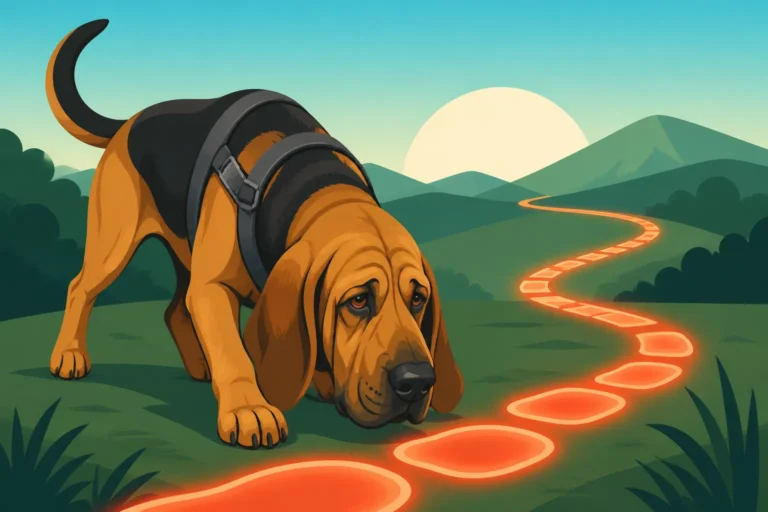
For Bloodhound enthusiasts, the American Bloodhound Club (ABC) stands as the guardian of the breed's unique trailing heritage. While other organizations offer scent work titles, the ABC's program is specifically tailored to the Bloodhound's unparalleled ability to follow human scent over long distances and varied terrain. Achieving an ABC trailing title isn't just a ribbon; it's a testament to your Bloodhound's inherent talent and your dedication to nurturing it, proving that their nose really is the best in the business.
The Different Levels of Trailing Titles
The ABC trailing titles are a progression, each building upon the skills and challenges of the last. Think of it as a ladder, where each rung requires greater precision, endurance, and ability to handle complexity. The titles you'll encounter are Trailing Dog (TD), Trailing Dog Excellent (TDX), Variable Surface Tracker (VST), and finally, Champion Tracker (CT). Each title represents a significant milestone in your Bloodhound's development as a working scent hound, validating their incredible genetic gifts.
The journey often begins with the Trailing Dog (TD) title. This is where the foundation is laid, requiring your Bloodhound to follow a trail of a specific length and age, with a set number of turns and typically culminating in finding a "victim" and a scent article. It’s challenging, but it’s designed to be achievable for a well-trained, focused Bloodhound and handler team. It’s about proving a reliable nose and a cooperative working relationship.
Moving up, the Trailing Dog Excellent (TDX) title demands a more seasoned team. The trails are longer, older, include more turns, and traverse more difficult terrain, often involving obstacles or changes in ground cover. This isn't just about finding the person; it's about navigating more complex scent environments and demonstrating sustained focus. The VST, or Variable Surface Tracker, is a distinct challenge. This title focuses on a Bloodhound's ability to trail over various surfaces, including pavement, concrete, and inside buildings, often in urban or semi-urban environments. It tests their adaptability and precision when the scent picture might be less defined than on natural ground. Finally, the Champion Tracker (CT) title is the pinnacle, awarded to a Bloodhound that has earned all three preceding titles: TD, TDX, and VST. It's a comprehensive demonstration of mastery across all aspects of trailing, a true testament to the Bloodhound's versatility and unparalleled scenting prowess.
Why the American Bloodhound Club?
The American Bloodhound Club's trailing program holds a special place because it focuses solely on the Bloodhound's unique capabilities and preserves the historical purpose of the breed. Unlike general tracking tests that might emphasize a dog following ground disturbance, ABC trailing tests are specifically about human scent discrimination and following. This distinction is critical because it plays directly into the Bloodhound's genetic strengths—their phenomenal ability to follow an individual's unique scent signature, even when it's faint, old, or contaminated by other odors.
When you pursue an ABC title, you're not just participating in a dog sport; you're engaging with a tradition that dates back centuries, celebrating the very characteristic that makes the Bloodhound famous worldwide. The Club’s dedication ensures that these tests remain true to the breed's heritage, providing rigorous yet fair challenges that truly showcase what a Bloodhound can do. It's also an incredible way to connect with other Bloodhound owners and handlers who share your passion for these magnificent scent hounds. The community around the ABC is incredibly supportive, offering mentorship and camaraderie as you navigate the complexities of training and trials.
Foundational Skills and Training for a Bloodhound
Earning an ABC trailing title isn't something you can rush. It's a journey that starts long before you ever consider entering a test. It requires building a solid foundation of trust, understanding, and a deep appreciation for your Bloodhound's natural instincts. This isn't your typical obedience class; it’s about learning to communicate with a dog whose primary language is scent, and whose focus can be utterly consumed by a trail.
Building the Relationship and Basic Obedience
While trailing is highly instinctual for a Bloodhound, a strong bond and some fundamental obedience are absolutely crucial. Imagine trying to work a trail with a dog that constantly pulls in random directions or ignores you completely. It would be frustrating and ineffective. Your Bloodhound needs to understand that you are their partner, even when their nose is leading the way. Basic commands like "come," "stay," and "wait" are vital, not to override their scenting, but to manage their movement and keep them safe, especially around roads or other hazards. You'll find that building this foundation makes everything else so much smoother. A dog that respects your guidance, even implicitly, will be much easier to work with when the scent takes them into challenging areas. Mantrailing Is the Answer to a Bloodhound, Not Obedience really emphasizes that while obedience is important, it's about channeling their drive, not suppressing it.
This relationship building starts from puppyhood. Socialization, positive reinforcement, and consistent, fair training are key. Think of BAXTER & Bella's approach to puppy training, which emphasizes positive methods and building a strong, cooperative relationship. While they might not focus specifically on trailing, the principles of clear communication and reward-based learning are universally applicable. It's about making training a positive experience, so your Bloodhound wants to work with you, even when the world of scent is screaming for their attention. A Bloodhound that trusts you will be more confident and perform better under pressure during a test.
Developing the Scent Work Drive
This is where the real magic begins with your Bloodhound. Developing their scent work drive means harnessing that incredible nose and channeling it into a productive, directed activity. You start with simple, fresh trails, making it incredibly easy for your puppy or young adult Bloodhound to succeed. The goal in these early stages is purely to build confidence and reinforce the idea that following a specific person's scent leads to a fantastic reward. Don't worry about perfection; celebrate every successful find! Starting a Bloodhound Puppy on a Trail is a fantastic resource for these early steps.
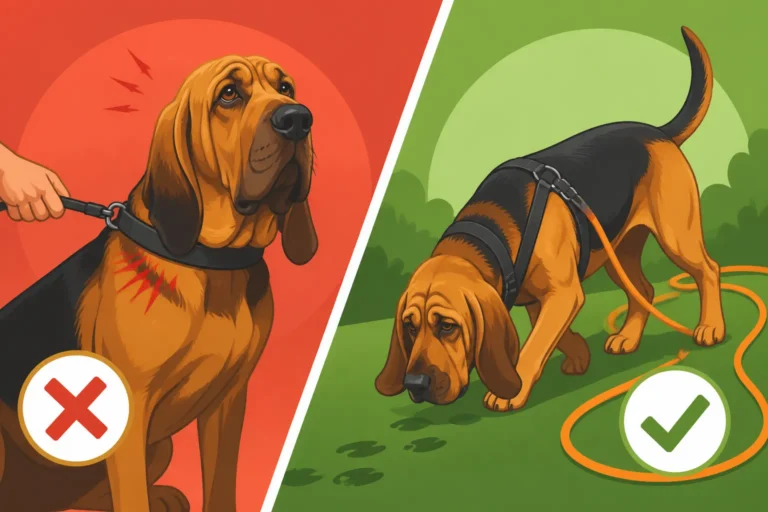
As your Bloodhound gains experience, you'll gradually increase the difficulty. This means making trails a bit longer, introducing more turns, and allowing the trail to "age" for a short period before your dog begins to work it. You'll also start introducing a "scent article" – an object handled by the person they are tracking – to help them focus on a specific individual's scent. How to Introduce a Bloodhound Puppy to a Scent Article can give you specific ideas. For equipment, you'll absolutely need a good quality trailing harness and a long line. Forget collars for serious trailing; a harness distributes pressure evenly and allows your Bloodhound to pull without choking, while the long line gives them freedom to work the scent while keeping them safe. You can find excellent options for harnesses and long lines on Amazon, ensuring you have durable gear that can stand up to the rigors of trailing. The choice of harness is crucial, as Which Harness a Bloodhound Trails In details. A well-fitting, comfortable harness ensures your Bloodhound can concentrate fully on their job without discomfort.
Progression is key. You'll move from simple grass trails to varied surfaces, light woods, and eventually more challenging environments. It's a patient process of gradual increases, always setting your Bloodhound up for success. You’ll be amazed at how quickly their natural abilities kick in and how much they love this work. For a Bloodhound, finding a trail and following it is like solving the most engaging puzzle imaginable. The First Year With a Bloodhound That Already Wants to Trail provides a roadmap for this crucial early development.
Preparing for an ABC Trailing Test
So, you've put in the time, your Bloodhound is showing incredible promise, and you're thinking about that first title. Preparing for an ABC trailing test is about more than just having a dog that can follow a scent; it's about understanding the rules, the environment, and how to effectively manage both yourself and your Bloodhound on test day. This phase is less about teaching your dog to trail, and more about refining their skills and ensuring they can perform consistently under varied conditions and according to strict regulations.
Eligibility and Test Day Logistics
Before you can even sign up, there are a few basic eligibility requirements for your Bloodhound. Generally, your dog must be registered with the AKC and of a minimum age (often 6 months for TD, though some recommend waiting until they're a bit older and more mature for competitive work). They need to be in good health and temperament, suitable for working around people and in different environments. It's always best to check the most current ABC regulations or the specific test premium for exact requirements.
Test day itself can be a whirlwind of activity, but knowing what to expect can help ease your nerves. You'll typically arrive early for check-in and to get your assignment. A "track layer" (the person whose scent your dog will follow) will be assigned to your Bloodhound, and a "judge" will observe and score your performance. The trails are laid out meticulously, often early in the morning, and allowed to age for a specific time. You'll receive instructions on where to start, present your scent article, and then it's just you and your Bloodhound, following their nose. Handlers often call ahead to the clinic for emergency services, but for testing, it's critical to know when and where to be. Remember that What an American Bloodhound Club Trailing Test Entry Costs is a consideration, so being prepared is key.
Practicing in different conditions is paramount. Don't just train in your backyard or the local park. Expose your Bloodhound to busy urban areas (for VST), dense woods, open fields, and various weather conditions. A Bloodhound that has only trailed in perfect conditions might struggle when faced with wind, rain, or a lot of distracting human activity. The goal is to make them resilient and adaptable, so nothing on test day is a complete surprise. Your calm demeanor on test day also significantly impacts your dog's performance, as they pick up on your stress.
The Specific Requirements for Each Title
Each ABC trailing title has increasingly stringent requirements designed to test different aspects of your Bloodhound's ability and your partnership. Understanding these nuances is key to knowing when your team is ready to compete.
-
Trailing Dog (TD): This is your entry-level title. The trail is typically between 440 and 500 yards long, laid 30 minutes to 2 hours before your Bloodhound starts. It will have at least 3, but no more than 5, turns. At the end of the trail, your Bloodhound must locate a "victim" and a specific scent article from that person. The terrain is usually natural, like fields or light woods. Success here demonstrates that your Bloodhound can reliably follow a relatively fresh scent over a reasonable distance, making proper turns, and finding the individual.
-
Trailing Dog Excellent (TDX): Stepping up the game, TDX trails are much longer—between 800 and 1000 yards—and significantly older, typically 3 to 5 hours. The number of turns increases to 5 to 7, and the trail will incorporate more varied and challenging terrain, like dense underbrush, fences, ditches, or even changes in elevation. There will also be two "cross trails" laid by other people, designed to distract and challenge your Bloodhound's ability to discriminate the correct scent. The dog must identify the specific track layer and their article at the end. How Far a Bloodhound Will Follow a Trail gives you an idea of the distances involved. This title really tests a Bloodhound's endurance, focus, and ability to ignore confusing scent information.
-
Variable Surface Tracker (VST): The VST is a different beast entirely. It's designed to showcase a Bloodhound's ability to trail in urban or semi-urban environments where natural surfaces are interspersed with pavement, concrete, gravel, and even inside buildings. The trail is 600 to 800 yards long, 3 to 5 hours old, with 4 to 6 turns. Crucially, at least one-third of the trail must be on non-vegetated surfaces. There are also at least two scent articles to find along the way, as well as the track layer at the end. This title requires incredible precision, as scent can "lift" and travel differently on hard surfaces, making it much harder for the dog to pinpoint the exact path.
-
Champion Tracker (CT): This isn't a separate test, but an honorary title awarded when a Bloodhound has successfully earned their TD, TDX, and VST titles. It's the ultimate recognition of a Bloodhound's comprehensive trailing abilities across all conditions and challenges.
Here's a quick overview of the main title requirements:
| Title | Trail Length (Yards) | Trail Age (Hours) | Number of Turns | Terrain | Cross Trails | Articles |
|---|---|---|---|---|---|---|
| TD | 440-500 | 0.5-2 | 3-5 | Natural | None | 1 |
| TDX | 800-1000 | 3-5 | 5-7 | Varied, obstacles | 2+ | 1 |
| VST | 600-800 | 3-5 | 4-6 | Mixed (non-veg 1/3+) | None | 2+ |
| CT | N/A | N/A | N/A | N/A | N/A | N/A |
Common Challenges and How to Overcome Them
Trailing tests are tough, and it's rare for a team to pass every time. There are several common challenges that can trip up even the most experienced Bloodhound and handler. Recognizing these can help you prepare more effectively.
One major hurdle is environmental distractions. During a test, your Bloodhound might encounter deer, rabbits, other people, or even stray trash. While a Bloodhound's focus on scent is legendary, they are still dogs. Training in increasingly distracting environments is essential. Gradually introduce these elements, always rewarding your Bloodhound for staying on task. This is where your strong bond and clear communication come into play; a quick verbal cue can help redirect their attention back to the trail.
Handler errors are another significant factor. It’s easy to get nervous or second-guess your Bloodhound, especially when the trail seems to vanish. However, micro-managing or "reading" your dog too much can actually confuse them. Trust your Bloodhound's nose. They know where the scent is, even if it doesn't make sense to your human logic. Learn to read your dog's subtle cues—the change in tail carriage, the head movement, the slowing or speeding of their pace—to understand their communication. What a Bloodhound Does When It Loses the Trail can offer insights into how your dog communicates. Over-handling can be just as detrimental as under-handling.
Weather and terrain can also pose significant challenges. Scent behaves differently in humidity, dryness, heat, or cold. Rain can wash scent away, while wind can scatter it. Practice in all conditions, so your Bloodhound learns to adapt. Similarly, transitioning from a grassy field to a paved road, or navigating a rocky hillside, requires different physical and mental effort from your dog. Ensure your Bloodhound is physically conditioned for these demands. How Long a Bloodhound Can Work Before It Tires highlights the importance of conditioning. Patience and persistence are your greatest allies on this journey. Every "failed" trail is a learning opportunity, revealing areas where you and your Bloodhound can improve. Don't get discouraged; celebrate the effort and keep training. It's a marathon, not a sprint, and the rewards of seeing your Bloodhound excel in their purpose are truly immeasurable.
Disclaimer
This article is for general informational purposes only and does not constitute professional advice. Laws, prices and regulations vary by location and change over time. Consult a qualified professional for guidance on your specific situation.