Whether a Bloodhound Is Stubborn or Just Busy
Anyone who has ever lived with a Bloodhound knows the struggle: you call their name, you offer a treat, you might even do a little dance, and they just… don't. They're nose-to-the-ground, locked onto something invisible, and utterly impervious to your pleas. It's easy to label them "stubborn" or "difficult," but that misses the true heart of what makes a Bloodhound tick. This guide will help you understand that what you're seeing isn't defiance, but rather an intense, innate drive to fulfill their ancient purpose.
The Bloodhound's World: A Universe of Scent
Imagine stepping into a concert hall where every single instrument is playing at full volume, all the time, and you're hardwired to identify each individual note. That's a bit like what a Bloodhound's world is like with scent. Their primary sense isn't sight or sound, but an olfactory superpower that dictates almost every waking moment. When your Bloodhound seems to be ignoring you, they're not being rude; they're simply on a different channel, one that's broadcasting in incredible detail what you can't even perceive.
The Overwhelming Power of Their Nose
It's been said that a Bloodhound's nose is thousands of times more sensitive than a human's, and honestly, that might even be an understatement. They possess an astounding number of olfactory receptors – estimates often put them in the hundreds of millions – far surpassing most other breeds. Their long, pendulous ears act like scent-sweepers, funneling airborne particles towards their damp nose, while the deep wrinkles and folds on their face help trap scent molecules, creating a kind of personal scent cloud that they can constantly sample. This isn't just a strong sense of smell; it's a finely tuned, highly specialized instrument designed for one purpose: tracking.
Think about it this way: for a Bloodhound, every blade of grass, every patch of pavement, every gust of wind carries a story, a detailed biography of who has been there, when, and what they might have touched. They're constantly processing an incredible amount of information that we are completely oblivious to. When they put their nose down, they enter a state of deep concentration, pulling apart individual scent trails from the chaos, much like an expert musician isolating a single cello in a symphony. This isn't just sniffing; it's reading the world with their nose.
Why a Scent Trumps All Else
For a Bloodhound, a compelling scent isn't just interesting; it's an undeniable call to action. It’s hardwired into their DNA. Their ancestors were bred for centuries, first by monks in medieval abbeys, then by nobility, to follow trails for days, sometimes even weeks, regardless of distractions or terrain. That innate drive means that when they catch a scent, it essentially overrides all other inputs. It's like an emergency siren going off in their brain, demanding immediate attention and pursuit.
This is why traditional recall, that coveted "come!" command, can often fall on deaf ears with a Bloodhound. It's not that they don't know what "come" means, or that they don't love you. It's that the scent of a squirrel that dashed across the path five minutes ago, or the faintest whiff of a deer that passed hours ago, is a far more powerful motivator in that moment. Their brain is telling them, in no uncertain terms, "Follow this!" They are simply doing what they were genetically programmed to do, responding to an urge that has been meticulously cultivated over generations. Whether a Bloodhound Can Be Called Off a Scent is a question many owners grapple with, and the answer often lies in understanding this profound drive.
Reframing "Stubborn": It's Scent-Driven Focus, Not Disobedience
The term "stubborn" implies a conscious choice to defy or resist. When we say a child is stubborn, we often mean they know what we want them to do but choose not to. With Bloodhounds, this interpretation is fundamentally flawed. Their behavior is rarely about willful disobedience. Instead, it's about an intense, singular focus on scent, which, from our human perspective, can certainly look like stubbornness.
What Appears as Disinterest is Deep Concentration
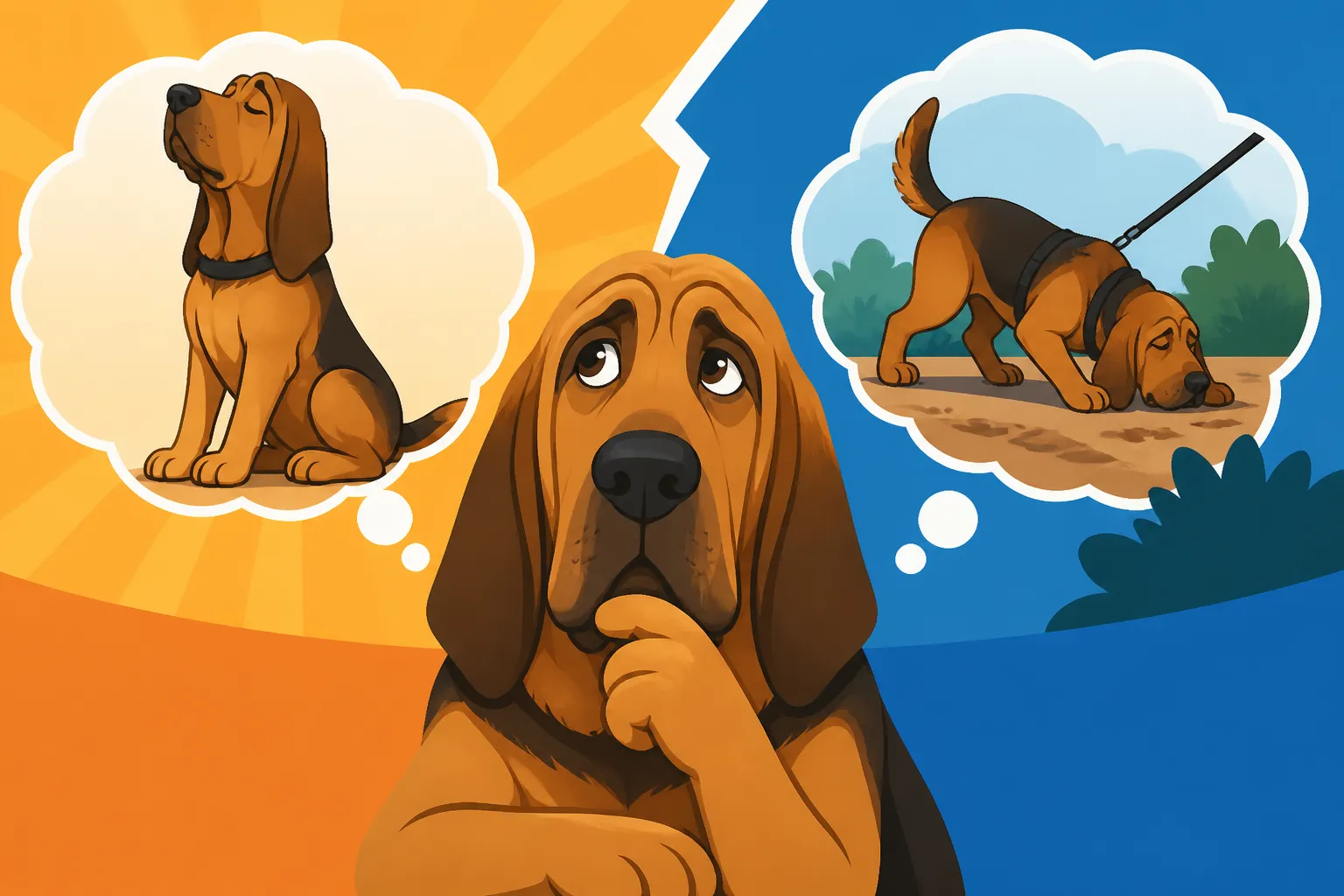
Have you ever been so engrossed in a book, a movie, or a complicated task that you barely registered someone calling your name? You weren't being stubborn; you were simply deeply focused. This is precisely what happens with a Bloodhound on a scent. When their nose hits the ground, they enter a state often described as "nose-lock." Their awareness of the immediate environment, including their handler, diminishes dramatically. They are literally "in the zone," processing complex olfactory data.
This deep concentration is not disinterest in you; it's intense interest in the trail. Their body language changes: tail up or gently waving, head low, gait steady and determined. Their ears might be down, obscuring peripheral vision, and their whole being is geared towards unraveling that scent puzzle. Trying to pull them off a fresh, intriguing trail is akin to interrupting a brilliant detective in the middle of solving a crucial clue. You might get their attention for a second, but their mind is already racing back to the scent. This is also why many owners struggle with Why Recall Fails on a Bloodhound Outdoors; their internal programming just takes precedence.
The Breed's Purpose Versus Pet Expectations
It's crucial to remember that Bloodhounds were not originally bred to be companion animals in the modern sense. They weren't developed for competitive obedience, agility, or even just as calm family pets (though they can be wonderfully affectionate companions indoors!). They were bred as working dogs, specifically as cold-trailing scent hounds, renowned for their ability to follow human scent over long distances and varied terrains, often days after the trail was laid. The Bloodhound Is the Only Dog Whose Evidence Stands in Court is a testament to this incredible, specialized ability.
Our expectations often clash with this profound purpose. We want a dog that comes when called, walks nicely on a loose leash, and pays attention to us above all else. A Bloodhound, however, is a dog whose job is to ignore everything except the scent they are following. It's not that they're stupid or untrainable; they simply prioritize their ancient mandate. Understanding this fundamental difference is the first step in moving past the "stubborn" label and developing a more effective relationship with your hound. They're not trying to be difficult; they're trying to be a Bloodhound.
How to Work With, Not Against, a "Busy" Bloodhound
Once you reframe "stubborn" as "intensely focused on scent," a whole new world of training and engagement opens up. Instead of fighting their natural inclination, you learn to harness it, working with their powerful nose rather than constantly pulling against it. This approach not only makes for a happier Bloodhound but also a more harmonious household.
Embracing Mantrailing and Scent Work
The absolute best way to engage a Bloodhound's mind and satisfy its deep-seated drive is through mantrailing or similar scent work. This isn't just a fun hobby; for a Bloodhound, it's fulfilling their very essence. Mantrailing involves teaching your dog to follow a specific human scent trail, often with a "missing person" at the end. It allows them to use their incredible nose in a structured, productive way, and it's a joy to watch them "work" with such intensity and purpose. Mantrailing Is the Answer to a Bloodhound, Not Obedience really hits this home.
You don't need to be a professional search and rescue handler to do this. Many communities offer recreational scent work classes, often called "Nose Work" or "Tracking." There are also excellent online resources and courses. For instance, platforms like BAXTER & Bella offer comprehensive online training programs that can help you introduce scent work concepts to your Bloodhound from the comfort of your home. Even just setting up simple "find it" games in your yard, hiding treats or scented articles for them to locate, can be immensely rewarding. This mental stimulation often tires them out far more effectively than physical exercise alone.
The Right Training Approach for a Bloodhound
Given their scent-driven nature, traditional obedience training needs a Bloodhound-specific twist. Positive reinforcement is paramount. Bloodhounds are sensitive souls; harsh corrections or constant nagging will likely shut them down or make them even more determined to follow their nose. Instead, make you more rewarding than the environment. Use high-value treats (think cooked chicken or cheese, not just dry kibble) and enthusiastic praise.
Short, frequent training sessions are better than long, drawn-out ones. Their attention span for non-scent-related tasks can be fleeting, especially once an interesting odor wafts by. Focus on foundational commands like "sit," "stay," and a reliable "leave it," which can be invaluable when they encounter something truly irresistible. Understand that progress might be slower than with other breeds, but consistency and patience will eventually pay off. Remember, their minds are designed for complex problem-solving (scent trails), not rote memorization of arbitrary commands.
Managing Their Environment for Success
Since you can't turn off their nose, managing their environment is crucial for preventing them from getting into trouble or disappearing on a fascinating trail.
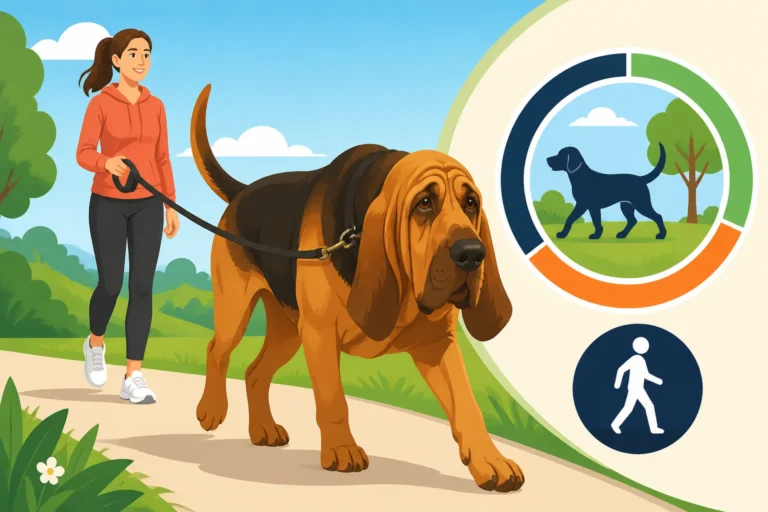
- Leash is Life: This is non-negotiable for most Bloodhounds. Why Off Leash Is Not a Goal With a Bloodhound is a vital read. A long line (15-30 feet, readily available on Amazon) allows them to explore safely on walks while still keeping them connected to you. A well-fitting harness, ideally one designed for tracking that doesn't put pressure on their throat, is also essential. Which Harness a Bloodhound Trails In details specific types.
- Secure Fencing: If you have a yard, it needs to be escape-proof. Bloodhounds are surprisingly agile and determined, and a low fence is merely a suggestion when a good scent calls. Many owners opt for at least a six-foot solid fence, or even higher, with no gaps or easy digging spots. What Fencing Actually Holds a Bloodhound provides more details.
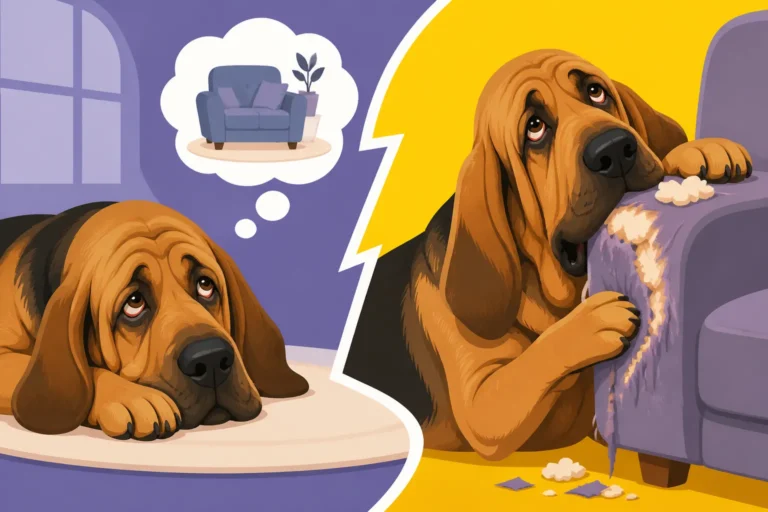
- Mental Enrichment Indoors: When they can't be trailing, provide plenty of appropriate outlets for their minds. Puzzle toys, Kongs stuffed with frozen treats, and snuffle mats can engage their nose and brain. Rotate toys regularly to keep things fresh.
Practical Strategies for Living with a Scent-Obsessed Hound
Living with a Bloodhound is a unique journey, filled with slobber, bays, and moments of utter devotion mixed with deep, scent-induced trance states. Developing practical strategies to navigate their world will make your life, and theirs, much more enjoyable.
Communication and Consistency Are Key
Because Bloodhounds can be so singularly focused, clear and consistent communication from you is paramount. Use a consistent voice tone, hand signals, and specific words for commands. Don't assume they "know" something just because they did it once; reinforce frequently. When you ask them to do something, be prepared to follow through gently but firmly. If you ask for a "sit" and they're sniffing, you might need to use a lure or gentle guidance to get them into position and then reward immediately.
Consistency also applies to routines. Bloodhounds thrive on predictability. Regular meal times, walk schedules, and training sessions help create a sense of security and structure, which can reduce anxiety and make them more receptive to your cues when they're not actively on a trail. When you do embark on a scent walk or training session, dedicate yourself fully to it. If you're giving them "work," treat it as such, and be present. They appreciate your commitment to their passion.
Essential Gear for Safe Exploration
Equipping yourself with the right tools makes all the difference when managing a scent-driven Bloodhound.
- Long Lines and Harnesses: As mentioned, a sturdy long line is indispensable. Look for biothane or nylon webbing options, perhaps 20-30 feet, which offer a good balance of reach and control. Pair this with a comfortable, Y-front harness that allows for full shoulder movement and doesn't restrict breathing, even when they pull into a scent. Harnesses from brands like Ruffwear or similar high-quality outdoor gear companies are often excellent choices, available on Amazon. Remember, Why a Bloodhound Works on a Long Line, Not a Collar is crucial for their safety and your peace of mind.
- High-Value Rewards: Always have these on hand! Small, soft, smelly treats work best for capturing their attention when their nose is otherwise occupied. Liverwurst, cheese sticks, or cooked meat cut into tiny pieces can be incredibly motivating.
- Enrichment Toys: A good collection of puzzle feeders, snuffle mats, and durable chew toys (like Nylabones or KONGs) will keep them mentally engaged when you can't be actively trailing. These are also readily available from retailers like Amazon.
- Snoods: While not for training directly, a snood can prevent their magnificent ears from dipping into their food or water bowls, keeping them cleaner and reducing the risk of ear infections, which can be a distraction for a dog and a headache for an owner. What a Snood Does for a Bloodhound further explains their utility.
In the end, calling a Bloodhound "stubborn" is like calling a fish "stubborn" for trying to swim out of your hand. It misunderstands their very nature. Embrace their extraordinary nose, channel their "busyness" into fulfilling scent work, and you'll discover an intelligent, devoted companion whose unique perspective on the world is truly a wonder to behold.
Disclaimer
This article is for general informational purposes only and does not constitute professional advice. Laws, prices and regulations vary by location and change over time. Consult a qualified professional for guidance on your specific situation.