Whether a Bloodhound Knocks a Child Over
One of the biggest concerns for families considering a Bloodhound, especially those with young children, is the sheer size and boisterous nature of these lovable giants. It’s a very real worry: can a big, clumsy Bloodhound accidentally knock over a toddler or a small child during a moment of excitement? This guide will dive deep into this common apprehension, exploring why it happens, how to manage it, and what practical steps you can take to ensure a safe and harmonious home for both your human and canine family members.
Understanding a Bloodhound's Physical Presence and Temperament Around Children
Let’s be honest: Bloodhounds are big dogs. They’re heavy, they’re often gangly, and they can be surprisingly unaware of just how much space they take up. This isn't about aggression or ill intent; it's simply a matter of physics and a breed-specific blend of enthusiasm and a touch of clumsiness that can lead to unintended tumbles, especially when little legs are involved.
The Sheer Size and Enthusiasm
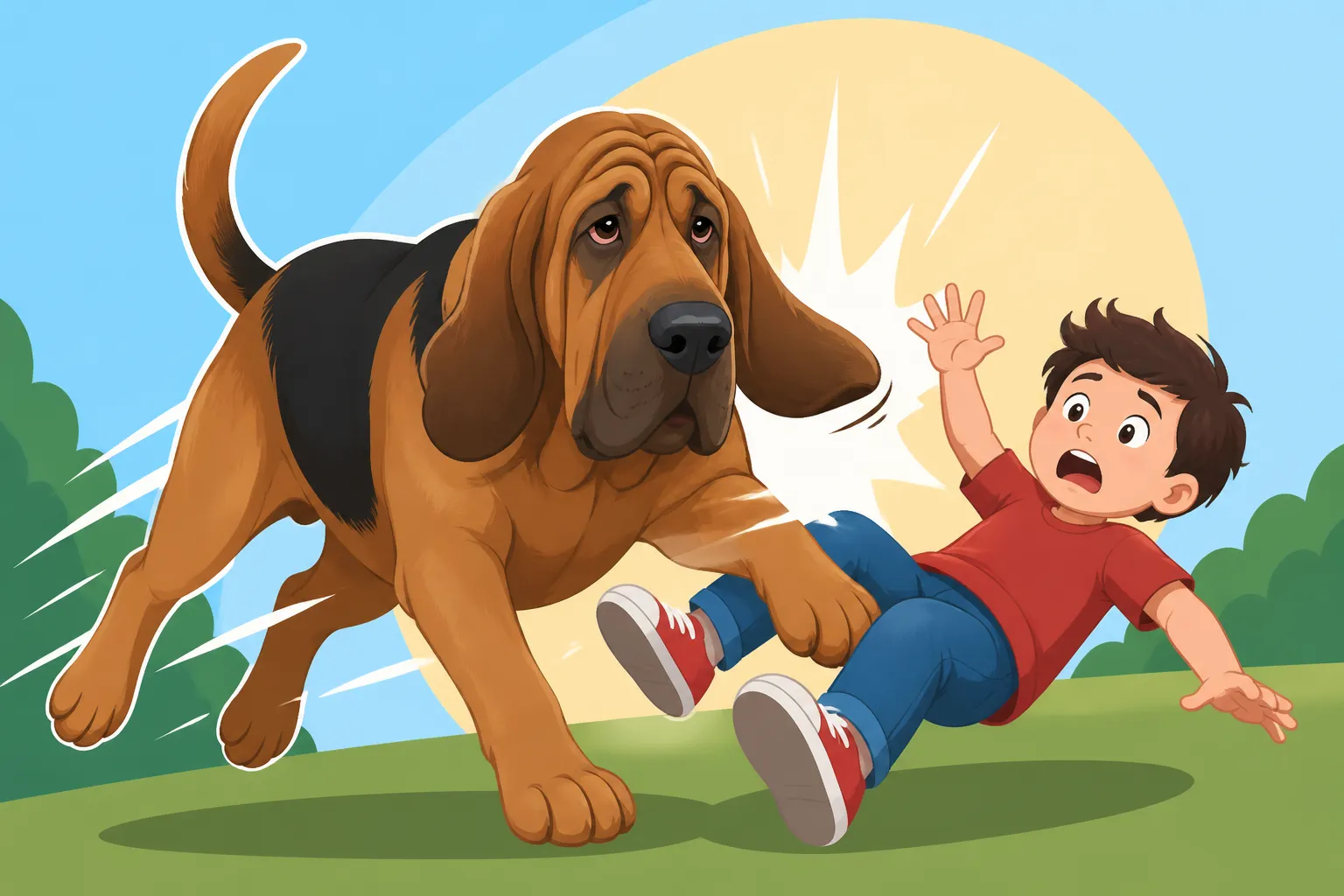
A full-grown Bloodhound can weigh upwards of 110 pounds, sometimes even more, and stand over two feet tall at the shoulder. When you combine this impressive bulk with their generally joyful and often boisterous personality, you have a recipe for accidental collisions. Imagine a big, happy, floppy dog barreling through the living room, ears flying, tail wagging like a drumstick – if a small child is in the way, they can easily get bowled over. It's not malicious, not even playful in a targeted way, but simply an outcome of their size and sheer exuberance.
Their loose skin and dewlaps also contribute to their unique gait and sometimes awkward movements. They can trip over their own feet, or get momentarily tangled, especially when moving quickly. This characteristic can amplify the impact of an accidental bump. Owners often describe them as "bulls in a china shop" with hearts of gold, and that description rings true, especially when they forget their own impressive scale. It's why many owners frequently wonder What a Bloodhound Weighs and How Tall It Stands.
The "Velcro Dog" Tendency
Bloodhounds are renowned for being "Velcro dogs." They adore their people and have an inherent desire to be physically close, often leaning against you, nudging you for attention, or trying to settle their considerable weight onto your lap. This is incredibly endearing for an adult, but for a small child who is still developing their balance and coordination, a 100-pound dog attempting to lean or sit on them can be startling and destabilizing.
This leaning behavior isn't about dominance; it's a deep-seated affection and a desire for connection. They genuinely want to be part of the family huddle. However, a child might not understand this gentle giant's intentions and could easily lose their footing if a Bloodhound decides it's time for a cuddle and leans into them with all its might. Teaching both the dog and the child boundaries is key here, making sure those affectionate gestures don't turn into unintentional knockdowns.
Bloodhound Clumsiness and Lack of Spatial Awareness
While incredibly intelligent when it comes to scent work, Bloodhounds can sometimes display a surprising lack of spatial awareness in a home environment. They get so engrossed in what their nose is telling them, or so excited by a new person or toy, that they can forget about their surroundings. This single-mindedness, combined with their size, can mean they walk right into furniture, or more concerningly, right over a small child.
Imagine your Bloodhound suddenly catching a whiff of something intriguing, like a dropped crumb or a new smell wafting in from outside. Their entire focus narrows to that scent, and the rest of the world fades away. In that moment, a small child playing on the floor might as well be invisible. This isn't a flaw in their character, but a characteristic of a breed bred for intense focus on scent. It highlights the importance of proactive management and supervision to prevent these innocent but potentially dangerous accidents. This is particularly true when they are younger and still getting used to their rapidly growing bodies; The First Year With a Bloodhound That Already Wants to Trail is often a period of significant physical growth and coordination challenges.
Mitigating the Risk: Training and Management Strategies
The good news is that many of these potential issues can be effectively managed with consistent training, early socialization, and smart household management. It requires dedication, but a well-managed Bloodhound is a wonderful family companion.
Early Socialization and Puppy Training
Starting early is absolutely crucial. A Bloodhound puppy, even at a young age, is already a force to be reckoned with. Introducing them gently and positively to children from a young age can help them learn appropriate interactions. Puppy classes are fantastic for general manners, but specific training around children needs to happen at home. Teach your puppy cues like "off," "gentle," and "wait." Reward calm behavior around children. This foundational training builds good habits before those little paws become giant paws.
Resources like BAXTER & Bella's online puppy training programs can be incredibly helpful for new owners, offering structured lessons that you can work through at your own pace, focusing on good manners and impulse control right from the start. They often provide modules that address common issues like jumping and over-excitement, which are directly relevant to preventing accidental knockdowns. Remember, consistency is key, and every interaction is a teaching moment. Think about how a young Bloodhound learns to manage its energy; understanding How Hard a Bloodhound Puppy Mouths can also inform how they learn to interact gently with tiny humans.
Teaching Impulse Control and Spatial Awareness
This is where the real work comes in. Bloodhounds are intelligent, but their drive for scent and their sometimes-goofy nature can make impulse control a challenge. Work on "stay," "wait," and "leave it" commands rigorously. Practice these commands in distracting environments, gradually introducing children into the scenario once the dog is reliable. Teach them to settle on a mat or in their crate when children are playing, rather than being underfoot.
For spatial awareness, simple games can help. Teach your Bloodhound to navigate around obstacles (including people) on cue. When a Bloodhound is excited, it tends to lose some awareness, so practicing these things when they are stimulated can be especially beneficial. Redirect their excitement away from children. For instance, if they get zoomies when a child enters the room, immediately engage them in a game of fetch with a toy or guide them to a designated "calm down" spot. This kind of consistent redirection helps them learn what is acceptable and what is not.
Supervised Interactions and Safe Spaces
No matter how well-trained your Bloodhound is, active supervision is non-negotiable when they are around young children. This means an adult is always present, actively engaged in watching the interactions, and ready to intervene immediately if needed. This isn't just about preventing accidents; it's also about teaching both dog and child how to behave appropriately. You're teaching your child to respect the dog's space and teaching your dog to be gentle and calm around the child.
Consider creating physical barriers like baby gates or ex-pens. These can provide safe zones for both the dog and the child, allowing them to be in the same general area without direct, unsupervised contact. A child can play safely in a gated area, and the Bloodhound can relax nearby without the risk of an accidental collision. This is especially useful during meal times or when children are engaged in activities on the floor. Remember, a Bloodhound's inherent desire to be near you means they'll likely still want to be in the room, even if separated. Providing these safe spaces allows for a harmonious coexistence. Establishing these clear boundaries from the outset is a key component of A Bloodhound in a House With Small Children.
| Interaction Scenario | Risk Level (Unmanaged) | Management Strategy |
|---|---|---|
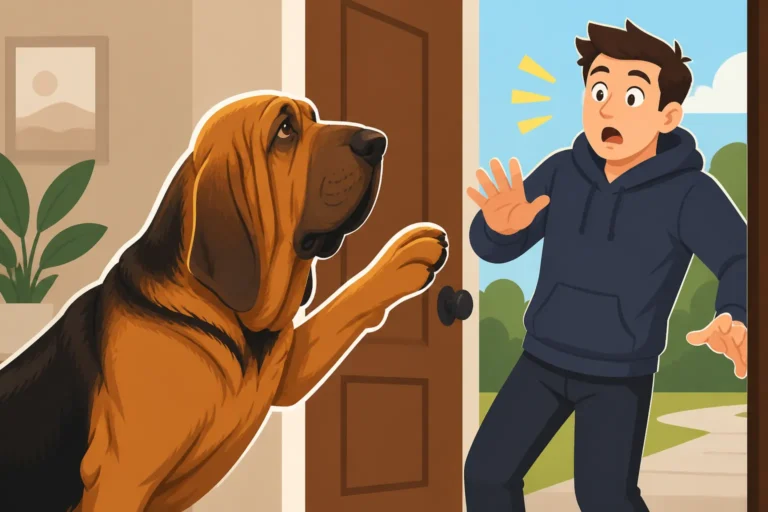
| Greeting a child at door | High | Leash, "sit-stay," redirect attention to toy/treat |
| Child playing on floor | Medium-High | Baby gate, crate, "place" command, constant supervision |
| Bloodhound seeking attention | Medium | Teach "off," redirect to designated pet spot, crate |
| Excited play (zoomies) | High | Secure dog, separate children, provide alternate activity |
| Walking past a standing child | Medium | Teach "gentle," "slow," leash guidance |
Practical Tools and Environmental Adjustments for a Safe Home
Beyond training, there are practical tools and environmental modifications that can significantly reduce the risk of your Bloodhound accidentally knocking over a child. These are not substitutes for training, but excellent complements to your efforts.
Physical Barriers and Management Aids
As mentioned, baby gates are your best friend in a multi-species household with a large dog and small children. They allow you to safely separate spaces, creating zones where your Bloodhound can be without direct interaction with a child, and vice versa. Use sturdy, pressure-mounted gates that can withstand a determined Bloodhound lean or nudge. Ex-pens, also known as exercise pens or dog gates, can create larger, contained spaces for your Bloodhound within a room, offering them room to move without encroaching on a child's play area.
Leashes, even indoors, can be a valuable management tool. A lightweight leash trailing behind your Bloodhound, or a short house line, gives you a quick and gentle way to redirect them if they're heading too fast towards a child or getting too rambunctious. This isn't about punishment; it's about subtle guidance and intervention before an incident occurs. Remember, the goal is always prevention and teaching appropriate behavior, not constant restriction.
Harnesses and Leashes for Control
When you're out and about, or even just moving through the house, a good quality harness can make a world of difference in controlling your Bloodhound's movements, especially around children. A front-clip harness, which attaches the leash at the dog's chest, discourages pulling by redirecting their momentum back towards you. This can be invaluable if your Bloodhound gets excited and pulls suddenly, preventing them from accidentally running into a child.
There are many excellent options available on platforms like Amazon, offering various designs and sizes suitable for large breeds. Look for harnesses that are comfortable, durable, and designed to minimize pulling without causing discomfort. Combining a well-fitting harness with a sturdy leash gives you greater control over your Bloodhound's impressive strength and helps you manage their enthusiasm, ensuring they don't accidentally knock someone over. It’s also crucial for outdoor adventures, as Why Off Leash Is Not a Goal With a Bloodhound is a common understanding among owners.
Educating Children on Dog Etiquette
It's equally important to educate children on how to behave around dogs, particularly large breeds like Bloodhounds. Teach them gentle hands, quiet voices, and to respect the dog's space. Show them how to pet appropriately (no pulling ears or tails), and teach them not to approach the dog when it's eating, sleeping, or playing with its toys. Emphasize that the dog needs its own space and quiet time, just like people do.
Role-playing these scenarios can be very effective. Practice how to stand still like a tree if the dog jumps, or how to ask an adult for help if they're unsure about interacting. Explaining that the Bloodhound is a very strong dog and needs careful handling helps children understand the responsibility involved. This mutual respect and understanding between dog and child will go a long way in preventing accidents and fostering a loving bond. This kind of careful introduction and education is paramount for How a Bloodhound Behaves Around a Toddler.
When to Seek Professional Help and Reassess the Situation
Sometimes, despite your best efforts, you might feel like you're not making progress, or the risks feel too high. It's important to recognize when it's time to bring in outside help and potentially reassess the living situation for everyone's safety.
Recognizing Persistent Challenges
If your Bloodhound consistently struggles with impulse control, even after dedicated training, or if their size and enthusiasm continue to be a significant safety concern for your children, it's a sign that you might need more specialized guidance. This includes persistent jumping, overly boisterous play that escalates too quickly, or an inability to calm down when children are present. It's not a failure on your part, but an acknowledgment that some challenges require expert intervention.
Another indicator is if the children become genuinely fearful of the dog, rather than just cautious. While a healthy respect for a large dog is good, persistent fear suggests that the interactions are not positive for them. This creates a stressful environment for both the children and the Bloodhound, and it's a situation that needs to be addressed proactively before it causes deeper behavioral issues or emotional distress for anyone in the household.
Consulting a Certified Professional Dog Trainer
If you're facing persistent challenges, don't hesitate to reach out to a certified professional dog trainer or a veterinary behaviorist. These experts have experience with large breeds and specific behavioral issues. They can observe your Bloodhound's interactions with your children in your home environment, identify underlying triggers, and develop a customized training plan tailored to your family's specific needs. They can provide hands-on guidance, help you refine your training techniques, and offer strategies you might not have considered.
A good trainer will focus on positive reinforcement methods, building your Bloodhound's confidence and teaching them appropriate behaviors without resorting to harsh corrections. They can also provide valuable insights into breed-specific traits and how to best manage them. Sometimes, just a few sessions with an experienced professional can make a world of difference, turning a stressful situation into a manageable and enjoyable one. For anyone deeply invested in their Bloodhound's well-being and seeking advanced behavioral guidance, considering Whether a Pet Bloodhound Should Do Scent Work Classes with a professional trainer can be a fantastic outlet for their instincts and a great way to bond while building focus.
Disclaimer
This article is for general informational purposes only and does not constitute professional advice. Laws, prices and regulations vary by location and change over time. Consult a qualified professional for guidance on your specific situation.