How a Bloodhound Behaves Around a Toddler
Bringing a magnificent Bloodhound into a home where a curious, energetic toddler resides can feel like navigating a tightrope walk – you adore both, but the sheer size and exuberance of one, coupled with the unpredictable nature of the other, can spark genuine anxiety. Many owners worry about unintentional knocks, startled cries, or even just managing the sheer presence of such a large, scent-driven dog around a tiny human. This guide is here to walk you through exactly how a Bloodhound typically behaves around toddlers, what to expect, and how to create a safe, harmonious environment for everyone.
Understanding the Bloodhound Temperament with Toddlers
It’s easy to look at a Bloodhound’s massive frame, deep voice, and often serious expression and assume they might be too much dog for a small child. However, most Bloodhound owners will tell you a very different story. Their temperament, while unique, often makes them surprisingly good companions for even the youngest family members, provided proper management and training are in place.
The Gentle Giant Reputation
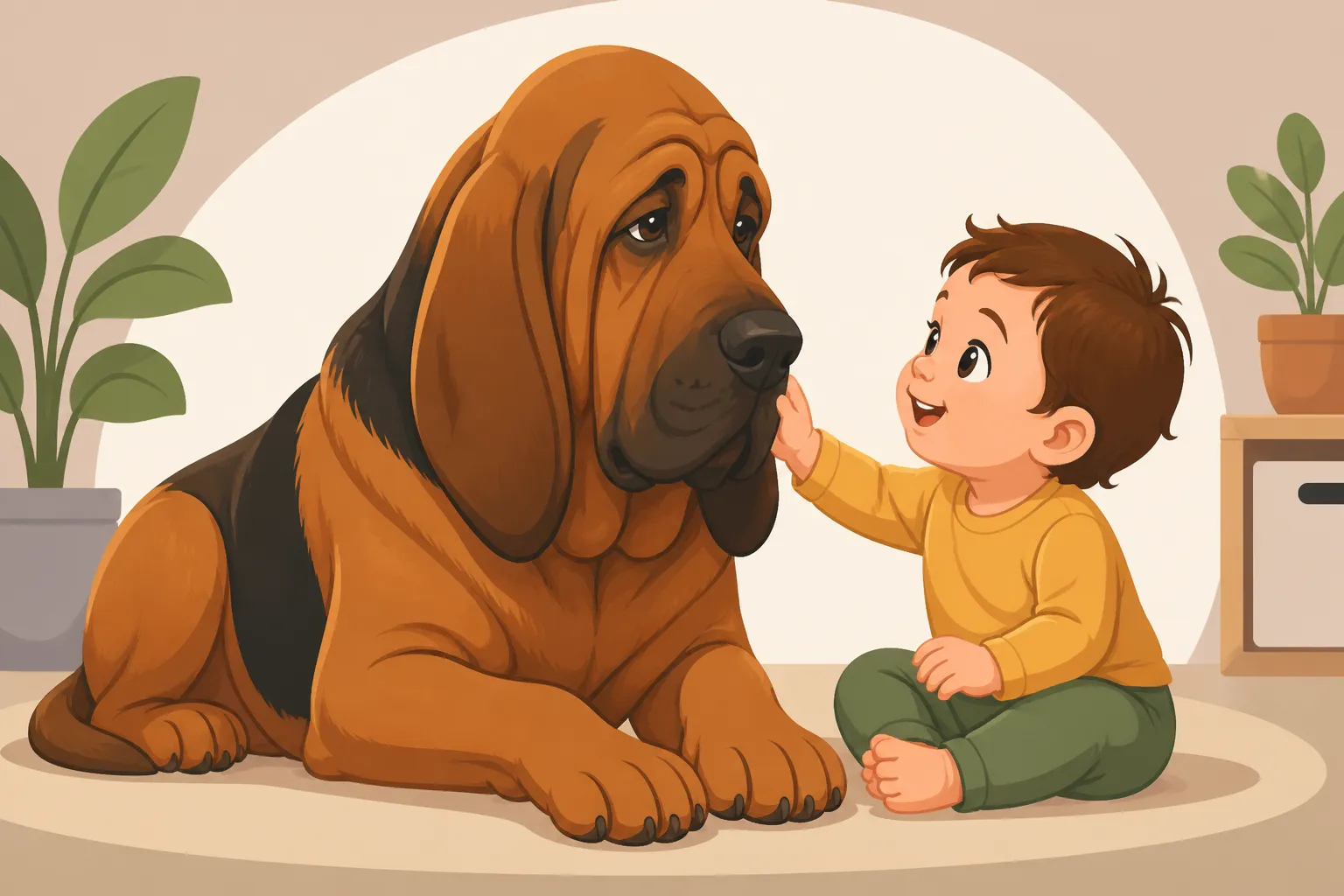
Despite their imposing size and formidable bay, Bloodhounds are, by and large, renowned for their incredibly gentle and placid nature. They often move with a deliberate slowness, observing their surroundings with an almost philosophical air. This inherent calmness is a huge asset when living with a toddler. They aren't typically a breed that's prone to quick, reactive movements or aggressive tendencies, especially when well-socialized and raised in a loving home. Their patience is often legendary; they can endure quite a bit of poking and prodding from a small child (though, of course, this should always be supervised and discouraged) without losing their cool. This gentle disposition is one of the primary reasons why many families choose a Bloodhound, finding them to be surprisingly tolerant and even nurturing towards the tiny humans in their lives.
However, "gentle" doesn't mean "incapable of causing harm." Even the most gentle giant can inadvertently knock over a small child with an enthusiastic wag of a tail or an accidental bump. It's crucial to remember that their sheer mass means any unintentional contact can have consequences for a toddler. Therefore, while their disposition is a huge plus, it never negates the need for constant vigilance and proactive management. It’s about leveraging their natural calm while mitigating the risks posed by their physical presence.
Size and Clumsiness: An Unintentional Hazard
Here's where the rubber meets the road. A Bloodhound, particularly a young, exuberant one, can weigh upwards of 90 to 110 pounds, with some males tipping the scales even heavier. They stand tall, and their tails can be surprisingly powerful whips at toddler height. This is the biggest, most realistic concern for Bloodhound owners with toddlers: the accidental bump, the clumsy turn, the excited tail-wag that sends a little one sprawling. They're not always the most graceful creatures, often lumbering with a singular focus, especially when their nose is engaged. What a Bloodhound Weighs and How Tall It Stands highlights just how substantial these dogs are.
Imagine your Bloodhound, suddenly alerted to a fascinating scent just outside the window, making a quick pivot to investigate. A toddler playing nearby, absorbed in their own world, might easily become an obstacle in the Bloodhound's path. These aren't malicious acts, but pure physics in action. Their large paws can also be a hazard, as can their broad chests. A Bloodhound might innocently step backward without realizing a small child is behind them, or bound off the couch without looking first. This is why supervision is paramount, not because the Bloodhound is dangerous, but because they are simply large and sometimes oblivious to the tiny beings around their feet. It falls to us, the human owners, to anticipate these moments and prevent them, ensuring both dog and child learn safe ways to coexist.
High Scent Drive and Distraction Potential
The Bloodhound's nose is their world. It dictates their interests, their movements, and often their attention span. This intense scent drive means they can become incredibly focused on a smell, sometimes to the exclusion of everything else, including a small child nearby. A Bloodhound's Nose Outvotes Its Handler perfectly describes this single-minded dedication. If a fascinating scent wafts in from outdoors, or if a crumb drops on the floor, your Bloodhound might zero in on it with remarkable intensity.
This can be a challenge with toddlers for a couple of reasons. First, a highly motivated Bloodhound on a scent mission might not notice a toddler in their path, increasing the risk of an accidental collision. Second, their distraction can make it harder to get their attention if a toddler is doing something inappropriate, like pulling an ear or climbing on the dog. You might find yourself repeating cues multiple times to break their scent trance. It's not disobedience; it's just how their magnificent noses operate. This necessitates a proactive approach to managing their environment, ensuring that high-value scents aren't competing with safe interactions, and that you always have your Bloodhound's attention when interacting with your child.
Preparing Your Home and Your Bloodhound for a Toddler
Integrating a Bloodhound and a toddler successfully is less about expecting innate perfection and more about strategic preparation and consistent management. It's about setting up an environment where both can thrive safely and happily.
Establishing Boundaries and Safe Zones
Creating clear physical boundaries is perhaps the most effective tool in managing a large dog like a Bloodhound with a small, unpredictable toddler. Baby gates become your best friend, even for a dog as large as a Bloodhound. They allow you to separate your dog from your child when direct supervision isn't possible, or when either needs a break. Think of them as invisible fences within your home, delineating "dog zones" and "kid zones." This doesn't mean the Bloodhound is banished; rather, it ensures that interactions are intentional and supervised. You might have a specific room, like the living room, designated as the primary play area for your toddler, with gates preventing the Bloodhound from freely entering unless invited and supervised.
Conversely, your Bloodhound needs their own safe space – a quiet spot where they can retreat and relax without being bothered. This might be a crate in a calm corner, a dog bed in a spare room, or an area behind a gate. This "safe zone" is invaluable for preventing overstimulation, especially during busy toddler phases, and for teaching your Bloodhound that they have a sanctuary away from the unpredictable energy of a small child. Whether Crate Training Suits a Bloodhound Puppy is a great resource to explore, as a crate can become a crucial part of this safe haven strategy, even for an adult dog. Having these boundaries clearly defined and consistently enforced reduces stress for both your Bloodhound and your toddler, fostering a more peaceful coexistence.
Early Socialization and Desensitization
For a Bloodhound puppy joining a family with a toddler, or for a Bloodhound who will soon meet a new baby, early and careful socialization is vital. This isn't just about exposing them to children, but teaching them how to behave around children. This means positive, controlled exposure to the sights, sounds, and movements of toddlers from a young age. Let them observe from a safe distance, rewarding calm behavior. If you're bringing a puppy home, consider a program like BAXTER & Bella, which offers comprehensive online puppy training and socialization guides that can be tailored to a family environment, helping you introduce your new Bloodhound to all aspects of family life, including small children, in a structured way.
Desensitization goes hand-in-hand with socialization. This involves gradually exposing your Bloodhound to things associated with toddlers that might otherwise startle or excite them. Think about the sudden squeals, the dropped toys, the wobbly gait, or even the scent of baby lotion. Play recordings of baby cries or toddler babble at low volumes, gradually increasing the intensity while rewarding your dog for calm responses. Practice having your Bloodhound stay calm when you pick up a doll or a toy that mimics a child's movement. The goal is to make these typical toddler behaviors part of their normal background noise, rather than something that triggers an excited or anxious reaction. The more familiar and less surprising these things are, the calmer your Bloodhound will be when they encounter the real deal.
Management Tools and Strategies
Beyond baby gates, there are several practical tools and strategies that can make managing a Bloodhound with a toddler much easier. A good quality harness and leash are non-negotiable for walks, especially since Why Off Leash Is Not a Goal With a Bloodhound emphasizes their strong scent drive and potential to wander. A hands-free leash can be incredibly helpful when you're pushing a stroller or holding a toddler's hand, allowing you to maintain control of your Bloodhound without juggling multiple items. You can find a wide array of hands-free leashes and durable harnesses on Amazon, making it easy to equip yourself for safe outings.
Inside the home, consider using tethering as a temporary management solution. If you need to cook dinner and your toddler is underfoot, you can tether your Bloodhound to a sturdy piece of furniture or a wall anchor with a comfortable bed nearby. This allows them to be in the same room, but prevents them from roaming freely and accidentally bumping into the child. Puzzle toys and long-lasting chews are also fantastic management tools. They can keep your Bloodhound happily occupied and focused on a rewarding task, diverting their attention from the toddler and reducing the chances of them seeking attention in less desirable ways. These tools aren't replacements for training or supervision, but they are incredibly useful for safely navigating daily life with a large dog and a small child.
Introducing and Supervising Interactions Between Bloodhounds and Toddlers
The first meeting, and all subsequent interactions, need to be carefully orchestrated and supervised to build a foundation of trust and respect. This isn't just about protecting the child, but also about ensuring your Bloodhound feels safe and secure in these interactions.
The Initial Meeting: Calm and Controlled
When introducing a Bloodhound to a toddler, or a new baby who has become a toddler, the environment should be calm, quiet, and controlled. Avoid loud noises, sudden movements, or a chaotic atmosphere. Ideally, the Bloodhound should be exercised and well-fed beforehand, making them more relaxed and less prone to over-excitement. Keep your Bloodhound on a leash, even in the house, for the initial meetings. This allows you to maintain immediate control and intervene if necessary. Have an adult hold the Bloodhound, gently encouraging calm greetings. The toddler should be held by another adult or secured in a high chair or playpen, ensuring they cannot rush the dog.
Allow the Bloodhound to approach the toddler on their own terms, to sniff and observe from a distance. Reward calm, curious behavior with praise and gentle petting. Do not force interaction. Keep these initial sessions very short – just a few minutes – and end on a positive note. The goal is to create a positive association, where the toddler's presence means good things (treats, praise, calm attention from you) for the Bloodhound. This isn't a free-for-all play session; it's a careful introduction to a new family member, emphasizing respect and safety from the very first moment. Remember, a Bloodhound's first impressions can set the stage for future interactions.
Constant Supervision and Active Engagement
Once initial introductions have gone well, the golden rule for Bloodhounds and toddlers is constant, active supervision. This means a responsible adult is always within arm's reach, ready to intervene. This isn't passive supervision from across the room while you scroll on your phone; it's being fully present and engaged, anticipating potential issues before they arise. Even the most gentle Bloodhound can accidentally knock over a toddler, as discussed in Whether a Bloodhound Knocks a Child Over. It's not malice, it's just their size.
You are the mediator and the teacher in these interactions. Teach your toddler how to gently pet the Bloodhound, and teach your Bloodhound how to be still and patient. Use positive reinforcement for both. If your toddler gets too rambunctious, or if your Bloodhound seems uncomfortable, gently separate them. Never punish the Bloodhound for showing signs of discomfort (like moving away, yawning, or lip-licking); these are early warning signals that they need space. Instead, praise them for communicating their feelings and step in to create distance. This active engagement creates a sense of security for both dog and child, building a relationship based on trust and understanding. Without this constant, engaged supervision, even minor incidents can escalate or create negative associations.
Teaching the Toddler Respectful Interaction
It's just as important to teach your toddler how to interact appropriately with your Bloodhound as it is to train your dog. Toddlers, by nature, are explorers. They want to touch, grab, and investigate, and they don't yet understand boundaries or canine body language. Start early, using simple language: "Gentle hands," "Soft touches." Show them how to pet the Bloodhound gently on the back or shoulder, avoiding sensitive areas like the ears, tail, or face. Never allow ear pulling or tail tugging, which can be painful and provoke a negative reaction in even the most patient dog.
Teach your child that the Bloodhound's bed or crate is their private space and should not be disturbed. This is part of respecting your dog's need for a safe retreat. Also, teach your toddler not to approach the Bloodhound while it's eating or chewing on a toy. These are prime situations for resource guarding, even in a calm dog. Instead of creating a stressful situation, teach them to give the dog space during these times. Consistency is key here. Every adult in the household needs to reinforce these rules. By teaching respectful interaction, you're not just protecting your Bloodhound, you're also instilling empathy and responsible behavior in your child.
Training Strategies for a Harmonious Household
Effective training is the bedrock of a successful cohabitation between a Bloodhound and a toddler. It's about teaching your dog self-control and reliable responses, making them a safer and more enjoyable companion for everyone.
Reinforcing Calm Behavior
With a large, powerful breed like a Bloodhound, reinforcing calm behavior is incredibly important, especially around small children. This means actively praising and rewarding your Bloodhound when they are lying down quietly, walking calmly past your toddler, or simply resting in their designated space. Don't wait for them to do something wrong; catch them being good. If your Bloodhound approaches your toddler calmly, give them a quiet "good dog" and maybe a treat. If they ignore a dropped toy from the toddler, that's a prime opportunity for a reward.
One great technique is "mat work" or "place training." Teach your Bloodhound to go to their mat or bed and stay there until released, even with distractions. This provides a valuable "off switch" when things get too busy with the toddler. You can use this when your toddler is having a particularly energetic play session, or when guests arrive. BAXTER & Bella offers excellent resources for teaching foundational obedience cues like "place," which are invaluable for creating a calmer home environment. The more you reinforce calmness, the more your Bloodhound will understand that a quiet demeanor around the toddler brings positive attention and rewards, rather than being ignored until they become unruly.
Teaching Impulse Control to Your Bloodhound
Impulse control is critical for a Bloodhound in a household with a toddler. This involves teaching them to think before they act, rather than reacting solely on instinct. Key behaviors to focus on include "leave it" and "wait." "Leave it" is essential for teaching your Bloodhound not to snatch toys from a toddler's hand, or not to dive for dropped food. Practice this extensively with high-value items, gradually increasing the difficulty. When your toddler drops a cracker, your Bloodhound's immediate reaction should be to look to you, not to lunge for the food.
"Wait" or "stay" is equally important. Teach your Bloodhound to wait patiently at doorways, before going outside, or before approaching the toddler. This prevents them from barreling past or over the child. You want your Bloodhound to be able to pause and get your permission before engaging. This level of self-control takes consistent practice and patience on your part, but it pays dividends in preventing accidental bumps or unwanted interactions. It empowers your Bloodhound to make good choices, knowing that waiting for your cue will result in a reward. This type of training also ties into How Long a Bloodhound Takes to Learn Something New, reminding you that consistency over time yields results.
Training the "Place" Command and Emergency Recalls
The "place" command, as mentioned earlier, is a cornerstone of managing a Bloodhound with a toddler. It gives your dog a specific, safe spot to go to and stay, providing both a mental and physical break from the activity of a small child. Practice this in various locations and with increasing distractions, always rewarding heavily for success. This command becomes your go-to when your Bloodhound is getting underfoot, or when you need a moment of calm. It also teaches them to settle down even when there's excitement nearby, which is a common occurrence with toddlers.
While Why Off Leash Is Not a Goal With a Bloodhound clearly states that reliable off-leash recall is not realistic for this breed outdoors, an emergency recall inside the house is still incredibly valuable. This is a cue, ideally unique and highly reinforced, that immediately gets your Bloodhound's attention and brings them to you, no matter what they're doing. This can be a lifesaver if your toddler unexpectedly grabs something from the dog, or if the Bloodhound is headed towards a fragile child-related item. This recall should always be rewarded with the highest value treat and enthusiastic praise, making it the most irresistible thing your Bloodhound can do. Consistent practice, even when you don't need it, builds a rock-solid response that can make all the difference in a pinch.
Addressing Common Challenges and Misconceptions
Living with a Bloodhound and a toddler isn't always smooth sailing. There will be moments that test your patience and require creative solutions. Understanding typical Bloodhound behaviors helps immensely.
Counter Surfing and Resource Guarding
Bloodhounds are often surprisingly adept at counter surfing, despite their sometimes lumbering appearance. Their height allows them to reach many surfaces, and their powerful noses make them excellent at detecting forgotten snacks or appealing items. This is particularly problematic with toddlers, who often leave food, toys, or even small, dangerous objects within reach. A Bloodhound might swipe a half-eaten sandwich from a low table, or a fascinating (to them) toddler toy. This isn't just annoying; it can be a choking hazard for your dog or a germ-spreading nightmare. Vigilance is key: keep counters clear, put food away immediately, and teach your toddler to clean up their eating area.
Resource guarding, while less common in inherently gentle Bloodhounds, can still occur, especially around high-value items like favorite toys, chews, or food. A toddler who approaches a Bloodhound's chew bone might inadvertently trigger a warning growl or a snap. This is why strict boundaries are so important: your toddler should never be allowed to disturb your Bloodhound while they are eating or chewing. Teach your Bloodhound a strong "drop it" cue for their own toys, and always be prepared to trade a less-desirable item for a more valuable one if you need to retrieve something. Prevention, through management and teaching respectful space, is the best strategy here.
Managing the "Bloodhound Bay"
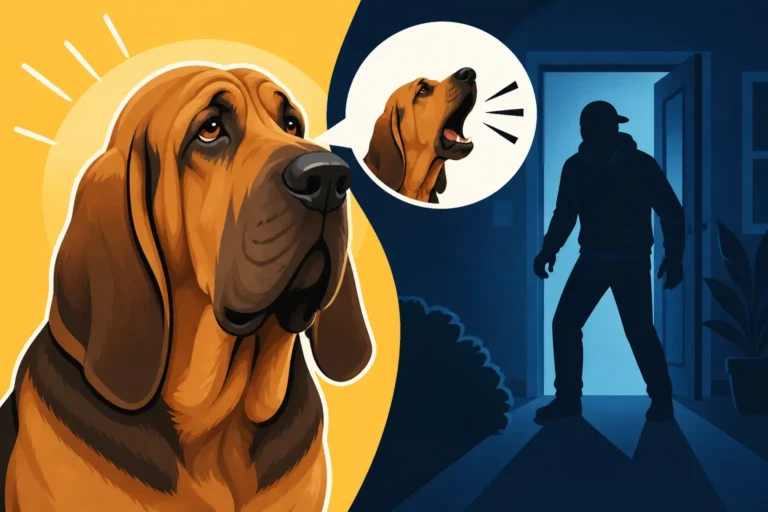
Ah, the Bloodhound bay. It's a sound that's both magnificent and, let's be honest, incredibly loud. The Baying a Bloodhound Cannot Be Trained Out Of makes it clear this isn't a behavior you can simply extinguish. Bloodhounds bay for a variety of reasons: when they're excited, when they've found a scent, when they're lonely, or sometimes just because they feel like it. While charming in moderation, a sudden, booming bay can easily startle or frighten a young toddler, potentially creating a negative association with the dog.
The key is management and desensitization. If your Bloodhound bays at certain triggers (e.g., mail delivery, someone at the door, another dog barking), try to manage those triggers. You might use white noise to mask outdoor sounds, or move your Bloodhound to a quieter part of the house during peak trigger times. If the baying is attention-seeking, teach your Bloodhound that quiet behavior gets attention, while baying does not. Reward them for settling quietly. You can also desensitize your toddler to the sound by playing recordings of your Bloodhound's bay at low volumes during calm times, pairing it with positive experiences for your child. It's about accepting this unique vocalization while minimizing its impact on your toddler and your household's peace.
Understanding the Bloodhound's Play Style
Bloodhounds aren't typically known for their delicate play. While they can be playful, their size means their play can look a bit rough for a tiny human. They might use their paws, lean heavily, or mouth gently, which, while not aggressive, can still easily overwhelm or accidentally injure a toddler. Their play style often involves sniffing, lumbering chases, and sometimes a bit of body slamming with other dogs. This isn't usually suitable for direct interaction with a toddler.
Instead of letting them "play" together, facilitate parallel play. This means your Bloodhound is present and calm while your toddler plays, but their interactions are mediated by you. Engage your Bloodhound in their own appropriate play (e.g., fetch with a soft toy, a puzzle feeder) in the same room as your toddler, reinforcing that calm, independent play is good. Teach your toddler to throw a soft toy for the Bloodhound to retrieve, rather than engaging in tug-of-war or wrestling. The idea is to teach both dog and child that they can enjoy each other's company without direct, potentially overwhelming physical play. This also means being mindful of How Much Exercise a Bloodhound Actually Needs – a well-exercised Bloodhound is a calmer Bloodhound, less likely to have pent-up energy that could manifest as boisterous play indoors.
The Long-Term Vision: Growing Up Together
The journey of raising a Bloodhound and a toddler together is a marathon, not a sprint. The goal is to cultivate a deep, loving bond built on understanding, respect, and safety that will last for years to come.
Fostering a Bond of Trust and Respect
Ultimately, you want your Bloodhound and your toddler to grow up as best friends, respecting each other's boundaries and finding comfort in each other's presence. This bond is forged through countless positive interactions, consistent training, and unwavering supervision. Always be your Bloodhound's advocate; ensure they are never put in a situation where they feel threatened or overwhelmed by your child. This builds their trust in you and helps them see the toddler as a benign, even positive, part of their world.
Encourage your toddler, as they grow and mature, to participate in the Bloodhound's care, always under adult supervision. This could be helping to fill the food bowl (with you guiding their hands), gently brushing the dog's coat, or giving a treat for a calm sit. These shared activities deepen their connection and teach responsibility. The gentle nature of the Bloodhound, combined with a child who learns respect and kindness, creates a truly special relationship. The Household a Bloodhound Was Built For implies a loyal companion, and that loyalty extends deeply to the children in their family.
Continuing Education for Dog and Child
Just as your toddler will constantly learn and grow, your Bloodhound will also continue to adapt and mature. What works at one stage might need adjusting at another. As your child transitions from a wobbly toddler to a running preschooler, the dynamics will change. Your Bloodhound's needs might also evolve as they age, perhaps becoming less tolerant of sudden movements or needing more rest. Staying attuned to these changes is crucial.
Keep reinforcing good habits for your Bloodhound, and continue to educate your child about safe dog interactions. As your child gets older, they can take on more responsibility, but constant reminders about canine body language and respecting personal space are always important. Never assume that because things have been good for a while, supervision can lapse. Life with a Bloodhound and a toddler is a continuous process of learning, adjusting, and celebrating the unique bond that develops between them. It requires dedication, but the reward of seeing these two very different beings share a loving, respectful companionship is immeasurable. Remember, Whether a Bloodhound Owner Should Buy Washable Everything is a realistic piece of advice for any owner, especially with messy toddlers and drooly Bloodhounds, ensuring a harmonious and clean home for all!
| Aspect | Bloodhound Behavior (Typical) | Toddler Behavior (Typical) | Management Strategy |
|---|---|---|---|
| Size/Movement | Large, often clumsy, powerful tail wags, can accidentally bump or knock over small objects/people. | Wobbly, unpredictable movements, falls easily, explores by touch, sometimes grabs. | Constant, active supervision, baby gates, "place" command for dog, teach toddler "gentle hands." |
| Temperament | Generally gentle, patient, placid, but can be boisterous when excited or on a scent. | Curious, energetic, attention-seeking, lacks understanding of personal space or boundaries. | Positive reinforcement for calm dog behavior, teach toddler gentle interaction, create dog's safe retreat (crate/bed). |
| Scent Drive | Extremely high, can become singularly focused on a scent, oblivious to surroundings. | Drops food/items frequently, attracted to dog's food/toys, puts everything in mouth. | Strict "leave it" command for dog, secure food/items, separate during mealtimes, keep floor clear. |
| Vocalization | Deep, loud baying, especially when excited or trailing. | Easily startled, can cry or become frightened by sudden loud noises. | Desensitize toddler to baying (e.g., recordings), manage triggers for dog's baying, reward quiet behavior. |
| Play Style | Lumbering, sniffing, sometimes body-slamming with other dogs, can use paws or mouth. | Wants to engage directly, tug, pull, climb, often doesn't understand "too rough." | Facilitate parallel play, engage dog in independent play, teach toddler safe ways to interact (e.g., throw soft toy), never allow direct wrestling. |
| Resource Guarding | Can occur with high-value items (chews, food) even in gentle dogs if boundaries aren't clear. | Naturally curious, may approach dog's food/toys, lacks understanding of ownership. | Never allow toddler to approach dog during eating/chewing, teach "drop it" and "trade" to dog, manage dog's high-value items separately. |
Disclaimer
This article is for general informational purposes only and does not constitute professional advice. Laws, prices and regulations vary by location and change over time. Consult a qualified professional for guidance on your specific situation.