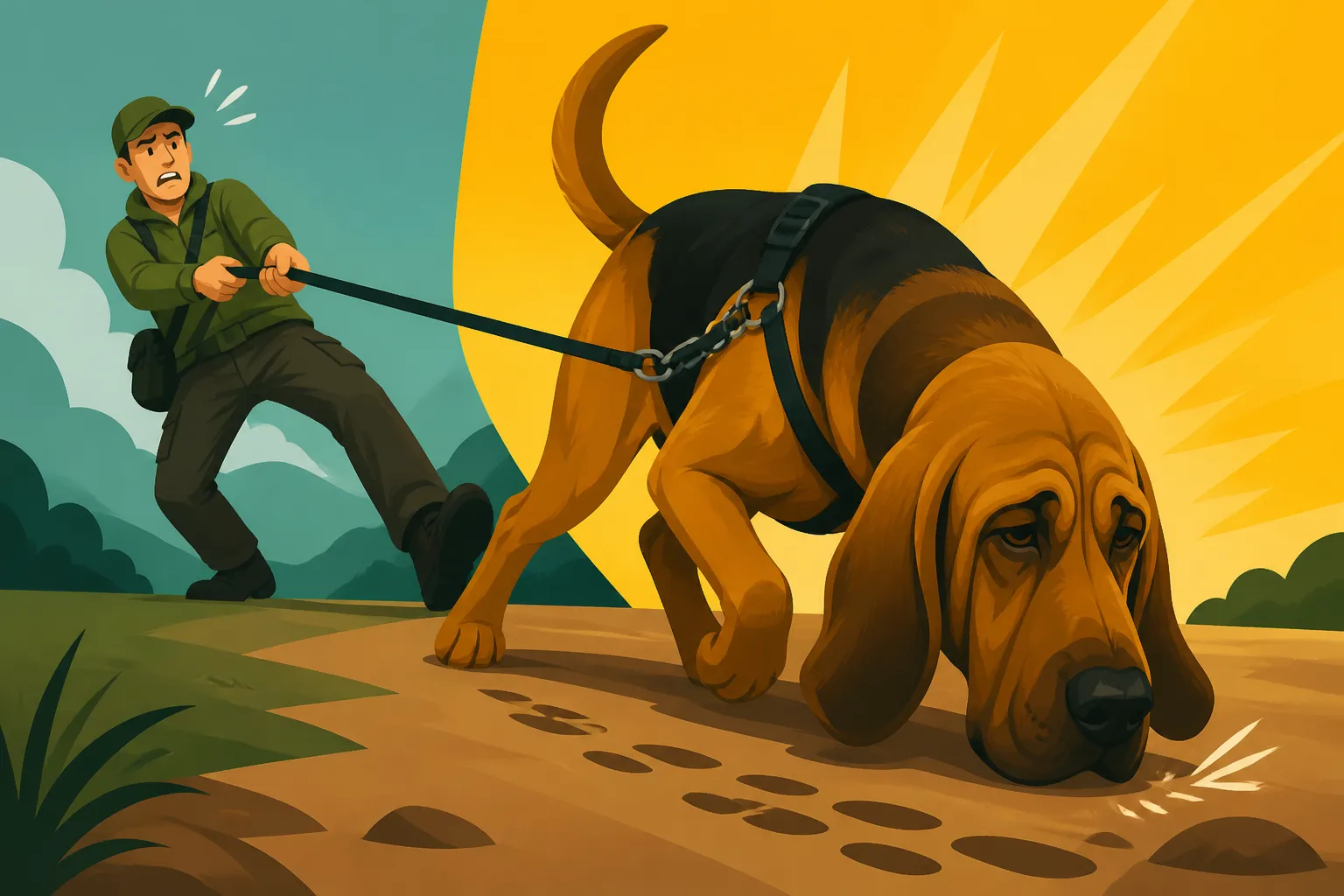
A Bloodhound’s Nose Outvotes Its Handler
Anyone who has ever lived with a Bloodhound knows the unique challenge of having a dog whose nose truly runs the show. You call their name, you offer a treat, you stand there waving your arms, but if that powerful nose has caught a whiff of something interesting, it's like you've suddenly become invisible. This isn't stubbornness in the way we usually think of it; it's a deep, primal instinct taking over, and it can be incredibly frustrating for handlers. This guide will help you understand the profound impact of a Bloodhound's olfactory world on their behavior and offer realistic strategies for working with their nose, not against it, to build a strong, responsive partnership.
The Unrivaled Nose: Why Scent Is Everything
Let's be honest, trying to out-compete a Bloodhound's nose is like trying to out-sing a opera star; you're just not equipped for it. Their world is dictated by scent in a way humans can barely comprehend, and this fundamental difference is at the core of almost every training and behavioral challenge you'll face. It's not that they don't love you or want to please you; it's that their brain is wired to prioritize olfactory information above all else.
The Biological Masterpiece: Millions of Receptors
When you look at your Bloodhound, you see a loving companion, a goofy friend, perhaps a drooly shadow. But what you're really seeing is a living, breathing, scent-detecting marvel. Their nasal cavity is an intricate labyrinth, lined with an astonishing number of olfactory receptors – estimates suggest they have up to 300 million of them, compared to our measly 5 to 6 million. This isn't just a slight advantage; it's a whole different sensory universe. Imagine trying to have a conversation with someone shouting at the top of their lungs right next to you while someone else whispers your name from across the street. That's essentially the sensory input a Bloodhound is processing.
Beyond the sheer number of receptors, their sense of smell is further enhanced by their unique physical features. Those long, pendulous ears, often called "leathers," don't just look distinctive; they actually help sweep scent particles up towards their nostrils as they move, creating a concentrated scent cone right where they need it. The loose skin, particularly around their face and neck, creates folds and wrinkles that also help trap scent particles, keeping them in the vicinity of the nose for longer, allowing for more thorough analysis. It's a design perfected over centuries, making them the ultimate scent hound.
The World Through Their Nostrils: A Bloodhound's Perception
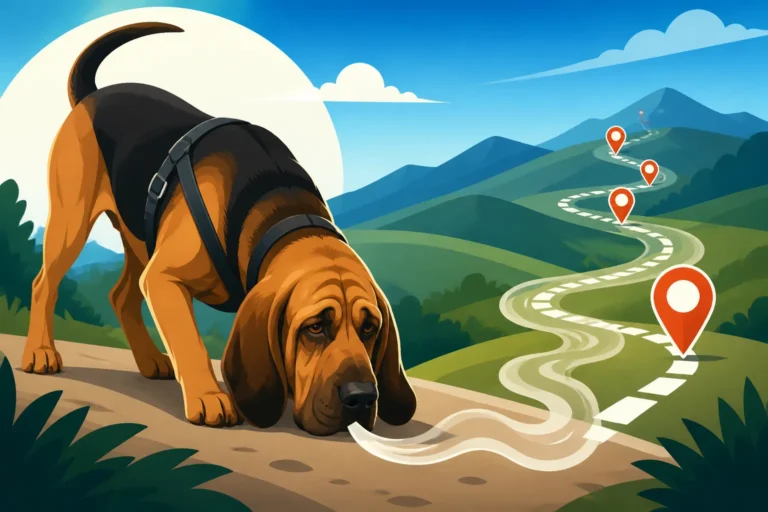
For a Bloodhound, every gust of wind, every patch of sidewalk, every blade of grass tells a story. Where we see a person walking down the street, a Bloodhound smells the individual components of their unique scent — their diet, their skin cells, the detergent on their clothes, the subtle hormones they're emitting, and even the direction they walked, how fast they were going, and how long ago they passed. It's an incredibly rich tapestry of information, layered and complex, far beyond what our eyes and ears perceive. This is why a Bloodhound can tell the difference between one person's scent and an entire crowd's, or follow a trail that is days old.
This profound difference in perception means their priorities are naturally different from ours. When we take them for a walk, we might be focused on avoiding traffic, greeting neighbors, or getting some exercise. For a Bloodhound, that walk is an open book, a thrilling mystery novel unfolding with every step. They're reading the scent left by a rabbit that crossed the path hours ago, deciphering the territorial markings of a neighborhood dog, and maybe even catching a faint trace of the mail carrier from yesterday. To interrupt this profound "reading" is like someone constantly interrupting you during the most gripping part of a movie. Their world isn't just better smelled; it is smell.
Ignoring Us for the Trail: It's Not Disobedience
This leads us to the classic Bloodhound frustration: the moment their nose goes down, and your voice ceases to exist. It feels personal, doesn't it? Like they're deliberately defying you, or that all those training sessions meant nothing. But it's not personal, and it's rarely disobedience in the malicious sense. It's simply that their olfactory system has engaged the highest priority task in their brain. When a Bloodhound commits to a trail, they enter a state of intense focus, often described as a "trance" or "zone." Their hearing becomes secondary, their peripheral vision narrows, and their brain dedicates all its processing power to unraveling the scent puzzle.
Think of it like this: if you were solving a complex mathematical equation or deeply engrossed in writing, would you respond immediately and cheerfully to someone asking if you want to take out the trash? Probably not. You might not even hear them properly until they say your name three times. For a Bloodhound on a hot scent, the external world, including your commands, simply fades into the background noise. Understanding this isn't an excuse for poor manners, but it helps shift your perspective from "my dog is ignoring me" to "my dog is doing what it was bred to do, and I need a different strategy." It highlights why traditional obedience methods sometimes feel like they're just not sticking with this breed.
The Realities of Recall and Off-Leash Freedom
Given their powerful drive to follow a scent, the concept of "off-leash reliability" with a Bloodhound takes on a very different meaning than with many other breeds. It's not about if they can be trained, but if it's truly safe and realistic given their instincts.
When "Come" Becomes "What Scent?"
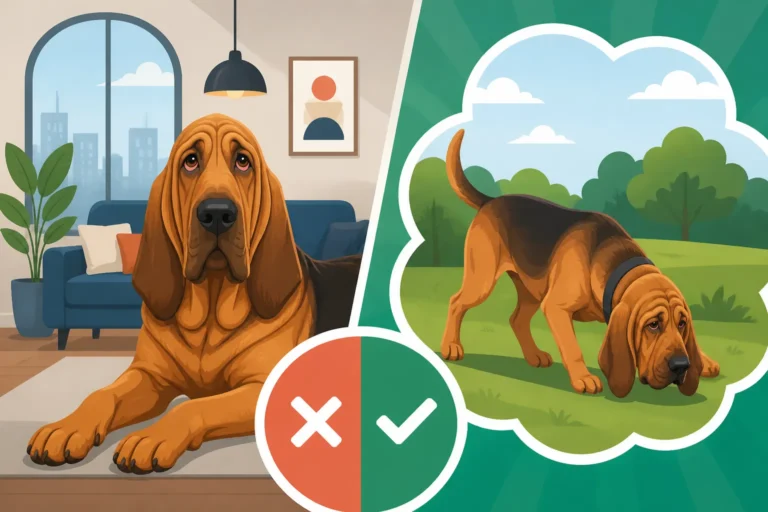
Every dog owner dreams of that perfect recall, the one where their dog joyfully bounds back at the first call. With a Bloodhound, this dream often collides with the reality of their powerful nose. You can spend months, even years, perfecting a solid recall in a controlled environment – your backyard, a quiet park, indoors. They'll nail it every time, trotting back for a treat and a praise. But introduce a novel, high-value scent outdoors, and suddenly, all that training seems to vanish. It's not that they forgot the cue; it's that the reward of solving the scent puzzle is, to them, far greater than anything you can offer at that moment.
The problem isn't a lack of intelligence; it's a difference in value proposition. A Bloodhound's brain is literally screaming "FOLLOW THAT SCENT!" and the internal reward for doing so is immense. To them, it's the ultimate enrichment, the purpose of their existence. Your perfectly timed "Come!" and tasty treat might register, but it's like a whisper against a roaring ocean. This is why Why Recall Fails on a Bloodhound Outdoors is a common topic among Bloodhound owners; it's a fundamental challenge rooted in their breed-specific traits. We want them to choose us, but their instincts compel them to choose the trail.
Fencing and Containment: More Than Just a Yard
Because their nose will lead them, securing your Bloodhound isn't just about having a fence; it's about having the right fence. A standard four-foot picket fence, while lovely, is often little more than a suggestion to a determined Bloodhound. They are large, powerful dogs, and their commitment to a scent is unwavering. They'll push, they'll lean, they'll dig, and if there's a weak spot, they'll exploit it. I've known Bloodhounds who have scaled seemingly impossible fences, squeezed through gaps you'd swear a cat couldn't fit through, or simply dug a tunnel with surprising speed and efficiency.
The ideal fence is typically at least six feet high, solid (not chain link if they're pushers), and ideally extends a foot or two underground or has a hot-wire at the bottom to deter digging. Even then, regular checks for escape routes are vital. What Fencing Actually Holds a Bloodhound is a question many new owners quickly learn to ask. It's not about keeping them in as much as it's about making it practically impossible for them to follow that irresistible scent they've just picked up outside your property line. Remember, a lost Bloodhound following a scent can travel miles in a short amount of time, oblivious to roads, traffic, or boundaries.
The Long Line as Your Lifeline
So, if off-leash isn't a realistic goal for most Bloodhounds in open, unsecured areas, what's the alternative for safe exploration and exercise? The answer, for many, is the long line. This isn't just a longer leash; it's a specialized tool that allows your Bloodhound to explore scents over a greater distance while still giving you control and keeping them safe. Lines typically range from 15 to 50 feet, or even longer for advanced scent work. They allow your hound to wander and investigate without being pulled up short by a standard leash, which can quickly lead to frustration.
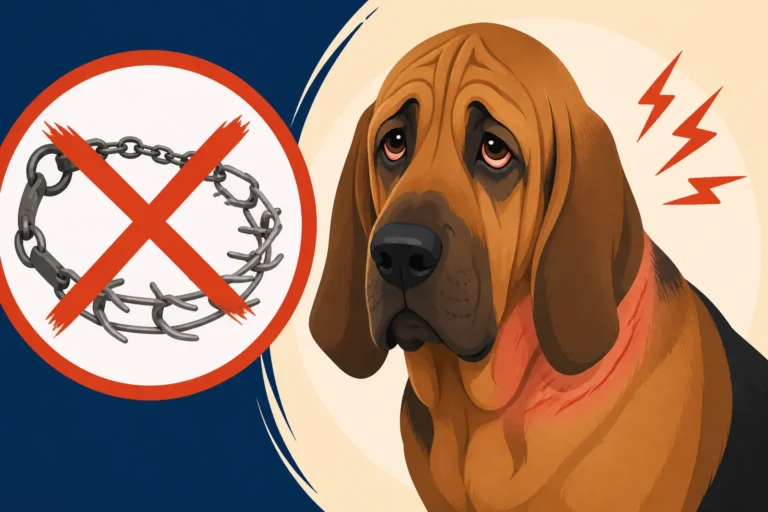
Using a long line requires practice and awareness on your part. You need to learn how to manage the slack, how to reel it in smoothly, and how to stop your dog safely without jerking them. It's best used with a comfortable, well-fitting harness, never a collar, to avoid neck injury if they hit the end of the line at speed. On Amazon or specialized dog supply stores, you can find a variety of durable long lines made from biothane or nylon webbing that are easy to clean and withstand the rigors of Bloodhound adventures. The long line allows them to engage their powerful nose, fulfilling their natural drive, while you maintain crucial safety. It bridges the gap between their desire to roam and your need to keep them secure.
Training with the Nose, Not Against It
The biggest mistake a Bloodhound owner can make is trying to train their dog like a Border Collie. This breed's unique drives mean that traditional obedience, while still important, needs to be adapted. Instead of fighting their nose, we should embrace it and channel that incredible drive.
Mantrailing: Their Natural Calling
If your Bloodhound's nose is their superpower, then mantrailing is their superhero mission. Mantrailing, or human scent detection, is the sport (or professional application) that taps directly into what Bloodhounds were specifically bred to do. It’s not just "walking on a leash"; it’s teaching them to follow the unique scent of a specific person over varied terrain and through complex environments. This isn't just a hobby; it’s an absolute game-changer for a Bloodhound's mental well-being. It provides unparalleled mental stimulation, allows them to use their natural talents, and strengthens the bond between handler and dog as you work together as a team.
For many Bloodhound owners, discovering mantrailing is like finding the missing piece of the puzzle. It transforms a "stubborn" dog into a focused, eager partner. When a Bloodhound is working a trail, they are in their element, happy and fulfilled. This focused work often translates into a calmer, more contented dog at home, as their primary instinctual needs are being met. You can find local mantrailing clubs or online resources to get started. Don't be intimidated; while professional search and rescue is intense, recreational mantrailing is accessible to almost any Bloodhound and owner. Mantrailing Is the Answer to a Bloodhound, Not Obedience perfectly encapsulates this philosophy.
Building Drive and Reward for Scent Work
To effectively train a Bloodhound in scent work, you need to understand what truly motivates them. For many dogs, food or toys are sufficient. For a Bloodhound, the act of trailing is often the biggest reward, but we can enhance and shape that drive. High-value, often smelly, treats are key, especially in the early stages or for reinforcing specific behaviors. Think hot dogs, cheese, cooked meat, or commercial high-value training treats. The reward isn't just given at the end of the trail; it's often presented by the "missing person" found at the end, further associating the successful completion of the trail with a positive outcome.
It's also about building excitement and ritual around the work. Many handlers have a special harness that is only used for scent work. When that harness comes out, the Bloodhound knows it's "go time." This creates a powerful association. The vocal encouragement, the praise, the celebration of a successful find – all contribute to building and sustaining their drive. Remember, Bloodhounds aren't typically driven by a desire to please in the traditional sense; they're driven by the profound satisfaction of using their nose. Our job is to facilitate that, make it fun, and be an enthusiastic teammate.
Beyond the Trail: Integrating Scent Into Daily Life
Even if formal mantrailing isn't for you, you can still integrate scent work into your Bloodhound's daily routine. Snuffle mats, puzzle toys that dispense treats, and simple "find it" games around the house can provide valuable mental stimulation. Hide treats in different rooms and let them use their nose to locate them. Scatter their kibble in the grass instead of feeding it in a bowl, turning mealtime into a mini-search. These activities, while not as intense as formal trailing, still engage their primary sense and provide an outlet for their natural drives.
Consider a subscription box for enrichment toys and puzzles, or explore different scent-based games from resources like BAXTER & Bella. Even a simple walk can become a scent adventure if you allow your Bloodhound more freedom on a long line to explore interesting smells, rather than constantly trying to keep them heel. It's about letting them be a Bloodhound, rather than trying to force them into a mold that doesn't fit their fundamental nature. This kind of consistent, low-stress scent enrichment helps keep their minds active and prevent boredom, which can often lead to destructive behaviors.
Understanding the Bloodhound Bay: Communication and Instinct
The Bloodhound's bay is legendary. It's not just a bark; it's a deep, resonant, mournful sound that can carry for miles. It's a defining characteristic of the breed, and something every prospective owner needs to understand and prepare for.
The Signature Sound: What a Bay Means
The Bloodhound's bay is an ancient form of communication, a vocalization deeply ingrained in their genetic makeup. Historically, it served to alert hunters to the progress of the trail and the location of the hounds. Today, your Bloodhound might bay for a variety of reasons. Often, it's directly linked to scent. When they pick up a particularly interesting trail, or when they've "lost" a scent and are trying to regain it, a bay might erupt. It's a form of expressing their intense focus and excitement in the hunt.
They might also bay as a form of communication with you – perhaps they want attention, or they're alerting you to something they perceive as unusual outside. Sometimes it's sheer boredom or frustration if their mental and physical needs aren't being met. And, let's be honest, sometimes it's just because they're a Bloodhound and they can. It's a fundamental part of their identity. Understanding the context of the bay can help you address the underlying need, whether it's more exercise, more scent work, or simply acknowledging their alert.
Managing the Volume: Living with a Vocal Hound
Living with a vocal hound like a Bloodhound means accepting a certain level of noise. You cannot, and should not, attempt to train the bay out of a Bloodhound entirely, as it is such an intrinsic part of who they are. The Baying a Bloodhound Cannot Be Trained Out Of is a harsh but necessary truth. However, you can manage when and how often they bay. This often involves proactive management and teaching them alternative behaviors. For instance, if they bay at every passerby, can you distract them with a high-value treat or a quick "look at me" exercise before they start?
Environmental management is also crucial. If they bay at things outside the window, limit their access or use window film. If they bay out of boredom, increase their mental and physical enrichment. Teaching a "quiet" cue can be helpful, but it takes time and consistency, and it will only work if you've addressed the root cause of the baying. This isn't about silencing them entirely, but rather about teaching them when it's appropriate to express themselves vocally and when it's not, within reason.
When Baying Becomes Problematic
While some baying is normal for a Bloodhound, excessive or incessant baying can become a problem, both for your sanity and your neighbors'. If your Bloodhound bays constantly when left alone, it could be a sign of separation anxiety or extreme boredom. If they're baying at every leaf that blows by, it might indicate insufficient mental stimulation or a lack of boundaries. This is where you need to step back and honestly assess their daily routine and environment.
A common lament among Bloodhound owners is figuring out How Loud a Bloodhound's Bay Is and how it impacts their living situation, especially in close-quarter neighborhoods or apartments. If their needs for exercise, scent work, and companionship aren't met, the baying can become a distressing symptom. Consulting with a professional positive-reinforcement trainer or a veterinary behaviorist can be invaluable if the baying is disruptive and you're struggling to manage it. They can help you identify triggers and implement a comprehensive behavior modification plan that respects your Bloodhound's nature.
The Bloodhound Learning Curve: Patience and Positive Reinforcement
Training a Bloodhound requires a different mindset than many other breeds. They aren't always quick to respond, and what might work for a Labrador might completely fail with a hound. Patience, understanding, and consistent positive reinforcement are your greatest tools.
"Stubborn" or Thoughtful? How They Process Information
Many people describe Bloodhounds as "stubborn." It's a common complaint, especially when they take their sweet time to respond to a known cue or seem to ignore you entirely when a scent is present. But is it truly stubbornness, or is it a different way of processing information? Bloodhounds are highly intelligent, but their intelligence is geared towards problem-solving through scent, not necessarily fast-paced, repetitive obedience drills. They tend to be thoughtful and methodical.
When you give a Bloodhound a command, they might not instantly react. They might be taking a moment to process the request, weigh it against any competing sensory information (like that intriguing scent wafting by), and then decide if it's worth their effort. This isn't defiance; it's a slower, more deliberate decision-making process. They aren't trying to be difficult; they're simply operating on their own internal clock, which often ticks a bit slower than our expectations. Understanding Why a Bloodhound Pauses Before It Obeys can help you adjust your expectations and avoid frustration.
Why Repetitive Drills Fall Flat
Traditional obedience training often relies on repetition, drilling a command until it becomes second nature. While some repetition is necessary for any dog, endless drills can quickly bore a Bloodhound. Their minds are too active, too inquisitive, to be engaged by monotonous tasks. If a Bloodhound finds a training session boring or unrewarding, they will simply "check out." You'll see their focus drift, their nose start to twitch, and their ears perk towards distant sounds. Trying to force them through it will likely lead to frustration for both of you and could even damage your relationship.
Instead of drilling, focus on short, engaging training sessions that are varied and fun. Incorporate games, use novel environments, and always end on a high note. Think about what a Bloodhound values – scent work, food, gentle praise, and comfortable exploration. Use these as your primary motivators. Make training feel like a partnership and a puzzle to solve, rather than a chore. If a Bloodhound isn't engaged, it's not because they're dumb; it's because you haven't made it interesting enough for their complex minds.
Finding Their Motivators: Beyond Just Food
While food is certainly a powerful motivator for many Bloodhounds, it's not the only one, and sometimes, even the tastiest treat can't compete with a truly compelling scent. To truly motivate your Bloodhound, you need a diverse toolkit of rewards. This might include specific squeaky toys they adore, a quick game of tug, the opportunity to sniff a particularly interesting patch of grass, or even just a warm, enthusiastic "Good dog!" accompanied by a scratch behind the ears. The key is to find what your individual Bloodhound values most in different situations.
Observing your Bloodhound is crucial. What do they gravitate towards? What gets their tail wagging the most? For scent work, the ultimate reward might be reaching the "find" at the end of the trail. For daily obedience, it could be a combination of treats, praise, and then the freedom to go sniff that intriguing spot they saw earlier. Positive reinforcement builds trust and enthusiasm, teaching your Bloodhound that working with you leads to good things, not just demands. What a Bloodhound Will Work For often varies by individual, requiring thoughtful observation from the handler.
Living with a Bloodhound: Behavior in the Home and with Others
Beyond their nose, Bloodhounds have a distinct personality and set of behaviors that make them truly unique companions. They are generally gentle, but their size and certain instincts require thoughtful management in a family setting.
Gentle Giants: Temperament with Children and Pets
Bloodhounds are renowned for their remarkably gentle and patient nature, often earning them the nickname "gentle giants." This temperament makes them generally excellent companions for families, often displaying a remarkable tolerance for children. They tend to be stoic and not easily rattled, which is a huge plus with boisterous youngsters. However, their sheer size and enthusiasm can mean accidental bumps or knocks, especially with toddlers. A wagging tail at full force can clear a coffee table, and a playful nudge can send a small child sprawling. Supervision is always key, teaching both child and dog how to interact respectfully and safely. How a Bloodhound Behaves Around a Toddler highlights the importance of management due to their size.
When it comes to other pets, Bloodhounds are typically quite amenable. Many coexist peacefully with cats and other dogs, especially if introduced properly and raised with them. Their prey drive is generally focused on game or human scent, rather than chasing small animals for sport, but individual temperaments vary. Still, never leave any interactions unsupervised, especially with smaller, fragile pets. Their friendly disposition often extends to strangers, making them less than ideal guard dogs, but excellent greeters.
Counter Surfing and Opportunistic Nosing
Don't let their gentle demeanor fool you; Bloodhounds are incredibly opportunistic. If it's edible and within reach, it's fair game. Their powerful noses mean they can sniff out a forgotten snack on the counter or a half-eaten sandwich left on the coffee table with alarming efficiency. Counter surfing is a common Bloodhound trait, as is raiding low-lying trash cans or pantries. This isn't malice; it's simply a testament to their incredible olfactory abilities combined with a healthy appetite. They are just following their nose to what smells delicious!
Proactive management is the best defense. Keep counters clear, secure trash cans with lids, and ensure pantry doors are closed. Teaching a solid "leave it" command is invaluable, but even then, prevention is always easier than correction. Remember, they aren't being "naughty" in their own minds; they're merely exploring the tantalizing scent buffet their environment offers. Given their size, they can reach surprising heights, so assume anything below your shoulders is potentially within their grasp.
Managing Independent Nature: Alone Time and Social Needs
While Bloodhounds form deep bonds with their families, they also possess a strong independent streak, a carryover from their working origins where they were expected to focus on a trail for long periods, often away from their handler. This independence means they aren't always "velcro dogs," constantly demanding attention, but they do have social needs. They thrive on companionship and can suffer from boredom or separation anxiety if left alone for excessively long periods without mental or physical stimulation.
A well-socialized Bloodhound will enjoy companionship and affection, but also appreciate quiet time to snooze or simply observe their surroundings. Providing them with appropriate chew toys, puzzle feeders, or a well-regarded interactive webcam and treat dispenser (like those found on Amazon) can help make alone time more manageable. Crate training from an early age can also provide a safe, comfortable den for them during quiet times or when you're away. Balancing their desire for interaction with their inherent independence is key to a happy, well-adjusted Bloodhound.
The Adolescent Bloodhound: Navigating the "Teenage" Years
Just like human teenagers, adolescent Bloodhounds can be a handful. They hit a period where they test boundaries, seem to forget everything they learned, and their already powerful scent drive becomes even more intense. This phase requires extra patience and unwavering consistency.
Testing Boundaries and Redoubled Scent Drive
The period between roughly 6 months and 2 years can be particularly challenging for Bloodhound owners. Your sweet, trainable puppy might suddenly develop an independent streak that makes you wonder if you've adopted a different dog. This is normal canine adolescence. They're growing into their massive bodies, their hormones are surging, and their natural instincts are deepening. That formidable nose, which was already quite powerful, becomes even more compelling. They might start pushing boundaries you thought were well-established, like counter-surfing, refusing to come when called, or becoming more selective about their obedience.
This isn't a sign that you've failed at training; it's a sign that your Bloodhound is maturing and asserting their identity. It’s also a time when their physical strength increases, making them harder to manage on a leash if their scent drive takes over. What might have been a gentle tug as a puppy can become a full-body pull as an adolescent. This is why continued, consistent training, combined with ample appropriate outlets for their energy and nose, is critical during this phase.
Consistency is Key: Reinforcing Early Training
During adolescence, consistency becomes your absolute best friend. It’s easy to get frustrated when your Bloodhound seems to have "forgotten" everything, but giving up or becoming inconsistent will only make things worse. Go back to basics if needed. Revisit fundamental cues in low-distraction environments before trying them in more stimulating settings. Every family member needs to be on the same page with commands, expectations, and rules. If one person lets them get away with counter-surfing, while another strictly enforces "off," your Bloodhound will quickly learn who to "listen" to.
Reinforce good behaviors frequently and generously. Remember those high-value treats? Now is the time to break them out consistently. Short, positive training sessions, interspersed with plenty of scent games and appropriate exercise, will keep them engaged. This period requires you to be more patient and persistent than ever, understanding that this phase will eventually pass with consistent guidance.
Physical and Mental Exercise Needs During Growth
Adolescent Bloodhounds are like finely tuned athletes whose engines are constantly revving. They have immense energy and a growing need for physical activity, but also for mental stimulation. Just letting them run around the yard isn't enough; they need structured exercise that engages both their body and their brain. Long, sniffy walks on a long line are fantastic, allowing them to expend physical energy while satisfying their intense olfactory drive. Regular mantrailing sessions, even short ones, can be incredibly fulfilling.
However, be mindful of their growing joints. While they need exercise, over-exertion, especially intense running or jumping on hard surfaces, should be approached with caution during their rapid growth phase to protect their developing bones and ligaments. Focus on steady, moderate activity rather than extreme bursts. Activities like swimming can be a great, low-impact way to build muscle and burn energy. Remember, a tired Bloodhound (both physically and mentally) is a good Bloodhound, and meeting these needs during adolescence can significantly reduce problematic behaviors.
The Bond: Building Trust and Partnership
Ultimately, living with a Bloodhound is about building a profound partnership based on mutual understanding and respect. It's about recognizing and celebrating their incredible, unique abilities, rather than constantly trying to suppress them.
Understanding Their World: Empathy as a Tool
The single most powerful tool you have as a Bloodhound owner is empathy. Try to see the world from their perspective, through their nose. When they are pulling on the leash, not because they're being rude, but because an irresistible scent is leading them, try to understand that powerful drive. When they seem to ignore you, it's not a personal affront but a consequence of their specialized sensory processing. This doesn't mean you let them do whatever they want, but it allows you to approach training and behavior challenges with a calmer, more strategic mindset.
When you show empathy, you stop fighting their nature and start collaborating with it. You'll find yourself less frustrated and more inclined to find creative solutions. Instead of punishing them for following their nose, you'll think about how to channel that energy into productive scent work. This shift in perspective is transformative for both you and your Bloodhound, deepening your bond and fostering a sense of teamwork.
The Handler as a Teammate: Collaborative Training
In traditional dog training, the handler is often seen as the "boss" and the dog as the "obedient subordinate." With a Bloodhound, this dynamic is far less effective. They thrive when they perceive you as a trusted teammate, a partner in their scent adventures. In mantrailing, the handler isn't leading the dog; they are supporting the dog, interpreting their subtle cues, and managing the environment. This collaborative approach can extend to all aspects of your relationship.
Think of it as a dance: sometimes you lead, sometimes you follow. You provide the structure, the safety, and the opportunities, and they provide the incredible nose and the drive. Learning to read your Bloodhound's body language, understanding their subtle signals when they're on a scent, or when they're losing it, is crucial. This mutual respect and understanding create a bond that is far stronger and more resilient than one built on strict obedience alone. Whether a Bloodhound Needs a Helper to Train for scent work, for example, illustrates this collaborative need, as a runner is often involved.
Celebrating Their Unique Abilities
Bloodhounds are not for everyone, and that's okay. They come with their own set of challenges that can be daunting for the unprepared. But for those who embrace their extraordinary nature, the rewards are immense. There's a profound joy in watching a Bloodhound work a trail, their nose to the ground, utterly consumed by their purpose. It’s a privilege to witness such a powerful instinct in action.
Celebrate their unique abilities. Celebrate their goofy charm, their gentle spirit, and yes, even their incredible, sometimes frustrating, nose. Understand that owning a Bloodhound is signing up for a life less ordinary, filled with drool, bays, and endless scent adventures. By adapting your expectations and your training methods to suit their inherent drives, you won't just have a dog; you'll have an extraordinary partner whose world you've learned to appreciate, one sniff at a time.
| Training Challenge | Bloodhound-Specific Explanation | Recommended Approach |
|---|---|---|
| Poor Recall Outdoors | Intense scent overrides handler's commands and rewards. | Use long lines, secure environments, make recall a game with high-value rewards. Channel drive into scent work. |
| "Stubbornness" / Slow Response | Deliberate processing; prioritizing scent info; easily bored by repetition. | Short, engaging, varied training sessions. Positive reinforcement. Understand their thoughtful nature. |
| Excessive Baying | Instinctual communication, often linked to scent, boredom, or frustration. | Identify triggers. Provide ample scent work and exercise. Teach a "quiet" cue. Environmental management. |
| Pulling on Leash | Nose-driven exploration, strong physical drive to follow scent. | Harness (not collar). Long line. Loose-leash training with high-value treats and reward for not pulling. |
| Counter Surfing/Stealing Food | Powerful nose detects food. Opportunistic. | Proactive management (clear counters). Strong "leave it" command. Secure food sources. |
| Appears to "Ignore" Handler | Deep focus on scent, sensory overload to human communication. | Gain attention before scent focus. Use high-value rewards to break focus. Redirect to appropriate scent work. |
Disclaimer
This article is for general informational purposes only and does not constitute professional advice. Laws, prices and regulations vary by location and change over time. Consult a qualified professional for guidance on your specific situation.