Whether a Bloodhound Suits an Apartment
Living with a Bloodhound is a dream for many dog lovers, but if your address is an apartment building rather than a sprawling country estate, you're probably doing some serious soul-searching about whether it's truly fair to bring one of these magnificent scent hounds into a smaller space. It's a valid concern, as Bloodhounds have a reputation, and for good reason, for being large, vocal, and driven by an insatiable nose. This guide will walk you through the realities of apartment living with a Bloodhound, helping you understand their unique needs and whether your lifestyle can truly accommodate them without undue stress for either of you.
The Bloodhound's Nature Versus Apartment Dimensions
When you first picture a Bloodhound, you might conjure an image of a stoic, serene dog, perhaps lounging by a fireplace. And in many ways, that's accurate indoors. Bloodhounds are often described as "ninety-pound lapdogs" or "velcro hounds" because they genuinely love to be near their people. They aren't typically bouncy, hyperactive dogs that zoom through the house for hours on end, especially once past puppyhood. Their energy often manifests in bursts when outside, followed by long stretches of deep slumber indoors.
However, their sheer size and bulk are undeniable. An adult Bloodhound can easily weigh over a hundred pounds and stand over two feet tall at the shoulder. Their long, pendulous ears and abundant loose skin mean they take up a considerable amount of space, even when curled up. In a small apartment, this can translate into a few key challenges. They might inadvertently knock over lamps with their tails, trip over small pieces of furniture, or find it difficult to navigate narrow hallways without brushing against everything. Their enthusiasm for greeting you at the door can quickly become an overwhelming tidal wave in a confined entryway. While they might be calm, their sheer physical presence demands respect for the space they occupy. It's not about them being destructive because they're destructive, but rather an issue of physics: a large dog in a small space will inevitably have a larger footprint, both literally and figuratively.
Another aspect to consider is their famous nose. Even when seemingly relaxed indoors, a Bloodhound's nose is always working. They'll follow scents around the apartment, sometimes with a snuffle and a grumble, which can lead them into every nook and cranny. While this is less problematic than, say, a high-energy terrier tearing up cushions, it does mean they're constantly exploring their environment. If your apartment has neighbors above or below, their scent world is even richer, and that can keep their brains buzzing even when their bodies are still. This constant sensory input, while part of their charm, can make it harder for them to truly "switch off" in a bustling building.
The Symphony of a Bloodhound: Noise and Neighbors
This is often the biggest hurdle for apartment dwellers considering a Bloodhound: their voice. Bloodhounds are renowned for their deep, resonant bay. It's not a bark; it's a mournful, drawn-out bellow that can carry for incredible distances. And they use it. They bay when they're excited, when they catch a compelling scent, when they feel lonely, or even when they're simply bored. The Baying a Bloodhound Cannot Be Trained Out Of is a reality you must face.
In an apartment setting, this can quickly become a nightmare for you and your neighbors. Thin walls are no match for a Bloodhound's bay. What sounds charmingly rustic in a rural setting becomes a significant disturbance in close quarters. Even if you love the sound, your neighbors likely won't, and constant complaints could jeopardize your living situation. Bloodhounds often bay if they're left alone for too long, especially if they haven't had enough mental and physical stimulation. This separation vocalization is a common issue and one that's particularly hard to manage when you're at work all day, leaving your dog to "sing" to the building.
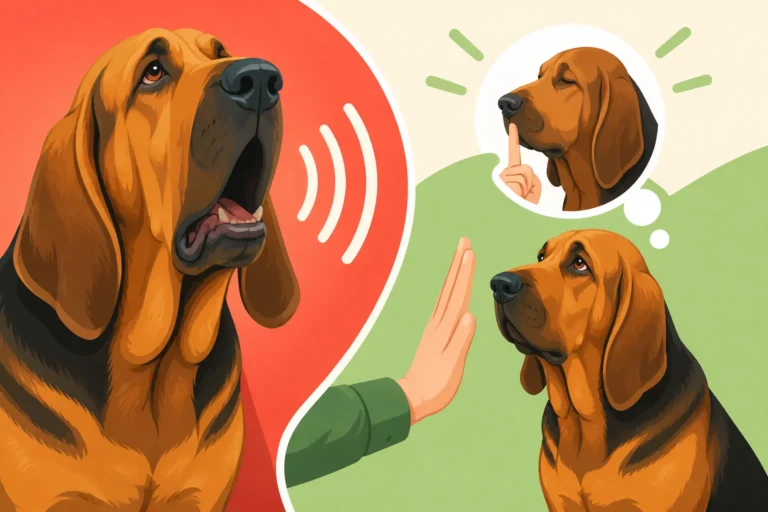
Consider also the external triggers. In an apartment complex, there's a constant stream of new scents and sounds: other dogs, people coming and going, delivery drivers, sirens (which many Bloodhounds will "sing" along to!). Each of these can set off a baying session. While you can attempt to manage some of these triggers with training, it's virtually impossible to eliminate them all in a shared living environment. The breed's instinct to vocalize when on a scent or feeling isolated is incredibly powerful, and while you can teach them a "quiet" cue, expecting them to be silent all day, every day, in an apartment is often an unrealistic expectation that sets both you and your dog up for failure. This is why Whether a Bloodhound Suits a Townhouse With Shared Walls is a crucial consideration for anyone with shared walls, not just apartments.
Exercise, Enrichment, and the Concrete Jungle
While Bloodhounds aren't typically high-energy dogs indoors, they still have significant exercise requirements, both physical and mental. Crucially, "exercise" for a Bloodhound isn't just about a walk around the block; it's about engaging their powerful nose. A Bloodhound needs to work its nose daily, and that's often best done outside, away from the confines of an apartment.
Here’s why traditional walks might not be enough, or even counterproductive, in an urban apartment setting:
- The Nose Takes Over: On a leash walk in the city, your Bloodhound will be overwhelmed by scents. Every lamppost, every tree, every patch of grass is a treasure trove of information. They will want to stop and investigate everything. This isn't just sniffing; it's an immersive experience for them. This means your "walk" often becomes a slow, frustrating drag for you, as they pull relentlessly, focused entirely on the ground. Walking a Bloodhound That Has Found a Scent explains this behavior in detail.
- Physical Demands: While they don't need to run miles every day, they do need sustained, moderate physical activity. A quick potty break isn't enough. They benefit from long, steady walks or, even better, dedicated scent work sessions in a safe, enclosed area. A quick sprint around a small dog park won't cut it, and a truly off-leash experience is rarely safe. Why Off Leash Is Not a Goal With a Bloodhound.
- Mental Stimulation is Key: For a Bloodhound, mental exercise is just as important, if not more so, than physical exertion. This means regular opportunities for scent work, such as mantrailing. Mantrailing Is the Answer to a Bloodhound, Not Obedience highlights this beautifully. This isn't just a hobby; it's fundamental to their well-being. Can you provide this in an apartment setting? You might be able to do some indoor "nose work" games with treats hidden around the house, but it's a poor substitute for real trailing work outdoors. These games can be enhanced with tools found on platforms like Amazon, such as snuffle mats or puzzle toys, but they are supplemental, not foundational.
- Limited Outdoor Access: Apartment living often means limited access to private outdoor space. Relying solely on public parks or sidewalks for exercise and potty breaks can be challenging. What if the weather is terrible? What if the elevator is broken? These logistical considerations become magnified when you have a large dog with specific needs.
Without proper outlets for their instincts, Bloodhounds can become bored, frustrated, and anxious, leading to destructive behaviors or excessive baying. How Much Exercise a Bloodhound Actually Needs goes into depth on this topic, reinforcing that their needs extend beyond just burning calories. Whether Nose Work Tires a Bloodhound More Than Walking is a concept worth understanding here, as mental stimulation is paramount for this breed.
Mitigating the Challenges: Making Apartment Life Work (If You're Dedicated)
So, is it impossible? Not entirely, but it requires an extraordinary level of dedication and lifestyle adjustments on your part. If you're absolutely set on apartment living with a Bloodhound, here are the critical strategies you'd need to implement:
1. Daily, Dedicated Scent Work
This is non-negotiable. You cannot simply walk a Bloodhound for a few blocks and expect it to be content. You need to commit to structured scent work sessions several times a week, ideally daily. This means finding safe, private, or dog-friendly public spaces where you can lay trails. This might be a local park during off-peak hours, a rented private field, or enrolling in regular mantrailing classes. These activities require significant time, travel, and often financial investment. Online resources like BAXTER & Bella offer excellent puppy and basic training programs that can lay a foundation, but for true scent work, hands-on instruction is often necessary.
2. Rigorous Management of Exercise and Routine
Your Bloodhound needs a predictable routine. Multiple, shorter walks throughout the day are often better than one long one, broken up by dedicated training sessions. Incorporate interactive playtime indoors, but be mindful of their size. Fetch might not be ideal in a small space, but engaging puzzle toys, treat dispensers, and even teaching new tricks can provide mental stimulation.
3. Crate Training from Day One
A crate will be your best friend. It provides a safe, personal den for your Bloodhound, reduces the likelihood of destructive chewing, and can help with house-training. More importantly, it can offer a quiet sanctuary away from the hustle and bustle of apartment life, and provide peace of mind when you can't supervise directly. Crate Training Suits a Bloodhound Puppy is an essential skill for any Bloodhound owner, but especially those in apartments.
4. Proactive Noise Management
This is where your commitment is truly tested. You must be hyper-aware of your Bloodhound's vocalizations.
- Soundproofing: While full soundproofing is expensive, consider heavy curtains, rugs, and strategic furniture placement to absorb sound.
- White Noise: Playing classical music or white noise machines can help mask external sounds that might trigger baying.
- Neighbor Relations: Be upfront and honest with your neighbors from the start. Exchange phone numbers, offer apologies for any noise, and share updates on your training efforts. A well-placed gift basket with earplugs might even go a long way in building goodwill!
- Alone Time: Gradually build up your Bloodhound's tolerance for being alone, starting with very short periods and increasing duration slowly. Ensure they are tired (physically and mentally) before you leave. If excessive vocalization persists, consider professional help from a certified dog behaviorist. How Long a Bloodhound Copes Alone is an important factor to understand here.
5. Managing Drool, Dirt, and Shedding
Bloodhounds are droolers. Their loose flews mean saliva often doesn't stay in their mouths, especially after drinking or when excited. They also have a short, dense coat that sheds consistently. In an apartment, this means:
- Cleaning Routine: You'll need to be diligent about wiping their jowls, especially after meals and drinks. Where a Bloodhound Puts Its Drool will quickly become apparent on your walls and furniture.
- Washable Everything: Invest in washable couch covers, dog beds, and a good steam cleaner.
- Grooming: Regular brushing helps manage shedding, but you'll still find hair everywhere. How Much a Bloodhound Sheds is a constant, not seasonal, reality.
Comparison: Bloodhound in an Apartment
| Aspect | Challenges in Apartment Living | Mitigation Strategies for Owners |
|---|---|---|
| Size & Space | Large, clumsy, prone to bumping things in small areas. | Dedicate clear pathways, minimal clutter, robust furniture. |
| Vocalization (Bay) | Loud, resonant bay can disturb neighbors, triggered by external stimuli. | Extensive training, soundproofing, neighbor communication, white noise. |
| Exercise Needs | Needs dedicated scent work, long walks; urban environment is overstimulating. | Daily mantrailing/nose work, multiple short walks, puzzle toys, dog park access. |
| Drool & Shedding | Drool on walls/furniture, constant shedding requires frequent cleaning. | Keep cloths handy, washable covers, regular brushing, robust cleaning. |
| Training Focus | Requires redirection from scent, impulse control, consistent routine. | Positive reinforcement, professional guidance, focus on mental enrichment. |
| Owner Commitment | High daily time investment, patience, adaptability, financial resources. | Willingness to adapt lifestyle, prioritize dog's needs, manage logistics. |
Ultimately, while a Bloodhound can exist in an apartment, the question is whether they can truly thrive. It demands an owner with immense patience, a flexible schedule, access to appropriate outdoor spaces for scent work, and a profound commitment to meeting the unique needs of this incredible breed. It's often a much harder path than having them in a home with a secure, private yard, and it's vital to consider all these factors before deciding. Don't underestimate Why a Bloodhound Ignores a Cue It Knows when its nose is engaged, a common scenario in bustling apartment hallways.
Disclaimer
This article is for general informational purposes only and does not constitute professional advice. Laws, prices and regulations vary by location and change over time. Consult a qualified professional for guidance on your specific situation.