Why a Bark Collar Is the Wrong Answer for a Bloodhound
If you're reading this, chances are you've experienced the sheer, resonant power of a Bloodhound's bay. It's majestic, yes, but when it's happening at 3 AM or every time a leaf blows past the window, it can drive even the most patient owner to desperation. Many owners, facing this unique challenge, wonder if a bark collar could be the answer to finding some peace and quiet. However, for a Bloodhound, a bark collar is not just ineffective; it's fundamentally the wrong approach and can actually cause more harm than good. This guide will explain why these devices are unsuitable for our scent-driven companions and offer humane, effective alternatives to manage their vocalizations.
Understanding the Bloodhound's Bay: More Than Just Noise
Let's be real: owning a Bloodhound means living with a certain level of vocal expression. Their bay isn't just a random noise; it's a deep-seated part of who they are, woven into their very DNA. To truly understand why a bark collar is a poor fit, we first need to appreciate the nuances of their unique vocal communication.
Instinctive Communication
The Bloodhound's bay is, at its core, an instinct. These dogs were selectively bred for centuries to follow a scent trail relentlessly and to vocalize that they were on the trail. Imagine a medieval hunt, with hunters following the sound of their hounds through dense forests—that's the legacy of the Bloodhound's voice. It's not a sign of aggression or disobedience; it's a declaration. When your Bloodhound bays, they might be communicating with you, with other dogs, or even just with their own ancestral memory. Trying to suppress this natural urge with a shock or a spray is like trying to train a bird not to fly. It goes against their very nature. This isn't a behavior they can simply "turn off." In fact, The Baying a Bloodhound Cannot Be Trained Out Of is a reality every owner needs to accept and work with.
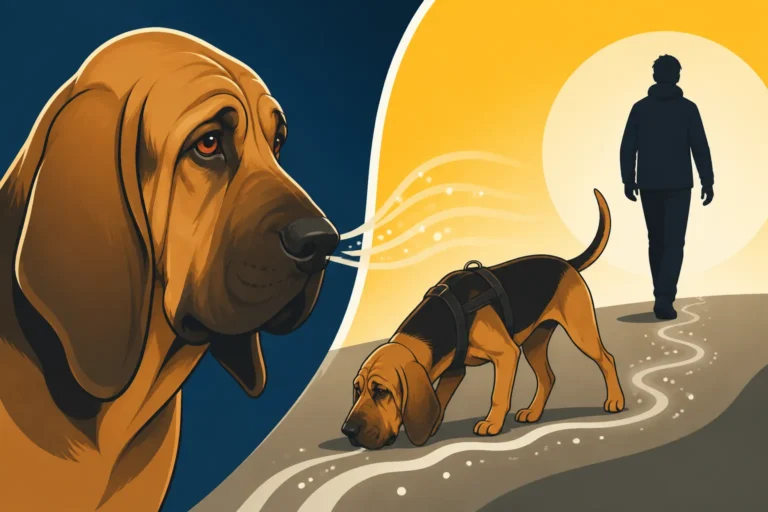
Their incredibly powerful nose plays a huge role here, too. A Bloodhound perceives the world through scent, and often, a bay is triggered by something their human companions can't even detect. A distant animal, a faint human trail from hours ago, or even changes in air currents carrying new smells—all can prompt a Bloodhound to "speak." Because their world is so rich with olfactory information, they are constantly processing and reacting to it, and sometimes that reaction is a bay.
Emotional Expression
Beyond instinct, a Bloodhound's bay can be a powerful emotional outlet. It can signify excitement, like when you pull out their leash for a walk, or anxiety, such as separation distress when they're left alone. It might be an expression of frustration if they can't reach something they want, or a plea for attention. Loneliness is a huge one for these social creatures; a solitary Bloodhound, particularly one left outdoors, will often bay to connect with its pack. A bark collar, in these situations, doesn't address the underlying emotion. Instead, it punishes the expression of that emotion, leaving the dog confused and potentially exacerbating the problem.
Consider a Bloodhound that bays out of loneliness. If the collar delivers a correction every time it tries to express its distress, the dog learns that its attempts to communicate are painful or unpleasant. This can lead to a state of learned helplessness, or it might manifest as destructive behaviors, withdrawal, or even aggression, as the dog finds other, less healthy ways to cope with its feelings. It's like telling a crying child to stop without ever asking why they're crying.
Environmental Triggers
Our modern world is full of sounds that can set off a Bloodhound. Sirens are a classic example, often triggering a beautiful, mournful chorus. Other dogs barking in the neighborhood, unfamiliar people passing by the house, or even common household noises can all be perceived as reasons to vocalize. Because Bloodhounds are highly sensitive to their environment, their baying can feel constant. Why a Bloodhound Bays explores these triggers in more detail.
Think about a Bloodhound reacting to a distant siren. The sound causes them to bay, a natural, almost involuntary response for many hounds. If a bark collar activates, the dog connects the unpleasant sensation with the siren, or worse, with its own natural reaction. This doesn't teach them to be quiet; it teaches them to fear external sounds or to associate their natural response with pain. Instead of learning to be calm, they learn to suppress a vital part of their being, often leading to suppressed stress that surfaces in other undesirable ways. It's a lose-lose situation.
Why Bark Collars Fail (and Harm) a Bloodhound
The appeal of a quick fix for incessant baying is understandable. Who wouldn't want immediate quiet? But when it comes to Bloodhounds, bark collars are not only ineffective but can cause significant emotional and physical damage to a breed already prone to sensitivity.
Misinterpreting the Bay
The fundamental flaw of a bark collar for a Bloodhound lies in its inability to differentiate the type of vocalization or its purpose. A collar simply detects sound and delivers a correction. It doesn't know if your Bloodhound is baying because it's genuinely excited to see you, because it's picked up an interesting scent, or because it's distressed from being alone. To the collar, all bays are equal—and equally punishable.
Imagine your Bloodhound, tail wagging furiously, lets out a joyful bay when you come home from work. ZAP! Or a spray of citronella. This creates profound confusion. The dog associates your return, a moment of joy, with an unpleasant sensation. What does this teach them? Not to bay, perhaps, but also potentially to be wary of your arrival, or to suppress all positive emotional expression. This can deeply strain the bond you share, which is the cornerstone of any successful training relationship. Bloodhounds thrive on positive reinforcement and clear communication, not arbitrary punishment for natural behaviors. They need to understand what you want them to do, not just what not to do. If the collar activates frequently and unpredictably, it can also lead to a general state of anxiety, where the dog is constantly on edge, worried about when the next correction will come.
Physical Discomfort and Stress
Beyond the psychological toll, bark collars can cause genuine physical discomfort and stress, especially on a breed like the Bloodhound. Their skin is delicate and prone to issues, particularly around the neck. Constant pressure or irritation from a poorly fitted collar, or repeated electrical impulses, can lead to skin lesions, infections, or hair loss. Even non-shock collars, like citronella spray collars, can be stressful. The sudden, unexpected spray and smell can be startling and unpleasant, leading to heightened anxiety rather than calm.
The deep-chested nature of Bloodhounds also means that collars, if not perfectly fitted, can press on their windpipe or throat, making the corrections even more uncomfortable. Furthermore, the constant stress of anticipating a correction can lead to physiological changes—elevated heart rate, increased cortisol levels—which are detrimental to a dog's long-term health and well-being. A dog that is perpetually stressed is not a happy or well-adjusted dog, and it certainly isn't one that is learning effectively. It's important to remember that these dogs have an average lifespan that is already shorter than many other large breeds, and chronic stress certainly won't help. Why a Bloodhound Dies Younger Than Its Size Predicts highlights the importance of overall well-being.
Escalation of Behavior
Perhaps the most insidious problem with bark collars is that they often don't solve the underlying issue; they merely suppress the symptom. When a dog's natural vocalization is suppressed, the underlying drive to communicate doesn't just disappear. Instead, it can manifest in other, often more problematic, ways. A Bloodhound that can't bay out its frustration might resort to destructive chewing, excessive digging, house soiling, or even aggressive behaviors because its primary form of communication has been arbitrarily cut off.
Think of it this way: your Bloodhound is baying because it's bored. If a bark collar stops the baying, the boredom remains, now compounded by confusion and discomfort. The dog might then chew up your couch to release that pent-up energy, or dig craters in your yard. The owner sees this new behavior as a new problem, when in reality, it's a direct consequence of failing to address the original root cause of the baying. This creates a cycle of frustration for both dog and owner, damaging trust and making genuine behavioral modification much harder. Rather than creating a quieter home, you might just be swapping one undesirable behavior for several others.
Humane and Effective Alternatives to Manage Baying
Acknowledging that bark collars are a dead end for Bloodhounds doesn't mean you're doomed to a lifetime of incessant baying. There are plenty of humane, effective, and positive ways to address and manage your Bloodhound's vocal tendencies. It all starts with understanding your dog and offering appropriate outlets.
Addressing the Root Cause
The very first step in managing a Bloodhound's baying is to become a detective and figure out why they're doing it. Is it separation anxiety? Boredom? Reactivity to outside stimuli? A plea for attention? Keeping a log of when and where the baying occurs, what precedes it, and what happens afterward can provide invaluable clues.
- Separation Anxiety: If your Bloodhound bays when left alone, it's likely a form of separation distress. This requires a gentle desensitization and counter-conditioning protocol, often involving very gradual increases in alone time and creating positive associations with your departure. Consider offering a high-value, long-lasting chew or a puzzle toy (like a Kong stuffed with frozen peanut butter or plain yogurt) right before you leave. These can distract them and associate your absence with something good.
- Boredom/Lack of Enrichment: A bored Bloodhound is a noisy Bloodhound. These dogs need jobs, and their ultimate job is using their nose. If they're not getting enough mental or physical stimulation, they'll find their own—often vocal—ways to entertain themselves.
- Attention-Seeking: If your Bloodhound bays and you immediately give them attention (even negative attention like scolding), you've just reinforced the behavior. Instead, try to ignore the baying, and reward quiet moments. This takes incredible patience and consistency! Only give attention when they are quiet, even for a brief second.
- Environmental Triggers: If specific sounds like sirens or neighborhood dogs trigger the baying, you can work on desensitization. Play recordings of these sounds at a very low volume, gradually increasing the volume over time, paired with positive reinforcement (tasty treats!). You might also use white noise machines or classical music to mask external sounds. On Amazon, you can find a wide variety of white noise machines that can help create a calmer environment for your dog.
Enrichment and Exercise
This is where Bloodhounds truly shine, and where most baying issues can see significant improvement. A tired Bloodhound is often a quiet Bloodhound, and for this breed, "tired" usually means mentally exhausted from using their nose.
- Scent Work (Mantrailing/Nose Work): This is the holy grail for Bloodhounds. Engaging their primary sense not only satisfies their deep-seated instinct but also provides unparalleled mental and physical exercise. Instead of punishing them for using their nose vocally, you're giving them an appropriate, structured outlet. Mantrailing Is the Answer to a Bloodhound, Not Obedience truly hits the nail on the head here. You don't need to aspire to search and rescue; even simple backyard scent games can make a huge difference. Hide treats or a favorite toy and encourage them to find it. This kind of work is incredibly tiring, and Whether Nose Work Tires a Bloodhound More Than Walking confirms its efficacy in draining their energy. Many online resources and local trainers can help you get started with these activities.
- Physical Exercise: While scent work is paramount, regular physical exercise is also crucial. A Bloodhound needs more than a quick stroll around the block. Long, leashed walks, where they can sniff to their heart's content, are vital. Remember, How Much Exercise a Bloodhound Actually Needs goes beyond just physical movement; it includes that mental engagement through sniffing.
- Interactive Toys and Puzzles: When you can't actively engage with them, puzzle toys that dispense food or require manipulation can keep their minds busy. Rotate these toys to keep things fresh and exciting.
Training and Management Strategies
Positive reinforcement is your best friend when training a Bloodhound. They respond far better to rewards for desired behaviors than to punishment for unwanted ones.
- "Quiet" Cue: Teach your Bloodhound a "quiet" command. When they start to bay, wait for a brief pause, then immediately mark it with a verbal "yes!" or a clicker, and reward them with a high-value treat. Gradually extend the period of quietness before rewarding. This teaches them that silence pays off.
- Counter-Conditioning and Desensitization: If the baying is triggered by specific sounds or sights, systematically expose them to these triggers at a low intensity while providing positive experiences. For example, if the mail carrier sets them off, start by having them observe from a distance, rewarding calm behavior, and slowly decrease the distance over many sessions.
- Environmental Management: Sometimes, simply changing the environment can help. Closing blinds to prevent window-watching, using baby gates to confine them to a quieter part of the house, or providing a comfortable, sound-dampened crate can all reduce triggers. For new puppy owners, a program like the one offered by BAXTER & Bella can be incredibly helpful for early socialization and basic obedience, building a solid foundation for managing behaviors before they become ingrained.
- Long Lines and Secure Fencing: Since going off-leash is rarely an option for a Bloodhound due to their powerful nose, a long line (often 30-50 feet) can provide a sense of freedom in a safe, enclosed area without the risk of them chasing a scent. Whether a Long Line Replaces Off Leash for a Bloodhound is a crucial read. Also, ensure your yard has secure, high fencing. What Fencing Actually Holds a Bloodhound is a must-read for anyone considering yard access for their hound.
Long-Term Management and Realistic Expectations
Owning a Bloodhound is a journey, and managing their baying is an ongoing process. There's no magic wand, but with dedication and realistic expectations, you can cultivate a harmonious home.
Acceptance of the Breed Trait
The single most important step in managing your Bloodhound's baying is to accept that their vocal nature is an intrinsic part of the breed. It's like expecting a Border Collie not to herd or a Golden Retriever not to retrieve. A Bloodhound will bay. Your goal isn't to eliminate it entirely, but to manage it, understand its causes, and redirect it into appropriate channels. Trying to force a Bloodhound into silence fundamentally misunderstands and disrespects their heritage. Embrace the bay! It's part of what makes them so unique and wonderful. You might find yourself appreciating How Loud a Bloodhound's Bay Is when it's during a successful trailing session, rather than an unwanted alert.
This acceptance frees you from the endless frustration of fighting against their nature and allows you to focus on productive solutions. It helps you recognize that their bay is often not a behavioral problem, but a characteristic that needs guidance and understanding.
Consistency and Patience
Training a Bloodhound requires saint-like patience and unwavering consistency. They are intelligent, but also independent and incredibly single-minded when it comes to scent. Changes won't happen overnight, and there will be setbacks. Every family member needs to be on the same page with training protocols, rewards, and how to respond to baying. Inconsistency will only confuse your Bloodhound and slow progress.
For instance, if one person allows attention-seeking baying while another ignores it, your dog will quickly learn that sometimes, baying works! Stick to a routine for feeding, exercise, and training. Structure and predictability can significantly reduce anxiety-driven vocalizations. The BAXTER & Bella program, for example, emphasizes consistency as a core tenet, which is perfect for building solid habits with a Bloodhound from puppyhood.
Professional Guidance
Sometimes, despite your best efforts, you might feel overwhelmed. That's perfectly normal, and it's a sign that it's time to call in the cavalry. A certified professional dog trainer (CPDT-KA) or a veterinary behaviorist can provide invaluable personalized guidance. They can help you identify specific triggers, create a tailored training plan, and teach you advanced techniques for managing your Bloodhound's unique personality.
Look for trainers who use positive reinforcement methods and have experience with scent hounds or working breeds. Avoid anyone who suggests harsh punishment or coercive methods like bark collars, as these will be counterproductive for your sensitive Bloodhound. A good trainer will help you build a stronger bond with your dog, founded on trust and mutual respect, which is ultimately the most effective path to a well-behaved and happy Bloodhound. Don't hesitate to seek help; it's a sign of a responsible and dedicated owner.
In conclusion, while the bay of a Bloodhound can certainly test your limits, resorting to a bark collar is a misguided and potentially harmful solution. By understanding the instincts and emotions behind their vocalizations, and by committing to humane training, enrichment, and consistent management, you can foster a happier, quieter life for both you and your magnificent Bloodhound.
Disclaimer
This article is for general informational purposes only and does not constitute professional advice. Laws, prices and regulations vary by location and change over time. Consult a qualified professional for guidance on your specific situation.