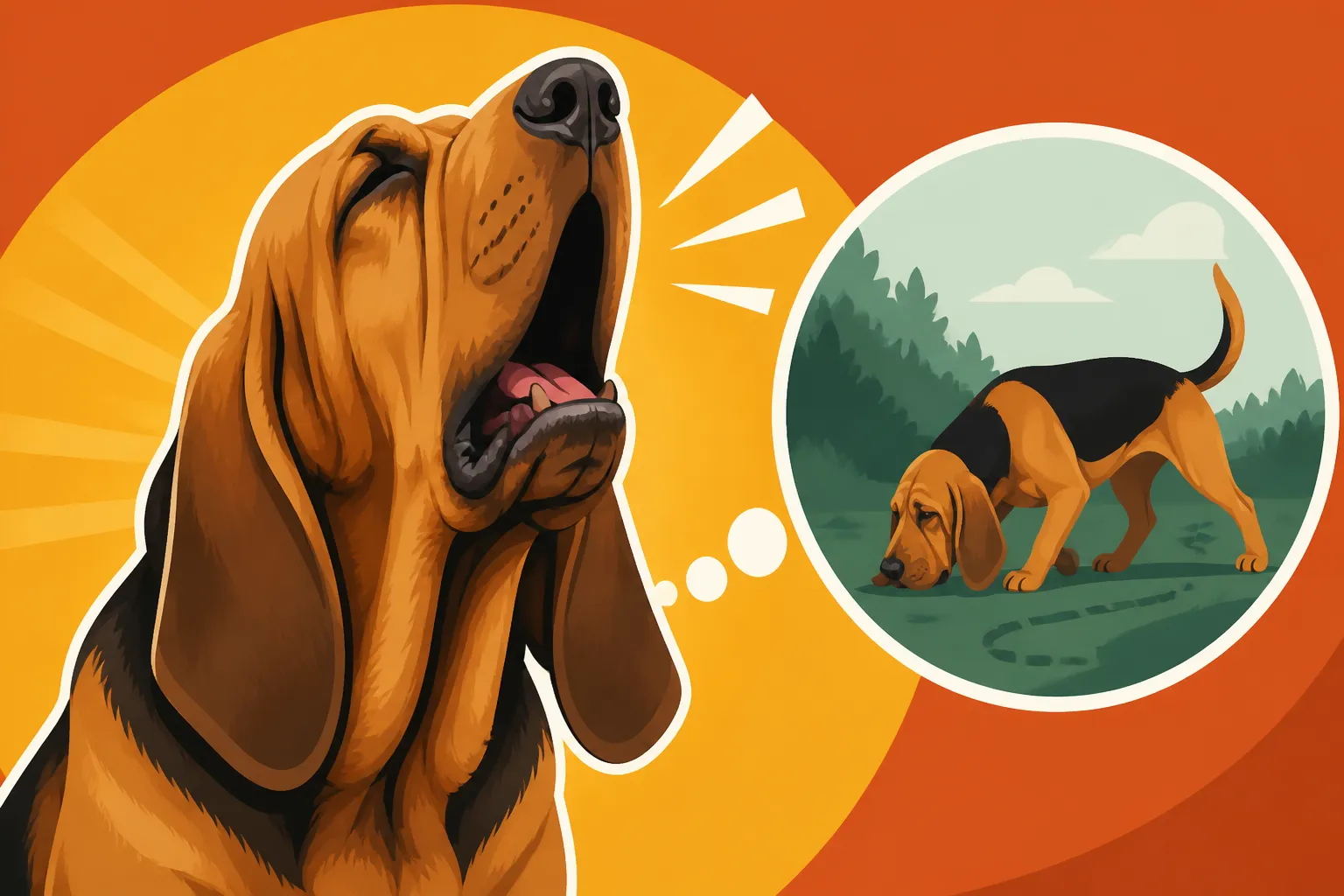
Why a Bloodhound Bays
That distinctive, mournful, and incredibly resonant sound – the Bloodhound's bay – is something every owner comes to know, love, and occasionally, wrestle with. It's often misunderstood by those unfamiliar with the breed, sometimes leading to frustration for both the dog and their human companions. This guide will take a deep dive into the very essence of why Bloodhounds bay, exploring the ancient instincts that drive this vocalization, what different bays can signal, and how you can live harmoniously with your vocal, scent-driven companion.
The Instinctive Roots of the Bloodhound Bay
When you hear your Bloodhound bay, it’s not just a random noise; it's a direct connection to a thousand years of selective breeding and an instinct as old as the hills. These magnificent hounds were crafted for a singular purpose: to follow a scent trail relentlessly, and to tell their handler exactly what they were doing every step of the way. The bay is their voice in the field, an ancient echo in our modern homes.
A Deep-Seated Evolutionary Trait
To truly understand the Bloodhound's bay, we have to travel back in time to their ancestors, the scenthounds of Europe. These dogs were bred to hunt in packs, tracking game across vast distances. In such a scenario, visual contact with the entire pack and the quarry was often impossible. How did they communicate their progress? Through sound. A consistent, deep-throated bay told the other hounds and the human hunters, "I'm on it! The trail is hot!" It allowed the pack to coordinate, to drive the animal, and for the hunters to follow even when sightlines were obscured by dense forest or rolling terrain.
This communal communication is hardwired into the Bloodhound's DNA. Even if your Bloodhound is the only dog in the house, that ancient impulse to announce a discovery or maintain contact with their "pack" (you!) remains incredibly strong. It’s not a choice; it's a fundamental part of who they are, an instinct that has been carefully selected for over centuries because it was crucial to their job. Comparing them to other breeds, you can see The Bloodhound Against the Other Scenthounds and understand just how specialized their vocalization is for scent work.
The Bloodhound's Unique Vocal Anatomy
Have you ever wondered why a Bloodhound's bay sounds so incredibly rich and deep, almost like a foghorn or a lament? It's no accident. Their physical characteristics are perfectly designed to produce this powerful, resonant sound. Think about their loose jowls, which don't just help sweep scent towards their nose but also vibrate and amplify sound. Their long, pendulous ear leather acts like a natural sound baffle, further enhancing their own ability to hear the trail while also potentially influencing the acoustics of their bay.
Most importantly, the Bloodhound possesses a deep, broad chest and strong lungs. This anatomical marvel provides the incredible lung capacity needed to sustain long, drawn-out bays, allowing the sound to carry over long distances. It's why when they bay, it often feels like it resonates through your very bones. This isn't just a bark; it's a full-body vocal performance. You might have noticed How Loud a Bloodhound's Bay Is and how it can startle people unfamiliar with the breed. It's a sound designed for a purpose, not for quiet contemplation.
Scent and Sound: An Unbreakable Link
The connection between a Bloodhound's nose and its voice is perhaps the most profound aspect of its baying behavior. For a Bloodhound, finding a compelling scent isn't just an intellectual exercise; it's an immersive, all-consuming sensory experience that demands an outward expression. When their nose goes down, their voice often comes up. They are literally "singing" the trail. What a Bloodhound Is Actually Smelling on a Trail explains this incredible sensory world they inhabit.
Imagine your Bloodhound in the backyard, nose to the ground, following the ghost of a rabbit that hopped through hours ago. That focused, intense action isn't silent. The low grumbles, the rising inflection of a "whoof-whoof-WOOF!" – that's them communicating. They're telling you, or anyone listening, "I've picked up something interesting! It's here! I'm following!" This isn't them being "stubborn" or "noisy"; it's them performing their innate function. Trying to stop a Bloodhound from baying on a trail is like trying to stop a bird from singing – it goes against their very nature. It's a crucial part of Mantrailing Is the Answer to a Bloodhound, Not Obedience because it gives them an appropriate outlet for this deep-seated drive.
Deciphering the Different Bloodhound Bays
While the general sound of a Bloodhound's bay is distinctive, a savvy owner learns to recognize nuances in their vocalizations. Just like human speech, there are different tones, rhythms, and intensities that can signal different messages. It's not always easy, especially when you're first getting to know your hound, but with observation, you'll start to discern what your Bloodhound is trying to tell you.
The Trail Bay: "I've Got the Scent!"
This is arguably the most iconic Bloodhound vocalization. When a Bloodhound is actively engaged in following a scent, their bay takes on a specific, often rhythmic quality. It's typically a deep, resonant, sustained sound, sometimes with a slightly urgent, driving quality. It's not frantic or high-pitched; rather, it’s a focused, determined vocalization. The pattern might be a series of steady, spaced-out "booo-wooo-wooo" sounds, or it could become more continuous as they lock onto a particularly strong or challenging trail.
For a handler working a Bloodhound, this bay is invaluable. It tells them: "I'm still on the track! Keep up!" If the bay changes, or if it stops, it's a significant signal. For example, if the bay becomes choppier, or if they start to make questioning "huffs" and snuffles, it might mean What a Bloodhound Does When It Loses the Trail. Conversely, a stronger, more confident bay means they are truly locked in. This specific type of bay is pure working instinct, a testament to their purpose.
The Alert Bay: "Someone's Here!"
Beyond the trail, Bloodhounds also use their bay to alert. This bay is usually triggered by something unexpected: a delivery truck pulling up, a stranger walking past the house, or a sudden noise outside. The alert bay often has a slightly different character than the trail bay. It might be more immediate, perhaps starting with a sharp "AWOOO!" followed by a series of deep, sustained bays. It can sound more like an alarm, though rarely aggressive.
Unlike some guard breeds that might have a sharp, staccato bark, the Bloodhound's alert bay is still very much a bay. It carries that deep, resonant quality, designed to be heard and to signal presence. It's their way of saying, "Hey! Something's happening! I'm letting you know!" While Bloodhounds are not typically guard dogs, their size and powerful voice can certainly act as a deterrent, even if their actual intention is just to announce. It's a gentle giant's way of standing guard.
The "I Want Something" Bay: Communication and Demand
Bloodhounds are smart and, let's be honest, they can be a bit dramatic. They learn quickly which behaviors get them what they want. If a bay consistently results in you giving them attention, food, or access to outside, they will absolutely use it as a tool. This "demand bay" can be particularly frustrating because it often sounds like an exaggeration of their usual vocalizations, perhaps more insistent or prolonged.
This type of bay might manifest as a prolonged, whining bay when they want to go out, a sharp "AWOO!" directed at you when they think it's dinner time, or a persistent series of low bays when they want to climb onto the couch for cuddles. It's important to differentiate this from urgent needs. If you consistently respond to every demand bay, you're inadvertently training your Bloodhound that baying is the most effective way to get your attention. This is where understanding and consistency in your responses become vital to avoid creating a perpetually vocal demanding hound.
Common Triggers for Bloodhound Baying
Understanding why your Bloodhound bays is a huge step toward living harmoniously with them. It’s rarely out of malice or pure naughtiness; more often, it’s a response to deeply ingrained instincts or unmet needs. Identifying the triggers is the first step in managing the behavior.
The Irresistible Call of Scent
This is the number one reason Bloodhounds bay, and it's something many new owners underestimate. Their world is dictated by scent, and when an interesting or compelling scent crosses their path, their brain essentially says, "Track it!" The bay is the natural consequence of this intense focus. Imagine a squirrel ran across your yard an hour ago, leaving behind a fascinating trail of dander and paw prints. To your Bloodhound, that's a thrilling mystery novel unfolding right before their nose, and they must read it out loud.
This can happen in various scenarios:
- Yard scents: A rabbit, deer, or even a neighborhood cat passing through.
- Neighborly scents: The mail carrier's route, a jogging neighbor, children playing down the street.
- Distant sounds: A siren, another dog barking miles away, a faint noise that carries on the wind.
It's crucial to remember that Why a Bloodhound Ignores a Cue It Knows when on a scent is not disobedience; it's a testament to the power of their nose. Their instinct to follow that scent, and to vocalize that they're following it, overrides almost everything else. This isn't a flaw in their character; it's the very essence of their breed.
Loneliness, Boredom, and Anxiety
While scent is a primary driver, emotional states also play a huge role in Bloodhound vocalization. These are highly social creatures, historically working alongside humans and other hounds. Being left alone for extended periods without adequate mental or physical stimulation can lead to significant distress, which often manifests as baying.
- Loneliness: A Bloodhound who views you as their pack leader will often bay if left alone, especially if they are not used to it. They're literally calling out for their pack. Whether a Bloodhound Bays When Left Alone is a common concern for owners who work full-time.
- Boredom: A Bloodhound with an idle mind and body is a prime candidate for excessive baying. Their minds are constantly seeking puzzles and information. If they're not given appropriate outlets for their intelligence and energy (like scent work!), they will create their own "entertainment," and that often involves their voice.
- Separation Anxiety: This is a more intense form of distress. Dogs with true separation anxiety experience panic when their primary attachment figure leaves. Baying, along with destructive chewing, pacing, and house-soiling, can be a symptom. This isn't just "being noisy"; it's a cry for help born of genuine fear. Addressing separation anxiety requires a careful, methodical approach, often with professional guidance.
Environmental Stimuli and Frustration
Beyond direct scent trails and emotional needs, Bloodhounds can also bay in response to a variety of environmental triggers or out of sheer frustration. Their senses are incredibly acute, meaning they pick up on things that we humans don't even register.
- Auditory Triggers: Sirens are a classic example. Many Bloodhounds will "sing along" with sirens, whether from an emergency vehicle far away or even a television show. The unique frequency and sustained sound seem to tap into their ancestral howling instincts. Other dogs barking in the neighborhood can also trigger a chain reaction of baying.
- Visual Stimuli (less common, but possible): While their nose is primary, a sudden movement or appearance of something unusual (a new decoration in a neighbor's yard, a person they don't recognize) can elicit an alert bay.
- Frustration: This is a big one. Imagine your Bloodhound sees a squirrel in the yard, but the fence prevents them from pursuing it. Or they smell something amazing on the other side of a closed door. That intense desire to investigate, coupled with the inability to do so, can lead to a sustained, frustrated bay. They might pace, paw at the barrier, and bay continuously, expressing their profound irritation at being denied their natural urge. This type of bay is often more agitated than a calm trailing bay.
| Type of Bay | Common Sound Characteristics | Primary Meaning | Common Triggers |
|---|---|---|---|
| Trail Bay | Deep, sustained, rhythmic "booo-wooo-wooo" | "I'm on the scent!" | Scent trails (animals, people, food) outdoors. |
| Alert Bay | Immediate, sharp "AWOOO!", followed by deep bays | "Something is happening/Someone is here!" | Strangers, delivery people, unexpected noises. |
| Demand Bay | Persistent, whining, insistent, repetitive bays | "I want attention/food/to go out!" | Owner present, specific unmet needs. |
| Frustration Bay | Agitated, prolonged, sometimes intense "awooos" | "I can't get to what I want!" | Barriers to scent, inability to reach something. |
| Loneliness Bay | Mournful, drawn-out, often repetitive "howls" | "Where is my pack? I'm alone!" | Owner absence, lack of stimulation. |
Managing and Understanding the Bay in a Home Environment
Living with a Bloodhound means accepting the bay. It's part of their charm, their history, and their unique personality. The goal isn't to silence them completely – that's often unrealistic and unkind – but rather to understand, manage, and channel their vocal nature appropriately.
Embracing the Bay (Within Reason!)
The first and most important step is setting realistic expectations. A Bloodhound is not a quiet breed. If you wanted a silent companion, a Bloodhound probably wasn't the right choice! Instead of fighting against their nature, try to appreciate the bay for what it is: a window into their incredible sensory world and their expressive personality. You can't train out instinct, but you can certainly train appropriate outlets and responses.
This acceptance can reduce your own frustration significantly. When they let out a deep bay because the neighborhood cat just strolled across the lawn, instead of feeling annoyed, try to think, "Ah, my amazing hound just picked up that cat scent that I couldn't even dream of detecting!" It's about shifting your perspective. However, "within reason" is key. A constant, uncontrolled bay is not enjoyable for anyone, especially your neighbors. Whether Neighbors Tolerated a Bloodhound is a very real concern, and a harmonious relationship with your community often hinges on managing your dog's vocalization.
Structured Scent Work as an Outlet
This is perhaps the single most effective way to address excessive or inappropriate baying driven by instinct. Bloodhounds need to use their noses. If they don't have a constructive outlet, they will find their own, and that often involves baying at every passing scent. Structured scent work, like mantrailing or even basic nose work games, taps directly into their core drive.
Consider enrolling in a mantrailing class or investing in some scent work kits from retailers like Amazon. This could include a long line, a tracking harness, and various scent articles to start them on. Even simple "find it" games where you hide treats around the house or yard can make a huge difference. These activities are incredibly mentally stimulating and physically tiring, often more so than a simple walk around the block. Whether Nose Work Tires a Bloodhound More Than Walking is absolutely true! A tired Bloodhound is a quiet Bloodhound. BAXTER & Bella, for instance, offers comprehensive online training programs that can help you introduce basic obedience and mental stimulation exercises that lay the groundwork for more advanced scent work. Giving them a job for their nose fulfills their deepest desires, reducing the need to bay out of boredom or frustration with unchanneled instinct.
Environmental Management and Routine
While you can't control every scent that wafts into your yard, you can manage their environment to reduce triggers.
- Secure Fencing: A strong, escape-proof fence is non-negotiable for a Bloodhound. If they can escape to follow a scent, they will. And a frustrated hound contained by a weak fence will often bay. What Fencing Actually Holds a Bloodhound is a critical read.
- Window Management: If your Bloodhound bays at every passerby, consider limiting their access to front-facing windows or using window film to obscure their view. Sometimes, "ignorance is bliss" when it comes to visual triggers.
- Enrichment Toys: Puzzle feeders, durable chew toys, and snuffle mats can keep their minds busy, especially when you need them to settle. Rotate these toys to keep them interesting. Many excellent options are available on Amazon.
- Consistent Routine: Dogs thrive on routine, and Bloodhounds are no exception. Knowing when to expect meals, walks, and playtime can reduce anxiety and demand-baying. If they know a fun scent game is coming up in the afternoon, they might be less inclined to bay endlessly in the morning.
- "Quiet" Cue: While you can't stop all baying, you can teach a "quiet" cue. This involves rewarding silence after a bay. When your Bloodhound barks or bays, wait for a brief pause, mark it with "yes!" or a clicker, and reward. Gradually, you can introduce the "quiet" cue before they settle, reinforcing the desired behavior. This takes patience and consistency, but it's not about punishing the bay, but rewarding the absence of it.
When the Bay Becomes a Problem (and seeking help)
Sometimes, despite your best efforts, the baying can become excessive, disruptive, or a symptom of a deeper issue. It's important to recognize when the behavior crosses the line from typical Bloodhound vocalization to something that genuinely needs intervention.
Identifying Excessive or Problematic Baying
What defines "excessive"? It's subjective, of course, but generally, if the baying is constant, relentless, and causing significant stress for you or your neighbors, it's problematic. Signs might include:
- Duration: Baying for extended periods (e.g., more than 10-15 minutes continuously) without stopping, even after the initial trigger is gone.
- Frequency: Baying multiple times an hour, every day, becoming the dominant sound in your home.
- Inappropriateness: Baying at seemingly nothing, or at very minor stimuli that wouldn't normally provoke such a reaction.
- Owner Distress: You feel constant tension, anxiety, or resentment towards your dog's vocalization.
- Neighbor Complaints: This is a clear indicator that the baying is beyond what is socially acceptable. Whether Neighbors Tolerated a Bloodhound is a question many Bloodhound owners face.
If you find yourself in this situation, it's not a failure on your part, but rather an indication that your Bloodhound needs additional support and a more structured approach.
Avoiding Counterproductive Training Methods
It's tempting, when faced with relentless baying, to reach for quick fixes. However, many common methods are not only ineffective for Bloodhounds but can actually worsen the problem or damage your relationship with your dog.
- Punishment: Yelling at your Bloodhound, hitting them, or using harsh physical corrections for baying rarely works. For a dog baying out of anxiety or instinct, punishment only increases their stress, which can lead to more baying, or even new behavioral problems like fear or aggression. They often don't understand why they are being punished, only that you are scary when they make that sound.
- Bark Collars (especially shock collars): Why a Bark Collar Is the Wrong Answer for a Bloodhound is a crucial point. While some might offer a temporary suppression of the bay, they don't address the underlying cause. If a Bloodhound is baying out of deep-seated instinct or anxiety, a shock or spray collar simply adds discomfort or pain to an already stressful situation. It teaches them that baying is painful, but not why it's happening or what they should do instead. It can create a dog who is fearful, confused, and potentially suppresses all vocalization, which isn't healthy.
The most effective methods focus on redirecting, managing the environment, and addressing the root cause, not just suppressing the symptom.
Consulting Professionals and Enrichment Strategies
If you're struggling with excessive baying, don't go it alone.
- Certified Professional Dog Trainer (CPDT-KA or KPA-CTP): Look for a trainer who has experience with scent hounds and uses positive reinforcement methods. They can help you identify triggers, develop management strategies, and teach your Bloodhound appropriate alternative behaviors. They can also guide you in structured scent work.
- Veterinary Behaviorist: If the baying seems rooted in deep anxiety or fear (like severe separation anxiety), a board-certified veterinary behaviorist can provide a medical perspective and, if necessary, prescribe medication to help manage anxiety while you work on behavior modification. They understand the intersection of physical and mental health.
- Environmental Enrichment: Double down on mental stimulation. Think beyond just walks. Invest in high-quality puzzle toys from Amazon that make them work for their food. Kongs stuffed with frozen peanut butter or plain yogurt can keep them occupied for a good chunk of time. Snuffle mats for meal times make eating a game. The more their brains are engaged in appropriate activities, the less energy they'll have for unproductive baying.
Remember, the Bloodhound's bay is a powerful, intrinsic part of their being. With patience, understanding, and the right approach, you can learn to appreciate it while ensuring it doesn't become a source of stress for your household or your community.
Disclaimer
This article is for general informational purposes only and does not constitute professional advice. Laws, prices and regulations vary by location and change over time. Consult a qualified professional for guidance on your specific situation.