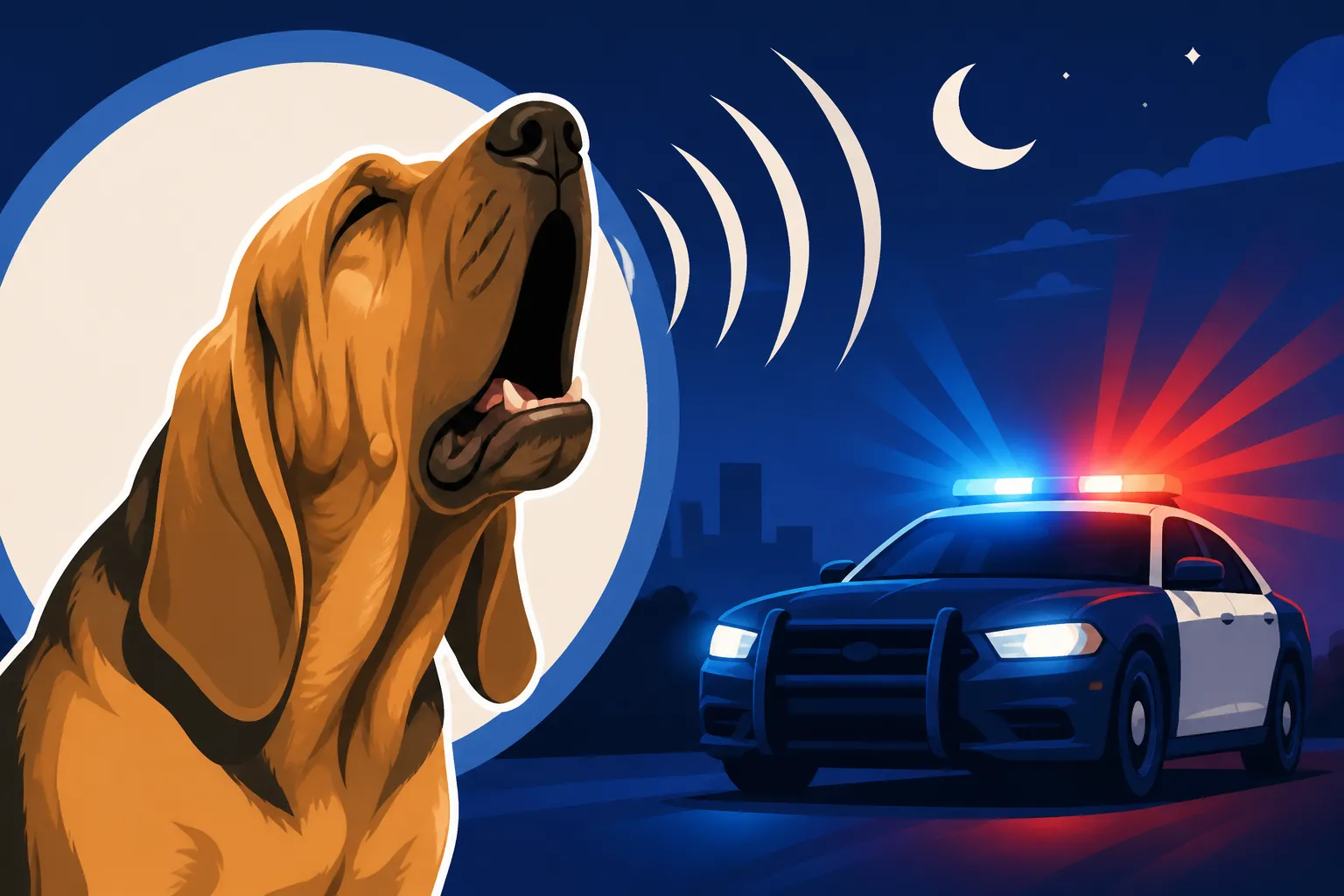
Whether a Bloodhound Howls Along With Sirens
If you're a Bloodhound owner, you've likely experienced it: that sudden, mournful, spine-tingling sound that erupts from your otherwise calm companion the moment a siren wails in the distance. It can be startling, sometimes even frustrating, and it leaves many of us wondering, "Why do they do that?" This isn't just a quirky habit; it's a deep-seated instinct, and understanding it is the first step toward managing it. This guide will delve into the vocal world of the Bloodhound, explain why sirens can be such a powerful trigger, and offer practical strategies to help both you and your hound cope.
The Bloodhound's Vocal Nature: More Than Just a Bay
Bloodhounds are known for their incredible noses, but their voices are just as distinctive and, frankly, unforgettable. Their vocalizations are not just random noise; they are a fundamental part of who a Bloodhound is, deeply rooted in their history and purpose. It's a spectrum of sounds, each with its own meaning, and understanding this range is crucial to interpreting their reactions to external stimuli like sirens.
Understanding the Bloodhound's Bay: A Deep Dive into Communication
The signature sound of a Bloodhound is, without a doubt, their bay. It's not a sharp, yappy bark you might hear from a smaller terrier; it's a long, resonant, almost musical sound that can carry for miles. Historically, this bay served a critical function: to alert hunters to the location of the quarry or, more famously, to indicate that they were hot on a trail. Imagine a dense forest or a vast, open field – a simple bark wouldn't cut it. The Bloodhound's bay was designed to penetrate the environment, to communicate across distances, and to convey urgency and focus. It’s a sound of purpose, a proclamation of their unwavering commitment to the scent they’re following.
Many owners find themselves asking Why a Bloodhound Bays, and the answer is multifaceted. It's an expression of their ancient heritage as tracking dogs. When they're on a scent, that bay is a focused communication. But it's also a general expression of excitement, frustration, or even boredom for some hounds. My old Gus, bless his heart, would sometimes bay just because the mailman dared to walk past our house. It wasn't about a scent; it was about proclaiming his presence and disapproval. This deep-seated vocal tendency means that your Bloodhound is naturally inclined to use their voice, and for them, it's often a primary way of interacting with the world.
The Difference Between Baying, Howling, and Barking in a Bloodhound
While the bay is their calling card, Bloodhounds, like all dogs, employ a range of vocalizations. It’s important to distinguish between them, as each serves a different purpose and might indicate a different underlying feeling or trigger.
- Baying: As discussed, this is the deep, drawn-out, often melodious sound. It’s characteristic of hounds and is primarily associated with trailing, excitement, or general vocal expression. It’s often sustained, a long "ooooOOOOooohhh-WOOF!" that builds and echoes.
- Howling: This is the sound most commonly triggered by sirens. A howl is typically more sustained and often has a mournful or lamenting quality. It can be a response to loneliness, an attempt to communicate with distant "pack members" (even if those "pack members" are just sounds), or a reaction to high-frequency noises. It often feels less purposeful than a bay and more like an involuntary reaction. When a siren goes off, the pitch and duration of the sound often hit a frequency that resonates deeply with a Bloodhound's auditory system, triggering this ancient form of communication.
- Barking: While Bloodhounds aren't known as incessant barkers like some other breeds, they do bark. Their bark is usually deeper and less frequent than a typical dog's. It's often used for alerting to immediate threats or arrivals (like a stranger at the door) or to demand attention. It's usually shorter, sharper, and more direct than a bay or a howl.
Understanding these distinctions helps us categorize the siren response as a howl, rather than a bay, which gives us clues as to why it happens and how we might approach it. When your Bloodhound lets out that long, resonant wail in response to a siren, they're not necessarily "baying at the moon;" they're often involuntarily responding to an auditory stimulus that mimics an ancient call.
Why Sirens Trigger Howling in Bloodhounds
It’s almost a cliché, isn't it? The dog that howls along with the ambulance. But for Bloodhound owners, it's a very real and often disruptive part of daily life. The scientific and behavioral reasons behind this phenomenon are fascinating and rooted deeply in canine evolutionary history. It's not just a random reaction; it's a complex interplay of instinct, sound perception, and communication.
The Instinctual Call: Responding to High-Pitched Sounds
Dogs possess a remarkable sense of hearing, far superior to ours, especially in the range of high-frequency sounds. What sounds like a harsh, mechanical wail to us might, to a Bloodhound, have elements that mimic the natural calls of other canids. Think about it: a wolf howling communicates across vast distances to other wolves, a long, sustained sound designed to carry through the wilderness. Sirens, with their fluctuating pitches and extended duration, often hit frequencies and patterns that resemble these ancient calls.
For a Bloodhound, a breed so deeply connected to its ancestral hunting and trailing roles, the impulse to respond to such a sound is incredibly strong. It’s not a conscious decision; it’s an involuntary, instinctual trigger. Their ears are incredibly sensitive, designed not just to track scent but also to pick up subtle auditory cues. The sound of a siren might register as a distant call from another dog or even a distressed animal, prompting them to respond in kind. They’re essentially saying, "I hear you! I'm here!" or "What's going on out there?"
It’s also possible that the sound creates a physical sensation in their ears that is uncomfortable or jarring, and howling is their way of externalizing that discomfort or trying to "cancel out" the unpleasant noise by making their own. The deep resonance of a siren might literally vibrate in their ear canals, and they react to it. This isn't just unique to Bloodhounds, of course; many breeds howl at sirens, but with the Bloodhound's already prodigious vocal capacity, their response tends to be particularly enthusiastic and prolonged.
The Pack Mentality and Auditory Triggers
Beyond just the sound itself, the pack mentality of dogs plays a significant role in their siren-induced howling. In the wild, canids howl to maintain contact with their pack, to rally members, or to warn of intruders. It's a communal act, a way of bonding and communicating within their social structure. While your Bloodhound might be the only canine in your immediate household, that ancient wiring is still very much present.
When a siren wails, your Bloodhound might interpret it as a call from a distant "pack member." They hear this sustained, high-pitched noise and respond with their own vocalization, attempting to communicate or join in. It’s a primal response to what they perceive as another dog's call. This is why you might notice that if one dog in a neighborhood starts howling at a siren, others often join in – it’s a chain reaction of perceived pack communication.
Moreover, Bloodhounds are incredibly social animals, even if they can be a bit independent when their nose is to the ground. Their connection to their human family often mimics that of a pack. They might be trying to "alert" you to the "other dog" they hear, or simply expressing their feelings in a way that feels natural to them. It's a profound display of their deeply ingrained social and communicative instincts, even if it does mean the whole neighborhood gets a free concert every time an emergency vehicle passes by. If you live in a city, understanding Whether a Bloodhound Suits an Apartment takes on a whole new dimension when sirens are involved!
Managing a Bloodhound's Siren-Induced Howling
While your Bloodhound's siren-induced howling is a natural, instinctual behavior, it doesn't mean you have to live with a perpetual soundtrack of wails. There are absolutely steps you can take to manage this vocal response, making life more peaceful for everyone – your hound included. It's about understanding their triggers and gently guiding them toward more desirable behaviors, rather than trying to suppress an innate drive.
Creating a Calming Environment During Siren Passages
One of the most immediate and effective strategies is to alter your Bloodhound's environment during those moments of siren activity. The goal here is to reduce the intensity of the trigger and provide a sense of security.
- Sound Dampening: When you hear a siren approaching, try closing windows and doors. This simple act can significantly reduce the sound level entering your home. If you have a designated "quiet room" or den, moving your Bloodhound there can help. Consider using thick curtains or even sound-absorbing panels if this is a frequent issue in your area. For persistent noise, a white noise machine or even a robust soundproof blanket available on platforms like Amazon can be very helpful in masking the siren's piercing frequencies.
- Distraction and Redirection: Instead of letting the siren take over, redirect your Bloodhound's attention. This can involve engaging them with a favorite toy, a puzzle feeder, or a chew that requires their full focus. The moment you hear a siren, grab that special Kong filled with peanut butter, or toss their cherished squeaky toy. The idea is to associate the sound of the siren not with howling, but with something positive and distracting. This takes practice and consistency, but it can be incredibly effective over time. My own Bloodhound, Daisy, learned that a siren meant a treat puzzle was coming out, and it definitely helped shift her focus.
- Comfort and Security: Some Bloodhounds might feel anxious when they hear sirens. Providing a safe, comfortable space can make a huge difference. A sturdy crate draped with a blanket can be a wonderful den, offering a sense of enclosure and security. Make sure they have a comfortable bed or blanket inside. Your calm demeanor also plays a huge role. If you get agitated by the siren or your dog's reaction, they will pick up on that stress. Remain relaxed, speak in a soothing voice, and project confidence.
Training and Desensitization Strategies
Beyond environmental management, active training can help your Bloodhound learn to cope with sirens. This isn't about punishing the howl, which only creates fear and anxiety, but about changing their emotional response to the sound.
- Desensitization: This is a gradual process where you slowly expose your Bloodhound to the sound of sirens at a very low volume, below their reaction threshold, and reward them for remaining calm. Start with recordings of sirens played almost imperceptibly. As they remain relaxed, slowly increase the volume over days or weeks, always rewarding quiet behavior with high-value treats and praise. The key is never to push them to the point of howling. If they react, you’ve gone too fast.
- Counter-Conditioning: This technique pairs the siren sound with something positive. Every time a siren sounds (even a real one in the distance, if you're quick enough), immediately give your Bloodhound a highly desirable treat or start a short, fun play session. The goal is to change their association from "siren equals howl" to "siren equals good things happen." This takes incredible consistency, but it can literally rewire their brain's response. For a structured approach to desensitization and counter-conditioning, programs like those offered by BAXTER & Bella could provide excellent guidance, breaking down the steps into manageable lessons.
- "Quiet" Cue: While it's nearly impossible to train out an instinctual howl completely, you can train a "quiet" cue. Practice this when your Bloodhound is barking or making other non-siren related noises. Wait for a brief moment of silence, say "Quiet," and reward immediately. Over time, you can start to use this cue when a siren begins, hopefully prompting a pause in their vocalization. Remember, Bloodhounds aren't always quick to obey if their nose or instincts have taken over, so be patient. You might find that Why a Bloodhound Ignores a Cue It Knows comes into play when their instincts are running high.
When to Seek Professional Help for Excessive Howling
While some howling at sirens is typical Bloodhound behavior, there are instances where it might indicate a deeper issue, and professional help becomes invaluable.
- Extreme Anxiety or Fear: If your Bloodhound's reaction to sirens goes beyond mere vocalization and includes signs of severe distress – excessive panting, trembling, hiding, destructive behavior, or even attempts to escape – it might be a fear or anxiety response. This is more than just a hound being a hound.
- Unmanageable Vocalization: If the howling is constant, prolonged, and absolutely unresponsive to any training or environmental changes, to the point where it's causing significant stress to you or your neighbors, it's time to consult an expert. Sometimes How Loud a Bloodhound's Bay Is can become a serious problem.
- Behavioral Consultations: A certified professional dog trainer or a veterinary behaviorist can assess your Bloodhound's specific situation. They can help identify underlying anxiety, fear, or other behavioral issues that might be exacerbating the howling. They can also provide a tailored training plan, potentially incorporating more advanced desensitization techniques or management strategies. In some cases, if anxiety is severe, a vet might discuss medication in conjunction with behavior modification. This isn't usually the first step, but it's an option for deeply distressed dogs.
Ultimately, managing a Bloodhound's siren-induced howling is a journey of patience, understanding, and consistent effort. By recognizing that their behavior stems from deep-seated instincts and applying thoughtful strategies, you can help your vocal companion navigate the modern world with greater calm and confidence.
Disclaimer
This article is for general informational purposes only and does not constitute professional advice. Laws, prices and regulations vary by location and change over time. Consult a qualified professional for guidance on your specific situation.