Why Drilling Loses a Bloodhound
When you bring a Bloodhound into your life, you quickly learn that these magnificent dogs operate on a different wavelength than many other breeds. If you try to train a Bloodhound using the same repetitive drilling methods you might use for a Golden Retriever or a Border Collie, you're likely to find yourself frustrated, and your Bloodhound completely disengaged. This guide will explore why traditional, drill-based training often fails with Bloodhounds and offer insights into methods that truly unlock their incredible potential.
The Bloodhound's Nose and Independent Spirit: Why They're Different
Understanding why "drilling" a Bloodhound is usually a losing battle starts with appreciating the very essence of the breed. These dogs weren't designed for rote obedience; they were bred for an entirely different, incredibly complex job.
Hardwired for Scent, Not Obedience
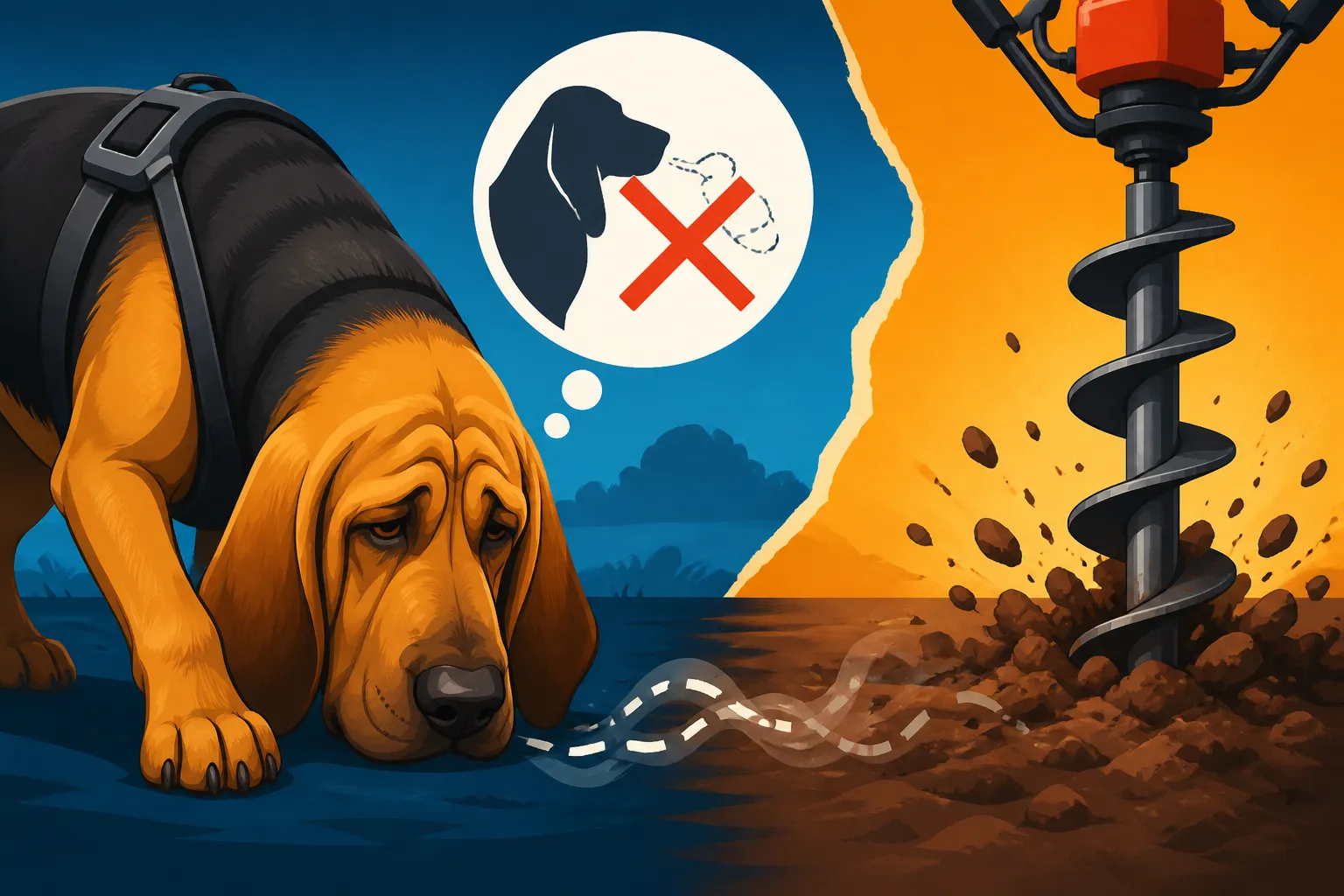
Imagine asking a world-renowned detective, famous for their brilliant deduction skills, to spend their entire day sorting paperclips by color. That's a bit like asking a Bloodhound, with a nose capable of tracking a human scent for miles and days, to repeatedly sit-stay in a sterile environment for twenty minutes. Their brain is simply hardwired differently. Their primary drive, their absolute passion, is scent. It's an instinct that runs deeper than almost any other command.
From the moment they're born, every fiber of a Bloodhound's being is tuned to analyze, dissect, and follow scent. This isn't just a strong sense of smell; it's a profound cognitive function that dictates how they perceive the world. When a Bloodhound's nose drops to the ground and catches a compelling trail, that scent becomes their entire universe. Everything else—your voice, your commands, the squeak of a toy—fades into background noise. It's not that they're ignoring you out of defiance; it's that their brain is literally overwhelmed by the incredible information their nose is feeding it. This makes it incredibly difficult for them to engage in repetitive tasks that don't tap into this core drive. This is why A Bloodhound's Nose Outvotes Its Handler every single time.
The Pace of a Scent Hound's Learning
It’s easy to mistake a Bloodhound's thoughtful, often slow, response to a command as stubbornness or a lack of intelligence. This couldn't be further from the truth. Bloodhounds are incredibly intelligent, but their intelligence manifests in problem-solving related to scent, not necessarily in quick, snappy obedience routines. They're thinkers, deliberators, and sensory information processors.
When you're trying to drill a "down-stay," a Bloodhound isn't just listening to your word; they're probably also processing the subtle scent of the squirrel that ran through the yard two hours ago, the faint smell of your neighbor's barbecue from last night, and the unique signature of your shoes on the grass. To them, these details are paramount. They need time to process, to decide if your request is genuinely more interesting or rewarding than the fascinating world of scent unfolding around them. They're not wired for immediate, robotic responses. They excel when they can engage their minds, explore, and figure things out. If you're trying to teach them a trick by repeating the same action fifty times, you're going against their natural inclination to investigate and understand rather than just perform.
The Pitfalls of Repetitive Drilling with a Bloodhound
While a little repetition is part of any learning process, the intensive, high-volume drilling often recommended for other breeds can actually be detrimental to your relationship with a Bloodhound and their learning process.
Boredom and Disengagement: The Bloodhound Shut-Down
Bloodhounds are curious creatures, and they thrive on novelty and mental engagement. When a training session becomes overly repetitive and lacks an element of discovery or problem-solving, they get bored. And a bored Bloodhound is a Bloodhound that mentally checks out. They might physically be there, but their mind is off in a more interesting scent-scape. You'll see them lag, sniff the ground incessantly (even when there's no "work" to do), or simply gaze off into the middle distance. This isn't defiance; it's a coping mechanism for boredom.
Think about it: if your job involved doing the same monotonous task for hours on end, wouldn't you find ways to mentally escape? For a Bloodhound, that escape route is their nose. When they're bored, they don't learn; they simply endure the session. This makes progress incredibly slow, and it can be disheartening for both dog and owner. Many owners mistake this disengagement for a lack of intelligence or a stubborn streak. But often, it's just a clear signal that the training method isn't stimulating their unique brain. If you find yourself asking Why a Bloodhound Ignores a Cue It Knows, boredom might be your answer.
Creating Aversion and Resistance
When training sessions are tedious, unrewarding, or filled with endless repetition that the dog finds dull, they can start to associate training itself with negative feelings. What was meant to be a fun, bonding activity turns into a chore. Bloodhounds, like all dogs, are masters of association. If "training time" consistently means "boring repetition" or "getting told what to do without a clear, exciting purpose," they will learn to avoid it.
This aversion can manifest in subtle ways, like taking longer to respond, or in more obvious ways, such as actively trying to escape the training area. If you compound this with harsh corrections or an impatient tone when they're disengaging, you risk damaging the trust and relationship you're trying to build. Bloodhounds are incredibly sensitive, despite their size and working drive. They don't respond well to heavy-handed tactics. Instead, they become resistant and shut down further. This is why tools like Why a Prong Collar Is Wrong for a Bloodhound and Why an Electric Collar Is Wrong for a Bloodhound are generally counterproductive and can actively harm your bond with this sensitive breed.
Effective Strategies for Engaging the Bloodhound Mind
So, if drilling doesn't work, what does? The key is to pivot your approach, focusing on engagement, motivation, and leveraging their innate talents.
Making Training a Game, Not a Task
The most successful Bloodhound trainers understand that every interaction can be a learning opportunity, and it should always feel like a game. Instead of endless "sits," try hiding a treat and asking for a "stay" while they wait, then releasing them with a "find it!" and enthusiastic praise. Make "come" a race to you for a super special treat or a game of chase. Short, frequent bursts of training (think 5-10 minutes, a few times a day) are far more effective than one long, grueling session. This caters to How Long a Bloodhound's Attention Lasts in a Session when it's focused on something they perceive as less stimulating.
Vary your rewards! While many Bloodhounds are food motivated, don't underestimate the power of a favorite squeaky toy or a quick game of tug as a reward. The goal is to make every interaction positive and surprising. Keep them guessing, keep them engaged, and keep it fun. This means less "do it again" and more "what's next?"
Harnessing Their Natural Drive: The Power of Scent Work
This is where Bloodhounds truly shine, and it's the ultimate answer to engaging their minds without resorting to boring drills. Instead of trying to force them into a mold they weren't made for, lean into their unparalleled natural ability. Mantrailing, tracking, and scent detection games are not just fun; they are profoundly fulfilling for a Bloodhound and build an incredible bond between you. Mantrailing Is the Answer to a Bloodhound, Not Obedience, and it works their brains and bodies in a way that traditional obedience simply can't.
You don't need to be a professional search and rescue handler to do scent work with your Bloodhound. You can start with simple hide-and-seek games with their favorite toy or treats in the house. Progress to backyard trails, having a friend or family member lay a short trail for your dog to follow. Invest in appropriate gear, like a comfortable tracking harness and a long line, which you can often find on Amazon. These tools allow your Bloodhound to work effectively and safely, letting their nose lead the way. Resources from platforms like BAXTER & Bella often include positive, engagement-focused training that can be adapted for scent work, even if they're not explicitly Bloodhound-specific. Remember, for a Bloodhound, scent work isn't a trick; it's their purpose, their joy, and their deepest form of mental enrichment.
Building a Relationship, Not Just a Command Set
Ultimately, training a Bloodhound isn't about getting them to flawlessly execute a series of commands on cue. It's about building a partnership based on trust, mutual respect, and understanding. When your Bloodhound trusts you, understands your expectations, and knows that working with you is rewarding and fun, they will be far more likely to engage. What a Bloodhound Will Work For isn't just treats; it's also the joy of the chase, the praise from their trusted person, and the satisfaction of solving a puzzle with their incredible nose.
Focus on clear, consistent communication and always be fair. Don't punish them for following their nose when you haven't given them a clear, more rewarding alternative. Celebrate their successes, no matter how small. A Bloodhound's "obedience" will naturally improve as your relationship strengthens and they learn that listening to you often leads to more exciting, scent-driven opportunities. They will choose to work with you because they want to, not because they fear consequences or are drilled into submission.
Recognizing and Adapting to Your Bloodhound's Needs
Being a great Bloodhound owner means constantly observing and adapting your approach to their unique personality and energy levels.
Signs Your Bloodhound Is Losing Interest
Learning to read your Bloodhound's body language is critical, especially during training. If you see them performing these behaviors, it's a sign they're disengaging:
- Excessive sniffing (off-trail): If their nose is glued to the ground, but you're not actively working a trail, they're likely seeking mental stimulation elsewhere.
- Lagging or pulling away: They might walk slower, resist moving forward, or try to veer off in another direction.
- Looking away: Avoiding eye contact or constantly turning their head away from you.
- "Soft" mouth or pawing: Trying to mouth your hand or paw at you, often a sign of seeking attention or expressing frustration/boredom.
- Quiet vocalizations: A soft whine or a low grumble can indicate they're unhappy or bored with the current activity.
Recognizing these subtle cues allows you to intervene before they completely shut down or become resistant.
When to End a Session (and How to Restart)
The golden rule for training any dog, but especially a Bloodhound, is to always end a session on a high note. As soon as your Bloodhound successfully completes a simple command or shows even a flicker of engagement, praise them lavishly, give them their jackpot reward, and end the session. It leaves them wanting more, eager for the next time. If you notice signs of disinterest, don't push through. Take a break. Switch to a fun game, a short walk, or just some cuddle time. You can always try again later, or even the next day, with a fresh perspective.
When restarting, try a different location, a higher-value reward, or a completely different type of activity, especially one that involves their nose. For example, instead of another sit-stay drill, try a simple "find it" game with treats scattered in the grass. This reinvention keeps things exciting and prevents them from associating "training" with "boring."
The Long Game of Bloodhound Training
Owning and training a Bloodhound is a marathon, not a sprint. You'll need an abundance of patience, a good sense of humor, and a deep appreciation for their unique way of thinking. They may not be the fastest to learn a traditional obedience routine, but their dedication to scent work and their incredible, affectionate nature make every moment worthwhile.
Focus on consistency with your rules and boundaries, but be flexible with your training methods. Understand that they are not being "stubborn"; they are simply being Bloodhounds, driven by an instinct few other breeds can rival. Celebrate their small victories, cherish their quirky nature, and enjoy the journey of discovering the world through their incredible nose. You'll find that the true rewards of training a Bloodhound come from fostering their natural talents and building an unbreakable bond, not from perfect heelwork or endless recalls.
Drilling vs. Scent-Focused Training for Bloodhounds
Here's a quick comparison to highlight the key differences and why a scent-focused approach triumphs for this unique breed:
| Feature/Method | Traditional Drilling | Scent-Focused Training |
|---|---|---|
| Primary Goal | Rote obedience, quick responses to commands | Harnessing natural instincts, mental enrichment, problem-solving |
| Bloodhound's Response | Boredom, disengagement, perceived stubbornness, resistance | High engagement, deep satisfaction, mental and physical fulfillment |
| Motivator | Repetition, generalized rewards (treats, praise) | Innate drive to use nose, specific high-value rewards (finding "the person," special treats) |
| Session Length | Often longer, more repetitive | Shorter, frequent, highly engaging |
| Learning Pace | Can be slow due to disinterest | Bloodhounds learn rapidly and enthusiastically |
| Relationship Impact | Can strain bond if seen as a chore or confrontational | Strengthens bond through partnership and shared success |
| Typical Tools | Clickers, leashes, treat pouches | Tracking harness, long line, scent articles, diverse environments, specialized training resources (e.g., those from BAXTER & Bella or gear from Amazon) |
| Long-Term Outcome | Potentially inconsistent obedience, frustrated owner | Confident, well-adjusted Bloodhound; engaged, happy owner |
Disclaimer
This article is for general informational purposes only and does not constitute professional advice. Laws, prices and regulations vary by location and change over time. Consult a qualified professional for guidance on your specific situation.