Whether a Microchip Is Enough for a Bloodhound
It's a fear every dog owner lives with, but for those of us with Bloodhounds, it often feels like a constant, low thrum beneath the surface: the terrifying thought of our beloved, scent-driven companion going missing. You do everything right – secure fences, diligent leash work – but a Bloodhound's nose is a force of nature, and sometimes, despite our best efforts, they just follow that captivating scent into the great unknown. When that happens, the first question that often pops into our minds, after the initial panic, is "Are they identifiable? Can someone find their way back to me?" Many rely on a microchip as the ultimate safety net, but for a Bloodhound, a microchip, while absolutely vital, is truly just one piece of a much larger puzzle. This guide will delve deep into why relying solely on a microchip for your Bloodhound might leave you more vulnerable than you think and what comprehensive steps you can take to ensure your extraordinary hound has the best chance of returning home.
The Basics of Microchips and What They Actually Do (and Don't Do)
When you first get your Bloodhound, whether as a bouncy puppy or an adult rescue, one of the first things your vet will likely recommend is a microchip. And it's a fantastic, low-tech invention that has reunited countless pets with their anxious families. But there's often a misunderstanding about what a microchip actually does. Let's clear that up right away.
What a Microchip Is and How It Works
Think of a microchip as a tiny, inert device, about the size of a grain of rice, that's implanted just under your Bloodhound's skin, typically between the shoulder blades. It's usually done with a needle, much like a routine vaccination, and for most dogs, it's a quick, minor discomfort. This little chip holds a unique identification number. It doesn't have a battery, it doesn't transmit signals on its own. It's a passive device.
When a stray dog is found and taken to a vet clinic or animal shelter, they'll use a special handheld scanner to pass over the dog's back. If a microchip is present, the scanner emits a low-frequency radio wave that activates the chip, causing it to transmit its unique ID number back to the scanner. This number is then entered into a national (or international) pet recovery database, which is linked to your contact information.
The Crucial "Don't" of Microchips
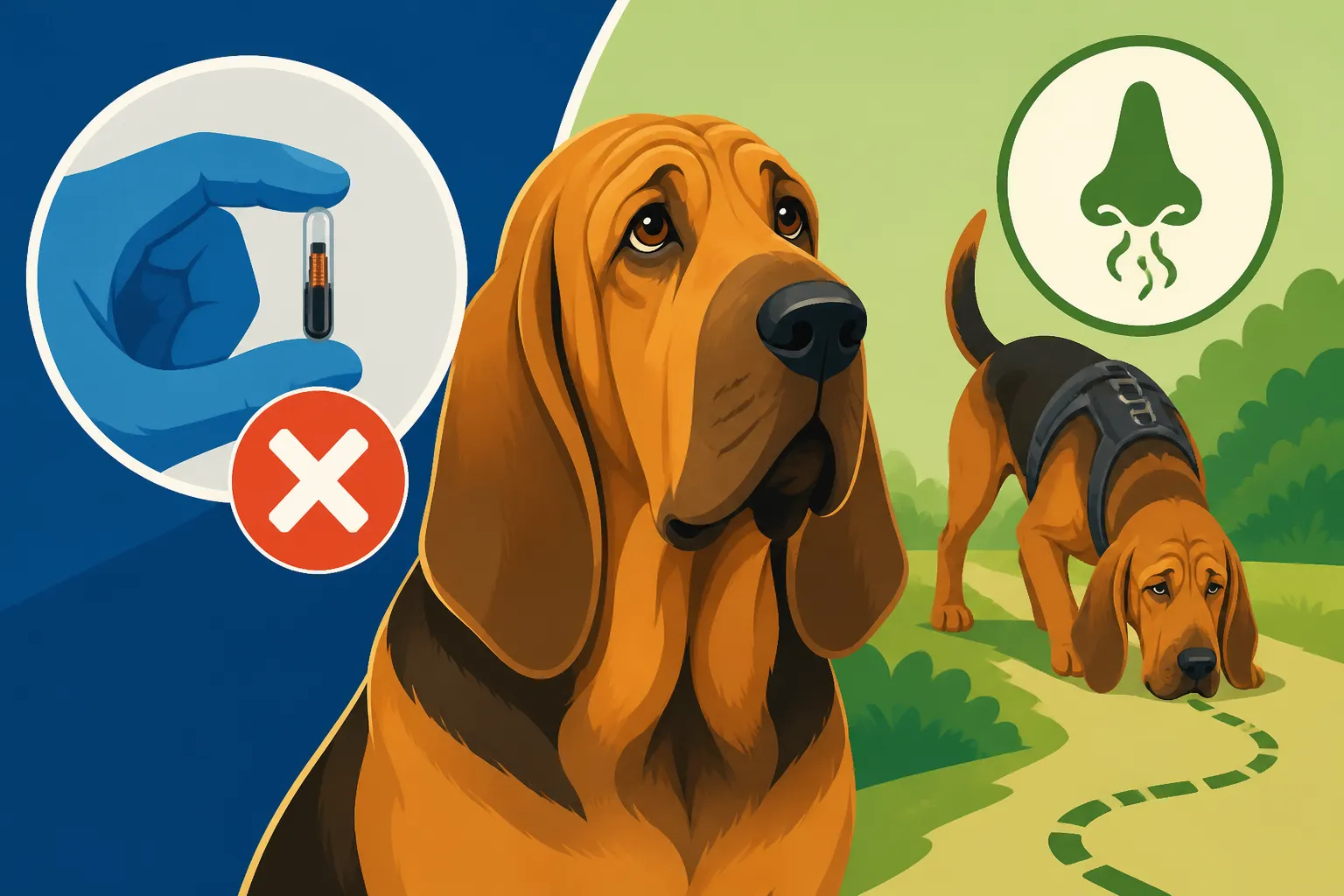
Here's the really important part that many owners mistakenly assume: A microchip is NOT a GPS tracker. I know, I know, it sounds like something straight out of a spy movie, but it simply doesn't work that way. A microchip cannot tell you where your Bloodhound is in real-time. It doesn't send out a signal that you can follow on an app. It can't guide you to their location if they've wandered off on a scent trail.
Its function is purely identification after your dog has been found and after they've been scanned. This distinction is absolutely critical, especially when you consider the unique traits of a Bloodhound. If your Bloodhound disappears, the microchip only becomes useful if someone physically locates them and takes them to a facility equipped with a scanner. Until then, you're relying on luck and visibility.
Why a Microchip Alone Isn't Enough for a Bloodhound's Unique Needs
When it comes to lost dogs, Bloodhounds are in a league of their own. Their incredible scenting ability, coupled with a singular focus once they're "on scent," means they can cover vast distances quickly and often without regard for their surroundings. This makes their safe return particularly challenging if they're not found almost immediately.
The Irresistible Call of the Scent Trail
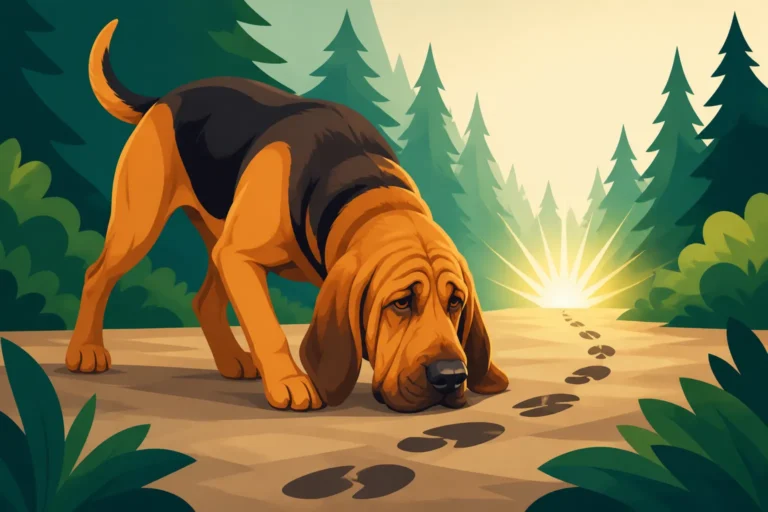
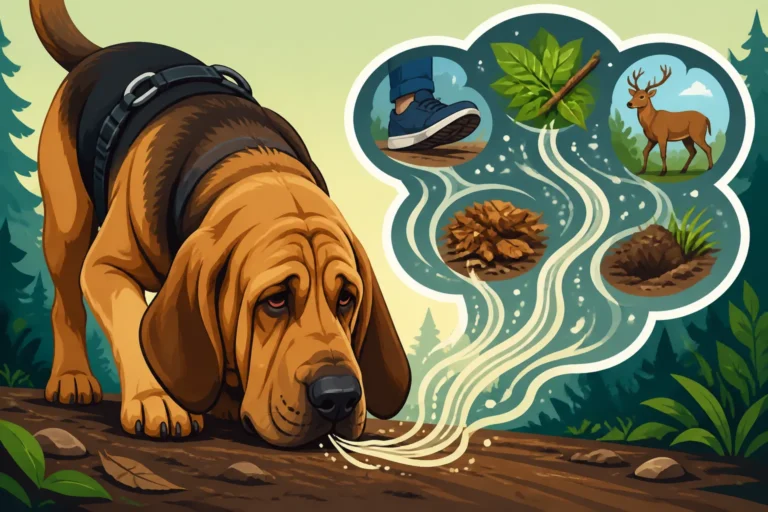
Bloodhounds are literally bred for their noses. They don't just smell things; they experience the world through scent in a way we can barely comprehend. When a Bloodhound catches an interesting scent, whether it's a deer, a rabbit, or even just the lingering trace of a human who walked by hours ago, their entire world narrows to that trail. All other stimuli – your calls, the sound of traffic, the familiar boundaries of your yard – fade into insignificance. It's not disobedience; it's an instinctual drive so powerful it's almost impossible to override. This is a big part of Why Off Leash Is Not a Goal With a Bloodhound.
Because of this intense drive, a Bloodhound can easily become oblivious to its environment and wander far from home. We've heard stories of Bloodhounds traveling How Far a Loose Bloodhound Will Travel, sometimes miles and miles, completely focused on their olfactory mission. If they're out of sight, they're likely out of hearing, and they won't simply "come home" like some other breeds might once the scent dissipates. They are truly lost in their work.
High Value, High Risk: Why Bloodhounds Are Targeted
Unfortunately, Bloodhounds are also a high-value target for theft. Their distinctive looks, gentle nature, and, yes, their legendary noses make them desirable to unscrupulous individuals. A purebred Bloodhound puppy can be quite expensive, and adult Bloodhounds are sometimes sought after for their potential in breeding or even illicit activities. This added risk means that if your Bloodhound is picked up by someone with ill intent, a microchip might be deliberately overlooked or even removed in rare, extreme cases. While this is certainly not the norm, it's a sobering thought that adds another layer of vulnerability.
If a thief simply removes a collar and tags, and the dog isn't taken to a vet or shelter for a scan, the microchip is essentially useless in the immediate aftermath of the theft. This underscores the need for multiple, redundant layers of identification.
The Time Sensitive Nature of a Lost Bloodhound
When a Bloodhound goes missing, time is absolutely of the essence. The longer they're gone, the further they can travel, and the more dangerous situations they can encounter – traffic, unfriendly animals, even becoming trapped or injured. A microchip does nothing to help in those critical first hours or even days when an active search is underway. It's a reactive tool, not a proactive one. For a dog that can move as quickly and single-mindedly as a Bloodhound, a delayed discovery could mean the difference between a swift reunion and a heartbreaking search.
Layering Protection: What Else Your Bloodhound Needs Beyond a Microchip
Given the unique characteristics of Bloodhounds and the limitations of microchips, layering your identification strategy is not just a good idea; it's absolutely essential. Think of it as building a robust safety net with multiple strands.
The Indispensable Collar and ID Tags
This might seem obvious, but it's astonishing how many dogs go without proper collars and tags. For a Bloodhound, a sturdy, comfortable collar with up-to-date ID tags is your first line of defense. The tags should include:
- Your Bloodhound's Name: Keep it simple, just their first name.
- Your Phone Number: Make sure it's a number you always answer or that goes to voicemail you check immediately.
- Your Address (Optional, but recommended): This allows someone local to return your dog without needing a vet visit.
- "Microchipped" or "Reward If Found": These can encourage people to help.
While a microchip is permanent, collars and tags are immediate. If someone finds your Bloodhound, they don't need a special scanner; they just need to look at the collar. This significantly speeds up the reunion process. I've often recommended finding durable, silent tags on sites like Amazon that won't jingle too much, which can be annoying for sensitive hound ears. Also, consider having a spare set of tags on hand, because they do wear out or get lost.
GPS Tracking Collars: A Game Changer
This is where technology really steps up for Bloodhound owners. Unlike a microchip, a GPS tracking collar provides real-time location data. These devices attach to your dog's collar and connect to satellites or cellular networks to transmit their location to your smartphone or computer. This is what you need to track your Bloodhound if they get lost on a scent trail. Whether a Bloodhound Needs a Tracking Collar is a serious question, and for many, the answer is a resounding "yes."
While there's a monthly subscription fee for most GPS trackers, the peace of mind they offer is often priceless. Imagine the difference: instead of frantically driving around hoping to spot them, you can see their approximate location on a map and direct your search efforts much more effectively. Some even offer geofencing features, alerting you the moment your Bloodhound leaves a designated safe zone, like your yard. This can be invaluable, particularly if you have a Bloodhound that is a master escape artist, even from yards you thought were secure. Whether a Bloodhound Runs Away From a Yard It Likes is a testament to their single-minded pursuit of scent.
Registration and Keeping Information Current
Having a microchip is only half the battle; ensuring your contact information linked to that chip is current is the other, equally important half. If you move, change phone numbers, or even get a new email address, you must update your microchip registry. This is often overlooked, and it renders the microchip useless.
Most microchip companies have online portals or dedicated phone numbers for updating information. Make it a habit to check your pet's microchip registration once a year, perhaps around their annual vet visit, just to ensure everything is correct. The same goes for any registration associated with a GPS tracker.
Maximizing Your Chances of a Swift Reunion
Even with all the preventative measures, a lost Bloodhound can still happen. Being prepared for that possibility means having a plan in place to act quickly and effectively.
High-Quality Photos and Unique Identifiers
Keep several clear, recent photos of your Bloodhound on your phone. These photos should show their face clearly and any unique markings they might have. Does your Bloodhound have a distinctive spot, a scar, or a particular wrinkle pattern around their eyes? Document it. These details are incredibly helpful when creating "Lost Dog" posters or sharing information on social media. The more specific you can be, the easier it is for someone to identify your dog.
It's also a good idea to have a "Lost Dog" kit ready. This can include a recent photo, a description of your Bloodhound's temperament (are they shy, friendly, food motivated?), and basic contact information. This saves precious time if you ever need to mobilize a search.
Community Networks and Local Resources
In the unfortunate event your Bloodhound goes missing, immediate action is crucial.
- Contact Local Shelters and Vets: Call every animal shelter, humane society, and veterinary clinic in your area, and expand your radius to neighboring towns. Provide them with your Bloodhound's description, photo, and microchip number.
- Social Media Power: Post on local lost pet Facebook groups, Nextdoor, and other community forums. Share widely and ask friends and family to do the same. Many success stories come from community sharing.
- Physical Posters: Create brightly colored, easy-to-read "Lost Dog" posters with a clear photo and your contact information. Post them in prominent locations where your Bloodhound was last seen and in surrounding areas. Offer a reward if you can, as it can motivate people to look more diligently.
- Scent Articles: If you know your Bloodhound is prone to trailing, consider preparing scent articles for them. Places like BAXTER & Bella, known for their comprehensive puppy training programs, often emphasize early exposure to different scents and environments. While they primarily focus on home training, the concept of scent work can be adapted for retrieval if you are working with a professional lost pet recovery service that uses scent dogs or if you have a dog that can follow its own home scent trail back. If your Bloodhound is a working dog, their natural drive means they might be more inclined to follow a familiar scent back to a safe place once their 'mission' is complete.
Consider your Bloodhound's personality. If they are shy, advise people not to chase them but to call you immediately. If they are food motivated, suggest enticing them with treats. Every detail can help someone who encounters your lost hound.
Here's a quick comparison of popular identification methods:
| Feature | Microchip | ID Tags on Collar | GPS Tracker Collar |
|---|---|---|---|
| Function | Permanent internal ID | Immediate visual ID | Real-time location tracking |
| Requires Power | No (passive) | No | Yes (battery, needs charging) |
| Cost | One-time fee | Low, recurring for new tags | Device cost + monthly/annual subscription fee |
| Range | Only when scanned (at close range) | As far as dog can be seen/read | Global (cellular/satellite network dependent) |
| Proactive/Reactive | Reactive (after found & scanned) | Proactive (immediate identification) | Proactive (helps locate while lost) |
| Permanence | Permanent (unless surgically removed) | Can be lost/removed | Can be lost/removed/damaged |
| Best for Bloodhounds | Essential base layer | First line of defense | Critical for active search/prevention |
Ultimately, a microchip for your Bloodhound is a non-negotiable safety measure, providing a last resort permanent identification. But because of the unique way Bloodhounds engage with the world through their nose, and their propensity to travel significant distances in pursuit of a scent, it simply isn't enough on its own. A sturdy, up-to-date ID collar, potentially a GPS tracking collar, diligent registration updates, and a proactive plan for immediate action are all equally vital components of ensuring your beloved hound has the best possible chance of coming home. Keep those photos current, keep that information updated, and never underestimate the power of their nose – or the lengths they might go to follow it.
Disclaimer
This article is for general informational purposes only and does not constitute professional advice. Laws, prices and regulations vary by location and change over time. Consult a qualified professional for guidance on your specific situation.