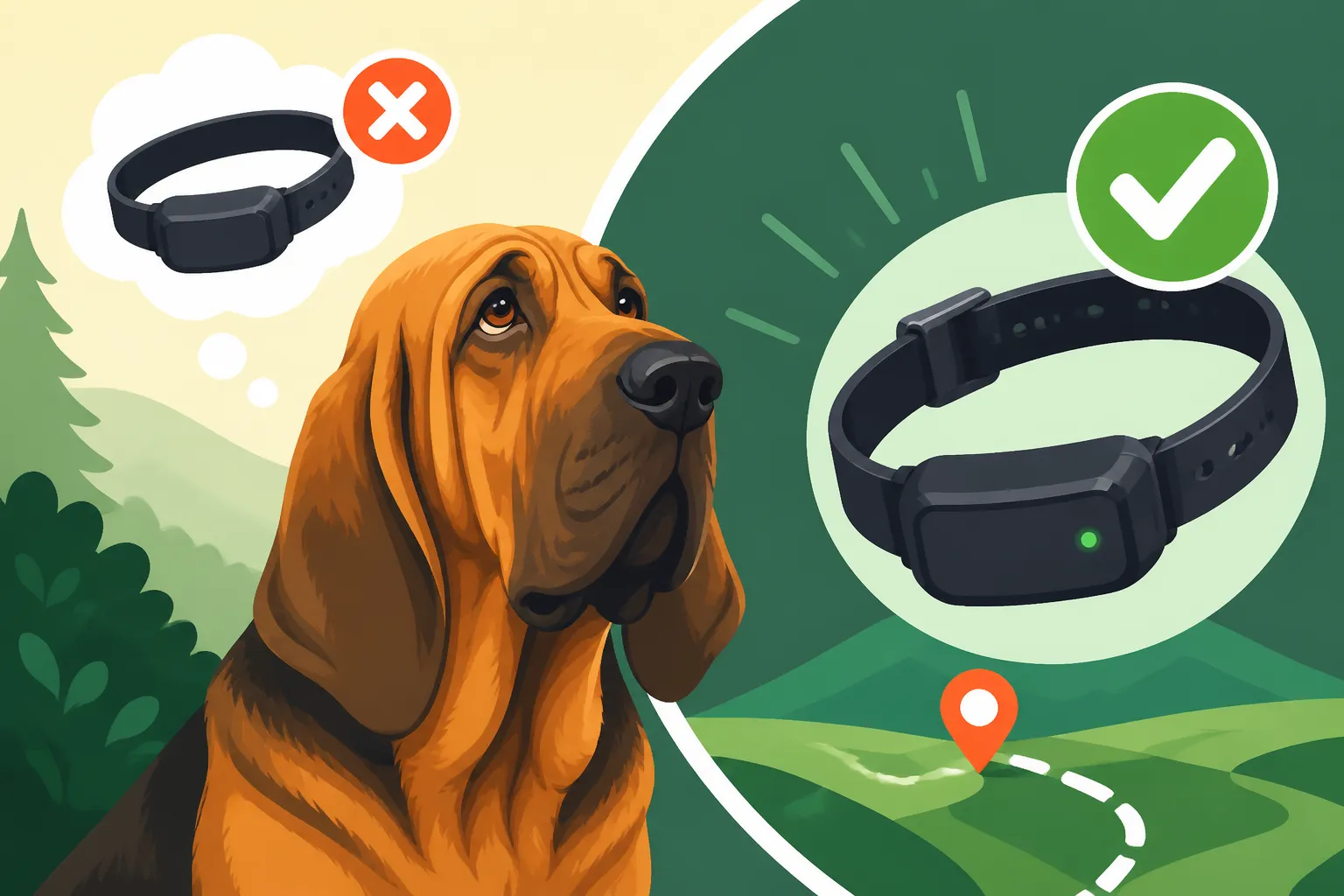
Whether a Bloodhound Needs a Tracking Collar
It’s a situation many Bloodhound owners dread: that moment of panic when their dog catches a scent, pulls free, and disappears over the horizon, utterly consumed by its powerful nose. You hear stories, see frantic posts online, and the thought inevitably arises – surely a tracking collar is the answer? This guide dives deep into whether these devices are truly a necessity for Bloodhounds, what they can and cannot do, and how they fit into the bigger picture of keeping your extraordinary scent hound safe.
The Inevitable Call of the Scent: Why Bloodhounds Get Lost
Let’s be honest, living with a Bloodhound is living with a nose that wears a dog. Their scenting ability isn't just "good"; it's legendary, almost supernatural. When a Bloodhound latches onto a scent, especially a fresh and compelling one, their entire world shrinks to that invisible trail. Everything else—your voice, your leash, the presence of traffic, even their favorite treat—becomes secondary, if it registers at all.
This isn't stubbornness, nor is it a sign of poor training in the traditional sense. It's an overwhelming, instinctual drive that has been selectively bred into them for centuries. Their brains are wired to follow a scent, to the exclusion of nearly everything else. This means that a Bloodhound, even one with a stellar "sit" and "stay" in the living room, can become deaf and blind to commands once that nose hits paydirt outdoors. Many owners quickly come to terms with the reality that Why Off Leash Is Not a Goal With a Bloodhound for the vast majority of these dogs. It's not about training harder; it's about respecting their genetic imperative. Their whole body language changes; their head drops, their tail often lowers, and they become a four-legged scent-following missile. You can call until your throat is raw, but they are literally in another world, following a trail you can't perceive.
The speed and distance a Bloodhound can cover when focused on a trail are astounding. A dog that slips its collar or finds a gap in a fence can vanish remarkably quickly. They don't typically look back, not out of malice, but because their focus is so singular. A short trot down the block can easily turn into miles of wandering as they follow a fascinating trail through unfamiliar territory. This innate drive is precisely why the question of a tracking collar comes up so often. Owners understand that once their Bloodhound is truly on a mission, traditional recall simply fails. Why Recall Fails on a Bloodhound Outdoors isn't a flaw in the dog; it's the strength of their gift. The distance a loose Bloodhound can travel is not to be underestimated, turning a quick escape into a long and terrifying search. How Far a Loose Bloodhound Will Travel can easily exceed your walking or even running pace, putting significant distance between you and them in a very short amount of time.
What a "Tracking Collar" Really Means for a Bloodhound
When we talk about "tracking collars," we’re generally referring to devices that allow you to locate your dog remotely. It's crucial to understand the different types available and their specific strengths and weaknesses, especially for a breed as unique as the Bloodhound.
GPS Tracking Collars
These are probably what most people think of when they hear "tracking collar." GPS collars use satellite technology to pinpoint your dog's location and relay it to your smartphone or a dedicated handheld device. Many popular brands offer these, often requiring a cellular subscription to transmit data.
Pros for a Bloodhound:
- Wide Range: As long as there's cellular service, these collars can track your dog over vast distances, which is critical for a breed known to wander far.
- Real-time Updates: Many models offer near real-time location updates, showing you exactly where your dog is moving on a map.
- Geofencing: You can often set up virtual fences, receiving an alert if your Bloodhound leaves a predefined safe area (like your yard).
Cons for a Bloodhound:
- Battery Life: High-frequency GPS tracking can drain batteries quickly, sometimes lasting only 12-24 hours with constant use. If your dog is lost for an extended period, the battery might die before you find them.
- Cellular Dependence: No cell signal means no tracking data. This can be a huge limitation if your Bloodhound escapes into rural areas or dense forests where coverage is spotty or nonexistent.
- Durability: Bloodhounds are large, strong dogs who can push through brush and over rough terrain. Collars must be robust enough to withstand this without breaking or falling off.
- Subscription Fees: Most GPS trackers require a monthly or annual subscription, adding to the ongoing cost of ownership.
Radio Frequency (RF) Tracking Devices
Less common for pet owners now, but historically used for hunting dogs, RF trackers consist of a transmitter on the dog's collar and a handheld receiver you carry. The receiver points you in the direction of the dog, typically with an audible or visual signal getting stronger as you get closer.
Pros for a Bloodhound:
- No Cellular Needed: These work independently of cell service, making them ideal for tracking in remote areas where GPS might fail.
- Better Battery Life: Often, the battery life is longer than GPS collars because they don't constantly transmit data over cellular networks.
Cons for a Bloodhound:
- Limited Range: The range is typically much shorter than GPS, often a few miles at best, and can be affected by terrain, hills, and dense foliage.
- Directional Only: You only get a general direction, not a precise map location. You have to actively follow the signal.
- No Alerts: They won't alert you if your dog leaves a zone; you have to be actively scanning.
- More Expensive Equipment: The initial investment for a reliable RF system can be higher than some consumer GPS options.
Simple ID Tags and Microchips
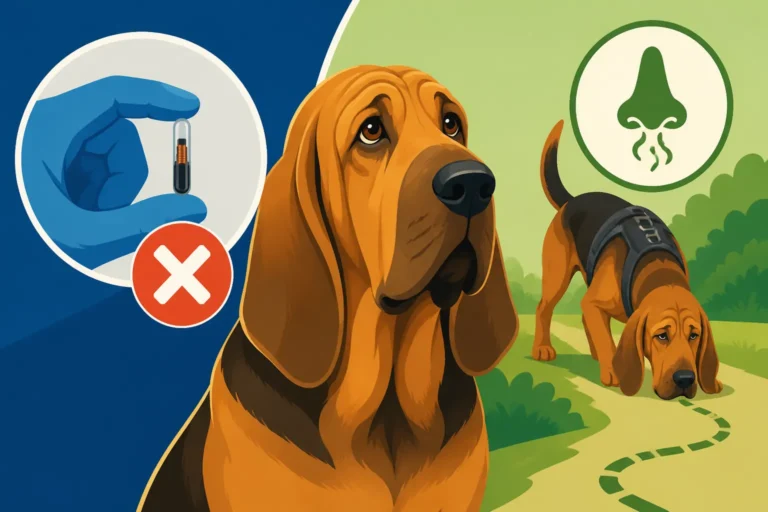
While not "tracking collars" in the real-time sense, these are fundamental. An ID tag with your current phone number is your dog's fastest way home. A microchip, implanted under the skin, provides permanent identification that can be scanned by a vet or shelter. However, Whether a Microchip Is Enough for a Bloodhound is a resounding "no" for a lost dog situation. It helps identify a dog after it's found, but it offers zero help in finding a dog that is actively missing. It's a critical backup, but not a proactive tracking solution.
Here's a quick comparison of the main types of tracking aids:
| Feature | GPS Tracking Collar | RF Tracking Device | ID Tag/Microchip |
|---|---|---|---|
| Real-time Loc. | Yes (on map/app) | No (directional only) | No |
| Range | Global (with cell signal) | Limited (e.g., 0.5-5 miles) | N/A (identification only) |
| Cellular Req. | Yes (for data transmission) | No | No |
| Subscription | Often required | Rarely (for some advanced models) | No |
| Battery Life | Moderate (12-48 hrs typical) | Good (days to weeks) | N/A (permanent) |
| Cost | Moderate device, ongoing subscription | High initial device, low ongoing | Low (tag) to Moderate (chip/vet fee) |
| Best Use | Wide-area tracking, real-time location on map | Tracking in remote areas, dense cover | Found dog identification, basic contact |
Are Tracking Collars a Replacement for Responsible Handling?
Absolutely not. A tracking collar is a powerful tool, a safety net, but it should never be seen as a substitute for vigilant, responsible handling of your Bloodhound. Think of it like a spare tire in your car: you hope you never need it, but you're glad it's there. You wouldn't drive without checking your main tires first, right?
Secure Containment is Paramount
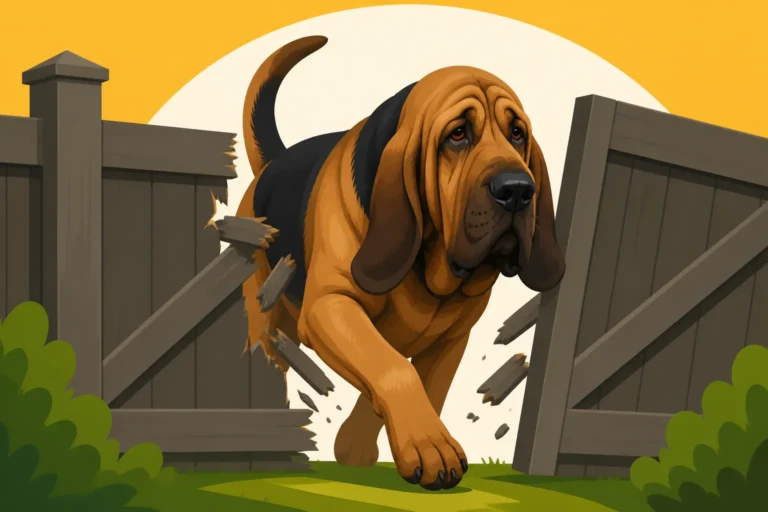
The first line of defense against a lost Bloodhound is always secure physical containment. This means a solid, high fence in your yard. Don't underestimate a Bloodhound's determination; they can be surprisingly agile and persistent. What Fencing Actually Holds a Bloodhound means at least a six-foot fence, preferably with a barrier at the bottom to prevent digging. And don't even think an Whether an Invisible Fence Stops a Bloodhound. That electronic jolt is a mere momentary inconvenience when a hot trail calls to them. They will blow right through it.
Indoors, be mindful of open doors and gates. A Bloodhound can be incredibly quick when they catch a whiff of something interesting from outside. Always ensure visitors know the rules about closing doors securely.
Leash and Harness Training: Your Lifeline
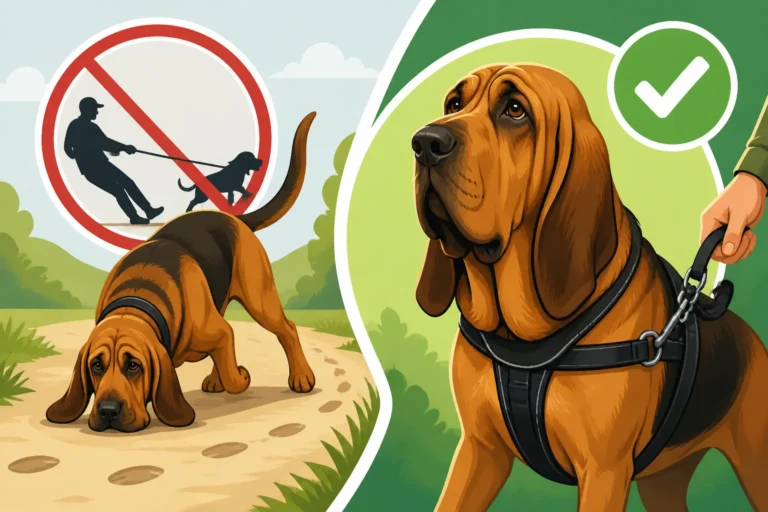
When out and about, your Bloodhound should always be on a leash. This isn't just about obedience; it's about safety. And not just any leash. A sturdy, non-slip leash attached to a well-fitting harness is essential. Many Bloodhound owners prefer harnesses that clip in the front or have multiple points of attachment, as these can give better control over a powerful dog that decides to "haul."
For exercise, especially in open, safe areas, long lines are a fantastic compromise. What a Mantrailing Harness and Long Line Cost is a worthy investment, allowing your Bloodhound to explore scents over a greater distance while still being securely connected to you. It satisfies their natural urge to follow a trail without the grave risk of them disappearing entirely. You can find excellent quality long lines and harnesses on platforms like Amazon, making it easy to equip your Bloodhound properly.
Foundational Training and Conditioning
While a Bloodhound's nose often overrides traditional obedience, foundational training is still incredibly important. A dog that understands basic cues, is comfortable being handled, and has a strong bond with its owner is generally a safer, happier dog. Programs that focus on positive reinforcement and scent-oriented games can be very beneficial. While BAXTER & Bella or other reputable online training programs can lay a fantastic foundation for general manners, a Bloodhound's nose is often a law unto itself. They are intelligent and trainable, but their primary intelligence lies in scent, not necessarily in rote obedience. Regular training sessions help maintain your bond and ensure your Bloodhound is generally more attentive, even if that attention might falter at the sight (or smell!) of a bunny.
Choosing the Right Device and Practical Considerations
If you decide that a tracking collar is a necessary safety measure for your Bloodhound, and for many owners, it absolutely is, there are some practicalities to consider beyond just the type of technology.
Durability and Fit
Bloodhounds have thick, muscular necks and loose skin. A collar must be snug enough not to slip off, but not so tight as to cause discomfort or rub. Look for durable materials, sturdy clasps, and waterproof designs. Remember, a Bloodhound that takes off might end up splashing through puddles, streams, or thick brush. The device needs to withstand that.
Battery Life Management
This is often the Achilles' heel of GPS trackers. If you rely on a tracking collar, establish a routine: charge it fully every night or every few days, depending on the model's battery life and your dog's activity levels. Consider a portable power bank if you're taking your Bloodhound to a remote location for an extended period. Having a spare, charged collar might even be an option for critical situations.
Integration with Other Safety Protocols
A tracking collar should be one piece of a multi-layered safety strategy.
- Always have up-to-date ID tags on the collar, even with the tracker.
- Ensure your microchip registration is current with your latest contact information.
- Take clear, recent photos of your Bloodhound from multiple angles, showing any unique markings. If they go missing, you'll be grateful to have these ready to share.
- Familiarize your dog with car rides so if you need to quickly get in the car and pursue a signal, they load easily. Getting a Bloodhound to Load Into a Vehicle calmly can save precious minutes.
- Pre-plan emergency contacts and local animal control numbers.
While no device can entirely prevent the heartache of a lost dog, especially with a breed as scent-driven as a Bloodhound, a quality tracking collar can dramatically improve your chances of a swift and safe reunion. It's an investment in peace of mind, allowing you to breathe a little easier knowing you have a powerful tool to back up your diligent handling.
Disclaimer
This article is for general informational purposes only and does not constitute professional advice. Laws, prices and regulations vary by location and change over time. Consult a qualified professional for guidance on your specific situation.