Whether an Invisible Fence Stops a Bloodhound
There’s a common dream many dog owners share: a happy pup frolicking freely in their yard, contained by nothing more than an invisible boundary. It sounds idyllic, doesn't it? No unsightly fences, no blocked views, just freedom. However, when you’re the proud, and often slightly exasperated, owner of a Bloodhound, that dream often crashes head-first into the very real, very powerful reality of their unparalleled nose. This guide is here to shed light on why invisible fences and Bloodhounds are, for the most part, a mismatched pair, and what truly effective containment looks like for these scent-driven companions.
Understanding a Bloodhound's Drive: Why Fences Matter
Let's be honest, living with a Bloodhound means accepting that their nose is the boss. It's not a suggestion; it's a fundamental truth of the breed. This isn't just a strong sense of smell; it's an all-consuming, highly focused, almost spiritual connection to scent that transcends nearly everything else. For a Bloodhound, a compelling scent isn't just interesting; it's a call to adventure, an unsolved mystery that absolutely must be followed.
The Irresistible Call of Scent
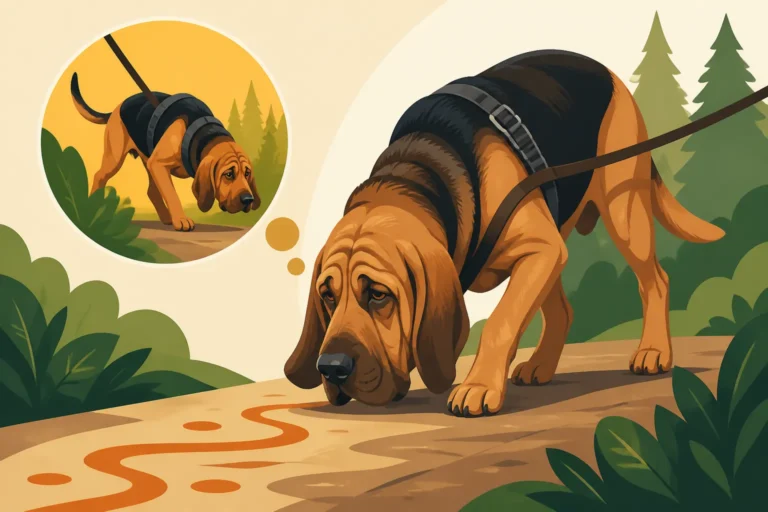
Imagine walking through a bustling city and suddenly, you hear your favorite song playing faintly in the distance. You might pause, try to locate it, and feel a pull to investigate. Now multiply that feeling by a thousand, imbue it with an ancient, instinctual purpose, and make it so vivid that it's almost a visual pathway. That's what a fresh, intriguing scent is to a Bloodhound. They don't just smell a rabbit; they smell the rabbit's journey, its panic, its unique body chemistry, and they feel an urgent need to unravel that narrative. It's a fundamental part of who they are, an instinct so deeply wired that it overrides training, comfort, and often, even the most delicious treats. You see, A Bloodhound's Nose Outvotes Its Handler in almost every scenario when a trail is on. This isn't stubbornness, nor is it a sign of poor training; it's the very essence of the breed. They are designed to follow a trail, often for miles, regardless of terrain or distraction. What seems like an insignificant whiff to us is a rich, detailed map to them, demanding their full, undivided attention.
Think about it: how often have you seen your Bloodhound pause, nose to the ground, totally engrossed in something you can't even perceive? They're not just sniffing around; they're reading. They're processing an enormous amount of data that tells them precisely What a Bloodhound Is Actually Smelling on a Trail, from subtle changes in temperature to the precise direction of travel. This deep immersion means that when that "perfect" scent hits, their world shrinks to just that trail. Everything else, including your calls, boundaries, and even a static correction, becomes background noise, easily dismissed in the face of their primary mission. This incredible drive is what makes them such legendary trackers, but it's also what makes containing them such a unique challenge.
What "Off-Leash" Really Means for a Bloodhound
For many dog breeds, "off-leash" implies a certain level of freedom and responsiveness, a trust that they'll stick by you or come back when called. For a Bloodhound, "off-leash" in an unfenced area is, frankly, a recipe for a missing dog report. It's not about whether they love you; they do, fiercely. It's about their hardwiring. Once a Bloodhound commits to a scent, their ability to hear or even process your recall cue diminishes drastically. They are in a trance, a single-minded pursuit that makes them functionally deaf and oblivious to their surroundings.
The romance of an off-leash dog running through an open field simply doesn't apply to a Bloodhound. Their natural instinct is to put their head down and go, following that trail wherever it leads, potentially for miles, across roads, into unfamiliar territories, and away from safety. This is why we often say Why Off Leash Is Not a Goal With a Bloodhound – it's not a training failure, it's a breed characteristic that must be respected for their safety. The potential consequences of a Bloodhound getting loose are severe, ranging from being hit by a car to getting lost permanently in an unfamiliar area. They don't have an internal compass that points them home once they've strayed far, especially if a fresh scent continues to pull them onward. Their world is the scent, and that's it.
How Invisible Fences Work (and Where They Fall Short for Hounds)
Invisible fences, often called electronic or containment fences, rely on a simple premise: create a psychological barrier using an unpleasant sensation. For many breeds, this can be effective. For a Bloodhound, it often proves to be a flimsy deterrent against their primary instinct.
The Technology Behind the Boundary
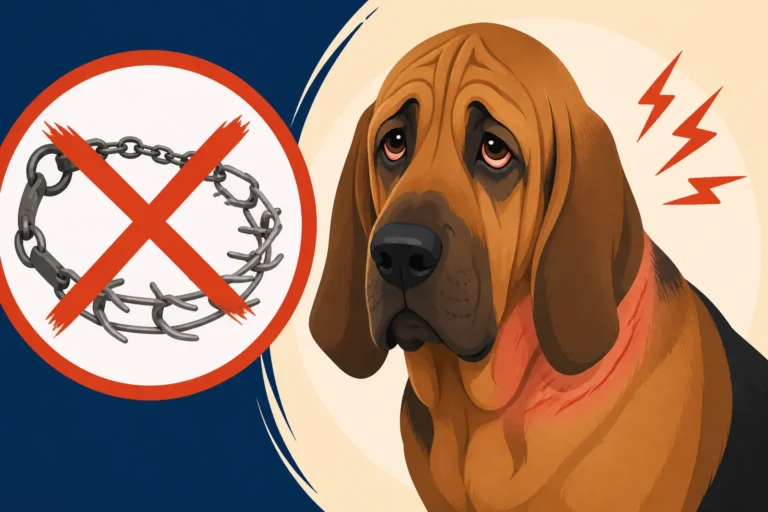
Most invisible fence systems work by burying a thin wire around the perimeter of your desired containment area. This wire emits a radio signal. Your dog wears a special collar that has a receiver unit. As the dog approaches the boundary wire, the collar first emits an audible warning tone. If the dog continues to move closer and attempts to cross the boundary, the collar then delivers a static correction – essentially a mild, startling zap. The idea is that the dog learns to associate the warning tone with the static correction, and thus learns to stop before reaching the boundary.
Some systems offer different levels of correction, from a mild vibration to a stronger static pulse, and some even have GPS-based boundaries without a buried wire. The goal is always the same: to create a negative association with crossing a perceived line, encouraging the dog to stay within the safe zone. Proper training, which typically involves walking the dog around the boundary with flags and introducing the correction in a controlled manner, is crucial for any dog to understand the system. Manufacturers like Invisible Fence Brand or PetSafe often provide detailed training protocols to help owners implement their systems effectively.
The Bloodhound's Motivation vs. the Fence's Deterrent
Here's where the rubber meets the road, or rather, where the Bloodhound's nose meets the invisible barrier. The efficacy of an invisible fence hinges on the dog's motivation to avoid the unpleasant correction being stronger than their motivation to cross the boundary. For a typical dog, a static shock is usually enough to make them think twice. But a Bloodhound isn't a "typical" dog, especially when a compelling scent trail is involved.
Imagine your Bloodhound has just picked up the faintest hint of a deer, or perhaps a curious human scent, just beyond the boundary. That scent isn't just a smell; it's a siren song. It’s an ancient, undeniable urge to follow. When that warning beep goes off, and then that static correction hits, the Bloodhound's brain is often already prioritizing the scent. The discomfort of the zap, while real, becomes a fleeting moment of irritation, a temporary obstacle that is far less important than the tantalizing information their nose is feeding them. They might register the pain, but the drive to follow that scent is so overwhelming that they'll often "push through" the discomfort. They might flinch, but they won't stop. For a Bloodhound, the thrill of the chase, the mystery of the trail, simply outweighs the temporary sting of the collar. It's not a matter of intelligence; it's a matter of inherent, biological prioritization.
The Risks and Realities of Using an Invisible Fence with a Bloodhound
While the concept of an invisible fence is appealing, the practical realities for a Bloodhound owner can be heartbreaking, leading to lost dogs and unimaginable worry. It's a gamble that, for this particular breed, rarely pays off.
The "Push Through" Phenomenon
The "push through" phenomenon is perhaps the biggest and most dangerous drawback of relying on an invisible fence for a Bloodhound. It's exactly what it sounds like: the dog, compelled by an irresistible scent, simply runs through the electronic boundary, accepting the static correction as a minor inconvenience. They might yelp, they might flinch, but they will keep going. Once they've made the decision to cross, the discomfort is often quickly forgotten as the trail intensifies and pulls them further away.
The truly insidious part of this is what happens after they've pushed through. Now your Bloodhound is outside the invisible boundary. They're lost in an unfamiliar area, their nose glued to the ground, potentially oblivious to their surroundings, and definitely not thinking about how to get back. Even if they did want to return, they would have to experience the static correction again to re-enter the "safe" zone. Many dogs who push through an invisible fence will not willingly take a second correction to come back, meaning they remain outside the boundary, essentially trapped out. This is a terrifying scenario for any dog owner, but especially for a breed like the Bloodhound, whose instinct will drive them further and further from home. Statistics show that once a Bloodhound is truly lost, their chances of being found decrease significantly, especially if they've traveled a great distance. This is why preventing them from getting loose in the first place is paramount. As heartbreaking as it is to consider, Whether a Lost Bloodhound Comes Home is often a matter of pure luck when an invisible fence fails.
Training Challenges and Escape Artists
Training any dog to an invisible fence requires patience and consistency, but with a Bloodhound, you're not just contending with distraction; you're battling a biological imperative. Their single-minded focus on scent makes them incredibly difficult to train on abstract boundaries. While they might understand the concept in a low-distraction environment (e.g., in the yard with no interesting smells around), that understanding often vanishes the moment a tempting scent hits their nose.
A Bloodhound is a master of selective hearing, especially when its nose is engaged. They are intelligent, yes, but their intelligence is geared towards tracking, not necessarily towards conforming to human-imposed, intangible rules when instinct screams otherwise. They learn quickly what the static correction feels like, but they also quickly assess whether the reward of the scent is worth the momentary sting. Many Bloodhounds quickly become "escape artists" by simply learning to tolerate the correction when the motivation is high enough. They might even figure out weak spots in the system, or simply run so fast that the initial correction is barely registered. This creates a false sense of security for the owner, believing their dog is contained, when in reality, it's just a matter of finding the right scent.
Safer Alternatives and Complementary Solutions for Bloodhound Containment
Given the Bloodhound's unique wiring, relying solely on an invisible fence is a risk no dedicated owner should take. There are far more reliable and humane ways to ensure their safety and satisfy their immense drive.
The Indispensable Physical Fence
When it comes to containing a Bloodhound, a sturdy, physical fence is truly the gold standard, and frankly, the only responsible primary containment method. This isn't just about keeping your dog in; it's also about keeping other animals and potential dangers out. A physical barrier provides undeniable boundaries that even the most scent-driven Bloodhound cannot simply ignore or "push through."
For a Bloodhound, you need more than just a token fence. We're talking about a minimum height of six feet, and even then, some determined individuals might test its limits. However, height isn't the only consideration. Bloodhounds are intelligent and persistent. They might try to dig under. Therefore, ensuring your fence extends below ground with an L-footer or buried wire mesh is crucial. Gates must be secure, self-latching, and regularly checked for any weaknesses. Imagine the frustration of installing a beautiful, tall fence only to have your clever hound figure out how to nudge open a loose latch. Many Bloodhound owners go as far as reinforcing the bottom of their fences with heavy-gauge chicken wire or concrete to prevent digging. Ultimately, What Fencing Actually Holds a Bloodhound is a robust, well-maintained physical barrier, not a silent electronic warning. It's an investment, yes, but an investment in peace of mind and your Bloodhound's safety.
Combining Systems and Management Strategies
While an invisible fence should never be the sole containment for a Bloodhound, there might be niche scenarios where it could complement a robust physical fence. For example, some owners might use an invisible fence system as an additional deterrent around a gate that a clever Bloodhound might try to open, or to create a smaller, inner perimeter within a very large, fenced property where a secondary boundary is desired. However, this is always as a secondary measure, with the physical fence being the primary barrier. It's about layers of protection, not relying on a single, easily bypassed system.
Beyond fences, responsible Bloodhound ownership means constant vigilance and proactive management. This includes never leaving your Bloodhound unsupervised, especially in areas where they are not securely contained. For walks, a secure harness is non-negotiable, and a long line is an essential tool for providing them with a sense of freedom while maintaining safety. Brands like Amazon offer a wide array of long lines in various lengths and materials, allowing you to find one that suits your training needs. I personally love the Biothane ones because they're easy to clean! A long line lets your Bloodhound explore scents within a controlled radius, satisfying their nose without risking an escape. Remember, What a Mantrailing Harness and Long Line Cost is a small price to pay for security and enrichment. The goal is to provide controlled scent work opportunities, not uncontrolled escapes.
The Power of Proactive Training and Enrichment
The best "containment" for a Bloodhound often comes from within – a mentally stimulated, well-exercised, and fulfilled hound is generally less inclined to desperately seek out external stimulation through escape. This doesn't mean they'll stop following a scent if it arises, but it does mean they'll be happier and more settled in their environment. The key to this is understanding their fundamental need: scent work.
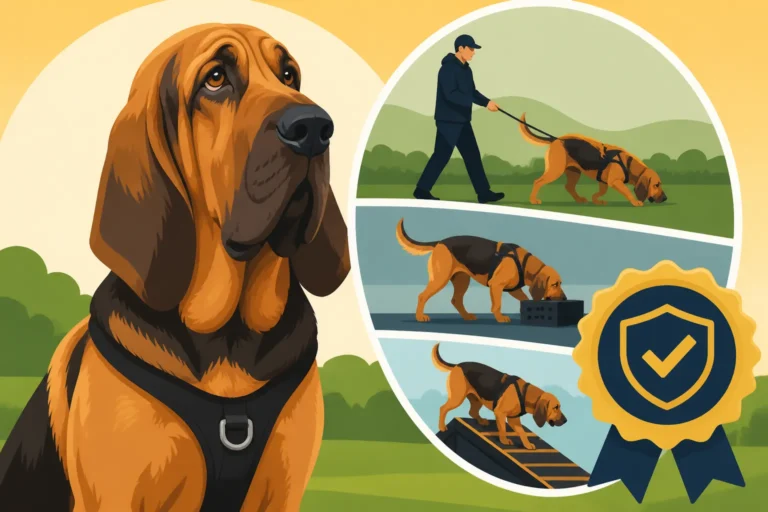
Rather than trying to suppress their natural instincts, lean into them! Dedicated mantrailing or nose work activities are not just fun games; they are crucial for a Bloodhound's mental well-being. These activities allow your dog to use their extraordinary nose in a structured, safe, and rewarding way. It satisfies their core drive, making them less likely to feel the overwhelming urge to escape and find their own "work." Even 20-30 minutes of focused scent work can be more tiring and satisfying for a Bloodhound than an hour of mindless running around the yard. This is why Mantrailing Is the Answer to a Bloodhound, Not Obedience for fulfilling their inherent needs.
Combine these scent games with regular, leashed walks using a proper harness. While a Bloodhound doesn't need to run marathons, consistent physical activity helps keep them healthy and reduces pent-up energy that might otherwise manifest as escape attempts or destructive behavior. Think about activities like exploring new walking trails (on a leash, of course!) or engaging with puzzle toys. Consider looking into online courses, such as those offered by BAXTER & Bella, which often include guidance on positive reinforcement and engagement strategies that can be adapted for scent work at home. Regularly engaging their mind and body in appropriate ways can significantly reduce the internal pressure that might otherwise push them to challenge boundaries. A well-exercised body and a well-used nose contribute significantly to a calmer, happier, and safer Bloodhound. This proactive approach supports their overall well-being and reduces the motivation to bolt.
Here's a quick comparison to help you weigh your options:
| Feature | Physical Fence (e.g., wood, chain link) | Invisible Fence (Electronic/Contained) |
|---|---|---|
| Type of Barrier | Physical: Tangible, solid obstruction. | Psychological: Electronic signal, static correction. |
| Primary Deterrent | Blocks movement, requires effort to breach. | Administers an unpleasant sensation (static shock) or warning tone. |
| Effectiveness for Bloodhounds | High: If properly installed (height, digging prevention), it provides a true barrier. | Low: A Bloodhound's scent drive often overrides the deterrent. |
| Risk of Escape | Low: Once secured, dogs are typically contained unless there's a structural failure. | High: Bloodhounds may "push through" the correction to follow a scent. |
| Ability to Return Home | Easy: Owner opens a gate. | Difficult: Dog must take another correction to re-enter. |
| Protection from Outside Dangers | Good: Deters stray animals, unwanted visitors, traffic. | None: Offers no barrier against external threats entering your yard. |
| Supervision Needed | Recommended, but allows for more confidence in short periods of unsupervised time. | Constant: A Bloodhound should never be left unsupervised with only an invisible fence. |
| Training Complexity | Minimal for the fence itself; focus on gate manners. | Requires extensive, consistent training; less effective for scent-driven breeds. |
| Typical Cost (Initial) | Generally higher for quality materials and installation. | Generally lower, but ongoing costs for batteries and potential repairs. |
Disclaimer
This article is for general informational purposes only and does not constitute professional advice. Laws, prices and regulations vary by location and change over time. Consult a qualified professional for guidance on your specific situation.