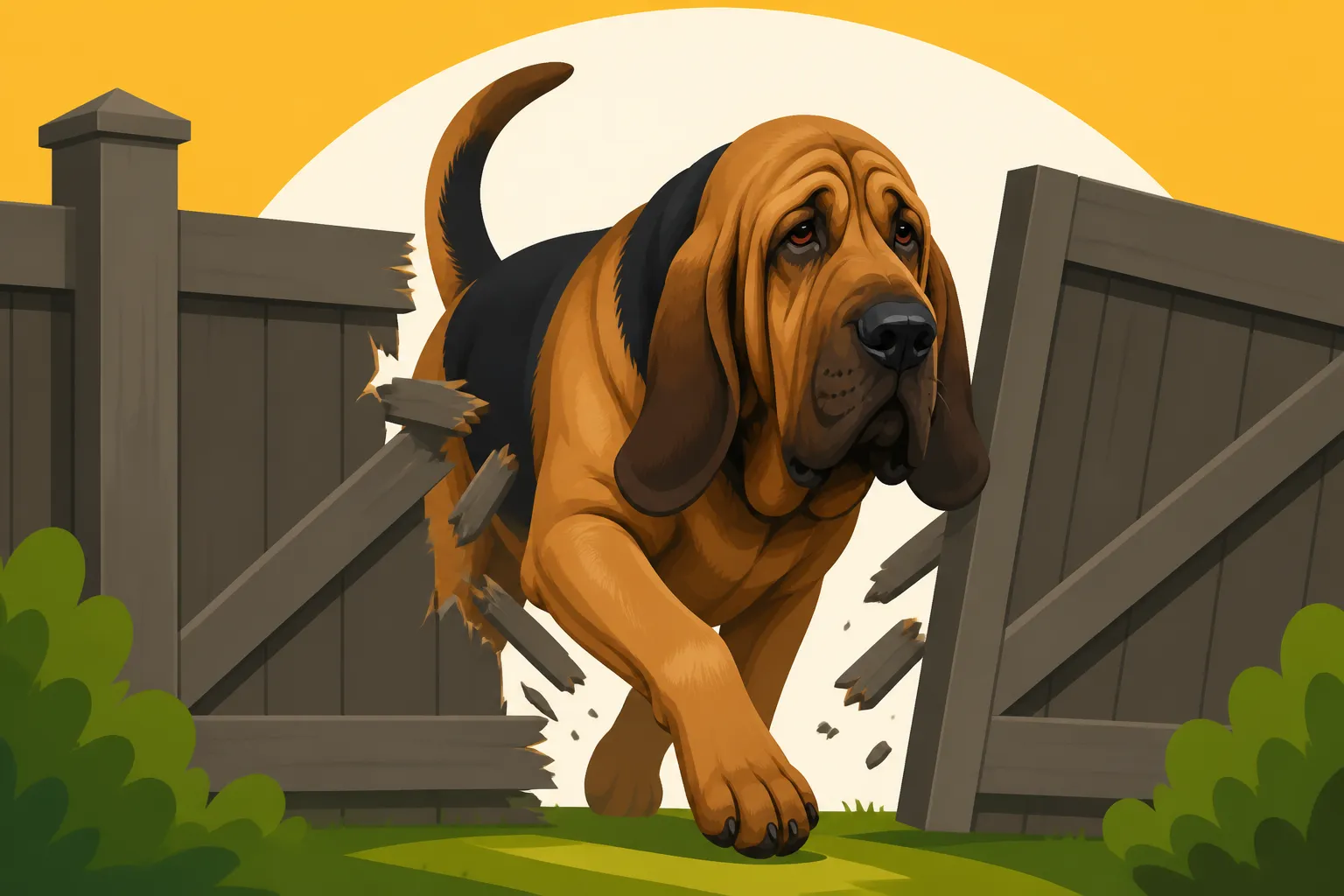
Whether a Bloodhound Pushes Through a Gate
The sheer joy of watching your Bloodhound amble around the yard, nose to the ground, is often interrupted by a sudden realization: they're not just sniffing, they're strategizing. Many Bloodhound owners come to find that what looks like a solid, secure gate to us, is merely a puzzle waiting to be solved, or a challenge waiting to be nudged open by a powerful nose and body. This guide dives deep into why your Bloodhound might push through a gate and, more importantly, how you can reinforce your defenses against their determined escape attempts.
The Bloodhound Mindset: Why Gates Are Just Suggestions
Understanding why your Bloodhound views a gate not as a barrier, but as a minor inconvenience, is the first step to truly securing your property. It’s not about defiance; it’s about their inherent nature and an intense drive that often overrides everything else.
The Irresistible Call of Scent
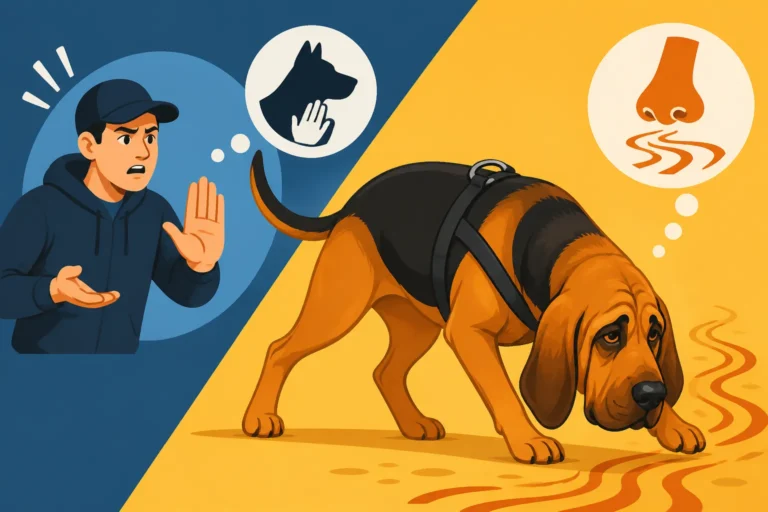
Imagine a world where every breeze carries a symphony of smells, each telling a compelling story. That's your Bloodhound's reality. Their nose is their universe, and when an interesting scent drifts from beyond your gate – be it a rabbit, a neighbor's cat, or simply the faint trace of a human who walked by hours ago – it becomes an almost irresistible call. For a Bloodhound, following that trail isn't just a desire; it's a primal instinct that can completely eclipse any training or learned boundaries.
This intense focus means that while they might understand "stay" or "no," the immediate, overwhelming urge to pursue a scent can make those commands temporarily evaporate from their minds. A gate that is perfectly adequate for other breeds might seem like a transparent veil to a Bloodhound on the trail of a particularly intriguing odor. They might not even register the gate as a thing to be respected, but merely as the final, flimsy obstacle between them and the next chapter of their olfactory adventure. Their entire being is geared toward scent discrimination and pursuit, and when that switch is flipped, the world outside becomes the only thing that matters. This is why attempting to Whether a Bloodhound Can Be Called Off a Scent is often an exercise in futility.
Persistent Problem Solvers
Bloodhounds are notoriously intelligent, but their intelligence isn't always expressed in ways we traditionally recognize, like performing complex obedience routines. Instead, it often manifests as incredible persistence and a knack for problem-solving, especially when it involves getting what they want – which, more often than not, means following a scent. If a gate doesn't give way with a gentle nudge, they'll lean into it, paw at the latch, or even try to shimmy through any perceived weakness. They're not easily deterred, and a single failed attempt doesn't mean they'll give up.
They learn quickly what works and what doesn't. A latch that occasionally sticks might be accidentally opened once, and then the Bloodhound remembers that action. They possess significant physical strength, and their heavy build allows them to apply considerable leverage against a gate. What might seem like a sturdy gate to a human, or even a smaller, less determined dog, can be systematically tested and exploited by a Bloodhound. If they've seen you open it, they might even try to mimic your actions, using their nose or paws on the latch. This isn't naughtiness; it's just a Bloodhound being a Bloodhound, applying their considerable mental and physical resources to achieve their goal.
Common Gate Weaknesses a Bloodhound Exploits
It’s easy to blame the dog, but often, the problem lies in the gate itself. Bloodhounds are masters at finding and exploiting the weakest points in any barrier, turning seemingly minor flaws into wide-open escape routes.
Latch Vulnerabilities
Many standard residential gate latches are simply not designed to withstand the persistent attention and brute force of a Bloodhound. Think about the common thumb latch – a quick flick with a paw or a strategic nudge with that powerful nose can easily release it. Gravity latches, where a piece of metal drops into a slot, are also often no match. A Bloodhound can lean against the gate just right, causing the latch to lift slightly and disengage. They might jump up and paw at it, or even just nose it open if it's a bit loose.
The issue isn't always the design, but also the installation. A latch that isn't perfectly aligned, or one that has a lot of play, offers an easy target. If your Bloodhound has seen you operate the latch, or if it's within reach, they might even figure out the mechanism. Their sheer size and strength mean that a loose-fitting latch can be jiggled open through sheer persistence. It’s not just about what we can open; it’s about what a 100-plus-pound dog with a single-minded goal can manipulate.
Structural Integrity and Gaps
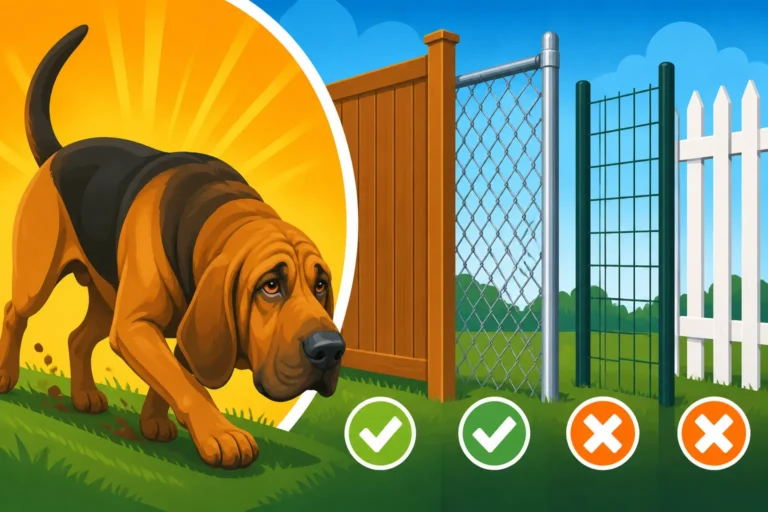
Beyond the latch, the entire structure of the gate is under scrutiny by a Bloodhound. Gates that sag over time, or those installed without proper support, create gaps at the bottom or sides that a Bloodhound will absolutely investigate. A small gap can be widened with a determined push, allowing them to squeeze through. Remember, these dogs are built for endurance and power, not delicacy. They will test the gate for any give, any wobble, any space they can wedge their nose into.
A common oversight is failing to secure the bottom of the gate. Even if the gate itself is solid, a few inches of space underneath can be an invitation for a Bloodhound to dig or push their way out. Wood gates can warp or shrink, creating new gaps. Chain link gates can be surprisingly flexible, allowing a determined Bloodhound to bend them just enough to slip through. They might not jump over, but they are certainly capable of figuring out How High a Fence a Bloodhound Can Climb a Fence if the opportunity arises. What seemed secure when first installed can, with age and the unrelenting pressure of a Bloodhound, become a significant vulnerability. It's crucial to consider the full barrier, not just the gate panel itself, and how it interacts with the ground and posts.
Fortifying Your Gates Against a Determined Bloodhound
Knowing your Bloodhound's tendencies and your gate's weaknesses is half the battle. The other half is implementing practical solutions to create a truly secure barrier that even the most motivated scent hound will struggle to defeat.
Heavy-Duty Latch Solutions
When it comes to securing your gate against a Bloodhound, standard latches often just won't cut it. You need to think about mechanisms that require more than a casual nudge or paw. Look for double-locking mechanisms, which require two separate actions to open, making it much harder for a dog to accidentally or intentionally unlatch. Spring-loaded barrel bolts, especially two of them (one at the top and one at the bottom), provide excellent security. They require a deliberate pull and slide action that's beyond most canine dexterity.
For the ultimate peace of mind, consider adding a padlock to your gate, especially if you're leaving your Bloodhound unsupervised for extended periods. This is a simple, effective, and often overlooked solution. You can find robust, weatherproof padlocks and secure latches on platforms like Amazon that are designed for heavy-duty use. Some owners even combine multiple types of latches – for instance, a sturdy main latch with an additional barrel bolt. The goal is to make the opening mechanism too complex or too robust for your Bloodhound to manipulate, regardless of how strong or motivated they are.
Reinforcing the Gate Structure
A strong latch is only as good as the gate it's attached to. Bloodhounds are powerful, and they will lean, push, and test the structural integrity of any gate. To prevent sagging, which creates those tempting gaps at the bottom, consider installing heavy-duty, adjustable hinges. These allow you to tweak the gate's alignment as needed. Diagonal bracing across the gate frame can also significantly enhance its rigidity, preventing it from warping or bending under pressure.
If your gate has gaps – perhaps at the bottom where it meets the ground, or between the gate and the fence post – these need to be addressed. You can fill gaps at the bottom with buried wire mesh or a piece of lumber securely anchored to the ground. For gaps between the gate and the frame, add weather stripping, extra wood, or metal sheeting to eliminate any space a Bloodhound could wedge their nose or body into. Ensure the gate posts themselves are deeply set and stable; if the posts wobble, the gate will never be truly secure. Regularly inspect your gate for any signs of wear and tear, loose screws, or weakened points. Just as you have The Weekly Routine a Bloodhound Owner Cannot Skip for their ears, adding a gate check to your routine can save you a lot of worry.
Training and Management
While physical barriers are paramount, training and management play a crucial supporting role in gate security. The most secure gate in the world is useless if a human leaves it ajar. Consistency is key. Never rely solely on a gate to contain your Bloodhound without also supervising them, especially when you're first implementing new security measures. Teach your Bloodhound a strong "stay" command, particularly around the gate, and reward them handsomely for respecting boundaries.
Beyond direct training, think about environmental management. Is there something consistently luring your Bloodhound out? If they frequently escape towards a specific scent, try to manage that external attractant if possible, or make the yard a more engaging place for them so they're less focused on what's outside. Enrichment toys, consistent exercise, and mental stimulation can help reduce their desire to seek adventure beyond the fence. Organizations like BAXTER & Bella offer excellent online resources and training programs that can help you establish a solid foundation of obedience and impulse control, which, while not foolproof against a strong scent drive, can certainly contribute to better gate manners. Never leave them unattended if you suspect the gate is a weakness, and always double-check the latch yourself. Remember, a Bloodhound's natural instinct to roam and trail means that Whether a Bloodhound Should Ever Be Let Off Leash is almost always a resounding "no" in an unsecured area, and gates are your last line of defense.
Additional Considerations for Bloodhound Gate Security
Securing a gate for a Bloodhound is more than a one-time fix; it's an ongoing commitment to safety and smart management. There are always extra layers of protection and practices that can elevate your peace of mind.
The Importance of a Double Barrier
For many Bloodhound owners, a single gate, no matter how robustly fortified, simply isn't enough to quell the anxiety. This is where the concept of a "double barrier" comes into its own. Imagine having a secondary gate or even an internal fence that creates a small vestibule or airlock effect. When you enter or exit the main gate, your Bloodhound is safely contained behind the inner barrier, preventing them from making a dash for freedom through an opening you just created.
This approach significantly reduces the risk of accidental escapes, which are arguably more common than intentional breaches, especially if you have guests, children, or forgetful family members. It buys you precious seconds to ensure the primary gate is fully latched before releasing your Bloodhound, or to grab them if they try to bolt. This is particularly crucial if you live near a busy road or in an area where How Far a Loose Bloodhound Will Travel could put them in serious danger. A double barrier acts as a vital safety net, providing an extra layer of protection against the unexpected, giving you greater confidence in your containment strategy.
Regular Maintenance and Inspection
Even the most meticulously installed and reinforced gate isn't "set it and forget it" when you have a Bloodhound. These dogs are constantly testing boundaries, and over time, any structure will show wear and tear. You need to adopt a routine of regular maintenance and inspection to ensure your gate remains escape-proof. This means checking hinges for tightness, lubricating latches so they don't stick or rust, and examining the gate frame for any signs of warping, splintering, or weakening. Look for fresh dig marks near the bottom, or scuff marks where your Bloodhound might have been testing the latch with their nose or paws.
After heavy rain or strong winds, it’s particularly important to check for shifts in the ground that might have affected post stability or created new gaps. If you notice any slack in the gate or hear it creak or groan more than usual, it’s time for an adjustment or repair. Your Bloodhound's safety is directly tied to the integrity of your containment, and neglecting regular checks is akin to leaving the door unlocked. A proactive approach to gate maintenance will save you from the heart-stopping panic of a missing Bloodhound and ensure they remain safely within their boundaries. You might even consider if Whether an Invisible Fence Stops a Bloodhound is a useful additional deterrent, but never as a primary barrier.
| Latch Type | Description | Bloodhound Vulnerability | Recommended Security |
|---|---|---|---|
| Thumb Latch | Simple, lift-and-release mechanism. | Easily nudged or pawed open by a determined Bloodhound's nose or paw. | Add a secondary barrel bolt or padlock. |
| Gravity Latch | Latch drops into a receiver due to gravity. | Can be jiggled or leaned on until the latch lifts and disengages. | Ensure tight fit; add a secondary, independent latch. |
| Barrel Bolt | Simple sliding bolt, often with a spring. | A single bolt can be pawed open if loose or installed poorly. | Use two barrel bolts (top & bottom), ensure snug fit. |
| Gate Spring Latch | Spring-loaded, requires a pull to release. | More secure, but strong Bloodhounds can still manipulate if mechanism is loose. | Ensure robust construction; can add a small padlock for extra security. |
| Double-Action Latch | Requires two distinct movements to open (e.g., lift & twist). | Much harder for a Bloodhound to operate. Generally good. | Ideal as a primary latch. |
| Padlock | Requires a key or combination. | Cannot be manipulated by a Bloodhound. | Excellent for high-security areas or unsupervised times. |
Disclaimer
This article is for general informational purposes only and does not constitute professional advice. Laws, prices and regulations vary by location and change over time. Consult a qualified professional for guidance on your specific situation.