Whether a Bloodhound Should Ever Be Let Off Leash
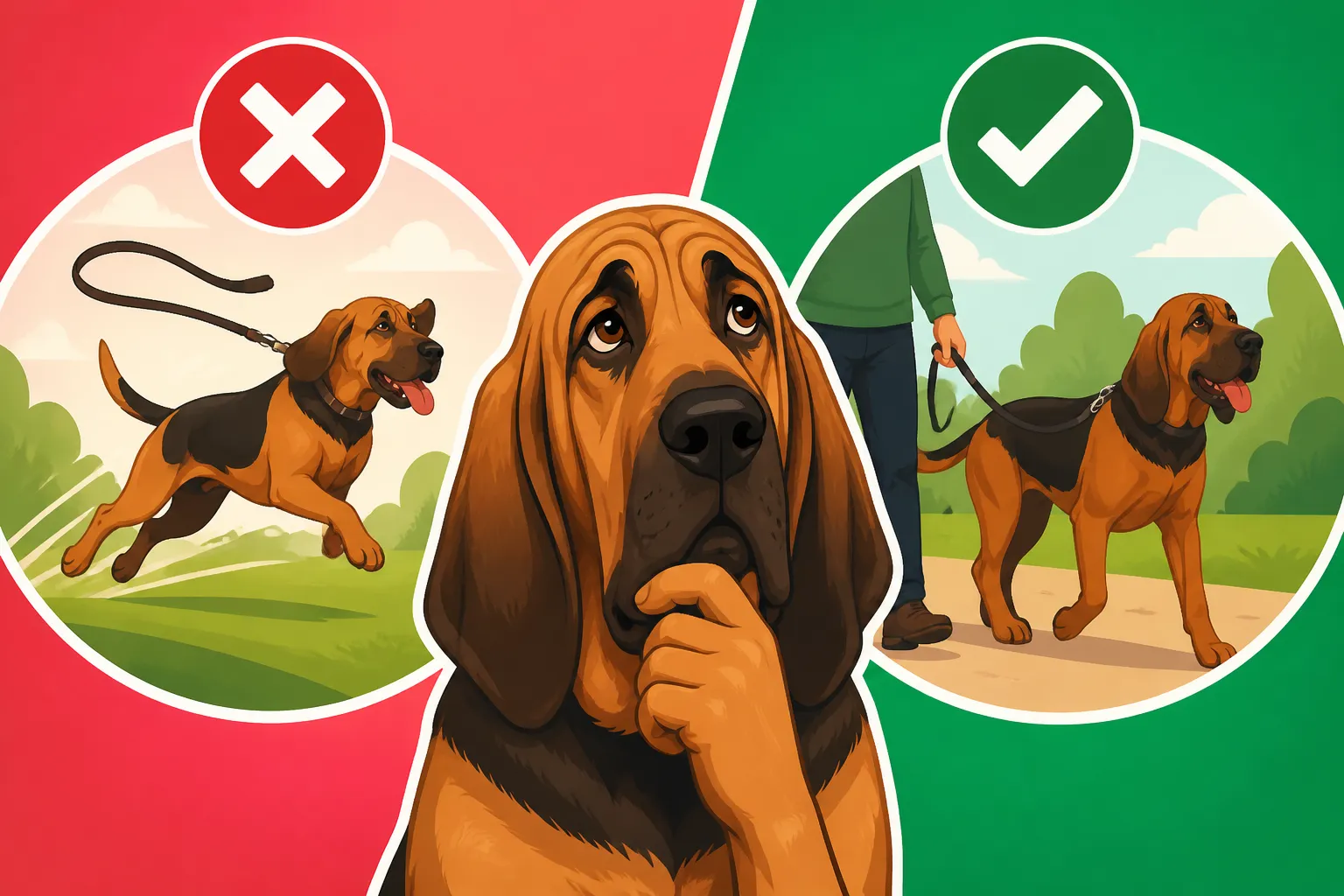
One of the most heart-wrenching scenarios for any Bloodhound owner is the fear of their beloved companion disappearing, nose to the ground, utterly oblivious to the world around them. It's a deeply frustrating paradox: you want your dog to experience freedom, to run and explore, but their very nature makes true off-leash freedom incredibly dangerous. This guide is here to help you understand the profound reasons why letting a Bloodhound off-leash is almost universally advised against, and more importantly, to offer practical, enriching alternatives that keep your extraordinary hound safe while honoring their incredible instincts.
The Irresistible Call of Scent
It’s easy to look at our dogs and wish they could run free like the wind, especially in an open field or a quiet park. We imagine them bounding back to us with a wagging tail, happy and fulfilled. But with a Bloodhound, that idyllic scene is often a dangerous fantasy, because their world is entirely ruled by their nose.
A Nose That Rules Supreme
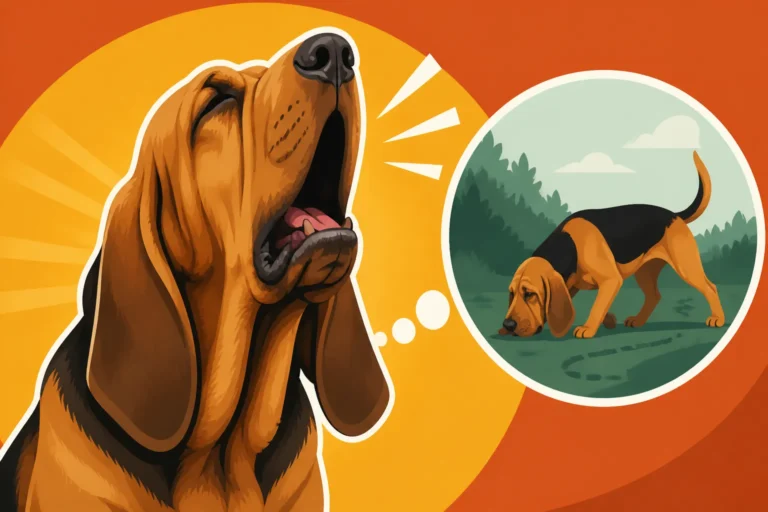
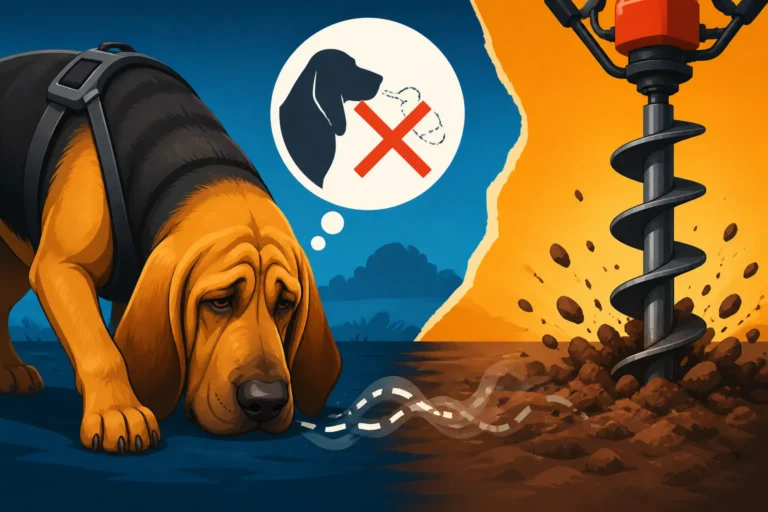
Let's be clear: a Bloodhound’s nose isn't just good; it's a marvel of evolution, a finely tuned instrument that can detect and follow scent trails hours, even days, old. For them, a single whiff of an interesting scent isn't just a curiosity; it's a compelling narrative, an urgent invitation to follow. It’s like us suddenly hearing our favorite song playing loudly in a crowded room – everything else just fades away. When a Bloodhound catches a strong scent, their brain literally flips a switch, and their primary directive becomes "follow the trail." This isn't stubbornness or a lack of training; it's an overwhelming biological imperative. We often talk about Why a Bloodhound's Nose Outvotes Its Handler, and it's a crucial concept to grasp. Your voice, your treats, your commands – they simply can't compete with the vivid, all-encompassing world that scent creates for your Bloodhound.
This profound instinct means that while your Bloodhound might know "come" perfectly in your living room or a quiet backyard, the moment a rabbit scurries by or a person walks a block away, that command becomes secondary, if it registers at all. Their floppy ears, while charming, are actually designed to help sweep scent towards their incredible nostrils, enhancing this sensory experience. They are, quite literally, built to ignore distractions and focus on the trail. Trying to reason with a Bloodhound on a hot trail is like trying to convince a human to ignore their own heartbeat. It’s just not going to happen.
The Disappearing Act
Because their focus on scent is so absolute, a Bloodhound can cover an astonishing amount of ground in a very short time. They don't zig-zag aimlessly; they move with purpose, driven by the scent in front of them. You might be standing in what feels like a wide-open, safe space, but if your Bloodhound picks up a trail, they will follow it unerringly, straight through a hedge, across a field, and right out of sight. I’ve heard countless stories of owners watching their Bloodhound vanish over a distant rise, only to realize with dawning panic how quickly their dog put miles between them. How Far a Loose Bloodhound Will Travel can be truly terrifying, covering ground faster than you can possibly keep up, especially if they are out of visual range.
Imagine this: you're at a local park, seemingly deserted, and decide to let your Bloodhound, Buster, off-leash "just for a minute." He's trotting happily beside you, and then, whoosh, his nose hits something interesting. Before you can even call his name, he's a blur, accelerating towards the tree line. You shout, you plead, you run, but Buster is gone. He's not running away from you; he's running to the scent. He's in his happy place, completely absorbed in the intricate tapestry of smells that you can't even perceive. Moments turn into minutes, minutes into an agonizing eternity, and suddenly, you're alone, calling into the empty air, your heart sinking with every unanswered cry. This isn't an exaggeration; it's a common, heartbreaking reality for Bloodhound owners who underestimate the power of their dog's nose.
The Real Dangers of Going Off-Leash
Beyond the immediate panic of a disappearing dog, the real world is full of hazards that a scent-driven Bloodhound simply won't register. Their phenomenal sense of smell, while incredible, also makes them vulnerable.
Traffic, Wildlife, and Other Hazards
Once a Bloodhound is on a trail, the rules of the road, the presence of other animals, or even natural obstacles become secondary. A busy street? A Bloodhound on a trail might cross it without hesitation. They don't look both ways; they follow the scent. This makes busy roads, parking lots, or even quiet residential streets incredibly dangerous. The heartbreaking reality is that many lost Bloodhounds meet tragic ends due to traffic collisions. It's not just cars either; a Bloodhound might follow a trail into unfamiliar or unsafe territory, potentially encountering aggressive wildlife, getting caught in snares, or falling into ditches or bodies of water.
Think about a common scenario: a deer has just bounded through the woods bordering your property, leaving a tempting scent ribbon. Your Bloodhound, off-leash, catches that scent and is off like a shot. They're not considering that the deer might lead them across a highway, or through thorny bushes, or into another dog's yard where they could be seen as an intruder. Their world is singularly focused on that scent. This isn't just about traffic; it's about the inherent vulnerability of a large, powerful dog with an overriding instinct that can lead them into all sorts of peril they don't even perceive. The stress and anxiety of an owner whose Bloodhound is lost and in potential danger is immense, and for many, it’s a risk simply not worth taking.
Recall Failure Is Not Disobedience
It's tempting to think that with enough training, your Bloodhound will eventually learn a "bulletproof" recall, even off-leash. We spend hours practicing "come" in controlled environments, and they perform admirably. But when a Bloodhound’s nose is engaged, that reliable recall can vanish into thin air. It’s not that they don’t understand the command, or that they’re being deliberately disobedient. It’s that the scent has literally rewired their brain’s priorities. Why Recall Fails on a Bloodhound Outdoors isn't a training flaw; it's a breed trait. Their mind is so intensely focused on analyzing the scent particles and following the path that everything else, including your voice, fades into an irrelevant background hum.
You might be standing there, yelling "COME!" with all your might, while your Bloodhound, twenty yards away, is diligently dissecting the scent of a squirrel that ran up a tree an hour ago. To them, they are performing a vital, ancient task. Your frustrated calls are just noise. Trying to punish a Bloodhound for not recalling when they are in such a primal state is not only ineffective but can also damage your bond. They won't connect the punishment with the act of following a scent; they'll connect it with you calling them, potentially making them less likely to come when called in the future because they associate it with negativity. Understanding this intrinsic motivation helps us shift from frustration to finding safer ways to satisfy their powerful drive.
Safe Alternatives for Bloodhound Freedom
Just because off-leash isn't a safe option doesn't mean your Bloodhound is doomed to a life of restrictive leashes. There are fantastic ways to give them the freedom to explore and engage their incredible nose in a controlled, safe environment.
The Long Line: Your Bloodhound’s Best Friend
If you dream of seeing your Bloodhound explore a field with a sense of freedom, the long line is your absolute best tool. This isn't just a longer leash; it's a specialized piece of equipment designed to give your dog a significant radius to roam while still allowing you to maintain ultimate control. Imagine a 20-foot, 30-foot, or even 50-foot line made of durable material like biothane, which is waterproof and easy to clean. This allows your Bloodhound to range further, investigate interesting smells, and even trot ahead, all while you have the security of knowing you can gently guide them back or stop them from heading into danger. How Long a Line a Bloodhound Handler Buys can depend on the environment, but having a few different lengths is smart.
Using a long line effectively requires a bit of practice on your part. You need to learn how to manage the line, letting it slack when your dog is exploring safely, and reeling it in or stepping on it quickly if they approach a boundary or something dangerous. Always attach a long line to a well-fitting harness, never directly to a collar, to prevent injury to their neck if they hit the end of the line at speed. You can find a fantastic selection of long lines made from various materials and lengths on Amazon, making it easy to experiment and find what works best for you and your Bloodhound. This simple tool transforms a stressful walk into a relaxed exploration for both of you, offering a safe compromise between total restriction and perilous freedom.
Securely Fenced Areas Are Key
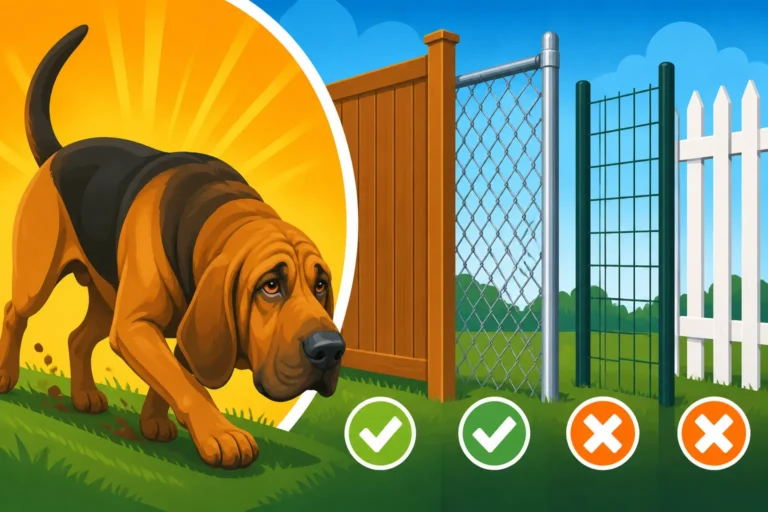
A truly secure, privately owned fenced area offers the closest thing to off-leash freedom for a Bloodhound. I emphasize "truly secure" because a typical suburban fence, while adequate for many breeds, might not be enough for a determined Bloodhound. Their desire to follow a scent can make them surprisingly adept at finding weaknesses. For a Bloodhound, a fence needs to be at least six feet high, ideally more, and it needs to be dug into the ground or have a wire skirt to prevent tunneling. What Fencing Actually Holds a Bloodhound is often more robust than what people initially imagine. They are not known for being jumpers like some other breeds, but if a scent is compelling enough, they might surprise you.
Before allowing your Bloodhound to roam free in any fenced area, you need to thoroughly inspect it for escape routes. Check for loose boards, gaps under gates, or spots where they might be able to push through. Even a seemingly small hole can become an escape route when motivated by an irresistible scent. Dog parks are often not ideal, as their fencing can be surprisingly flimsy, and the presence of many other dogs can create distractions and potential conflicts. Instead, look for private dog parks, rentals of secure fields, or if you're lucky enough to have a large, securely fenced yard of your own, that's truly the gold standard. For those without such a luxury, apps that allow you to rent private, fenced yards can be a game-changer, providing a safe space for your Bloodhound to stretch their legs and nose. Whether a Fenced Field Is Safe for a Bloodhound ultimately comes down to the quality of the fence and your vigilance.
Embracing Their Instinct with Scent Work
The best way to satisfy a Bloodhound's inherent drive for scent is not to fight it, but to channel it into productive, fun, and safe activities. This is where dedicated scent work truly shines, providing mental and physical enrichment without the dangers of true off-leash freedom.
Mantrailing: The Ultimate Outlet
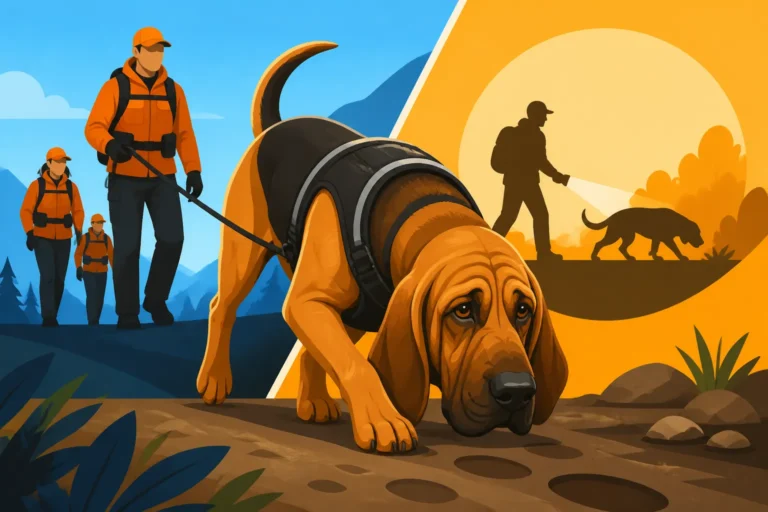
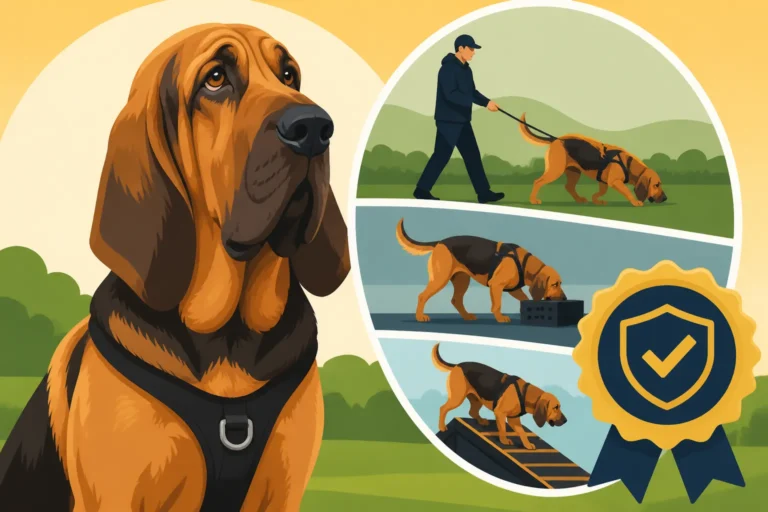
Mantrailing is, without a doubt, the pinnacle of scent work for a Bloodhound, and it's the activity they were literally bred for. It involves teaching your dog to follow a specific human scent trail, often laid hours earlier, in various environments. This isn't just a game; it's structured, purposeful work that completely engages their unique abilities. When a Bloodhound is mantrailing, they are doing what their DNA compels them to do, but in a controlled environment with a handler guiding them on a long line. Mantrailing Is the Answer to a Bloodhound, Not Obedience because it works with their instincts rather than against them. It’s an incredibly rewarding experience for both dog and handler, deepening your bond as you work together.
Starting a Bloodhound puppy on a trail can begin with simple games in your backyard, teaching them to follow short, fresh trails to a "missing" person (usually a family member). As they gain confidence and skill, the trails become longer, older, and more complex, taking them through urban environments, parks, and even forests. The satisfaction your Bloodhound gets from successfully finding their "person" at the end of a trail is palpable – it’s a deep, primal fulfillment. Many online platforms, like BAXTER & Bella, offer fantastic resources and online courses that can teach you the fundamentals of scent work and mantrailing, allowing you to start this journey safely at home and eventually move to in-person classes with experienced instructors. This gives your Bloodhound a job, tires them out mentally, and keeps them safe.
Other Nose Work Activities
Beyond formal mantrailing, there are countless other nose work activities that can engage your Bloodhound’s incredible sense of smell. These range from simple "find it" games in the house to more structured "detection" style sports where dogs learn to identify specific scents. Hiding treats around the house, scattering kibble in the grass (often called "sniffaris"), or using puzzle toys that require sniffing to release food can provide daily mental stimulation. These activities don't require any off-leash time and can be done safely in your home or securely fenced yard.
Consider playing "hide and seek" with a favorite toy or a highly prized treat. Let your Bloodhound watch you hide it in an easy spot, then encourage them to "find it." As they get better, make the hides more challenging, requiring them to really put their nose to work. You can even invest in commercially available "nose work kits" that introduce specific target odors in a game-like format. These activities are not only fun but also build confidence and provide an essential outlet for their natural drives. The goal is always to work with their powerful nose, giving them appropriate channels for their talents, rather than constantly trying to suppress an instinct that is so fundamental to who they are.
| Activity Type | Safety for Bloodhound | Freedom Level | Required Training/Equipment | Primary Benefit |
|---|---|---|---|---|
| Off-Leash | Very Low | High | High risk, unreliable | Owner convenience (at high cost to dog) |
| Long Line | High | Medium | Long line, harness, handler skill | Safe exploration, controlled freedom |
| Secure Fenced Yard | High | High | 6ft+ fence, no gaps, regular checks | Unrestricted movement in a safe area |
| Mantrailing | Very High | Medium | Harness, long line, scent articles, helper, trainer | Mental fulfillment, instinctual satisfaction |
| Indoor Nose Work | Very High | Low | Treats, toys, puzzle feeders | Mental stimulation, bonding, no outdoor risk |
Disclaimer
This article is for general informational purposes only and does not constitute professional advice. Laws, prices and regulations vary by location and change over time. Consult a qualified professional for guidance on your specific situation.