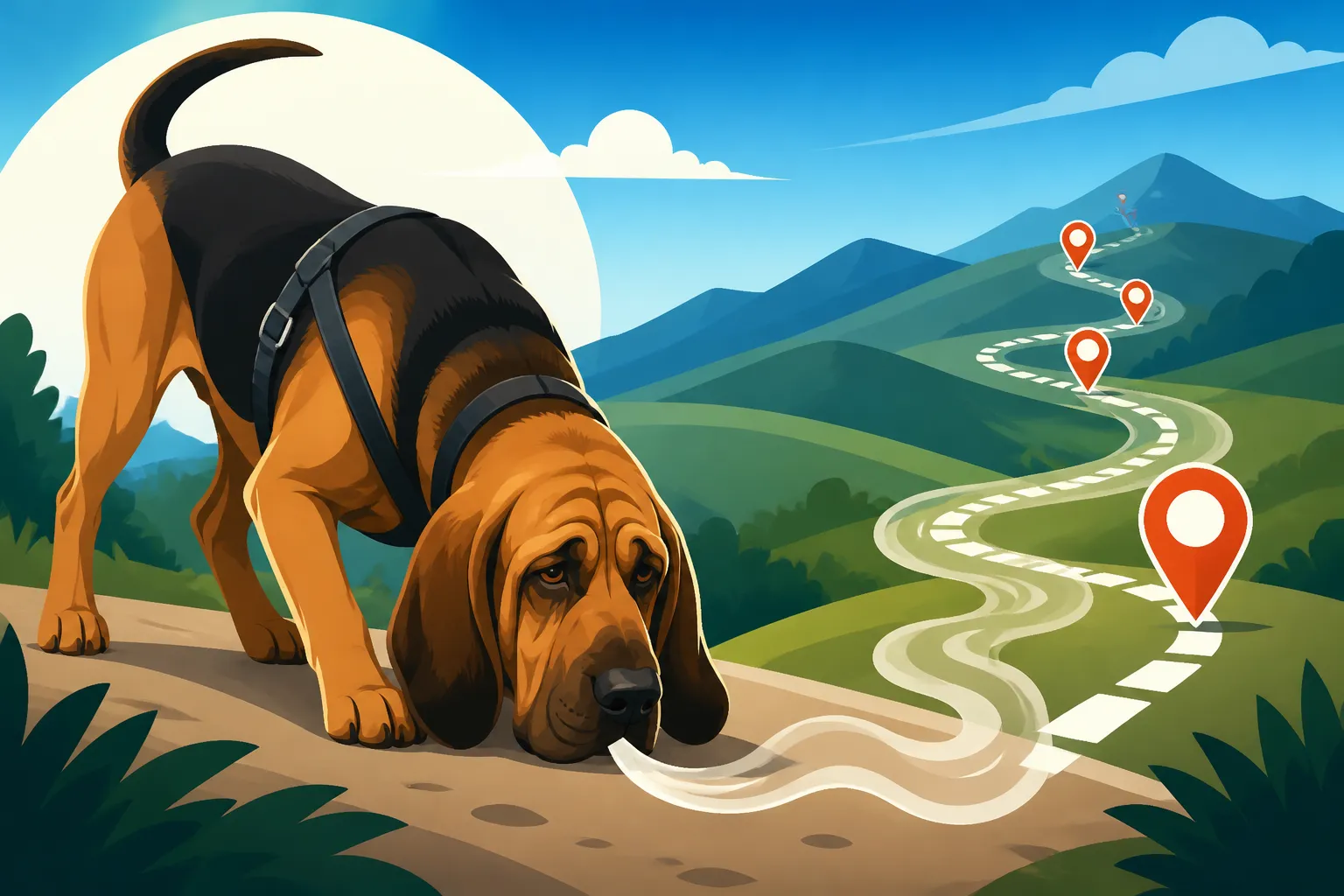
How Far a Loose Bloodhound Will Travel
The heart-stopping moment you realize your Bloodhound isn't just sniffing the perimeter but has actually slipped away can send shivers down any owner's spine. It's a terrifying scenario, and the first question that screams through your mind is, "How far could they possibly have gone?" The honest truth, and one that every Bloodhound owner needs to internalize, is that a loose Bloodhound can travel an astonishing distance, often much farther and faster than you might ever anticipate, all guided by that incredible, unwavering nose. This guide will delve into the powerful instincts driving this travel, the factors that influence how far they'll go, and, crucially, how to prevent such escapes and what to do if the unthinkable happens.
The Irresistible Call of the Scent: Why Bloodhounds Travel So Far
Understanding a Bloodhound's potential to roam starts with understanding their fundamental nature. These aren't just dogs with good noses; they are dogs whose entire being is designed and driven by scent. Their legendary tracking abilities, which even hold up in a court of law, are a testament to an instinct so profound that it overrides nearly everything else.
The Nose is Always on Duty
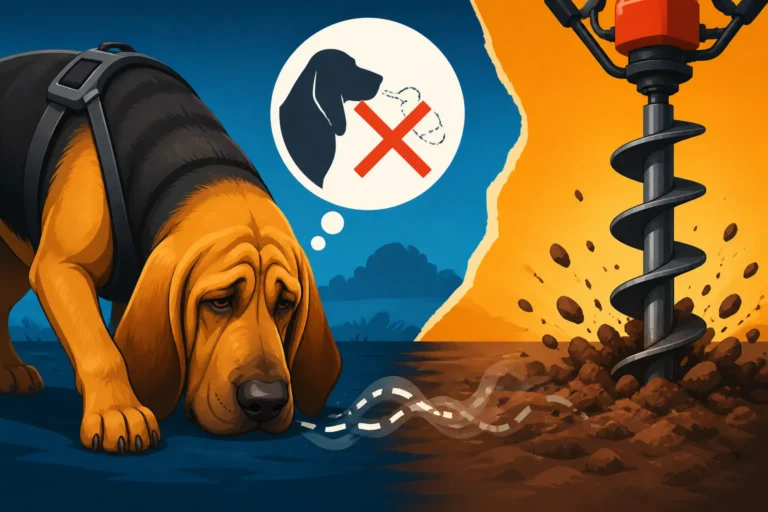
For a Bloodhound, the world is an intricate tapestry of smells. Every breeze carries a story, every patch of ground is a newspaper. When a Bloodhound is off-leash and picks up an interesting trail—be it a deer, a rabbit, or even just the lingering scent of a person who walked by hours ago—it's not merely a suggestion to investigate. It's an imperative. Their powerful olfactory system, with its millions of scent receptors, locks onto that particular odor, and their genetic programming compels them to follow. They don't think, "Oh, my owner is calling," or "I should stay close to home." They think, "This scent must be followed, at all costs." This intense focus means they literally tune out their surroundings, including your frantic calls.
Imagine trying to call a child back from their absolute favorite amusement park ride – but the child can’t actually hear you because they’re so engrossed. That’s a bit like a Bloodhound on a hot trail. Their ears, those magnificent, long, pendulous ears, even serve a purpose in scent work, sweeping ground scent upwards toward their nose, enhancing their ability to stay locked onto a trail. This single-minded devotion means they can easily wander miles from home without even realizing it, propelled forward by an invisible thread of odor. Their stamina for this work is also incredible; a Bloodhound can follow a trail for How Far a Bloodhound Will Follow a Trail over challenging terrain for hours.
The Lack of Natural Recall
Because their nose is king, conventional recall training, while important for safety, often takes a backseat when a truly compelling scent arises. You might have the most perfectly trained "come" in the living room, but out in the real world, with a deer scent screaming past, that training can completely evaporate. It's not defiance; it's instinct. Their brain simply prioritizes the scent. This is why the common wisdom among Bloodhound owners is that "off-leash is not a goal." It's not about your training skills; it's about the breed's inherent drive. Many owners find that even in seemingly secure, fenced areas, a Bloodhound will find the tiniest gap or weakest point if there's a scent to follow on the other side. This is why most Bloodhound experts will firmly tell you that Why Off Leash Is Not a Goal With a Bloodhound.
This unreliability of recall is a critical factor in how far they will travel. If they cannot be called back once they've engaged with a scent, their travel distance is limited only by their physical endurance, the landscape, and eventually, exhaustion or capture. They simply keep going until the scent dissipates or they encounter an impenetrable barrier.
Factors Influencing a Loose Bloodhound's Travel Distance
While a Bloodhound's nose will always be the primary driver, several other factors play a significant role in how far they might actually wander if they get loose. It's not a static number, but a dynamic range influenced by environment, the dog's individual traits, and even the "quality" of the trail they're on.
Environmental Conditions and Terrain
The environment is a huge player in a Bloodhound's travels. A dog that gets loose in a dense suburban area might get tangled in fences, traffic, or find itself disoriented more quickly, potentially limiting its linear travel. However, in rural or semi-rural settings, where open fields, woods, and fewer human obstacles exist, a Bloodhound can cover vast distances unimpeded.
Weather conditions also impact scent and, consequently, how a Bloodhound trails. Humidity tends to hold scent better, meaning a dog might follow a trail more efficiently and for longer. Dry, windy conditions can scatter scent, making the trail harder to follow, but it might also compel the Bloodhound to range wider in search of the "strongest" part of the odor. Extreme heat can lead to exhaustion more quickly, while cold weather, if the dog is conditioned, might allow for longer, more sustained tracking. Think about a Bloodhound on a hot summer day in the middle of an open field versus a cool autumn morning in a forested park. The latter scenario allows for much greater, faster travel.
Age, Fitness, and Motivation
A young, energetic Bloodhound puppy might not have the stamina of an adult, but its curiosity and still-developing understanding of boundaries can lead it to roam quite far before it gets tired or confused. An adult Bloodhound, particularly one in peak physical condition from regular exercise or even active trailing work, has incredible endurance. These dogs are built for long hours on the trail; they can literally run for miles without stopping if the scent is strong.
Consider a Bloodhound used for mantrailing or search and rescue. These dogs are conditioned to cover significant ground. If such a dog gets loose and picks up a powerful scent, they might travel dozens of miles across varied terrain before they even begin to tire. Even a pet Bloodhound, if regularly walked and healthy, has surprising stamina. The "motivation" of the scent itself is paramount. A fresh, strong scent from a fleeing animal will drive them much further and faster than a weak, intermittent human trail.
"Coming Home" Instincts
While Bloodhounds are incredibly driven by scent, they aren't necessarily "homing pigeons." Their primary instinct is following the scent, not finding their way home. Once they are deep into a trail, their focus on the scent overrides any mental map back to their starting point. Some dogs, when the scent fades or they become truly exhausted, might attempt to backtrack or simply stop and wait. However, others can become profoundly disoriented.
The idea that a lost dog will instinctively find its way home is largely a myth for many breeds, but especially so for a Bloodhound whose entire sensory world becomes temporarily narrowed to a single, overriding odor. They are often found miles away, sometimes in entirely different towns, completely unaware of their distance from home. This is why microchipping is essential, and a good Whether a Microchip Is Enough for a Bloodhound can be a lifesaver.
Preventing the Great Escape: Containment and Management
Given the Bloodhound's powerful nose and drive, prevention is always the best strategy. You simply cannot rely on their recall or their sense of direction to keep them safe. Instead, focus on robust physical containment and diligent management.
Fortifying Your Fences
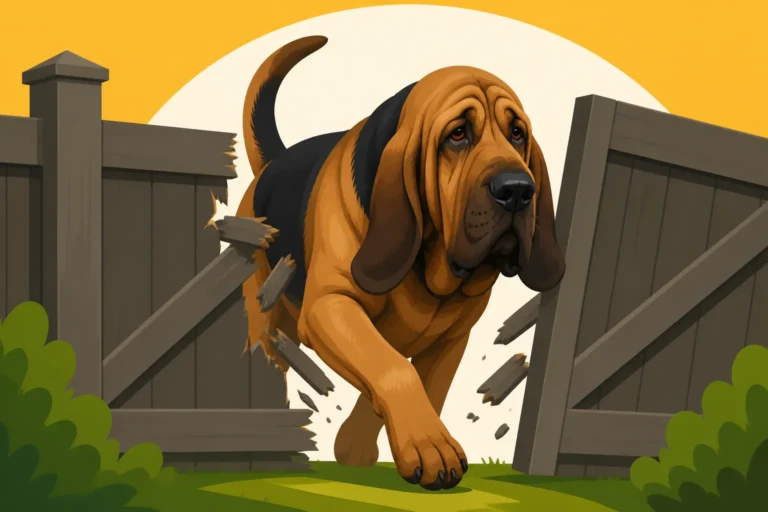
The first line of defense is a secure yard. Standard residential fences, even 4-foot or 5-foot chain link, are often insufficient. Bloodhounds are strong, determined, and surprisingly agile for their size. They can lean against fences until they bend, they can dig under them, and they can sometimes even scale lower ones.
For a Bloodhound, a truly secure fence means:
- Height: At least 6 feet, ideally higher, or a fence with an inward-leaning top section to deter climbers.
- Depth: The fence line needs to extend underground (e.g., concrete footer, buried wire mesh, L-footers) to prevent digging. Bloodhounds are expert excavators when motivated.
- Integrity: No weak spots, loose boards, or gates that can be easily nudged open. Gates should have heavy-duty, difficult-to-open latches, perhaps even double-latched.
- Double Fencing: For ultimate security, especially if you have a large property or a particularly escape-prone Bloodhound, consider a double-fencing system. This creates a buffer zone where, if they breach the inner fence, they're still contained by an outer one.
Remember, a Bloodhound's intelligence, while not always manifesting in traditional "obedience," shines through in problem-solving when a scent is on the line. They will methodically test every weakness in your What Fencing Actually Holds a Bloodhound if they believe there's a reward on the other side.
Leash and Long Line Management
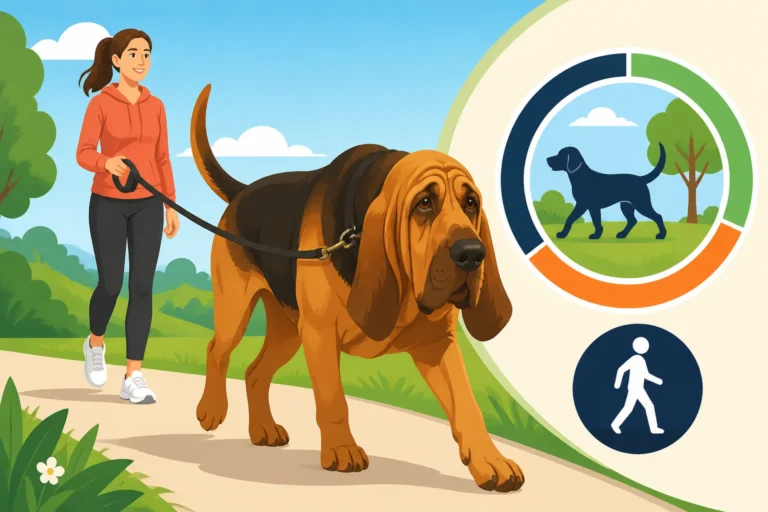
Out on walks, a Bloodhound should always be on a leash. No exceptions. Even a seemingly quiet park or open field can hold an irresistible scent. A sturdy harness (not just a collar, which can put pressure on their windpipe if they lunge) and a strong leash are non-negotiable. For exercise in a somewhat open but controlled environment, a long line (15-30 feet or more) can be incredibly beneficial. This allows them to explore scents more freely while still being tethered to you. You can find robust long lines, tracking harnesses, and GPS collars for added peace of mind on platforms like Amazon, offering a wide variety of options for every budget and need. Whether a Long Line Replaces Off Leash for a Bloodhound is a crucial question, and for a Bloodhound, the answer is usually yes.
Training and Enrichment
While you can't train out a Bloodhound's scent drive, you can channel it. Engaging in structured scent work or mantrailing activities can be immensely satisfying for your dog and help fulfill their innate desire to track. This can also make them less likely to take off after random scents in inappropriate situations because they have a dedicated outlet for their talents. Organizations like the American Bloodhound Club offer resources for getting involved in trailing. Online training platforms, like those offered by BAXTER & Bella, can provide structured guidance for foundation skills, even if full off-leash recall remains a pipe dream.
Another critical aspect of prevention is ensuring your Bloodhound is mentally and physically enriched. A bored Bloodhound is more likely to seek out their own "entertainment," which often involves following their nose to places you don't want them to go. Regular exercise, interactive toys, puzzle feeders, and plenty of quality time with their humans can reduce the motivation for an unplanned excursion.
When the Unthinkable Happens: How to Find a Lost Bloodhound
Despite all precautions, sometimes a determined Bloodhound can still slip away. If your Bloodhound does go missing, your response needs to be swift and strategic. Their ability to cover vast distances means time is of the essence.
Immediate Action Plan
- Don't Chase: It's your first instinct, but chasing a Bloodhound will likely make them run faster and further, often perceiving it as a game or being "herded."
- Call Their Name & Scent Article: If they've only just gotten out, call their name calmly and loudly while standing still. If you have a specific "recall" whistle or command, use it. You can also try bringing out a high-value, stinky treat or their favorite squeaky toy. If they aren't immediately in sight, grab a personal item with your scent on it (like a worn t-shirt) and place it near the escape point. This can help them find their way back if they loop around, or at least establish a last known location for other searchers.
- Alert Neighbors & Local Authorities: Immediately inform neighbors, especially if they have seen which direction your Bloodhound headed. Call local animal control, shelters, and police departments. Provide a clear description and a photo. Many areas have lost pet social media groups; post there with all relevant details.
- Tracking Collars and Microchips: If your Bloodhound wears a GPS tracking collar, activate it immediately. Even without real-time tracking, a microchip is vital for identification once they are found. Ensure your microchip registration information is up-to-date!
Expanding the Search Radius
Because Bloodhounds can travel so far, your search radius needs to expand quickly. Don't just look in your immediate neighborhood.
Consider these search strategies:
- Scent Familiarity: Start your search from the last place they were seen, moving outward in concentric circles. Think about where scents might lead them – wooded areas, parks, hiking trails, even urban alleyways where interesting smells might concentrate.
- Time of Day: Bloodhounds might be more active at dawn or dusk when temperatures are cooler and natural prey animals are more mobile. Check these times.
- Targeting Common Sense Points: They might eventually gravitate toward human activity if they get hungry or thirsty. Check local businesses, construction sites, farms, or water sources.
- Post Flyers & Online Alerts: Create clear, concise "Lost Dog" flyers with a large photo, your contact information, and mention their breed's unique traits (e.g., "friendly but may follow nose"). Distribute them widely, especially at vet clinics, pet stores, and community centers in neighboring towns. Utilize social media and dedicated lost pet websites. Even with the best online resources, perhaps from BAXTER & Bella, the physical legwork of putting up flyers is still indispensable.
Remember, a Bloodhound's journey can be extensive. Owners have reported their lost Bloodhounds being found 10, 20, or even 50 miles away from their homes, often in completely different counties. Their sheer determination and focus on a trail mean they can cross roads, navigate complex terrain, and bypass many common obstacles without breaking their stride.
Understanding the Risks of Roaming
The distance a loose Bloodhound travels isn't just a number; it represents a myriad of serious dangers. The further they go, the higher the risk of something terrible happening.
Traffic and Injuries
This is perhaps the most immediate and terrifying risk. A Bloodhound, nose to the ground, is oblivious to cars, motorcycles, or bicycles. They won't look both ways; they won't even hear an approaching vehicle if they're locked onto a scent. Many lost Bloodhounds are unfortunately hit by cars. Beyond direct impacts, they can also suffer injuries from sharp objects, falls, or encounters with wildlife. A stray bullet from a hunter mistaking them for game is also a tragic possibility in rural areas.
Encounters with Other Animals and People
A loose Bloodhound might encounter aggressive stray dogs, territorial wildlife (coyotes, bears, even protective farm animals), or people who are afraid of large, loose dogs. While Bloodhounds are generally good-natured, a frightened or disoriented dog can react unpredictably. They might also unintentionally harass livestock, leading to dangerous situations with farmers or property owners.
Hunger, Thirst, and Exposure
The longer a Bloodhound is loose, the more vulnerable they become to the elements. They can quickly become dehydrated, especially in warm weather or after intense exertion. Lack of food can lead to weakness and poor decision-making. Exposure to extreme cold, heat, rain, or snow can lead to hypothermia, heatstroke, or other serious health issues.
The Cost of Recovery
Should your Bloodhound be found, the financial costs can be substantial. Emergency vet care for injuries, boarding fees at a shelter, or rewards for finding them can add up quickly. This is often A Bloodhound's Money Is Spent in the Operating Room for unexpected events like these.
| Factor | Impact on Travel Distance | Risk Level for Loose Bloodhound | Prevention/Mitigation Strategy |
|---|---|---|---|
| Scent Drive | High: Drives extensive, single-minded travel for miles. | Very High | Secure fencing, long-line use, structured scent work training. |
| Terrain (Open vs. Urban) | Open: Facilitates long-distance, unimpeded travel. Urban: More obstacles, but still can get far. | Medium-High | Know your environment, secure your property thoroughly. |
| Weather (Humidity, Wind) | Humidity: Holds scent, enabling longer tracking. Wind: Can scatter, leading to wider searching. | Medium | Awareness of conditions, higher vigilance in favorable scenting weather. |
| Dog's Fitness/Age | High: Fit, adult dogs have incredible stamina. Puppies/seniors may tire faster but still roam. | High | Understand individual dog's capabilities; never underestimate. |
| Recall Reliability | High: Lack of reliable recall means distance is physically limited. | Very High | Never off-leash outside of secure, controlled areas; long lines only. |
| Disorientation | Lowers chance of self-return, increases random wandering. | Medium | Microchip, visible ID tags, GPS tracker. |
The table above illustrates just how many variables are at play. While Bloodhounds are truly magnificent creatures, their incredible gift of scent is also their Achilles' heel when it comes to off-leash freedom. It places an immense responsibility on us, their human companions, to provide an environment where that gift can be celebrated safely, without the devastating risk of them getting lost.
Disclaimer
This article is for general informational purposes only and does not constitute professional advice. Laws, prices and regulations vary by location and change over time. Consult a qualified professional for guidance on your specific situation.