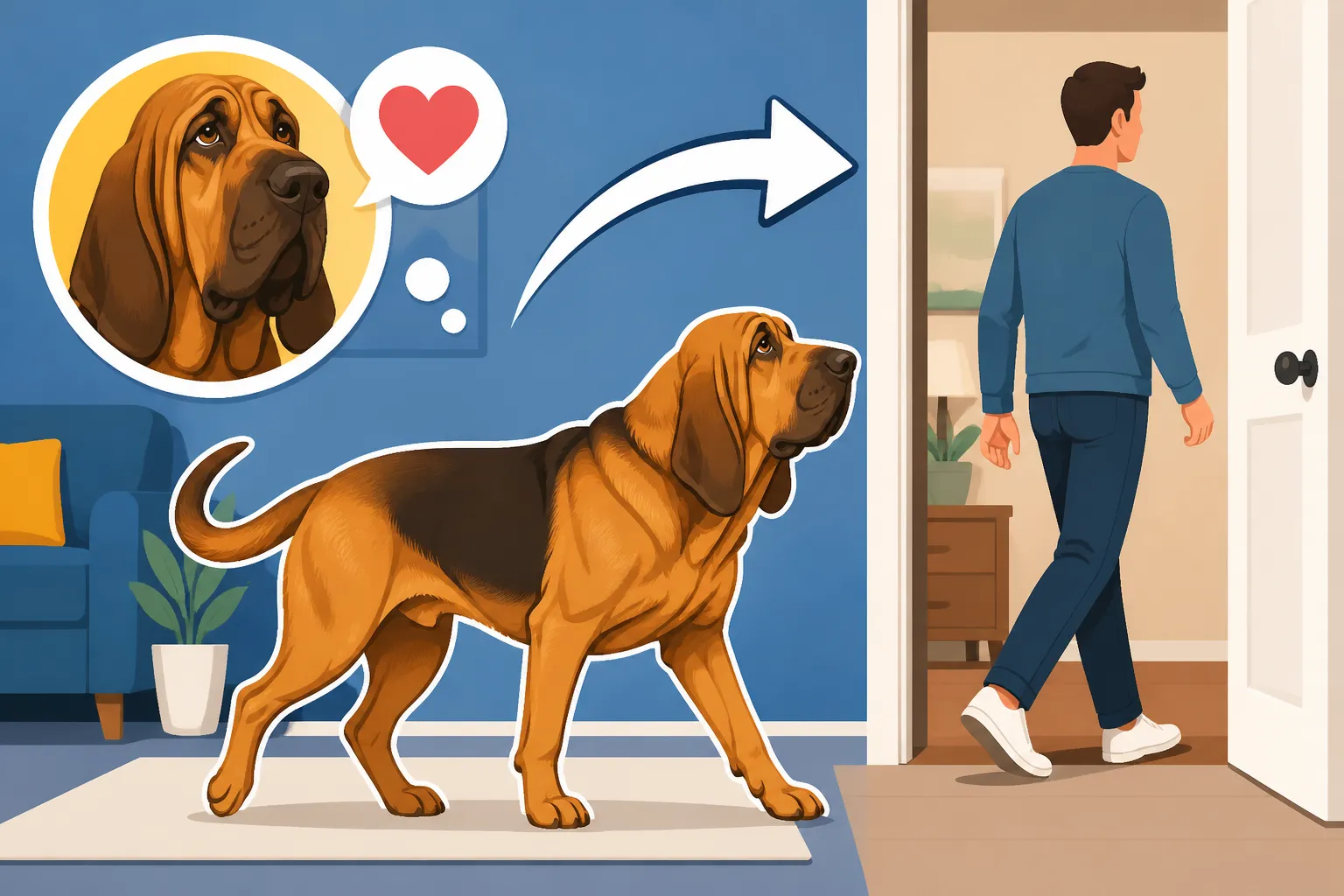
Whether a Bloodhound Follows Its Owner Room to Room
It's a familiar scene for many Bloodhound owners: you get up from the couch, and a large, wrinkly shadow detaches itself from the floor, following your every move. Whether you're heading to the kitchen for a snack, the bathroom for a moment of peace, or just to another room, your Bloodhound is often right there, sometimes literally underfoot. This guide is here to help you understand why your beloved hound develops such a strong "velcro dog" tendency and how to navigate living with a canine companion who prefers to be within arm's reach at all times.
The Bloodhound's Innate Need for Proximity and Connection
Bloodhounds are undeniably special dogs, known for their incredible noses and their gentle, affectionate nature. What many prospective owners don't realize, though, is just how deeply ingrained their need for connection and proximity is. This isn't just about love; it’s about their history, their instincts, and their unique way of experiencing the world.
Why Bloodhounds Form Such Strong Bonds
Bloodhounds, historically, have been working dogs, often laboring in partnership with humans. They were bred to track, a demanding job that requires intense focus and a close working relationship with their handler. This partnership forged a deep reliance and bond. While they are renowned for their independent scent drive, they also thrive on companionship and validation from their human partners. They aren't aloof; quite the opposite. They see you as the center of their universe, their pack leader, and the source of all good things, including interesting smells and belly rubs.
Their emotional intelligence, while sometimes overshadowed by their powerful nose, is also very high. They pick up on your moods, your routines, and even subtle shifts in your presence. For a Bloodhound, being close to you is a way to feel secure, to understand what's happening, and to participate in the "pack's" activities, even if those activities involve nothing more exciting than watching you fold laundry. This deep connection makes them incredibly loyal and devoted companions, often seeking physical contact or at least visual confirmation of your whereabouts.
The "Velcro Dog" Phenomenon in Bloodhounds
If you describe your Bloodhound as a "velcro dog," you're not alone. This term perfectly captures the behavior of a dog who sticks to you like glue, following you from room to room, settling at your feet, or often, just a few inches behind you. It's not uncommon for Bloodhound owners to find themselves navigating around a large, floppy-eared lump wherever they pause. This can manifest as them needing to be in the same room, or even attempting to squeeze onto the same piece of furniture, regardless of its size or their own.
For a Bloodhound, this isn't just a quirky habit; it’s often a combination of their inherent pack drive and their constant environmental assessment through scent. They are keenly aware of your presence, and every time you move, it creates a shift in their environment – new air currents, new scent trails, new opportunities for investigation. Staying close allows them to monitor these changes and remain connected to their most important resource: you. While it can be charming, it can also lead to hilarious tripping hazards or a feeling of never having a moment completely to yourself. This constant shadowing is a hallmark of the breed and a testament to their deep attachment.
Understanding the Bloodhound's Motivation to Follow
It's easy to assume your Bloodhound is just being clingy, but their reasons for shadowing you are often more complex, stemming from their incredible sensory world and their need for security.
Scent-Driven Curiosity and Observation
Let's be real, a Bloodhound's entire world revolves around scent. Their nose is their superpower, and it never truly "turns off." When you move from one room to another, you're not just a person walking; you're a moving source of fascinating, ever-changing odors. You track scents from outside, from your clothes, from the other humans or pets in the house. Every step you take lays a new, ephemeral trail for your Bloodhound to analyze. It's like you're constantly dropping tiny, invisible breadcrumbs for them to follow.
This intense curiosity means they are always observing, always collecting data. Even in your own home, new scents can emerge – maybe you picked up something from the kitchen counter, or perhaps the mail you just opened has interesting residual odors. Your Bloodhound might be silently auditing the laundry pile you just passed, or checking the spot where you stood by the window for any outdoor smells you might have brought in. For them, every room is a new canvas of information, and being close to you ensures they don't miss any critical updates to the "scent report" of the house. It's a fundamental part of A Bloodhound's Nose Outvotes Its Handler, even within the confines of your home.
Seeking Reassurance and Security
Beyond their powerful sense of smell, Bloodhounds are deeply sensitive creatures who thrive on companionship. While they are large and robust, they can also be prone to anxiety, especially if they feel separated from their trusted human. Following you from room to room can be a way for them to seek constant reassurance that they are not alone and that their world is stable and secure. This isn't always full-blown separation anxiety, but rather a preference for proximity that offers comfort.
If left alone for too long, or if their routine is disrupted, some Bloodhounds can indeed develop more serious separation anxiety. Their shadow behavior might then escalate to whining, destructive chewing, or inappropriate elimination when you are truly out of sight. They just don't cope well with perceived isolation. Understanding this can help you differentiate between a quirky "velcro" tendency and a genuine need for more emotional support. It's worth considering how this need for constant connection can impact their overall well-being, as even mild anxiety can contribute to stress over time. If you suspect deeper anxiety issues, it's wise to consult with a professional, as unresolved stress can sometimes contribute to other health issues in dogs, such as digestive upset or even, in predisposed breeds like Bloodhounds, an increased risk for bloat. While a direct link isn't established, managing overall stress is always beneficial. For more on this, you might explore Whether an Anxious Bloodhound Bloats More.
The Bloodhound's "Job" Indoors
Even when they're not actively trailing a missing person, a Bloodhound's mind is always working. Their ancestral job is to detect and follow, and this instinct doesn't simply vanish when they're inside your house. For many Bloodhounds, following their human is a natural extension of their innate desire to "work" and be connected to their pack. They are silently processing information, noting your movements, anticipating your next action, and constantly confirming their proximity to you.
Think of it as their low-key, indoor scent work. Every time you open the fridge, go to the bathroom, or sit down at your desk, your Bloodhound is taking notes. They're learning patterns, associating scents with activities, and generally just being an active participant in your domestic life. This makes them incredibly tuned into their environment and to you, which is a fantastic trait for a working dog, but it also means they are rarely truly "off duty" when it comes to observing their favorite human.
Managing the Follow-Me Tendency: When it's Adorable and When it's Too Much
Living with a Bloodhound shadow is part of the package, but there are times when it's endearing and times when it can be a little overwhelming. Finding a balance means appreciating their devotion while also teaching them that it's okay, and even good, to have some independent time.
Embracing the Bloodhound's Affection
First and foremost, it's important to embrace and appreciate this aspect of your Bloodhound's personality. Their "velcro dog" nature is often a beautiful manifestation of their deep loyalty and affection. It means they adore you, trust you, and want to be close to you. Many Bloodhound owners cherish this constant companionship, finding comfort in their hound's quiet presence. There's a certain charm in having such a devoted companion who always wants to be where you are, offering a floppy head for a pet or a gentle lean against your leg.
This connection builds an incredibly strong bond between you and your dog, fostering a sense of mutual understanding and security. While it might sometimes mean a little less personal space, it also means you have a constant furry confidant. Enjoy those moments when they curl up at your feet, gently snore, or just gaze up at you with those famously soulful eyes. It’s a unique characteristic of the breed and a testament to the profound relationship you share.
Strategies for Encouraging Independent Time and Space
Even with the deepest affection, every owner needs a bit of personal space now and then, and every dog benefits from learning to be comfortable on their own. The goal isn't to make your Bloodhound less affectionate, but to build their confidence in their own company. One of the best tools for this is a designated "safe space," like a crate. Crate training, especially when started early, can teach your Bloodhound that their crate is a cozy, secure den where they can relax independently. For guidance on introducing and making the crate a positive place, structured online training programs (like those offered by BAXTER & Bella) can provide step-by-step instructions. You can even consider resources on Crate Training Suits a Bloodhound Puppy for a good foundation.
Another effective strategy is to provide high-value enrichment toys that can keep your Bloodhound engaged when you step away. Think puzzle feeders that dispense treats slowly, or durable chew toys stuffed with peanut butter or other delicious fillings. These can keep their powerful minds and noses occupied for significant periods, teaching them to associate your absence with a positive, self-directed activity. High-quality puzzle toys or durable chew toys from Amazon can be a godsend for keeping their busy minds occupied when you need a few minutes of quiet. Start with short durations and gradually increase the time they spend with their enrichment toy while you are in another room, building their comfort slowly.
Addressing Excessive Following or Separation Anxiety
While a little shadow-following is normal, if your Bloodhound's need for proximity turns into genuine distress when you're out of sight, it might be tipping into separation anxiety. Signs of excessive following or anxiety include destructive behavior (chewing door frames, scratching at doors), frantic pacing, persistent whining or barking, house soiling even after being let out, or excessive drooling when you leave the room or house. If these behaviors are present, it’s crucial to address them proactively.
Begin by working on gradual desensitization. Practice leaving the room for very short periods (seconds at first), returning calmly before your Bloodhound shows any signs of distress. Gradually increase the time you're away. Avoid making a big fuss when you leave or return; this helps to normalize your departures and arrivals. For those moments when you need to step out, a reliable dog camera (easily found on Amazon, often with two-way audio) can give you peace of mind and help you monitor any signs of distress. If the anxiety is severe, professional help from a certified dog behaviorist or a veterinary behaviorist may be necessary. They can help create a tailored plan, which might include medication in conjunction with behavior modification. Remember, your Bloodhound's well-being is paramount, and addressing anxiety can significantly improve their quality of life. Understanding How Long a Bloodhound Copes Alone might also provide valuable context.
Practical Tips for Living with a Shadow
Living with a Bloodhound who loves to be by your side means a few adjustments to your daily life, but with a bit of foresight and training, you can make it work for everyone.
Setting Boundaries and Teaching "Place"
Even for the most devoted Bloodhound, having clear boundaries is essential. Teaching a "place" command can be incredibly useful. This involves training your Bloodhound to go to a specific spot (like their bed or mat) and stay there until released, regardless of what you're doing. Start in short increments, rewarding them heavily for staying. Use high-value treats and praise. This gives them a job and a designated spot when you need them not to be underfoot, such as while cooking in the kitchen or during a Zoom meeting.
Consistency is key. Everyone in the household needs to use the command consistently. Practice in various rooms and with different distractions. Over time, your Bloodhound will learn that "place" means a comfortable, rewarding spot away from your immediate path, allowing you both a little breathing room. For more insights on what motivates your hound, check out What a Bloodhound Will Work For.
Ensuring Safety in a Multi-Room Home
A large, enthusiastic Bloodhound following you can easily become a tripping hazard. This is especially true when you’re carrying things, going up or down stairs, or moving quickly. Simple safety measures can make a big difference. Get into the habit of looking down before you step back or pivot. Teach your Bloodhound a "wait" cue at doorways to prevent them from barreling through or getting tangled around your legs. You might also teach a "step back" or "move" command for when they're too close.
Consider installing baby gates or pet barriers in areas where you absolutely need an obstruction-free zone, like a kitchen while preparing a meal. This gives them a visual boundary without feeling completely cut off. While it might seem like a small thing, preventing falls and accidental injuries for both you and your Bloodhound is crucial for a harmonious household.
Providing Mental and Physical Outlets
Often, a Bloodhound's intense following behavior can be exacerbated by boredom or a lack of appropriate mental and physical stimulation. Remember, these dogs were bred for endurance and problem-solving through scent. A Bloodhound who isn't given enough outlets for their natural instincts will find ways to occupy themselves, and often that means being intensely focused on their human. Providing ample opportunities for exercise and, especially, mental enrichment through scent work, can significantly reduce their need to be your constant shadow.
Long, leashed walks where they can sniff and explore are vital. Even better is engaging them in actual scent work or "mantrailing." This is where their incredible nose truly shines, and it's incredibly tiring for them mentally. Even short, structured scent games indoors can provide immense satisfaction. Rather than endless obedience drills (which Bloodhounds aren't always keen on), focusing on their natural talent can be a game-changer. This mental engagement can help them feel fulfilled and more settled, even when you're not actively interacting with them. In fact, Mantrailing Is the Answer to a Bloodhound, Not Obedience could offer some fantastic ideas. And for their physical needs, remember to provide How Much Exercise a Bloodhound Actually Needs without overdoing it, especially with growing puppies.
| Strategy | Description | Benefits |
|---|---|---|
| Crate Training | Create a comfortable, safe den for independent relaxation. | Builds confidence, provides a secure retreat, can aid in anxiety management. |
| Enrichment Toys | Provide puzzle feeders, stuffed KONGs, or durable chew toys. | Keeps them mentally engaged, redirects attention, promotes self-play. |
| "Place" Command | Teach them to go to and stay on a designated spot (bed, mat). | Creates boundaries, offers a reliable "off-duty" station. |
| Gradual Desensitization | Practice short, calm departures and arrivals, increasing time slowly. | Reduces anxiety associated with your absence, normalizes departures. |
| Scent Work/Mantrailing | Engage their natural abilities with tracking games or formal training. | Provides intense mental stimulation, tires them out constructively. |
| Physical Exercise | Ensure daily walks and playtime tailored to their age and energy. | Prevents boredom, releases pent-up energy, promotes overall well-being. |
| Barriers/Gates | Use physical barriers for temporary "no-hound" zones in the home. | Prevents tripping, allows for undisturbed tasks like cooking. |
Disclaimer
This article is for general informational purposes only and does not constitute professional advice. Laws, prices and regulations vary by location and change over time. Consult a qualified professional for guidance on your specific situation.