Whether a Bloodhound Barks at Intruders
It's a common, completely understandable assumption that a large, imposing dog like a Bloodhound would be a natural deterrent, ready to bark up a storm at anyone approaching your home uninvited. After all, they’re big, they're loud, and they certainly look serious. But the truth is, a Bloodhound's inherent nature, while incredibly powerful in its own way, simply doesn't align with the typical "guard dog" role. This guide will delve into why your Bloodhound is unlikely to be your first line of defense against intruders, what their reactions truly mean, and how to approach home security with this unique breed.
The Bloodhound's Innate Temperament and Focus
When you bring a Bloodhound into your home, you're not getting a fierce protector in the traditional sense. Their history and genetics have molded them into something entirely different: a master of scent, driven by an almost singular focus on trailing. This profound dedication to their nose means their priorities are simply not aligned with territorial guarding or alarm barking at perceived threats.
A Nose for Scent, Not Strangers
Imagine a Bloodhound walking through your living room. A stranger steps onto your porch. Most dogs might immediately perk up, perhaps even let out a warning bark. Your Bloodhound? They might just be more interested in that crumb under the sofa or the subtle scent of the neighbor's cat that drifted in through the window. Their world is governed by scent, and the presence of a new person, unless that person is actively engaging them in a way that creates a strong new scent trail (like dropping a treat), is often just another background detail. They don't naturally perceive a new human presence as an intruder in the protective sense; they perceive it as a new scent to potentially investigate.
This isn't to say they're oblivious. They will certainly notice someone. But their processing of that information is through the lens of their nose. A new human scent isn't inherently threatening; it's interesting. Their instinct is to follow, not to confront or hold at bay. This is why Why Off Leash Is Not a Goal With a Bloodhound is such critical advice – their nose will always win out over any other command or perceived duty. They are not easily distracted from a compelling scent, whether it's the trail of a lost person or a fascinating new smell on the sidewalk.
The Gentle Giant Myth (and Reality)
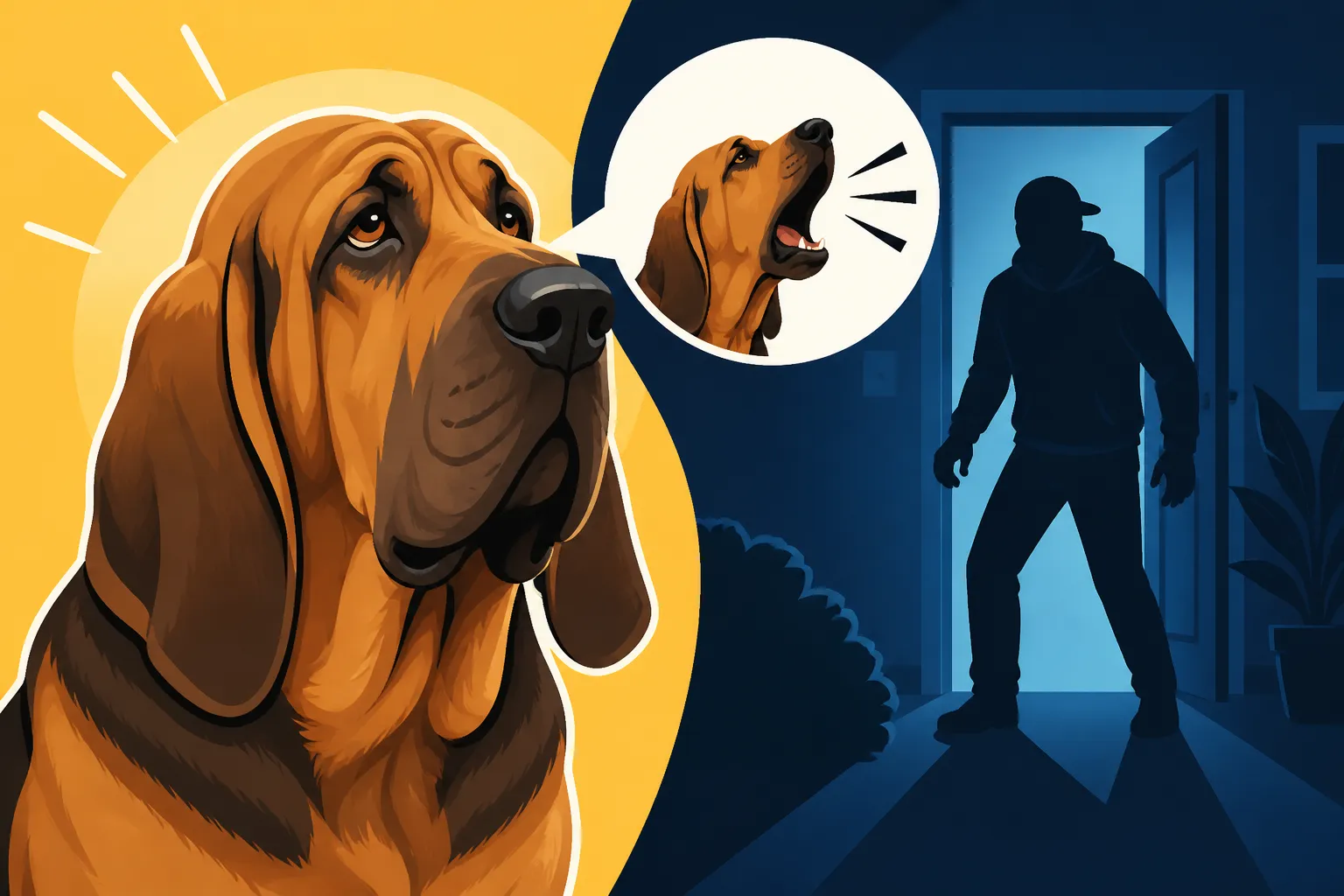
Bloodhounds are renowned for their incredibly gentle and benevolent nature. They are often described as "big softies" or "gentle giants," and for good reason. They typically adore people, including strangers. Their loose, wrinkled faces and mournful eyes often belie a deeply affectionate and tolerant personality. This means that if an actual intruder were to enter your home, your Bloodhound would be far more likely to greet them with a wagging tail and a request for ear scratches than with a territorial snarl.
This can be a tough pill to swallow for owners who want their large dog to act as a deterrent. You want to believe that huge, droopy-faced dog will put fear into anyone with ill intent. But their historical role was to track people, often people who were lost or even fugitives, and to do so without aggression. A truly aggressive Bloodhound would be useless for its intended purpose. So, while their size can certainly be intimidating to some, their underlying disposition is one of remarkable kindness. For a comprehensive look at their temperament, consider that A Bloodhound in a House With Small Children is often a testament to their patience and gentle disposition.
Prioritizing a Scent Work Lifestyle
For a Bloodhound, true fulfillment often comes from engaging their incredible olfactory abilities. This is why activities like mantrailing or scent work are so vital for their mental and physical well-being. When we say Mantrailing Is the Answer to a Bloodhound, Not Obedience, it’s not an exaggeration; it speaks to their core drive. If you want a "working" Bloodhound, you should channel that energy into what they were bred to do: follow a trail.
This focus on scent work reinforces their inclination to engage with the world through their nose, not through aggressive posturing or territorial defense. They are happy to ignore a passing stranger if there's a more interesting scent puzzle to solve. This means that trying to train them to be a guard dog goes against their very nature and could lead to confusion, anxiety, or even extinguish the very traits that make them such extraordinary trackers. Their brain is simply wired for a different kind of "work" than standing guard.
What Actually Triggers a Bloodhound's Voice
While a Bloodhound might not bark at an intruder, they are far from silent dogs. They possess a distinctive and powerful voice that they use readily, but for reasons very different from traditional alarm barking. Understanding these triggers is key to living harmoniously with a Bloodhound and realizing that their "bark" isn't often a protective one.
The Infamous Bloodhound Bay
The sound most associated with a Bloodhound isn't a sharp, staccato bark; it's a deep, resonant bay. This sound is truly unmistakable – a long, drawn-out bellow that can carry for incredible distances. When a Bloodhound bays, it's usually because they are working a scent. This is their natural vocalization when they are on a trail, letting their handler know they are hot on the scent. Why a Bloodhound Bays is deeply ingrained in their DNA, a communication tool for their primary function.
They might also bay if they are bored, lonely, or anxious. A Bloodhound left alone for too long might bay simply out of separation anxiety or a desire for attention. If they hear another dog baying in the distance, they might join in, creating a mournful chorus. It's a vocalization that comes from deep within their chest, a powerful expression of their hound nature. It's not typically a warning. So, if your Bloodhound starts baying while you're home, it's far more likely they've caught the scent of a deer across the field or are simply expressing their general malaise, rather than alerting you to an imminent threat at the door.
Other Vocalizations and Their Meanings
Bloodhounds do have other vocalizations, but they still rarely equate to typical alarm barking.
- Howling: Similar to baying, often a response to sirens, other distant dogs, or expressing profound loneliness. It's a deep, mournful sound that evokes images of their ancient ancestors calling across vast distances.
- Whining: This is a common Bloodhound sound, often used to solicit attention, express discomfort, or indicate a desire for something (food, a walk, a potty break). It’s usually a softer, more insistent sound than baying.
- "Woof" (but rarely a bark): While they can make a single "woof" sound, it's not their go-to. If they do, it might be out of surprise or a brief acknowledgment of something novel, but it rarely escalates into sustained, defensive barking. Think of it more like a soft huff than an aggressive bark. They are not typically "yappy" dogs.
The sheer volume of a Bloodhound's voice is something every owner must contend with. How Loud a Bloodhound's Bay Is cannot be overstated; it's a sound that resonates through walls and across properties. Neighbors, even tolerant ones, will certainly hear it. This is why managing their vocalizations through proper exercise, mental stimulation (like scent games), and appropriate training for boredom or separation anxiety is so crucial. It's not about training them not to bark at intruders, but rather managing their natural vocal tendencies for overall household peace.
Assessing Your Home's Security Beyond the Dog
Given that your Bloodhound is unlikely to be your personal bodyguard, it's essential to approach home security with realistic expectations and proactive measures. Relying on a Bloodhound for protection is a recipe for disappointment and potential vulnerability.
Understanding the Deterrent Factor
While a Bloodhound won't actively defend your home, their sheer size can still act as a visual deterrent. A large dog, even a friendly one, might make a would-be intruder think twice simply because of the unknown factor. They see a big dog, and they might assume it's protective, regardless of the breed's actual temperament.
However, this is a passive deterrent. It works only if the intruder sees or hears the dog before entering. Once inside, if the Bloodhound's gentle nature becomes apparent, any deterrent effect quickly vanishes. Therefore, you cannot count on their presence alone for security. It's more of a side benefit than a primary security feature.
Modern Security Solutions
Since your Bloodhound is off the hook for guard duty, it's wise to invest in reliable modern security solutions. These systems don't rely on canine instinct and are specifically designed to detect and deter unwanted entry.
- Alarm Systems: A robust alarm system with sensors on doors and windows is paramount. Many systems offer professional monitoring, providing an immediate response when activated. These systems don't care if your dog is friendly or focused on a scent; they simply detect entry.
- Security Cameras: Cameras, especially those with motion detection and two-way audio (many affordable options are available on Amazon), can be incredibly effective. They allow you to monitor your property remotely and can often deter intruders by their visible presence. Some systems even offer integrated spotlights or alarms.
- Reinforced Doors and Windows: The simplest and often most overlooked security measure is making your home physically harder to break into. Solid core doors, reinforced frames, and good quality locks are fundamental. Window locks and even security films can add extra layers of protection.
Think of these systems as your true "guard dogs" – they are always on alert, never distracted by a squirrel, and always ready to sound the alarm without a moment's hesitation.
Creating a Secure Environment
Beyond technology, consider the environment you create around your home.
- Good Lighting: Well-lit areas around your home, especially entrances and windows, make it harder for intruders to approach undetected. Motion-sensor lights are particularly effective.
- Landscaping: Trim shrubs and trees that could provide cover for someone trying to approach your house. Avoid leaving ladders or tools outside that could be used to gain entry.
- Neighborly Watch: A good relationship with your neighbors can be an informal but effective security network. They might notice suspicious activity when you're not home, or even when your Bloodhound is simply sniffing a fascinating new scent in the yard.
Ultimately, your Bloodhound's role in home security is more about companionship and providing a wonderful presence in your life, not active protection. Prioritize their well-being and temperament, and secure your home through proven methods designed for that specific purpose.
Training and Management for Household Harmony
While you won't be training your Bloodhound to be a guard dog, proper training and management are still crucial for integrating them successfully into your home and ensuring their unique traits don't become problematic.
Socialization is Key
Bloodhounds, by nature, are social creatures. Early and consistent socialization is vital to ensure they remain the gentle, accepting dogs they are meant to be. Expose your Bloodhound puppy to a wide variety of people, places, sounds, and other friendly dogs. This helps them learn that new experiences and new people are generally positive or neutral, not something to fear or react aggressively toward.
A well-socialized Bloodhound will be confident and calm when strangers enter your home, rather than anxious or fearful, which could lead to unwanted vocalizations or behaviors. A good puppy class, perhaps one that uses positive reinforcement methods like those championed by BAXTER & Bella, can be incredibly beneficial for this. Their programs often focus on building a strong foundation of trust and good manners, which is exactly what a Bloodhound needs to thrive. The goal is a dog that is comfortable and unstressed, even with new people around.
Managing Vocalizations
As we've established, Bloodhounds are vocal. While you can't train out their natural tendency to bay, you can manage when and why they use their voice.
- Address Boredom and Loneliness: Many Bloodhound vocalizations stem from a lack of mental or physical stimulation. Ensure your Bloodhound gets enough exercise and plenty of opportunities for scent work. A bored Bloodhound is a noisy Bloodhound.
- Crate Training: A well-crate-trained Bloodhound can provide a safe, quiet space for them when you're away, potentially reducing separation anxiety-related baying.
- Training a "Quiet" Cue: While challenging for a natural baying breed, you can work on a "quiet" command using positive reinforcement. When your Bloodhound is baying or howling, wait for a momentary lull, mark it (with a clicker or "yes!"), and reward heavily. Gradually extend the duration of quiet before the reward. This teaches them that silence, even amidst their natural vocal tendencies, can be rewarding.
- Environmental Management: If your Bloodhound bays at every passerby outside a window, consider blocking their view with window film or curtains. If they respond to external noises, a white noise machine can help.
Remember, the goal isn't to silence them completely, but to teach them appropriate times and situations for their voice. The Baying a Bloodhound Cannot Be Trained Out Of means you're managing, not eliminating.
Preventing Escape and Roaming
One of the biggest security concerns with a Bloodhound isn't them confronting an intruder, but them following an enticing scent right out of your yard. Their nose is so powerful that it can override almost any training or sense of loyalty when a good trail presents itself.
- Secure Fencing: A high, secure fence is non-negotiable for a Bloodhound. They can be surprisingly agile climbers and diggers if motivated by scent. Six-foot fences are often recommended, and checking for weak spots or potential escape routes should be a regular ritual.
- Supervision: Even with a secure fence, never leave a Bloodhound unsupervised for extended periods outdoors. Their determination to follow a scent can lead them to discover weaknesses you didn't even know existed.
- Identification: Ensure your Bloodhound always wears identification tags and is microchipped. If they do manage to escape, these are crucial for their safe return. Consider a GPS tracking collar, available from many retailers on Amazon, for added peace of mind, especially if you live near busy roads or open spaces. Whether a Bloodhound Needs a Tracking Collar is a serious consideration for any owner.
In summary, your majestic, scent-driven Bloodhound is a magnificent companion, a tracking marvel, and a gentle soul, but not a guard dog. Understanding this fundamental aspect of their nature will help you manage your expectations, secure your home effectively, and foster a truly harmonious relationship with your incredible hound.
| Trait / Behavior | Typical Guard Dog | Bloodhound | Home Security Implication |
|---|---|---|---|
| Reaction to Strangers | Suspicious, territorial, barks aggressively. | Generally friendly, curious about new scents, may greet. | Unlikely to deter or engage an intruder defensively. |
| Primary Vocalization | Sharp, alert barking. | Deep, resonant baying (often scent-driven or attention-seeking). | Baying is rarely an alarm; it's a communication of pursuit or need. |
| Protective Instinct | Strong, defends territory/family. | Minimal, more likely to track than to protect aggressively. | Do not rely on for protection. |
| Focus/Drive | Vigilance, territorial defense. | Olfactory pursuits, following scent trails. | Easily distracted from "guarding" by compelling scents. |
| Temperament | Often aloof, wary, confident, strong-willed. | Gentle, affectionate, tolerant, eager to please (people, not always commands). | More likely to befriend than to confront an intruder. |
| Escape Tendency | Low, prefers to stay on property. | High, will follow a scent trail for miles if unsupervised. | Risk of getting lost, not containing an intruder. |
Disclaimer
This article is for general informational purposes only and does not constitute professional advice. Laws, prices and regulations vary by location and change over time. Consult a qualified professional for guidance on your specific situation.