The First Runaway a Bloodhound Puppy Should Follow
Bringing home a Bloodhound puppy is an exciting journey, filled with visions of their incredible nose at work. But when you think about that very first step, the "first runaway trail" they'll follow, it can feel a little daunting. You want to set them up for success, build their confidence, and tap into that amazing scenting ability without overwhelming them. This guide is all about making that initial trailing experience positive, enriching, and a solid foundation for your puppy's natural talents.
Understanding Your Bloodhound Puppy's Natural Drive
Before you even think about laying a trail, it’s crucial to understand what makes your Bloodhound puppy tick. They aren't just cute, floppy-eared companions; they are born with an incredibly powerful and ancient instinct to follow scent. Trying to fight this drive is like trying to stop the tide – it's far better to learn how to channel it.
The Innate Trailing Instinct
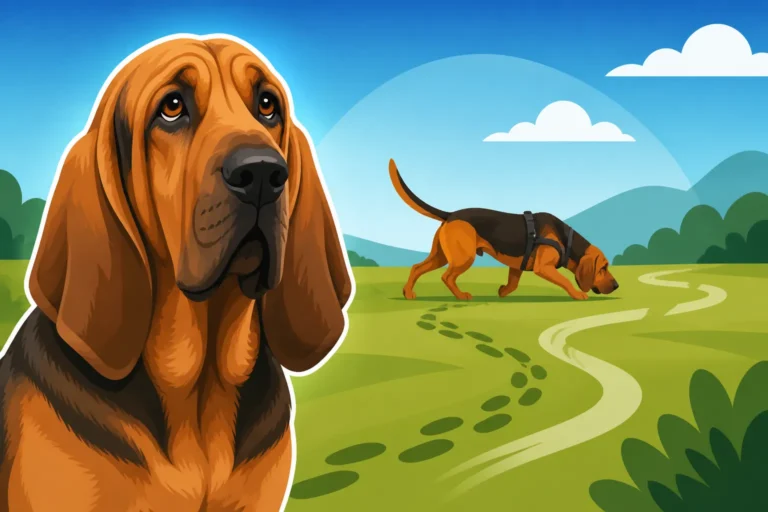
Your Bloodhound puppy comes pre-loaded with an instinct that has been honed over centuries: the ability to follow a specific scent, often for miles, over varied terrain, and through distractions. This isn't something you teach them from scratch; it's something you simply encourage and refine. From the moment they arrive home, their nose is working overtime, cataloging every new smell. They are quite literally built for this job, with those long ears sweeping scent towards their nose and a vast number of scent receptors that put other breeds to shame. It's a fundamental part of their being, not just a party trick.
This deep-seated desire to trail is what makes them such unique and sometimes challenging companions. While other puppies might be driven by toys or visual cues, your Bloodhound puppy is often operating in a world dictated by invisible odor particles. Understanding this difference is key to preventing frustration on both sides and setting realistic expectations. We aren't trying to make them trail; we're giving them the opportunity to do what they were born to do. For a deeper dive into this incredible ability, you might want to read What a Bloodhound Is Actually Smelling on a Trail.
Early Exposure to Scent Work Concepts
Even before their very first "official" runaway, you can start laying the groundwork for scent work. This isn't formal training, but rather playful introduction to the idea that their nose is a tool for discovery. Think simple games like hiding treats under cups or in different rooms and encouraging them to find them. Use encouraging words and lots of praise when they succeed. The goal here is to build their confidence in their own scenting ability and make the act of searching a fun, rewarding experience.
These early games teach your puppy that using their nose leads to good things, creating a positive association with scent-based activities. It also starts to hone their focus, even if just for short bursts, on a specific "target" scent, even if that target is just a piece of kibble. This informal play prepares them mentally and physically for the more structured (but still fun!) runaway trails you'll introduce later. It’s about building a language of scent work before asking them to speak in full sentences. You can find more ideas on How to Introduce a Bloodhound Puppy to a Scent Article.
Preparing for the First Runaway Trail
Success in that very first runaway trail hinges a lot on preparation. You want to minimize distractions, maximize comfort, and ensure everyone involved knows their role. Rushing into it without the right tools or environment can quickly lead to a disheartening experience for both you and your puppy.
Essential Gear for Puppy Trailing
When embarking on your Bloodhound puppy's first trail, the right gear isn't just helpful; it's absolutely crucial for their safety, comfort, and success. Forget the everyday collar and leash – those aren't designed for scent work. What you need is a well-fitting tracking harness that distributes pressure across their chest and shoulders, rather than their neck. This allows them to pull into the scent comfortably without choking or being distracted by neck pressure. Look for harnesses specifically designed for tracking or pulling, often with a ring on the back. Companies like Ruffwear or similar robust brands found on Amazon offer excellent options that are durable and comfortable for growing puppies.
Equally important is a long line. We're talking 15-30 feet, maybe even longer as they get more confident. This isn't about giving them "off-leash" freedom; it's about giving them enough leash to follow the scent naturally, without feeling constrained by your proximity or pace. A good quality, lightweight, yet strong line will prevent tangles and allow you to maintain control while giving them space to work. Never, ever use a retractable leash for this kind of work, as the inconsistent tension can be confusing and even dangerous. You can learn more about suitable options by checking out Which Harness a Bloodhound Trails In and Why a Bloodhound Works on a Long Line, Not a Collar. Also, be mindful of the cost implications, as outlined in What a Mantrailing Harness and Long Line Cost.
Choosing the Right "Runaway" Helper
For your puppy's first few trails, the "runaway" or "victim" should ideally be a familiar, friendly face – someone your puppy already loves and is excited to see. This familiarity creates a strong positive association with the end of the trail and helps motivate them to follow the scent. A family member, a close friend, or even a trusted neighbor who your puppy adores is perfect. This person should be enthusiastic, patient, and understand their role is to be an exciting reward at the end. They shouldn't be intimidating or overly strict; their job is purely to be the "prize."
The helper also needs to understand the concept of laying a clean trail. This means minimizing their own scent contamination before the trail starts, perhaps by having a designated scent article for the puppy to reference (more on that in a moment). They should try to walk a consistent, simple path and be prepared to wait patiently at the end, ready with praise and a high-value treat or toy. Having a dedicated helper is so important, especially when you're just starting out, and you can explore this further in Whether a Bloodhound Needs a Helper to Train.
Selecting the Ideal Location
The location for your puppy's first runaway trail is paramount to their success. Think simple, quiet, and low-distraction. A large, open grassy field that's securely fenced is often ideal. Avoid areas with heavy foot traffic, other dogs, or strong environmental odors that could overwhelm your puppy's sensitive nose. A local park in the early morning or a friend's spacious backyard can work wonderfully. The key is to minimize any external factors that could pull their attention away from the task at hand.
Consider the surface as well. Grass is generally easy for puppies to trail on, as it holds scent well. Avoid hard, reflective surfaces like asphalt for initial trails, as scent dissipates much faster there. A little wind can actually be helpful, as it helps spread the scent, but avoid extremely windy days that might make it too challenging for a novice. The goal is to set them up for an easy win, building their confidence and making the experience overwhelmingly positive. You want the environment to be a blank canvas for their nose, not a sensory overload.
Laying and Following the First Trail
Now for the fun part! Laying and following that very first trail is a delicate dance between guiding and allowing your puppy to lead with their nose. Patience and positive reinforcement are your best friends here.
The Scent Article Introduction
Before your helper even takes a step, you need to introduce your puppy to the "scent article." This is a small piece of fabric, like a cotton handkerchief or a piece of an old t-shirt, that has been impregnated with the helper's individual scent. The helper should hold it against their skin for a good 10-15 minutes prior to the trail, perhaps tucking it into an armpit or pocket. This maximizes their unique odor on the fabric.
When it's time to start, hold the scent article to your puppy's nose, allowing them to take a good, deep sniff. Don't rush this process; let them really investigate it. As they sniff, use a consistent command like "Find!" or "Seek!" in a happy, encouraging tone. This helps them associate the command with the act of identifying and following that specific scent. The scent article acts as their initial reference point, telling them exactly who they're looking for. For more details on this, be sure to read How to Introduce a Bloodhound Puppy to a Scent Article and What Scent Article a Bloodhound Puppy Starts On.
Creating a Simple, Engaging Path
The very first trail should be incredibly short and straight – think 10 to 20 yards, maximum. You're not looking for a marathon; you're looking for a clear, undeniable success. The helper should walk a simple, direct line away from you and the puppy, perhaps making one very gentle turn if they're doing well. They should walk at a normal, steady pace, dropping the scent article at the very beginning of the trail to mark the starting point. They then continue to the end and hide in plain sight, perhaps just behind a small bush or tree, waiting enthusiastically.
This isn't the time for complex turns, crossing other trails, or trying to trick your puppy. The goal is to make it as easy as possible for them to follow the scent from start to finish. Remember, this is about building confidence and reinforcing their natural abilities. Keep the path clear of obvious distractions, and ensure the ground is easy to navigate for little puppy paws. You might be surprised at how short even 20 yards feels when your puppy is intently working! The insights in How Many Yards a Bloodhound's First Runaway Should Be can give you a better sense of appropriate distances.
Guiding Your Puppy Through Its First Trail
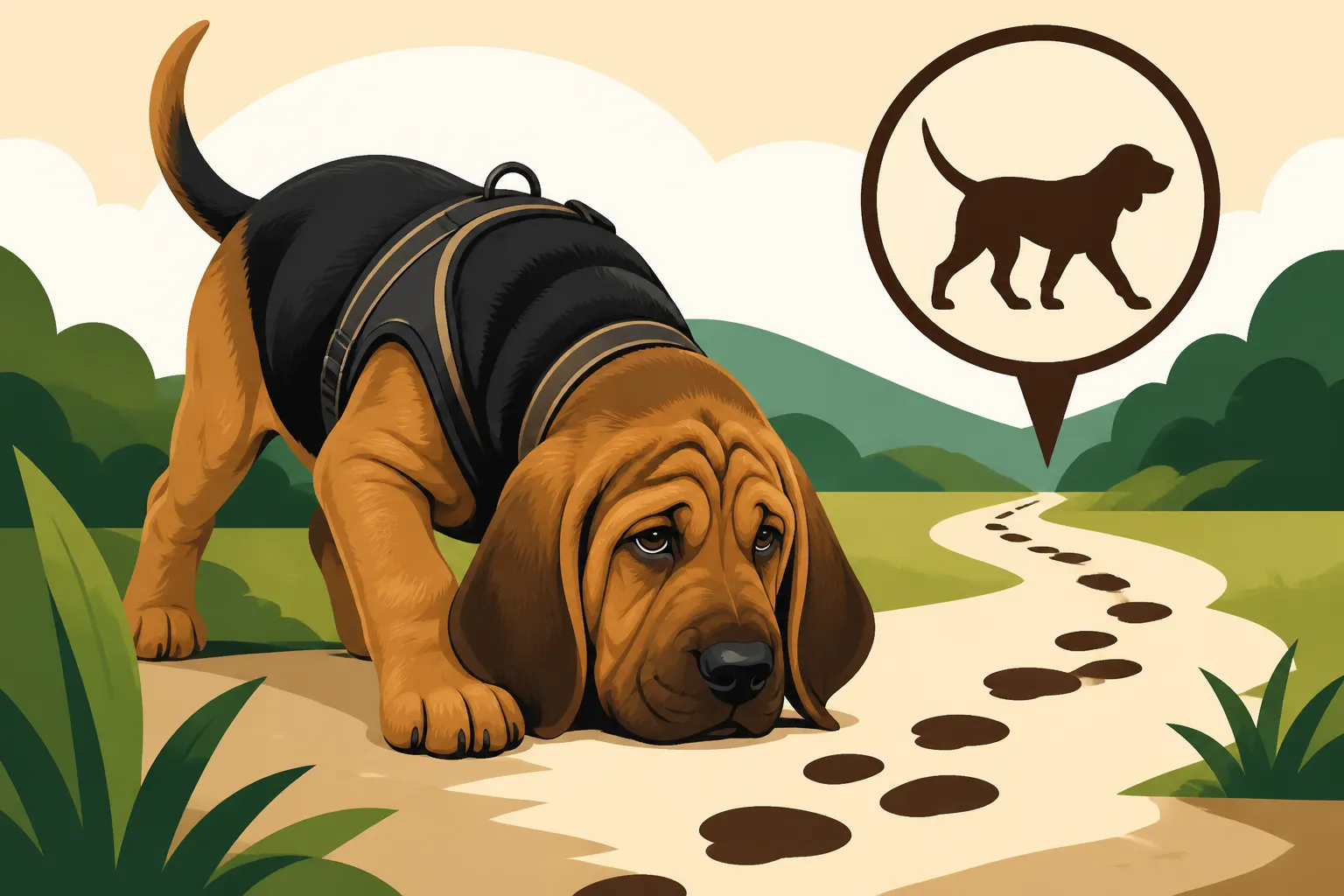
With the harness on and the long line attached, let your puppy sniff the scent article and give your "Find!" command. Then, step out onto the trail. At this stage, your role is primarily to hold the long line and follow your puppy's lead. Keep the leash loose, allowing them to put their nose to the ground and move at their own pace. Resist the urge to pull them along or direct them; let their nose do the work. You'll likely see their head drop, their tail start to wag a little, and their focus narrow. These are all good signs!
As they follow the scent, offer soft, encouraging verbal praise: "Good boy/girl! Go find!" If they get momentarily distracted or lift their head, gently guide them back to the last known scent with your body language, or simply wait for them to re-engage their nose. Don't yank the leash or get frustrated. Remember, this is a learning experience, and they're figuring out how to interpret all those amazing smells. When they reach the helper, it's a huge party! The helper should crouch down, offer enthusiastic praise, cuddles, and a high-value treat or toy. This immediate, joyful reward is critical for solidifying the positive association with trailing. For more information on motivating your Bloodhound, check out Whether Food Is the Right Reward for a Trailing Bloodhound.
Interpreting Your Puppy's Behavior on the Trail
Understanding what your Bloodhound puppy is trying to tell you with their body language during a trail is a crucial part of becoming a good handler. They communicate their progress, their confusion, and their successes in subtle ways.
Recognizing Signs of Success and Confusion
A Bloodhound puppy "on scent" often exhibits very distinct behaviors. You'll likely see their head drop low to the ground, their nose working diligently, sweeping left and right. Their tail might have a low, steady wag, or be held relatively still. They move with purpose, following an invisible path that only they can perceive. Their focus will be intense, tuning out the surrounding world. This is what we call being "in the zone" – a clear sign they are actively on the trail and making progress.
Conversely, signs of confusion or losing the trail include lifting their head high and scanning, looking back at you, slowing down significantly, or even starting to wander aimlessly. They might whine or look genuinely puzzled. These are not signs of failure, but rather indications that the scent might be weaker, or they've temporarily lost the thread. It’s a moment for you to be patient and encouraging, not to scold. This is part of the learning process for them to develop problem-solving skills on the trail.
When to Offer Assistance (and When Not To)
Knowing when to step in and when to let your puppy work it out is an art. For those first few trails, if your puppy shows clear signs of confusion, you can gently guide them back to the last spot where they were confidently working. A subtle shift of your body or a light tug on the long line towards the correct direction can sometimes be enough. You might even lower your hand to the ground where you believe the scent lies, offering a gentle verbal cue like "Find it!" But resist the urge to physically drag them or point directly at the trail. The goal is for them to discover the scent.
However, if they are still working, even slowly or with some meandering, let them go. Sometimes, what looks like confusion to us is actually them air-scenting, circling back, or problem-solving. Over-intervening can actually hinder their development, teaching them to rely on you rather than their own magnificent nose. Trust their instincts. The table below outlines some common puppy behaviors and appropriate handler responses.
| Puppy Behavior | Interpretation | Handler Response |
|---|---|---|
| Head down, nose working, focused | On scent, making progress | Quiet verbal encouragement ("Good boy!"), follow calmly, keep leash loose. |
| Head up, sniffing air, circling | Temporarily lost scent, air-scenting, problem-solving | Be patient, allow them space to work it out. If prolonged, gently guide back to last known scent point. |
| Looking back at handler | Seeking guidance, unsure | Offer gentle verbal encouragement. If needed, very subtle directional cue with body language or light leash tension. |
| Whining, pawing ground | Frustration, scent too weak or lost | Re-evaluate trail difficulty. Guide back to last known scent. Consider ending on a high note with a shorter trail. |
| Pulling purposefully | Strong on scent, highly motivated | Continue to follow calmly, maintain loose leash. |
Celebrating the "Find"
The "find" is the grand finale of every successful trail, and for a Bloodhound puppy, it needs to be an absolute celebration! When your puppy reaches the helper, the helper should immediately get down to their level, offering huge amounts of enthusiastic praise, physical affection (if the puppy enjoys it), and that high-value reward. This isn't the time for a quick pat and moving on; it's a party! The more joyful and rewarding the "find" is, the more motivated your puppy will be to follow the next trail.
This positive reinforcement closes the loop on the entire trailing process. It confirms that all that hard work with their nose leads to a fantastic outcome. Over time, your puppy will not only associate finding the person with the reward but also with the inherent joy of completing their "job." Remember, for a Bloodhound, finding the person is often reward enough, but that initial surge of positive reinforcement is vital. To learn more about how a Bloodhound signals the end of a trail, you can check out What a Bloodhound Does at the End of a Trail.
Common Pitfalls and How to Avoid Them
Even with the best intentions, it's easy to fall into traps that can derail your Bloodhound puppy's early trailing experiences. Being aware of these common mistakes can help you steer clear and keep the learning process positive.
Overwhelming the Puppy
One of the biggest mistakes new handlers make is asking too much, too soon. It’s tempting to want to see your incredible Bloodhound puppy perform miracles, but for their very first trails, less is definitely more. Don't make the trail too long, too winding, or introduce too many distractions. A short, straight, low-distraction trail is paramount. Overwhelming a puppy with a difficult trail can lead to frustration, disinterest, or even cause them to "shut down." They might start to associate scent work with stress rather than fun, which is the last thing you want.
Think about a human child learning to read. You wouldn't hand them Shakespeare on day one. You start with simple picture books and gradually increase complexity. The same applies to your Bloodhound puppy's scent work. Building a strong foundation of easy successes will give them the confidence and desire to tackle more challenging trails down the road. Keep initial sessions short, no more than 10-15 minutes, including setup and cooldown, to prevent fatigue and maintain enthusiasm.
The Temptation to Over-Correct
It's natural to want your puppy to do everything perfectly, especially when you know how capable their nose is. However, over-correcting a Bloodhound puppy during scent work is almost always counterproductive. Pulling on the leash, scolding, or physically forcing them back to the scent line can be incredibly confusing and damaging to their confidence. They are using an instinct that operates on a different level than our human understanding, and what looks like a "mistake" to us might simply be them processing complex scent information.
Instead of correcting, think in terms of guiding and redirecting. If they wander off course, gently move your body to block their path and encourage them back towards the general area of the trail. Use encouraging vocalizations. Let their nose be the guide, and trust that with practice, they will learn to interpret the scent more efficiently. A Bloodhound needs to feel confident and unpressured to perform their best work. Being harsh will only shut down their natural drive. If a puppy is truly struggling, the trail itself might be too hard, or they might be tired, in which case it's better to end the session on a positive note, even if it's just a quick "find" with the helper right next to you.
Keeping It Fun and Positive
This cannot be stressed enough: scent work for your Bloodhound puppy, especially in the early stages, needs to be an overwhelmingly positive and fun experience. Every session should end with joy and enthusiasm. If you find yourself getting frustrated, it's time to take a break. Your emotions can easily transfer to your puppy, making them less likely to enjoy the activity. Use lots of praise, high-value treats, and their favorite toys as rewards. The "find" should always be a party!
Keep the sessions short and sweet, always leaving them wanting more. Don't push them to exhaustion or force them to work when they're clearly not interested. Variety in helpers and locations (once they're more experienced) can also keep things fresh and engaging. This isn't about training a robot; it's about nurturing an incredible natural talent and building a strong, joyful working relationship with your companion. Remember that The First Year With a Bloodhound That Already Wants to Trail is about building a strong foundation of positive experiences.
Progressing Beyond the First Runaway
Once your Bloodhound puppy has mastered a few simple, straight trails, it's time to gently expand their horizons. This gradual progression keeps them challenged and engaged without becoming overwhelmed.
Gradually Increasing Difficulty
After several successful short, straight trails, you can start to slowly increase the difficulty. This might mean making the trail slightly longer, perhaps extending it to 30-50 yards. You can also introduce a few more gentle turns, creating a soft "S" shape or a shallow curve. The key word here is "gradual." Don't jump from a 10-yard straight line to a 100-yard trail with multiple sharp turns in one go. Each new element should be introduced incrementally, allowing your puppy to gain confidence with each step.
You can also start to vary the time the helper waits before the puppy starts. Initially, the helper might hide right as they finish walking. For subsequent trails, you could have the helper wait for 30 seconds, then a minute, then a few minutes, slowly increasing the age of the trail. This teaches your puppy to work an aging scent. Always ensure they are still having fun and succeeding more often than not. If they struggle with a particular increase in difficulty, scale back and rebuild their confidence before trying again.
Introducing New Environments
As your puppy gains confidence and experience, you can gradually introduce them to new environments. Start with variations of what they already know – perhaps a different grassy field, or a park with slightly more ambient noise but still low foot traffic. Slowly, over time, you can introduce more complex environments: light woods with leaf litter, paved paths (but only after they've mastered grass), or even quiet suburban areas with sidewalks. Each new environment presents unique scent challenges, as different surfaces hold scent differently and urban areas have a myriad of distracting odors.
Always begin with a very short and simple trail in a new environment to ensure success. Observe your puppy closely for signs of stress or overwhelming distraction. The goal is exposure, not perfection. This process helps generalize their trailing skills, teaching them that their nose works everywhere, not just in their familiar training spot. Remember that formal scent work classes, as discussed in Whether a Pet Bloodhound Should Do Scent Work Classes, can be a fantastic way to introduce new environments and challenges under expert guidance.
Integrating Basic Obedience into Trailing
While trailing is primarily about allowing your Bloodhound's natural instincts to shine, a few key obedience cues can be incredibly helpful and even critical for safety. Teaching a solid "wait" or "stay" at the start of the trail, for example, allows you to set up the scent article and ensure your helper is ready without your puppy launching prematurely. A "leave it" cue can be invaluable if your puppy fixates on an irrelevant scent or distraction during a trail.
Remember, Bloodhounds are independent thinkers, especially when on scent. Their "obedience" might look different than a highly trained sport dog. The goal isn't military precision, but rather having a few reliable cues that help manage the trailing process safely and effectively. Consistent positive reinforcement for these obedience behaviors, practiced both on and off the trail, will help your Bloodhound understand when it's time to "work" with their nose and when it's time to listen to your direct commands. Mantrailing Is the Answer to a Bloodhound, Not Obedience offers a good perspective on balancing these aspects.
Disclaimer
This article is for general informational purposes only and does not constitute professional advice. Laws, prices and regulations vary by location and change over time. Consult a qualified professional for guidance on your specific situation.