A Bloodhound in a House With Small Children
Bringing a large, curious Bloodhound into a bustling home with small children can feel like a grand adventure, but it also brings a unique set of challenges and questions. Many families dream of a loyal, gentle giant, only to worry about accidental tumbles, slobbery kisses, and how to manage those powerful noses when tiny hands are involved. This guide is here to walk you through the realities of raising a Bloodhound alongside your little ones, offering practical advice and empathetic insights to help you build a safe, happy, and harmonious household for everyone.
Understanding the Bloodhound Temperament Around Children
The Bloodhound is renowned for its incredible scenting ability and its calm, gentle disposition. However, "gentle" doesn't always translate to "delicate" or "small," especially when you're talking about a dog that can weigh over a hundred pounds and boasts boundless enthusiasm. Understanding the core traits of this magnificent breed is the first step in creating a safe environment for your children.
The Bloodhound's Gentle Giant Nature
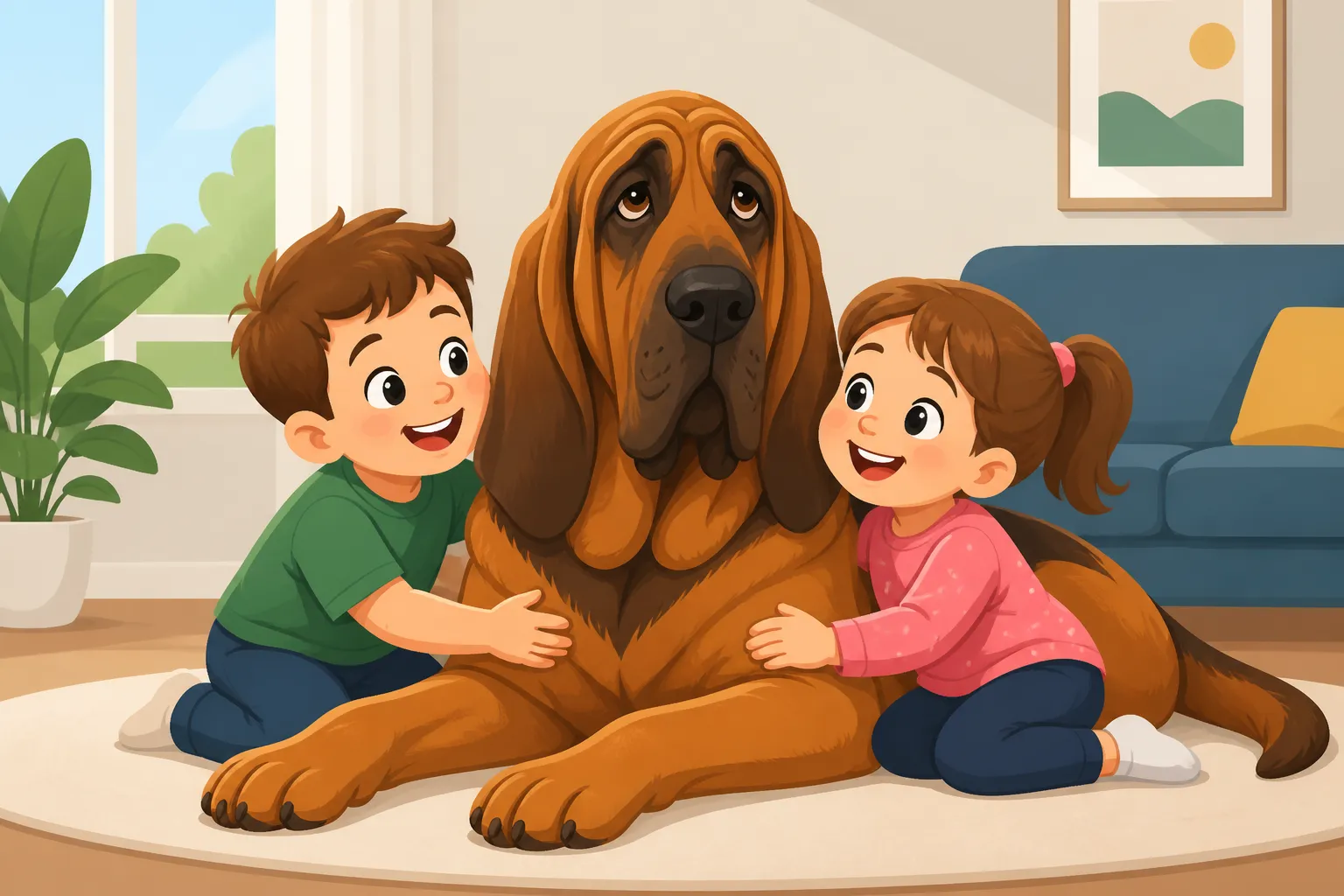
It's truly something to behold: a Bloodhound, with its deep, soulful eyes and long, velvety ears, can look intimidating to some, but those who know them understand they are truly gentle giants at heart. They tend to be remarkably patient and tolerant, often taking the antics of toddlers in stride. I've seen Bloodhounds calmly endure ear tugs (accidental, of course!) and even attempts to "ride" them, responding with a slow blink or a gentle lean rather than any aggression. This innate kindness is one of the breed's most endearing qualities and a huge plus for families. They don't typically have a high prey drive towards small, fast-moving children in the same way some other breeds might, largely due to their specific breeding for tracking large game or people, rather than chasing and apprehending.
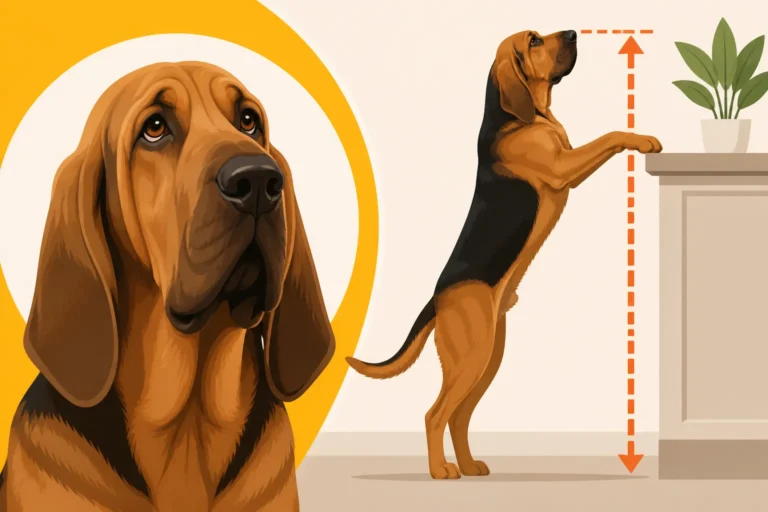
However, "gentle" doesn't mean "unaware" of their size. A Bloodhound can be oblivious to its sheer mass, lumbering around with a wagging tail that could clear a coffee table or inadvertently knocking over a standing toddler. It's not maliciousness, it's just a lack of spatial awareness common in many large breeds. Think of it like a clumsy but sweet older sibling who sometimes bumps into the younger ones without meaning to. They want to be close, they want to be involved, and sometimes that desire outweighs their ability to maneuver gracefully in a crowded space. This is where vigilant supervision and proactive training become crucial, turning potential hazards into manageable moments.
Moreover, their calm demeanor is often observed when they are relaxed or focused on a scent. When excited, say, by the prospect of a walk or a visitor, even the most laid-back Bloodhound can transform into a joyous, bouncing, drooling whirlwind. A happy Bloodhound greeting can easily overwhelm a small child, not with aggression, but with sheer, unadulterated enthusiasm. They might jump, not to dominate, but to get closer to the source of their joy, or simply because they haven't learned other ways to express excitement. This burst of energy, combined with their weight and clumsy nature, is a major consideration for families with small children who might be easily knocked over or frightened by such an exuberant display.
Patience and Persistence, Not Aggression
Bloodhounds are generally not aggressive dogs. Their history and purpose have always been about following a trail with unwavering focus, not about confrontation. When faced with something they don't like, their primary instinct is often to retreat or simply ignore, rather than to snap or growl. This is a tremendous asset in a family environment, particularly with the unpredictable nature of young children. A Bloodhound is far more likely to get up and move to a quieter spot if a child is being too boisterous, which is a sign of a well-adjusted and tolerant dog.
However, their persistence, a trait that makes them unparalleled trackers, can sometimes be misunderstood in a home setting. If a Bloodhound wants something – a toy, a treat, a spot on the couch – they can be remarkably single-minded in their pursuit, often using their immense body weight to nudge, lean, or push. While not aggressive, this can be overwhelming for a small child who is holding a desired item or occupying a favored resting spot. It's crucial to understand that this isn't an act of dominance; it's simply a reflection of their determined nature. They are bred to not give up on a scent, and sometimes that translates into not giving up on getting that dropped cracker, either.
The sheer physical presence of a Bloodhound can also be misinterpreted. A long, mournful bay might sound alarming to a child, even if it's just the dog expressing boredom or a desire for attention. Their deep bark can also startle. Parents often wonder How a Bloodhound Behaves Around a Toddler, and the answer lies in understanding that their natural behaviors, while rarely malicious, can still be imposing due to their size and vocalizations. Teaching both the dog and the children how to interact respectfully and safely is paramount to prevent misunderstandings and foster a positive relationship.
Natural Instincts and Child Behavior
Bloodhounds live by their noses. Their world is a rich tapestry of scents, and this instinct will always, always come first for them. A child who drops a crumb, leaves a toy smelling of their hands, or wanders off with a delicious-smelling snack, becomes an instant focal point for that powerful nose. This isn't about being disobedient; it's about following an ancient, deeply ingrained drive. This means items left on low tables, or food accidentally dropped, become irresistible temptations. It's a key reason why consistent management and training are so important in a home with both.
Children, especially very young ones, are naturally unpredictable. They might shriek, run, grab, or poke, all actions that can be confusing or even startling to a dog. While Bloodhounds are generally tolerant, any dog has its limits. A sudden, loud noise or an unexpected movement from a child could cause a Bloodhound to react defensively, or more likely, to simply get out of the way, potentially knocking the child over in the process. Understanding that a child's natural exploratory behavior needs to be guided and that a dog's instincts need to be respected is vital. It's not about training the instinct out of the Bloodhound, but about managing the environment to prevent conflicts and teaching the child appropriate interactions.
Furthermore, a Bloodhound’s loose skin and dewlaps, while part of their charm and function in trailing, can be tempting for a small child to grab or pull. This can be painful or uncomfortable for the dog, potentially leading to a sharp vocalization or a quick head turn that could be misconstrued. It’s important to remember that these dogs are not toys; they are living, feeling beings, and children need to learn how to interact gently. Conversely, the Bloodhound's long, pendulous ears are also an easy target for little hands. Consistent teaching for both parties – teaching the dog "leave it" and teaching the child "gentle hands" – becomes a daily mantra in a Bloodhound home.
Managing Size and Enthusiasm in a Mixed Household
The sheer size of a Bloodhound, coupled with its often clumsy enthusiasm, means that accidental bumps and knocks are a real possibility when little ones are around. It's less about intentional harm and more about the physics of a large, happy dog in a space shared with small, sometimes unsteady humans.
Accidental Collisions and Their Prevention
A Bloodhound, especially a young or unexercised one, can be a walking, wagging, 100-pound projectile. They love to be near their people, and their expressive tails can sweep across a room with surprising force. I've known more than one Bloodhound owner who learned the hard way that delicate decor, or even small children, cannot be left in the path of a truly happy Bloodhound tail. These accidental collisions are almost always due to the dog's obliviousness to its size, not any malice. They are just so thrilled to see you, or to get to their dinner, that they forget they're not a toy poodle.
To prevent these bumps and tumbles, environmental management is key. This means keeping pathways clear, especially in areas where children play. Consider using baby gates or exercise pens to create separate play zones for children and safe zones for the dog when direct supervision isn't possible. Training is also paramount. Teaching your Bloodhound a solid "down-stay" or "go to your mat" can give you valuable tools to manage their excitement when children are running around. A long line can also be invaluable indoors to subtly guide them away from potential collision courses with toddlers, allowing you to gently redirect them without causing frustration for either the dog or the child.
Moreover, understanding when your Bloodhound is most likely to be enthusiastic – often when you first come home, or at meal times – allows you to be proactive. Teach your children to stand still, or even sit down, when the dog is very excited, making them less likely to be knocked over. Similarly, teaching the dog a polite greeting behavior, like sitting for attention rather than jumping, is crucial. If you're wondering Whether a Bloodhound Knocks a Child Over, the answer is, unfortunately, yes, they absolutely can, purely by accident. It's up to us as owners to minimize that risk through thoughtful management and consistent training.
The "Happy Tail" and Little Faces
Ah, the "happy tail"—a Bloodhound's tail is a formidable, powerful appendage, not just a cute indicator of joy. When a Bloodhound is truly happy, that tail becomes a blur, capable of wagging with enough force to cause real bruising or even an accidental crack to a small child's head if they are at the wrong height. It's not aggressive, it's just physics, and it's a common concern for families with young children who might be at just the right height to intersect with that enthusiastic wag.
This concern extends beyond just the tail. Bloodhounds, with their deep chest and substantial bodies, can easily bump into children while walking past, or even when settling down to lie next to them. Their large heads, too, can swing around unexpectedly during play or when sniffing something interesting, leading to an unplanned encounter with a child's face. These are typically innocent accidents, but the potential for injury, however minor, is always there. It’s important to teach children to give the dog a bit of space, especially when the dog is moving around or reacting to something exciting.
Solutions involve creating physical barriers during times of high excitement, like using a sturdy baby gate to separate the dog from the children during chaotic playtime or meal prep. You might also want to invest in a tough, high-quality kennel or crate to provide a safe, designated "happy place" for your Bloodhound when things get too boisterous in the main living areas. This not only protects the children but also gives your dog a much-needed break from the constant stimulation of a busy family home. Just like we want our children to have quiet time, our Bloodhounds appreciate a den to retreat to.
Counter Surfing and Little Hands
Bloodhounds are notoriously driven by their noses, and if their nose tells them something edible is nearby, their bodies will follow. This leads to a common Bloodhound habit: counter surfing. What does this have to do with small children? Well, children often leave food within reach, on low tables, or even drop it on the floor. A Bloodhound's sense of smell is so potent that even the faintest scent of a dropped cookie or a forgotten sandwich can trigger an intense investigation.
Imagine a scenario: your toddler proudly carries a plate of crackers, but inevitably drops a few. Before you can intervene, your Bloodhound, whose nose picked up the scent from across the room, is there, scooping them up. This isn't just about lost snacks; it's about the potential for accidental collisions as the dog rushes in, or even resource guarding if the child tries to retrieve a dropped item. It's also a safety concern if the dropped item is something toxic to dogs. This also applies to toys or other items a child might be playing with that are left on the floor. A Bloodhound might investigate, pick it up, and chew it, not understanding it's a cherished toy, creating tears and potential choking hazards.
Teaching a solid "leave it" command is absolutely critical in a Bloodhound home with children. This cue can literally be a lifesaver, allowing you to prevent your dog from snatching dropped food or mouthing a child's toy. Consistent training, even for simple commands, is necessary, as Bloodhounds can be famously "selective" in their hearing when their nose is engaged. It takes patience and a deep understanding of What a Bloodhound Will Work For to keep them engaged in training, but it’s worth every minute for the safety and peace of mind it brings.
Training and Socialization for a Harmonious Home
A well-trained and properly socialized Bloodhound is a joy in any home, but it's especially crucial when tiny humans are part of the equation. This isn't about creating a robot dog, but about building a confident, respectful companion who understands boundaries and interacts safely with everyone, big and small.
Early Exposure is Key
The best time to start socializing a Bloodhound to children is during puppyhood. If you're bringing home a new Bloodhound puppy, expose them to calm, respectful children from a very young age, always under strict supervision. These early positive experiences are invaluable. It teaches the puppy that children are a normal, non-threatening part of their world and that good things happen when kids are around (like gentle pets, or even dropped treats, supervised of course!). This prevents the puppy from developing fear or apprehension around children later on, which can sometimes lead to undesirable reactions.
However, "exposure" doesn't mean letting children run wild with a puppy. It means controlled, positive interactions. Invite friends with well-behaved children over for short, supervised visits. Teach the children how to interact gently, how to approach the puppy calmly, and how to give treats appropriately. Praise the puppy for calm behavior around children. This proactive approach helps shape a dog who views children as friendly, rather than scary or annoying. Remember, a Bloodhound puppy is already quite large, and it's easy for them to overwhelm a child even at a young age. Early, careful exposure sets the foundation for a lifelong bond.
If you've adopted an adult Bloodhound, especially one whose history with children is unknown, the process will be slower and more cautious. Start with observing their reactions from a distance. Introduce children one at a time, always on leash, with a barrier in between if necessary. Look for signs of stress or discomfort in the dog, such as lip licking, yawning, tail tucked, or looking away. Proceed at the dog's pace, always prioritizing safety. It's often helpful to work with a professional trainer in these situations, as they can help read canine body language and guide introductions.
Teaching Boundaries to Both Dog and Child
Creating a harmonious home with a Bloodhound and children means setting clear, consistent boundaries for everyone. For the Bloodhound, this means teaching foundational commands like "sit," "stay," "down," "off," and "leave it." These aren't just tricks; they are vital safety cues. "Off" means no jumping on people, which is especially important for preventing a large Bloodhound from accidentally knocking over a child. "Leave it" is essential for preventing them from snatching dropped food or toys. Consistency is paramount here; every member of the family, including older children, needs to use the same commands and enforce the same rules.
For children, teaching boundaries is equally important. They need to learn that the dog is not a toy. This means no pulling ears, no climbing on the dog, no disturbing the dog while it's eating or sleeping, and no taking toys or food directly from the dog's mouth. Teach them to offer pets gently, always on the shoulder or chest, avoiding the face or tail. Emphasize quiet voices and calm movements around the dog. A great rule of thumb for children is "If the dog comes to you, that's okay. If you go to the dog, ask an adult first." This empowers the dog to choose interaction and gives them an escape route if they feel uncomfortable. What Harsh Handling Does to a Bloodhound is important to avoid; they are sensitive dogs and respond best to gentle, consistent methods.
One of the most effective boundaries you can teach is the concept of a "safe zone" for the dog. This might be their crate, a specific dog bed, or an area behind a baby gate where children are not allowed to bother them. This gives your Bloodhound a place to retreat when they need a break, preventing them from feeling overwhelmed or cornered. Teach children to respect this space explicitly. Consistency in enforcing these boundaries, for both two-legged and four-legged family members, prevents confusion and builds a trusting relationship.
Reinforcing Calm Behavior
With a breed as large and occasionally boisterous as a Bloodhound, actively reinforcing calm behavior is a game-changer in a home with children. It's easy to only pay attention when your dog is doing something "wrong" – jumping, barking, sniffing where they shouldn't. Instead, make a conscious effort to praise and reward your Bloodhound when they are lying calmly, observing quietly, or interacting gently. This could be a soft "good dog" and a quiet stroke when they're settled on their bed, or a small, high-value treat when they greet visitors politely without jumping.
Think about scenarios where a Bloodhound's excitement can be problematic for small children, such as greetings at the door or during meal preparation. Instead of just trying to stop the unwanted behavior, actively train and reward the alternative desired behavior. For example, when the doorbell rings, instead of letting your Bloodhound charge forward, work on a "place" command, sending them to their mat. Reward heavily when they stay there calmly while the door is opened. This not only protects children from accidental bumps during greetings but also fosters a more controlled environment. It takes dedication, but the payoff is a much more relaxed household.
Many dog training platforms, like BAXTER & Bella, offer online courses that can guide you through these positive reinforcement techniques. They often provide modules specifically on manners and impulse control, which are vital for a large breed living with children. Remember, Bloodhounds respond incredibly well to positive reinforcement because they love to please and are highly motivated by food rewards. By making calm behavior rewarding, you're building a dog who chooses to be gentle and settled around the most vulnerable members of your family. Consistency is always key.
Establishing Safe Spaces and Supervised Interactions
Creating a home where both your Bloodhound and your children can thrive peacefully requires careful planning, especially around designated safe zones and the crucial rule of constant supervision. This isn't about restricting their bond, but ensuring it develops safely and positively.
The Importance of a Dog's Retreat
Every Bloodhound, regardless of how tolerant or laid-back they might seem, needs a designated retreat – a sanctuary where they can go to escape the hustle and bustle of family life. For a large dog in a home with small children, this is not a luxury, it's a necessity. This space should be entirely theirs, a place where they know they will not be disturbed. This could be a spacious crate in a quiet corner of the house, a dog bed tucked away in a spare room, or an area behind a baby gate that children cannot access. It's their personal "off-duty" zone.
Teach your Bloodhound to go to this place on command and reward them for using it. Encourage them to rest there throughout the day, especially during busy times like meal preparation or children's playtime. Crucially, teach your children to respect this space absolutely. It's a non-negotiable rule: when the dog is in their retreat, they are not to be approached, touched, or disturbed. This prevents the dog from feeling overwhelmed or trapped, reducing the likelihood of a defensive reaction. It’s also important for your Bloodhound's mental well-being; just like humans, dogs need downtime and a sense of security. Whether Crate Training Suits a Bloodhound Puppy is a common question, and for many, a crate provides this invaluable sanctuary.
Think of it this way: children get their own bedrooms, their own quiet corners. Your Bloodhound deserves the same. This dedicated space allows them to decompress, sleep uninterrupted, and feel secure. This peace of mind for your dog translates directly into a more patient and tolerant companion when they are interacting with the family. Without a safe retreat, a Bloodhound might start to show subtle signs of stress or discomfort which, if ignored, can escalate.
Child-Free Zones for the Bloodhound
In addition to the dog's retreat, it can be incredibly beneficial to establish child-free zones for the Bloodhound, especially during certain times or in specific areas of the home. This might sound counterintuitive in a family setting, but it's a proactive measure to prevent issues and ensure everyone's safety and comfort. For instance, the dining area during meals could be a child-free zone for the Bloodhound to prevent begging, accidental knocks from their tail, or attempts to snatch food from low chairs. Similarly, a living room might be a "dog-free" zone when toddlers are having active play sessions to avoid any accidental tumbles.
Using baby gates or tall pet gates strategically is an excellent way to implement these zones. They allow visual connection while providing a physical barrier. This setup is particularly useful when you need to focus on a task, like cooking dinner, and can't provide full, undivided attention to both your dog and your children. A well-placed gate can keep the Bloodhound out of the kitchen while you're navigating hot pans and small children, reducing stress for everyone. It also helps manage their powerful scent drive; if they can't physically reach the dropped toast, they can't eat it.
Establishing these zones helps children learn boundaries around the dog, reinforcing the idea that the Bloodhound isn't always available for play or interaction. It teaches them patience and respect for the dog's space, while giving the dog much-needed predictability. For instance, having a quiet, gated area where the Bloodhound can relax after a walk or during nap time means they're less likely to be disturbed, leading to a calmer, happier dog. Whether an Invisible Fence Stops a Bloodhound is often debated for outdoor containment, but for indoor management, physical gates are the safest and most reliable solution.
The Golden Rule: Never Unsupervised
This is arguably the most critical rule in any home with both dogs and small children: they should never, ever be left unsupervised together. Not for a second. Even the most tolerant Bloodhound can be unpredictable, and even the most well-behaved child can make a sudden, startling move. It only takes a split second for an innocent interaction to go wrong, and given a Bloodhound's size, the consequences can be significant. This isn't about distrusting your dog; it's about being a responsible owner and protecting both your child and your pet.
Supervision means active, engaged observation. It doesn't mean being in the same room while engrossed in your phone or another task. It means being fully aware of the interactions, ready to intervene immediately if needed. This is where tools like leashes, crates, and gates become invaluable. If you need to step away for even a moment – to answer the door, use the restroom, or grab something from another room – either the dog or the child (or both) should be safely contained. This might mean the Bloodhound goes into their crate with a chew toy, or the child goes into a playpen.
It's a lot of work, no doubt. But the safety and peace of mind it provides are immeasurable. This rule applies equally to a new puppy as it does to an older, established Bloodhound. As children grow, their understanding of appropriate interaction improves, and the dynamics will shift, but the principle of supervision remains constant until both the child is old enough to consistently and safely interact, and the dog is proven to be completely reliable, which for a Bloodhound, often means ongoing management due to their size and enthusiasm. This vigilance ensures that the relationship between your Bloodhound and your children develops into one of mutual respect and affection.
Addressing Common Challenges
Living with a Bloodhound and small children isn't always a walk in the park. There are specific challenges that often arise due to the breed's characteristics and the unpredictable nature of young children. Proactive strategies can turn potential headaches into manageable daily routines.
Food Guarding and Toy Possessiveness
While Bloodhounds are generally good-natured, resource guarding – protecting food, toys, or even favored resting spots – can sometimes develop, especially if not addressed early. In a home with small children, this can be particularly concerning. Imagine your Bloodhound happily chewing on a bone, and a curious toddler wanders over to investigate. A dog who resource guards might growl, snap, or lunge to protect their item. This is a natural canine behavior, but it's unacceptable and dangerous in a family environment.
To prevent this, teach your Bloodhound from puppyhood that human hands near their food or toys are a good thing. Practice "trade-up" games: approach your dog while they're eating or chewing a high-value item, offer an even better treat, and then take the original item (returning it quickly). This teaches them that humans approaching their stuff means better things are coming, rather than a threat. Similarly, ensure children understand never to approach a dog while it's eating, sleeping, or chewing on a valued item. Create physical barriers during meal times or when high-value chews are given, perhaps by feeding your Bloodhound in their crate or a separate room.
Beyond prevention, if you notice any signs of resource guarding – even subtle ones like freezing, stiffening, or a hard stare – seek professional help immediately. Do not try to fix this yourself, especially when children are involved. A certified professional dog trainer or veterinary behaviorist can provide a safe, effective plan. This is not a situation where you can afford to "wait and see." Keeping all food, human or canine, picked up and out of reach of children is also essential to prevent tempting scenarios.
Excessive Licking and Mouthing
Bloodhounds are often affectionate, and part of that affection can manifest as enthusiastic licking and mouthing. While a slobbery kiss might be endearing from an adult dog to an adult human, it can be overwhelming, unhygienic, and potentially frightening for a small child. Their large mouths and often floppy lips make for a very wet experience! Mouthing, where the dog gently (or not so gently) takes a hand or arm in their mouth without biting pressure, can also be common, especially in puppies or adolescent Bloodhounds who are still learning bite inhibition.
To manage excessive licking, redirect it. If your Bloodhound starts licking a child, immediately interrupt the behavior with a calm "no lick" or "off," and then redirect their attention to an appropriate chew toy or a different form of interaction, like a gentle pet from an adult. Reward them when they stop licking and engage in the desired alternative. For mouthing, especially with puppies, consistency is key. Whenever teeth touch skin, immediately yelp (like a puppy would) and withdraw attention for a few seconds. This teaches them that mouthing stops all fun. Repeat, repeat, repeat.
It's also important to manage the environment. If your child's hands or face are particularly interesting (perhaps after eating a sticky snack), gently clean them before interaction with the dog to reduce the temptation for licking. For persistent lickers, a brief time-out in their crate can also be an effective deterrent. Remember, this isn't about punishing affection, but about teaching appropriate ways to express it. Teaching your Bloodhound Whether a Bloodhound Can Hold Still While a Trail Is Laid requires impulse control, and the same principles apply to teaching them to control their mouth and tongue around children.
Dealing with Excitable Greetings
Bloodhounds are often incredibly enthusiastic greeters. Whether it's you coming home, a friend visiting, or a child entering the room, their joy can manifest as jumping, nudging, and a general explosion of happy energy. While charming in theory, this level of excitement can easily knock over a small child, or at the very least, startle them. Their large size means that even a "friendly" jump can be dangerous for someone unsteady on their feet.
The key to managing excitable greetings is proactive training and consistency. Teach your Bloodhound that four paws must remain on the floor to receive attention. When they jump, calmly turn your back, ignore them, or even step away. Only when all four paws are on the ground and they are calm do they get attention, praise, or a gentle scratch. Every single time. It's difficult to be consistent, especially when you're thrilled to see your dog, but it's essential for safety around children. Enlist family members and visitors to follow the same rule.
Consider using a leash even indoors during greeting times, especially when children are present. This gives you direct control and allows you to calmly guide your Bloodhound into a sit or down position before anyone enters the room. Reward heavily for calm, controlled greetings. You can also teach a "go to your place" command for when guests arrive, directing them to their bed with a high-value chew until the initial excitement has passed. For Bloodhounds who are highly motivated by scent, a puzzle toy filled with treats can divert their attention during high-excitement periods. This consistent approach will help your Bloodhound understand that calm behavior earns rewards, rather than rambunctious displays.
Practical Tools and Strategies for Day-to-Day Life
Integrating a Bloodhound into a family with small children is an ongoing process that benefits immensely from practical tools and smart strategies. These aren't just for training; they're for creating a seamless, safe, and enjoyable daily life.
Equipment for Safe Management
When you share your home with a large, powerful dog and small, vulnerable children, having the right equipment is non-negotiable for safety and peace of mind. First and foremost, sturdy baby gates or pet gates are your best friends. They are invaluable for creating those child-free zones for the dog, or dog-free zones for the children, allowing you to manage interactions and provide separation when needed. Look for gates that are tall enough that your Bloodhound cannot easily jump over them, and robust enough to withstand a determined lean.
A comfortable, appropriately sized crate is another essential piece of equipment. It serves as your Bloodhound's personal den, a safe retreat, and a tool for managing your dog when you can't provide direct supervision. During crate training, make it a positive place with soft bedding and engaging chew toys. For walks, a well-fitting, no-pull harness is crucial. Bloodhounds have an incredible scent drive and can pull with surprising strength, making them difficult to manage with just a collar, especially when you might also be holding a child's hand. Brands like Ruffwear or similar durable options available on Amazon can offer great solutions. A long line (a 15-30 foot leash) can also be invaluable for supervised outdoor play in a safe, open area, giving your Bloodhound some freedom while maintaining control, especially since Off Leash Is Not a Goal With a Bloodhound.
Finally, for cleaning up after a slobbery, large breed, invest in plenty of washable dog beds, blankets, and a good stock of cleaning cloths. Bloodhounds are known for their drool, especially after drinking or during excitement, and cleanliness contributes to a healthier environment for both dog and child. Having these tools ready minimizes frustration and helps maintain a harmonious household.
Engaging Activities for Both
A tired Bloodhound is a good Bloodhound, but simply walking them isn't always enough to mentally stimulate their incredible noses. Engaging them in appropriate activities that utilize their natural instincts can lead to a calmer, more content dog, which in turn makes them a better companion for children. Mantrailing or scent work is hands-down the best way to exercise a Bloodhound's mind and body. Even for pet owners, basic scent games can be done in your backyard or a local park. This intense mental exercise tires them out more effectively than just physical exertion.
You can involve older children in these activities in a safe, supervised way. Teach them how to lay a simple "runaway" trail for your Bloodhound in the yard (with an adult holding the dog on leash, of course). The child can be the "missing person" that the Bloodhound tracks to, receiving a joyful reward when found. This creates a positive, engaging bond between the dog and the child, centered around the Bloodhound's natural talents. It’s a wonderful way to teach children about responsible dog ownership and the unique abilities of their canine companion.
For younger children, simpler interactive play, always supervised, can be beneficial. Rolling a soft ball, or having the child sit quietly while the Bloodhound performs a "sit-stay" for a treat, can build positive associations. Just be mindful of the Bloodhound's tendency to pick up and carry objects, and ensure toys are appropriate for both. Remember that How Much Exercise a Bloodhound Actually Needs involves mental stimulation as much as physical, and nose work is paramount for this breed.
Consistent Routine is Your Best Friend
Dogs thrive on predictability, and Bloodhounds are no exception. Establishing and sticking to a consistent daily routine is perhaps one of the most powerful strategies for creating a calm and secure environment for both your Bloodhound and your children. A predictable schedule for feeding, walks, training sessions, and playtime helps your Bloodhound understand what to expect and when, reducing anxiety and unwanted behaviors. When a dog knows when their needs will be met, they are less likely to act out for attention.
For example, having set meal times helps prevent begging at the dinner table. Knowing when their daily walk or scent game will happen can alleviate pent-up energy that might otherwise be directed at exploring forbidden areas or nudging children. A consistent bedtime routine for the dog can help everyone get a good night's sleep. This predictability is also incredibly helpful for children, as it teaches them about the dog's needs and how their lives intertwine.
A routine also helps to reinforce boundaries. If the Bloodhound consistently goes to their crate for quiet time after a walk, they learn that this is part of the daily rhythm. If children know that after 7 PM is "dog quiet time" where the Bloodhound rests in its crate, they learn to respect that boundary. Building this structure into your family life isn't about rigidity; it's about creating a harmonious flow that minimizes surprises and stress for everyone. This applies to fundamental aspects like house training; a consistent schedule is key to understanding How Long House Training a Bloodhound Puppy Takes.
| Scenario | Safe Interaction Strategy | Risky Interaction Scenario |
|---|---|---|
| Child approaching dog | Child asks adult, approaches calmly, pets shoulder/chest. | Child runs at dog, grabs ears/tail, climbs on dog. |
| Dog approaching child | Dog sits calmly, waits for attention, rewarded by adult. | Dog jumps excitedly, nudges with nose, licks face aggressively. |
| Feeding time | Dog eats in crate/separate room, children respect space. | Child tries to take dog's food, dog eats unsupervised on floor. |
| Playtime | Supervised play with appropriate toys, redirection from adult. | Unsupervised child playing with dog, child's toys left on floor. |
| Dog resting | Children know to leave dog alone in its designated retreat. | Child disturbs sleeping dog, tries to wake it up or play. |
| Leaving house | Dog safely contained (crate/gate) when no supervision. | Dog and child left alone together, even for a moment. |
When to Seek Professional Guidance
Even with the best intentions and consistent effort, sometimes challenges arise that are beyond what a typical owner can manage alone. Knowing when to call in a professional is a sign of responsible pet ownership, not failure.
Recognizing Warning Signs
It's vital for any Bloodhound owner, especially one with children, to be able to recognize subtle (and not so subtle) warning signs that their dog is stressed, fearful, or potentially developing problematic behaviors. Early intervention is key. Watch for changes in body language: a tucked tail, lip licking, excessive yawning, averted gaze, stiff posture, growling (even soft growls), snapped air, or freezing up when a child approaches are all signals that your dog is uncomfortable or distressed. These are not signs of a "bad" dog, but a dog that needs help and a changed environment.
More overt signs like growling, snapping, or attempting to bite, even if it doesn't make contact, are absolute red flags that demand immediate professional intervention. Do not dismiss these as "just being a dog" or "the child provoked it." While context is important, any escalation towards aggression, regardless of the perceived trigger, must be taken seriously, particularly when children are in the home. It’s your responsibility to ensure the safety of everyone. If you're ever worried about How a Bloodhound Treats a Cat or other small animals, these principles of recognizing warning signs apply just as much to those interactions.
Other warning signs might be more subtle but still indicate a problem, such as a Bloodhound constantly seeking to escape children, hiding, or showing signs of anxiety (pacing, whining, destructive chewing) only when children are around or after interactions with them. These behaviors suggest the dog is not comfortable with the current dynamic and needs support to cope. Don't wait for things to escalate to a bite or serious incident. Early action can prevent a small issue from becoming a devastating one.
Choosing the Right Professional
If you identify any warning signs or simply feel overwhelmed by managing your Bloodhound and children, choosing the right professional is crucial. Avoid trainers who advocate for harsh correction methods, dominance theory, or "alpha" training. Bloodhounds are sensitive dogs who shut down with punitive methods, and What Harsh Handling Does to a Bloodhound can actually worsen fear and aggression, especially around children. Look for professionals who use positive reinforcement, force-free, and science-based training methods.
Seek out a Certified Professional Dog Trainer (CPDT-KA), a Certified Applied Animal Behaviorist (CAAB), or a Veterinary Behaviorist (DACVB). These individuals have extensive education and experience in canine behavior and can provide tailored plans that prioritize safety and humane treatment. They can help you understand your Bloodhound's body language, identify triggers, and implement effective strategies for managing interactions with children. They might also suggest behavior modification plans, management techniques, or even medication in some cases, all designed to improve your dog's comfort and confidence.
When selecting a professional, don't hesitate to ask for their credentials, references, and a detailed explanation of their training philosophy. A good professional will involve the whole family in the training process, teaching both adults and children how to interact safely and respectfully with the Bloodhound. They will also prioritize safety above all else, offering realistic and practical advice for your specific household. Investing in professional guidance is an investment in the long-term safety and happiness of both your children and your beloved Bloodhound.
Ongoing Support for a Lifetime
Bringing a Bloodhound into a family with children isn't a one-time training event; it's an ongoing journey that requires continuous learning, adaptation, and support. As children grow and enter different developmental stages, their interactions with the dog will change, and new challenges might arise. Similarly, as your Bloodhound ages, their needs, energy levels, and tolerance might shift. What worked when your children were toddlers might need adjusting when they become boisterous elementary schoolers, or when your Bloodhound becomes a senior. Aging in a Bloodhound Starts at Six, and their patience might not be what it once was.
Regular check-ins with a trusted trainer or behaviorist can be invaluable as your family dynamic evolves. They can help you anticipate potential issues, fine-tune your management strategies, and continue to strengthen the bond between your Bloodhound and your children. Joining online communities or local Bloodhound clubs can also provide a network of experienced owners who understand the unique challenges and joys of this breed. Many of these resources can be found through platforms like BAXTER & Bella, which offers lifetime access to its training programs, providing continuous support as your dog and family grow.
Ultimately, the goal is to foster a relationship built on mutual respect, understanding, and safety. This commitment to ongoing support ensures that your Bloodhound remains a cherished, well-adjusted family member, and that your children learn valuable lessons about empathy, responsibility, and the incredible bond shared with a canine companion. It’s about building a foundation that allows for a long, happy life together, minimizing stress and maximizing joy for everyone in the home.
Disclaimer
This article is for general informational purposes only and does not constitute professional advice. Laws, prices and regulations vary by location and change over time. Consult a qualified professional for guidance on your specific situation.