How High a Bloodhound Can Reach on Its Back Legs
Ah, the majestic Bloodhound, a breed known for its incredible nose, soulful eyes, and sometimes, a rather surprising ability to reach places you thought were safe. Many new Bloodhound parents, or even seasoned ones, have walked into their kitchen to find a half-eaten sandwich on the floor, or worse, paw prints on the counter where dinner was cooling. You’re left wondering, "How in the world did they get up there?" It’s a common frustration, and this guide is here to shed light on just how high a Bloodhound can reach on its back legs and, more importantly, how you can manage their impressive vertical talents in your home.
The Unexpected Vertical Talent of a Bloodhound
It's easy to underestimate a Bloodhound's reach. They are, after all, rather lanky and appear a bit clumsy at times with their loose skin and long ears. But beneath that gentle, somewhat bumbling exterior lies a surprising amount of strength and determination, especially when there's an interesting scent or a tasty treat involved. They might not be agile jumpers like a Border Collie, but they have a distinct way of leveraging their body to gain impressive height.
How a Bloodhound's Size Translates to Vertical Height
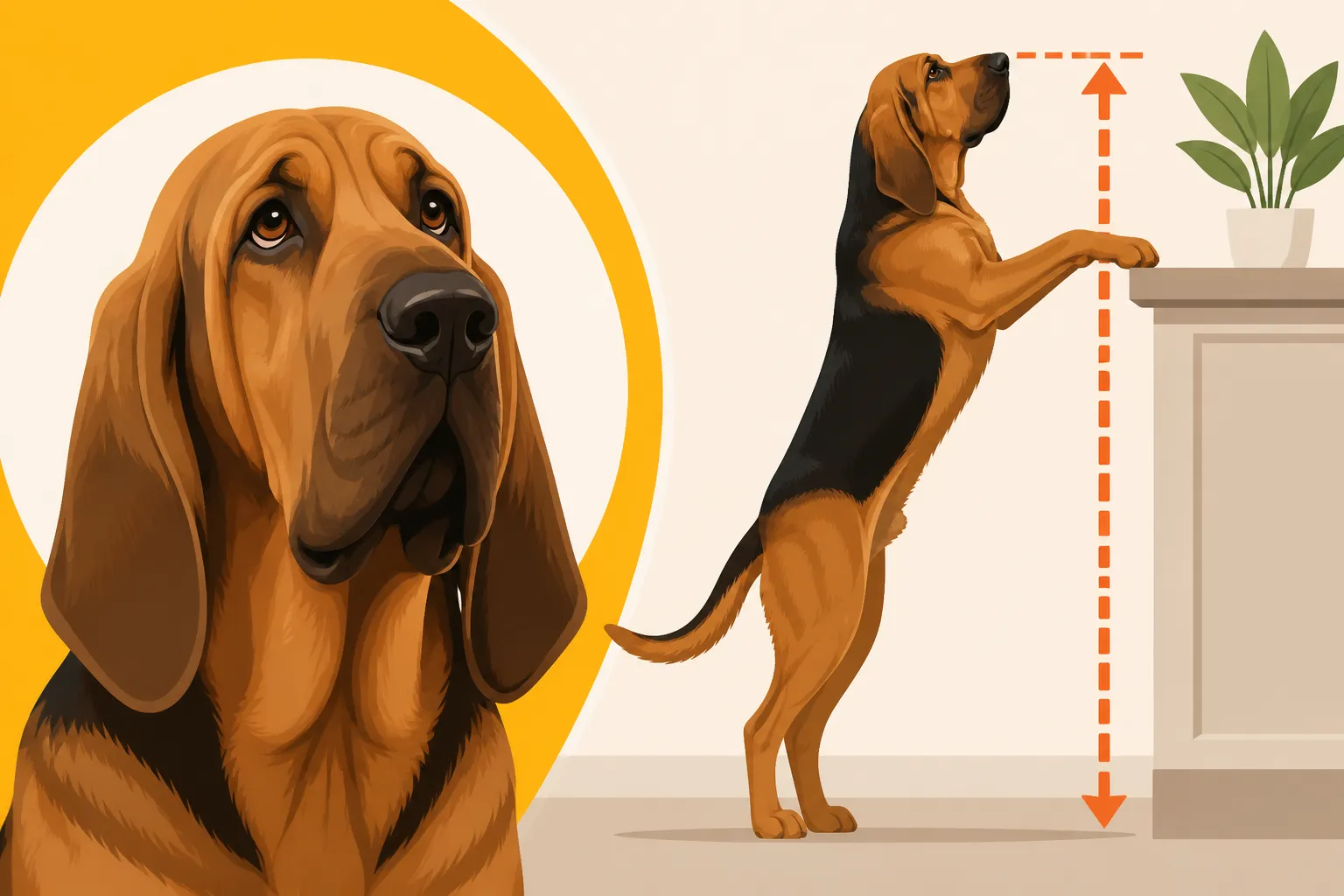
Let’s talk about pure physics for a moment. An adult male Bloodhound typically stands between 25 to 27 inches at the shoulder, and a female isn't far behind at 23 to 25 inches. Now, imagine that height doubled when they stand straight up on their hind legs. They're essentially adding their torso length, which is substantial, plus the full stretch of their front legs and paws. This means that a large male Bloodhound, standing fully upright, can easily reach a height of 5 to 6 feet, or even more, with their nose or front paws. This puts them comfortably at countertop level, and for particularly tall dogs or shorter counters, they might even be able to get their head over the top.
This isn't a casual stand, either. When a Bloodhound decides to investigate something at height, they often do so with purpose. They will lean against the surface for support, using their considerable body weight (which can be anywhere from 80 to 110 pounds, sometimes more!) to steady themselves. This isn't just a brief peek; they can hold this position for a surprising amount of time if they are sufficiently motivated. It's why you often find items not just sniffed, but actually removed from counters – they have the stability and reach to grab and pull. For more on their physical characteristics, check out What a Bloodhound Weighs and How Tall It Stands.
The Role of Paws, Jowls, and Loose Skin in Reaching
Beyond sheer height, a Bloodhound's unique physical traits also contribute to their counter-surfing prowess. Their large, strong paws are not just for digging; they can be surprisingly adept at grasping and pulling. While they don't have opposable thumbs, those big paws can hook onto a towel, a pot handle, or the edge of a plate, pulling it down to ground level where further investigation (and consumption) can occur.
Their famously loose skin, particularly around the neck and jowls, also plays a subtle role. While primarily for scent trapping and protection during trailing, this loose skin allows for an extra bit of stretch and flexibility as they contort to reach an object. Imagine them stretching their neck just that extra inch to get a sniff of something tantalizing, or to nudge an item closer to the edge. And let’s not forget those long, pendulous ears! While they don't actively aid in reaching, they can sometimes accidentally sweep items off lower surfaces as the Bloodhound strains upward, leading to unintended chaos.
Why Your Bloodhound Stands on Its Hind Legs
Understanding how they reach is one thing, but knowing why they do it is crucial for prevention. It’s rarely out of malice or disobedience; for a Bloodhound, it’s often about an irresistible drive to investigate and, let’s be honest, often about food.
The Irresistible Pull of Scent and Food
A Bloodhound's nose is legendary. We’re talking about an olfactory superpower that allows them to follow trails days old and separate individual scents in a crowded area. So, when there's a delicious smell emanating from your kitchen counter, it’s not just a casual whiff for them; it's a full-blown investigation beckoning. To a Bloodhound, a forgotten piece of toast or a pot of simmering stew isn't just food; it's a puzzle, a mission. Their genetics compel them to explore scent to its conclusion.
This intense scent drive often overrides any "leave it" commands they might know in less tempting situations. The motivation to reach a food source is primal and incredibly strong. It's not necessarily that your Bloodhound is being "bad" or defiant; it’s that their incredible nose is screaming "jackpot!" and their body is simply following orders from their most powerful sense. This is why consistent training and environmental management are so important. The desire for food, especially human food, is a common reason why dogs will push boundaries. For more insights into their drive, consider What a Bloodhound Will Work For.
Curiosity and the Quest for Information
Beyond food, Bloodhounds are inherently curious creatures. They want to know what’s going on, what’s happening in their environment, and what new and interesting things might be appearing at higher elevations. A new package on the table, a fascinating trinket, or even just observing what you’re doing up there can be enough to prompt them to stand on their back legs. They are intelligent and observant, and they use their senses to gather as much information as possible about their world.
Sometimes, it’s simply boredom. A Bloodhound that isn't getting enough mental stimulation or physical exercise might become more prone to exploring their environment in less desirable ways, including vertical exploration. An under-stimulated Bloodhound might find the challenge of getting something off the counter a stimulating activity in itself. This highlights the importance of keeping your Bloodhound engaged, perhaps through activities like mantrailing, which channels their natural abilities in a constructive way. Check out How Much Exercise a Bloodhound Actually Needs for more.
Bloodhound-Proofing Your Home Against the Reach
Given their impressive vertical capabilities and strong motivations, relying solely on training might leave you occasionally disappointed (and your counters cleared). A multi-faceted approach that includes environmental management is key to living harmoniously with a counter-surfing Bloodhound.
Securing Countertops and Cabinets
The first line of defense is simply not leaving anything tempting within reach. This sounds obvious, but in the hustle and bustle of daily life, it's easy to forget. Get into the habit of clearing your counters entirely when you leave the room, even for a moment. This includes dirty dishes, grocery bags, mail that smells interesting, and certainly any food items. Remember, "out of sight, out of mind" is a good rule of thumb, but for a Bloodhound, "out of smell, out of mind" is even better.
For items you can't easily put away, like a fruit bowl, consider placing them in a secure pantry or inside a cabinet with child-proof latches. Yes, child-proof latches for your dog! Many Bloodhounds are surprisingly adept at Whether a Bloodhound Opens Doors and Cabinets, so standard latches might not be enough. Sturdy, heavy bins with secure lids are a must for trash cans, as an adventurous Bloodhound will absolutely try to tip and explore an open bin. You can find excellent, heavy-duty options on Amazon that are designed to be tip-proof and lid-secure, making it much harder for even the most determined hound to access their contents.
| Obstacle Type | Bloodhound Reach Potential | Prevention Strategy | Example Product/Action |
|---|---|---|---|
| Kitchen Counter | High (5-6+ feet) | Clear completely, secure appliances | Put away all food, use appliance locks. |
| Dining Table | High (4-5 feet) | Keep clear, use placemats only before meals | Remove tablecloths (easy to pull). |
| Low Shelves/Tables | Very High (3-4 feet) | Remove tempting items, use heavy décor | Anchor bookshelves, move breakables higher. |
| Trash Cans | Moderate to High | Use heavy, locking-lid cans | Amazon tall kitchen trash cans with step-pedals. |
| Cabinets/Pantry | Moderate (with effort) | Install child-proof locks, secure latches | Magnetic cabinet locks, internal slide latches. |
| Refrigerator (top) | Possible (leaning) | Avoid storing food items on top | Use the top for non-food storage or empty space. |
Strategic Placement of Tempting Items
Sometimes, it's not just about what's on the counter, but what's near it. Bloodhounds can use chairs, step stools, or even people as leverage to get higher. Make sure dining chairs are pushed fully under the table or even temporarily removed from the kitchen if you're battling a persistent counter-surfer. Consider using baby gates or exercise pens to restrict access to the kitchen entirely when you're not actively supervising. There are many tall, sturdy gates available on Amazon that can effectively block off areas and provide a much-needed barrier against an exploring Bloodhound.
Also, be mindful of what you're leaving on lower surfaces. A Bloodhound that enjoys Whether a Bloodhound Steals Food From Counters will also likely attempt to raid coffee tables or end tables. Keep remotes, glasses, and other small items picked up. Remember that anything that smells remotely interesting or like food is fair game. This includes things like chapstick, medication bottles (which can be very dangerous), and even kids' toys that might have food residue on them.
Training Your Bloodhound to Keep All Four Paws on the Floor
While physical barriers are essential, true peace of mind comes from teaching your Bloodhound appropriate behavior. It’s a long game, but incredibly rewarding when your hound chooses to ignore a temptation.
Teaching Impulse Control and "Leave It"
One of the most valuable commands for a Bloodhound is "leave it." This isn't just for things on the ground; it applies to anything you don't want them interacting with. Start training this in low-distraction environments with low-value treats. Gradually increase the distraction and the value of the item they need to "leave." The goal is to teach them that ignoring the tempting item leads to a better reward from you. Consistency is absolutely crucial here. Every time they successfully "leave it," they are reinforcing that good decision.
Another important aspect is impulse control. Bloodhounds, with their strong drives, can sometimes struggle with waiting for things. Training "wait" at doors, for food bowls, and before greeting people can help build their overall ability to control their impulses. This will translate into better behavior around counters and other forbidden zones. Online training resources, like those offered by BAXTER & Bella, can provide structured courses and support for teaching these critical foundation behaviors, which are essential for managing a large, scent-driven breed like a Bloodhound.
The Importance of Mental and Physical Exercise
A tired Bloodhound is a well-behaved Bloodhound. Both physically and mentally. These hounds were bred to work for hours on end, following a scent trail. If they're not given an outlet for this natural drive, they'll find their own "work," which often involves exploring your home in ways you don't appreciate. Daily, vigorous exercise is non-negotiable. This isn't just a leisurely stroll; it needs to be engaging. Long walks, hikes (on leash, always, as Why Off Leash Is Not a Goal With a Bloodhound is paramount), or structured scent work sessions are excellent options.
Mental exercise is just as vital. Puzzle toys, snuffle mats, and short, engaging training sessions can help tire out their impressive brains. Consider enrolling in a beginner mantrailing class; it’s a fantastic way to channel their natural abilities into a rewarding activity. A Bloodhound that has spent an hour or two engaged in satisfying scent work is far less likely to be looking for trouble on your kitchen counters than one who’s been lounging around all day. Remember, a bored Bloodhound can become a destructive one, perhaps even engaging in behaviors like Whether a Bloodhound Chews Furniture When Bored if their energy isn't properly channeled. Providing them with constructive outlets for their intelligence and energy is one of the best ways to ensure their impressive reach is reserved for hugs, not ham sandwiches.
Disclaimer
This article is for general informational purposes only and does not constitute professional advice. Laws, prices and regulations vary by location and change over time. Consult a qualified professional for guidance on your specific situation.