How a Bloodhound Separates One Person’s Scent From a Crowd
One of the most mind-boggling challenges for new Bloodhound owners, or even seasoned handlers, is comprehending how these incredible dogs can pinpoint one specific human scent amidst a bustling street fair or a crowded park. It feels almost magical, doesn't it? This guide will dive deep into the fascinating science and diligent training that allow a Bloodhound to perform this seemingly impossible feat, helping you understand the true power behind that legendary nose.
The Unrivaled Power of the Bloodhound's Nose
When we talk about a Bloodhound's nose, we're not just talking about a slightly better sense of smell than other dogs. We're talking about an evolutionary masterpiece, a finely tuned instrument designed specifically for discerning individual scent. It’s the reason their evidence is accepted in a court of law, a distinction no other breed holds.
What Makes Their Olfactory System Unique
A Bloodhound's nose isn't just one component; it's a symphony of anatomical adaptations. First, consider the sheer number of olfactory receptors they possess. While we humans have a mere 5 million, a Bloodhound boasts an astounding 300 million or more. Imagine having 60 times the number of sensors in your nose – that's the starting point for a Bloodhound. Each of these receptors is specifically designed to bind to volatile organic compounds, the tiny airborne molecules that make up scent. It's like having an enormous, highly sensitive antenna system for smell.
Beyond the receptors, their physical nose structure plays a vital role. Those long, pendulous ears aren't just for show; they actually help sweep ground-level scent into the dog's nasal passages, creating a sort of "scent cone" that directs the molecules right where they need to go. Their deep flews, the drooping lips, also act to trap scent particles, keeping them near the nose for further analysis. They also have a unique ability to inhale and exhale simultaneously, meaning there's almost constant airflow over their scent receptors, allowing for continuous processing of new scent information. This continuous flow helps them build a comprehensive picture of the environment, layer by layer, rather than just taking snapshots. It's not just about what they smell, but how they gather and process that information. This dedication to scent is why a Bloodhound's nose outvotes its handler nearly every time.
Understanding the Scent Cone
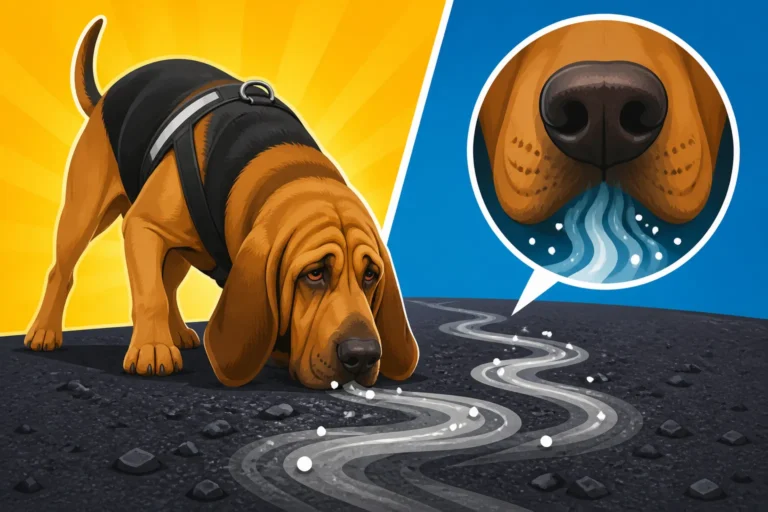
Picture this: you're walking through a field, and a gentle breeze is blowing. As you move, you shed microscopic skin cells, sweat particles, and oils. These tiny biological particles, along with bacteria and other microscopic detritus, form your unique "scent signature." The air currents then carry these particles, creating an invisible, three-dimensional plume of scent behind you, much like smoke from a chimney. This is what we call the "scent cone."
For a Bloodhound, this scent cone is not an indistinct cloud. With their unparalleled olfactory capabilities, they can actually interpret the edges and density of this cone. They can tell where the scent is strongest, which usually corresponds to the freshest part of the trail. The width and height of the cone also give them clues about factors like wind direction and how recently the person passed. When a Bloodhound is working, it's not just following a line; it's navigating this complex, constantly changing cone of scent, using it to determine the direction and even the pace of the person they're tracking. They can literally follow the invisible trail of a person as precisely as if they were walking on visible footprints. This nuanced understanding of scent movement helps them differentiate one individual's fading cone from the fresh, overlapping cones of many others. You can learn more about What a Bloodhound Is Actually Smelling on a Trail in our detailed article.
Deconstructing Human Scent: What a Bloodhound Actually Smells
It’s one thing to have an incredible nose, but what exactly is it detecting? It’s not just a generic "person smell." Human scent is far more complex and individual than we often realize, and a Bloodhound is built to exploit that complexity.
The Invisible Scent Signature We All Carry
Every single one of us has a completely unique "scent fingerprint." This fingerprint is a complex cocktail of chemicals, primarily volatile fatty acids and other organic compounds, that are produced by our skin glands, metabolic processes, and the bacteria that live on our skin. Think of it like a personal perfume or cologne that you don't even know you're wearing, but that's unique to you. Factors like diet, medication, emotional state, and even the clothes you wear can subtly alter this signature.
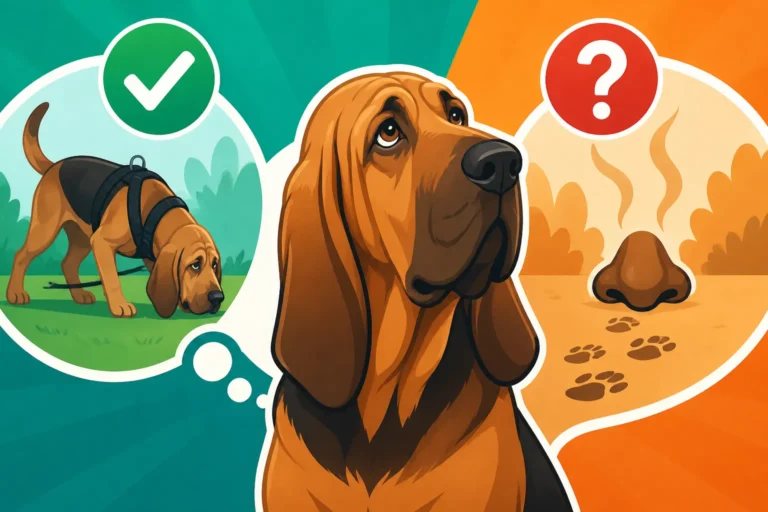
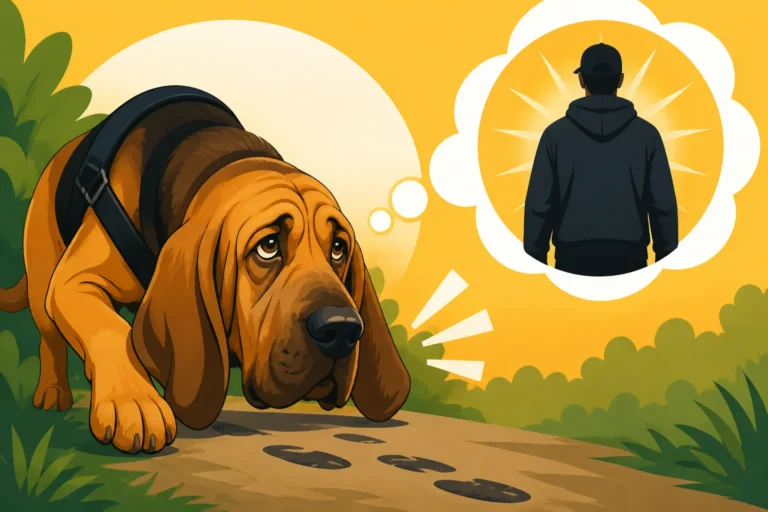
When a Bloodhound is presented with a "scent article" – an item that the missing person has recently touched and imbued with their unique scent – they create an olfactory "template" in their mind. This template isn't just a single smell; it's a multi-layered profile of that individual's unique chemical signature. Then, as they work, they are constantly comparing every new scent molecule they encounter to this internal template. Any deviation, any additional scent, is recognized as a "distraction," something to be filtered out while they focus on matching the target scent. This is the fundamental reason why a Bloodhound can tell your scent from mine, even if we've just shaken hands. They are quite adept at filtering out these contaminating scents.
How Environmental Factors Influence Scent Trails
The persistence and clarity of a scent trail are profoundly affected by the environment. It's not a static entity; it's dynamic, constantly interacting with its surroundings.
Consider the ground surface:
- Asphalt or concrete: These hard, non-porous surfaces tend to hold scent well, especially in cooler temperatures, as the scent particles adhere to the surface. However, heat can cause scent to dissipate more quickly.
- Grass or soil: Porous surfaces can absorb scent particles, protecting them from wind and sun, allowing trails to last longer. Moisture can also help "fix" scent to the ground.
- Water: Moving water can disperse scent rapidly, but surprisingly, scent can also adhere to banks and objects along a waterway, making it still trackable under certain conditions.
Weather conditions are also critical:
- Wind: Wind can be a Bloodhound's friend or foe. A steady, gentle breeze can carry scent particles along a clear path, making the trail easier to follow. Strong, gusty winds, however, can scatter scent widely, making the trail appear broken or much wider than it actually is.
- Rain: Light rain can actually enhance a trail by re-hydrating scent particles, making them more volatile and easier for the dog to detect. Heavy rain, on the other hand, can wash scent away entirely, particularly on non-porous surfaces.
- Temperature and Humidity: Cooler, humid conditions generally preserve scent better, as molecules evaporate more slowly. Hot, dry conditions cause scent to dissipate quickly.
Bloodhounds are trained to account for these variables. A skilled handler also understands these nuances and can adjust their dog's working style based on the conditions. For instance, on a windy day, the dog might work a wider sweep, knowing the scent could be dispersed. Or in an area of high foot traffic, they might move more slowly and methodically, using their body and ears to funnel even faint traces of the target scent towards their powerful nose. This ability to adapt is crucial for following trails, even those that are How Old a Trail a Bloodhound Can Follow.
| Environmental Factor | Impact on Scent Trail | Bloodhound's Adaptation/Handler's Strategy |
|---|---|---|
| Wind | Disperses scent, creating wider trail | Works wider sweeps, uses body to funnel scent |
| Rain (Heavy) | Washes scent away, especially on hard surfaces | Focuses on protected areas (under eaves, dense brush) |
| Rain (Light) | Re-hydrates scent, can enhance trail | May work more efficiently, scent becomes more volatile |
| Temperature (Hot) | Accelerates scent dissipation | Works faster, needs more breaks, focuses on shade |
| Temperature (Cold) | Preserves scent, slower dissipation | Trail can be older and still viable, dog works steadily |
| Humidity | Higher humidity helps scent adhere and persist | Longer-lasting, clearer trails |
| Surface (Porous) | Absorbs and protects scent | Trails last longer, may require slower, deeper "nose-to-ground" work |
| Surface (Hard) | Scent adheres but can dissipate with heat | Can be clear but ephemeral in direct sun; good for fresh trails |
Navigating the Olfactory Chaos: Crowds and Contamination
This is where the magic truly seems to happen – how does a Bloodhound keep its focus when surrounded by hundreds, if not thousands, of other human scents? It comes down to a combination of inherent ability and rigorous training.
Filtering Through a Cacophony of Scents
Imagine you're in a crowded room, and everyone is talking at once. It's overwhelming, right? Now imagine trying to pick out a single, specific voice in that din. That's a tiny fraction of what a Bloodhound's nose contends with in a crowd. However, their olfactory system isn't just about raw sensitivity; it's about discrimination.
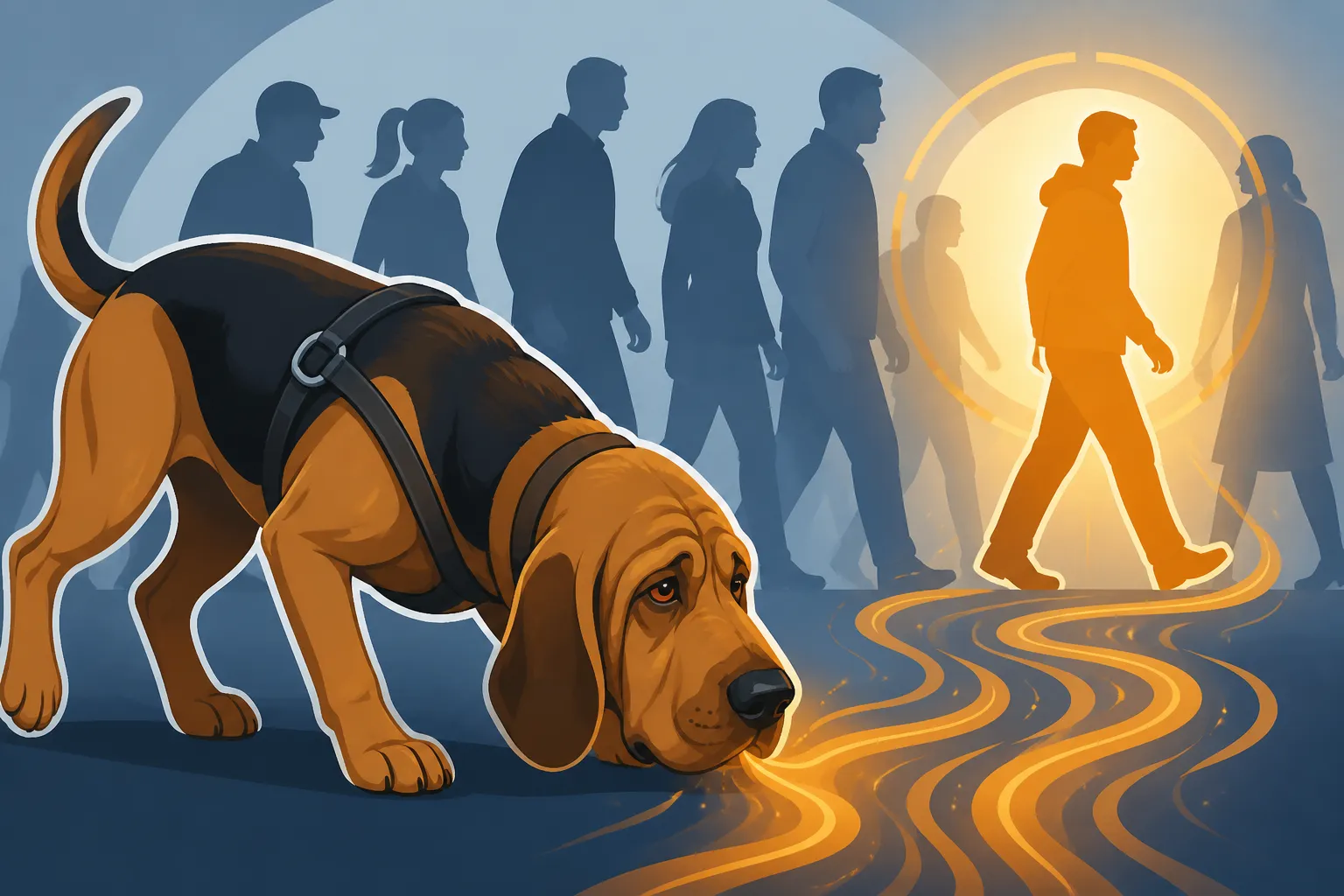
When a Bloodhound is on a trail, they're not just vaguely smelling "people." They're comparing the current ambient scent profile to the specific "target odor" they've imprinted from the scent article. Every other human scent in the crowd, every dropped coffee, every discarded wrapper, every car exhaust fume – these are all recognized as background noise, as irrelevant information. Their brain is wired to identify the unique signature they are seeking and actively ignore all others. It's a highly advanced form of selective attention, but for scent. It also helps that the target scent, even if faint, is still what their entire system is keyed into. Other scents might be strong, but they don't match the specific chemical fingerprint they're looking for, so they are dismissed. This is where their legendary focus on trailing a person rather than a path (Why a Bloodhound Trails a Person Rather Than a Path) really shines.
The Role of Training in Distraction Management
While a Bloodhound has an innate ability to discriminate scents, this skill is honed and perfected through extensive training. From a young age, puppies are introduced to scent work, gradually increasing the complexity and distractions of their trailing environments.
Initially, a Bloodhound puppy might start with short, simple trails in a quiet, undisturbed area. As they progress, the training scenarios become more challenging. They might be asked to follow a trail through an area where other people have walked, where food has been dropped, or where other dogs have been present. The key is to build the dog's confidence and focus, teaching them that persistence on the target scent always leads to a reward, whether it's their favorite toy, enthusiastic praise, or a tasty treat. This positive reinforcement solidifies their drive to ignore distractions.
Repetition and consistency are paramount. Trainers will purposefully introduce various distractions, from loud noises to other animals, and guide the dog to "work through" them. Over time, the dog learns that these distractions are simply part of the job, and they develop the mental fortitude to maintain their single-minded focus on the target scent. This rigorous conditioning, often guided by comprehensive programs like those offered by BAXTER & Bella, ensures that when a Bloodhound is deployed in a real-world scenario, such as a crowded urban environment, they are mentally prepared to filter out the overwhelming sensory input and stick to their task. The goal is to make the target scent the most important thing in their world, regardless of what else is happening around them.
From Theory to Practice: Guiding a Bloodhound Through the Maze
The Bloodhound's extraordinary ability to pick out a single scent in a crowd isn't just a natural talent; it's also a testament to the crucial partnership between the dog and its handler. Without a skilled handler, even the most gifted Bloodhound can falter.
The Importance of the Scent Article
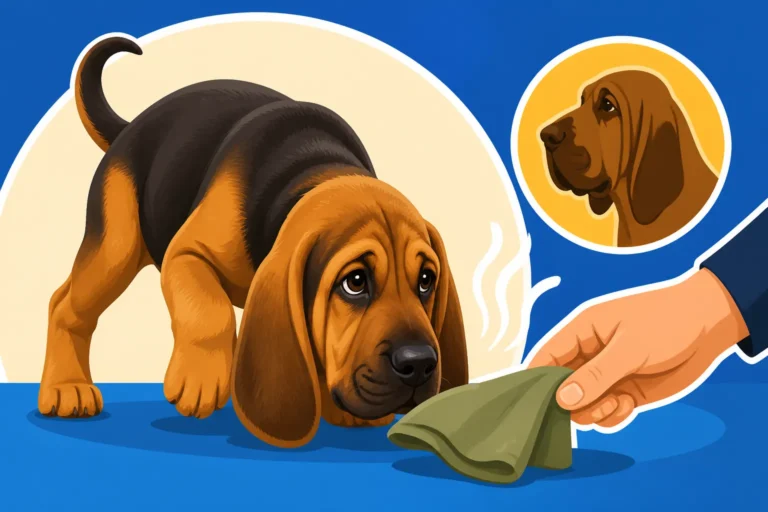
The journey of a Bloodhound tracking an individual always begins with the scent article. This is a crucial piece of the puzzle, essentially providing the Bloodhound with the "mugshot" of the scent they need to find. An ideal scent article is something that has been recently and exclusively handled by the missing person, minimizing contamination from other individuals. This could be a shirt, a pair of socks, a hat, or even a car seat. The fresher and less contaminated the article, the clearer the "picture" the Bloodhound can build of the target scent.
The handler carefully presents this article to the Bloodhound, allowing the dog to take several deep inhalations. During this critical moment, the dog’s olfactory system begins to build that unique chemical profile. Any secondary scents on the article, such as those from paramedics or family members who also touched it, are processed as irrelevant and filtered out, much like a complex search algorithm zeroes in on specific data points. The quality of this initial imprinting on the scent article directly impacts the dog's effectiveness. This is why preserving scent evidence is paramount in search operations. Understanding What Scent Article a Bloodhound Puppy Starts On is fundamental to effective training. Many handlers use specialized kits, readily available on platforms like Amazon, to collect and preserve scent articles properly, safeguarding the purity of the scent for the Bloodhound.
The Handler's Essential Partnership
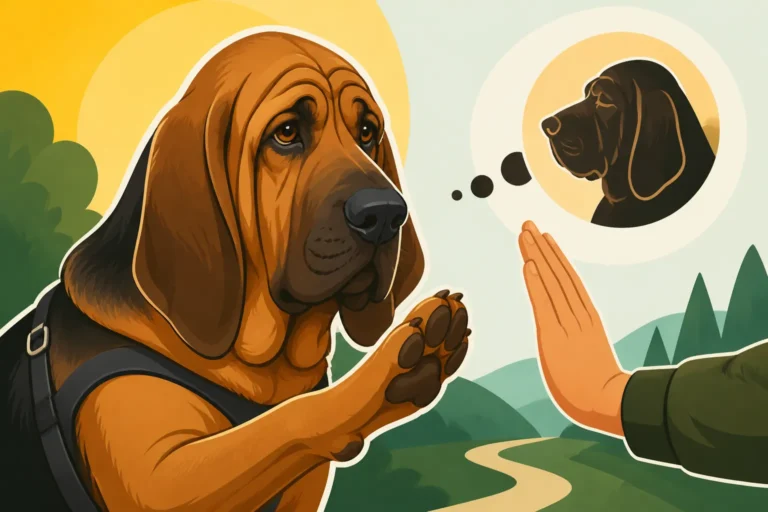
While the Bloodhound is the nose, the handler is the brain and interpreter of the trail. This partnership is far more intricate than simply holding a leash. The handler must learn to "read" their dog, understanding subtle changes in body language, tail carriage, ear movements, and sniff patterns that indicate whether the dog is on a hot trail, working through a puzzle, or losing the scent.
The handler’s role is to guide, support, and trust the Bloodhound. They need to anticipate where the scent might be affected by environmental factors, such as wind or obstacles, and adjust their own pace and direction accordingly. For example, if a Bloodhound is working an urban sidewalk crowded with people, the handler won't simply plow through. Instead, they might work the dog on the periphery of the crowd, or slightly upwind, allowing the Bloodhound to follow the dispersed scent molecules carried by air currents, rather than trying to push through a wall of conflicting ground scent.
Furthermore, the handler provides invaluable encouragement and reinforcement. When the Bloodhound makes a correct turn, when they push through a difficult patch of contamination, a skilled handler offers praise and positive feedback, reinforcing the desired behavior. They are also responsible for managing the Bloodhound's physical needs, ensuring breaks, water, and rest, especially during long or challenging searches. This deep understanding and constant communication between dog and handler is what truly unlocks the Bloodhound's potential, allowing them to perform their incredible feats of detection even in the most challenging and crowded environments. When the dog finally locates the person, the handler is there to celebrate the What a Bloodhound Does at the End of a Trail and reinforce the success.
Disclaimer
This article is for general informational purposes only and does not constitute professional advice. Laws, prices and regulations vary by location and change over time. Consult a qualified professional for guidance on your specific situation.