Whether a Bloodhound Is Trained to Bite
It's a common, and completely understandable, fear that a large, powerful dog with such a strong reputation might be trained to be aggressive, or worse, to bite. Many people look at a Bloodhound's imposing size, deep bay, and historical ties to trailing, and they mistakenly assume these dogs are meant for protection or attack work. However, this couldn't be further from the truth. This guide will dive deep into why Bloodhounds are not, and should not be, trained to bite, what their true purpose is, and how their gentle nature is their defining characteristic, not a flaw.
The Bloodhound's Purpose: Trailing, Not Takedowns
When we talk about Bloodhounds, we're talking about a breed whose entire existence revolves around one incredible talent: their nose. These dogs are purpose-bred, and that purpose has absolutely nothing to do with aggression or physical confrontation. Their job is to follow a scent trail, often for miles and over days, to find a missing person, an escaped suspect, or even a lost pet. They are relentless, methodical, and singularly focused on their task, but never in a way that involves biting.
A Nose Above All Else: The Bloodhound's True Weapon
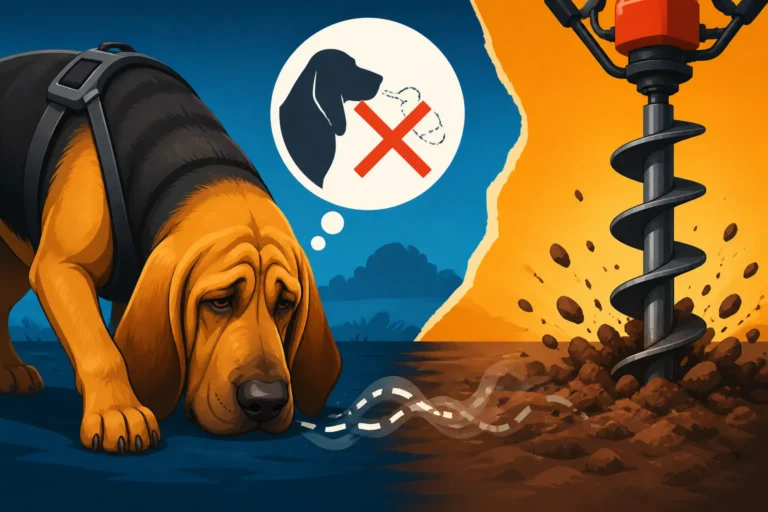
Imagine a dog whose sense of smell is so profound it's considered legal evidence in a court of law. That's a Bloodhound for you. Their olfactory system is a marvel, packed with millions more scent receptors than most other breeds, giving them an unparalleled ability to pick up and differentiate individual human scent. Their long, pendulous ears and wrinkled skin actually help sweep and funnel scent particles towards their nose, enhancing their tracking prowess. For a Bloodhound, their nose is their weapon, their tool, their guiding star. It allows them to navigate complex environments, distinguish one person's unique odor from a crowd, and persevere on trails that have long faded to the human senses.
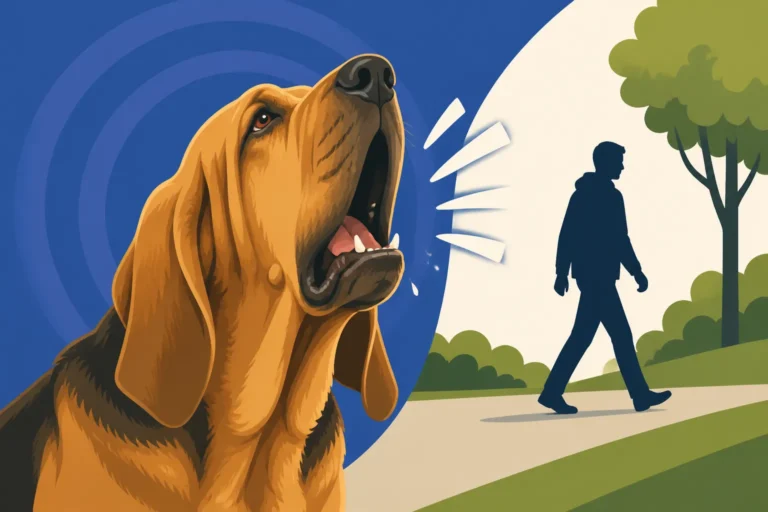
Their entire anatomy, from those long ears to their powerful, enduring stride, is built for following a trail, not for engaging in conflict. They are driven by an insatiable curiosity for scent, not by any protective or aggressive instinct. When a Bloodhound is working, its focus is so intense that it often appears deaf to everything else around it, including its handler's calls. This isn't stubbornness, but pure, unadulterated scent drive. You might wonder, Why a Bloodhound Ignores a Cue It Knows, and often, it's because their nose has simply taken over. Their success hinges on their ability to stay on that trail, not on confronting whatever they find at the end.
Gentle Giants: Temperament and Character
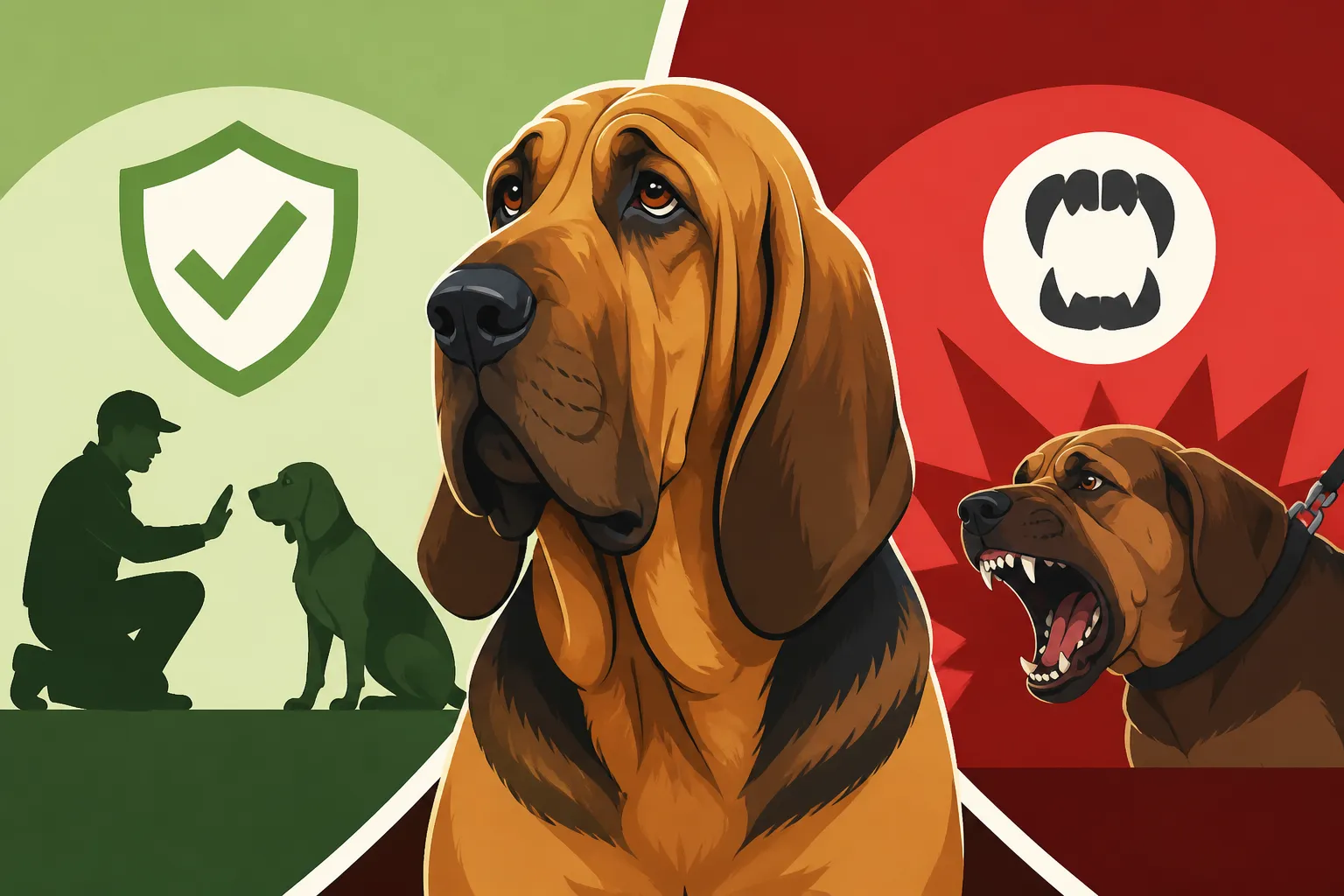
Despite their imposing size and deep, resonant bay, Bloodhounds are famously known as "gentle giants." Their temperament is typically docile, affectionate, and incredibly tolerant. They are known for being patient with children and generally friendly with strangers and other animals. This gentle disposition is not just a pleasant byproduct; it's a fundamental aspect of their breed character, essential to their work.
Think about it: a dog trained to track missing people, including vulnerable individuals like children or those with dementia, simply cannot afford to be aggressive. Their mission is to find and indicate, to bring comfort and resolution, not to cause further distress. Any hint of aggression or a tendency to bite would disqualify them entirely from their specialized role. The ideal Bloodhound is a calm, stable presence, unfazed by new environments, loud noises, or unfamiliar faces. While they might appear imposing, their soft eyes and characteristic "sad" expression often hint at their sweet nature. This is a breed that is far more likely to lean on you for a head scratch than to show any signs of hostility.
Why Bloodhounds Are Not Protection Dogs
The idea of a Bloodhound as a protection dog is a complete misunderstanding of the breed's historical development and inherent nature. While other breeds are specifically selected and trained for guarding, personal protection, or bite work, Bloodhounds are fundamentally different.
Lack of Protective Instincts
Unlike breeds like German Shepherds or Rottweilers, which often possess strong natural protective instincts towards their families and territory, Bloodhounds generally lack this trait. They tend to be inherently friendly and welcoming to almost everyone they meet. Their response to a stranger entering their home is more likely to be a wagging tail and an invitation for a sniff than a challenging growl or bark. This isn't to say they don't love their families intensely; they absolutely do. But their expression of that bond doesn't typically manifest as guarding.
Their historical role, tracing back to medieval times, was primarily to track game animals, and later, to locate lost or escaped people. In none of these roles was aggression a desired or beneficial trait. In fact, aggression would have been a significant hindrance, potentially endangering the people they were meant to find or making them unsuitable for working alongside law enforcement or search and rescue teams. This inherent lack of aggression is part of what makes The Bloodhound Is the Only Dog Whose Evidence Stands in Court so powerful – their testimony is unbiased, driven solely by scent.
Training Focus: Tracking, Not Attack Work
Training a Bloodhound is an exercise in harnessing their incredible nose, not in developing any form of aggression. Their training focuses intensely on scent discrimination, trail fidelity, endurance, and problem-solving. This involves teaching them to follow a specific scent article, to ignore distractions like other animal scents or food, and to indicate when they've found the person at the end of the trail.
Typical Bloodhound Training Elements:
| Training Aspect | Focus for Bloodhound | Contrast with Protection Dog |
|---|---|---|
| Primary Goal | Locating a specific scent source (person) | Deterring or apprehending a threat (person) |
| Core Skill | Olfactory discernment, persistence, independent trailing | Bite work, guarding, obedience to protect |
| Motivation | Scent drive, positive reinforcement, handler praise | Drive to protect, prey drive, sometimes compulsion |
| Interaction at Find | Gentle indication, wagging tail, possibly a nudge or lick | Holding, barking, or biting to incapacitate threat |
| Desired Temperament | Docile, friendly, unfazed by strangers, highly focused | Alert, confident, discerning, protective, sometimes aloof |
Organizations that train Bloodhounds for search and rescue or law enforcement work meticulously select dogs for their exceptional noses and, crucially, for their stable, non-aggressive temperaments. There is no aspect of their professional training that involves bite work, attack commands, or any behavior that would encourage aggression towards humans. In fact, if a Bloodhound showed consistent aggressive tendencies, it would be deemed unsuitable for search work.
Mantrailing, which is essentially organized scent work for dogs and their handlers, is the perfect outlet for a Bloodhound's natural talents. It's truly Mantrailing Is the Answer to a Bloodhound, Not Obedience for these dogs. This specialized training allows them to fulfill their innate drive in a constructive, engaging way that benefits both dog and handler, entirely free from any aggressive components. Brands like BAXTER & Bella offer online puppy training programs that often include modules on positive reinforcement and channeling natural instincts, which align perfectly with a Bloodhound's needs without ever introducing aggression.
Misconceptions and Media Portrayals
It's easy to see why the misconception about Bloodhounds and biting persists. Popular culture has a long history of misrepresenting working dogs, and the Bloodhound is no exception.
Hollywood vs. Reality
From classic cartoons to old movies, Bloodhounds have often been portrayed as fierce, baying hounds relentlessly pursuing escaped convicts, sometimes depicted with snarling jaws and a menacing demeanor. These dramatic portrayals, while making for exciting cinema, are far removed from the reality of the breed. They contribute to a public image that can be intimidating and inaccurate. The famous imagery of Bloodhounds chasing characters like escaped slaves or prisoners, often depicted with a sinister undertone, has unfortunately colored public perception for generations.
The truth is, when a Bloodhound corners a person at the end of a trail, their reaction is typically one of excitement and joy at having completed their task. They might give a happy bay, wag their tail furiously, or try to solicit a pet from the person they've found. They are not trained to hold a person, attack them, or prevent their escape. Their job finishes when the person is located. What a Bloodhound Does at the End of a Trail is usually a celebration, not an apprehension. These media portrayals confuse the Bloodhound's powerful trailing drive with a drive to apprehend physically, which is simply not how they are built or trained.
Understanding Aggression in Any Dog
It's important to differentiate between a breed's inherent purpose and individual dog behavior. While Bloodhounds are not bred or trained to bite, any dog, regardless of breed, has the potential to bite if pushed to its limits. This isn't unique to Bloodhounds or any specific "aggressive" breed; it's a fundamental aspect of canine behavior stemming from fear, pain, resource guarding, or inadequate socialization.
Common reasons any dog might bite:
- Fear/Anxiety: A dog might bite if it feels trapped, threatened, or overwhelmed.
- Pain/Injury: Dogs in pain, especially if it's sudden or severe, might snap if touched.
- Resource Guarding: Protecting food, toys, or sleeping spots.
- Lack of Socialization: Dogs not exposed to various people, places, and situations as puppies can be fearful and reactive.
- Maternal Instincts: A mother dog protecting her puppies.
- Prey Drive: While Bloodhounds have a strong prey drive for scent, it's not typically directed at humans in an aggressive way. However, an untrained dog might chase and nip at small, fast-moving objects or creatures.
Responsible dog ownership, regardless of breed, always involves understanding canine body language, providing proper training and socialization, and ensuring the dog's physical and mental well-being. A Bloodhound, like any dog, deserves a home where its needs are met and where it feels secure enough never to resort to biting out of fear or distress.
Responsible Ownership and Training for a Bloodhound
If you're thinking about welcoming a Bloodhound into your life, understanding their unique needs and how to fulfill them is crucial. Their incredible nose and gentle nature dictate a specific approach to care and training that will lead to a happy, well-adjusted companion.
Embracing Their Natural Talents
The most rewarding thing you can do for a Bloodhound is to engage their magnificent nose. As we've discussed, scent work, or mantrailing, is where they truly shine. It's a fantastic way to bond with your dog, provide mental stimulation, and give them a job they were literally born to do. You can start this journey even with a puppy; Starting a Bloodhound Puppy on a Trail can begin with simple games in the backyard.
Look for local mantrailing classes or online resources that teach you how to set up trails and encourage your Bloodhound's natural abilities. This kind of activity tires a Bloodhound out far more effectively than a simple walk around the block, satisfying their intellectual and instinctual needs. Remember, a tired Bloodhound is a happy Bloodhound, and one whose mind is engaged is far less likely to develop destructive behaviors out of boredom.
When it comes to training, positive reinforcement is the golden rule. Bloodhounds are highly sensitive and respond best to reward-based methods. Harsh corrections or punishment can make them shut down or become withdrawn. Patience, consistency, and plenty of high-value treats are your best friends when training these sometimes "stubborn" hounds. Their independent nature means they might take a moment to process a command, giving the impression that Whether a Bloodhound Is Stubborn or Just Busy is a valid question, but it's usually just their busy brain processing scent.
Socialization and Management
Early and ongoing socialization is vital for a Bloodhound puppy. Expose them to a wide variety of sights, sounds, people, and friendly dogs in a positive and controlled manner. This helps them develop into confident, well-adjusted adults who are comfortable in different situations.
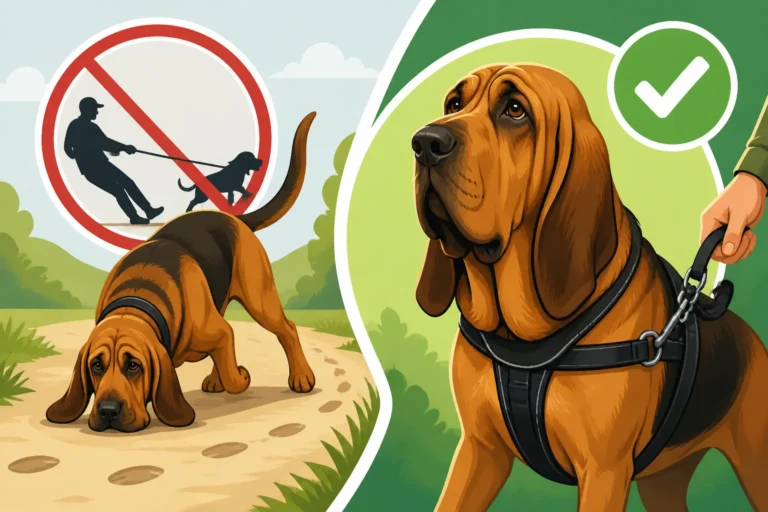
However, their extraordinary nose also means you need to be realistic about off-leash activities. For a Bloodhound, Why Off Leash Is Not a Goal With a Bloodhound is a fundamental safety rule. Once they catch a scent, their instinct to follow is incredibly powerful, and they will follow it wherever it leads, potentially into dangerous situations like busy roads or unfamiliar territories. A secure, tall fence (at least six feet high) is essential for any yard time, and even then, supervision is key.
When out and about, a sturdy harness and a long line are indispensable tools. These allow your Bloodhound to explore scents safely while giving you control. You can find excellent long lines and appropriate harnesses on platforms like Amazon, ensuring you have the right gear for comfortable, safe walks. While some breeds might be able to handle a retractable leash, a Bloodhound needs something more substantial. Understanding the cost of proper gear, like What a Mantrailing Harness and Long Line Cost, is part of responsible ownership.
In essence, Bloodhounds are remarkable companions whose purpose is to find, not to fight. By understanding their unique temperament and providing appropriate outlets for their talents, you can enjoy a deeply rewarding relationship with these intelligent, affectionate, and incredibly gentle hounds.
Disclaimer
This article is for general informational purposes only and does not constitute professional advice. Laws, prices and regulations vary by location and change over time. Consult a qualified professional for guidance on your specific situation.