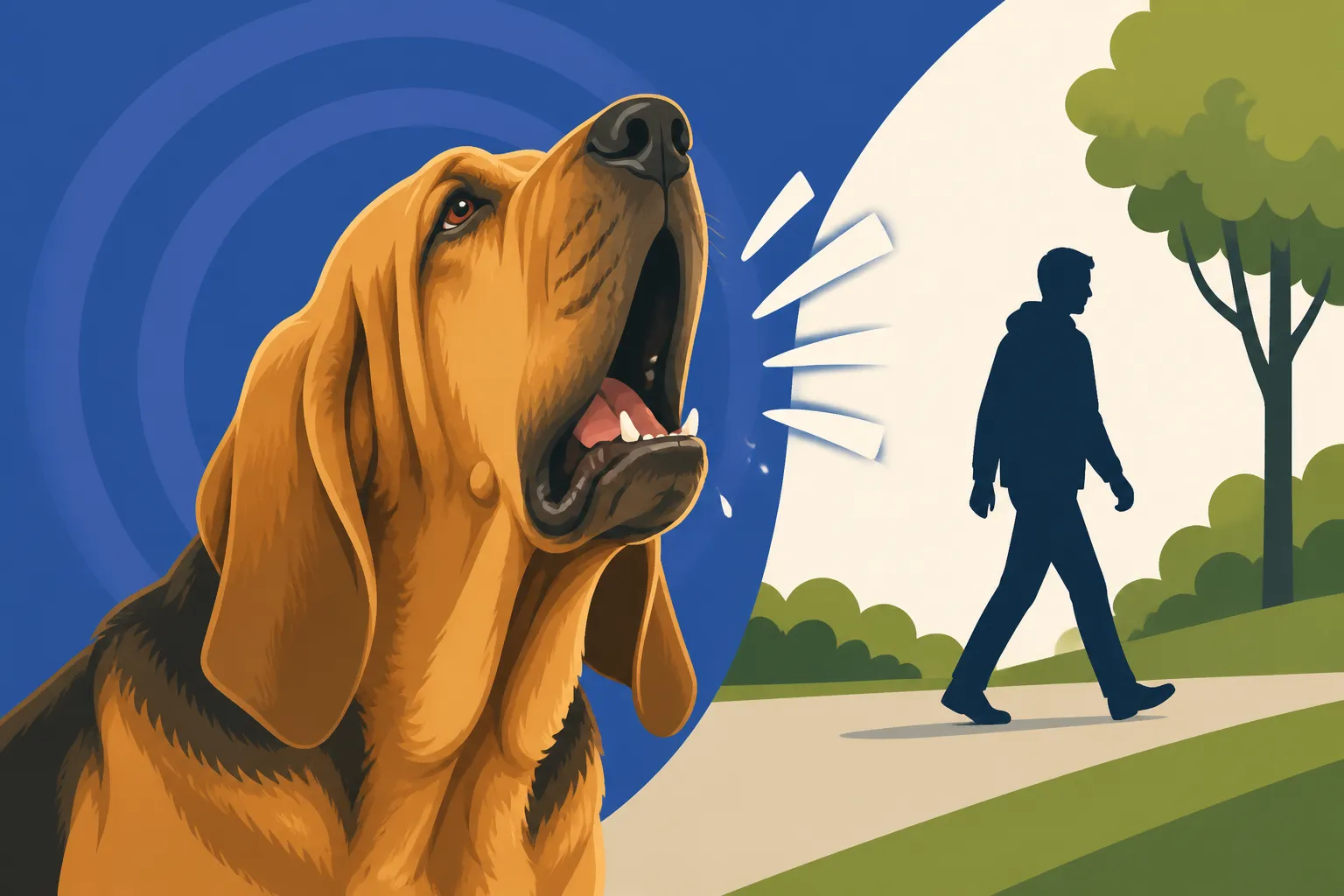
Whether a Bloodhound Bays at Every Passerby
It's a common fear for anyone considering bringing a magnificent Bloodhound into their home: the idea that this famously vocal breed will erupt into a mournful bay every single time someone walks past the window, drives down the street, or even just breathes within earshot. This guide is here to shed some light on the truth behind Bloodhound baying, helping you understand its roots, what truly triggers it, and how you can manage this deeply ingrained characteristic without losing your mind—or your neighbors' patience.
The Root of the Bay: Why Bloodhounds Are So Vocal
Let's get one thing straight from the start: a Bloodhound's bay is not simply "noise." It's a fundamental part of who they are, as intrinsic to their being as their incredible nose. To understand why your Bloodhound might vocalize, you first have to understand their history and purpose. These dogs were bred for centuries, not just to find a scent, but to follow it relentlessly and, crucially, to communicate that they are on the trail. Their bay is their original form of communication, a deep, resonant sound designed to carry over long distances, letting their handlers know they're working, they're focused, and they're making progress. It's a distinct sound, different from a sharp bark, and it’s meant to signal intent and direction, not aggression or mere annoyance. You can dive deeper into this instinctual vocalization by reading Why a Bloodhound Bays.
This profound baying instinct means that the expectation that a Bloodhound will be a quiet, unobtrusive companion is, quite frankly, unrealistic. It's like expecting a bird not to sing. Their entire physiology is geared towards scent work and communicating that work. Their long, pendulous ears sweep scent towards their nose, their loose skin traps scent particles, and their powerful lungs are built to sustain that impressive bay. When they catch a particularly interesting scent, the urge to vocalize can be overwhelming. It's not a sign of disobedience or a lack of training; it's the very essence of their working drive manifesting. For generations, this bay was a handler's only clue as to where their dog was and what it was doing, making it an invaluable tool in the field.
Furthermore, this bay isn't just a single-purpose sound. While primarily used for trailing, it can also become a general expression of high arousal. Whether that arousal is positive (excitement at a new discovery) or negative (frustration at being unable to reach a fascinating scent), the bay is often the default output. This is why attempting to "train out" the bay completely is largely futile and can even be detrimental to the dog's well-being. It's a natural expression of their drive, and trying to suppress it entirely is like trying to suppress their desire to use their nose – it's going against their very nature. Understanding this foundational aspect is the first step in realistically managing a Bloodhound's vocal tendencies in a home environment.
Understanding the Triggers: Is It Really Every Passerby?
Now, let's address the burning question: will your Bloodhound bay at every single passerby? The simple answer is, probably not every single one, but their threshold for vocalization can be quite low, and it largely depends on the specific trigger and individual dog. It’s rarely about the person themselves, and almost always about the scent they carry or the frustration of being unable to investigate that scent.
Think about it from your Bloodhound's perspective. Their world is dominated by scent. When a person walks past your home, they don't just see a visual image; they process a complex plume of odors—skin cells, laundry detergent, perfume, lingering food smells, traces of other animals they've encountered, and the unique signature of their individual biochemistry. For a Bloodhound, this is an incredibly rich data stream. If that scent registers as novel, particularly interesting, or somehow deviates from the norm, it can absolutely trigger a bay. It's less about them being territorial or aggressive towards the person, and more about their instinctual drive to acknowledge and potentially follow that intriguing scent. This is why sometimes a passerby they see daily might get no reaction, but a new delivery driver with a different scent profile could set them off.
Beyond just the novel scent, there are other common triggers related to passersby:
- Excitement or Frustration: Your Bloodhound might see someone they want to greet or investigate, but they're confined behind a fence or window. This frustration, the inability to act on their powerful drive, can quickly escalate into baying. They might be trying to "call" the person over, or expressing their disappointment at the missed opportunity. This is often the case when they bay at the mail carrier or a friendly neighbor.
- Boredom and Loneliness: A Bloodhound who isn't getting enough mental or physical stimulation is far more likely to vocalize at any passing stimulus. If they are left alone for long periods without engaging activities, a passerby can become the highlight of their day, prompting a bay as a desperate attempt to get attention or simply alleviate their monotony. Whether a Bloodhound Bays When Left Alone This type of baying is often prolonged and can be accompanied by other signs of distress or restlessness.
- Anxiety or Fear: While less common for a true Bloodhound bay (which is typically a "working" vocalization), an anxious dog might vocalize out of unease. If a particular passerby seems threatening, or if the dog is generally insecure, they might bay as a way to express their discomfort. However, true aggression or fear-based barking is usually a sharper, higher-pitched sound.
It's crucial to differentiate between these triggers. A Bloodhound baying at a novel scent is expressing their breed purpose. A Bloodhound baying out of frustration or boredom, however, might be indicating an unmet need. Understanding these nuances helps you respond appropriately rather than just trying to silence the sound. They are not intentionally being "bad" dogs; they are simply being Bloodhounds, responding to their world through their incredible senses.
Managing the Melody: Practical Approaches to Bloodhound Baying
Since we've established that completely eliminating a Bloodhound's bay is neither realistic nor fair to the dog, the goal becomes management. You want to reduce nuisance baying while still allowing your Bloodhound to express their natural instincts in appropriate ways. This is where a proactive, empathetic approach is key.
Enrichment and Scent Work are Your Best Friends
The single most effective way to reduce unwanted baying is to channel your Bloodhound's prodigious scent drive into constructive outlets. A tired Bloodhound, especially a mentally stimulated one, is a quieter Bloodhound. Daily scent work, even if it's just in your backyard, is paramount. This isn't just about walks around the block; it's about engaging their nose. Consider simple "find it" games with treats hidden around the house or yard. Investing in a long line and taking them to safe, open areas for "mock trails" where they can follow a scent you've laid will be incredibly rewarding for them. Mantrailing Is the Answer to a Bloodhound, Not Obedience Tools like snuffle mats or puzzle toys, which you can find readily on platforms like Amazon, can also provide mental stimulation during downtime indoors.
Training for a "Quiet" Cue
While you can't train out the bay, you can train a "quiet" cue. This involves teaching your Bloodhound to stop vocalizing on command. It takes patience and consistency. The basic method is to allow them to bay once or twice at a trigger (like a passerby or a knock at the door), then immediately reward them the moment they stop. You can use a specific word like "Quiet!" or "Enough!" before they stop, then mark and reward their silence. It's challenging but achievable. The BAXTER & Bella online training program, or similar positive reinforcement resources, often provide structured guidance for teaching cues like "quiet" in a gentle, effective manner that aligns with a Bloodhound's sensitive nature. This doesn't mean they'll never bay, but it gives you a tool to interrupt and regain focus. Learn more about this by looking up Whether a Bloodhound Can Be Taught a Quiet Cue.
Environmental Management
Sometimes, the simplest solutions involve changing their environment. If a particular window is a hotspot for baying at passersby, consider using privacy film, blinds, or even strategically placed furniture to block their view. For outdoor areas, solid fencing or privacy screens can help reduce visual triggers. However, remember that blocking the view won't block the scent, so combining this with active scent work is essential. Creating a "den" area in a quieter part of the house, perhaps with a comfortable crate, can give them a retreat from outside stimuli. For some Bloodhounds, playing background music or white noise can help mask distant sounds that might otherwise trigger a bay.
Addressing Underlying Issues
If the baying seems excessive, prolonged, or accompanied by other concerning behaviors, consider if there's an underlying issue. Are they truly getting enough exercise and mental stimulation? Are they anxious when left alone? Are they experiencing physical discomfort? A veterinary check-up is always a good idea to rule out medical causes. For anxiety, a certified professional dog trainer or veterinary behaviorist can offer tailored strategies and support. Remember, a Bloodhound's bay is their voice, and sometimes it's telling you something important about their state of mind.
What Not to Do: Avoid Aversive Tools
It's tempting to reach for quick fixes like bark collars, especially when you're desperate for peace and quiet. However, for a Bloodhound, these methods are often counterproductive and can cause significant harm. Why a Bark Collar Is the Wrong Answer for a Bloodhound Aversive tools like shock collars or citronella sprays punish the expression of a natural instinct without addressing the reason for it. This can lead to increased anxiety, fear, and a breakdown of trust between you and your dog. A Bloodhound's nature is to be sensitive and driven by scent; punishing them for this can make them shut down, become fearful, or find other, less desirable ways to express their distress. Positive reinforcement, patience, and understanding are always the best approach for this magnificent breed.
Finally, managing a Bloodhound's vocalizations often involves managing human expectations – both your own and your neighbors'. It's important to be a good neighbor, and that might mean explaining your Bloodhound's breed traits and working proactively to minimize disturbances. Whether Neighbors Tolerate a Bloodhound
More Than Just a Noise: Distinguishing Bloodhound Vocals
As a Bloodhound owner, or prospective owner, it's incredibly helpful to learn the nuances of their vocal repertoire. Not every sound is a "bay," and understanding the difference can give you clues about what your dog is trying to communicate. Bloodhounds are expressive creatures, and their vocalizations are rich with meaning.
Let's break down some common Bloodhound sounds:
| Vocalization | Description | Typical Triggers / Meaning | Management Strategy |
|---|---|---|---|
| Bay | Deep, mournful, prolonged, resonant "AROOOOO" | Following a scent, high excitement, frustration, calling out. | Scent work, "Quiet" cue, environmental management. |
| Bark | Shorter, sharper, more abrupt. | Alarm, territorial alert, seeking immediate attention. | Redirect attention, reward quiet, address underlying fear. |
| Howl | Sustained, rising and falling "OOOooooOOO" | Responding to sirens, other distant howls, sometimes loneliness. | Desensitization, background noise, increased companionship. |
| Whine | High-pitched, often soft, continuous. | Seeking attention, discomfort, needing to potty, anxiety. | Address needs, teach alternative behaviors, provide comfort. |
| Grumble | Low, rumbling sound, often with a closed mouth. | Contentment, mild protest (e.g., being moved from a comfy spot), playful growl. | Observe context; usually not a concern. |
The classic Bloodhound "bay" is distinctive. It's that deep, resonant, almost musical sound that can carry for quite a distance. It's often employed when they are fully immersed in a scent trail or when they are highly aroused by an external stimulus they can't reach. It's their working voice. If you've ever heard a pack of Bloodhounds working, you'll recognize the symphony they create. This bay is usually not aggressive; it's more of a declaration. How Loud a Bloodhound's Bay Is
A "bark," on the other hand, is generally a shorter, sharper sound. While Bloodhounds can bark, it's not their primary mode of vocal communication. When a Bloodhound barks, it's more akin to a typical dog's alert or warning. They might bark at a sudden noise, a perceived threat, or to grab your immediate attention for something pressing, like needing to go outside. If your Bloodhound is barking frequently, it might indicate a different underlying issue than their instinctual baying, such as genuine alarm or a demand for something.
"Howling" is another vocalization often associated with hounds, and Bloodhounds are no exception. They might howl in response to sirens, other dogs howling in the distance, or even certain musical tones. This is a very primal, communal vocalization, and many Bloodhounds find it difficult to resist joining in. Whether a Bloodhound Howls Along With Sirens It's generally not a sign of distress but rather an innate response to specific auditory triggers.
Finally, "whining" is a universal dog vocalization. Bloodhounds will whine when they want something, when they're uncomfortable, or sometimes when they're anxious. A quiet whine might indicate they need to go outside, while a more persistent, high-pitched whine could signal pain or separation anxiety. Whether a Bloodhound Whines Constantly It's important to tune into these different sounds, as they provide valuable insights into your Bloodhound's needs and emotional state, allowing you to respond more effectively than just shushing any noise they make. This understanding is a hallmark of responsible Bloodhound ownership, helping you build a stronger bond with your vocal companion.
Disclaimer
This article is for general informational purposes only and does not constitute professional advice. Laws, prices and regulations vary by location and change over time. Consult a qualified professional for guidance on your specific situation.