Why Obedience Rankings Understate a Bloodhound
Many dog owners, especially those new to the breed, encounter a common frustration when they try to apply standard obedience metrics to their beloved Bloodhound. It's disheartening to hear your hound labeled as "stubborn" or "slow to learn" when you know there's a brilliant, intuitive mind at work. This guide aims to peel back the layers of traditional obedience rankings to reveal why they often fall short in truly assessing the unique, scent-driven intelligence of the Bloodhound, and how you can better understand and work with your extraordinary companion.
The Flawed Metrics of Traditional Obedience
When we talk about dog intelligence rankings, we're usually referring to studies and anecdotal evidence based on how quickly a dog learns and performs a set number of obedience commands. Breeds that excel in competitive obedience, like Border Collies or German Shepherds, consistently top these lists. While incredibly smart in their own right, applying these same benchmarks to a Bloodhound is like judging a fish on its ability to climb a tree – it completely misses their natural genius.
What Traditional Obedience Tests Measure and Miss
Traditional obedience tests primarily evaluate a dog's willingness and ability to respond to human cues consistently, regardless of distractions. They measure things like sitting on command, staying in place, coming when called, and heeling precisely. These are valuable skills, no doubt, but they don't encompass the full spectrum of canine intelligence. For a Bloodhound, whose entire being is wired for scent detection, these tasks are often secondary to the overwhelming call of the nose.
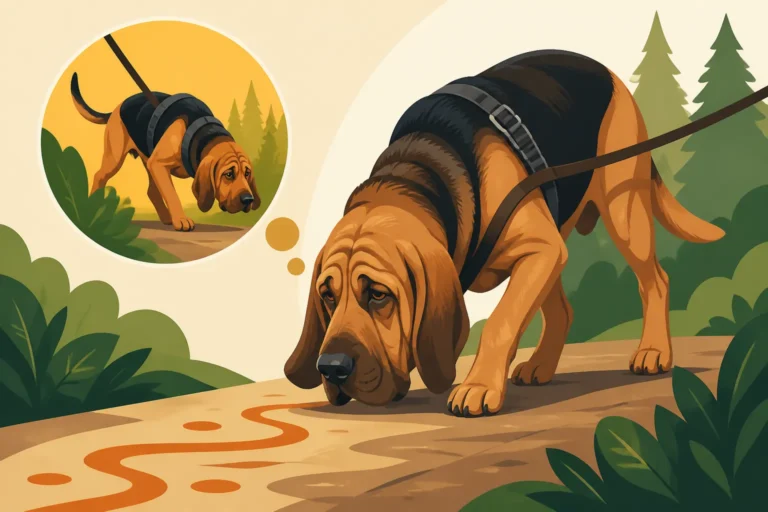
A Bloodhound's brain is constantly processing olfactory information, a world of smells invisible to us. When a Bloodhound "ignores" a "sit" command in a park, it's not being disobedient; it's likely processing a fascinating scent trail that's telling it a story about who passed by, when, and where they were headed. Their attention isn't on defying you, but rather on fulfilling their profound genetic destiny. These tests simply don't have a category for "how effectively can this dog differentiate between two-day-old human scent trails in an urban environment," which is where a Bloodhound truly shines.
Why "Stubborn" Is a Misinterpretation
The word "stubborn" often gets tossed around when describing Bloodhounds, and it’s a label that does them a great disservice. From a human perspective, a dog that doesn't immediately comply with a known command might seem willful. However, for a Bloodhound, what we perceive as stubbornness is often a deep, innate drive to follow scent. Imagine trying to have a serious conversation with someone who is simultaneously receiving urgent messages in a language you don't understand. Their focus would be split, and they might seem distracted or unresponsive.
This intense focus on scent means that external cues, including your voice, can literally fade into the background when an interesting odor presents itself. It's not a choice to disobey; it's an overpowering instinct. Understanding this fundamental aspect of their physiology and behavior helps shift our perspective from frustration to appreciation. When you witness a Bloodhound's nose drop to the ground, and their entire body language changes, you're seeing not stubbornness, but intense, single-minded dedication.
The Impact of Ranking Systems on Perception
These generalized obedience rankings, while providing a fun way to compare breeds, can unfortunately perpetuate misconceptions. When a breed consistently ranks low on an "obedience intelligence" list, it can lead prospective owners to believe the dog is genuinely less intelligent or harder to train. This isn't true for the Bloodhound, whose intelligence simply manifests differently. Their problem-solving abilities are geared towards complex scent puzzles, not rote memorization of arbitrary commands.
This misperception can lead to owners adopting a Bloodhound with unrealistic expectations, then becoming disheartened when their dog doesn't behave like a Golden Retriever. It's vital for potential Bloodhound owners to understand that their dog is supremely intelligent, but that intelligence is channeled into a specific, powerful function. Instead of trying to force them into a mold that doesn't fit, we should be seeking to understand and harness their unique talents. You might find that typical obedience classes, even those offered by popular platforms, might need to be supplemented with more scent-specific activities to truly engage your Bloodhound. Why a Bloodhound Ignores a Cue It Knows delves deeper into this phenomenon.
A Bloodhound's True Genius: Scent Work
To truly appreciate a Bloodhound's intelligence, you have to look beyond traditional obedience and into the incredible world of scent. This is where their genetic legacy, honed over centuries, truly shines. Their intelligence isn't about rapid-fire responses to commands; it's about unparalleled analytical ability within the olfactory landscape.
The Unmatched Power of the Bloodhound Nose
There's a reason the Bloodhound is often called "the nose with a dog attached." Their olfactory system is nothing short of a marvel. While humans have about 5 million scent receptors, a Bloodhound boasts around 300 million, coupled with a massive olfactory bulb in their brain dedicated to processing these signals. This isn't just about smelling more; it's about smelling with incredible detail and discrimination. They can differentiate individual human scents even after days, hours, or through layers of other odors. How Many Scent Receptors a Bloodhound Has explains the science behind this incredible ability.
When a Bloodhound is working a trail, they are performing a complex cognitive task: identifying the target scent, filtering out environmental distractions, following minute changes in scent concentration, and solving problems like scent gaps or wind shifts. This requires immense focus, memory, and analytical prowess that goes far beyond simply responding to a "stay" command. It's an intellectual marathon that few other breeds can even begin to comprehend, let alone master.
Natural Drive vs. Artificial Commands
For many breeds, especially those bred for general companionship or various working roles, responding to human commands is a strong primary drive. They are often eager to please, and their reward system is heavily tied to human approval and interaction. For a Bloodhound, while they certainly love their people, their primary drive is rooted in the pursuit of scent. This isn't to say they can't be trained, but rather that their motivation often needs to be aligned with their innate desires.
Trying to get a Bloodhound to perform repetitive, unstimulating obedience drills when there's a whole world of scents calling to them can feel like an uphill battle. It's like asking a brilliant mathematician to spend all day counting jellybeans – they can do it, but their true passion and mental capacity lie elsewhere. Instead of fighting this natural inclination, embracing it through activities like mantrailing or scent work allows them to engage their brains and truly thrive. Many owners find excellent scent work kits and training aids on sites like Amazon that can help kickstart this journey.
How Scent Work Engages Their Brain
Scent work is not just "playing games"; it's a profound mental workout for a Bloodhound. It taps directly into their evolutionary purpose and provides an outlet for their extraordinary cognitive abilities. When a Bloodhound is on a trail, they are actively solving a puzzle, making decisions, and using their unparalleled sensory input to achieve a goal. This kind of work is incredibly tiring, far more so than a simple walk around the block. Whether Nose Work Tires a Bloodhound More Than Walking is something many Bloodhound owners can attest to.
Regular scent work sessions offer numerous benefits: they reduce boredom, prevent destructive behaviors stemming from understimulation, build confidence, and deepen the bond between dog and handler. It allows the Bloodhound to be the magnificent creature they were bred to be, using their talents to their fullest extent. Instead of viewing their nose as a distraction from obedience, see it as the key to unlocking their happiest, most fulfilled self.
Understanding the Bloodhound's Motivation and Learning Style
Training a Bloodhound requires a particular approach, one that acknowledges their unique drives and intellectual strengths. If you try to train them like a typical "eager to please" breed, you'll likely hit a wall of frustration. Instead, focus on understanding what truly motivates them and how they learn best.
Reward-Based Training and High-Value Treats
Positive reinforcement is crucial for a Bloodhound. Harsh corrections or punishment are not only ineffective but can also damage your relationship with a sensitive hound. Bloodhounds respond incredibly well to rewards, but these rewards need to be high-value. A dry kibble might work for some dogs, but for a Bloodhound, you'll want to pull out the big guns: cheese, cooked meat, liverwurst, or anything else they consider utterly irresistible. These powerful motivators are essential for capturing and holding their attention, especially when competing with the allure of a captivating scent. What a Bloodhound Will Work For explains this further.
When training, timing is everything. Deliver the reward immediately after the desired behavior to create a clear association. Keep sessions short, fun, and varied to maintain their interest. Remember, a Bloodhound's attention span for traditional, repetitive tasks might not be as long as for a scent trail. Celebrating their successes, even small ones, builds a positive association with training and with you. Online platforms like BAXTER & Bella offer excellent positive reinforcement courses that can be adapted for the unique challenges of a Bloodhound.
Patience and Consistency Are Key
Training a Bloodhound is a marathon, not a sprint. You need an abundance of patience and unwavering consistency. They may not learn a new command in three repetitions like some breeds, but once they get it, they often retain it very well. The challenge isn't usually comprehension, but rather motivation and focus in distracting environments. Don't get discouraged if progress seems slow; celebrate every small step forward.
Consistency from every member of the household is also vital. Everyone needs to use the same cues and follow the same rules. Bloodhounds are smart and will quickly learn who they can "negotiate" with. Establish clear boundaries and stick to them. This provides the structure and predictability that helps a Bloodhound feel secure and understand expectations, even if their nose is telling them a different story.
The Role of Environment in Training
The environment plays a massive role in a Bloodhound's ability to "obey" a command. In a quiet living room with no tempting smells, your Bloodhound might be a superstar. Take them to a bustling park with squirrels, other dogs, and a thousand human trails, and suddenly, they might seem "deaf." This isn't a lapse in their training; it's a testament to the power of their primary drive.
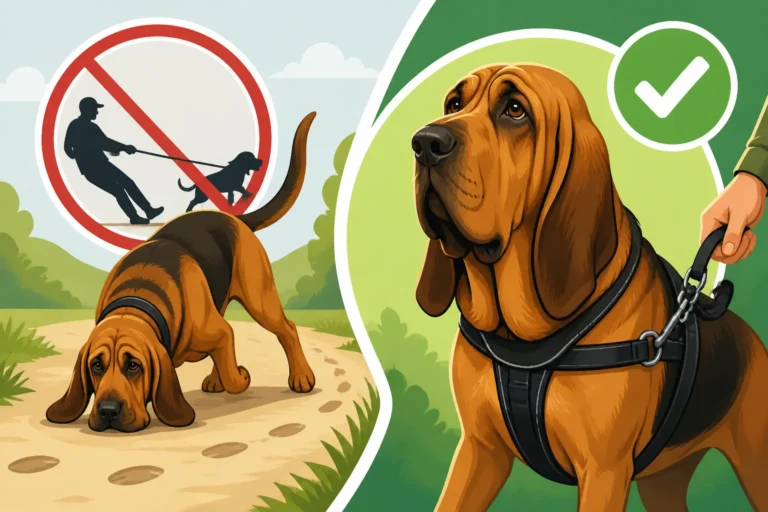
Start training in low-distraction environments and gradually introduce more challenges. This process is called "proofing." For example, practice your recall in the backyard before attempting it in an open field. Understand that an "off-leash" life is rarely a realistic or safe goal for a Bloodhound due to their intense scent drive. Why Off Leash Is Not a Goal With a Bloodhound is a critical read for any Bloodhound owner. Even with the best training, the call of a compelling scent will almost always override a command. Long lines, sturdy fences, and secure leashes are your best friends.
Working With Your Bloodhound, Not Against It
Ultimately, owning a Bloodhound is about forming a partnership built on mutual respect and understanding. It means acknowledging their extraordinary gifts and structuring their lives in a way that allows them to use those gifts, rather than suppressing them.
Building a Partnership Through Scent Games
Instead of seeing your Bloodhound's nose as a hindrance, embrace it as their superpower. Integrate scent games and actual mantrailing into their routine. This isn't just for "working" Bloodhounds; it's essential for the mental well-being of any Bloodhound. Start with simple hide-and-seek games with treats in the house, then move to hiding a person in the yard, and eventually, explore formal mantrailing classes. Mantrailing Is the Answer to a Bloodhound, Not Obedience is truly the mantra for Bloodhound ownership.
This kind of work deepens your bond because you are collaborating on a task that is inherently rewarding for them. You become their partner in discovery, the one who facilitates their greatest joy. You'll see a level of engagement and focus in scent work that you might never achieve with traditional obedience drills alone. Look on Amazon for books or starter kits on canine nose work to begin your journey.
Redefining "Obedience" for a Bloodhound
For a Bloodhound, "obedience" might look a little different than for other breeds. It's less about robotic adherence to commands and more about a collaborative effort. A well-trained Bloodhound understands basic commands and will perform them, but perhaps with a slight delay, or needing a moment to disengage from a scent. Their "come" might be a strong, steady pull back to you on a long line rather than an immediate sprint.
Redefine success. Is your Bloodhound happy? Engaged? Living a fulfilled life? Are they safe and manageable in public? If the answer is yes, then you've achieved a tremendous level of "obedience" on their terms. Don't fall into the trap of comparing them to breeds with different genetic blueprints. Celebrate their unique intelligence and their incredible nose. The Bloodhound Is the Only Dog Whose Evidence Stands in Court is a testament to what they are truly capable of.
Setting Realistic Expectations
The most important thing an owner can do is set realistic expectations. Understand that your Bloodhound will always be driven by scent. They will probably always pull on the leash if they catch a hot trail. They might occasionally seem to "forget" a command if a really good smell comes along. This is not a failure on your part or theirs; it's simply who they are.
By providing consistent, positive training that respects their nature and offering ample opportunities for scent work, you can raise a well-adjusted, happy, and truly amazing companion. Embrace their quirks, marvel at their abilities, and understand that their intelligence operates on a different, profound wavelength than what conventional rankings often measure.
| Trait/Focus | Traditional Obedience Rankings Perspective | Bloodhound Reality & Intelligence |
|---|---|---|
| Primary Drive | Eagerness to please, compliance | Scent detection and tracking |
| "Stubbornness" | Lack of intelligence, willful disobedience | Intense, natural focus on olfactory input |
| Attention Span | Consistent focus on handler/task | Hyper-focused on scent; easily distracted by non-scent tasks |
| Learning Speed | Quick command acquisition | Slower for arbitrary commands; rapid for scent puzzles |
| Problem Solving | Task-based; sequential steps | Complex, multi-layered scent analysis and environmental interpretation |
| Exercise Needs | Physical exertion, structured play | Mental stimulation through scent work is paramount |
| Ideal Environment | Controlled, minimal distractions | Any environment is a scent-rich puzzle to solve |
Disclaimer
This article is for general informational purposes only and does not constitute professional advice. Laws, prices and regulations vary by location and change over time. Consult a qualified professional for guidance on your specific situation.