Where the Bloodhound Ranks for Obedience Intelligence
Many Bloodhound owners quickly discover that their furry, long-eared companions don't always fit neatly into the mold of a "highly obedient" dog that responds instantly to every command. This can be incredibly frustrating and even lead to questions about their intelligence, especially when you see other breeds performing complex tricks with effortless grace. But the truth is, a Bloodhound's intelligence is profound, just incredibly specialized, and understanding this unique brilliance is key to a harmonious relationship. This guide will delve into where the Bloodhound truly shines intellectually, how their specialized abilities often lead to misunderstanding in traditional obedience rankings, and how to harness their incredible brainpower for a fulfilling life together.
The Flawed Lens of Traditional Obedience Rankings for Bloodhounds
When we talk about "dog intelligence" in popular culture, we're often unconsciously referring to a very specific type of intelligence: how quickly a dog learns and obeys human commands, and how consistently they perform those commands even when distracted. Breeds like Border Collies, Poodles, and German Shepherds typically top these lists because they are bred for traits that align perfectly with this definition – keen attention to their handler, eagerness to please, and high trainability for complex tasks. This is where the Bloodhound often gets a raw deal, landing lower on such lists, not because they lack intelligence, but because their genius lies in an entirely different domain.
What Traditional Obedience Measures
Most popular dog intelligence rankings, famously the one by Stanley Coren, measure a dog's "working intelligence" or "obedience intelligence." This is usually assessed by how many repetitions it takes for a dog to learn a new command, and the percentage of times they obey a known command on the first try. A dog that learns a command in under five repetitions and obeys 95% of the time is considered highly intelligent in this context. These tests often involve a variety of basic to advanced cues like 'sit,' 'stay,' 'come,' 'down,' and 'heel,' performed in various environments.
For many dog breeds, these metrics are excellent indicators of their capacity to integrate into human society, learn complex sequences for sports like agility or competitive obedience, or perform service tasks. Owners expect their dogs to be readily attentive, quick to respond, and easily motivated by praise or a quick treat. This framework prioritizes a dog's willingness and ability to suppress their own instincts in favor of human direction, a quality often highly valued by pet owners.
Why Bloodhounds Don't "Excel" Here
The challenge for Bloodhounds isn't a lack of brainpower; it's a fundamental difference in their wiring. They were selectively bred for centuries to do one job: follow a scent trail relentlessly, independently, and without external cues from a human. Their entire being, from their physical characteristics like long ears that sweep scent to their profound cognitive abilities, is geared towards this singular purpose. When a Bloodhound's nose locks onto a scent, the rest of the world, including your earnest requests for a 'sit,' simply fades into irrelevance. This isn't defiance; it's instinct. It’s their equivalent of a human hyper-focusing on a complex puzzle.
Because their drive to track is so overwhelmingly powerful, they are often perceived as "stubborn" or "dull" by traditional training standards. They might learn a command, but their compliance can be situational. If there's a compelling scent, you might find yourself wondering Why a Bloodhound Ignores a Cue It Knows. This isn't a flaw in their intelligence, but rather a reflection of their genetic imperative. They prioritize the trail above all else, which means they don't fit the typical obedience mold, and ranking them against breeds bred for handler-focused work misrepresents their true capabilities.
The Bloodhound's True Genius: The Unrivaled Nose and Cognitive Prowess
To truly appreciate a Bloodhound's intelligence, you have to look beyond the confines of traditional obedience rings and into the world of scent. Here, they are not just intelligent; they are peerless. Their brain is a complex processing unit dedicated almost entirely to interpreting a tapestry of odors, making them the ultimate detectives of the canine world. This is where their cognitive abilities are stretched to their limits, solving puzzles that no human, or indeed almost any other dog, could even begin to comprehend.
The Unrivaled Olfactory Prowess
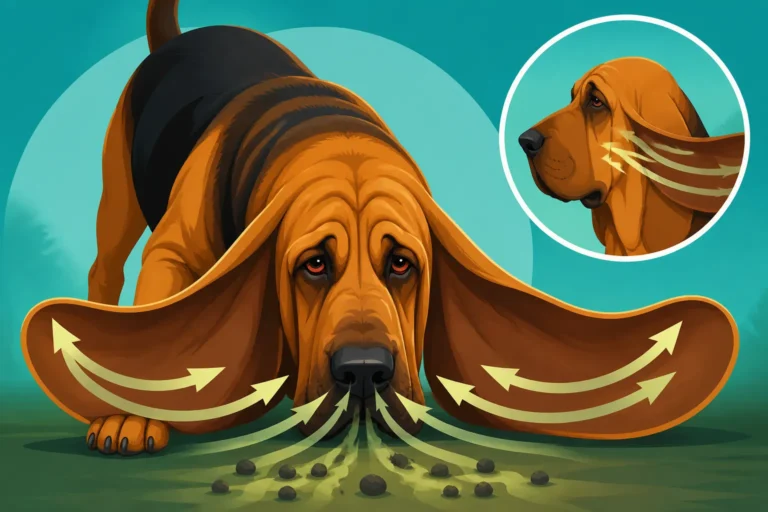
A Bloodhound's sense of smell isn't just "good"; it's an evolutionary marvel. With an estimated 300 million olfactory receptors (compared to our meager 6 million), their nasal cavity is a supercomputer of scent. But it's not just the number of receptors; it's how their brain processes this information. They can pick out individual scent molecules, differentiate between similar odors, and even follow a trail that is days old, contaminated by weather, or obscured by other scents. Their long, pendulous ears act like scent gatherers, sweeping odors toward their nose, and their loose facial skin and deep wrinkles trap scent particles, keeping them close to their nostrils as they work.
This extraordinary sensory input means their brain is constantly engaged in complex analysis. Think about it: they're not just sniffing the ground; they're dissecting layers of scent, filtering out distractions, and reconstructing a narrative of where a person has been and how long ago. It's an intricate process that demands immense focus and an incredible capacity for data processing. This is why a Bloodhound can follow a faint human trail even through a busy urban environment or over varied terrain, a feat of pure intellectual power that dwarfs most "obedience" tasks. Indeed, A Bloodhound's Nose Outvotes Its Handler every single time, because that nose is guiding a highly intelligent and specialized brain.
Problem-Solving on a Scent Trail
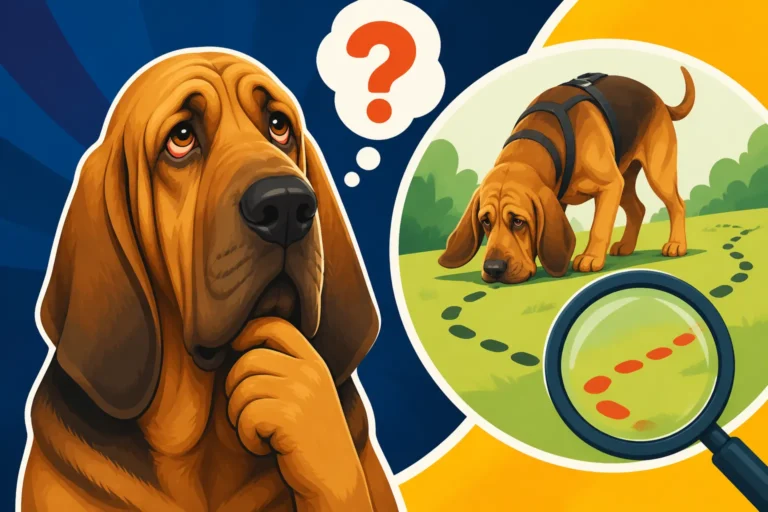
Following a scent trail isn't a mindless task; it's a dynamic, intricate form of problem-solving. When a Bloodhound is on a trail, they're not just mechanically moving forward; they're constantly analyzing, hypothesizing, and adapting. Did the wind shift the scent? Did the person double back? Did they cross water, and if so, how does that affect the scent dispersion? They must make real-time decisions, often without any visible cues, relying solely on the information their nose provides. This requires sustained concentration, memory, and an incredible ability to filter out irrelevant stimuli.
Consider a scenario where a missing person walks through a park, crosses a busy street, enters a building, and then exits from a different door. A Bloodhound needs to process all the conflicting environmental scents, maintain focus on the target odor, and follow the most probable path, even when that path isn't a straight line. They are constantly evaluating the strength and direction of the scent, making split-second adjustments, and remembering previous scent markers. This complex cognitive activity far surpasses the intelligence required for a dog to simply "sit" on command. Their ability to do this consistently and accurately is why their evidence holds up in court, a testament to their unparalleled problem-solving intelligence.
Training a Bloodhound: Beyond Traditional Commands
Given their unique mental makeup, training a Bloodhound requires a shift in perspective. You can't approach it like training a typical retriever or herding dog. Instead, you need to lean into their natural drives and understand what truly motivates them, building a partnership based on mutual respect for their instincts. This often means embracing specialized activities that allow their true intelligence to flourish, rather than trying to force them into a mold they weren't designed for.
Harnessing the Scent Drive
The most effective way to train and engage a Bloodhound is to integrate their scent drive into everything you do. This means that Mantrailing Is the Answer to a Bloodhound, Not Obedience. Mantrailing, or person-specific scent trailing, allows your Bloodhound to use their innate abilities in a structured and productive way. It's a fantastic mental and physical workout that satisfies their deepest instincts. When a Bloodhound is working a trail, they are engaged, focused, and utterly content. This activity builds immense confidence and strengthens your bond because you are working with their natural talent, not against it.
Starting a Bloodhound puppy on a trail can be a wonderful experience, or even teaching an adult rescue. You'll need specialized gear, such as a comfortable, well-fitting tracking harness and a long line, which you can often find readily on platforms like Amazon. These tools are crucial for safety and to differentiate 'work mode' from casual walks. By giving them a designated "job" that leverages their powerful nose, you'll see a profound transformation in their overall demeanor, leading to a much happier and more fulfilled hound.
Building a Working Relationship, Not Just Obedience
Forget the idea of endless repetitions for perfect obedience. Bloodhounds learn differently. They respond best to positive reinforcement, patience, and making training a rewarding game. They are not naturally eager to please in the same way some breeds are, but they are incredibly motivated by scent work and food. Understanding What a Bloodhound Will Work For – typically a high-value treat or the continuation of a scent trail – is paramount. Harsh corrections or frustration will quickly shut down a Bloodhound, making them resistant and potentially damaging your relationship.
Instead of drilling, focus on short, engaging sessions that end on a positive note. Online training platforms, like those offered by BAXTER & Bella, can provide excellent resources for positive reinforcement techniques that can be adapted for scent-driven breeds. They teach you to understand your dog's motivation and build cues that are clear and rewarding. Remember, Why Drilling Loses a Bloodhound is because their independent, problem-solving brain thrives on engagement and reward, not rote memorization. They need to understand the value of responding to you. This also means accepting that Whether a Bloodhound Can Trail and Do Obedience is true, but often in separate contexts – they'll excel at trailing and perform adequate house manners, but rarely combine the intense focus needed for competitive obedience with their scent work.
Practical Obedience for Everyday Life
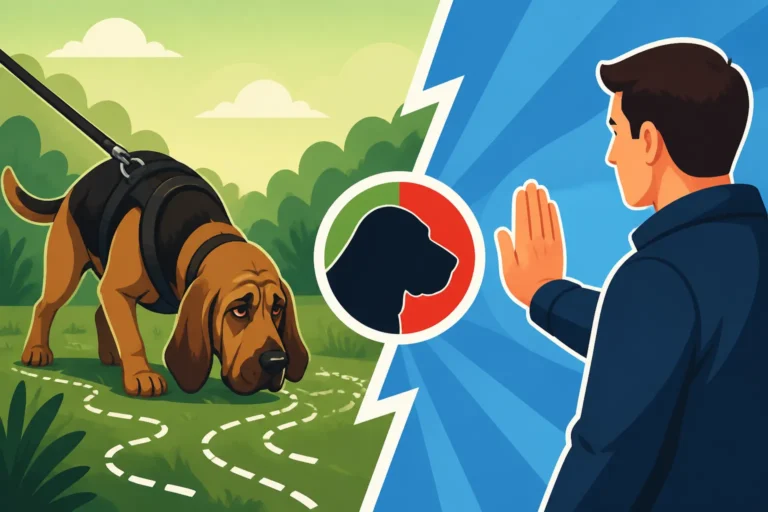
While scent work should be the cornerstone of your Bloodhound's mental enrichment, practical obedience is still vital for safety and living harmoniously. A reliable 'sit,' 'stay,' and especially a strong 'come' are non-negotiable, even if they're harder-won than with other breeds. Since Why Off Leash Is Not a Goal With a Bloodhound is a fundamental truth for the breed, focus heavily on impeccable leash manners. Using a long line, especially when out exploring, allows them some freedom to investigate scents while still remaining safely connected to you.
Consistency is key. Every time you ask for a behavior, be prepared to follow through, even if it means gently guiding them. Their general good nature and desire for comfort mean they can learn house rules and basic commands, it just takes more time, patience, and understanding of their unique learning style. Think of these commands as tools to manage their powerful instincts safely, allowing you to enjoy their wonderful companionship without constant worry.
Redefining "Smart" for Your Bloodhound
It's time to let go of conventional ideas of canine intelligence when it comes to the Bloodhound. Their ranking on standard obedience lists is a gross understatement of their profound cognitive abilities. Instead of trying to force a square peg into a round hole, embrace and celebrate the truly extraordinary intelligence that makes them such captivating and effective working dogs.
Celebrating Unique Talents
Your Bloodhound isn't just a pet; they are a living, breathing testament to centuries of specialized breeding, a canine athlete with an unrivaled talent. Why Obedience Rankings Understate a Bloodhound is simply because those rankings don't assess the incredible complexity of scent discrimination and trailing. Celebrate their unparalleled nose, their deep concentration, their gentle nature, and their unwavering determination when on a trail. These are the hallmarks of their intelligence. Whether they are pursuing a lost person, enjoying a recreational scent game in the backyard, or simply "reading the newspaper" of your neighborhood through their nose, they are actively engaging a mind built for intricate analytical tasks.
This specialization means that while they might not be the quickest to learn 20 different agility obstacles, they can solve a scent puzzle that would stump every other dog breed. Their intelligence manifests as persistence, meticulous analysis, and an incredible memory for odor. Encourage these natural behaviors, provide outlets for their sniffing passions, and you will unlock a level of engagement and satisfaction that traditional obedience alone could never provide.
Managing Expectations and Frustrations
Owning a Bloodhound often means managing expectations, both your own and those of others. People might comment on their "stubbornness" or slow response times, but as an owner, you know it's simply their nose-driven world taking precedence. Acknowledge that Whether a Bloodhound Is Stubborn or Just Busy is a common question, and the answer is usually "busy" – busy processing a world of scent that we can't even perceive. This understanding can reframe your own frustrations into admiration for their incredible focus.
The joy of a Bloodhound lies in embracing their unique quirks and working with their profound instincts. You'll find that Whether Nose Work Tires a Bloodhound More Than Walking is often true – twenty minutes of intense scent work can be far more mentally exhausting and satisfying for them than a long, unstimulating walk. So, if you've been frustrated by a Bloodhound that seems less "smart" than other dogs, take heart. You own a canine genius, a master of scent, whose intelligence is simply too magnificent and specialized to be confined by conventional definitions.
Here's a quick comparison of how Bloodhounds typically measure up in different intelligence aspects:
| Intelligence Aspect | Traditional Obedience Ideal | Bloodhound Reality/Strength |
|---|---|---|
| Command Learning Rate | Very quick, 1-5 repetitions | Can be slower, 15-20+ repetitions required |
| Response Reliability | High (95% first-try obedience) | Context-dependent; lower if scent is present |
| Focus | Handler-focused, easily directed | Scent-focused, easily distracted by odors |
| Problem-Solving | Spatial puzzles, understanding sequences | Olfactory puzzles, complex scent discrimination |
| Motivation | Praise, toys, handler interaction, food | Scent work, high-value food reward |
| Independence | Low; relies on handler for direction | High; works independently on a trail |
Disclaimer
This article is for general informational purposes only and does not constitute professional advice. Laws, prices and regulations vary by location and change over time. Consult a qualified professional for guidance on your specific situation.