Why Recall Fails on a Bloodhound Outdoors
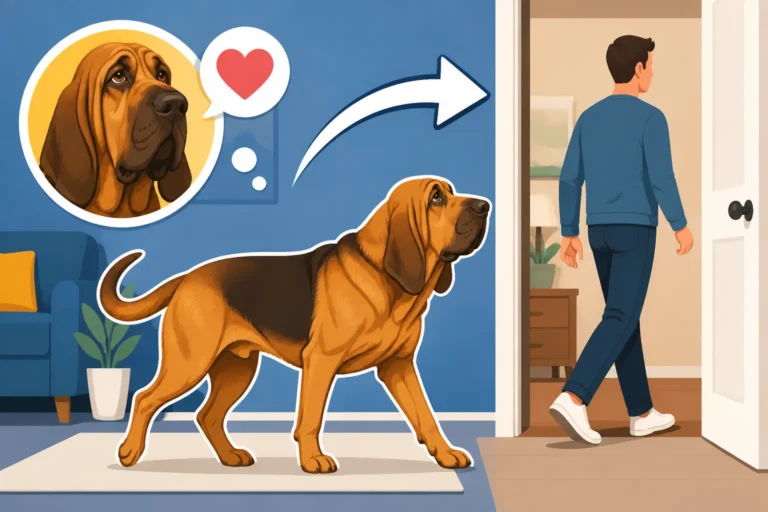
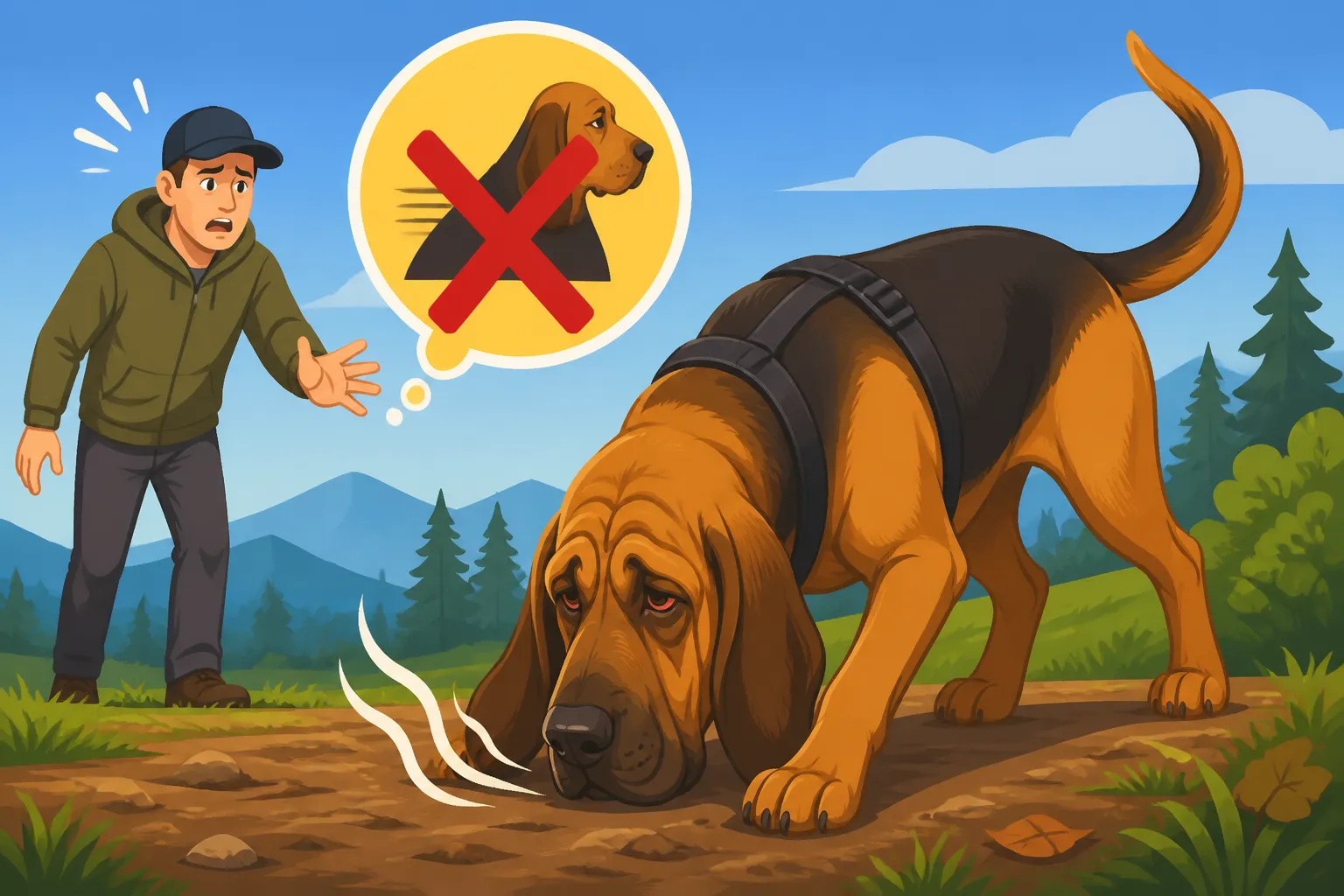
It’s a scenario Bloodhound owners know all too well: you’re out for a peaceful walk, your magnificent hound is sniffing along, seemingly content, and then bam! a scent hits, and suddenly you’re holding onto a freight train or watching your beloved dog disappear into the horizon, seemingly deaf to your panicked calls. This isn't just frustrating; it's genuinely terrifying, and it leaves many wondering why the tried-and-true recall methods that work for other breeds simply fail with their Bloodhound. This guide will dive deep into the unique biological and behavioral reasons behind a Bloodhound’s unreliable outdoor recall and offer realistic strategies for managing this powerful, scent-driven companion.
The Irresistible Call of the Scent
Let's be brutally honest: your Bloodhound's nose isn't just good; it's a superpower, a force of nature that utterly dominates their world. When that nose locks onto a scent trail, everything else, including your voice, fades into insignificance. This isn't disobedience in the way you might think; it's a primal, instinctual drive taking over.
A Bloodhound's Nose Reigns Supreme
Imagine having a sense so profoundly powerful that it paints a vibrant, detailed picture of the world, far more vivid than anything your eyes or ears can convey. That's a Bloodhound's reality. They possess an astounding number of olfactory receptors – estimates often put it in the hundreds of millions – far exceeding what most other breeds, or certainly humans, can boast. Their long, pendulous ears don't just look distinctive; they actually work like scent-sweeping mechanisms, gathering and funneling odors towards their incredibly sensitive nostrils. This means that a faint whiff of a rabbit that crossed the path hours ago, or even a person who passed by yesterday, becomes an urgent, compelling narrative for your Bloodhound.
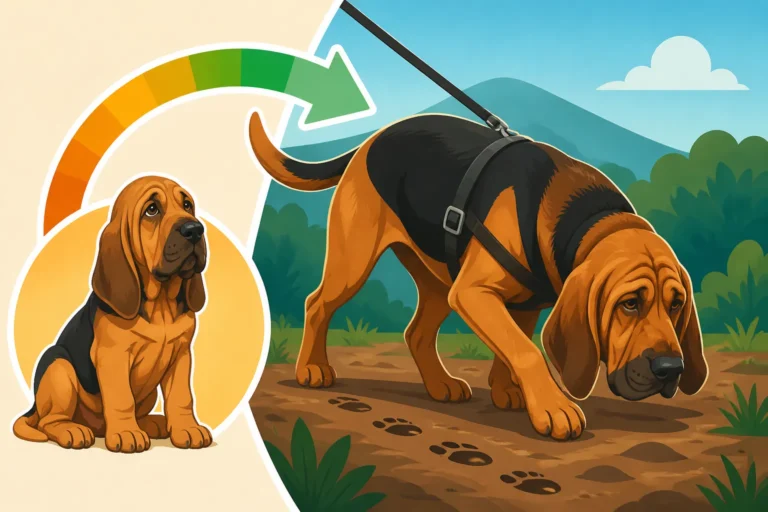
When you're walking your Bloodhound, they aren't just taking a stroll; they're reading the ground, the air currents, and the foliage like an open book. Every stray leaf, every patch of damp earth, every discarded chewing gum wrapper tells a story. And once that story begins, particularly a compelling one involving a warm-blooded creature or an interesting human, their entire being shifts into tracking mode. This isn't a choice they make to ignore you; it's a physiological takeover, where the world beyond the scent stream simply ceases to exist. It's truly a marvel of nature, even if it makes walks challenging!
The Hyper-Focus Phenomenon
Once a Bloodhound locks onto a specific scent, they enter a state of hyper-focus that is nearly impossible for them to break on their own. It’s like us getting completely engrossed in a thrilling movie or a captivating book – the outside world fades, and our attention is singular. For a Bloodhound, this focus is magnified exponentially by their genetic predisposition for trailing. They are quite literally bred to follow a trail without distraction, for miles and for hours if necessary, until they reach the end. This isn't about being stubborn; it's about fulfilling their deepest, most ancient purpose.
This deep concentration means that traditional recall cues, which rely on the dog choosing to disengage from an activity and return to you, are often ineffective. The reward of finding the source of the scent is so immensely powerful and intrinsically motivating for them that any treat or toy you offer, no matter how high-value, pales in comparison to the "prize" at the end of their invisible trail. This is why you'll often see them pull with incredible strength, impervious to discomfort, driven solely by that olfactory beacon. This isn't a flaw in your training; it's a testament to the sheer power of their nose and their breed's incredible drive.
Sensory Overload in the Great Outdoors
While a Bloodhound's nose is their greatest asset, in an uncontrolled outdoor environment, it can also lead to what amounts to sensory overload, making recall an even bigger challenge. Imagine trying to concentrate on one specific task in a room where a dozen different conversations are happening at once, loud music is playing, and several televisions are blaring different shows. That's a bit like what an unfettered Bloodhound experiences. Every single scent molecule is a piece of information, and the sheer volume of data they are processing at any given moment is staggering.
In a park, on a trail, or even just in your backyard, there are countless scent trails intersecting, overlapping, and weaving together. A rabbit's path from an hour ago, the neighbor's cat from last night, a delivery driver's scent from earlier, the lingering aroma of someone's spilled coffee – it all contributes to a complex tapestry of odors. For a Bloodhound, each of these threads is a potential story, a new adventure. Trying to pull them away from this rich, stimulating environment with a simple "come!" command is like asking a detective to abandon a complex case midway through because you've called their name from another room. Their mind is fully engaged, their instincts are firing, and your voice, even when raised, simply can't cut through the noise of their olfactory world. This is especially true if they haven't been specifically trained to Whether a Bloodhound Can Be Called Off a Scent with extreme positive reinforcement in highly controlled settings first.
Genetic Hardwiring vs. Learned Behavior
It's crucial to understand that a Bloodhound isn't just a dog that happens to have a good nose; they are a scent hound, meticulously developed over centuries for a very specific purpose. This heritage means their behaviors are deeply ingrained, often overriding attempts at conventional obedience when a compelling scent presents itself.
A Breed Bred for Independent Trailing
Unlike many other breeds that were developed to work with humans in a partnership, such as herding dogs or retrievers, Bloodhounds were selectively bred to work independently on a trail. Their job was to put their nose to the ground and follow a scent for long distances, sometimes over varied terrain, without much direct guidance from a handler. The handler's role was more to keep up and manage the dog at the end of the trail, not to interrupt the process. This means that an ingrained sense of independent thought and decision-making on the trail is part of their DNA.
When a Bloodhound is tracking, they are making complex calculations about scent direction, age, and intensity. They are problem-solving on the fly, and interrupting that process can actually be detrimental to their work, which historically was often critical for law enforcement or finding lost persons. So, when your Bloodhound ignores your recall and plunges headlong after a scent, they are, in a way, just doing what generations of their ancestors were supposed to do. It’s not a personal affront; it's a deeply rooted behavioral pattern. Trying to make an off-leash recall a "goal" for a Bloodhound might be setting yourself up for disappointment, and understanding Why Off Leash Is Not a Goal With a Bloodhound can save a lot of heartache.
The Historical Context of Their Work
The very purpose for which Bloodhounds were developed sheds immense light on their recall challenges. For centuries, these dogs were not pets; they were tools. They were used to track game, and later, to track people, sometimes over incredible distances and through harsh conditions. Think about medieval Europe, where they were employed to track escaped prisoners or poachers. There were no leashes as we know them today, certainly no retractable ones, and certainly no expectation of an instantaneous, light-switch recall when they were hot on a trail. The handler followed, trusting the dog's nose above all else.
This historical context means that the genetic blueprint for a Bloodhound prioritizes the successful completion of a trail above all else. Their reward isn't necessarily a piece of kibble from your hand, but the intrinsic satisfaction of working the scent to its conclusion, whether that's finding the "quarry" or simply exhausting the trail. This deep-seated drive explains why they will ignore pain, discomfort, or even fear in pursuit of a scent. It's an internal programming that is incredibly difficult, if not impossible, to fully override with training, especially in a distracting outdoor environment. It underscores the profound difference between a Bloodhound and, say, a Border Collie, whose genetic imperative is to work in tight cooperation with a human.
The Concept of "Selective Deafness"
Many Bloodhound owners jokingly refer to their dogs having "selective deafness" when a scent is present, and honestly, it’s not far from the truth. But it's not truly a deliberate choice to ignore you. Instead, their auditory processing simply gets significantly down-prioritized when their olfactory system is engaged at full throttle. Think of it this way: your brain has limited resources, and when one sense is providing overwhelming, critical data, other sensory inputs get suppressed. For a Bloodhound on a scent, the nose becomes the only truly important sense.
This "selective deafness" means that no matter how loud or authoritative your voice, or how sharp your whistle, it's just background noise compared to the intricate symphony of scents their nose is processing. They are not consciously rebelling; they are operating under a different sensory hierarchy. It highlights why training a reliable recall for a Bloodhound outdoors is fundamentally different from training a conventional dog. You're not just competing with distractions; you're competing with a biological imperative. It requires immense patience, understanding, and often, a paradigm shift in how you approach outdoor management. Instead of focusing on recall, focus on safe containment and the enjoyment of their natural instincts through controlled scent work.
Environmental Factors and Distractions
While scent is the ultimate distraction for a Bloodhound, the outdoor environment throws in plenty of other variables that conspire against a successful recall. It's not just what they smell; it's what they see, hear, and feel that can pull their attention away, making recall an uphill battle even for the most dedicated owner.
Visual Stimuli and Moving Targets
Even though a Bloodhound's nose is their primary sense, their eyes and ears are certainly not dormant. The movement of a squirrel darting up a tree, a bird taking flight, or even a distant jogger can capture their attention and activate their prey drive or curiosity. While they aren't sight hounds, a sudden movement can be a visual cue that confirms or initiates a scent chase, even if they initially detected it with their nose. They might see a flash of movement and then immediately put their nose to the ground to confirm the associated scent, thus intensifying their focus.
A Bloodhound's sheer size and power mean that once they decide to pursue a visual target, they can build incredible momentum quickly. Stopping that momentum, especially when combined with their natural drive, is incredibly difficult. You might see them lunge, pulling with all their might, or simply take off at a surprising speed for such a large dog. This immediate, explosive response to movement, coupled with their scent drive, means that even in an area where you think there might be no compelling scents, a sudden visual distraction can be enough to send them off course and render your recall attempts useless. Managing these visual triggers is just as important as managing scent.
The Influence of Sound and Movement
The world outside is a symphony of sounds, and for a Bloodhound, many of these sounds can signal potential scent sources or interesting events. A distant siren, children playing, other dogs barking, or even the rustle of leaves in the wind can all register as important information, diverting their attention. While their sense of hearing might not be as legendary as their nose, it's still highly acute and plays a role in their overall environmental awareness.
When these sounds combine with movement or scent, they create an even more potent distraction. Imagine a bird chirping loudly and then taking flight – both auditory and visual cues that might spark your Bloodhound's interest. A Bloodhound, particularly one with strong prey drive, might quickly connect a sound to a potential trail. The suddenness of these events, especially in an open space, can be jarring and immediate. They don't have the luxury of contemplating your recall command; their instincts push them to investigate. This constant barrage of sensory input in an uncontrolled outdoor setting makes it incredibly challenging to hold their attention, let alone demand an immediate return.
Familiarity vs. Novelty in Outdoor Settings
It's a common misconception that if you take your Bloodhound to the same park every day, they will eventually get bored and their recall will improve. For a Bloodhound, this is often the opposite of what happens. Familiar places are just more complex scent tapestries. Every blade of grass, every tree, every fence post has a history of scents layered upon it. The "novelty" for a Bloodhound isn't just a new place; it's a new scent trail in a familiar place, or a familiar scent that has been refreshed. This continuous renewal of olfactory information means that a Bloodhound rarely gets "bored" of a location.
Even in your own yard, a Bloodhound can find endless hours of entertainment following the overnight travels of local wildlife or the scent of a neighbor's dog that passed by the fence line. When you take them somewhere truly new, the sheer volume of novel scents can be overwhelming, leading to an even deeper state of investigative focus, making recall an absolute pipe dream. This is why off-leash exploration in unfamiliar areas is almost never a safe option for a Bloodhound. Understanding this fundamental difference in how they perceive their environment helps temper expectations and promotes safer management strategies, such as using a long line. For a Bloodhound, Where a Bloodhound Can Safely Be Loose is almost never in an unfenced outdoor area.
Training Misconceptions and Challenges
Many Bloodhound owners come from backgrounds with other breeds where a reliable recall was achievable with consistent training. They often find themselves frustrated and confused when these same methods fall flat with their scent hound. It's not you; it's the breed's unique attributes that require a different approach.
The Limitations of Traditional Obedience
Traditional obedience training, while valuable for teaching basic manners and communication, often doesn't fully account for the intensity of a Bloodhound's drive. Commands like "sit," "stay," and "come" are taught in controlled environments, often with high-value treats as motivation. While a Bloodhound can certainly learn these commands indoors or in a quiet, low-distraction setting, the moment a potent scent enters the equation outdoors, the calculus changes entirely. The motivation of the treat simply cannot compete with the intrinsic reward of the hunt.
Moreover, traditional obedience often relies on the dog choosing to obey, which implies a level of self-control and prioritization that is extremely difficult for a Bloodhound to exhibit when their nose is engaged. It's not that they don't understand the command; it's that their brain is literally prioritizing a different, more powerful signal. Expecting a Bloodhound to drop a hot trail on command is akin to asking a human to stop breathing voluntarily for an extended period – it goes against their fundamental biological programming. This isn't to say traditional obedience is useless; it's simply insufficient on its own for outdoor recall.
Reinforcement Challenges When Scent is King
One of the cornerstones of effective dog training is consistent, high-value reinforcement. You reward the desired behavior, and the dog learns to repeat it. The challenge with Bloodhounds and outdoor recall is that the "reward" of following a scent is so overwhelmingly powerful that it dwarfs almost any external reinforcer you can offer. A piece of chicken, a favorite squeaky toy, or even enthusiastic praise often can't compete with the thrill of the chase and the satisfaction of working a trail.
This creates a dilemma: how do you make returning to you more appealing than the most exciting thing in their world? It's incredibly difficult. Even if you do manage to get them back once or twice, the intermittent nature of this success means the behavior isn't consistently reinforced. The one time they successfully follow a rabbit track for half a mile without you, that single, massive intrinsic reward can outweigh dozens of successful recalls in a less distracting environment. This makes training a battle against their own powerful biology, a battle that most owners will ultimately lose without very specific, constant, and ingenious training protocols, often involving professional scent work trainers who understand the breed.
The Myth of "Just More Practice"
Many well-meaning trainers or dog owners might suggest that Bloodhound owners simply need "more practice" with recall. While practice is essential for any skill, for a Bloodhound, simply repeating recall commands in distracting environments often backfires. Each time your Bloodhound ignores your command and follows a scent, two things happen:
- The recall command becomes meaningless: It loses its power because it's associated with not returning.
- The scent-following behavior is reinforced: Every time they successfully follow a scent without being interrupted, that instinct is strengthened.
This creates a vicious cycle. The more they practice ignoring you and succeeding in their hunt, the harder it becomes to ever get them back. It's why many experienced Bloodhound handlers advocate for a shift in mindset: instead of trying to force a recall in every situation, accept that off-leash freedom in uncontrolled environments is simply not safe or realistic for the vast majority of Bloodhounds. Investing in proper equipment and management strategies becomes paramount, rather than endlessly drilling a command that is destined to fail. For many, Whether a Bloodhound Can Be Called Off a Scent is a question with a very discouraging answer.
Managing the Outdoor Environment
Given the unique challenges of Bloodhound recall, the focus for owners must shift from simply training a command to implementing robust management strategies. This ensures both your Bloodhound's safety and your peace of mind.
The Indispensable Long Line and Harness
For a Bloodhound, a long line isn't just a training tool; it's an absolute necessity for safe outdoor adventures. Letting a Bloodhound off-leash in any unfenced, uncontrolled area is akin to letting a toddler wander into a busy street – incredibly dangerous. A long line, typically ranging from 15 to 50 feet, allows your Bloodhound to explore scents and engage their natural instincts while still remaining safely tethered to you. This is the closest you'll get to supervised "off-leash" freedom in many settings.
When using a long line, it's absolutely crucial to pair it with a well-fitting, comfortable harness. Never attach a long line to a flat collar, choke collar, or prong collar. The sudden impact of a Bloodhound hitting the end of a long line, especially if they're moving at speed, can cause severe injury to their neck and throat. A Y-front or H-back harness distributes the pressure across their chest and shoulders, preventing injury and giving you better control. Brands like Ruffwear or Kurgo offer durable options often available on Amazon. Teaching your Bloodhound to wear a harness comfortably from a young age is key. Many owners find that Why a Bloodhound Works on a Long Line, Not a Collar is a lesson learned the hard way if they don't use proper equipment.
| Management Tool | Purpose | Pros | Cons |
|---|---|---|---|
| Long Line (15-50ft) | Allows exploration with safety | Offers freedom to sniff; prevents escape; builds handler confidence | Can get tangled; requires active handler attention; not suitable for crowded areas |
| Well-fitting Harness | Prevents neck injury; better control | Distributes pressure; comfortable for the dog; aids in redirection | Needs correct fit; some dogs may chew; not all harnesses are equal |
| Secure Fencing (6ft+ solid) | Total containment for yard | Allows true off-leash in safe space; peace of mind | Costly to install; can be breached by digging/climbing if not secured at base |
| High-Value Treats | Training reinforcement | Motivates in low-distraction; can build positive association with handler | Loses power in high-distraction; can lead to weight gain if overused |
| Snood | Keeps ears out of the way | Protects ears from food/dirt; reduces ear infections; makes eating cleaner | Some dogs dislike wearing; can be seen as "silly" |
Creating a Safe, Controlled Training Space
For any true off-leash recall practice, a secure, fully enclosed space is non-negotiable for a Bloodhound. This might be a private, fenced dog park, a friend's securely fenced property, or your own yard with appropriate fencing. The key is that it must be escape-proof. A Bloodhound can easily scale or dig under fences that would contain other breeds. A 6-foot solid fence with a secure bottom is often the minimum recommended. Before letting your Bloodhound off-leash in any "safe" area, do a thorough inspection for potential escape routes.
In this controlled environment, you can practice recall without the anxiety of them truly getting lost. Start with minimal distractions, gradually introducing more as your Bloodhound's reliability improves. Use extremely high-value rewards – think cooked chicken, cheese, or hot dogs – and make coming back to you the most exciting, rewarding thing that happens. Consider joining a training program that specializes in positive reinforcement and uses scent work to engage your Bloodhound. Organizations like BAXTER & Bella often have resources for positive training, though they might not explicitly focus on scent hounds, their principles of reward-based training can be adapted. Remember, the goal isn't just to get them to come back, but to make them want to come back, especially when competing with their powerful nose.
Shifting from Recall to Management
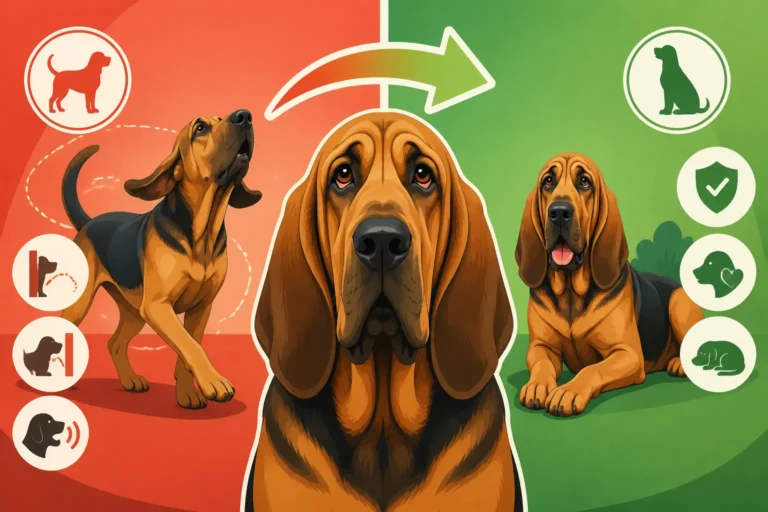
Ultimately, for many Bloodhound owners, the most realistic and responsible approach is to shift away from the expectation of a perfect outdoor recall and instead focus on excellent management. This means accepting that your Bloodhound will likely need to be on a long line or securely fenced at all times when outside the home. This isn't a failure on your part or your dog's; it's simply acknowledging the breed's incredible, innate drive.
Embrace activities that engage their nose in a safe, controlled way. Mantrailing, tracking, or even advanced nose work classes can provide an immense outlet for their natural talents. These activities allow them to use their nose to their heart's content, fulfilling their genetic purpose, and often lead to a much more content and tired dog at the end of the day. You might find that Mantrailing Is the Answer to a Bloodhound, Not Obedience for both stimulation and bonding. By managing their environment responsibly, you prevent dangerous situations and reduce the frustration of constant, failed recall attempts. It allows you to appreciate their amazing abilities without putting them at risk. Remember, a Bloodhound's nose is a gift, and learning to manage it safely is the best way to honor that gift.
Disclaimer
This article is for general informational purposes only and does not constitute professional advice. Laws, prices and regulations vary by location and change over time. Consult a qualified professional for guidance on your specific situation.