Getting a Bloodhound to Load Into a Vehicle
It's a familiar scene for many Bloodhound owners: you've got an adventure planned, maybe a trip to the vet, or even just a quick jaunt to the park, and your otherwise eager, lovable hound turns into a stubborn, immovable statue at the car door. Getting a large, sometimes hesitant, Bloodhound into a vehicle can feel like trying to herd a very heavy, very fragrant, uncooperative cloud. This guide is all about helping you understand why your big friend might be digging in their heels and, more importantly, how to make vehicle loading a calm, positive, and even enjoyable experience for both of you.
Understanding Why Your Bloodhound Might Resist Vehicle Loading
You love your Bloodhound, but sometimes their sheer size and independent spirit make certain tasks, like hopping into the car, surprisingly challenging. It's not usually defiance for defiance's sake; there are often very real reasons why they might be hesitant. Understanding these reasons is the first step toward finding a solution that works for them.
The Fear Factor and Negative Associations
Think about it from your Bloodhound's perspective. For many dogs, a car ride often means a trip to the vet for shots, a scary groomer, or being left alone somewhere new. If their past experiences with car travel have been predominantly negative or stressful, it's completely natural for them to develop an aversion to the vehicle itself. They might associate the sight of the open car door with something unpleasant, leading to reluctance, pulling away, or even a full-on freeze. Their incredible sense of smell also means they might pick up lingering scents of stress or fear from previous trips, making them even warier.
Even if they haven't had explicitly bad experiences, the sheer newness of a car or the feeling of being enclosed can be unsettling for some Bloodhounds, especially if they haven't been properly introduced to it. The rumble of the engine, the feeling of movement, and the unfamiliar smells can all contribute to anxiety. It's crucial to remember that their apprehension isn't a personal affront; it's a genuine emotional response.
Physical Challenges of a Large Breed
Let's be honest, Bloodhounds are big. They're heavy, they're often gangly as puppies, and even as adults, their size can make maneuvering into a vehicle a bit awkward. A standard car's back seat might require them to crouch uncomfortably or step over a high threshold. SUVs and trucks, while offering more space, often have a significant vertical jump that can be intimidating or even painful for a dog with developing joints or older, arthritic hips. You might think they can just jump, but a misstep or a slip can lead to injury, which only reinforces their reluctance.
Consider their unique physique too: those long ears can get tangled, and their loose skin can snag on things. For a dog that needs to be comfortable and secure, a challenging entry point can be a real barrier. It’s not just about getting in; it’s about how they get in and the physical effort involved. A comfortable entrance sets the tone for a comfortable ride. Remember, what seems like a small step to us can feel like a mountain to a large dog, especially if they're not confident in their footing.
Past Experiences and Learned Behavior
Dogs are creatures of habit and routine, and Bloodhounds are no exception. If your Bloodhound has always been able to jump in easily, then suddenly develops resistance, it's worth exploring if a specific incident triggered the change. Did they slip once? Did they get startled by a loud noise while trying to get in? Sometimes, a single negative event can create a lasting impression. Conversely, if they've learned that resisting means they don't have to go, they've successfully trained you!
Think about how you've handled loading them in the past. Have you ever gotten frustrated, tugged on their leash, or pushed them? While understandable in the moment, these actions can quickly become part of their learned association with car travel. Positive reinforcement is always the key, as Bloodhounds, like many hounds, respond much better to gentle guidance and rewards than to force. Consider what your Bloodhound will work for and use that to your advantage. What a Bloodhound Will Work For often involves high-value treats and enthusiastic praise.
Building Positive Associations and Foundational Training
Getting your Bloodhound to happily load into a vehicle isn't usually an overnight fix. It's a process of building trust, creating positive associations, and breaking down the action into manageable, reward-filled steps. Patience, as with all Bloodhound training, is truly a virtue here.
Starting with the Basics: Proximity and Calmness
Before you even think about getting them into the car, start by making the car a neutral, then positive, presence in their world. Begin by simply walking past the parked car with your Bloodhound on a leash. Don't force interaction; just let them sniff and observe. If they show any calm curiosity, offer a small, high-value treat and quiet praise. Gradually, work up to letting them approach the car, sniff the tires, and stand next to the open door without any pressure to get inside. The goal is to make the car seem like no big deal – just another part of their environment that sometimes offers treats.
You want them to be relaxed around the vehicle. Try feeding them meals next to the car, or playing a gentle game of "find it" with treats scattered around the bumper. The more positive experiences they have in the vicinity of the car, the less intimidating it will become. It's about slowly chipping away at any apprehension they might have, replacing it with comfort and even anticipation.
Lure and Reward Techniques
Once your Bloodhound is comfortable being near the vehicle, you can start introducing lure and reward techniques. Use their favorite high-value treat or a beloved toy to encourage them to take small steps towards the car door, then onto a ramp, and eventually into the vehicle itself. Hold the treat just out of reach, guiding their nose in the direction you want them to go. As soon as they take even a tiny step in the right direction, mark the behavior with a verbal cue like "yes!" or a clicker, and give them the treat.
Break the process into the tiniest increments:
- Look at the car: Treat!
- Walk towards the car: Treat!
- Put one paw on the ramp/threshold: Treat!
- Put two paws on the ramp/threshold: Treat!
This slow, deliberate approach ensures they're successful at each stage and associate the positive reward with moving closer to and into the car. The key is to never push or force them. If they resist, go back a step or make the current step even easier. BAXTER & Bella offers excellent resources on positive reinforcement training methods that can be easily adapted for teaching specific behaviors like vehicle loading, emphasizing patience and reward. Remember that How a Bloodhound Responds to a Raised Voice is usually not with eager compliance, so keep your tone calm and encouraging.
Introducing the Vehicle Gradually
With luring and rewarding, you'll start to introduce the actual vehicle. For some Bloodhounds, just getting a paw onto the floor of the car is a huge win. For others, it might be putting their front paws on a ramp. Keep the sessions short, positive, and end on a success. Don't try to get them all the way in on the first try if they're still hesitant.
Once they're comfortable with partial entry, you can work towards full entry. Once inside, immediately reward them. Don't close the door right away. Let them explore, sniff, and then calmly exit, rewarding them again. Repeat this several times. When they're comfortable getting in and out, try closing the door for a few seconds, then opening it and rewarding them. Gradually increase the time the door is closed, then start the engine, then move the car a few feet, always rewarding their calm behavior. This incremental approach helps them build confidence without being overwhelmed. Just as you would with Crate Training Suits a Bloodhound Puppy, slow and steady wins the race.
Practical Strategies for Different Vehicle Types
Bloodhounds come in all shapes and sizes, and so do the vehicles we transport them in. Tailoring your approach to your specific vehicle type can make a significant difference in your Bloodhound's comfort and willingness to load up.
Loading into Cars and Sedans
For lower-sitting cars and sedans, the primary challenge is often the threshold and the potentially confined space of the back seat. While a Bloodhound can certainly fit, the act of getting in can feel awkward. Here are some pointers:
- Open Both Back Doors: If possible, open both back doors. This creates a more open, less intimidating "tunnel" for your Bloodhound to walk through, making it feel less like they're being stuffed into a box. It also gives them the option to exit quickly if they feel too enclosed.
- Lure, Don't Lift: Forcing a large dog into a small space can be counterproductive and even dangerous for your back. Instead, use your lure-and-reward technique to guide them in. Toss treats onto the seat to encourage them to jump in themselves.
- Non-Slip Surfaces: If your car seats are slick leather or vinyl, consider a non-slip cover or a heavy blanket. A Bloodhound needs good traction to feel secure, especially when jumping or stepping into a confined space. This reduces the risk of slipping and potential injury.
- Practice Short, Positive Rides: Once they are loading comfortably, take them on very short, fun drives – perhaps just around the block to a dog-friendly spot, or even just sitting in the driveway for a few minutes. Make sure the destination is always positive, reinforcing the idea that car rides lead to good things, not just vet visits.
Navigating SUVs and Trucks with Ramps or Steps
SUVs and trucks offer more space, but the higher entry point can be a significant hurdle. This is where aids like ramps or portable steps truly shine.
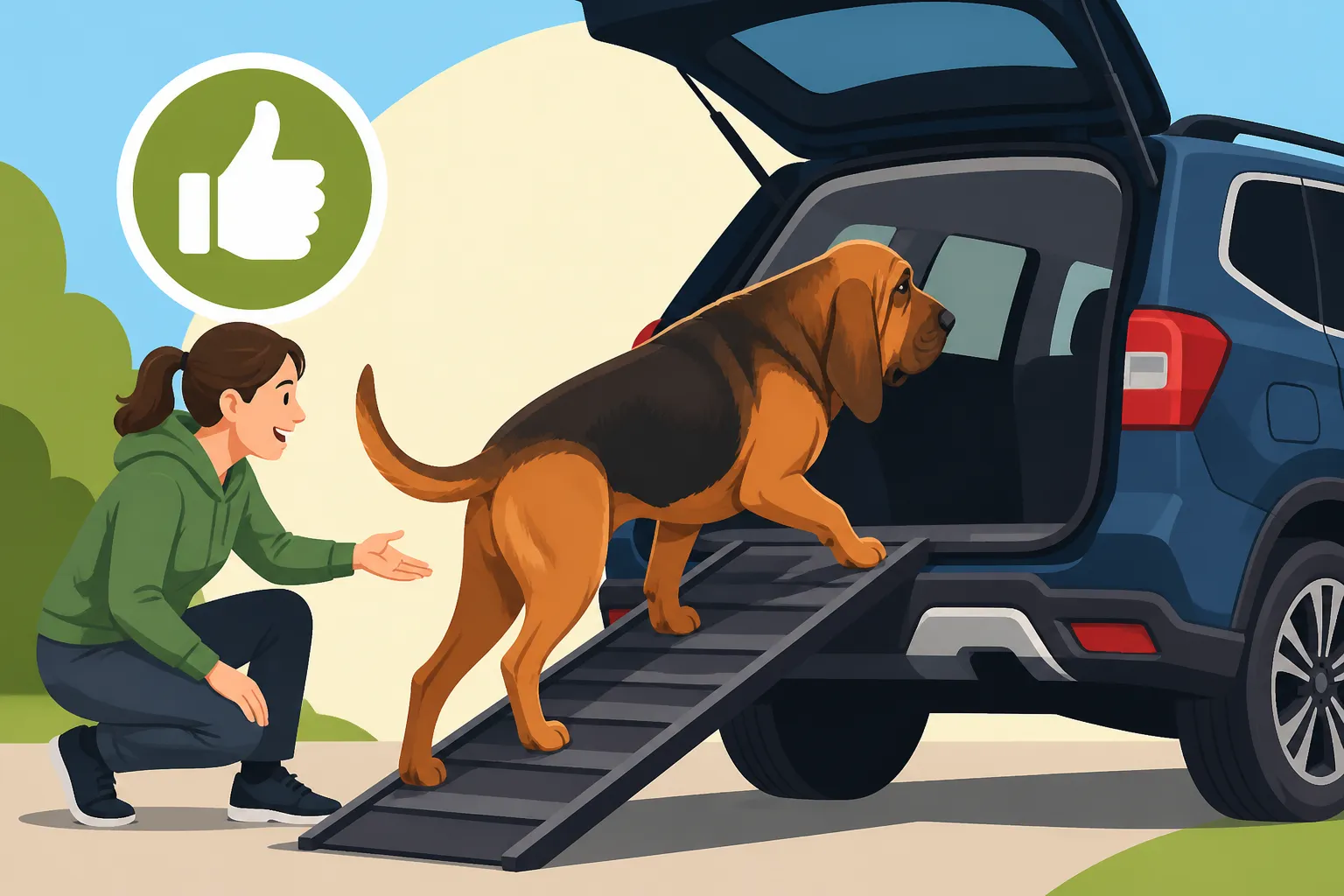
- Invest in a Quality Ramp or Steps: For a large breed like a Bloodhound, a sturdy, wide ramp or set of steps is almost a necessity, especially if you want to protect their joints long-term. Look for ramps with a non-slip surface and a gentle incline. Brands available on platforms like Amazon offer a wide variety of options, from telescoping ramps to sturdy foldable steps. When choosing, consider the height of your vehicle's cargo area or backseat and your dog's weight.
- Introduce the Ramp/Steps Separately: Don't just spring the ramp on them at the car. First, lay the ramp flat on the ground and let your Bloodhound investigate it. Lure them across it with treats, rewarding every step. Once they're comfortable walking on the flat ramp, prop it up slightly (e.g., against a curb) and repeat the process. Gradually increase the incline until they are comfortable walking up and down it when it's against your vehicle.
- Practice Entering and Exiting: Just like with the car itself, practice going up and down the ramp without immediately going on a trip. The goal is for them to see the ramp as a normal, easy way to access the car, not a stressful barrier to an unknown destination. Praise them lavishly for each successful traverse.
- Safety First: Always ensure the ramp is securely positioned and won't slip as your Bloodhound walks on it. Guide them gently but never force them up or down. A fall could set your training back significantly.
Crating for Safety and Comfort
For many Bloodhound owners, especially those who travel frequently or over long distances, crating their dog in the vehicle is the safest and most comfortable option. It provides a secure space, minimizes distractions, and offers a sense of den-like security.
- Choose the Right Crate: A travel crate should be large enough for your Bloodhound to stand up, turn around, and lie down comfortably. It needs to be well-ventilated and secure. For larger SUVs or truck beds (with a cap), a sturdy wire or plastic kennel often works well. For smaller spaces, a soft-sided crate might be an option if your Bloodhound isn't a chewer and is calm in the car. Check crash-tested crates for ultimate safety, as Whether a Bloodhound Should Ride Loose in a Car is generally not recommended for safety reasons.
- Crate Training is Essential: Before introducing the crate to the vehicle, ensure your Bloodhound is thoroughly crate trained at home. The crate should be a positive, safe space, not a punishment or a novelty. If Crate Training Suits a Bloodhound Puppy has been successful, integrating a car crate will be much smoother.
- Load the Crate First: If possible, load the empty crate into the vehicle, then encourage your Bloodhound to enter the crate. This can sometimes be easier than getting them directly into the vehicle and then into a crate.
- Secure the Crate: Always ensure the crate is securely fastened within the vehicle to prevent it from sliding or tipping during sudden stops or turns. Use bungee cords, cargo straps, or a non-slip mat underneath. A sliding crate can be terrifying for a dog and dangerous in an accident.
- Comfort and Familiarity: Put a familiar blanket or their favorite bed inside the crate. This familiar scent and comfort can help them settle more easily. A treat-dispensing toy can also provide a positive distraction during the initial moments of a car ride.
| Loading Method / Aid | Pros | Cons | Ideal For |
|---|---|---|---|
| Direct Jump-In | No extra equipment needed | High risk of joint injury, difficult for hesitant dogs | Small, agile dogs; very low-threshold vehicles |
| Pet Steps | Easier on joints than jumping, more compact | Can be unstable, some dogs hesitant with multiple steps | Smaller SUVs, dogs comfortable with stairs |
| Pet Ramp | Gentle incline, excellent for joint health | Can be bulky, requires training to use, takes up space | Large dogs, senior dogs, dogs with mobility issues |
| Car Crate | Highest safety, secure, familiar den space | Requires space, Bloodhound must be crate-trained, heavy to move | All vehicle types, long trips, anxious dogs |
| Harness & Seatbelt | Safer than loose, less bulky than crate | Still allows some movement, not crash-proof, dog still "loose" | Dogs comfortable in vehicles, shorter trips |
Addressing Common Challenges and Troubleshooting
Even with the best intentions and the most positive training, you might still hit a snag or two. Bloodhounds, with their unique personalities and powerful drive, sometimes need a little extra understanding and tailored troubleshooting.
When Your Bloodhound Still Refuses
It's disheartening when your Bloodhound, despite your efforts, still plants their feet and refuses to get in. Don't despair; this is a common challenge. First, rule out any physical discomfort or pain. If they've suddenly become reluctant, a vet check-up might be in order to ensure there isn't an underlying issue like arthritis or an injury that makes jumping or stepping painful. Hip and Elbow Dysplasia in the Bloodhound are conditions that can make vehicle entry uncomfortable.
If it's not physical, then it's likely a deeply ingrained fear or learned avoidance. Go back to square one, or even several steps back. Re-evaluate your reward system: are your treats high-value enough? For a Bloodhound, a piece of plain boiled chicken or cheese might be more motivating than a standard kibble treat. Break the process down into even smaller micro-steps. Can they just look at the car and get a treat? Can they just put a nose on the bumper? Celebrate any tiny move in the right direction. Sometimes, changing the environment can help too – try practicing at a different time of day when there are fewer distractions, or in a quieter location. If necessary, consider consulting a professional dog trainer or behaviorist who specializes in positive reinforcement. They can offer tailored strategies and hands-on guidance.
Managing Excitement and Over-Arousal
On the flip side, some Bloodhounds aren't afraid of the car; they're too excited. They might bound around, bark, or try to jump in haphazardly, making the loading process chaotic and potentially dangerous. This over-arousal can stem from excitement about the destination (a walk in the park!) or just general high energy.
Before even approaching the car, try to burn off some of that excess energy. A good sniff-walk around the yard or a short game of fetch can help them feel more settled. How Much Exercise a Bloodhound Actually Needs can vary, but ensuring they've had some mental and physical stimulation beforehand is key. Implement a calm routine: "sit" before opening the car door, "wait" before being invited into the car. Reward calm behavior heavily. You might need to practice calming exercises away from the car, teaching them to settle on a mat or perform simple obedience cues in distracting environments. The goal is to channel their enthusiasm into focus, making "car time" a structured, predictable event rather than a free-for-all.
Consistency and Patience Are Key
Training a Bloodhound, especially when addressing deep-seated reluctance or managing intense excitement, requires monumental consistency and patience. Bloodhounds are incredibly intelligent but can also be single-minded when following their nose or pursuing their own agenda. If you sometimes allow them to resist, or you sometimes get frustrated and resort to pushing, you're sending mixed signals that will only confuse them and prolong the training process. Whether a Bloodhound Is Stubborn or Just Busy is a question many owners ask, but consistency helps clarify expectations.
Every interaction around the car, even just walking past it, is an opportunity for training. Make it a rule: no getting into the car until they are calm and follow your cue. This might mean standing by the car for several minutes until they offer a moment of stillness, then immediately rewarding and inviting them in. Short, frequent training sessions (5-10 minutes, several times a day) are often more effective than one long, frustrating session. Remember, the journey is just as important as the destination. With a Bloodhound, building a positive relationship around every aspect of their care, including car travel, makes for a much happier life together. The First Year With a Bloodhound That Already Wants to Trail is a critical time for establishing good habits, and that includes car manners.
Disclaimer
This article is for general informational purposes only and does not constitute professional advice. Laws, prices and regulations vary by location and change over time. Consult a qualified professional for guidance on your specific situation.