How High a Bloodhound Can Climb a Fence
It's a common misconception that Bloodhounds are lazy, lumbering dogs content to nap all day. Many new owners, lured by their sweet, gentle demeanor, assume a standard fence will be perfectly adequate. The harsh reality, however, is that a motivated Bloodhound, with an irresistible scent on the breeze, can become an escape artist of epic proportions, and understanding just how high they can climb a fence is critical to keeping them safe and sound. This guide will delve deep into the surprising athleticism of these scent-driven hounds and arm you with the knowledge to secure your property effectively.
The Overlooked Athleticism of a Scent Hound
When you picture a Bloodhound, you might imagine a slow-moving, droopy-faced dog, perhaps a bit clumsy. It's easy to underestimate their physical capabilities, especially when they're lounging around the house. But don't let that serene exterior fool you. These dogs were bred for endurance and relentless pursuit over varied terrain, and when their nose tells them there's something to investigate on the other side of a barrier, their natural athleticism kicks into high gear. They might not be sprinters or high jumpers in the conventional sense, but their sheer determination and surprisingly powerful hindquarters make them formidable climbers.
Scent as the Ultimate Motivator
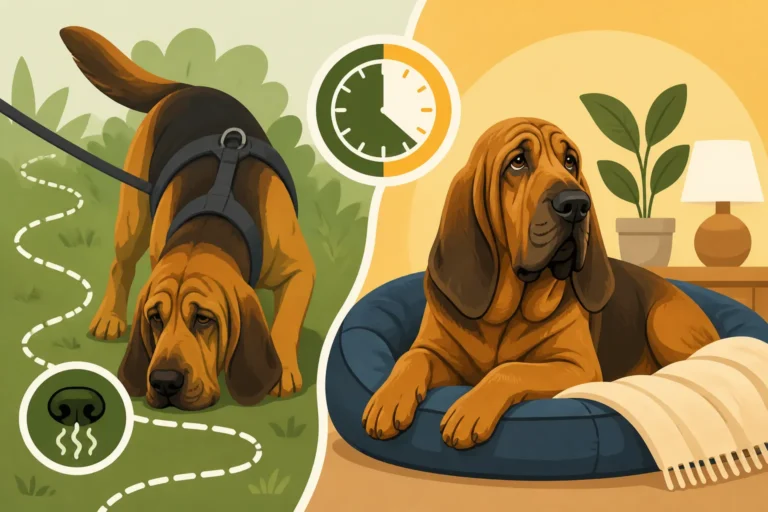
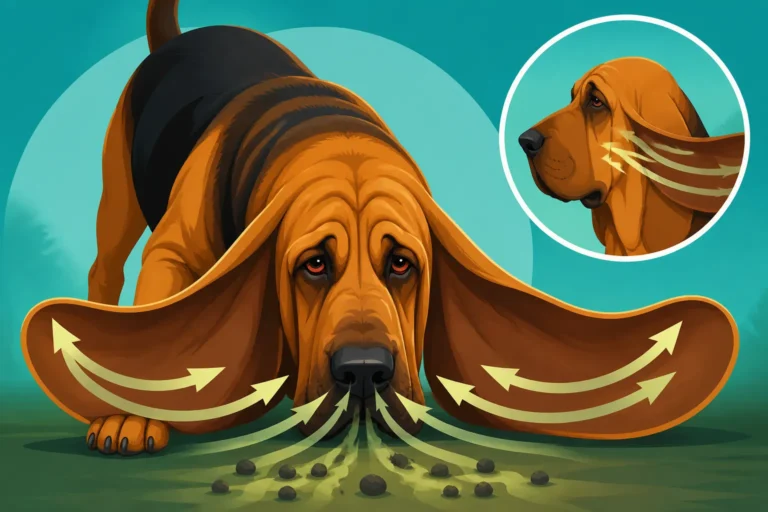
For a Bloodhound, scent isn't just a casual interest; it's their entire world. Imagine the most delicious smell you've ever encountered, amplified a thousand times, and then imagine it's just beyond your reach. That's what an intriguing scent is to a Bloodhound. This powerful drive can override discomfort, fatigue, and even a natural aversion to scaling obstacles. A whiff of a rabbit, a deer, or even a human trail can transform a seemingly placid hound into a determined athlete. They don't jump fences out of malice or disobedience; they do it because their biology compels them to follow that scent, often with single-minded devotion. This is precisely why Why Off Leash Is Not a Goal With a Bloodhound is such a crucial piece of advice for any Bloodhound owner. Once that nose goes down, the ears might as well be closed to anything else.
This isn't to say every Bloodhound will scale Mount Everest for a squirrel, but it does mean their motivation to overcome barriers is far greater than many other breeds. They aren't looking for trouble; they're looking for information, and a fence is just another part of the puzzle. They might test a fence line, looking for weaknesses, or they might simply see a scent leading over it and decide that's the path they need to take.
Physical Prowess Underestimated
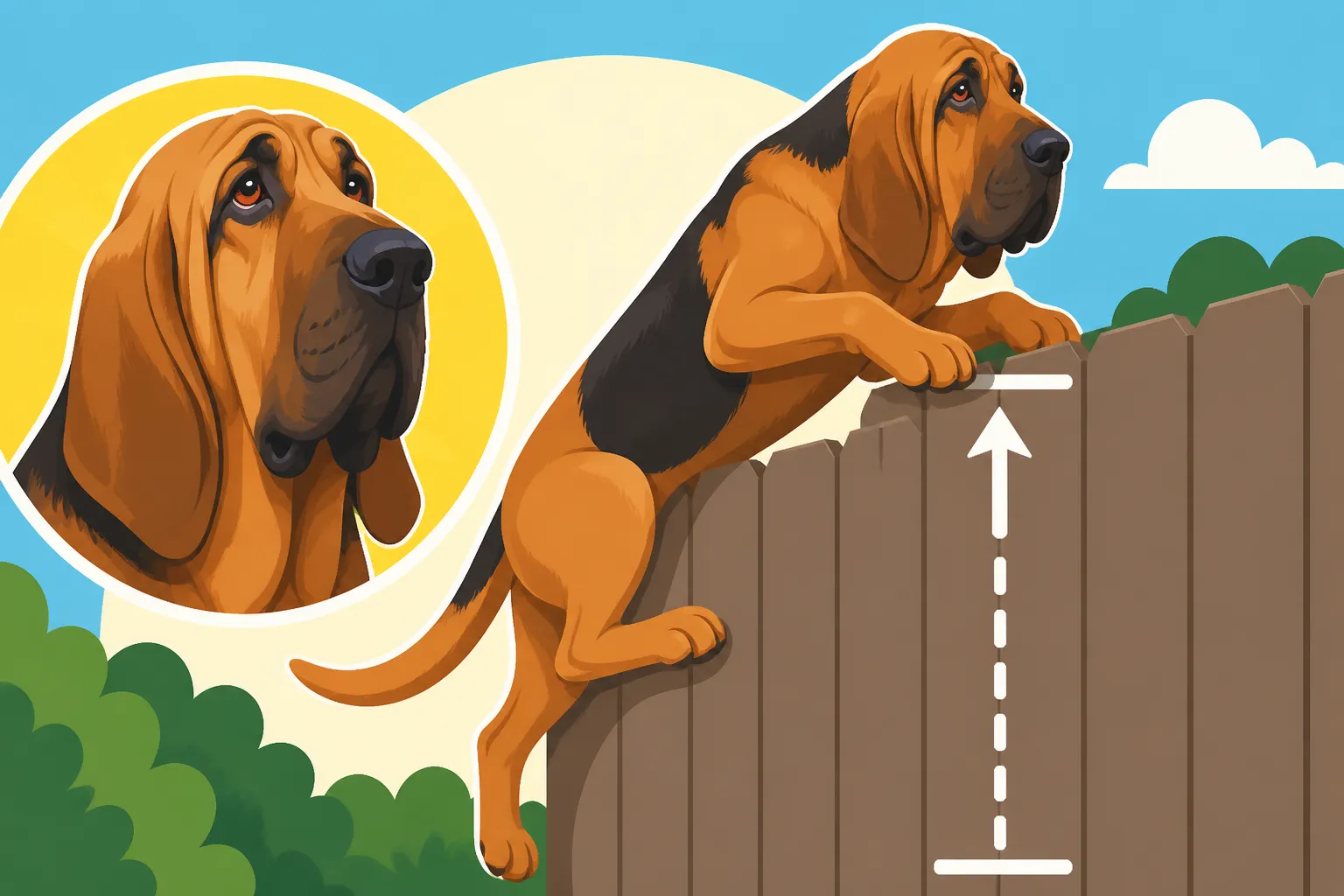
While they may not have the sleek, agile build of a Border Collie, Bloodhounds possess incredible strength and surprising dexterity. Their long, muscular legs are built for covering vast distances, and their powerful hindquarters can provide the necessary thrust to get them up and over. They aren't necessarily jumping cleanly, but rather finding purchase and pulling themselves up. Think less of a high jump and more of a determined scramble. Their heavy bones and substantial weight don't necessarily impede them; in some cases, their sheer mass combined with grip can be an advantage.
Furthermore, a Bloodhound's loose skin and dewlaps, while often seen as purely aesthetic or for scent gathering, can actually aid them in certain climbing situations. While not a climbing harness, it allows for flexibility and can prevent snags that might deter a dog with tighter skin. Their large paws provide good traction, and their intelligence, especially when it comes to problem-solving related to scent, can lead them to discover footholds or leverage points on a fence that you might never consider. They are persistent creatures, and persistence combined with physical strength makes for a surprisingly capable climber.
The Realistic Heights a Bloodhound Can Clear
So, you're probably wondering, how high can these determined hounds actually climb? There's no single definitive answer, as it depends on a myriad of factors, but it's safe to say that many standard residential fences simply aren't enough. Owners often lament losing their Bloodhounds over fences that would contain other large breeds, simply because the Bloodhound's drive and ingenuity are unique.
Factors Influencing Climb Height
Several elements play a significant role in determining just how high a Bloodhound can manage to get over. It's not just about the dog's physical ability, but also the environmental context and their internal motivation.
- Fence Material and Design: A smooth, solid privacy fence (like vinyl or solid wood) that offers no toeholds is much harder for a Bloodhound to scale than a chain-link fence. Chain link is practically a ladder for a determined dog, allowing them to get their paws and even dewlaps in for leverage. Vertical slats on a wood fence can also be used as toeholds if the gaps are wide enough or the wood is old and splintered. A leaning fence, even slightly, can offer just enough angle for them to get a boost.
- Adjacent Structures: This is a big one. A shed, a dog house, a pile of firewood, a trash can, a retaining wall, or even dense shrubbery right next to the fence can provide a convenient stepping stone. I've heard stories of Bloodhounds using snow drifts that piled high against fences in winter, transforming a six-foot barrier into a two-foot hop. Always check what's near your fence that could give your hound a boost.
- Motivation Level: As discussed, a high-value scent is the ultimate motivator. A Bloodhound might be perfectly content within a four-foot fence for months, but the moment a female in heat or a delectable deer trail passes by, that fence instantly becomes a minor inconvenience rather than an insurmountable barrier. Their drive to follow a trail is unparalleled.
- Age and Physical Condition: A healthy, adult Bloodhound in its prime (roughly 1 to 6 years old) will be the most capable climber. Puppies and very senior Bloodhounds might have less agility or strength. However, even an older Bloodhound with a lingering scent memory can surprise you. Remember, The Age a Bloodhound Is Considered Senior means their energy levels might drop, but their nose is still fully functional. A lean, fit Bloodhound might also find climbing easier than an overweight one.
Real-World Examples and Anecdotes
You'd be amazed at the stories Bloodhound owners tell. I've heard of Bloodhounds scaling six-foot chain-link fences with relative ease, using the diamond pattern as a ladder. They don't just jump; they climb, using their powerful legs to propel themselves upwards and their front paws to grab and pull. Some have been known to "spider-man" up solid fences by finding even the smallest cracks or imperfections to get a grip, or by simply bracing themselves against the fence and scrambling.
Consider this: if a Bloodhound can push open a gate or dig under a fence with enough determination, they can certainly find a way over a fence that presents a clear path to an enticing scent. They are problem-solvers by nature, and while their focus is usually on solving scent puzzles, that same drive can be applied to physical barriers. It's not uncommon for a Bloodhound to spend time surveying a fence, finding a weak spot, or recognizing an opportunity presented by a nearby object. They might not be the most graceful, but they are incredibly persistent.
| Fence Type | Typical Height | Climb Difficulty for a Bloodhound | Notes |
|---|---|---|---|
| 4-foot Chain Link | Low | Very Easy | Acts as a ladder. Minimal barrier for a motivated Bloodhound. |
| 6-foot Chain Link | Medium | Easy to Medium | Still climbable, especially if motivated. Less agile dogs might struggle more, but many succeed. |
| 4-foot Solid Wood | Low | Easy to Medium | Can be cleared with a running jump, or by using adjacent objects. |
| 6-foot Solid Wood | Medium | Medium to Hard | Difficult if truly smooth and no footholds. Possible with strong motivation or a boosting object. |
| 8-foot Solid Wood | High | Hard | Generally effective if smooth and free of adjacent aids. |
| Invisible Fence | N/A | No Physical Barrier | Only a deterrent; a Bloodhound's scent drive can easily override the static correction. Whether an Invisible Fence Stops a Bloodhound is a critical question for owners. |
Preventing the Great Escape: Fence Security for Bloodhounds
Knowing that your sweet-faced hound is a potential fence-climber can be a bit daunting, but there are absolutely effective strategies to keep them safely contained. The key is to think like a Bloodhound – or, rather, think about what motivates a Bloodhound – and address those points of escape.
Building a "Bloodhound-Proof" Fence
When it comes to securing your yard, you need to go beyond standard recommendations. For a Bloodhound, a truly secure fence usually means one that is tall, smooth, and has no escape routes.
- Height is Paramount: A minimum of a six-foot fence is almost mandatory for a Bloodhound, and many experienced owners will advocate for an eight-foot fence, especially if you have a particularly athletic or scent-driven individual. If you opt for chain link, remember it acts as a ladder, so eight feet is truly the safer bet. For solid fences, ensure there are no horizontal rails on the inside that your dog could use to climb.
- Address Digging: While this article focuses on climbing, digging is another common Bloodhound escape method. You'll need to install a dig guard along the bottom of your fence, such as burying chicken wire or a section of concrete footing horizontally along the fence line, extending outward at least 18-24 inches. This prevents them from simply tunneling under.
- Fence Toppers and L-Footers: For fences that are six feet, adding an "L-footer" or "coyote roller" at the top can be incredibly effective. An L-footer extends inward at the top of the fence at a 45-degree angle, making it impossible to get a purchase to pull over. Coyote rollers are round pipes that spin, preventing a dog from getting a grip. These can often be found through retailers like Amazon and are a worthwhile investment.
- Eliminate Climbing Aids: Scrutinize your yard for anything that could give your Bloodhound a leg up. Move dog houses, sheds, sturdy planters, woodpiles, or even large rocks away from the fence line. Trim back any sturdy tree branches that hang over the fence. Remember that any slight elevation, even a dip in the terrain that creates a higher launch point, can be exploited.
Environmental Enrichment and Training
Physical barriers are crucial, but they're only half the battle. A bored or under-exercised Bloodhound with an insatiable nose is far more likely to try and escape than one who is mentally and physically satisfied.
- Scent Work is Key: Bloodhounds need to use their noses. It's not a luxury; it's a fundamental requirement for their well-being. Engaging them in regular mantrailing, tracking, or even simple "find it" games in the house can fulfill this deep-seated need. Organizations like BAXTER & Bella offer online courses and resources that can help you get started with positive reinforcement training and enrichment activities, channeling that incredible nose drive into acceptable outlets. Mantrailing Is the Answer to a Bloodhound, Not Obedience for a reason – it taps into their core identity.
- Adequate Exercise: While often perceived as lazy, Bloodhounds do need consistent, moderate exercise to stay healthy and happy. Long, leashed walks where they can sniff to their heart's content are far more valuable than off-leash romps in an unsecured area, which is highly risky. Aim for at least an hour or two of focused activity daily. Remember How Much Exercise a Bloodhound Actually Needs is often more than people assume.
- Supervision: Even with the most secure fence, supervision is still your best friend. Never leave a Bloodhound unattended in a yard for extended periods, especially if they have a history of escapes or if there's a strong scent stimulus in the air. Many escapes happen when owners believe their dog is "safe" and run inside for "just a minute."
- Microchipping and ID: Despite your best efforts, escapes can still happen. Ensure your Bloodhound is microchipped and wears a collar with up-to-date ID tags at all times. This dramatically increases the chances of a safe return. Consider a GPS tracking collar for an extra layer of security. Whether a Microchip Is Enough for a Bloodhound – it's a good start, but more is better.
The Grave Consequences of a Bloodhound Escape
Beyond the frustration and the cost of repairing fences, the consequences of a Bloodhound escaping can be severe, both for the dog and for the community. It's a risk no responsible owner wants to take.
Dangers to the Bloodhound
Once a Bloodhound picks up a compelling scent, they become oblivious to their surroundings. They'll follow that trail through anything and over anything.
- Traffic Accidents: This is arguably the biggest risk. A Bloodhound on a scent trail will not look both ways before crossing a street. They are utterly focused, making them extremely vulnerable to being hit by a car. The sheer number of lost Bloodhounds involved in traffic incidents is heartbreakingly high.
- Getting Lost and Injured: Bloodhounds can cover vast distances surprisingly quickly when on a trail. They can become disoriented, wander into unfamiliar or dangerous territory, or get snagged on fences and barbed wire, sustaining injuries. How Far a Loose Bloodhound Will Travel can be many miles, far beyond what you'd expect.
- Exposure to Wildlife: Depending on your area, an escaped Bloodhound could encounter wildlife, leading to altercations, bites, or exposure to diseases. They might also unintentionally chase and stress local livestock.
- Dehydration and Exhaustion: Following a scent can lead to hours of strenuous activity, especially in hot weather. Without access to water or rest, they can suffer from heatstroke or severe dehydration.
Dangers to Others
While Bloodhounds are generally gentle and friendly dogs, an escaped dog can still pose risks to others, even unintentionally.
- Causing Accidents: A large dog wandering loose in traffic can cause drivers to swerve, leading to accidents. Their size alone can be startling to pedestrians.
- Property Damage: While typically not destructive, a lost Bloodhound might try to dig under or climb over other fences to follow a scent, potentially damaging someone else's property in the process.
- Legal Ramifications: If your escaped Bloodhound causes an accident, injures another animal, or damages property, you could face legal liability, including fines, vet bills, or even lawsuits. Local animal control might also impound your dog, incurring further fees and potential behavioral evaluations. This is why investing in proper containment upfront is always the wiser, more responsible choice.
Disclaimer
This article is for general informational purposes only and does not constitute professional advice. Laws, prices and regulations vary by location and change over time. Consult a qualified professional for guidance on your specific situation.