The Age a Bloodhound Can Start Serious Trailing
It's a common misconception that Bloodhounds are born ready for serious trailing, or that you have to wait until they're a year or more old before you can even think about formal scent work. Many new Bloodhound owners find themselves bursting with excitement, eager to unleash that legendary nose, but they're often unsure where to begin or when the "right time" is. The truth is, while their instinct is powerful from day one, preparing a Bloodhound for serious trailing is a journey that involves careful timing, foundational work, and a deep understanding of their physical and mental development. This guide will help you navigate the stages of your Bloodhound's growth, ensuring you introduce formal scent work at the optimal age to foster a healthy, enthusiastic, and highly effective trailing partner.
Understanding the Bloodhound's Natural Trailing Instinct
The Bloodhound's nose isn't just a powerful tool; it's a fundamental part of their being. From the moment they're born, their world is primarily experienced through scent, and their instinct to follow intriguing odors is hardwired. This inherent drive is what makes them such unparalleled scent-detection dogs, capable of unraveling intricate scent puzzles that would baffle any other breed. But understanding when this instinct matures into something trainable for serious work is key to harnessing it effectively.
When the Instinct First Appears
Even as tiny pups, Bloodhounds are exploring their environment with their noses. You'll notice them rooting around in their bedding, following the scent of their mother, and later, the distinct smells of their littermates and new surroundings. This isn't formal trailing, of course, but it's the very beginning of their lifelong obsession with scent. They're constantly gathering information, categorizing smells, and learning what's "normal" and what's interesting. This early exploration is crucial for their sensory development and lays the groundwork for later training. Don't underestimate the power of these innocent puppy investigations; they're literally training their brains to process a world of smells.
As they grow, usually around 8-12 weeks, their curiosity becomes more pronounced. A dropped treat, a family member walking into another room, or even the faint scent of a neighborhood cat can capture their attention completely. They'll drop their heads, sniff furiously, and follow that invisible thread with an intensity that can surprise a new owner. This is where you first glimpse the potential, the raw talent that makes a Bloodhound special. It's not about complex trails yet, but about encouraging that innate desire to explore through scent, to find the "source" of an interesting smell, whatever it may be.
The Difference Between Play and Purpose
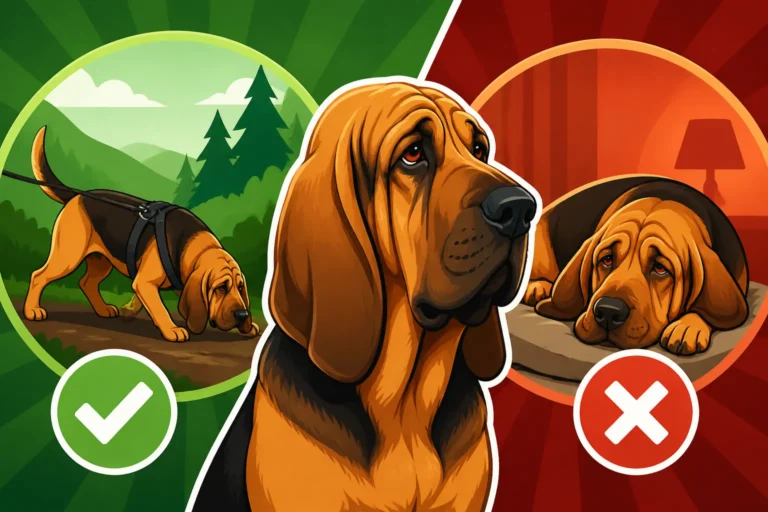
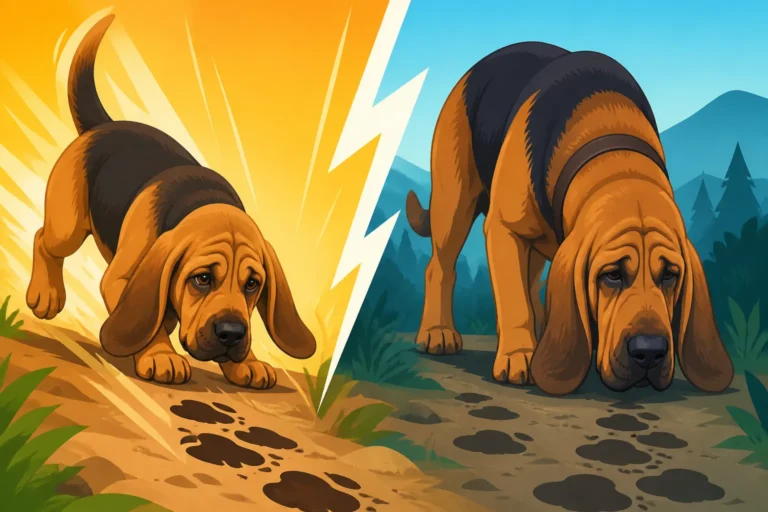
It's easy to mistake a puppy's enthusiastic sniffing for serious trailing readiness. They might follow your scent around the house or track a dropped toy with great gusto, and it's certainly fun to watch! However, there's a significant difference between this instinctual play and the focused, sustained work required for "serious trailing." Play is often driven by immediate gratification – finding the toy, getting the treat – and lacks the deliberate commitment to a specific, aged human scent over varied terrain and distractions.
Serious trailing, especially the kind that leads to certifications or real-world search work, demands mental fortitude, endurance, and a deep understanding of the task. It requires the dog to ignore environmental distractions, differentiate target scent from ambient smells, and communicate their findings clearly. A young puppy, while brimming with scent drive, simply doesn't have the mental maturity, attention span, or physical stamina for this kind of rigorous work. Their "purpose" in puppyhood is still primarily play, exploration, and learning about their world in a joyful, low-pressure way. We want to nurture that love for scent without demanding too much too soon, which could inadvertently extinguish their natural enthusiasm.
Puppyhood and Foundational Scent Games
You absolutely don't have to wait until your Bloodhound is a year old to start engaging their nose! In fact, the opposite is true. Puppyhood is the perfect time to build a strong foundation, making future serious trailing much smoother and more enjoyable for both of you. It's all about making scent work a positive, rewarding, and natural part of their lives, without any pressure to perform.
Gentle Introductions to Scent
The earliest "training" should feel like a game. Think hide-and-seek with a twist. Start with simple scent articles – perhaps a worn sock of yours or a small piece of cloth rubbed on your skin – and hide it just out of sight, a few feet away. Let your puppy watch you hide it initially, and then encourage them to "find it!" When they do, celebrate with enthusiastic praise and a delicious treat. The goal here is to connect the scent article with a positive outcome. As they get the hang of it, you can make the hides slightly harder, perhaps behind a chair or under a blanket, gradually increasing the "distance" of the trail to a few yards. This isn't about covering vast distances or deciphering complex trails, but about building confidence and enjoyment in using their nose.
It's also about introducing the concept of a "start scent" and understanding that they are looking for that specific scent. For more detailed guidance, you might find articles like How to Introduce a Bloodhound Puppy to a Scent Article incredibly helpful. These early games should always be fun, short, and end on a high note. We're building their "work ethic" in a gentle, positive way, teaching them that focusing on scent leads to wonderful things. You can even try hiding yourself in a very easy spot, letting them "find" you by scent, and then showering them with affection and treats. This reinforces the idea that finding a person is the ultimate reward.
Building Drive and Engagement
As your Bloodhound puppy grows, you can start to subtly increase the challenge. Instead of watching you hide the scent article, have someone hold the puppy while you walk a very short, straight line (think 5-10 feet) and drop the article, then walk away. Then, bring the puppy to the "start" of your walk, present the scent article, and encourage them to follow. This is their first taste of a true "runaway" scenario, albeit a tiny one. The person they're trailing should be someone they adore, making the "find" extra rewarding. Remember, the focus is still on success and fun. The First Runaway a Bloodhound Puppy Should Follow provides excellent insights into this stage.
You want to make the "chase" irresistible. Use high-value treats and enthusiastic praise when they succeed. Think of it as cultivating their inner detective. You're teaching them that their nose is their superpower, and using it leads to great things. Avoid any pressure or frustration if they get distracted. Gently redirect them, re-present the scent, and make it easier if necessary. The goal is to build a dog that wants to follow scent more than anything else, a dog that is engaged and excited by the prospect of a "trail." This foundation, built on positive reinforcement and play, is far more effective than trying to impose strict obedience on a young Bloodhound with a mind of its own.
Transitioning to Formal Training
Once your Bloodhound has a solid foundation of scent games and a clear enthusiasm for using their nose, you can start to think about more formal training. However, "formal" doesn't mean rigid or boring; it means structured, progressive, and mindful of their physical and mental development. This is where we bridge the gap between playful sniffing and purposeful trailing.
Physical Maturity and Readiness
One of the most critical aspects of starting serious trailing is ensuring your Bloodhound is physically ready. Bloodhounds are large breed dogs, and their growth plates close later than smaller breeds. Pushing them too hard, too fast, can lead to serious joint problems like hip and elbow dysplasia. Generally, most Bloodhound puppies are not considered physically mature enough for strenuous, sustained work until they are at least 12-18 months old, with some lines maturing even later.
During their first year, their bones, joints, and ligaments are still developing. While short, low-impact scent games are fine, long, challenging trails over varied, difficult terrain should be avoided. Imagine asking a human toddler to run a marathon; it just wouldn't be safe for their growing body. Pay attention to your dog's gait, energy levels, and any signs of discomfort. Consult with your veterinarian to understand when their growth plates are likely closed and when they are physically cleared for more demanding activities. This patience in their physical development is an investment in their long-term health and trailing career.
Mental Development for Focused Work
Beyond physical maturity, mental readiness is equally important. A Bloodhound puppy, while bright and driven by scent, typically has a shorter attention span and can be more easily distracted than an adult. Serious trailing requires sustained focus, problem-solving skills, and the ability to work independently while still responding to their handler's cues. This mental fortitude develops with age and experience.
Around 6-12 months, your Bloodhound will still be in their "adolescent" phase. They might be testing boundaries, easily distracted by squirrels or interesting smells that aren't the target scent, and generally more inclined to "do their own thing." This is normal! Continue with short, engaging sessions, gradually introducing mild distractions and increasing the duration and complexity. By 12-18 months, many Bloodhounds begin to show a more consistent focus and a better understanding of the trailing task. They start to grasp the concept that a specific scent is the priority, even amidst other tempting odors. This mental shift is crucial for their success in serious trailing.
The Role of a Mentor or Trainer
As you consider moving into serious trailing, finding an experienced mentor or professional trailing instructor is invaluable. While it's certainly possible for Whether an Average Owner Can Train a Bloodhound to Trail, having expert guidance can dramatically accelerate your progress and prevent common pitfalls. A good trainer can help you:
- Read your dog: Understanding your Bloodhound's body language on a trail is critical. When are they truly on scent? When are they distracted? An experienced eye can teach you how to interpret their subtle cues.
- Lay effective trails: There's an art to laying trails that are challenging but achievable, progressively building your dog's skills without overwhelming them.
- Troubleshoot issues: Every dog encounters difficulties. A mentor can help you identify why your Bloodhound might be losing the scent or getting sidetracked and offer strategies to overcome these challenges.
- Introduce new concepts: Things like turns, varying terrain, urban trailing, or working older scents require specific techniques and progressive introduction.
Look for trainers who specialize in Bloodhounds or scenthounds, or those with extensive experience in mantrailing, human remains detection (HRD), or search and rescue (SAR). These individuals understand the unique Bloodhound temperament and their scenting abilities. Organizations like the American Bloodhound Club can often provide recommendations for reputable trainers and training groups in your area. Enrolling in local classes or workshops can also connect you with a supportive community of like-minded individuals.
Serious Trailing: The Right Age and Approach
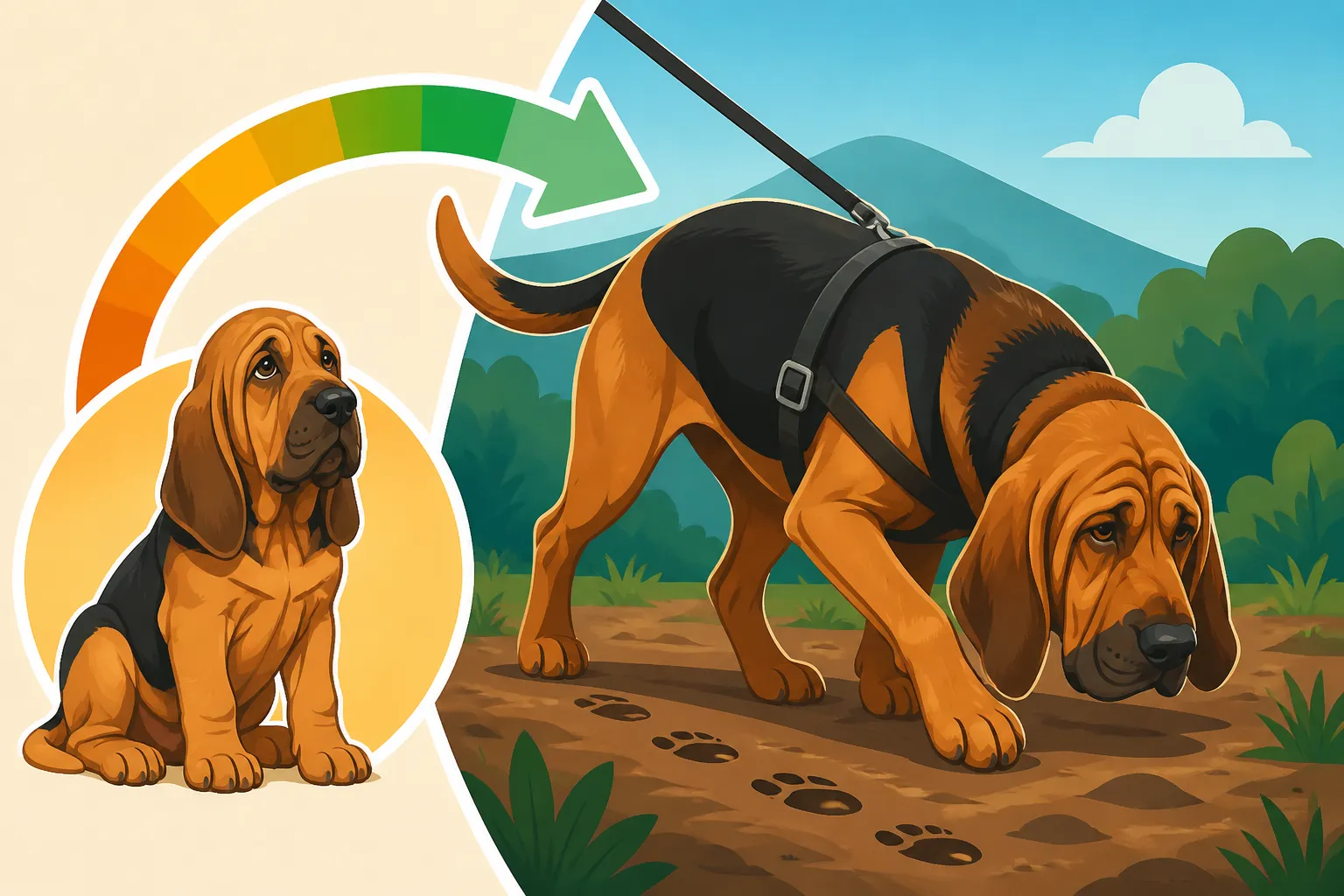
So, when does "play" officially transition into "serious trailing"? For most Bloodhounds, the sweet spot for beginning true, purposeful trailing work often falls between 12 and 18 months of age, provided they have that strong foundation from puppyhood. This isn't a hard-and-fast rule, as every dog develops at its own pace, but it's a general guideline when both physical and mental maturity start aligning.
Defining "Serious Trailing"
What do we mean by "serious trailing"? It's more than just following a short scent path in the backyard. Serious trailing involves:
- Consistent work on varied terrain: Moving from groomed parks to rough woods, urban environments, or even through water.
- Tracking aged scent: Following trails that are hours, or even days, old. For insight into how incredible their noses are, consider How Old a Trail a Bloodhound Can Follow.
- Handling distractions: Working effectively around people, other animals, traffic, and strong ambient odors.
- Endurance: Sustaining focus and effort for longer periods, potentially covering significant distances. How Long a Bloodhound Can Work Before It Tires delves into this aspect.
- Purposeful communication: The dog is not just finding a person, but indicating the find and staying focused on the task with a handler.
At this stage, your training sessions will become more structured. You'll likely be working on specific skills like scent discrimination (identifying one person's scent among many), cornering, traversing different surfaces, and extending the length and age of the trails. It's truly incredible to witness a Bloodhound's nose in action when they are fully engaged in serious trailing, demonstrating their unparalleled ability to follow What a Bloodhound Is Actually Smelling on a Trail.
Tailoring Training to the Individual Dog
While general age ranges provide a framework, it's absolutely crucial to tailor your training approach to your individual Bloodhound. Just like people, dogs have different personalities, learning speeds, and physical capabilities.
- The Early Bloomer: Some Bloodhounds might show exceptional focus and physical readiness earlier than others. If your dog is mature for their age, eager, and physically sound, you might gently increase the challenge a bit sooner.
- The Late Developer: Conversely, some Bloodhounds take a little longer to "grow into their paws" both physically and mentally. Don't rush these dogs. Pushing them too hard will only lead to frustration or potential injury. Patience is your best tool. Keep the sessions fun, build their confidence, and they will get there when they are ready.
- Health Considerations: Always keep your Bloodhound's health in mind. Any lameness, respiratory issues, or other health concerns should be addressed by a vet before increasing the intensity of training. A dog in pain cannot perform its best and risks further injury.
Listen to your dog. Are they still having fun? Are they showing signs of fatigue or stress? Are they still enthusiastic about the harness and heading out to work? These are all indicators that you're on the right track or that you might need to dial back the intensity. Remember, you want to cultivate a lifelong love for scent work, not burn them out before they've even truly begun.
Avoiding Burnout and Overwhelm
It's tempting, especially when you have such a talented dog, to train every single day or make every session super intense. However, this can quickly lead to burnout or overwhelm, particularly in a young Bloodhound. Their enthusiasm and drive are precious, and we want to protect them.
- Keep it fun: Always end sessions on a positive note. If you feel frustration creeping in, take a break.
- Short, frequent sessions: Especially in the beginning, shorter sessions (20-30 minutes) are often more effective than one long, exhausting one. They maintain focus and keep the dog eager for the next session.
- Vary your training: Don't just do the same type of trail every time. Mix up the location, the length, the age of the scent, and even the "quarry" (the person being tracked).
- Rest and recovery: Just like human athletes, Bloodhounds need downtime. Allow for rest days between more intense training sessions.
- Positive reinforcement: Always, always reward generously for effort and success. Whether it's high-value treats, a favorite toy, or enthusiastic praise, make it clear that they're doing a great job.
A Bloodhound that enjoys its work will be a much more effective and reliable trailing partner in the long run. Building that solid, joyful foundation ensures they approach every trail with gusto, ready to put that incredible nose to work.
Essential Gear and Resources for Serious Trailing
Embarking on serious trailing with your Bloodhound means investing in the right equipment and knowing where to find ongoing support and education. The gear doesn't have to be fancy, but it does need to be functional and safe for both you and your dog.
Harnesses and Long Lines
These are your absolute foundational tools for trailing. A properly fitted harness is paramount. You want a Y-front or H-back harness that allows full range of motion for your Bloodhound's shoulders and doesn't put pressure on their throat or impede their breathing. Avoid harnesses that restrict movement or have straps that rub in sensitive areas. For serious trailing, the harness becomes the dog's "uniform," signaling that it's time to work. Which Harness a Bloodhound Trails In can give you more specific ideas about suitable types.
Alongside the harness, a long line is essential. Forget short leashes; a Bloodhound needs length to work. Lines typically range from 15 to 30 feet, sometimes even longer for experienced teams working open areas. This allows your Bloodhound to follow the scent naturally, making turns and changes in direction without you constantly pulling them off track. It also gives them the space to cast widely and confirm the scent. The material should be comfortable to hold (even when wet or dirty), durable, and easy to clean. Many handlers prefer biothane or similar synthetic materials over traditional rope or nylon for their easy maintenance and grip. You can find a wide variety of options for both harnesses and long lines on platforms like Amazon, often with detailed reviews from other working dog owners. For budgeting, consider researching What a Mantrailing Harness and Long Line Cost before you shop. Remember, Why a Bloodhound Works on a Long Line, Not a Collar is crucial for their comfort and ability to focus on the scent.
Training Resources and Communities
While a good mentor is invaluable, there are many other resources available to support your trailing journey:
- Books and Online Courses: Several excellent books cover the fundamentals of scent work and trailing. Online courses and video tutorials can also offer flexible learning opportunities, often from renowned experts. You might even find comprehensive programs, like those offered by BAXTER & Bella, that cover not just basic obedience but also introduce elements of nose work and more advanced skills, setting a great foundation for any specialized training.
- Trailing Clubs and Associations: Joining a local or national Bloodhound club (like the American Bloodhound Club) or a general trailing club can connect you with experienced handlers, training events, and certifications. How a Bloodhound Is Certified for Search Work is a great next step to learn about official recognition. These groups often host seminars and workshops, which are excellent for hands-on learning and networking. Look up What a Mantrailing Seminar Costs a Bloodhound Owner to get an idea of the investment involved.
- Social Media Groups: There are many active online communities dedicated to Bloodhounds and scent work. These can be great places to ask questions, share experiences, and get advice from a wider range of handlers.
Remember that serious trailing is a partnership. Both the dog and the handler need to be trained. The handler learns to read the dog, interpret the environment, and manage the line, while the dog learns to focus, problem-solve, and communicate the trail.
| Age Range (Approx.) | Key Focus | Activities & Goals | Handler's Role | Gear |
|---|---|---|---|---|
| 8-12 Weeks | Instinct Play | Puppy "find-it" games with visible scent articles (e.g., What Scent Article a Bloodhound Puppy Starts On), short "runaways" (e.g., How Many Yards a Bloodhound's First Runaway Should Be). Introduce harness briefly. | Foster enthusiasm, build positive associations with scent. Keep it short and fun. | Light puppy harness, short line/leash |
| 3-12 Months | Foundation Building | Progressive "runaways" with known person, increasing distance (10-50ft), mild distractions, varied surfaces. Start learning to wear long line. | Continue to build drive & engagement, introduce concepts gently. Monitor physical exertion. | Y-front harness, 15-20 ft long line |
| 12-18 Months | Transition to Formal | Introduce unknown person trails, older scents (15-30 mins), longer distances (100+ yards). Start working with a mentor. | Observe physical/mental readiness, seek expert guidance, maintain positive reinforcement. | Durable Y-front harness, 20-30 ft long line |
| 18+ Months | Serious Trailing | Working complex, aged trails over diverse terrain, focused skill-building (corners, cross-contamination, urban). Potential for certifications. | Continuous learning, advanced problem-solving, maintaining fitness and enthusiasm. | Reliable, comfortable harness, 30+ ft long line, tracking collar (optional) |
Lifelong Learning and Advanced Trailing
The journey with a Bloodhound and their nose is truly a lifelong adventure. Even after your Bloodhound is well into serious trailing, the learning never stops, for either of you. Just like any skilled endeavor, maintaining proficiency and enthusiasm requires ongoing effort and adaptation.
Continuing Education for Handler and Hound
Once you've established your Bloodhound in serious trailing, it's easy to get comfortable with what you know. But the world of scent work is constantly evolving, and there's always more to learn. For handlers, this means attending advanced seminars, workshops, and conferences. Engaging with other experienced handlers can expose you to new techniques, different problem-solving strategies, and a wider understanding of scent theory. Remember, even if you feel you have a good grasp, staying current helps you identify areas for improvement and keeps your skills sharp.
For your Bloodhound, continuing education means consistent, challenging, but always rewarding training sessions. Introduce new types of trails, different "quarries," and varied environmental conditions. Perhaps you've focused mainly on wilderness trailing; try urban trailing to challenge their scent discrimination skills amidst human foot traffic and hard surfaces. Or experiment with older trails to truly test their endurance and dedication to a faint scent. Regular practice isn't just about maintaining skills; it's about keeping their minds engaged and preventing boredom. A bored Bloodhound is not a happy or effective Bloodhound. This continued engagement helps keep them sharp and ensures they remain enthusiastic partners in the field.
Keeping the Passion Alive for Senior Hounds
As your Bloodhound ages, their physical capabilities will naturally begin to change. Aging in a Bloodhound Starts at Six, and you'll likely notice a decrease in stamina, perhaps some stiffness in their joints, or a slight slowing of their pace. This doesn't mean their trailing career is over! It simply means adapting your approach to accommodate their changing needs.
- Adjust intensity and duration: Shorter, less physically demanding trails might be appropriate. Focus on technical challenges rather than long distances.
- Prioritize comfort: Ensure their harness fits perfectly and doesn't cause any rubbing or discomfort. Consider joint supplements or pain management options in consultation with your vet.
- Maintain mental engagement: Even if their body slows, their nose and mind can remain sharp for years. Scent games and shorter, familiar trails can still provide immense mental stimulation and enjoyment.
- Celebrate every success: Whether they're a young prodigy or a seasoned veteran, every successful find is a testament to their incredible abilities and your bond. Continue to make scent work a source of joy and accomplishment for your senior hound.
A Bloodhound's dedication to scent is profound, and with proper care, training, and adaptation, they can remain passionate and effective trailing partners well into their senior years. The key is to always honor their natural drive while respecting their physical and mental limits, ensuring a fulfilling and healthy life together.
Disclaimer
This article is for general informational purposes only and does not constitute professional advice. Laws, prices and regulations vary by location and change over time. Consult a qualified professional for guidance on your specific situation.