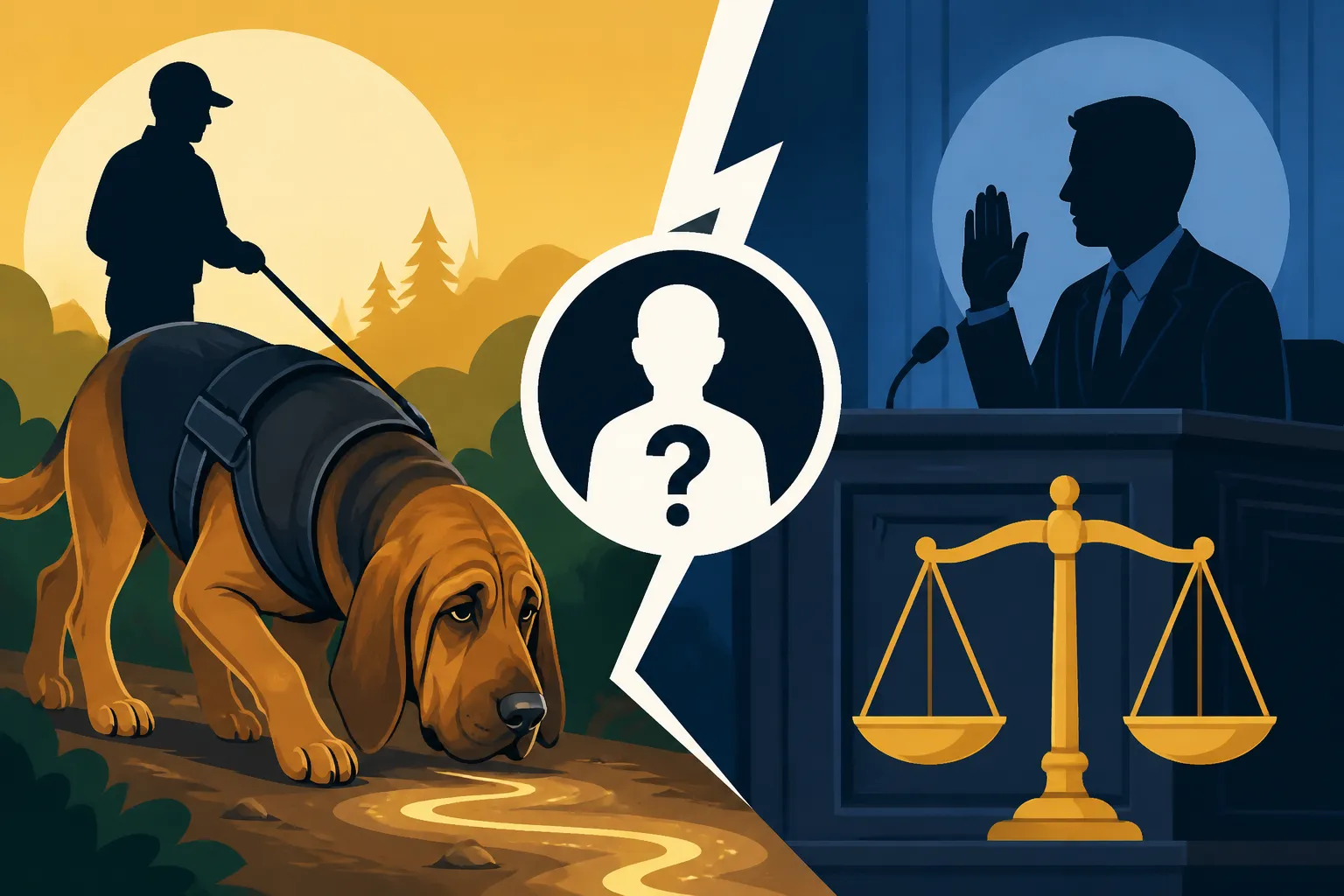
Whether a Bloodhound Handler Testifies About the Trail
It’s a unique position, isn't it? As Bloodhound owners, we know the incredible capabilities of these dogs, but when it comes to legal situations, it’s understandable to wonder how that translates into a courtroom. You might think, "My dog found the person, isn't that enough?" But it's far more nuanced than that. This isn't about the dog telling the court what happened; it's about the handler acting as the indispensable bridge, interpreting the dog's silent language for the legal system. This guide will walk you through the handler's critical role in testifying about a Bloodhound's trail, demystifying a process that can feel incredibly daunting.
The Handler's Integral Role in Legal Proceedings
When a Bloodhound is deployed for scent work, whether it's locating a missing person or tracking a suspect, the dog itself cannot stand on the witness stand and explain its actions. That responsibility falls entirely on the human handler. This isn't just about vouching for your dog; it's about being an expert witness who can objectively describe the intricate process of scent tracking and the dog's performance throughout the operation. The handler doesn't simply present a "result"; they detail the journey and the scientific principles behind it.
Think about it: a judge and jury are going to see a large, droopy-eared dog, and while they might be charmed, they need concrete, articulable reasons to trust its work. That's where you, the handler, come in. Your testimony provides the critical context, the observations, and the professional interpretation that validates the Bloodhound's findings. It's less about the dog's "statement" and more about your professional account of how the dog executed its specialized skill.
Interpreting the Trail: Describing Canine Communication
One of the most crucial aspects of a handler's testimony is the ability to interpret and describe the Bloodhound's behavior on the trail. It's not enough to say, "The dog followed a scent." You need to articulate how the dog followed it, the indicators it gave, and what those indicators mean in the language of scent work.
A Bloodhound communicates through a complex array of subtle and not-so-subtle cues. These can include a change in tail carriage – a high, steady flag often signals strong scent, while a lowered tail might mean the scent is fading or lost. Their head position, the depth of their sniff (often called "air-scenting" versus "ground-scenting"), and even the pace and direction of their movement all speak volumes to a trained handler. You might describe how your Bloodhound’s ears, designed to sweep scent towards its nose, were working furiously, or how its stride became more purposeful as it locked onto a stronger odor. What a Bloodhound Is Actually Smelling on a Trail delves into the incredible world of canine olfaction, which forms the basis of this interpretation.
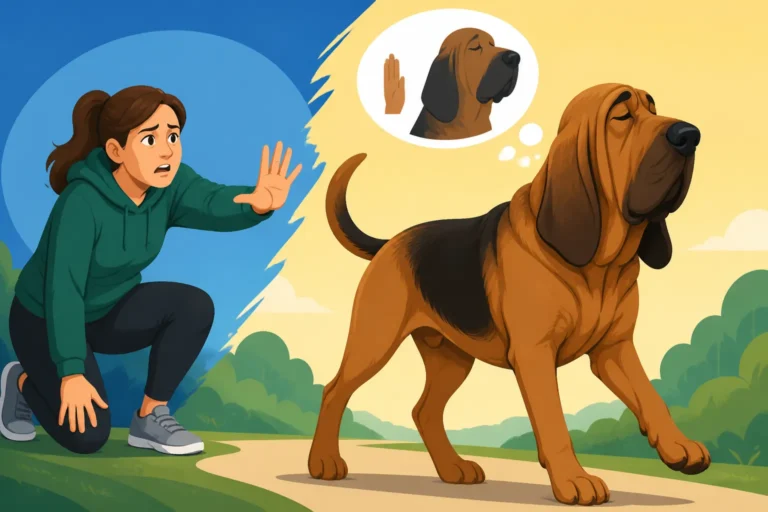
You'll be asked to explain these behaviors to people who have no experience with scent hounds. For example, if your Bloodhound takes the "prayer position" (bowing its head and forelegs), that might indicate a strong interest in a ground scent. If it suddenly whips its head around, it could be catching an air current carrying the scent from a different direction. Every twitch, every sniff, every change in direction becomes a piece of evidence that you, as the handler, translate into understandable terms for the court. This detailed interpretation is what truly allows the Bloodhound's work to be understood and accepted as reliable.
The Chain of Custody for Scent and Evidence
Another vital aspect of your testimony will revolve around the handling of the scent article and maintaining its integrity. In legal terms, this is known as the "chain of custody," and it's paramount for any evidence presented in court. With a Bloodhound, the scent article—a piece of clothing, an item from a scene, or even an air sample—is the starting point of the trail.
As the handler, you'll need to testify about how the scent article was obtained, stored, and presented to your Bloodhound. This means describing the sterile procedures used to prevent contamination, such as wearing gloves, using clean bags, and ensuring the item hasn't been exposed to other scents. You'll explain how you presented the article to your dog, how the dog indicated it had registered the scent, and then how you initiated the trail. If you use specialized training equipment, perhaps a scent article kit you purchased from Amazon, you’d be able to describe how those tools were used to maintain purity. Every step, from the moment the scent is collected to the moment the dog begins tracking, must be meticulously documented and explained to demonstrate that the integrity of the scent was preserved. This meticulousness is what separates a casual outing with your dog from a legally defensible search.
Establishing Credibility: What Courts Look For
The legal system values credibility above almost all else. For a Bloodhound handler, this isn't just about being honest; it's about demonstrating a profound level of professional competence and adherence to established standards. Your testimony isn't just about what your dog did on this particular day; it's about showcasing a history of rigorous training, certification, and consistent methodology. Without this established credibility, even the most impressive trail might be dismissed as unreliable.
Certification and Training: The Foundation of Expertise
One of the first questions you can expect to face is regarding your and your Bloodhound's qualifications. This is where formal certification becomes absolutely non-negotiable. Courts want to know that the handler isn't just an enthusiastic amateur, but a trained professional operating within recognized standards.
Certification bodies, such as law enforcement agencies, state search and rescue associations, or national organizations like the American Bloodhound Club, provide rigorous testing and accreditation. These certifications often require extensive hours of training, successful completion of trails under various conditions, and a demonstrated understanding of scent theory and canine behavior. You might testify about the specific courses you completed, the instructors you learned from, and the number of hours you've logged in training with your Bloodhound. For instance, you could mention a particular online course from BAXTER & Bella that helped you understand scent theory better, or specialized workshops you attended.
Crucially, ongoing training and recertification are just as important as initial certification. You'll likely be asked about how often you train, the types of scenarios you practice, and how you maintain your Bloodhound's proficiency. This demonstrates a commitment to excellence and ensures that both you and your dog remain sharp and reliable. Whether a Bloodhound Handler Must Be Qualified to Testify directly addresses this critical aspect of legal admissibility. A handler's testimony is only as strong as the documented training and expertise behind it.
Documenting the Work: A Trail of Records
Imagine trying to recall every detail of every trail you’ve ever run with your Bloodhound. Impossible, right? That's why meticulous record-keeping is not just helpful; it's absolutely essential for a handler who might need to testify. Your training logs and operational reports become tangible proof of your Bloodhound's capabilities and your consistent methodology.
These records should include details such as:
- Date and time of training or operation.
- Location and environmental conditions (weather, terrain, temperature, wind).
- Type of trail (e.g., urban, wilderness, hard surface).
- Duration and distance of the trail.
- Identity of the person tracked (for training) or missing person/suspect (for operations).
- Description of the scent article used.
- Your Bloodhound's specific behaviors and indications throughout the trail.
- Outcomes (e.g., successful find, trail lost, evidence located).
- Any challenges encountered and how they were addressed.
Think of these records as a diary of your Bloodhound’s career. They provide an undeniable paper trail that backs up your verbal testimony, leaving less room for doubt or challenge. When a defense attorney asks about a specific detail from a trail that happened months or even years ago, having comprehensive, dated notes allows you to answer with precision and confidence. These records are the objective evidence that supports your subjective observations of your Bloodhound's remarkable abilities.
The Nature of Testimony: Beyond "Yes" or "No"
When a Bloodhound handler takes the stand, their testimony is not simply a confirmation that the dog "found" someone. It's a detailed narrative, presented under oath, that explains the science and practice of scent tracking as observed through the expert lens of the handler. The handler’s role is to educate the court on the mechanics of the trail, not to pass judgment on the person found at the end of it.
Describing the Dog's Actions: The Story of the Scent
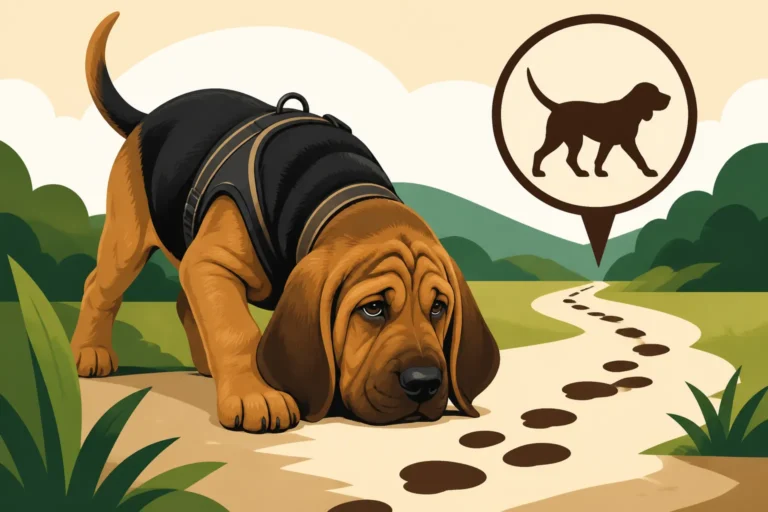
The handler's testimony is about describing the actions of the Bloodhound and the process of tracking. You are there to articulate that your Bloodhound followed a specific human scent from a known starting point to a particular conclusion – whether that conclusion is finding an individual, locating a discarded item, or determining where a trail ended. You are not testifying to the guilt or innocence of a person; rather, you are providing factual observations of your dog's work.
For example, you might explain, "My Bloodhound, 'Copper,' was presented with a scent article belonging to the missing person at the trailhead. Copper immediately lowered his head, indicating he had locked onto the scent, and began pulling steadily on his harness in a northwesterly direction. After approximately 200 yards, he veered sharply to the east, consistent with scent pooling in a sheltered area, and then continued into a dense thicket, where he gave a final indication by pawing at the ground near a discarded jacket."
This kind of testimony avoids making conclusions about who left the jacket or why, focusing solely on what the dog did. The legal system then takes this information and integrates it with other evidence. This distinction is crucial because Whether a Bloodhound's Trail Alone Can Convict clearly shows that while Bloodhound evidence is powerful, it rarely stands entirely alone as the sole piece of evidence for a conviction. It corroborates other facts, paints a fuller picture, and helps connect dots that might otherwise remain disparate.
Cross-Examination and Challenges
Being a Bloodhound handler means being prepared for intense scrutiny, especially during cross-examination. Defense attorneys will meticulously pick apart every aspect of your testimony, your training, your dog's performance, and the conditions of the trail. This isn't meant as a personal attack, but as a test of the reliability and robustness of the evidence.
You might face questions about:
- Your qualifications: "How many hours of training do you have?", "When was your last certification?", "Did you pass every component of your last test?"
- The dog's reliability: "Has your Bloodhound ever been wrong?", "Does your dog ever get distracted?", Whether a Bloodhound Can Be Wrong is a common line of questioning, requiring handlers to discuss false positives or lost trails.
- Environmental factors: "What was the wind speed and direction?", "How might the rain have affected the scent?", "Was the ground wet or dry?" This is where your detailed records, including notes on things like Whether Rain Destroys a Bloodhound's Trail or Whether Wind Moves the Scent a Bloodhound Follows, become invaluable.
- Scent contamination: "Was anyone else allowed near the scent article?", "How do you know other scents didn't interfere?"
- Your own biases: "Were you told about the suspect beforehand?", "Did you have an expectation of where the trail would lead?"
Preparing for cross-examination involves not only knowing your material inside and out but also understanding the limitations of Bloodhound evidence. Being honest and transparent about challenges or ambiguities often strengthens your overall credibility. Whether a Defense Can Challenge a Bloodhound's Trail explores the types of arguments that can be made against canine evidence. Your ability to articulate challenges and how you managed them, rather than attempting to present a perfect, infallible picture, will be key.
Ethical Considerations and Limitations in Testimony
While a Bloodhound's nose is truly a marvel, it's not a magical solution, and ethical handling of their evidence in court requires a clear understanding of both their strengths and their limitations. A responsible handler doesn't oversell their dog's abilities but rather presents their work within the bounds of what the science and experience demonstrate. This means being honest about what the dog can and cannot do, and how external factors might influence a trail.
Understanding Human vs. Canine Scent Perception
One of the most important things a Bloodhound handler communicates in court is the fundamental difference between human and canine scent perception. We often think of "scent" in terms of odors we can detect, like perfume or smoke. But a Bloodhound isn't tracking a single, strong odor; it's tracking the unique, constantly shedding "scent picture" of an individual.
You might explain that your Bloodhound is following a specific "scent cone" of human skin rafts, breath, and biological excretions, rather than just footfall contamination. You'd clarify that this means a Bloodhound can separate one person's scent from a crowd of others, even hours later. How a Bloodhound Separates One Person's Scent From a Crowd is a fascinating topic that highlights this unique ability. This distinction helps the court understand why a Bloodhound can pick out a single individual’s trace where a human detective would be utterly lost. It's about explaining that the dog's world is fundamentally different from ours, and its senses provide information we simply cannot access directly.
When the Trail Goes Cold or is Lost
It's tempting to want every trail to end in a clear, definitive "find." However, in the real world, trails can go cold, be lost, or be impacted by environmental factors. An ethical Bloodhound handler must be just as capable of testifying about a lost trail as they are about a successful one. Admitting that a dog could not follow a scent any further, or that a trail was compromised, is a sign of integrity, not failure.
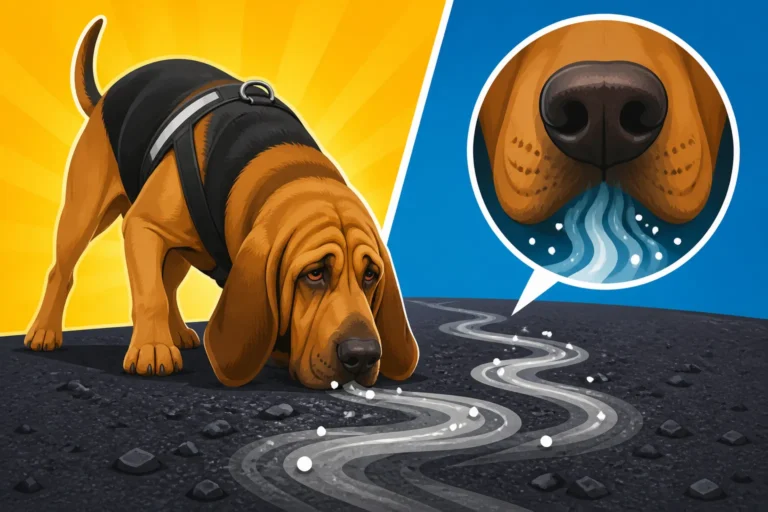
You would need to explain the indicators your Bloodhound gives when a trail is lost. This might include circling, repeatedly returning to a previous point of interest, or exhibiting a lack of drive or focus. You might discuss how environmental factors like a sudden downpour, a strong crosswind, or a highly contaminated urban area can legitimately end a search. For instance, if you were searching a city street, you might explain how Whether Asphalt Holds Scent for a Bloodhound affects how long a trail can persist on such a surface.
The handler's honesty about these limitations prevents false expectations and reinforces the scientific basis of the Bloodhound's work. It demonstrates that the handler is not blindly pursuing a predetermined outcome but is objectively interpreting the dog’s performance based on extensive training and experience.
Here’s a quick overview of what a handler can and cannot testify to:
| Aspect of Testimony | What a Handler Can Testify To | What a Handler Cannot Testify To |
|---|---|---|
| Dog's Actions | Observations of the Bloodhound's behavior (head position, tail flags, changes in pace, final indication) on the trail. | The dog's "thoughts," "intentions," or subjective experience. |
| Scent Theory | Principles of human odor, how scent disperses, and how dogs track. | That the dog "knows" someone is guilty or lying. |
| Trail Conditions | Environmental factors (weather, terrain, contamination) and their potential impact. | That a person definitely followed a specific path (only what the dog indicated). |
| Scent Article | Chain of custody, handling procedures, and presentation to the dog. | The source of the scent article (unless personally observed). |
| Qualifications | Personal training, certifications, and documented experience. | The qualifications of other handlers or dogs (unless directly observed/involved). |
| Outcomes | That the dog followed a specific scent to a person or object. | Guilt or innocence of any party; conclusions about criminal intent. |
In summary, the Bloodhound handler serves as a crucial expert witness in legal proceedings where canine scent evidence is presented. Their ability to articulate their qualifications, the scientific principles of scent work, and the detailed observations of their dog's behavior on a trail is what transforms a dog's incredible sense of smell into admissible, credible evidence. It's a demanding but profoundly important role that underscores the unique legal standing of this remarkable breed. Whether a Bloodhound's Find Holds Up in Court is a testament to the meticulous work and expert testimony of dedicated Bloodhound handlers.
Disclaimer
This article is for general informational purposes only and does not constitute professional advice. Laws, prices and regulations vary by location and change over time. Consult a qualified professional for guidance on your specific situation.