Whether a Bloodhound Forgives a Bad Session
We've all been there: a training session that just didn't go right. Maybe you were tired, your Bloodhound was distracted, or you both just weren't clicking, and you ended up frustrated, raising your voice, or feeling like you pushed too hard. The worry that follows, wondering if you've permanently damaged your bond or made your intelligent hound wary of future learning, is a common and very real concern for Bloodhound owners. This guide aims to reassure you that while a bad session can have an impact, your Bloodhound is remarkably resilient, and there are concrete steps you can take to mend any perceived rifts and ensure future training is positive and productive.
Understanding the Bloodhound Temperament and Memory
Bloodhounds are often described as having a unique combination of extreme scent-driven focus, an independent streak, and a deeply sensitive, affectionate nature. These traits all play a role in how they experience and remember training. They're not the kind of dog you can browbeat into submission; they thrive on cooperation and positive reinforcement.
How Bloodhounds Process Experiences
Bloodhounds are incredibly intelligent, but their intelligence is often geared towards problem-solving scent puzzles, not necessarily "pleasing you" in the traditional obedience sense. When it comes to learning, they form associations rapidly. If a training session consistently involves stress, discomfort, or harsh corrections, they will associate those negative feelings with the training environment, the specific cue, or even you. It's not so much that they "hold a grudge" in a human sense, but rather that their highly developed memory and associative learning mean they remember feelings linked to experiences.
Imagine your Bloodhound, deep in thought, trying to process a new command. If they're met with impatience or a sharp tug on the leash when they're simply taking a moment to figure things out, they're not going to think, "Oh, I must have done it wrong." Instead, they might connect the sensation of pressure or your raised voice with that specific command or even with the act of engaging in training itself. This can lead to hesitation, avoidance, or a general reluctance to participate. Their independent nature also means they're less likely to perform if they don't see the value or if the experience is unpleasant. It's why things like Why a Bloodhound Ignores a Cue It Knows are so important to understand. They aren't being stubborn for the sake of it; they're often processing or prioritizing other stimuli, like an interesting scent, or they've simply decided the reward isn't worth the effort given the current emotional tone.
The Importance of a Positive Reinforcement Foundation
For a breed as sensitive and intelligent as the Bloodhound, positive reinforcement isn't just a preferred method; it's practically essential for building a lasting and trusting relationship. Bloodhounds are incredibly responsive to rewards they value, whether that's a tasty treat, a favorite squeaky toy, or the sheer joy of following a trail. When you use positive reinforcement, you're teaching your Bloodhound that engaging with you and learning new things is a fun, rewarding experience.
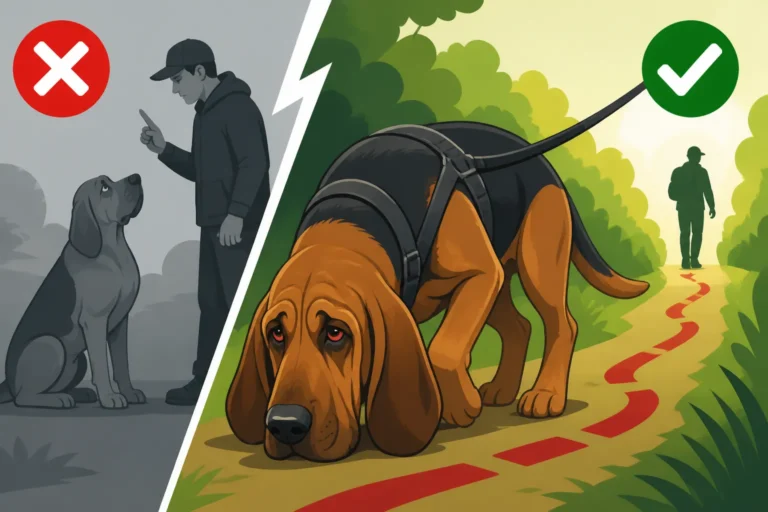
Harsh methods, on the other hand, can quickly backfire. Bloodhounds are not dogs that respond well to fear or intimidation. They might shut down, become fearful, or simply decide that training isn't worth their time if it involves unpleasant sensations. This isn't just about humane treatment; it's about effectiveness. A Bloodhound who fears making a mistake or anticipates discomfort is far less likely to offer behaviors willingly or to engage enthusiastically. Instead, they might develop a defensive posture or a general disinterest in what you're asking. Over time, negative experiences can erode the trust that is foundational to any good working relationship with your hound. Remember, their primary motivation is often their nose, and channeling that through positive, cooperative methods, perhaps even exploring Mantrailing Is the Answer to a Bloodhound, Not Obedience, will yield much better results than trying to force their compliance.
What Constitutes a "Bad Session" for a Bloodhound?
Sometimes, we don't even realize we've had a "bad session" until after the fact, when our Bloodhound seems less eager to work or shows subtle signs of stress. Recognizing what makes a session go awry from your dog's perspective is the first step toward preventing it.
Common Training Mistakes and Their Impact
There are several common pitfalls that can turn a perfectly good training intention into a "bad session" for your Bloodhound:
- Frustration and impatience from the handler: If you're feeling stressed or annoyed, your Bloodhound will pick up on it. Dogs are incredibly adept at reading human emotions, and your frustration can translate into anxiety or confusion for them. This creates a negative atmosphere that makes learning difficult.
- Raised voice or harsh corrections: Yelling, snapping, or using physical punishment (even a sharp leash correction) can be deeply impactful. Bloodhounds are sensitive. While a mild correction might be ignored, anything perceived as harsh can cause them to shut down, become fearful, or associate the correction with the cue itself, rather than their mistake. What Harsh Handling Does to a Bloodhound can have long-lasting effects on their willingness to engage.
- Sessions that are too long or repetitive: Bloodhounds, while persistent on a scent trail, have surprisingly short attention spans for repetitive obedience drills. How Long a Bloodhound's Attention Lasts in a Session is usually much shorter than owners expect, especially for young dogs. Drilling the same command over and over without success quickly becomes boring and frustrating for them, and for you. This leads to disengagement and a lack of motivation.
- Lack of clear communication: If your cues are inconsistent, or you're not rewarding at the right moment, your Bloodhound will become confused. Confusion leads to frustration for the dog, which can manifest as giving up or offering incorrect behaviors out of sheer guesswork.
- Overwhelming distractions: Trying to train a complex new behavior in a highly distracting environment, like a busy park, can set your Bloodhound up for failure. Their nose will naturally pull them away, and if you continually try to correct them for following their instincts, it becomes a battle rather than a learning experience.
The impact of these mistakes isn't just on that single session. Repeated negative experiences can undermine trust, create aversive associations with training, and even lead to a loss of confidence in your Bloodhound. They might start avoiding eye contact, ignoring cues, or even trying to physically distance themselves from you during training times.
Signs Your Bloodhound Had a Negative Experience
Your Bloodhound communicates largely through body language, and learning to read these subtle cues can help you identify when a session is going south or has already become a negative experience.
Look for these signs:
- Disengagement or lack of focus: Instead of looking at you, your Bloodhound might be sniffing the ground excessively, looking away, or simply tuning you out. This isn't stubbornness; it's often a coping mechanism for stress or boredom.
- Stress signals: Yawning (when not tired), lip licking, excessive panting, sudden scratching, or shaking off (as if wet) are all common canine stress signals. If you see these, your dog is uncomfortable.
- Avoidance: Your Bloodhound might physically move away from you, turn their head, or even try to leave the training area. If you call them for training and they lag, hide, or try to escape, that's a clear sign they're not enjoying it.
- Lowered body posture: Cowering, tucking their tail, or flattening their ears against their head can indicate fear or submission, suggesting they feel intimidated or punished.
- Slow or hesitant responses: If a command they usually know well is met with a very slow, reluctant response, they might be anticipating something unpleasant.
- Subtle stiffness: Even if they comply, a stiff body, tight mouth, or averted gaze can indicate underlying tension rather than enthusiastic participation.
Understanding these signals helps you intervene before a session becomes truly "bad." It also gives you insight into how your Bloodhound is feeling, which is paramount for repairing any damage. Don't mistake a quiet or compliant Bloodhound for a happy one if these stress signals are present. They might simply be shutting down to cope with the pressure.
| Sign of a Negative Session | What it Might Look Like | What it Indicates |
|---|---|---|
| Disengagement | Excessive sniffing, looking away, ignoring cues. | Boredom, frustration, or prioritizing other stimuli (e.g., scent). |
| Stress Signals | Yawning (not tired), lip licking, panting, scratching, shaking off. | Anxiety, discomfort, internal conflict. |
| Avoidance | Physically moving away, ducking head, trying to leave. | Fear, anticipation of punishment, desire to escape. |
| Lowered Posture | Tucked tail, flattened ears, cowering. | Fear, submission, feeling intimidated. |
| Hesitant Responses | Slow, reluctant compliance to known cues. | Anticipating discomfort, lack of motivation. |
| Stiffness | Tight body, tense mouth, averted gaze even if performing. | Underlying tension, reluctance. |
Rebuilding Trust and Moving Forward After a Setback
It's easy to get caught up in guilt after a session that didn't go well, but the good news is that Bloodhounds are remarkably forgiving, especially when their human genuinely tries to make things right. The key is to be proactive and consistent in your efforts to rebuild trust.
Immediate Steps to Take After a Negative Session
If you realize mid-session or immediately afterward that things went wrong, here are some crucial steps:
- End on an Easy Win: This is paramount. Don't just stop cold. Find one super simple command your Bloodhound knows flawlessly – "sit," "touch," or even just coming to you for a treat. Ask for it once, reward generously with their absolute favorite treat (think real chicken or cheese!), and then immediately end the session. This leaves them with a positive taste in their mouth, even if the rest of the session was a bust. It helps overwrite the negative feelings with a small, happy memory.
- Take a Break and Reset: Both you and your Bloodhound need a mental and emotional break. Don't try to "fix" it right away by repeating the same thing. Step away from structured training for a few hours, or even the rest of the day. Engage in something purely fun and non-training related, like a relaxed sniff walk in the yard, a game of gentle tug, or just quiet cuddle time. This signals to your Bloodhound that not all interactions are about demands and expectations.
- Self-Reflect, Not Self-Blame: Use this break to objectively analyze what went wrong. Were you tired? Did you rush? Was the environment too distracting? Was the reward not motivating enough? Did you introduce something too difficult too soon? This reflection is about learning, not blaming yourself. Every handler has off days, and every dog has their moments. The important thing is to understand the factors at play so you can adjust next time.
- Offer Comfort and Reassurance: If your Bloodhound is clearly stressed, offer gentle petting (if they enjoy it), speak in a calm, soothing voice, and avoid making any demands. Let them know they're safe and loved, regardless of their performance. Sometimes, simply sitting quietly with your dog for a few minutes can do wonders for reconnecting.
These immediate actions help prevent a single bad session from snowballing into a larger issue and demonstrate to your Bloodhound that you're a fair and understanding leader.
Long-Term Strategies for Repairing the Relationship
A single bad session usually won't cause irreparable damage, but consistent negative experiences can. To truly repair and strengthen your bond after a setback, consider these long-term strategies:
- Re-establish Positive Associations: For a while, focus purely on fun, positive interactions. Make training feel like a game. Use novel, high-value rewards. Instead of traditional obedience, lean into activities your Bloodhound naturally loves, like scent work. Games like "find it" with treats or short, enthusiastic trailing exercises can be hugely beneficial. This is where the wisdom of The First Year With a Bloodhound That Already Wants to Trail really comes into play, even if your dog is older.
- Keep Sessions Short and Frequent: Instead of one long, arduous session, break training into many short, 2-5 minute bursts throughout the day. This keeps enthusiasm high and prevents boredom or frustration from setting in. Always aim to end while your Bloodhound is still engaged and wanting more. This means ending before Why Drilling Loses a Bloodhound becomes an issue.
- Focus on What Your Bloodhound Loves: For many Bloodhounds, this means anything to do with their nose. Consider formal mantrailing classes or informal scent games. When you allow them to engage their natural instincts, you’re fulfilling their deepest desires and strengthening your bond through shared, joyful activities. This is precisely why What a Bloodhound Will Work For often revolves around scent and food. Even daily walks can become training opportunities by allowing them to follow a designated trail or 'find' hidden treats.
- Be a Predictable and Fair Leader: Consistency is key. Always use the same cues for the same behaviors. Reward consistently for desired actions. Avoid sudden changes in your tone or demands. Your Bloodhound needs to know what to expect from you. If you were inconsistent before, now is the time to commit to being clear and fair.
- Consider Professional Guidance: If you find yourself repeatedly struggling or if your Bloodhound shows significant fear or reluctance, don't hesitate to consult a certified professional dog trainer or a veterinary behaviorist who specializes in positive reinforcement and scent hounds. They can offer tailored strategies and help identify underlying issues you might be missing. Resources like online courses (e.g., BAXTER & Bella) or local trainers recommended by the American Bloodhound Club can be invaluable.
- Patience and Understanding: Repairing trust takes time. Don't expect immediate results. Celebrate small wins and be patient with your Bloodhound – and with yourself. Every positive interaction, no matter how small, contributes to rebuilding confidence and strengthening your relationship. Remember that Bloodhounds have a unique learning style; sometimes their "stubbornness" is simply their brain working differently, as explored in Whether a Bloodhound Is Stubborn or Just Busy.
Preventing Future "Bad Sessions"
The best way to deal with a bad session is to prevent it from happening in the first place! While perfection is impossible, setting yourself and your Bloodhound up for success makes all the difference.
Setting Yourself and Your Bloodhound Up for Success
Proactive planning and understanding your Bloodhound's needs are paramount to making every training session a positive experience.
- Know Your Bloodhound's Limits: Understand that your Bloodhound’s attention span, especially for formal obedience, is limited. Don't expect an hour of perfect heeling. Break tasks down into tiny, achievable steps. If you're working on something new, like Getting a Bloodhound to Load Into a Vehicle, start with just approaching the car happily, then stepping in, then sitting inside, rather than trying to achieve a full load-in on the first try.
- Prioritize Scent Work: Seriously, embrace the nose! Bloodhounds are genetically hardwired to trail. Integrating scent work into your daily routine, even if it's just hiding treats around the house for them to find, can satisfy their innate drive and make them happier, more fulfilled dogs. This often means less "problem behavior" stemming from boredom or unfulfilled instincts. Regular, purposeful scent work, even if it's just short, fun sessions, is more tiring and mentally stimulating for a Bloodhound than a long walk alone. Consider exploring entry-level mantrailing or nose work classes in your area.
- Choose the Right Environment: Start training new behaviors in a quiet, low-distraction environment, like your living room or a fenced yard. Once the behavior is solid, gradually introduce more distractions. Don't expect your Bloodhound to perform a perfect sit-stay next to a squirrel on day one!
- Use High-Value Rewards: What motivates your Bloodhound? For some, it's a specific soft treat; for others, a favorite toy or a quick game of chase. Tailor your rewards to what your individual dog finds irresistible. This ensures they are highly motivated to participate. For example, some Bloodhounds love bits of hot dog, cheese, or cooked meat, which you can often find readily available through stores like Amazon or your local pet supply.
- Be Prepared and Positive: Before you start a session, make sure you have your treats, clicker (if you use one), and a plan. Approach training with a positive attitude. Your energy is contagious, and a calm, happy handler makes for a calm, happy Bloodhound.
- Build a Strong Foundation: Spend time on basic obedience, but always make it fun. Teach them that coming when called means great things happen, and that sitting politely earns rewards. These basics, built with positive reinforcement, are the bedrock of a good working relationship.
Knowing When to End a Session
Learning to "read the room" with your Bloodhound is crucial for preventing negative experiences. Ending on a high note is far more beneficial than pushing through frustration.
- Look for Early Warning Signs: As discussed before, be vigilant for signs of stress, boredom, or disengagement. If your Bloodhound starts yawning, looking away, sniffing excessively, or responding slowly, it's time to re-evaluate. These aren't necessarily signs of a "bad" session yet, but they're signals that it could become one if you continue pushing.
- End Before They Get Bored: A good rule of thumb is to end the session before your Bloodhound loses interest. Ideally, you want to stop when they are still engaged and wanting more. This keeps training exciting and reinforces that it's a positive, fun activity.
- Prioritize Fun Over Perfection: It's okay if your Bloodhound doesn't master a new trick in one session. The goal is to build a positive association with learning and spending time with you. If a behavior isn't happening, simplify it, go back a step, or change to an entirely different, easy task.
- Keep a Mental Log: Pay attention to what works and what doesn't. Some days your Bloodhound might be more receptive, some less so. Factors like weather, recent exercise, and even their meal schedule can influence their mood and focus. Over time, you'll learn their rhythms and be better equipped to schedule successful training sessions.
Remember, every interaction with your Bloodhound is a form of communication. By prioritizing positive reinforcement, understanding their unique temperament, and being attentive to their cues, you can minimize "bad sessions" and foster a relationship built on trust, respect, and mutual enjoyment.
Disclaimer
This article is for general informational purposes only and does not constitute professional advice. Laws, prices and regulations vary by location and change over time. Consult a qualified professional for guidance on your specific situation.