Whether a Defense Can Challenge a Bloodhound’s Trail
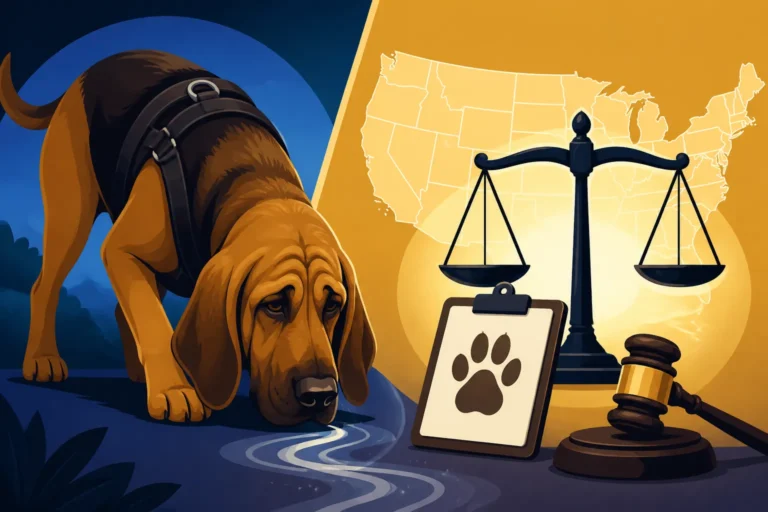
It's completely understandable to wonder about the legal weight of a Bloodhound's incredible nose. When you hear about a Bloodhound's trail being used as evidence, it might sound almost infallible, like something out of a detective novel. But the reality is that any piece of evidence presented in court, no matter how compelling, can and often will be challenged by the defense. This guide will walk you through how Bloodhound evidence is typically presented and, more importantly, the various avenues a defense attorney might explore to challenge its validity in a legal proceeding.
The Legal Standing of Bloodhound Evidence
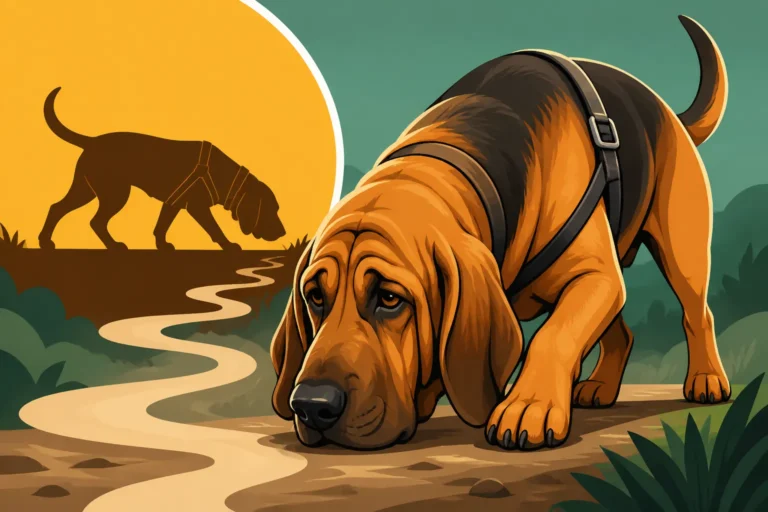
For centuries, the Bloodhound has held a unique place in the annals of law enforcement. Their legendary noses and unwavering focus on a scent trail have made them invaluable tools in locating missing persons and tracking suspects. However, presenting a dog's work in a court of law is a complex matter, requiring adherence to specific legal precedents and rigorous standards.
A History of Admissibility in Court
The idea of a dog's testimony in court might seem modern, but Bloodhounds have a long history of being accepted as tools for investigation. Early cases, some dating back to the late 19th and early 20th centuries, established precedents for allowing Bloodhound evidence. These early rulings often focused on the breed's natural abilities and the handler's testimony regarding the dog's training and reliability. It wasn't always a smooth road; some jurisdictions were more receptive than others, and the standards for admissibility varied widely. Yet, over time, a general consensus emerged that, with proper foundational testimony, a Bloodhound's trail could indeed be presented to a jury. It wasn't about the dog "testifying" itself, but rather the handler providing expert testimony about the dog's actions and the interpretation of those actions within the context of the trail.
The 'Gold Standard' for Scent Evidence
When it comes to scent trailing, Bloodhounds are often considered the gold standard. Their olfactory capabilities are simply astounding, often cited as being thousands of times more acute than a human's. This incredible physiological advantage, combined with their historical use in tracking and a lineage specifically bred for this purpose, gives them a unique position among canines in legal contexts. Unlike other breeds that might be trained for various tasks, the Bloodhound's entire design – from its long, pendulous ears that sweep scent into its nostrils to its deeply wrinkled face that traps scent particles – is geared towards scent work. This specialization is a key reason why their evidence is so often accepted, making them distinct from other working breeds. When discussing the intricacies of scent work, it becomes clear that Why a Bloodhound's Ears Sweep Scent Toward Its Nose is an integral part of their unparalleled tracking ability.
How Bloodhound Testimony Is Presented
When Bloodhound evidence is brought into court, the dog doesn't sit on the witness stand, of course! Instead, it's the Bloodhound's handler who testifies. The handler is presented as an expert witness, detailing their qualifications, their experience with the specific Bloodhound involved, the dog's training history, and the specifics of the trail itself. This testimony will include how the trail was initiated, the conditions under which it was conducted, the dog's behavior during the trail, and the outcome. The handler explains what they observed the dog doing, and how they interpreted the dog's actions as following a specific human scent. It's a careful dance, presenting the dog's inherent ability while also emphasizing the handler's expertise and the methodology used to ensure the trail's integrity. It's important to remember that Whether a Bloodhound's Find Holds Up in Court often hinges on the handler's professionalism and meticulous record-keeping.
Grounds for Challenging Bloodhound Trails
Even with their esteemed reputation, Bloodhound evidence is far from immune to challenge. Defense attorneys are trained to scrutinize every piece of evidence, and Bloodhound trails offer several potential avenues for questioning their reliability and admissibility.
Handler Qualification and Training
One of the most common and effective ways to challenge Bloodhound evidence is to attack the handler's qualifications and training. A defense attorney will dig deep into the handler's background:
- Certification and Experience: Is the handler certified by a recognized organization? How long have they been a Bloodhound handler? How many successful trails have they completed? Have they testified in court before? Any gaps or inconsistencies here can raise doubts. For example, if a handler claims extensive experience but cannot provide detailed logs of past training or deployments, their credibility might be questioned.
- Adherence to Best Practices: Did the handler follow established protocols for scent trailing? This includes everything from how the scent article was obtained and presented to the dog, to how the trail itself was managed. For instance, did the handler allow too many people near the scent article or the starting point of the trail? Did they correctly identify the end of the trail, or did they inadvertently guide the dog?
- Bias or Impartiality: A defense might argue that the handler, being part of law enforcement, could have an unconscious bias towards finding a suspect, potentially influencing their interpretation of the dog's actions. While handlers are trained to be objective, human nature can sometimes be subtly swayed, and this is a point a defense attorney will explore.
The Dog's Reliability and Training History
Beyond the handler, the individual Bloodhound itself can become the subject of intense scrutiny. Not all Bloodhounds are created equal, and their training and track record matter.
- Specific Training and Certification: Was this particular Bloodhound specifically trained for trailing human scent? What kind of training regimen did it undergo? Is it certified for trailing by a reputable organization like the National Police Bloodhound Association or the American Bloodhound Club? A dog trained primarily for drug detection, for example, might not be considered reliable for human scent trailing.
- Past Performance and Accuracy: The defense will want to see the dog's entire trail log. How many successful trails has it completed? How many times has it been "wrong" or failed to find a subject? A dog with a spotty record might be deemed unreliable. They might bring up cases where the Bloodhound's trail led to an innocent person, even if ultimately acquitted. When considering Whether a Bloodhound Can Be Wrong, examining the dog's entire career is paramount.
- Age and Health: Was the Bloodhound in peak physical condition during the trail? An older dog might have a diminished sense of smell or be more easily fatigued. Health issues, even minor ones, could potentially impact a dog's performance, especially if it was unwell on the day of the trail. Owners of aging Bloodhounds often focus on Aging in a Bloodhound Starts at Six, recognizing that physical capabilities can change.
Environmental and Contamination Factors
The environment in which a trail occurs is a massive factor, and one that can introduce significant doubt about the Bloodhound's accuracy.
- Weather Conditions: Rain, strong winds, extreme heat, or cold can all degrade scent. A defense might argue that the weather conditions on the day of the trail were so adverse that any scent would have dissipated or been dispersed, rendering the trail unreliable. For instance, Whether Rain Destroys a Bloodhound's Trail is a critical question in court. Similarly, Whether Wind Moves the Scent a Bloodhound Follows can greatly impact a trail's integrity.
- Contamination: A trail area can be teeming with other human scents, confusing even the most skilled Bloodhound. Was the crime scene secured properly? How many people walked through the area before the Bloodhound started its work? Were first responders, investigators, or even curious bystanders allowed to walk over the potential trail path? The presence of too many confounding scents can make it impossible for a dog to isolate the target scent.
- Time Lapse: How much time passed between the incident and when the Bloodhound began its trail? The older a trail, the weaker the scent, making it harder for the dog to follow. While Bloodhounds are renowned for following old trails, even several days old, there comes a point where the scent simply isn't strong enough to be reliably followed. The question of How Old a Trail a Bloodhound Can Follow is often fiercely debated.
Scent Article Integrity
The very first piece of evidence – the scent article – is perhaps the most critical. If the integrity of this article is compromised, the entire trail can be called into question.
- Source of the Scent: Was the scent article definitely from the person of interest? Was it handled in a way that prevented contamination from other individuals? For example, if a piece of clothing was taken from a shared living space, was it truly isolated to the individual whose scent the dog was meant to follow?
- Handling and Storage: How was the scent article collected? Was it touched by gloved hands? Was it placed in an airtight, clean container to prevent further contamination or degradation? Was it stored properly until the Bloodhound was ready to work? Careless handling can introduce other scents or dilute the target scent, making the Bloodhound's task impossible. Using clean, scent-free bags from places like Chewy or specific forensic suppliers is crucial for maintaining integrity.
- Uniqueness of Scent: While each person has a unique scent signature, a defense might argue that the scent article was insufficient to provide a strong, isolated scent for the Bloodhound to follow. Perhaps it was a generic item, or one that had been exposed to many different people.
The Daubert Standard and Expert Witness Testimony
In many jurisdictions, the admissibility of expert testimony, including that of Bloodhound handlers, is governed by the Daubert standard (or similar state-level standards like Frye). This standard requires judges to act as "gatekeepers," ensuring that scientific testimony is not only relevant but also reliable.
Applying Scientific Rigor to Scent Evidence
Under Daubert, a judge considers several factors when evaluating the reliability of expert testimony:
- Testability: Can the theory or technique be tested? In the context of Bloodhounds, this relates to whether their ability to follow a specific human scent can be scientifically verified and whether specific training methods lead to predictable outcomes.
- Peer Review and Publication: Has the theory or technique been subjected to peer review and publication? While Bloodhound work has a long practical history, rigorous scientific studies on the exact mechanisms and statistical reliability of individual dogs in varied conditions are less common than in other forensic sciences.
- Known or Potential Rate of Error: What is the known or potential rate of error for Bloodhound trailing? This is incredibly hard to quantify, as every trail is unique. There's no standardized "error rate" for a Bloodhound because a "failed" trail could be due to scent dissipation, contamination, or the subject simply not being present.
- Existence and Maintenance of Standards: Are there recognized standards controlling the technique's operation? For Bloodhounds, this refers to handler training, dog certification, and established protocols for conducting trails. Organizations like the American Bloodhound Club strive to set such standards.
- General Acceptance: Is the theory or technique generally accepted within the relevant scientific community? While Bloodhound evidence has legal acceptance, its "scientific" acceptance can be a point of contention among forensic scientists, particularly concerning the exact mechanisms and provable accuracy in every scenario.
A defense attorney will exploit any weaknesses in these areas, arguing that Bloodhound evidence doesn't meet the scientific rigor required to be presented as expert testimony.
Cross-Examination Strategies
During cross-examination, a defense attorney will try to undermine the credibility of the handler and the reliability of the Bloodhound's trail. This can involve:
- Highlighting Inconsistencies: Pointing out discrepancies between the handler's testimony and their written reports, or between the current case and past trails.
- Challenging Expertise: Questioning the depth of the handler's knowledge on canine olfaction, scent dynamics, or legal precedents related to Bloodhound evidence.
- Exposing Potential Biases: Suggesting that the handler was predisposed to find the defendant, perhaps due to pre-existing information or pressure.
- Introducing Alternative Explanations: Proposing other reasons why the Bloodhound acted as it did, such as following a non-target scent, being led by the handler (consciously or unconsciously), or simply exhibiting normal dog behaviors. They might ask, for instance, How a Bloodhound Separates One Person's Scent From a Crowd to probe the handler's understanding of scent discrimination.
- Questioning the Dog's Motivation: While it might sound odd, a defense could even suggest the dog was not genuinely on a trail but motivated by a treat or toy, rather than truly focusing on the human scent. This might lead to discussions about what a Bloodhound will work for and how motivation is maintained. Many handlers use specific high-value treats, often ordered from places like Chewy, to keep their Bloodhounds engaged.
Corroborating Evidence
It's crucial to understand that in almost all modern legal cases, a Bloodhound's trail is not the sole piece of evidence used to secure a conviction. It is almost always presented as one piece of a larger puzzle.
- Supporting the Narrative: The trail often serves to corroborate other evidence, such as eyewitness accounts, forensic evidence (DNA, fingerprints), or surveillance footage. For example, if a Bloodhound trails from a crime scene to a suspect's home, and then DNA evidence also links the suspect to the scene, the Bloodhound's trail strengthens the overall prosecution case.
- Seldom a Standalone Conviction: Because of the inherent difficulties in scientifically quantifying a Bloodhound's "error rate" and the numerous factors that can influence a trail, courts are generally reluctant to allow a conviction based only on Bloodhound evidence. The defense will always emphasize this, highlighting that without other supporting evidence, the Bloodhound's trail alone is insufficient. When discussing Whether a Bloodhound's Trail Alone Can Convict, the answer is almost universally no in contemporary law.
The Impact of a Successful Challenge
If a defense attorney successfully challenges Bloodhound evidence, it can have significant repercussions for the prosecution's case.
Exclusion of Evidence
The most direct impact of a successful challenge is the exclusion of the Bloodhound evidence from the trial entirely. If the judge determines that the handler or the dog's testimony does not meet the standards for admissibility (e.g., Daubert), the jury will not be allowed to hear about the Bloodhound's trail. This is a huge blow to the prosecution, as it removes a potentially powerful and persuasive piece of evidence. It forces the prosecution to rely solely on their remaining evidence, which might be weaker without the Bloodhound's corroboration.
Weakening the Prosecution's Case
Even if the evidence isn't completely excluded, a strong challenge can significantly weaken its impact. If the defense successfully sows doubt about the handler's qualifications, the dog's reliability, or the conditions of the trail, the jury might view the Bloodhound evidence with skepticism. They might still hear about the trail, but they will have been given ample reason to discount its importance or question its accuracy. This can be just as damaging as outright exclusion, as it undermines the prosecution's narrative and makes it harder to convince the jury beyond a reasonable doubt. For instance, if the defense can demonstrate that a Bloodhound being wrong in court (Whether a Bloodhound Has Ever Been Wrong in Court) has happened before, it can make a jury hesitant to fully trust the current trail.
A Bloodhound's nose is an incredible gift, and their work in tracking missing persons and suspects is invaluable. However, in the adversarial environment of a courtroom, every piece of evidence must withstand rigorous scrutiny. Defense attorneys have a duty to ensure justice, and challenging Bloodhound evidence is a legitimate and often successful strategy to protect their clients' rights. Understanding these complexities helps appreciate the nuanced role Bloodhounds play in our legal system. Whether you're researching for personal interest or simply curious, knowing these details offers a more complete picture of our amazing canine partners. Looking for quality training gear or supplies? Remember that many professional handlers rely on reputable sources like Chewy for their Bloodhound's needs.
Disclaimer
This article is for general informational purposes only and does not constitute professional advice. Laws, prices and regulations vary by location and change over time. Consult a qualified professional for guidance on your specific situation.