Whether a Bloodhound’s Nose Counts as Evidence in Every State
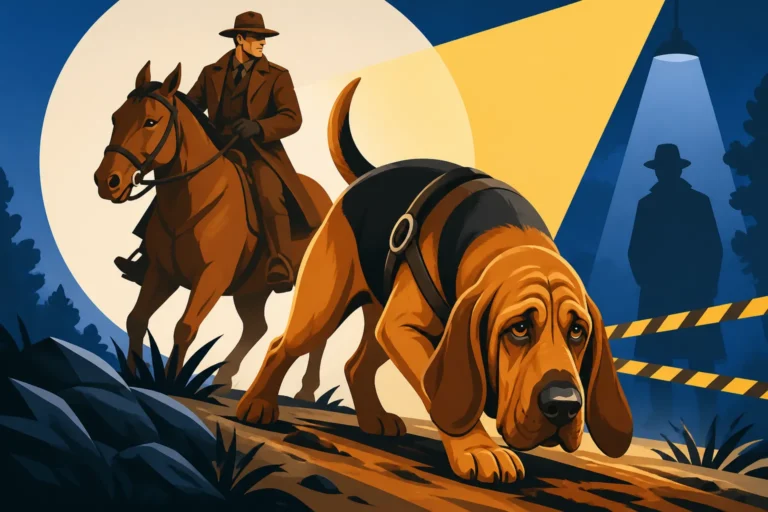
It’s a common movie trope: the Bloodhound on the trail, nose to the ground, leading law enforcement right to a suspect. You see them on TV and in films, their solemn faces inspiring confidence that the bad guy is about to be caught. But when the drama ends and real life begins, does that powerful nose really hold up in a real courtroom? The truth is, the legal standing of a Bloodhound's evidence is a nuanced topic, varying significantly depending on where you are and how the trail was conducted. This guide will explore the fascinating world of Bloodhound evidence, from its historical acceptance to the critical requirements for its modern-day use, helping you understand why it's not always as straightforward as it seems on screen.
The Long and Storied History of Bloodhound Evidence in Court
For centuries, the Bloodhound has been revered for its unparalleled scenting ability. Its reputation isn't just folklore; it's rooted in a long history of practical use, particularly in tracking people. This breed has literally put its nose to the ground to track everything from lost children to escaped prisoners, and yes, criminal suspects. This incredible aptitude led to early legal acceptance, setting the Bloodhound apart from virtually every other dog breed.
When Bloodhound Trails First Entered the Legal System
The idea of using a dog's scent trail as evidence might seem novel to some today, but it dates back a surprisingly long way. Even before modern forensic science, people recognized the Bloodhound's unique skill. Early court cases, particularly in the late 19th and early 20th centuries, began to cautiously accept testimony based on a Bloodhound's work. The sheer accuracy and persistence of these dogs were compelling, and judges and juries were often swayed by the idea that a dog could follow an invisible trail that no human could detect.
This historical acceptance established a precedent. Unlike a random pet dog pointing out a toy, a Bloodhound's trail was seen as a disciplined, specialized act. This initial trust laid the groundwork for future legal arguments, slowly chipping away at the skepticism surrounding animal testimony. It’s why you'll often hear that The Bloodhound Is the Only Dog Whose Evidence Stands in Court. This isn't just a boast; it's a testament to decades, even centuries, of documented success and careful handling that carved out a special niche for them in the justice system.
Why Bloodhounds Hold a Unique Legal Standing
What makes a Bloodhound different from, say, a German Shepherd or a Labrador, both of whom are also incredible working dogs with fantastic noses? It boils down to a few key factors that converge to give the Bloodhound its unique legal standing. First and foremost is the sheer biological superiority of their olfactory system. A Bloodhound has far more scent receptors than most other breeds, combined with physical attributes like their long, pendulous ears that sweep scent towards their nose, and loose facial skin that helps trap scent particles. They are truly built for scent detection.
Beyond biology, there's the historical dedication to the breed's purpose. For generations, Bloodhounds have been selectively bred and rigorously trained for trailing. This isn't just about a strong nose; it's about a dog that is single-minded, persistent, and methodical on a trail. They are trained to follow a specific human scent, often ignoring distractions that would throw other dogs off. This specialization means that when a Bloodhound is working, it's typically doing exactly what it was bred and trained to do, making its actions more predictable and, therefore, more credible in a legal context. Understanding What a Bloodhound Is Actually Smelling on a Trail helps illuminate just how specialized their work truly is.
The Nuances of Admissibility: State by State and Case by Case
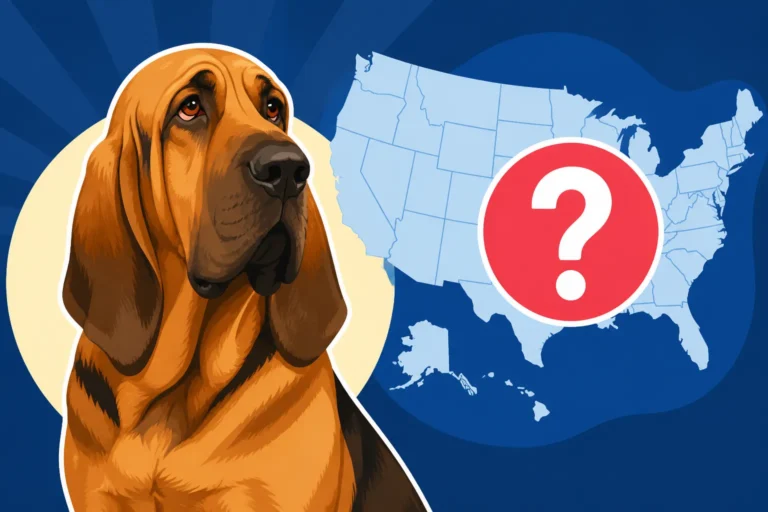
While Bloodhounds have a unique place in legal history, claiming their evidence "counts in every state" is an oversimplification. The legal landscape is far more complex, with individual states and specific courts having their own standards for what constitutes admissible evidence. It's less about a blanket acceptance and more about meeting stringent criteria.
Variation in State Legal Standards for Scent Evidence
The biggest hurdle for Bloodhound evidence is the sheer variety of legal opinions. Some states embrace scent evidence, viewing it as a valuable investigative tool when properly handled. They might have a long history of accepting it, with established precedents that make it easier for prosecutors to introduce. Other states are far more cautious or even outright reject it, considering it too unreliable or "junk science."
These differences often stem from varying judicial interpretations of what makes scientific evidence reliable. Courts grapple with questions like: How do we know the dog isn't making a mistake? How do we prove the specific scent cone was correctly identified? Is it truly "scientific" in the way DNA or fingerprint analysis is? Because scent evidence isn't always easily quantifiable in the same way, some jurisdictions opt for extreme caution. So, while Whether a Bloodhound's Nose Counts as Evidence in Every State is technically "no," many jurisdictions do accept it under certain conditions, while others do not.
General Requirements for Admissibility
For states that do allow Bloodhound evidence, there's usually a laundry list of requirements that must be met before it can even be presented to a jury. These aren't just suggestions; they are critical elements that, if overlooked, can lead to the evidence being thrown out.
Typically, these requirements include:
- Proof of Breed Purity: The dog must be a purebred Bloodhound, not a mix, to ensure the inherent scenting ability.
- Reliable Pedigree: Documentation of the dog's lineage, often through kennel clubs, to demonstrate a line bred for trailing.
- Proven Training: Extensive records demonstrating the dog's training and proficiency in scent tracking, usually with certified instructors.
- Successful Track Record: Evidence of the dog's past successes in trailing, sometimes including specific numbers of finds or convictions.
- Proper Maintenance of Scent Article: The initial scent article must have been handled in a way that prevents contamination. For example, a police officer carefully placing a suspect's dropped hat into an airtight bag from a Chewy order, rather than handling it with bare hands.
- Lack of Contamination at Scene: The crime scene itself must be relatively free of overwhelming distracting scents or excessive foot traffic before the dog began its work.
- Skill of the Handler: The handler's qualifications, experience, and adherence to proper trailing protocols are paramount. Whether a Bloodhound Handler Must Be Qualified to Testify is a huge factor, as their testimony often provides the framework for the dog's actions.
- The Specificity of the Trail: Was the trail clear, direct, and conclusive, or was it convoluted and uncertain?
Without meeting these stringent criteria, even in accepting states, the evidence from a Bloodhound's trail can quickly be deemed inadmissible.
| Factor | Impact on Admissibility | Why it Matters |
|---|---|---|
| Dog's Breed & Purity | High acceptance if purebred Bloodhound | Ensures the dog possesses the inherent, specialized scenting capabilities. |
| Dog's Training/Certification | Essential for credibility and proof of reliability | Demonstrates the dog understands its job and performs consistently. |
| Handler's Experience & Training | Crucial for proper interpretation and guidance | A skilled handler can accurately testify to the dog's behavior on the trail. |
| Condition of Scent Article | Must be uncontaminated and specific | Ensures the dog is tracking the correct individual's unique odor. |
| Conditions of the Trail | Weather, terrain, age of trail, human interference | External factors can affect scent integrity and the dog's ability to track. |
| Corroborating Evidence | Strengthens the case, often a requirement in some states | Bloodhound evidence is rarely, if ever, the sole basis for conviction. |
The Indispensable Role of the Handler and Training
It's tempting to think of the Bloodhound as an autonomous, four-legged lie detector. However, the dog is only half of the equation. The handler's expertise, the dog's rigorous training, and the strict protocols followed during a search are absolutely vital to whether a Bloodhound's trail is ever considered credible in court. This partnership isn't just for show; it's the foundation of legal admissibility.
Certifying the Bloodhound and Its Handler
Before a Bloodhound or its handler can ever step into a courtroom, they need to undergo extensive certification processes. This isn't just a pat on the head and a "good boy"; it's a series of tests and evaluations designed to prove both the dog's natural ability and the handler's skill in interpreting and guiding that ability. Organizations, often within law enforcement or through specialized private bodies, establish standards for these certifications.
These certifications typically involve:
- Formal Training Programs: The dog and handler must complete specific courses covering scent theory, trailing techniques, evidence preservation, and legal considerations.
- Blind Trails: The dog and handler are tested on trails where neither knows the route or the location of the "quarry." This prevents conscious or unconscious cuing from the handler.
- Varied Conditions: Training and testing are conducted in diverse environments – urban, rural, different weather conditions, varying trail ages – to demonstrate versatility and reliability.
- Documentation: Meticulous records are kept of all training sessions, successes, and even failures, to present a comprehensive history of the team's capabilities.
This rigorous process is why How a Bloodhound Is Certified for Search Work is so essential. It’s what gives prosecutors something concrete to present to a judge when arguing for the admissibility of the evidence. Without these credentials, the defense has an easy time arguing that the team is untrained and therefore unreliable.
Why the Handler's Testimony is Often More Critical Than the Dog's Actions
The Bloodhound doesn't speak. It doesn't write reports. Its "testimony" comes through its actions – putting its nose down, following a path, baying at the end of a trail. It's the handler who translates these actions into a narrative that a court can understand. The handler testifies about what they observed, how the dog behaved, the protocols followed, and the significance of the dog's actions.
This is where the human element becomes paramount. The handler must:
- Be a Qualified Expert: They must demonstrate sufficient experience and training to be recognized as an expert in scent trailing.
- Maintain Objectivity: They must explain the dog's actions without undue interpretation or personal bias, sticking to factual observations.
- Detail Protocols: They must clearly articulate the strict protocols followed during the trail, from scent article handling to search methodology.
- Defend Reliability: They will be cross-examined on the reliability of Bloodhound evidence in general, their dog specifically, and their own methods. This often means discussing Whether a Bloodhound Can Be Wrong and how false positives are mitigated.
In essence, the handler becomes the Bloodhound's voice in court. Their credibility, training, and adherence to best practices are often the deciding factors in whether the dog's impressive work is accepted as valid evidence. This isn't just about showing up with a Bloodhound; it's about a highly trained professional presenting compelling, documented evidence of a specialized skill. If you're passionate about this, even for a family pet, consider joining classes to deepen your understanding; Whether a Pet Bloodhound Should Do Scent Work Classes can be a great way to bond and explore their natural talents.
Challenges and Limitations of Bloodhound Evidence
Despite their celebrated abilities and historical legal standing, Bloodhound trails are not a magic bullet, nor are they immune to scrutiny. The legal system, rightly so, places a high bar on evidence that can impact a person's freedom. There are very real challenges and limitations that make the use of Bloodhound evidence contentious and often challenged by defense attorneys.
The Difficulty of Quantifying Scent Evidence
One of the biggest hurdles is the inherent difficulty in scientifically quantifying scent. Unlike DNA, fingerprints, or even ballistics, there's no universally accepted laboratory test that can definitively say, "Yes, this specific scent sample matches that person, with a margin of error of X." How a Bloodhound Separates One Person's Scent From a Crowd is astonishing, but it's an internal process the dog undertakes, not one we can replicate with current technology to present as concrete scientific data in the same way.
This lack of quantifiable data makes it vulnerable to challenges. Defense attorneys frequently argue that scent evidence lacks the scientific rigor of other forensic methods. They might argue that a dog's "identification" is subjective, or that the dog could be influenced by extraneous factors, leading to a false positive. This leads to questions about how accurately a dog can distinguish between similar scents or if external contamination occurred. This ambiguity is precisely why many courts demand corroborating evidence before a Bloodhound's trail can even be considered in a criminal case.
Common Defense Challenges to Bloodhound Testimony
Defense teams are trained to poke holes in every piece of evidence, and Bloodhound testimony offers many avenues for challenge. Their primary goal is often to prove that the dog's trail was unreliable, contaminated, or simply incorrect.
Common challenges include:
- Contamination of Scent Article: Was the scent article (e.g., a dropped glove, a piece of clothing) handled by multiple people without gloves? Was it stored improperly? If so, the defense can argue the dog wasn't tracking the specific suspect's scent but a mixed or contaminated one.
- Handler Influence: The defense might suggest the handler unconsciously (or even consciously) influenced the dog's direction. Even subtle body language or leash tension can be argued as a "cue."
- Environmental Factors: Weather (rain, wind), terrain, and the age of the trail can all be used to argue that the scent was too degraded or dispersed for a reliable trail.
- Lack of Corroboration: Rarely will a Bloodhound's trail be the sole piece of evidence. If there's no other physical evidence, eyewitnesses, or confessions to support the dog's "find," the defense will hammer this point home, asserting that the dog alone is insufficient.
- Dog's Track Record: A defense attorney might delve into the specific dog's past performance, highlighting any failures or instances where its trail didn't lead to a conviction. This directly relates to Whether a Defense Can Challenge a Bloodhound's Trail.
- General Reliability of Bloodhounds: In jurisdictions less familiar with scent evidence, the defense might challenge the entire premise of using a dog's nose in court, sometimes bringing in "expert" witnesses to counter claims of infallibility.
This extensive scrutiny means that Bloodhound evidence, while potent, requires meticulous record-keeping, strict adherence to protocol, and a highly skilled handler to stand up in court. It’s a powerful tool, but one that must be wielded with precision and supported by every possible safeguard to ensure justice is served. If you're thinking about getting involved in any kind of scent work, understanding the legal implications and the gear required, like a quality What a Mantrailing Harness and Long Line Cost, is a crucial first step. And for all your Bloodhound's general supplies, from grooming tools to toys, reputable online retailers like Chewy offer a vast selection to keep your companion healthy and happy.
Disclaimer
This article is for general informational purposes only and does not constitute professional advice. Laws, prices and regulations vary by location and change over time. Consult a qualified professional for guidance on your specific situation.