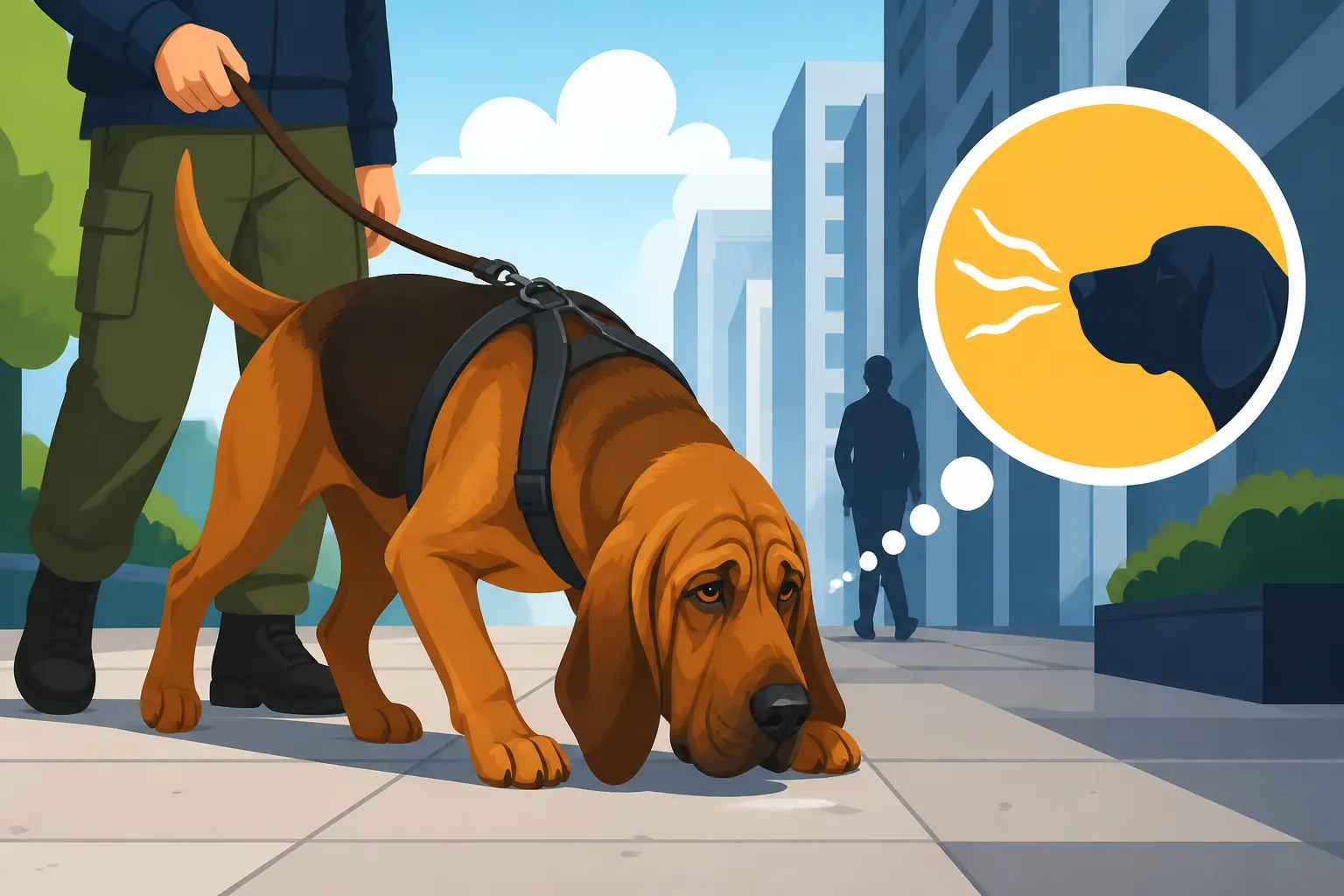
Whether a Bloodhound Can Work a Downtown Sidewalk
It’s a romantic notion, isn't it? Imagining your majestic Bloodhound, nose to the ground, diligently tracking a scent through the bustling streets of a downtown core, perhaps helping a search and rescue team. The reality, however, is often a muddy, drooly, and incredibly frustrating endeavor for many owners. Navigating a Bloodhound, a breed driven by an almost singular focus on scent, through an environment designed for humans, not hounds, presents a unique set of challenges. This guide will delve into the practicalities of bringing a Bloodhound to a downtown sidewalk, what to expect, and whether it's truly a suitable environment for their unparalleled abilities.
The Sensory Overload of an Urban Environment for a Bloodhound
For us humans, a downtown sidewalk is a cacophony of sights and sounds: car horns, chatter, street performers, bright lights, and the dizzying array of shop windows. For a Bloodhound, it’s all that, amplified a thousand times over, but predominantly through their nose. Their world is a rich tapestry of odors, and a downtown area is less a tapestry and more a chaotic, jumbled pile of yarn from every conceivable source.
Navigating a Scent-Rich Labyrinth
A Bloodhound's nose is not just sensitive; it's a marvel of evolution, capable of discerning and following individual scent trails that are hours, even days, old. Imagine trying to read a single newspaper article when hundreds of different newspapers are being thrown at your face simultaneously. That's a bit like what a downtown sidewalk is for a Bloodhound. Every person who has walked by, every spilled coffee, every exhaust fume, every discarded food wrapper, every dog that sniffed a lamppost – it all leaves a distinct, persistent scent.
When you ask a Bloodhound to "work" in such an environment, they are constantly bombarded. While they possess an incredible ability to filter and focus on a specific target scent, the sheer volume of competing, intriguing odors can make it incredibly difficult. It’s not that they can’t do it; it’s that the mental effort required is immense, and their innate drive to explore every interesting smell can quickly override any handler's directive. Owners often find their Bloodhound's nose simply outvotes its handler in these situations, leading to a frustrating tug-of-war rather than focused work. For more on their incredible olfactory abilities, you might want to read What a Bloodhound Is Actually Smelling on a Trail.
The Distractions Beyond Scent
Beyond the overwhelming scent-scape, downtown sidewalks present numerous other distractions that can derail a Bloodhound’s focus. Visual stimuli are constant: pedestrians of all shapes and sizes, other dogs, cats, squirrels darting across paths, buses, bicycles, and storefront displays. The auditory environment is equally challenging, with sirens, construction noise, car alarms, and general city bustle creating a high-stress backdrop.
While Bloodhounds are generally known for their placid temperament, sustained exposure to such high levels of stimulation can be overwhelming and even stressful. A dog that is constantly stressed or overstimulated cannot perform at its best, whether that's trailing or simply walking politely on a leash. A good handler understands that keeping their dog in a calm, focused state is paramount, and a downtown environment rarely facilitates that for a scent-driven breed like the Bloodhound. This is particularly true if you are hoping for any semblance of an "off-leash" experience, which, frankly, is never a goal with a Bloodhound, especially in an urban setting. Why Off Leash Is Not a Goal With a Bloodhound explains this in detail.
Practicalities of Handling a Bloodhound on a Downtown Sidewalk
Handling a Bloodhound on a busy downtown sidewalk isn't like walking a smaller, less driven companion breed. Their size, strength, and unwavering focus on scent demand specific equipment, training, and a deep understanding of their unique behavioral traits.
Equipment Essentials for Urban Excursions
First and foremost, you need the right gear to maintain control and ensure safety for both your Bloodhound and the public. A standard collar, even a strong one, is simply not enough. Bloodhounds have powerful necks and an immense drive, and they can easily slip a collar or pull hard enough to cause themselves injury or escape.
- Harness: A well-fitting, sturdy harness is non-negotiable. Look for one that clips in the front (chest) rather than just the back. A front-clip harness helps redirect your Bloodhound's pulling power back towards you, making them much easier to manage. Many pet supply stores, including large retailers like Chewy, offer a variety of harnesses suitable for large, strong breeds. Brands like Ruffwear or Easy Walk are often recommended for their durability and design features that discourage pulling. For more on this, check out Which Harness a Bloodhound Trails In.
- Long Line (for supervised areas): While not for sidewalks, if you eventually plan to transition your Bloodhound to scent work in a less crowded urban park area, a long line (15-30 feet) is essential for practicing. This allows them some freedom to explore a scent without being truly off-leash. However, using a long line on a busy sidewalk is a significant tripping hazard for pedestrians and could be dangerous for your dog.
- Leash: A strong, comfortable leash, preferably 6 feet long, is standard. Opt for a durable material like nylon or leather, and make sure the hardware is robust. Avoid retractable leashes in urban settings, as they offer little control and can be dangerous.
- Identification: Ensure your Bloodhound wears tags with your current contact information, and that their microchip details are up-to-date. In a busy urban environment, the risk of them getting loose, however slim, is ever-present. Consider an additional, reflective collar for visibility.
The Challenge of Leash Manners
You might have the best-behaved dog at home, but a downtown sidewalk is the ultimate test of leash manners for a Bloodhound. Their natural instinct is to keep their nose to the ground, following every intriguing trail. This means a constant, often strong, pull on the leash. Even with a front-clip harness, managing a large, strong Bloodhound intent on a scent trail requires significant physical strength and consistent training.
This isn't just about comfort; it's about safety. A Bloodhound pulling relentlessly can drag a handler into traffic, knock over pedestrians, or get tangled in street furniture. Consistent training is vital, starting with basic leash manners in less distracting environments before attempting downtown excursions. The goal isn't just to stop them from pulling, but to teach them to check in with you, even when their nose is screaming for attention.
Specialized Training for Urban Scent Work
Simply taking your Bloodhound for a walk downtown and expecting them to "work" on a scent trail is unrealistic. If the goal is actual scent work in an urban environment, it requires highly specialized training that goes far beyond basic obedience.
Mantrailing: The Bloodhound's True Calling
Forget "sit" and "stay" when it comes to downtown success with a Bloodhound's nose. While basic obedience is helpful for overall control, the real answer to channeling a Bloodhound's drive, especially in complex environments, is mantrailing. Mantrailing Is the Answer to a Bloodhound, Not Obedience highlights this crucial distinction. Mantrailing teaches a Bloodhound to follow a specific human scent, ignoring all others, which is exactly what's needed in a busy downtown area.
This training involves:
- Scent Discrimination: Teaching the dog to focus on a single human scent article (e.g., a piece of clothing) and follow only that scent. This is incredibly difficult in a downtown environment where a thousand other human scents are present.
- Environmental Acclimation: Gradually exposing the dog to increasingly complex and distracting environments, moving from quiet parks to suburban areas, and finally to urban settings. This acclimation isn't just about desensitizing them; it's about teaching them to maintain focus despite the chaos.
- Handler Skill: The handler needs extensive training too. They must learn to "read" their dog, understand its cues, and provide appropriate support and direction without interfering with the dog's natural trailing ability. This includes knowing when to encourage, when to let the dog problem-solve, and when to recognize that the environment is simply too much.
It's a misconception that a Bloodhound can just "turn on" its trailing abilities anywhere. They need a clear objective, a specific target scent, and the training to ignore the overwhelming amount of background "noise" in an urban setting.
Socialization and Desensitization
For a Bloodhound to even cope with a downtown sidewalk, let alone work on it, proper and early socialization is paramount. This means exposing your puppy to a wide variety of sights, sounds, people, and other dogs in a positive, controlled way. However, there's a fine line between socialization and overwhelming a dog.
Desensitization involves gradually increasing exposure to specific stimuli so the dog learns to tolerate or ignore them. For a downtown environment, this means getting them used to:
- Crowds: Walking past many people, seeing children, adults, and people with mobility aids.
- Traffic: The noise, movement, and smells of cars, buses, and trucks.
- Strange Objects: Bicycles, scooters, street furniture, construction materials, and unusual street art.
Without careful and positive exposure, a Bloodhound can become anxious or reactive in such an environment, making any attempt at focused work impossible. It's about building resilience and confidence, not just tolerating.
| Aspect of Urban Environment | Challenge for Bloodhound | Mitigation/Training |
|---|---|---|
| Scent Overload | Too many competing trails | Mantrailing, Scent Discrimination |
| Visual Distractions | Moving people, vehicles, objects | Desensitization, Focus exercises |
| Auditory Noise | Sirens, construction, chatter | Gradual exposure, Positive reinforcement |
| Physical Hazards | Litter, glass, tight spaces | Good leash handling, Boots (if necessary) |
| Public Interaction | Strangers wanting to pet | Handler control, "Working" vest |
Is It Even Fair to Ask a Bloodhound to Work a Downtown Sidewalk?
Ultimately, the question isn't just can a Bloodhound work a downtown sidewalk, but should they? While their nose is undeniably powerful, the downtown environment is inherently contradictory to how they naturally excel.
The Energy Cost of Urban Trailing
Think about the mental energy you expend navigating a busy city street. Now multiply that by ten for a Bloodhound trying to process every single scent detail, while also avoiding obstacles, people, and sudden noises. Even a short session of trying to "work" a downtown sidewalk can be incredibly taxing for a Bloodhound. They might appear physically tired, but more often, they'll be mentally exhausted, leading to frustration, poor focus, and potentially stress-related behaviors later on.
For genuine trailing work, Bloodhounds perform best in environments where the target scent is clearer, and competing scents are fewer. This allows them to utilize their incredible gifts without the overwhelming sensory assault of a city center. Asking them to constantly filter through a thousand irrelevant scents is like asking a virtuoso pianist to perform in a construction zone – they might be capable, but the environment makes it incredibly difficult and drains their energy.
Alternatives to Downtown Work
If your goal is to provide your Bloodhound with mental stimulation and allow them to use their nose, there are far more effective and less stressful alternatives to downtown sidewalks.
- Suburban Parks or Trails: These often offer a good balance of varying terrain and interesting scents without the sheer volume of a city center. You can still practice basic trailing in these areas, perhaps with a pre-laid "runaway" for your dog to follow. How Long a Line a Bloodhound Handler Buys might offer good insights here.
- Designated Scent Work Classes: Many trainers offer specialized nose work or mantrailing classes that provide controlled environments and expert guidance. This allows your Bloodhound to practice their skills with purpose, in a setting designed for success, not frustration.
- Large, Fenced Areas (for controlled exercises): If you can find a large, securely fenced area, you can lay longer, more complex trails. This allows your Bloodhound to stretch their legs and their nose without the risk of traffic or crowds. While finding a perfectly safe, off-leash space for a Bloodhound is rare (see How Far a Loose Bloodhound Will Travel), a long line in a large, contained area can mimic that freedom for training purposes.
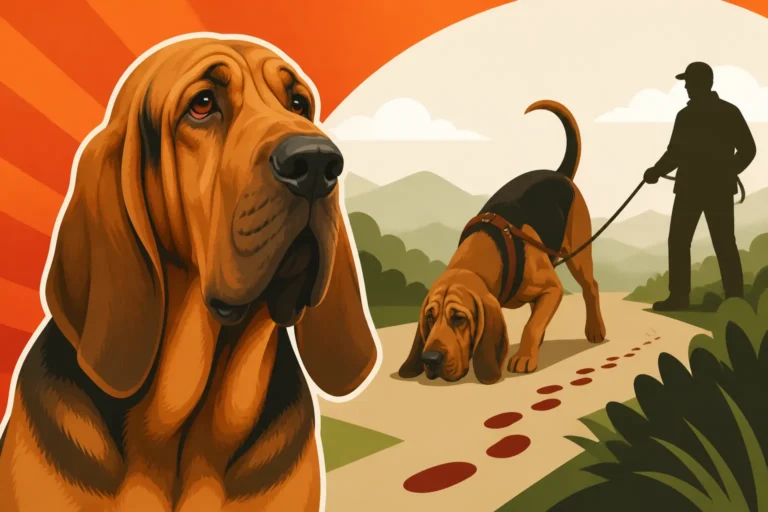
- Rural or Wilderness Trailing: This is where Bloodhounds truly shine. Open fields, forests, or quiet rural roads provide the ideal canvas for their scenting abilities, allowing them to focus on their task with minimal environmental interference.
While a Bloodhound can technically walk on a downtown sidewalk, often dragging their handler along with them, expecting them to perform effective scent work there is usually asking too much of them. It's an environment that clashes with their natural working style. Their extraordinary nose is a gift, and as responsible owners, we owe it to them to provide opportunities to use it in ways that are safe, enriching, and conducive to their success. Your Bloodhound wants to work, but they need the right stage for their talents.
Disclaimer
This article is for general informational purposes only and does not constitute professional advice. Laws, prices and regulations vary by location and change over time. Consult a qualified professional for guidance on your specific situation.