What the Chien de Saint Hubert Was Used For
It's easy to look at our modern Bloodhounds, with their soulful eyes and legendary noses, and feel a deep connection to their past. But for many, the actual history of their ancient ancestor, the Chien de Saint Hubert, feels shrouded in the mists of time. We know they were hunters, but what exactly did they do? How did their work shape the dogs we cherish today? This guide is going to pull back the curtain on the historical uses of the Chien de Saint Hubert, helping you understand the incredible legacy that leads right to your own loyal companion.
The Monastic Roots of the Chien de Saint Hubert
To truly understand the Chien de Saint Hubert, we have to travel back in time, not to a royal kennel, but to the quiet, dedicated world of monastic life. The origins of this incredible breed are deeply intertwined with the Abbey of Saint Hubert in the Ardennes region, a place of profound influence on medieval hunting practices.
Breeding by the Abbey of Saint Hubert
Imagine a time when the vast forests of Europe were teeming with wild game, and hunting was not just a sport for the nobility, but a vital part of sustenance and control. It was in this environment, roughly between the 7th and 9th centuries and possibly even earlier, that the monks of the Abbey of Saint Hubert began their meticulous work. These weren't casual breeders; they were dedicated to cultivating a specific type of hound. Their goal was clear: to produce pure hunting stock that excelled in tracking.
The monks understood the importance of consistency and predictable traits in their hounds. They weren't just letting dogs breed indiscriminately; they were carefully selecting individuals that demonstrated superior scenting ability, stamina, and the calm demeanor necessary for persistent trailing. The abbey's isolated location in the dense Ardennes forests was ideal, allowing them to maintain a pure and distinct line, free from the genetic mixing that might occur in more populous areas. This dedicated effort over centuries led to a recognizable type of hound, renowned throughout the region for its singular abilities. You can read more about When the Monks Began Breeding the Bloodhound's Ancestor and The Abbey of Saint Hubert Bred the Bloodhound's Ancestor.
The Pursuit of "Blooded" Stock
The term "Bloodhound" itself often conjures images of tracking wounded animals, following a blood trail. While they excel at this, the original meaning of "blooded stock" in the context of the Chien de Saint Hubert was actually about purity of lineage. It referred to hounds of unmixed, aristocratic bloodlines, carefully bred and documented by the monks. This purity was paramount because it ensured the consistent transmission of desirable traits, primarily their unparalleled scenting ability.
These "blooded" hounds were highly prized. Owning a Chien de Saint Hubert from the Abbey wasn't just about having a capable hunting dog; it was a status symbol, a testament to the owner's wealth and prestige. The monks would even present these hounds as gifts to royalty and nobility, spreading their fame and influence across Europe. This careful maintenance of pure lines, focused on specific working traits, is a cornerstone of responsible breeding that persists even today, demonstrating the enduring legacy of the abbey's efforts. The term itself is fascinating; delve deeper into What Blooded Stock Meant When the Bloodhound Was Named and Why Bloodhound Does Not Mean a Hound That Tracks Blood.
Primary Role in Aristocratic Hunts
The Chien de Saint Hubert's primary purpose was deeply ingrained in the grand hunting traditions of medieval aristocracy. They weren't the hounds that delivered the killing blow, but rather the essential instruments for initiating and sustaining a complex pursuit.
Tracking Large Game Animals
The main quarry for the Chien de Saint Hubert was large game: deer, especially red deer, and formidable wild boar. Bears were also tracked in some regions where they were present. These hunts were far from simple. Animals in vast, untamed forests could easily disappear, especially if wounded, or simply leave a very faint trail. The Chien de Saint Hubert's job was to meticulously unravel these often "cold" or faint scent puzzles.
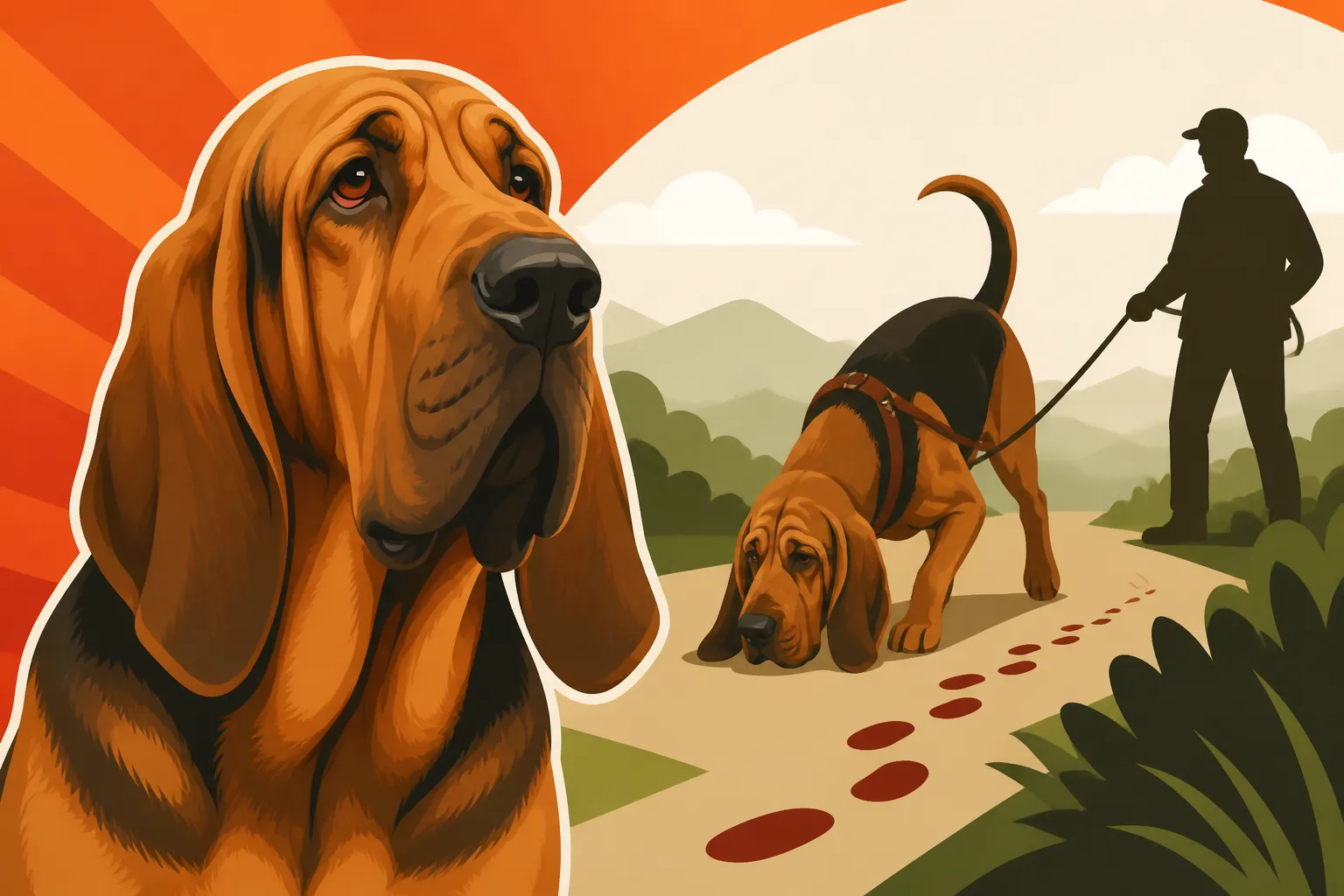
They would be brought to the scene where game was known to have passed or wounded, and with their noses to the ground, they would systematically follow the invisible path of scent. This required immense concentration, stamina, and a methodical approach that few other breeds could match. Their work was the crucial first step, ensuring that the hunt could continue even when the quarry was out of sight, deep within the forest's tangled undergrowth. They were the key that unlocked the rest of the hunt, preventing the loss of valuable game and hours of fruitless searching.
The Concept of the "Relay Hunt"
Medieval hunts were often elaborate affairs, and the Chien de Saint Hubert played a specialized role in what was known as the "relay hunt." This wasn't a solo effort where one dog did everything. Instead, it was a finely choreographed team endeavor. The Chien de Saint Hubert hounds, with their incredible scenting ability, would be employed first. Their task was to patiently and persistently find and follow the scent of the quarry, tracking it through all manner of terrain.
Once the Chien de Saint Hubert had located the animal or driven it into a specific area, often hours after the initial scent was laid, a fresh pack of faster, more aggressive hounds would be released. These might be lighter, swifter breeds, perhaps early forms of Greyhounds or similar coursing hounds, whose job was to visually pursue and bring down the now-located game. This division of labor maximized efficiency; the Chien de Saint Hubert ensured the game was found, and the coursing hounds ensured it was caught. This system perfectly illustrates the unique and indispensable contribution of the Chien de Saint Hubert: their ability to find and stick to a trail that others simply could not perceive.
Developing the Unrivaled Scenting Prowess
The Chien de Saint Hubert wasn't just good at scenting; they were bred to be unrivaled. Every aspect of their physical form and mental focus was cultivated to enhance their olfactory capabilities, making them the gold standard for scent work.
The "Cold Nose" Advantage
One of the most remarkable qualities of the Chien de Saint Hubert was its "cold nose." This refers to their extraordinary ability to follow trails that were hours, sometimes even days, old. Most hounds struggle with cold trails, as ambient air movement, weather, and the degradation of scent particles quickly obscure the path. But the Chien de Saint Hubert was different. Their breeding focused specifically on individuals that could pick up the faintest of residual scents, persevering long after the immediate "hot" scent had dissipated.
Their unique physical characteristics were no accident in this regard. Their long, pendulous ears, often trailing on the ground, are believed to have helped sweep scent particles towards their nose, concentrating the odor. The loose skin and deep wrinkles on their face and neck might have served a similar purpose, acting as a kind of "scent net" to capture and hold airborne scent molecules close to their highly sensitive nostrils. These physical traits, combined with an intense, unwavering focus, gave them an advantage in situations where other hounds would simply give up. This "cold nose" is a defining characteristic that persists in modern Bloodhounds, allowing them to follow trails that leave humans utterly bewildered. We explore this further in How Many Scent Receptors a Bloodhound Has.
Selective Breeding for Scenting Instinct
The meticulous breeding efforts by the monks of Saint Hubert were truly groundbreaking. They didn't just breed for physical traits; they were intensely focused on instinct and working ability. Hounds that showed the most tenacious trailing drive, the keenest sense of smell, and the greatest endurance were selected for breeding. This was a form of performance breeding centuries before such concepts were widely formalized.
This selective breeding wasn't just about identifying the best; it was about protecting and amplifying these traits across generations. They weren't interested in speed or aggression as much as they were in pure, unadulterated scenting capacity. The temperament was also key – a dog that was too easily distracted or too aggressive wouldn't be effective in the methodical, often lengthy, process of trailing. This deep-seated instinct to follow a trail, no matter how faint or old, became the hallmark of the Chien de Saint Hubert and its direct descendant, the Bloodhound. This dedication to specific working traits is why the modern Bloodhound's nose remains legendary, whether it's tracking a missing person or simply sniffing out dropped crumbs in the kitchen. If you're looking to support your Bloodhound's natural instincts, exploring puzzles and scent games from places like Chewy can be a great way to engage them.
The Chien de Saint Hubert's Journey Beyond the Ardennes
The fame and utility of the Chien de Saint Hubert couldn't be contained within the borders of the Ardennes. Its exceptional abilities soon saw it spreading across Europe, particularly finding a new home and a crucial stage for its development in England.
Exportation to England and Royal Patronage
The exact timeline and methods of the Chien de Saint Hubert's arrival in England are debated, but one prominent theory suggests they may have been introduced by William the Conqueror in 1066. Whether through conquest or later diplomatic gifts, these hounds soon gained immense favor with English royalty and nobility. The English hunting traditions were well-established, but the superior scenting ability of the Chien de Saint Hubert offered a significant enhancement to their practices.
English breeders eagerly embraced these hounds, continuing the tradition of careful selection and further refining the breed. Over centuries, these imported hounds, and their subsequent English-bred descendants, began to diverge slightly from their continental cousins, leading to the development of what we now recognize as the modern Bloodhound. The prestige of these dogs was such that they were often referred to as "blooded hounds," emphasizing their pure and noble lineage as much as their hunting prowess. This period was critical in solidifying the breed's characteristics and reputation. Learn more about How the Bloodhound Reached England and What English Breeders Changed About the Bloodhound.
Influence on Other Hound Breeds
The Chien de Saint Hubert's impact extended far beyond just creating the Bloodhound. Its legendary scenting abilities and distinctive physical traits served as a foundational genetic pool for numerous other European scent hound breeds. As these "blooded hounds" spread, their progeny were often crossbred with local hounds to improve scenting capabilities, add stamina, or enhance specific hunting styles.
For instance, many of the coonhound breeds developed in America, while having distinct traits, owe a debt to the ancestral Bloodhound lines for their deep-chested, scent-driven nature. Across the continent, various regional hounds designed for specific game or terrain often trace elements of their lineage back to the original Chien de Saint Hubert type. It truly stands as a patriarch of the scent hound family, leaving an indelible mark on canine history. Its legacy is a testament to the power of selective breeding for specific, highly valued working traits, setting the standard for what a scent hound could be. This widespread influence means that even if you're not seeing a purebred Bloodhound, you're likely seeing traits that hark back to its ancient ancestor.
Not Just a Hunter: The Temperament and Appearance
While their utility in the hunt was paramount, the Chien de Saint Hubert was also notable for its character and distinctive look, traits that are still very much a part of the Bloodhound today.
Gentle Giants of the Medieval World
Despite their formidable size and powerful physique, the Chien de Saint Hubert was known for a surprisingly docile and amiable temperament. They weren't bred for aggression or protection; their value lay solely in their nose and their relentless focus on a trail. This gentle nature made them manageable in the field and within the confines of kennels or even noble households.
Imagine a large, deep-chested dog, capable of traversing miles of challenging terrain, yet calm enough to be handled by gamekeepers and nobles alike. This calm disposition meant they could work methodically without unnecessary distractions or conflicts, ensuring they stayed on task. This gentle giant persona is still very much alive in the modern Bloodhound, who is known for being loving, patient, and good-natured, especially with children. You'll often find them happily lounging around the house, quite content after a good "scent adventure." For all their power and history, they are truly big softies at heart. Keeping a powerful dog like the Chien de Saint Hubert, even if its needs were simpler then, would have required significant resources. Today, we're lucky to have access to high-quality nutrition and supplies, making it easier to care for our Bloodhounds, whether we shop at a local store or order supplies from Chewy.
Distinctive Physical Characteristics
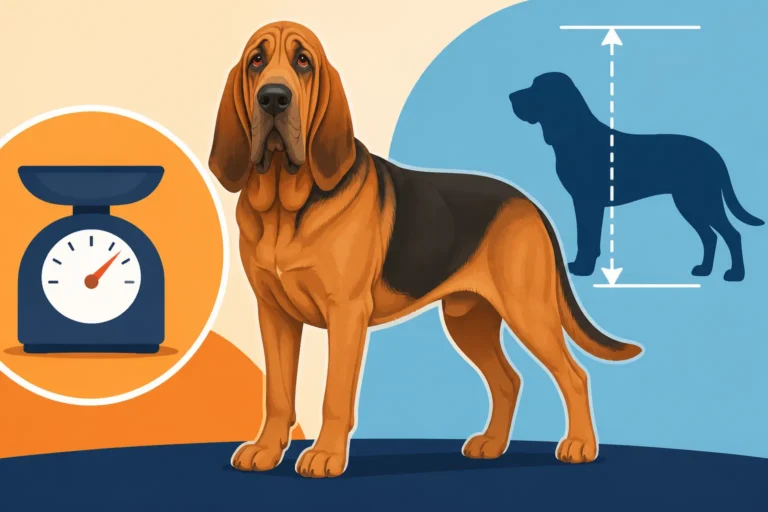
The Chien de Saint Hubert possessed many of the physical traits that define the Bloodhound breed today, albeit perhaps in slightly less exaggerated forms. They were large, substantial hounds with heavy bone, built for endurance rather than speed. Their most striking features included their long, pendulous ears, which were believed to aid in gathering scent from the ground. Their deep-set eyes, often with visible haws (the lower eyelid), contributed to their characteristic solemn expression.
The loose, elastic skin, particularly around the head and neck, forming wrinkles and dewlaps, was also present. As discussed earlier, these features were functional, thought to help trap and concentrate scent particles around the nose. The deep, powerful muzzle housed that incredible olfactory system, and their strong neck and shoulders allowed them to keep their nose to the ground for extended periods without tiring. These characteristics weren't just for show; they were finely tuned adaptations that enabled the Chien de Saint Hubert to perform its specialized work with unmatched proficiency.
To give you a clearer picture, let's compare the Chien de Saint Hubert's primary uses with other types of hounds prominent in medieval hunting.
| Feature | Chien de Saint Hubert (Early Bloodhound) | Sighthound (e.g., Greyhound, Lurcher types) | Coursing Hound (e.g., Talbot Hound descendant) | Mastiff Type (e.g., early Alaunt types) |
|---|---|---|---|---|
| Primary Function | Scent-tracking (cold trails) | Sight-hunting, speed pursuit | Scenting & pursuit (fresher trails) | Guarding, fighting, holding large game |
| Key Sense Used | Smell (dominant) | Sight (dominant) | Smell (strong) | Strength, intimidation |
| Typical Quarry | Wounded deer, wild boar | Hares, deer (chased visually) | Deer, boar (followed by scent then sight) | Boar, bear, human threats |
| Hunting Method | Persistent, methodical trailing | Swift, explosive chase | Combination of scent and speed | Grappling, holding |
| Physical Build | Heavy, wrinkled, long ears | Lean, agile, deep chest, short coat | Medium build, often longer ears | Very large, powerful, often brachycephalic |
| Temperament | Docile, focused, independent | Energetic, eager, sometimes aloof | Energetic, good-natured | Protective, formidable |
| Role in Relay Hunt | Initiator, trail finder | Closer, catcher | Intermediate pursuit | Sometimes holding quarry once found |
This table really highlights how specialized the Chien de Saint Hubert was, making it indispensable in a well-organized hunt.
The story of the Chien de Saint Hubert is a tale of extraordinary dedication to a specific purpose, one that continues to define the Bloodhound breed today. From the quiet cloisters of an abbey to the grand forests of Europe, their journey is a testament to the power of a truly exceptional nose.
Disclaimer
This article is for general informational purposes only and does not constitute professional advice. Laws, prices and regulations vary by location and change over time. Consult a qualified professional for guidance on your specific situation.