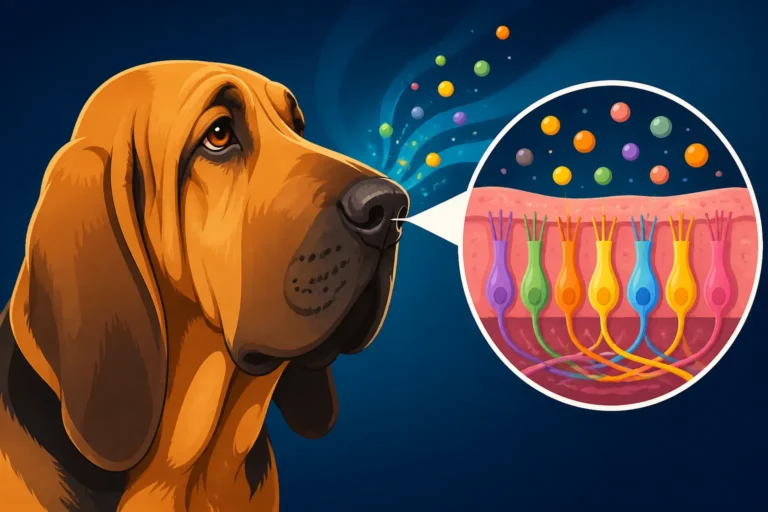
When the Monks Began Breeding the Bloodhound’s Ancestor
For centuries, the Bloodhound has stood as the undisputed champion of scent work, a testament to an incredible sense of smell and a relentless drive that few other breeds can match. But have you ever stopped to wonder where this extraordinary dog came from? It’s not a simple story of wild dogs being tamed; rather, it’s a narrative deeply intertwined with human dedication and, surprisingly, the quiet halls of ancient monasteries. Pinpointing the exact moment when the monks began meticulously breeding the Bloodhound's ancestor brings us back to a time when canine development was far more organized than one might imagine, laying the foundation for the remarkable breed we know and love today.
The Ancient Origins of Scent Hounds in Europe
Before the focused efforts of monastic breeders, dogs with impressive scenting abilities were already valued across Europe. These weren't necessarily what we would recognize as Bloodhounds today, but their lineage certainly contributed to the dogs that would eventually capture the attention of the monks. Understanding this earlier context helps us appreciate the careful selection and refinement that took place later.
Hunting Traditions Before the Monks
Imagine a time long before modern agriculture and neatly organized farms, when survival often depended on a successful hunt. People relied on dogs to track game, whether it was deer, wild boar, or smaller prey. These early hunting companions were selected primarily for their nose and their stamina. They weren't bred for specific aesthetic traits like long ears or wrinkled brows; instead, functionality was paramount. A dog that could follow a cold trail for hours, signaling its find with a vocal alert, was a prized possession, essential for putting food on the table.
These ancient hunters would have observed their dogs closely, noting which ones had the keenest noses, the strongest desire to follow a trail, and the most enduring physical capabilities. Over generations, certain lines of hounds would have become known within communities for their prowess, passed down from one hunter to the next. This informal selection process, driven purely by the practical needs of hunting, began to shape the genetic predispositions for the extraordinary scenting ability that would later be perfected.
The Role of Early European Hounds
Across Europe, different regions developed their own types of hounds suited to local terrain and game. In the dense forests and marshlands of what is now Belgium and France, larger, more robust hounds were favored. These dogs needed to push through thick undergrowth and brave difficult weather conditions, all while keeping their nose to the ground. They were often slow and methodical trailers, not quick sight hounds, which allowed hunters to keep pace on foot or horseback through challenging landscapes.
These dogs were valued for their perseverance and their deep, resonant voices, which helped hunters locate them in thick cover. They were the original "loose-skinned" dogs, with a certain amount of extra skin that might have helped protect them from thorns and briars, and long ears that perhaps helped funnel scent towards their powerful noses. While not yet the distinct Chien de Saint Hubert, these ancestral hounds carried the genetic blueprint for many of the Bloodhound's most iconic features. Their existence laid the groundwork for the more systematic breeding efforts to come, showing that the potential for superior scenting had long been present in certain canine populations.
The Abbey of Saint Hubert: A Cradle of Canine Development
The story of the Bloodhound truly begins to coalesce within the hallowed grounds of the Abbey of Saint Hubert in the Ardennes region. Here, a singular dedication to canine breeding, driven by spiritual and practical motivations, gave rise to the direct ancestor of our modern Bloodhound.
Who Was Saint Hubert?
To understand the dogs, we must first understand the man. Saint Hubert was a historical figure, born around 656 AD, who lived a life that underwent a profound transformation. Initially a wealthy nobleman with a passion for hunting, legend tells of a pivotal Good Friday hunt where he encountered a magnificent stag with a crucifix between its antlers. This miraculous vision led Hubert to abandon his secular life, dedicate himself to God, and eventually become a bishop. He is now revered as the patron saint of hunters and is closely associated with the Ardennes forest region.
The connection between Saint Hubert and hunting, even after his conversion, remained strong. He became a symbol of ethical hunting, emphasizing respect for nature and God's creatures. It was in his honor, and perhaps under his enduring influence, that the monastic community at the Abbey of Saint Hubert, founded near his burial place, took up the task of breeding dogs that would embody both spiritual devotion and practical utility. This spiritual patronage provided a unique context for the breeding program, elevating it beyond mere sport to something almost sacred.
The Monastic Dedication to Breeding
The monks of the Abbey of Saint Hubert were not just spiritual guides; they were also highly skilled agriculturalists and craftsmen. Their self-sufficient communities often engaged in various practical endeavors, and selective breeding of livestock, including dogs, was a natural extension of their expertise. Beginning around the 8th or 9th century, these monks took a scientific, almost scholarly approach to canine development, a stark contrast to the more informal breeding practices of the past. They maintained meticulous records, documenting lineages, temperaments, and hunting abilities, essentially creating one of the earliest recorded breed "standards."
Their goal was to develop a hound of unparalleled scenting ability and unwavering perseverance, capable of following the oldest and coldest trails. This wasn't merely for sport; these dogs were also used to track lost pilgrims, find game for the monastery's sustenance, and even pursue poachers. The monks were guided by a specific vision, patiently selecting breeding pairs over generations to hone the desired traits. Their cloistered environment and long-term commitment allowed for a consistency in breeding that would have been difficult to achieve elsewhere, cementing the foundation for a truly specialized scent hound. You can learn more about Where the Great Abbey of Saint Hubert Stands and its historical significance.
The Chien de Saint Hubert Emerges
From these dedicated efforts emerged the "Chien de Saint Hubert," or "Hound of Saint Hubert." This was the direct ancestor of the modern Bloodhound, a dog renowned throughout Europe for its extraordinary nose. These hounds were large, powerful, and distinctive, with loose skin, long pendulous ears, and a deep, sonorous bay. Their temperament was described as noble and docile, a reflection of the calm and methodical nature needed for sustained trailing.
The Chien de Saint Hubert quickly gained a reputation, not just for hunting, but also for its ability to follow human scent. They became highly sought after, with puppies and breeding stock often presented as gifts to royalty and nobility across Europe. This distribution helped spread the breed's influence and laid the groundwork for its further development outside the monastery walls. The monks' careful breeding meant that these dogs weren't just good at tracking; they were consistently good, their abilities predictable and reliable, a testament to the rigorous standards maintained within the abbey. Understanding What the Chien de Saint Hubert Was Used For reveals the wide array of tasks these remarkable hounds performed.
The Evolution of the Chien de Saint Hubert into the Modern Bloodhound
The Chien de Saint Hubert didn't remain exclusively within the Ardennes. As its reputation grew, these dogs traveled, particularly across the English Channel, where they underwent further development and eventually earned the name "Bloodhound." This period of evolution was crucial in shaping the breed into the dog we recognize today.
Crossings and Refinements in England
When the Chien de Saint Hubert arrived in England, often through gifts from French nobility or after the Norman Conquest, it met a slightly different set of environmental pressures and hunting traditions. English breeders, influenced by local hunting hounds, began to refine the Saint Hubert. They might have crossed these imports with indigenous scent hounds, perhaps to adapt them to the English landscape or to enhance certain desired characteristics, such as stamina over long distances or a slightly different conformation. This cross-breeding, while maintaining the core scenting ability, likely led to some subtle changes in appearance and temperament over many generations.
The goal remained the same: to produce the ultimate scent hound. English breeders focused on maintaining and even enhancing the breed's incredible olfactory prowess, alongside its characteristic loose skin, deep chest, and impressive bone structure. This adaptation in England was a key step in the journey of the Saint Hubert hound becoming the Bloodhound. The dogs continued to be prized for their ability to follow faint trails, becoming indispensable for tracking deer, boar, and even cattle rustlers. The article How the Bloodhound Reached England delves deeper into this historical migration.
What "Blooded" Meant for the Breed Name
The name "Bloodhound" often conjures images of tracking blood, and indeed, they are capable of following such trails. However, the true origin of the name is much more nuanced and speaks to the dogs' aristocratic lineage and purity of breeding. In medieval times, "blooded" referred to an animal of pure breeding, from a noble or "blooded" stock. It signified an animal whose pedigree was known and whose line was carefully maintained, often by nobility or, in this case, by monks.
Therefore, the term Bloodhound meant a "hound of pure blood" or a "blooded hound," emphasizing its distinguished ancestry and the meticulous breeding efforts that had gone into its creation, first by the monks of Saint Hubert, and then by dedicated English breeders. It was a mark of quality and authenticity, distinguishing it from common or mixed-breed hounds. This understanding helps shed light on the breed's esteemed status and the careful attention paid to its development over centuries. To explore this further, read What the Name Bloodhound Actually Means.
Distinguishing Traits of the Early Bloodhound
By the time the Chien de Saint Hubert had fully evolved into what was recognized as the Bloodhound in England, it possessed a set of physical and behavioral traits that were both unique and highly functional. These dogs were unmistakably large and powerfully built, designed for endurance rather than speed. Their loose skin, particularly around the head and neck, formed deep wrinkles and dewlaps, which some believe helped to capture and funnel scent particles toward their exceptionally sensitive noses.
The long, pendulous ears, often described as velvety to the touch, served a similar purpose, sweeping ground scent upwards as the dog moved. Their deep-set eyes, often with a visible "haw" or third eyelid, gave them a solemn, almost mournful expression. Temperamentally, they were known for their calm and placid demeanor, a necessary trait for a dog that needed to concentrate for hours on a trail without becoming overly excitable or distracted. This combination of physical attributes and unwavering focus made them unparalleled in their specific work, cementing their reputation as the "King of Scent."
The Historical Context of Monastic Breeding Programs
The decision by the monks of Saint Hubert to undertake such a rigorous and sustained breeding program was not an isolated quirk. It reflects a broader role that monasteries played in medieval society, acting as centers of innovation, preservation, and practical development.
Monasteries as Centers of Learning and Agriculture
In an era when formal education and scientific inquiry were largely confined to religious institutions, monasteries served as intellectual powerhouses. Monks were often literate, skilled in record-keeping, and possessed the organizational capacity to undertake long-term projects. Beyond spiritual pursuits, they were frequently at the forefront of agricultural innovation, improving crop yields, developing new farming techniques, and, crucially, selectively breeding livestock. They understood genetics long before the science of it was formally established, recognizing that desirable traits could be perpetuated and enhanced through careful pairing.
This environment of disciplined study and practical application made monasteries ideal locations for sophisticated breeding programs. Unlike secular breeders who might face changing fortunes or short-term interests, monastic communities offered stability and a multi-generational commitment. Their pursuit of excellence in all endeavors, whether cultivating herbs or breeding hounds, was an expression of their devotion and their role in contributing to society's welfare. This intellectual framework, combined with practical skills, was fundamental to the success of the Chien de Saint Hubert project.
Practical Needs Driving Breed Development
While the spiritual connection to Saint Hubert was significant, the monastic breeding program was also rooted in very practical needs. Large monastic estates, often encompassing vast tracts of land, required effective ways to manage their resources and ensure their sustenance. This meant hunting for food, protecting their lands from poachers, and sometimes even locating lost individuals within their expansive territories. A highly specialized scent hound was not a luxury; it was a valuable tool that directly contributed to the monastery's self-sufficiency and security.
The consistent demand for such a capable working dog provided the continuous motivation for the monks to maintain and improve their breeding lines. They weren't breeding for fashion or fleeting trends; they were breeding for utility, for a specific and demanding job. This practical imperative meant that only the best working dogs were selected for breeding, ensuring that the Chien de Saint Hubert remained true to its purpose and retained its extraordinary capabilities generation after generation. This long-term, utility-driven selection is a key reason why the Bloodhound's scenting abilities remain so potent today. Even now, modern Bloodhounds still require high-quality nutrition to sustain their working drive, with many owners finding specialized large-breed formulas easily accessible from retailers like Chewy.
The Slow Pace of Early Selective Breeding
It's easy to look back and see the "creation" of a breed as a swift process, but in reality, early selective breeding was incredibly slow and painstaking. Without a modern understanding of genetics, the monks relied on keen observation and empirical knowledge passed down through generations. They had to wait for dogs to mature, prove their abilities in the field, and then breed, a cycle that could take years. Any significant refinement in traits might span several decades, even centuries.
Consider the immense patience required: seeing a desirable trait in a puppy, breeding that puppy when it matured, and then waiting to see if its offspring also displayed the trait, perhaps even more strongly. It was a testament to the monks' dedication and their long-term perspective, often thinking in terms of generations rather than individual animals. This slow, deliberate process, combined with a relatively closed breeding pool, allowed for the gradual but incredibly effective consolidation of the Bloodhound's unique characteristics, particularly its unparalleled nose.
| Era | Key Events | Canine Focus | Resulting Influence on Bloodhound |
|---|---|---|---|
| Pre-8th Century | Informal hunting traditions, reliance on keen-nosed dogs. | Utility for survival, basic scenting aptitude. | Ancestral genetic pool, raw scenting ability. |
| 8th-9th Century | Foundation of the Abbey of Saint Hubert. | Monks begin systematic, recorded breeding. | Development of the Chien de Saint Hubert, emphasis on purity and deep scenting. |
| 9th-11th Century | Chien de Saint Hubert widely recognized, spread through Europe. | Unparalleled scenting, docile temperament, distinctive appearance. | Establishment of core Bloodhound traits, reputation for tracking. |
| 11th-12th Century | Norman Conquest, Chien de Saint Hubert arrives in England. | Adaptation to English hunting, cross-breeding with local hounds. | Refinement of stamina, transition to the name "Bloodhound." |
| Medieval to Early Modern | Continued selective breeding by nobility and hunters. | Preservation of scenting ability, standardization of physical traits. | Consolidation of modern Bloodhound characteristics. |
Legacy and Lasting Impact on Today's Bloodhound
The legacy of the monastic breeders and the early English developers is undeniably present in every Bloodhound today. Their dedication shaped not just a breed, but an entire approach to scent work that continues to save lives and solve mysteries.
Tracing the Lineage to Modern Dogs
Every Bloodhound walking the earth today can trace its ancestry back to those foundational hounds carefully bred by the monks of Saint Hubert and later refined in England. This unbroken lineage is a powerful testament to the effectiveness of early selective breeding. While some might question Whether the Bloodhound Is a Thousand Years Old, its roots are certainly ancient and run deep. The physical characteristics – the loose skin, the long ears, the deep chest – are direct links to those ancient dogs, preserved because they were integral to the breed's function.
But beyond the appearance, it's the unparalleled nose that truly connects them to their past. That relentless drive to follow a trail, the methodical pace, the powerful bay when a trail is found—these are echoes of the original Chien de Saint Hubert, maintained through centuries of deliberate breeding. Modern Bloodhound breeders continue to prioritize these core working traits, often focusing on temperament and health alongside scenting ability. Owners interested in canine genetics can find a wealth of information and products, including DNA testing kits for their pups, through platforms like Chewy.
Preserving the Ancient Scenting Prowess
Even in our modern world, where technology often takes precedence, the Bloodhound's ancient skill remains irreplaceable. Their ability to follow faint, aged, and otherwise impossible-to-detect scent trails continues to make them invaluable partners in search and rescue, law enforcement, and even in finding lost pets. This specialized skill is not something that can be easily replicated or taught to just any dog; it is ingrained in the Bloodhound's very DNA, a gift from its monastic ancestors.
Preserving this incredible scenting prowess requires ongoing dedication from breeders, trainers, and owners. Many Bloodhound enthusiasts are committed to ensuring the breed maintains its working drive, participating in trailing competitions and working with law enforcement agencies. This ensures that the lessons learned by the monks centuries ago continue to guide the breed's development, allowing future generations of Bloodhounds to carry on their noble tradition as the world's finest scent hounds. The dedication to Whether a Bloodhound Should Be Screened Before Breeding reflects this ongoing commitment to the breed's health and working capabilities.
Disclaimer
This article is for general informational purposes only and does not constitute professional advice. Laws, prices and regulations vary by location and change over time. Consult a qualified professional for guidance on your specific situation.