The Bloodhound Against a Coonhound
It's so easy to confuse a Bloodhound with a Coonhound, isn't it? At first glance, they both embody that classic "hound dog" look—long ears, soulful eyes, and an undeniable air of being perpetually on the verge of a sniff-driven adventure. But while they share a deep-rooted passion for following a trail, these magnificent breeds have developed along very different lines, leading to distinct personalities, appearances, and care requirements. If you're pondering which of these scent-driven companions might be the right fit for your home and lifestyle, you've come to the right place. This guide will walk you through the fascinating differences between the Bloodhound and the various Coonhound breeds, helping you understand their unique needs and what makes each of them truly special.
Shared Ancestry and Divergent Paths
Both Bloodhounds and Coonhounds hail from ancient lines of scenthounds, dogs bred specifically for their incredible ability to follow a scent trail. Their history is intertwined with the pursuit of game, and their shared purpose has naturally led to some overlapping traits. However, over centuries, their development diverged to optimize them for very specific types of work, shaping them into the distinct breeds we know today. Understanding this shared past and subsequent specialization is key to appreciating their differences.
Deep Roots in Scent Work
The lineage of both the Bloodhound and the various Coonhound breeds can be traced back to European scenthounds, primarily those developed in medieval monasteries and noble kennels. These early hounds were prized for their unwavering commitment to a trail, their deep noses capable of unraveling complex scent puzzles across vast distances. The monks of the Abbey of Saint Hubert, for example, were instrumental in refining some of the earliest scenthound lines, creating dogs with an unparalleled drive to follow scent. This deep historical connection means that when you look at a Bloodhound or a Coonhound, you're seeing a direct descendant of dogs whose entire purpose was, and still largely is, to put their nose to the ground and follow where it leads. It's a fundamental part of their DNA, a drive that defines their very existence. This shared heritage is why both types of hounds possess such keen olfactory abilities, an attribute that truly sets them apart from many other dog breeds.
Specialization for Different Game
While their ancestors were broad-spectrum scenthounds, the Bloodhound and Coonhounds were eventually refined for quite different "jobs." The Bloodhound, as many know, became the undisputed champion of cold trailing, bred for its ability to follow human scent, often many hours or even days old, over vast and varied terrain. Their slow, methodical, and incredibly accurate trailing style made them invaluable for tracking missing people or fugitives, leading to their unique legal standing in courtrooms. Their focus was less on speed and more on relentless, undeniable accuracy. You can read more about The Bloodhound Is the Only Dog Whose Evidence Stands in Court.
Coonhounds, on the other hand, were developed in America specifically for hunting raccoons and other small nocturnal game. This required a different set of skills: speed, agility to navigate dense undergrowth, and a distinctive "treeing" instinct. When a Coonhound strikes a fresh trail, they need to be able to follow it quickly, often through the night, and then "tree" their quarry, holding it at bay with their characteristic baying until the hunter arrives. Different types of Coonhounds, like the Black and Tan, Redbone, Bluetick, Treeing Walker, Plott, and English, were developed in specific regions, each with slightly different traits optimized for local hunting conditions, but all sharing that core treeing drive. This divergence in purpose led to differences in physical build, vocalization, and overall working temperament.
Physical Distinctions: More Than Just Color
When you see a Bloodhound and a Coonhound side-by-side, even if they share a similar color, their physical forms are quite different. These differences are not merely aesthetic; they reflect centuries of breeding for specific functions, each feature serving a purpose in their unique tracking styles. It's truly fascinating how form follows function in these magnificent animals.
The Iconic Bloodhound Features
The Bloodhound possesses a truly distinctive look that sets it apart immediately. Their most striking features are their abundance of loose skin, particularly around the face and neck, and their incredibly long, low-set ears. This loose skin, often referred to as "wrinkles" or "dewlap," isn't just for show. It's believed to help cup and gather scent particles from the air and ground, directing them towards their powerful nose. Their deep-set eyes, often showing a prominent haw (the lower eyelid), contribute to their famously mournful expression. You might wonder Why a Bloodhound's Haw Shows. Their ears are exceptionally long and pendulous, hanging low and acting like natural scent-sweepers, further aiding their ability to pick up and retain scent. These ears are so long they can often dip into their food bowl, leading to unique grooming challenges. The Bloodhound Ear That Trails Through the Food Bowl details some of these issues.
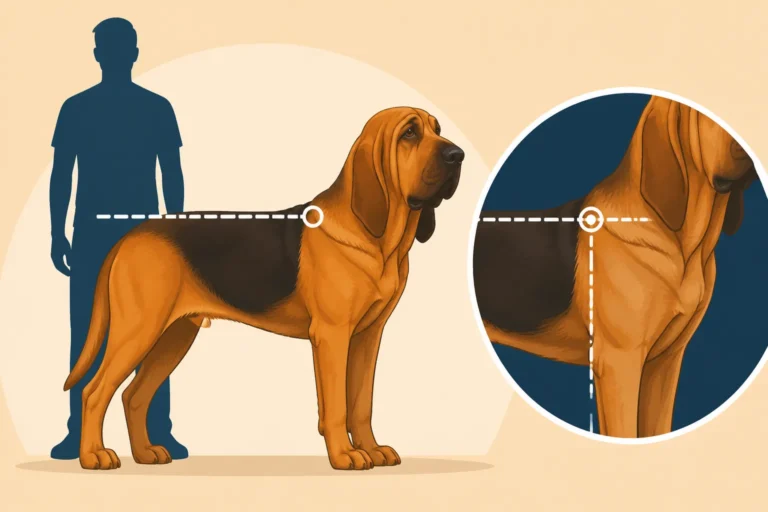
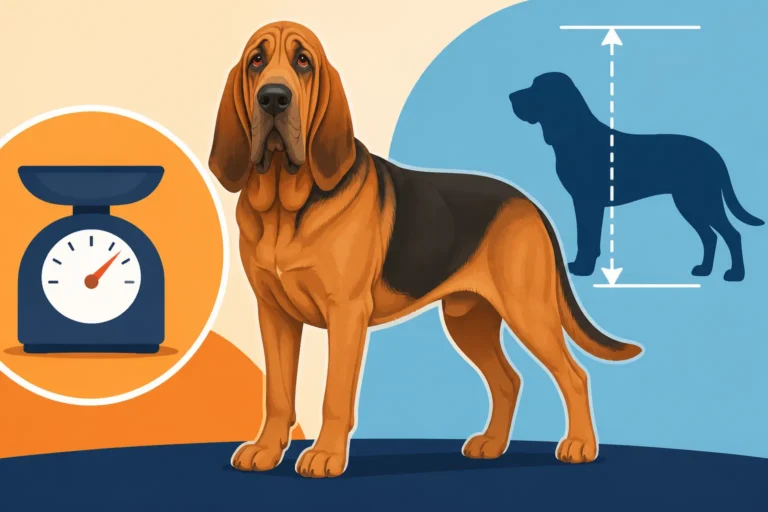
Bloodhounds are large, heavily boned dogs, typically weighing between 80 to 110 pounds, though some males can be even larger. They are built for stamina and endurance, not speed, with a powerful, muscular body that allows them to track for hours on end over difficult terrain. Their coats are short, dense, and relatively low-maintenance in terms of brushing, but their skin folds and ears require diligent attention to prevent infections. The classic Bloodhound colors are black and tan, liver and tan, or red, often with lighter markings or 'flews' (loose upper lips) that frame their broad muzzle. For more on their physical stature, you can explore What a Bloodhound Weighs and How Tall It Stands.
Coonhound Varieties and Their Looks
Coonhounds, while also large, generally possess a more athletic and streamlined build compared to the heavily wrinkled Bloodhound. They are built for agility, speed, and endurance through varying terrains, including dense brush and even climbing trees if necessary. Their ears are long, but typically shorter and higher-set than a Bloodhound's, though still very hound-like. Their skin is tauter, with less of the characteristic wrinkling of the Bloodhound, and their eyes are usually tighter-fitting.
What truly distinguishes Coonhounds physically is their incredible variety. There isn't just one "Coonhound" look; instead, there are several distinct breeds, each with its own preferred coat color and pattern:
- Black and Tan Coonhound: As the name suggests, these are predominantly black with rich tan markings, often with the same striking tan "eyebrows" and muzzle markings seen on a Bloodhound. They share some ancestral lines with the Bloodhound.
- Redbone Coonhound: Known for their stunning, glossy solid red coat.
- Bluetick Coonhound: Features a dark blue mottled or "ticked" pattern over a white background, giving them a distinctive appearance.
- Treeing Walker Coonhound: Often tricolor (black, white, and tan) with a striking, fast-moving appearance.
- Plott Hound: Unique among coonhounds for its origins in boar hunting and its brindle coat patterns (black, gray, or brown stripes).
- English Coonhound: Can come in redtick, bluetick, tricolor, or white and lemon.
Most Coonhounds typically weigh between 50 to 80 pounds, making them generally lighter and more nimble than a Bloodhound. Their coats are also short and dense, designed for protection in the field. This diversity in appearance is a direct result of their development in different regions by hunters who often bred for specific local preferences and hunting styles.
Temperament and Home Life: Quiet Observer vs. Energetic Hunter
Bringing a dog into your home means bringing in a whole new personality, and when it comes to Bloodhounds and Coonhounds, those personalities, while both distinctly "hound," offer different experiences. Their centuries of specialized work have instilled unique traits that dictate how they interact with their families, other animals, and the world around them. Understanding these core temperamental differences is crucial for any potential owner.
The Bloodhound's Gentle, Introspective Nature
The Bloodhound is famously known as the "gentle giant" of the canine world, and for good reason. They are typically docile, patient, and remarkably tolerant, making them wonderful family pets, even in homes with children. Their calm demeanor is often surprising given their large size and powerful build. They are not prone to aggression and are generally quite social, getting along well with other dogs and even cats, especially if introduced properly. However, it's important to remember that they are large and can inadvertently knock over small children simply due to their sheer bulk. They are often described as being a bit "clownish" in their youth, but they tend to mature into rather serious, deep-thinking individuals.
One of the most defining characteristics of a Bloodhound's temperament is their incredible focus on scent. When their nose is engaged, the rest of the world fades away. This means that while they are generally biddable indoors, outdoors, they have a singular mission. Their independent nature, born from generations of working alone on a trail, means they will often ignore direct commands if a fascinating scent presents itself. This isn't stubbornness, but rather an overwhelming instinct. Why a Bloodhound Ignores a Cue It Knows explains this in more detail. They are not typically high-energy dogs in the traditional sense, but they do require regular, moderate exercise and, crucially, mental stimulation through scent work. An under-exercised or under-stimulated Bloodhound can become bored and destructive. They tend to be more observers than instigators, often preferring to quietly absorb their surroundings unless a scent calls to them.
Coonhound's Energetic and Vocal Personality
Coonhounds, while also affectionate and loyal, generally possess a higher energy level and a more boisterous personality than Bloodhounds. They were bred for active, demanding hunting pursuits that required speed, endurance, and a distinct vocal output. This means that in a home environment, they need significantly more vigorous exercise to stay happy and healthy. A Coonhound thrives when given ample opportunities to run, explore, and engage their powerful noses, ideally in a secure, fenced area or on a long line. Without sufficient physical and mental outlets, they can become restless, destructive, or excessively vocal.
Vocalization is another key difference. Coonhounds are renowned for their distinctive "baying" sound, a long, mournful, and often loud howl that is an integral part of their hunting strategy. They use it to signal a hot trail, to call attention to treed game, and simply as a form of communication. While many Bloodhounds also bay, it's often less frequent and typically tied more directly to scenting than the general communicative baying of a Coonhound. Why a Bloodhound Bays explores this behavior. Coonhounds will bay when excited, when lonely, when they hear sirens, or when they are simply expressing themselves. This can be a challenge for owners in close-knit neighborhoods or apartments. While intelligent, their independent hunting instincts can make them challenging to train for off-leash reliability, similar to Bloodhounds, as their nose will always take precedence over a handler's command. They are typically friendly and good with families, but their exuberance and vocal nature require an owner who understands and appreciates these traits.
Scenting Prowess and Working Styles
Both breeds are celebrated for their incredible noses, but the way they utilize this talent, their approach to a trail, and what they consider "success" differs significantly. These variations are a direct reflection of the jobs they were initially bred to do, leading to fascinating distinctions in their working styles. Understanding these nuances helps us appreciate the true artistry of each hound's unique talent.
The Bloodhound's Unmatched Cold Trailing Ability
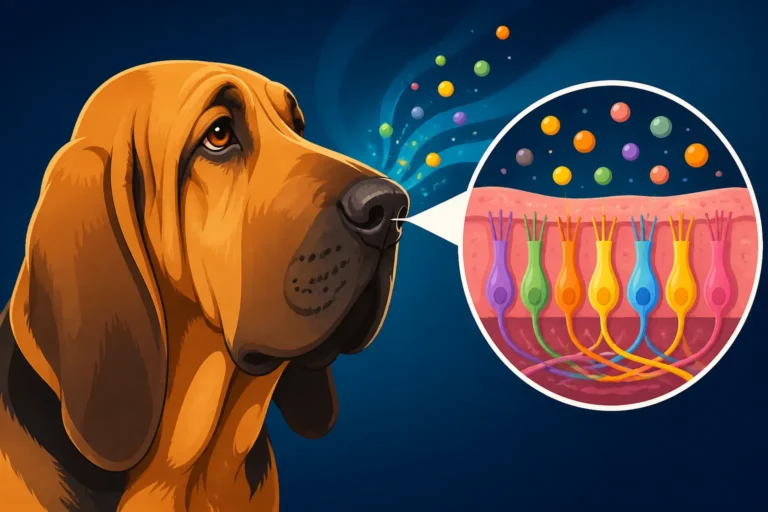
The Bloodhound is, without a doubt, the world's premier cold trailer. Their olfactory capabilities are legendary, allowing them to follow human scent that is hours, days, or even weeks old, over diverse terrain, and through various environmental conditions. This ability stems from an incredible density of scent receptors, combined with their unique physical attributes like those long ears and loose skin, all working in concert to funnel and process scent particles. Why a Bloodhound's Ears Sweep Scent Toward Its Nose goes into detail on this. They are methodical in their work, moving slowly and deliberately, meticulously unraveling the individual scent signature of a person from among countless other environmental odors. They don't rush; they analyze.
When a Bloodhound is on a trail, they are singularly focused, seemingly oblivious to distractions. Their pace is often a steady trot, nose glued to the ground, carefully following every twist and turn of the scent. They are trained to follow the individual scent, not just a general human odor, a trait that makes their evidence so valuable in legal settings. For more on how they achieve this, consider How a Bloodhound Separates One Person's Scent From a Crowd. This intense focus means they are not easily called off a trail once engaged. For a Bloodhound, finding the person at the end of the trail is the ultimate reward, and they are typically very gentle upon finding their "quarry." Their work is a marathon, not a sprint, requiring incredible stamina and mental concentration.
Coonhound's Treeing Instinct and Hot Trail Speed
Coonhounds, while also possessing phenomenal noses, were bred for a different kind of scent work. Their job was to find a fresh trail of specific game, typically raccoons, follow it at speed, and then "tree" the animal, holding it in place until the hunter arrived. This requires a much faster, more energetic approach to trailing. When a Coonhound strikes a scent, they typically open up with their characteristic bay, letting their hunter know they are on the job. Their trailing style is more about speed and tenacity over shorter, hotter trails, rather than the cold, methodical analysis of a Bloodhound.
Their primary goal is to locate the game and force it up a tree, where they will then stand at the base, baying continuously to "mark" the spot. This "treeing" instinct is incredibly strong and defines their working style. While they can follow older trails, their strength lies in their ability to quickly pick up and drive a fresh scent. They are agile and adept at navigating challenging environments, including dense woods, streams, and rough terrain, often working in packs during hunts. The reward for a Coonhound is the excitement of the chase and the successful treeing of the game, followed by the acknowledgment from their hunter. Their work is a burst of high-energy pursuit, culminating in that iconic, unwavering bay beneath the treed animal.
| Feature | Bloodhound | Coonhound (General) |
|---|---|---|
| Primary Scent Work | Cold trailing (human scent), methodical | Hot trailing (game scent), fast-paced, treeing |
| Physical Build | Heavy, muscular, loose skin, very long ears | Athletic, streamlined, less loose skin, shorter ears |
| Average Weight | 80-110+ lbs | 50-80 lbs |
| Coat Colors | Black & Tan, Liver & Tan, Red | Black & Tan, Red, Bluetick, Tricolor, Brindle |
| Temperament | Docile, patient, independent, gentle giant | Energetic, boisterous, independent, enthusiastic |
| Vocalization | Deep bay, less frequent unless on scent | Frequent, loud baying, especially when trailing/treed |
| Exercise Needs | Moderate, consistent, heavy mental stimulation | High, vigorous, ample running/exploration |
| Grooming Needs | High (ears, folds), low (coat) | Moderate (ears), low (coat) |
| Off-Leash Reliability | Very low (nose takes over) | Very low (nose takes over) |
Care and Upkeep: Different Demands for Different Hounds
Owning any large hound is a commitment, but the specific needs of a Bloodhound versus a Coonhound can vary quite a bit. From their unique physical attributes that demand special attention to their differing energy levels and grooming requirements, understanding these care considerations is vital. You want to make sure you're ready for the day-to-day realities of life with one of these incredible scenting machines.
Grooming the Bloodhound's Unique Features
A Bloodhound's iconic features—those long, pendulous ears and abundant loose skin—are also their biggest grooming challenges. These traits, so essential for their scenting prowess, create environments prone to infection and require diligent, regular care. Their ears, being so long and thick, cover the ear canal, trapping moisture and heat. This creates a perfect breeding ground for yeast and bacteria, leading to frequent ear infections. You truly need to commit to Cleaning a Bloodhound's Ears Every Week for Life. This isn't a suggestion; it's a critical part of owning a Bloodhound to prevent chronic discomfort and costly vet visits. You'll need specific ear cleaning solutions and a consistent routine, often involving deep cleaning and drying. Products found on sites like Chewy can be helpful for maintaining ear hygiene.
Similarly, the Bloodhound's famous skin folds and wrinkles, particularly around the face, neck, and muzzle, can trap moisture, dirt, and food particles, leading to skin fold dermatitis. These areas need to be wiped down daily, sometimes even several times a day, with a damp cloth and then thoroughly dried to prevent irritation and infection. Wiping a Bloodhound's Folds Before They Sour is not just about keeping them clean, but healthy. Their jowls are also prone to drooling, especially after drinking or when excited, which can lead to dampness around their chest and neck that also needs regular attention. While their short coat is relatively easy to brush, shedding can be moderate to heavy, and a good rubber grooming mitt can help manage it.
Meeting the Coonhound's High Energy and Vocal Needs
Coonhounds, while generally less demanding in terms of specific skin and ear care compared to Bloodhounds, require a significant commitment to exercise and managing their vocal tendencies. Their athletic build means they need ample opportunity for vigorous physical activity every single day. Long walks on a leash are a start, but they truly thrive with opportunities to run, explore securely in a large, fenced yard, or engage in active scent work. Without enough exercise, a Coonhound can become bored, destructive, and potentially develop nuisance barking or baying habits. They are not content to be couch potatoes without a substantial outlet for their energy first.
Their vocal nature is another major consideration. Coonhounds love to "talk" through baying, howling, and barking. This is an instinctual behavior, deeply ingrained in their hunting heritage, and it's not something you can easily train out of them. While training can help moderate excessive vocalization, expecting a Coonhound to be a quiet companion is unrealistic. This makes them less suitable for apartment living or homes with close neighbors who might be sensitive to noise. Training and socialization are crucial for Coonhounds to channel their energy and intelligence positively. They respond well to consistent, positive reinforcement training, but remember their nose will always take priority outdoors. Ensuring they have durable chew toys, perhaps from a pet supply retailer like Chewy, can help satisfy their natural chewing instincts and prevent boredom-related destruction. Regular ear checks and cleaning are still important for Coonhounds, as their pendulous ears can also be prone to infections, though generally not to the same degree as a Bloodhound.
Health Considerations: Inherited Traits and Common Ailments
Both Bloodhounds and Coonhounds are generally robust breeds, but like all purebred dogs, they come with their own set of potential health challenges. Many of these are linked to their size, their unique physical characteristics, or specific genetic predispositions that have been identified within their breed lines. Being aware of these common ailments is a crucial part of responsible ownership, allowing you to partner with your veterinarian to provide the best possible care throughout your hound's life.
Bloodhound's Predisposition to Certain Conditions
Bloodhounds, due to their unique physiology, are prone to several distinct health concerns. One of the most critical is bloat (gastric dilatation-volvulus or GDV), a life-threatening condition where the stomach fills with gas and can twist, cutting off blood supply. Their deep, narrow chests are a significant risk factor. This condition can progress rapidly and is almost always a veterinary emergency. Bloat Is What Kills Most Bloodhounds and The Gastropexy Decision Every Bloodhound Owner Faces are essential reading for any Bloodhound owner, as preventive surgery (gastropexy) is often recommended.
Beyond bloat, their long, heavy ears make them highly susceptible to chronic ear infections, as discussed earlier. Without diligent cleaning, these can become persistent and painful. Their loose skin can also lead to skin fold dermatitis, particularly in warm, damp climates, requiring careful hygiene. Eye problems are also common, including ectropion (where the lower eyelid rolls outward, exposing the haw) and entropion (where the eyelid rolls inward, causing lashes to irritate the eye). These conditions can lead to chronic irritation, infections, and even corneal damage, sometimes requiring corrective surgery. The Four Eye Problems a Bloodhound Is Born Toward provides a comprehensive overview. As large, fast-growing breeds, Bloodhounds are also prone to orthopedic issues like hip and elbow dysplasia, making careful breeding and puppy management crucial. Hip and Elbow Dysplasia in the Bloodhound delves into these concerns. Lastly, heart conditions and hypothyroidism can also be seen in the breed.
Coonhound Health Concerns
Coonhounds, while generally hardy, also have their share of health considerations. Like Bloodhounds, many large, deep-chested breeds are at risk for bloat, though perhaps to a lesser degree than the Bloodhound. Owners of Coonhounds should still be vigilant about the signs and preventive measures. Orthopedic issues such as hip and elbow dysplasia are also a concern in Coonhounds, as they are active, athletic dogs, emphasizing the importance of responsible breeding and maintaining a healthy weight.
Ear infections are common in Coonhounds as well, owing to their pendulous ears that restrict airflow and can trap moisture and debris. Regular cleaning and veterinary checks are important to prevent recurrent issues. Eye problems can also occur, though perhaps less frequently or severely than in Bloodhounds, with conditions like entropion or ectropion occasionally seen. Some Coonhound lines may also be predisposed to certain neurological conditions or blood clotting disorders. As with any active breed, injuries sustained during vigorous exercise or hunting can also be a concern. When choosing a Coonhound puppy, researching reputable breeders who perform health screenings for genetic conditions prevalent in their specific Coonhound variety is always a wise step. Products like joint supplements or specialized diets can often be found on platforms like Chewy, which can support overall health for active, large breeds throughout their lives.
Disclaimer
This article is for general informational purposes only and does not constitute professional advice. Laws, prices and regulations vary by location and change over time. Consult a qualified professional for guidance on your specific situation.